Welcome to Law and Disorder Radio
Law and Disorder is a weekly independent civil liberties radio program airing on more than 150 stations and on Apple podcast. Law and Disorder provides timely legal perspectives on issues concerning civil liberties, privacy, right to dissent and practices of torture exercised by the US government and private corporations.
Law and Disorder June 9, 2014
Podcast: Play in new window | Download
Updates:
- Michael Ratner: Guantanamo Bay Prisoner Exchange
- Five Taliban In Exchange For A U.S. Prisoner Held In Afghanistan
- 149 Detainees Left In Guantanamo Prison – 88 Cleared For Release
- Michael Smith Reports Back On Highlights At the 2014 Left Forum
——
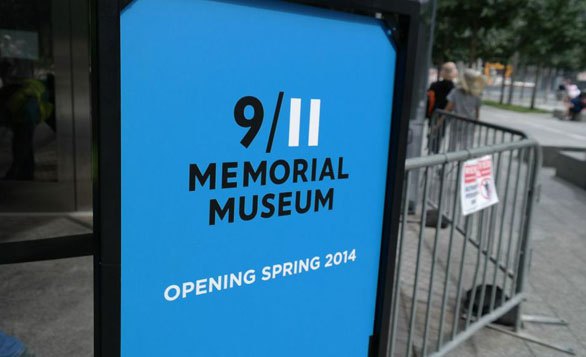
9/11 Memorial Museum Protests
There were many protests during the official opening of the 911 Memorial Museum. Muslim communities and other groups have voiced concern about the film in the musuem titled “The Rise of Al-Qaeda” and how it fails to adequately discern between Al-Qaeda and those of the Islamic faith. Meanwhile, the museum’s official response is that the film is objectively telling the story of what happened.
- We came together because of a concern about a video they were showing called The Rise of al-Qaeda. It’s a 7 minute documentary and the concern is about the problematic language that its using. It makes it seem as if the acts of 9-11 are equated with Islam.
- Our feeling is that the film needs to be edited and could exacerbate an already anti-Muslim climate.
- Quoting criticism – The film in its current state presented risks that visitors would assign collective responsibility for September 11th to Islam and all Muslims.
- There’s a historian Todd Fine who says its an inconsistent array of terminology that gets carelessly thrown around with little concern for the harmful impact it can have on people.
- The video didn’t do enough to separate al-Qaeda from Islam and from mainstream Islam. It’s reckless.
- Despite the fact that the own museum’s own advisory board was instantly concerned when they saw the film and said it should be reviewed and edited – despite the fact that 400 scholars wrote letters saying it contains problematic and contested terminology that conflates terrorism with Islam – and despite the fact that leaders from so many different inter-faith communities have spoken out about this – that the museum continues to stand by its decision not to edit the video – is astonishing.
- I was doing a little research on her (Debra Burlingame-on 911 Memorial Museum Board of Directors) and there’s a high number of racist quotes she’s said. “Islam’s a transnational threat.”
- Millions and millions of people will be going to this museum and museums can have a big impact.
- We have to remember that this is in the context not of a society that welcomes and embraces the Muslim community but one that’s surveilling the Muslim community.
- It’s feeding into this notion that all Muslims are responsible for the acts of a few individuals.
- This video also feeds into police surveillance because what do they say? After 911 we have to be more vigilant and that means surveilling an entire community.
- Communities are coming together and speaking out, including about this video.
- We have to change the structures that enable this to happen. The Islamophobes are really problematic and have connections to some of the institutions.
- We have to make sure our institutions are fomenting Islamophobia.
- Book – Islamophobia and Israel by Elly Bulkin and Donna Nevel
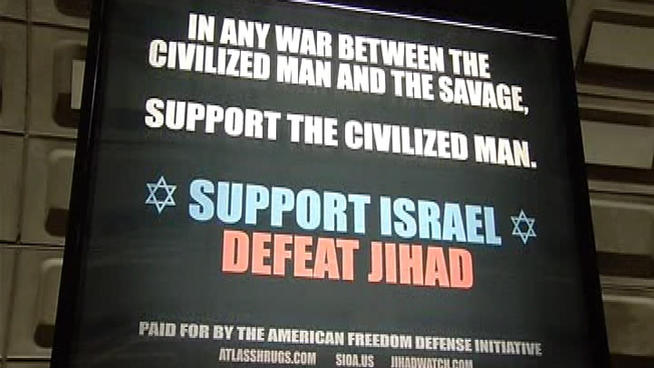
- We wanted to analyze the intersection of Islamophobia and Israeli politics and to look at the way the “war on terror” impacts both. Also to raise an issue that’s basically taboo in the Jewish community as well as outside the Jewish community.
- We have 4 different areas that we look at. Our lengthiest area is “follow the money” where you basically see how connected the Islamophobes are with right-wing Israel crowd, the settlement movement and others as well.
- Jews Against Islamophobia / Jews Say No / Jewish Voices For Peace / Jews For Racial and Economic Justice
- Contact Donna Nevel – denevel(at)gmail(dot).com
Guest – Donna Nevel, a community psychologist, educator, and writer whose work is rooted in Participatory Action Research (PAR) and popular education. Co-author with Elly Bulkin of Islamophobia and Israel. She has been involved with a wide range of organizing efforts to challenge segregation and inequality and further equity and racial justice in public education. She has also been a long-time organizer for Palestinian-Israeli peace and justice and works with groups to challenge Islamophobia and anti-Arab racism.
——
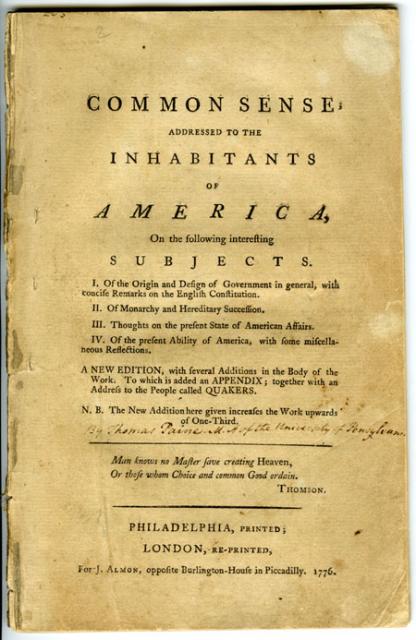
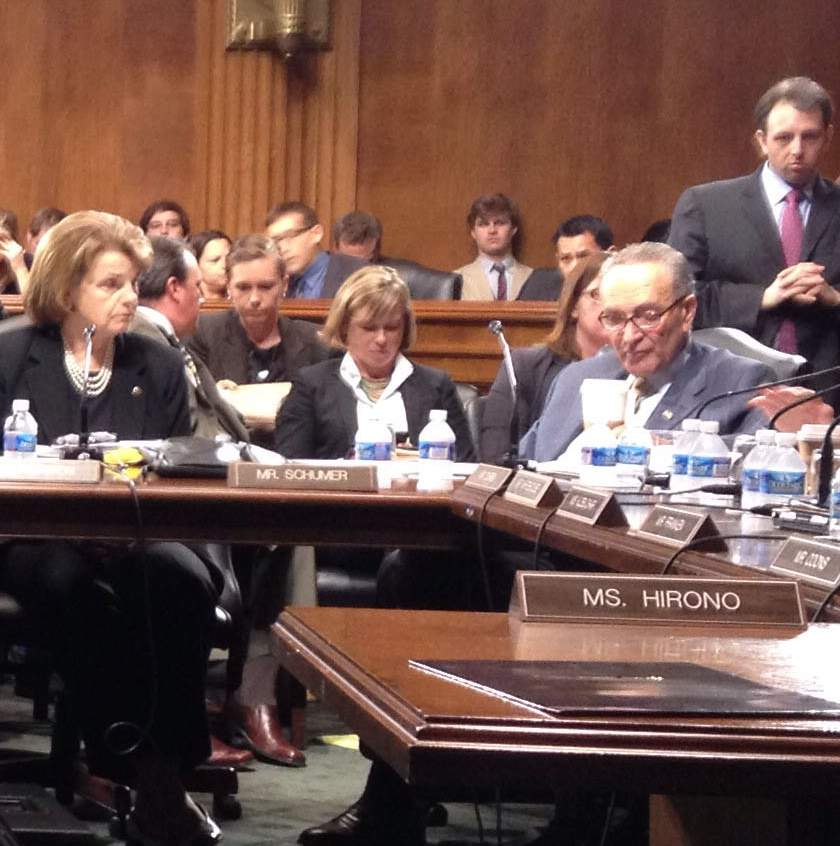
Free Flow of Information Act (Journalist Shield Law)
Current shield laws for journalists in the United States have broad exceptions for national security. This means that a prosecutor can override the law by showing how the information sought would “materially assist” the government in “preventing” or “mitigating” an act of terrorism. Initially, the shield law is set up to provide a confidentiality privilege for journalists so a police officer or FBI agent can’t get that information even with a court order unless there is an unusually strong justification for it. The latest version of the shield law as of September 2013 has a clause telling judges that it only covers legitimate news gathering. This of course makes very easy to declare any kind of news gathering you don’t like as illegitimate, and therefore the sources are not protected. Last month, the House of Representatives voted to approve an amendment to an appropriations bill barring the Justice Department from compelling reporters to testify about confidential sources.
- We are going to get a shield law but its going to be one that doesn’t protect any journalists or sources.
- It’s a lot easier for the FBI and the DOJ to just skip the investigation and go straight to the reporters. Why do they have to any work when they have the journalist getting all the sources for them.
- They subpoenaed records from the Associated Press last summer, they subpoenaed the source for James Risen who wrote a book and that actually appeared before the 4th Circuit of Appeals and was turned down by the Supreme Court for review.
- There’s been a push to try and pass a shield law before but Obama back in 2009 said he wouldn’t let any shield law pass that didn’t have a big national security exemption.
- What happened back in September is that there was a massive compromise with 2 Senators, Diane Feinstein from California and Dick Durbin from Illinois. They wouldn’t let this law go through unless it contained a big national security exception. Meaning any reporter covering national security would have to disclose their sources, and second it had a big exclusion for wikileaks and other organizations that published leaks.
- There’s actually a balancing test as part of this law that tells judges to consider if a journalist is engaged in legitimate news gathering. This is problematic because anyone can be a journalist, this has been the case since the founding of this country.
- They’re trying to put into law the fact that some journalists are legitimate and some are illegitimate.
- The internet has brought this country back to the time of its founding in terms of journalism because when the “press clause” in the First Amendment were passed, anyone could be a journalist.
- The “press clause” was defined as the right to publish.
- I believe we do need shield laws, but not this shield law.
- I think there is a big push by the institutional media to keep journalism as a profession, but that’s not what journalism is. Now with the internet, anyone can publish. As long as anyone as the intention to disseminate information, they should be protected as a journalist.
- When it helps the government the definition of the media is very broad.
- It’s going to be political suicide if Holder or anyone from the Obama administration pushes to send James Risen to jail.
- The DOJ argued in an affidavit that James Rosen was aiding and abetting his source.
- More and more, we’re seeing this administration trying to frame the news gatherer and the source, not as a journalist and a source but as criminals in a conspiracy.
- I was a radio journalist for 3 years. I used to work at the Center for Constitutional Rights where I met Michael Ratner and was involved with Chelsea Manning’s trial.
Guest – Carey Shenkman, has worked with several legal teams including Chelsea Manning’s defense, and legal research defining the protection of new media under the Bill of Rights and The U.S. Constitution.
——————————————————————————————
Law and Disorder June 2, 2014
Podcast: Play in new window | Download
Updates:
- Wikileaks Reveals The Other Country NSA Surveilled All Content: Media Blackout
- U.S. Government Can Destroy People: Informant Sabu (Hector Xavier Monsegur) And Jeremy Hammond
- Remembering League of Revolutionary Black Workers Founder General Gordon Baker Jr.
- Read General’s Letter To The Detroit Draft Board
- Michael Ratner Resigns From Brandeis University
- International Advisory BoardMichael Ratner’s Open Letter To Brandeis University President Published In Forward Thinking
- Coalition of Imokalee Workers Demonstrations In Columbus, Ohio
- Glenn Greenwald Nowhere To Hide Book Tour -Ticket Give Away – Listen To Answer Question
- We Have 5 Tickets In Each City To Give Away
- Dates City
June 17, 2014 Seattle, WA
June 18, 2014 San Francisco, CA
June 19, 2014 Los Angeles, CA
June 21, 2014 San Diego, CA
June 23, 2014 New York, NY
June 26, 2014 Rosemont, IL
——
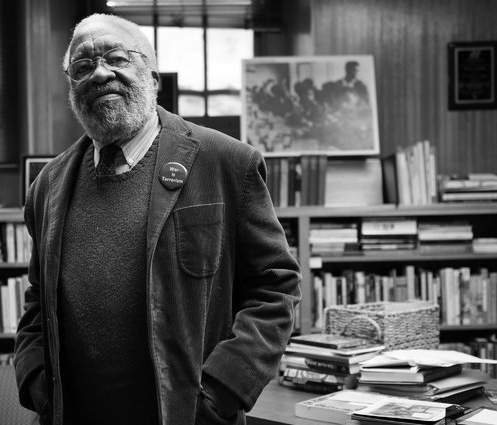
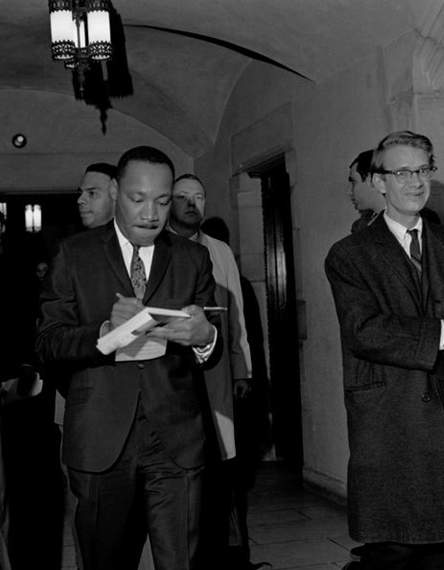
Remembering Dr. Vincent Harding
Last month pioneering historian, theologian and civil rights activist Dr. Vincent Harding had died at the age of 82. Harding was a close adviser to Dr. Martin Luther King Jr. and wrote King’s famous antiwar speech, “Beyond Vietnam: A Time to Break the Silence.” King delivered the address at Riverside Church in New York City on April 4, 1967.
After King was assassinated, Harding became the first director of the Martin Luther King Jr. Memorial Center and of the Institute of the Black World. He later became Professor of Religion and Social Transformation at Iliff School of Theology in Denver. After serving in the Army for several years Harding became a pacifist and later served as co-chairperson of the social unity group the Veterans of Hope Project. He’s the author numerous books including There Is A River and Wade in the Water: The Wisdom of the Spirituals.
- Vincent was sometimes called by black activists across the continent, the gentle giant.
- Giant, not because of his physical size but because of intellectual stature.
- Last summer we did a conference together speaking to a national conference of Quakers.
- He was an incredibly soft-spoken and gentle person, yet could be so absolutely incisive in his quiet comments.
- He was so persuasive that everyone had to pay attention to him.
- On campus he was either in the midst of a student group trying to quietly cajole them into activism themselves or once the students became activists, he was one of the few faculty that was right there with students walking them through that activism.
- Every thing in that speech (Beyond Vietnam) is a part of what Vincent lived every day.
- He was in the Army during the Korean War and became a convert to Gandhi and non-violence theory.
- His participation to bringing me to Iliff was a clear signal that he was one of those civil rights warriors who was not satisfied with interpreting the civil rights struggle as a black and white issue.
- When we engaged in protest on the streets of Denver, beginning around 1989, getting ready for the 1992 Columbian Quinscentenary, we had Iliff students who would come out with the American Indian Movement of Colorado to help us protest what we always framed as state supported hate speech.
- We were never against Italians celebrating their heritage but its the fact that Columbus Day is a federal holiday. It’s a federal celebration then, of the genocide of Indian people.
- About a year and a half ago he joined Jewish activists and African American activists on a trip to Palestine, the West Bank. He came back deeply affected.
- He immediately began to see the deep deep connection between the Palestinian struggle for freedom and American Indians on this continent.
- We’re seeing it still today, US foreign policy is characterized by violence and the threat of violence and if not military violence, economic violence.
- Vincent and Dr. King were men of conscience who once they understood the truth in Vietnam could not help but speak to it.
- 18 year old kids don’t have the clear reading of history to fall back on their decision making. (military)
- His passing is a passing of an era marked by the passing of Maya Angelou. It deeply deeply saddened me because I was hoping this next month to have lunch with him.
Guest – Dr. George Tinker, a colleague of Dr. Vincent Harding at the IIliff School of Theology. Dr. Tinker. He teaches courses in American Indian cultures, history, and religious traditions; cross-cultural and Third-World theologies; and justice and peace studies and is a frequent speaker on these topics both in the U.S. and internationally. teaches courses in American Indian cultures, history, and religious traditions; cross-cultural and Third-World theologies; and justice and peace studies and is a frequent speaker on these topics both in the U.S. and internationally. His publications include American Indian Liberation: A Theology of Sovereignty (2008); Spirit and Resistance: Political Theology and American Indian Liberation (2004); and Missionary Conquest: The Gospel and Native American Genocide (1993). He co-authored A Native American Theology (2001); and he is co-editor of Native Voices: American Indian Identity and Resistance (2003), and Fortress Press’ Peoples’ Bible (2008).
———————————————————————————–

Please help support Law and Disorder, the show is now a sponsored project of Fractured Atlas, a non-profit arts service organization. Contributions for the charitable purposes of Law and Disorder must be made payable to Fractured Atlas only and are tax-deductible to the extent permitted by law.
Law and Disorder May 26, 2014
Podcast: Play in new window | Download
Updates:
- NSA Collecting MetaData And Content On Five Countries
- Julian Assange-Glenn Greenwald Twitter Storm
- Host Discussion On NSA Ubiquitous Data Collecting
——-
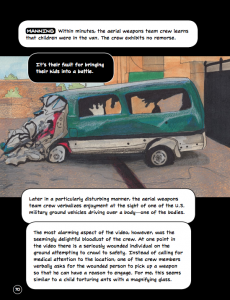
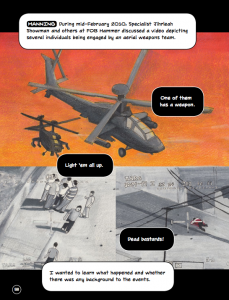
The United States vs. Private Chelsea Manning
Last year our own Michael Ratner made many trips to Fort Meade to attend the very secretive Private Chelsea Manning trials. Michael had also explained in past shows about how he heard Chelsea testify as to why he released each set of documents such as the Iraq war logs, the Afghanistan war logs, State Department cables and more. She said her decision to release the documents were done as an act of conscience. Our guest Wikileaks activist and artist Clark Stoeckley was also at this historic trial. His recent graphic novel titled The United States vs. Private Chelsea Manning is a collection of his vivid sketches from inside the court room. He joins us to talk about his work as an activist and his experiences producing the book. Welcome to Law and Disorder.
- As I understand the transcripts are still under seal.
- Those sketches took a little bit longer, ones that where full court room where I drew a lot of people.
- I would work in pencil and draw as quickly as I could everything that I saw in the court room and then I would come back and fill it in with color and hard outlines.
- What she was doing was offering up 20 years of her life, accepting full responsibility and that takes a lot of courage and bravery to do that – being the smallest person in the court room and being noble about it.
- Unfortunately the media wasn’t there to catch the pre-trial. They only showed up on the first day and then the sentencing and the verdict.
- I remember how the court room fell to a complete silence when that video came on and the tears, and the blank stares on the prosecutions’ faces.
- I’m looking through the book right now, I see you, you’re in the picture there Michael Ratner, in the background sitting behind Chelsea.
- 35 years was the sentence and that’s going to be appealed. As I understand the appeal will start as early as December.
- They didn’t like that we’re holding vigils every week and holding large protests there. They shut down the road and they had to re-route traffic. It was the largest protest Ft. Meade had every seen.
- Just a heads up to anyone who wants to correspond with Chelsea, you know have to use the name Chelsea when addressing envelopes. http://www.chelseamanning.org/
- I just started putting them in libraries today.
- CHELSEA E. MANNING 89289 / 1300 NORTH WAREHOUSE ROAD / FORT LEAVENWORTH, KANSAS 66027-2304
Guest – Clark Stoeckley, is an artist and author of the book The United States v. Private Chelsea Manning. He’s also the owner of truck with the WikiLeaks logo emblazoned on it. Stoeckley’s vivid sketches from inside the court and beyond, together with carefully selected transcripts of the proceedings, trace the arguments as they move back and forth between the defense and the prosecution.
——-


Net Neutrality – The Time Warner/Comcast Merger and New Rules Proposed By The FCC
In our last interview with attorney Matt Wood, policy director at Free Press, we talked about the 45 billion dollar Comcast -Time Warner merger and its implications to net neutrality. This proposed merger would unite the nation’s largest cable TV and internet service provider with the second largest cable company. If combined, these companies would offer service to two thirds of U.S. households. We get an update on the merger and we also discuss the new rules proposed by the FCC about net neutrality. Net neutrality essentially means preventing unreasonable discrimination against content on the internet. The Free Press maintains that the new FCC rules would kill rather than protect net neutrality and allow rampant discrimination online.
- What the court said was that you can’t treat broadband providers as common carriers – not as some insurmountable conclusion but simply based on the way the FCC has decided to treat them up to this point.
- So the FCC up to this point has tried to deregulate and yet tried to maintain some of the protections we all need from our communications.
- Though its in the FCC’s discretion according to the majority and according to the DC circuit, what the courts have said, the FCC has made this decision in the past. They still haven’t reversed it, they still want to say that broadband is not a common carrier service and therefore the FCC can’t adopt common carrier or common carrier like obligations for broadband.
- There’s obviously a grave concern to government secrecy and censorship especially when it comes to whistle-blowers and the kind of information that Edward Snowden brought to all of us.
- If you used the phone to commit a crime whether that is wire fraud or you’re talking to your co-conspirators about how to conduct the crime. It is not the telephone company’s place and either say you can or can’t make that call.
- Net neutrality is a way of insuring that the carrier of our speech (that’s typically a private company) doesn’t have a role or not in deciding whether that speech goes through.
- If and when the government steps in and says hey we want to tap that line because we’re actually conducting an investigation or if and when there’s a punishment for the activity that you used the phone to plan that’s obviously a very important legal debate.
- Net neutrality is not a way for the government to control our speech. It is a way to insure that our cable and phone companies do not control our speech.
- The FCC in its current mode is basically saying well even if we’re required to allow these two tiers or multiple tiers of service, we can still step in and protect you and provide a basic level of service.
- This isn’t just about big internet companies on one side and big telephone and cable companies on the other side, its about that we all use the internet especially in a cloud based system. We’re using it not just to watch movies which is an important cultural activity but to back up our files, to send educational videos.
- What the cable and telephone companies want to do is charge you extra to reach their customers and they want to charge in both directions.
- If you want to reach them at all Netflix or Google, Law and Disorder, you also have to pay us now.
- Its no secret that FCC Chairman Wheeler headed not just one but two telecommunication lobbies.
- The FCC has this proceeding that it will be running over the summer. What Chairman Wheeler has proposed we think is not good enough but its not a done deal either so the FCC will take comments not only from companies and groups like ours but members of the public.
Guest – Attorney Matt Wood helps shape the policy team’s efforts to protect the open Internet, prevent media concentration, promote affordable broadband deployment and prioritize a revitalized public media. Before joining Free Press, he worked at the public interest law firm Media Access Project and in the communications practice groups of two private law firms in Washington, D.C. Before that, he served as editor-in-chief for the Harvard Civil Rights-Civil Liberties Law Review, worked for PBS, and spent time at several professional and college radio and television stations. Matt earned his B.A. in film studies from Columbia University and his J.D. from Harvard Law School.
—————————————————————————
Please help support Law and Disorder, the show is now a sponsored project of Fractured Atlas, a non-profit arts service organization. Contributions for the charitable purposes of Law and Disorder must be made payable to Fractured Atlas only and are tax-deductible to the extent permitted by law.