
Welcome to Law and Disorder Radio
Law and Disorder is a weekly independent civil liberties radio program airing on more than 150 stations and on Apple podcast. Law and Disorder provides timely legal perspectives on issues concerning civil liberties, privacy, right to dissent and practices of torture exercised by the US government and private corporations.
Law and Disorder January 13, 2014
Podcast: Play in new window | Download
Updates:
- Lynne Stewart Released From Prison, Returns Home
- Media, Pennsylvania Activists Come Forward
- White House Report: “Liberty and Security in a Changing World”
——
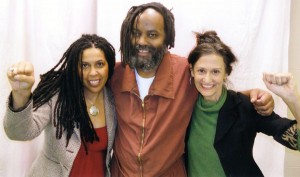

Mumia Abu-Jamal, Heidi Boghosian and Professor Johanna Fernandez
We at Law and Disorder have kept you updated on his case for the 10 years we’ve been broadcasting. It’s our pleasure to welcome Mumia Abu-Jamal as our special guest. Professor Johanna Fernandez joins us as Mumia calls from SCI Mahanoy in Frackville, Pennsylvania. Johanna is a Professor of History at Baruch College and co-coordinator of the newly launched campaign to bring Mumia home.
Mumia Abu-Jamal:
- I remember with quite a degree of distinction receiving in the mail, a packet full of xeroxed FBI files.
- I believe by 1971, I had left the party. I read through files that named names and detailed internal affairs of the Black Panther Party of Philadelphia, the national office, other organizations, activists all through out the city and the region.
- We lived in communal apartments and houses. We lived together we worked out of the same offices, we spent all day together with each other.
- To read about lies that were in those files, and the people that you knew for years that were FBI informants, stuff like that, it was absolutely mind blowing.
- Media, Pennsylvania story: I think they are the linear ancestors of Edward Snowden.
- These were anti-war people for the most part, living their own lives but willing to make a contribution to the movement, because they were part of the movement.
- It’s interesting that these file come out now, because for someone who has been reading and writing recently, about the Reverend Dr. Martin Luther King Jr., people know now that the FBI taped hotel rooms where Martin and Ralph David Abernathy and other civil rights activist were staying.
- They tried to use those tapes to blackmail Martin King and actually force him into suicide.
- This was all part of Hoover’s plan to destroy the Black Freedom Movement and any movement that was against what the government was doing.
- It’s interesting that Law and Disorder is talking about 9/11 when right there in New York you have an estimated 100 cops who used 9/11 to justify scamming the public. Cops, prison guards and a few firefighters.
- When you think about the ordinary heroes. These are people whose names are not known. Those nameless black mothers, grandmothers, sisters and daughters, they made that movement possible. (Black Freedom Movement)
- Even if you think of Edward Snowden. He’s an average guy, no college education, he’s like a computer whiz. Now he got a great job and he resolved in his mind, in his heart, in his soul, that he would not be silent about the things he saw and heard.
- BringMumiaHome.com
- Law and Disorder Interview – The Framing of Mumia Abu Jamal by J.Patrick O’Connor
Guest – Mumia Abu-Jamal is a renowned journalist from Philadelphia who has been in prison since 1981 and was on death row since 1983 for allegedly shooting Philadelphia police officer Daniel Faulkner. After decades of appeals, he left death row in 2012 but is still facing a life sentence. He is known as the “Voice of the Voiceless” for his award-winning reporting on police/state violence brutality and other social and racial epidemics that plague communities of color in Philadelphia and throughout the world.
——
Federal Court Allows For DHS Laptop Searches At Border
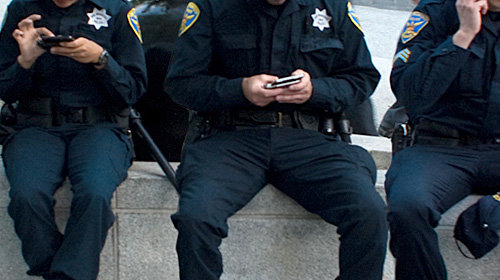
Each year, thousands of American citizens returning from abroad are subjected to searches of their laptops, cell phones and other personal devices. The Department of Homeland Security claims it has the right to such searches regardless of whether the traveler is suspected of wrongdoing.
A federal court recently dismissed a 2010 lawsuit against the DHS. The ACLU, and the National Association of Criminal Defense Lawyers, filed the suit on behalf of Pascal Abidor, a dual French-American citizen whose laptop was searched and confiscated at the Canadian border, as well as the National Press Photographers Association and the NACDL. Abidor was traveling from Montreal to NY on Amtrak when his laptop was searched and taken by customs officers. He was questioned, taken off the rain in handcuffs and held in a cell for several hours. When his laptop was returned, many of his files, chats and photos had been searched.
- The agent opened Mr Abidor’s laptop and started looking through the files on his desktop.
- She found a couple pictures that she showed to agents around her. She turned the laptop around to see what he thought about the pictures she identified.
- One was a picture of a Hamas rally in Israel, and the other picture was of a Hezbollah rally in Lebanon.
- Mr Abidor explained that these were related to his graduate work in Islamic studies.
- The agents thought these pictures were suspicious, and they took Mr. Abidor off the train, the train left without him. They put him in handcuffs and placed him in a holding cell where he was forced to wait for several hours.
- While he was there, the agents interrogated him about his studies, his associations, his interests in Islam, etc.
- Eventually they decided there was no evidence of wrong doing. They decided to let him go but not before seizing all his electronic devices and specifically detaining his laptop for an indefinite period of time.
- When they returned his laptop 11 days later he was able to determine from the last open date on his files, that the government had actually inspected his personal photographs a transcript of a chat he had with his girlfriend, copies of his email correspondence, class notes, journal articles, tax returns, his graduate school transcript and even his resume.
- He decided to come to us and we brought a lawsuit on his behalf challenging this policy.
- David House is a very talented computer programmer who lives in Cambridge, Massachussetts and he was at one time deeply involved in the Bradley Manning support network.
- The government figured out that David House was related to Chelsea Manning and they wanted to question him in connection with the Wikileaks investigation.
- They set up an alert in the data base, known as the Text Database. It let the government know whenever Mr. House was leaving the country.
- When Mr House returned (from leaving the country) government agents were waiting for him at Chicago O’Hare.
- They interrogated Mr. House about wikileaks and his political activities and confiscated his laptop and electronic devices.
- When we brought a lawsuit on Mr. House’s behalf and actually settled with the government, the DHS notes after reviewing all of his materials after going through every file on his laptop . . concluded there was absolutely no evidence to seize these devices. There was strong reason to believe they knew this from the beginning and they knew they couldn’t get a probable cause warrant by a judge.
- As we understand it, the DHS can put anyone it likes into the Text Database.
- Our understanding is that from October 1, 2008 to June 2, 2010 more than 6,500 people.
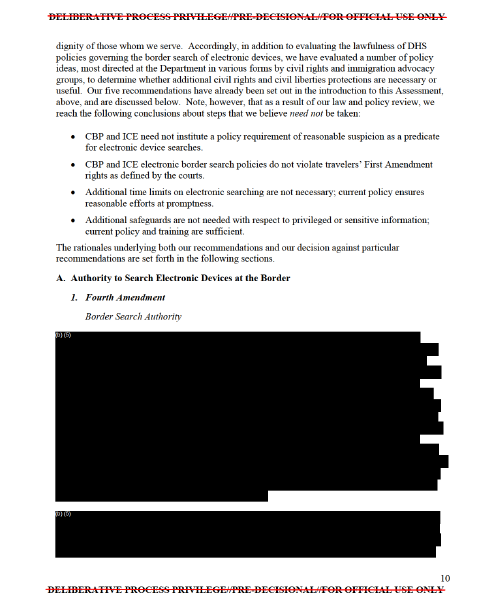
- What we asked for in our FOIA request was the DHS Civil Rights and Civil Liberties Impact Report on border searches. We ultimately got the report with some redactions pertaining to the government’s legal analysis of why its allowed to engage in suspicionless searches.
Guest – Brian Hauss, the William J. Brennan Fellow with the ACLU’s Speech, Privacy, and Technology Project. At the ACLU, he has been involved in litigation challenging the federal government’s suspicionless search and seizure of laptops and other electronic devices at the international border. Brian is a graduate of Yale University and Harvard Law School. After graduation from law school, he served as a law clerk to the Honorable Marsha Berzon of the United States Court of Appeals for the Ninth Circuit.
——————————————————————————————
Books From Law and Disorder Hosts

Law and Disorder January 6, 2014
Podcast: Play in new window | Download
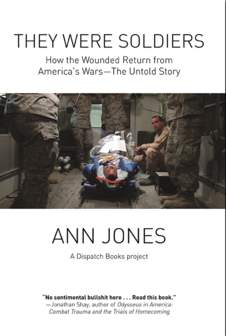
They Were Soldiers: How the Wounded Return from America’s Wars
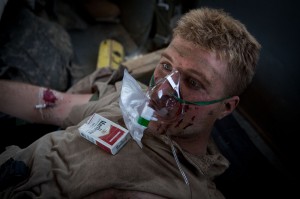
What are the true costs of war in Afghanistan? Our guest, author Ann Jones has written an impactful book titled They Were Soldiers: How the Wounded Return from America’s Wars, it chronicles a world mostly hidden from the public. Ann Jones has spent nearly a decade working with Afghan civilians and writing about the effects of war on their lives but in the last couple years, she focused on the human toll on and off the battle field as U.S. soldiers return back from war zones with permanent mental damage, missing limbs or as quadruple amputees.
- I live in Norway where peace is taken for granted as it is in Europe.
- The United States looks crazed, the way we send our forces out all over the world, are always looking for a fight.
- Any unit of any size has a special unit within it that does mortuary affairs because all combat units are losing soldiers all the time and even soldiers who never leave base may be victims of this war. Suicides for example.
- The job of the soldiers assigned to mortuary affairs is to protect the other soldiers from knowledge of those deaths.
- Their job is to go out and retrieve the pieces of soldiers who very often in Afghanistan have literally been blown to pieces and bring those body parts and remains back to the base, to thier little secret part of the base and try to match up and put them in “transfer cases.” – to transfer them home to Dover, Delaware where they are repackaged, gussied up to be put in coffins and sent on for families for burial.
- Landstuhl Regional Medical Center is very close to Ramstein Air Base in Germany. There are special air ambulance services that go out from there to Africa, to Asia to pick even individual casualties. The individuals are often members of the CIA or private contractors or military special ops people.
- The suicides have been increasing year by year. Many of those suicides take place in the field. There have been a number that have been documented as a result of hazing and sexual assaults.
- A great many more take place here at home when soldiers return and find that they can’t live with themselves.
- I think what’s really troubling now is the number of soldiers and ex soldiers who aren’t really counted in this statistic who are taking their lives under the influence of opiad-pain killers, that have been pushed upon them by big-pharma.
- They’re shown to be highly addictive, particularly in young people and to be heavily implicated in suicide.
- The rate at which soldiers under treatment in the V.A. are taking their lives is what should be a national scandal.
- It’s estimated that 1 in 3 women soldiers have been the victim of sexual assault.
- Though in fact the number of male soldiers victimized is even greater. The percentage is less but the number is greater because men still represent 85 percent of the personnel in the military.
- Congress is supposed to vote on military appropriations for 2014 very shortly. Kirsten Gillebrand, the senator from New York is leading the campaign to attach an amendment to that budgetary appropriation that would remove the prosecution, the reporting and the decision about the prosecution and the prosecution itself from the chain of command and place it in the hands of specially trained military and civilian legal units.
- Who joins? It’s kids, from poor families, from dysfunctional families. Mainly from in the South and the “rust belt” and urban centers who see very little if any, opportunity for their ambitions and their idealism in their home communities.
Guest – Ann Jones, a journalist, photographer, and the author of ten books of nonfiction. She has written extensively about violence against women. Since 2001, she has worked intermittently as a humanitarian volunteer in conflict and post-conflict countries in the Middle East, sub-Saharan Africa, and central and south Asia. From Afghanistan and the Middle East, she has reported on the impact of war upon civilians; and she has embedded with American forces in Afghanistan to report on war’s impact on soldiers. Her articles on these and other matters appear most often in The Nation and online at www.TomDispatch.com. Her work has received generous support from the Radcliffe Institute for Advanced Study at Harvard University, where she held the Mildred Londa Weisman Fellowship in 2010-11, the John Simon Guggenheim Memorial Foundation (2011-12), and the Fulbright Foundation (2012). She lives in Oslo, Norway, with two conversational cats.
—–

The Black Misleadership Class Versus the Movement and its Legacy
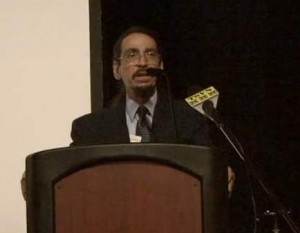
We go now to hear Glen Ford speaking at the Black Agenda Report 7th anniversary gathering at Harlem’s Riverside Church. The theme of the event was ““The Black Misleadership Class Versus the Movement and its Legacy.” Ford gives strong criticism of newly elected New Jersey Senator Cory Booker as the essence of Black misleadership, showing the many ties of the current Newark mayor to corporate America.
Glen Ford is the Black Agenda Report executive editor Glen Ford can be contacted at Glen.Ford@BlackAgendaReport.com.
——————————————————————————-
Books From Law and Disorder Hosts
Law and Disorder December 30, 2013
Podcast: Play in new window | Download
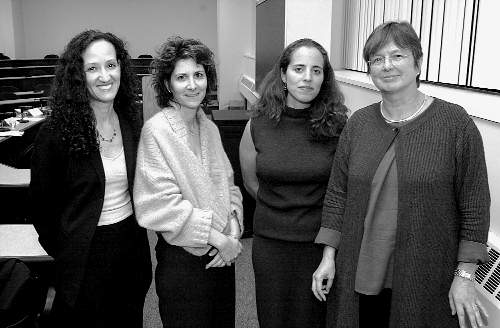
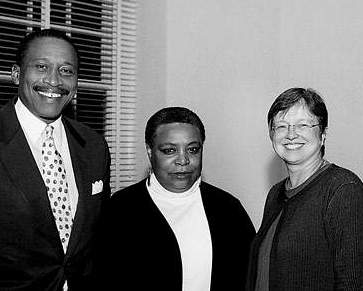
Lawyers You’ll Like: Professor Holly Maguigan
In our Lawyers You’ll Like series we’re joined by Professor Holly Maguigan, Professor of Clinical Law at the New York University School of Law, where she teaches Comparative Criminal Justice Clinic: Focus on Domestic Violence and Evidence. Professor Maguigan is an expert on the criminal trials of battered women. Her research and teaching is interdisciplinary. Professor Maguigan is a member of the Family Violence Prevention Fund’s National Advisory Committee on Cultural Considerations in Domestic Violence cases. She serves on the boards of directors of the National Clearinghouse for the Defense of Battered Women and the William Moses Kunstler Fund for Racial Justice. She is a past co-president of the Society of American Law Teachers, the largest membership organization of law professors in the U.S.
- I was doing medieval history and I was at Berkeley. It was 1967 and Oakland stopped the draft.
- I got very interested in the anti-war politics.
- I hated lawyers. I really hated lawyers. They were boring. They talked about themselves all the time. They only had stories about their cases and how great they were and they would never post bail when people got arrested.
- The University of Pennsylvania in Philadelphia is where I stayed for 17 years.
- First I started out as a public defender. I loved being a public defender, it was the beginning and end of everything I hoped it would be.
- That’s where I met David Rudovsky and David Kairys. They were then defenders while I was a student.
- After they went out on their own, they kept inviting me to join them. I kept putting it off because I loved being a defender so much.
- In Philadelphia there was much more actual litigation, not just motion litigation there’s a lot of that here in New York City but actual trials.
- You had a sense, there was an analysis that people were doing life on the installment plan and you needed to do what you could to kick them loose any particular time.
- It was a community in its own odd way and I found it difficult to leave it.
- I was doing major felonies within a couple of years.
- David Kairys was very focused on constitutional litigation and government misconduct. He did the Camden 28 which was a big draft resistance case.
- My interest was more into criminal defense.
- Grand juries (all over the country) convened to investigate the alleged transportation of Patty Hearst by the SLA from California where she had been captured.
- He was a killer. (Frank Rizzo) There was no question. More people died in police actions before or since.
- I don’t mean to suggest that all the police started out as homocidal. This was a situation which from the top down came the message if you’re a good cop then you’re going to take people out however you think you need to.
- I knew about race and class bias in the court room as much as a white woman who was middle class could know.
- I was just blown away by what happens when you add hatred of women to hatred of black people and hatred of poor people.
- Judges would go by me in the hall and say Maguigan, ahem, you didn’t give me anything this Christmas, not even one lousy bottle, you’re not getting any assignments.
- Judges would do things, like open the drawer in their chambers, and there would be wads of bills, and they’d let you know.
- I developed a specialty on women who kill men.
- In the early eighties a group in Philadelphia called Women Against Abuse began working and they did advocacy for battered women accused of crime and meant a huge difference.
- The battered women cases I was working on were quite consuming because people then didn’t know very much in how to try these cases.
- The judges expected you to plead insanity or guilty. Reasonable doubt was a consideration at sentencing not at trial.
- There were cases that did require teams. There was no question.
- I wanted to be in court. I wanted to be in the presence of that conflict between the authorities and regular people.
- I went to NYU where I taught in the criminal defense clinic for many years.
- To see students react to the great stories their clients have is just amazing.
- SALT (Society of American Law Teachers) is about who gets into law school, what they learn and who teaches them. It’s about access to justice. It’s about relating to law school as a place where you train people to do social justice. SALT’s focus is on students and teaching.
- Holly Maguigan to be honored by Society of American Law Teachers.
Guest – Professor Holly Maguigan teaches a criminal defense clinic and one in comparative criminal justice as well as a seminar in global public service lawyering and a course in evidence. She is an expert on the criminal trials of battered women. Her research and teaching are interdisciplinary. Of particular importance in her litigation and scholarship are the obstacles to fair trials experienced by people accused of crimes who are not part of the dominant culture. Professor Maguigan is a member of the Family Violence Prevention Fund’s National Advisory Committee on Cultural Considerations in Domestic Violence cases. She serves on the boards of directors of the National Clearinghouse for the Defense of Battered Women and the William Moses Kunstler Fund for Racial Justice. She is a past co-president of the Society of American Law Teachers, the largest membership organization of law professors in the U.S.
——————————————————————————-
Books From Law and Disorder Hosts