Welcome to Law and Disorder Radio
Law and Disorder is a weekly independent civil liberties radio program airing on more than 150 stations and on Apple podcast. Law and Disorder provides timely legal perspectives on issues concerning civil liberties, privacy, right to dissent and practices of torture exercised by the US government and private corporations.
Law and Disorder March 17, 2014
Podcast: Play in new window | Download
Updates:
- Hosts Discuss The CIA Spies On Senate Committee Staff Computers
- Heidi Boghosian: Goes Back To 2009 When The CIA Destroyed Videotapes of Interrogation.
- Michael Ratner: When It Was Disclosed That The NSA Is Surveilling All Of Us, She (Feinstein) Stood In Front Of Everybody And Said Oh, This Is Great.
——
Senate Democrats Help Block Key DOJ Civil Rights Division Nominee
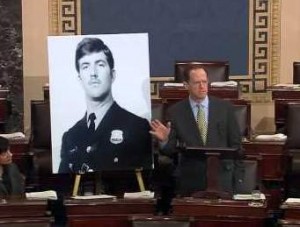
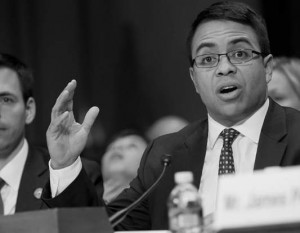
We take a looking at how a group of Senate Democrats broke ranks with President Obama to block key nominee Debo Adegbile as head of the Department of Justice’s Civil Rights Division. Seven democrats joined with Republicans to defeat Adegbile’s bid. That defeat was driven by the Philadelphia Fraternal Order of Police who launched a campaign against Adegbile and his work defending imprisoned Black Panther Mumia Abu-Jamal. Specifically, Adegbile was part of a team of lawyers at the NAACP Legal Defense Fund who successfully argued the trial judge’s jury instructions violated Abu-Jamal’s rights.
- The recent campaign has been foregrounded especially on FOX television news where you heard leading anchors and reporters connecting Dego Adegbile to Mumia Abu-Jamal.
- The Fraternal Order of Police wrote letters to media outlets. They wrote a letter to President Obama objecting to Dego Adegbile. This is fully congruent to what we in Educators for Mumia Abu-Jamal have experienced from the Fraternal Order of Police throughout the years.
- The Fraternal Order of Police will even stoop to maintaining a black list online of any of us Educators around the country not only for working for Mumia but for just for signing ads in the New York Times on behalf of Mumia Abu-Jamal’s new trial or release with restitution, whatever the case, they’ll maintain those charges.
- The Fraternal Order of Police will put pressure on venues that host the events for Mumia Abu-Jamal.
- It is a national organization and in their letter to President Obama they claim to represent some 350 thousand police officers across the country and claim to be speaking for those 350 thousand.
- There are elements of the Fraternal Order of Police all over the country who will step forward to ratchet up this venom against Mumia Abu-Jamal.
- They have always used Maureen Falkner the widow to be in the position of the grieving widow of the slain police officer in spite of the fact that there is exculpatory evidence. They don’t want to discuss that, they want to play the drama of the grieving relative instead.
- Of course that has powerful media appeal it often in our infotainment industry overrides argument, we know.
- There is a stigmatization that is pervasive throughout much of our culture that causes lawyers, public relations officers and others to back away from the issue.
- It’s an outrageous departure and betrayal of a tradition of civil rights advocacy that at least Democratic Party affiliates like to say they have supported through the years.
- We will hope that voters will make them pay a price for this kind of vote.
- We have voting rights issues because Dego Adegbile would have the job of which states to sue for Voter ID laws that are oppressive to African Americans.
- Educators for Mumia Abu Jamal
- Temple News At Temple University Ad Story.
Guest – Professor Mark Taylor, founder of Educators for Mumia Abu Jamal, a group of teachers from all levels of education, organizing since 1995 for a new a trial. Mark Taylor is a professor of Theology and Culture at Princeton Theological Seminary.
———
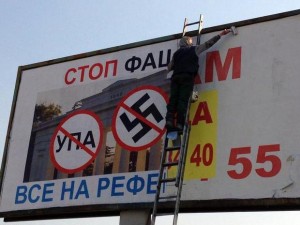
Ukraine and the Pathology of America’s Liberal Worldview. An African American Perspective
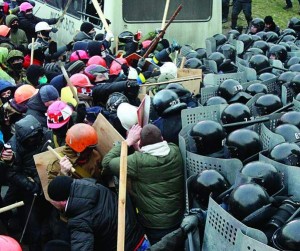
In his recent article, Ukraine and the Pathology of America’s Liberal Worldview. An African American Perspective returning guest Ajamu Baracka calls it a massive cognitive deficiency that President Obama asks Congress to agree on a billion dollar package aid for the Ukraine. Meanwhile, the elite opinion in the United States has embraced the position that cuts in public expenditures and services at every level of government are a reasonable and unavoidable necessity. Baracka says the crisis is here in the United States, with extended unemployment benefits for the 1.3 million people who lost thier jobs in Detroit.
- It’s clear that there was legitimate social opposition in the Ukraine to some of the policies of the government there and there was an attempt to express some of those concerns that were quickly taken advantage of by some elements of the Ukrainian society that are, have been associated with some of the more fascist elements that have been aligned with the far right for decades.
- Some of those right wing forces ended up being the primary shock troops engaged in all kinds of violent activities.
- A decision was made in which the protesters had won much of their demands in terms of political reforms, but that agreement was jettisoned by those right wing forces.
- The result was that basically they stormed the institutions of the government and proclaimed themselves the new government.
- There’s real danger in characterizing this as a popular revolution. It’s clear that more than half of the population of Ukraine was still not convinced that a revolutionary movement was called for and one in which violated the tenants of the Ukrainian constitution.
- It became clear that the character of this revolution was one that was not really committed to social change.
- Here we have a situation in Detroit a city that is basically bankrupt as a consequence of these predatory banks and the disintegration of the U.S. economy and its urban cores.
- When the city officials went to the administration looking for assistance of course the line was, there’s no assistance for you.
- It’s not just Detroit it’s across the country. We saw in December Congress, when striking their budget deals they eliminated extensions for the long term unemployed.
- When it comes to the American people, the working class, the poor, there’s no money, there’s only growing austerity, but when it comes to advancing what many of us call the “empire” they can always find resources.
- The one billion dollar package to the Ukraine is a stark contrast to the line – There’s no resources to bail out the people of Detroit.
- Ultimately the winners in the Ukraine chess game will be U.S. capital and there would be some European capital that would benefit also.
- Ukrainian economy will be forced to open up. The financial sector will be exposed. Banks will be taken over. Whatever state industries that are viable will be seized, privatized. There will be massive unemployment.
- The Ukrainian workers will find that their wages not only increase but probably will be further eroded because they’re in competition with other poor workers throughout western Europe.
- That’s why the U.S. is salivating at the prospects of penetrating the Ukrainian economy.
- For reasons that are not really clear to me, many folks in the west in the U.S. don’t seem to be able to recognize this growing threat. This tendency to align themselves with the most reactionary elements on the planet.
- The way I see it is a global strategy on the part of U.S. and western imperialism and the alignment they’ve made with what everybody knows to be fascist elements within the Ukraine.
- It’s similar to alignments being made in slightly different ways to the radical right in Venezuela, with the continued support to the right wing government in Israel. .
- What we see is a counter-revolutionary strategy based on closer alignments with right wing forces throughout the world.
- There’s been mass confusion, people not being able to differentiate from the left and right, all they see is opposition and the opposition is enough for them to align with it.
Guest – Ajamu Baraka, Longtime activist, veteran of Black Liberation Movement, Human Rights defender, Former founding director of US Human Rights Network, currently Public Intervenon for Human Rights with Green Shadow Cabinet, member of Coordinating Committee of Black Left Unity Network and Associate Fellow at IPS.
———————————————————————–
Law and Disorder March 10, 2014
Podcast: Play in new window | Download
Updates:
- Brooklyn Folk Festival April 18-20 2014
- Michael Smith Reads Listener Feedback: An Observation On Corporations
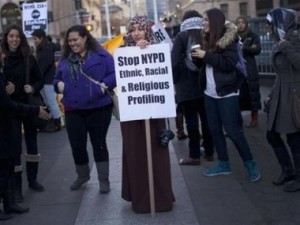
NJ Federal Court Dismisses NYPD Spying On Muslims Case
We take a look into the failed lawsuit challenging the New York City Police Department’s broad surveillance of Muslims in New Jersey. As listeners may know the case Hassan v City of New York brought by the Center for Constitutional Rights and Muslim Advocates was dismissed last month. Since 2002, the NYPD spied outside its jurisdiction on at least 20 mosques, 14 restaurants, 11 retail stores, two grade schools and two Muslim Student Associations in New Jersey. The monitoring included using racial and ethnic profiling systems, video surveillance, photographing, community mapping and infiltration.
- It was very troubling for me too Michael. At Rutgers where I teach, we found out that the NYPD had a safe house just off of our New Brunswick campus.
- It’s really troubling that student groups on my campus not to mention grade schools and Muslim book stores and community centers have been invaded.
- It’s created a chilling sentiment among the Muslim community. People self-censor, they’re afraid that what they say will be used against them in entrapment cases.
- This decision by this judge is completely stunning. The logic that he puts forward and I’m reading from his ten page report. He says “the police could not have monitored New Jersey for Muslim terrorist activities without monitoring the Muslim community itself. The motive for the program was not solely apparently to discriminate against Muslims but to find Muslim terrorists hiding among ordinary law abiding Muslims.”
- If you examine what he says, the notion that there are terrorists in the Muslim community, therefore its alright to go out and spy on them.
- It’s based on the notion that somehow Islam serves to radicalize Muslim Americans into performing political violence.
- This program has been active since 2002, but there hasn’t been one terrorism related lead, let alone any kind of conviction.
- Since the events of 9/11 there have been all sorts of pseudo-scientific attempts to show that somehow the religion Islam creates political violence.
- If you look at Hamas, the group in Palestine, they’ve gone to the Quran to justify violence as well as to justify cease fire.
- It’s politics really as the key reason why people turn to violence and so to somehow blame Islam, this is a form of cultural racism.
- What this means is that the NYPD can go around with impunity and spy on religion minorities, not just in New York City, but in New Jersey, in Connecticut.
- It sends a green light to other police departments across the country as well as the FBI which has similar programs.
- He (Judge Martini) justified his ruling referring to a case in the Supreme Court. I think we have a lot of work to do ahead of us in pushing back against this racist logic.
- Some people claim that there isn’t racism against Muslims because Muslims aren’t a race.
- There’s tremendous variation between human to human in terms of our genetic make up and 85 percent of this variation occurs within a so called race.
- Why are we calling it racism? Because its a form of cultural racism, because its based on the premise that Islam somehow creates an ideology, it creates a culture that programs people to act in violent ways.
- The reason why people turn to violence often is because peaceful movements failed.
- I’m currently working on a book on the cultural logic of the national security state.
- If you look the campaigns If You See Something, Say Something. What’s being asked of you is to become an agent of state surveillance.
Guest – Deepa Kumar, an Associate Professor of Media Studies and Middle Eastern Studies at Rutgers University. Her work is driven by an active engagement with the key issues that characterize our era–neoliberalism and imperialism. Her latest book is Islamophobia and The Politics of Empire by Haymarket Books and is in response to the events of 9/11, the Bush administration launched a “war on terror,” ushering in an era of anti-Muslim racism, or Islamophobia. Her first book, Outside the Box: Corporate Media, Globalization and the UPS Strike (University of Illinois Press, 2007), is about the power of collective struggle in effectively challenging the priorities of neoliberalism.
—–


Net Neutrality – Time Warner/Comcast Merger
A merger of media cable giants Comcast and Time Warner Cable threatens net neutrality. Comcast intends to take over Time Warner for more than 44 billion dollars in stock. This proposed merger would unite the nation’s largest cable TV and internet service provider with the second largest cable company. If combined, these companies would offer service to two thirds of U.S. households. The deal must be approved by the U.S. Justice Department and the FCC.
- What we would have here is a 45 billion dollar deal combining the nation’s largest and second largest cable company.
- They face some competition especially from video from satellite providers.
- The place where they don’t face competition at all is on the broadband platform.
- This deal would strengthen them both in their cable TV programming dominance and on the broadband side too.
- You’d have one company that reaches two thirds of the country and its the only option some people have for advanced communications services, putting video and broadband together.
- That would give tremendous power of everything we see on both TV and online. Comcast is already a must have for any independent programmer.
- For even web providers such as Netflix.
- Even without that horizontal competition today between Comcast and Time Warner cable this is not good news for the American people, for free expression, for lower prices, for anything we care about.
- Net-neutrality means preventing unreasonable discrimination against content.
- Verizon went to court and had these net neutrality rules struck down that the FCC put forward.
- They (Verizon) said they internet is really like a newspaper than it is like a phone system and what that means is that we at Verizon should have editorial discretion over the internet content we transmit.
- An internet service provider used to be somebody you went to who rode over the top of an open phone system. Right? Back in the dial up days there were a number of internet service providers and you could switch from one to the other.
- Internet content should not be regulated by the Federal Communications Commission full stop yet the communications network that we all use to get online is something where have to have a public oversight role and a certain degree of universality, affordable and openness.
- Susan Crawford talks about these issues as well. She said “What the companies want to do is confuse the conversation for the sidewalk.”
- We need these rules to keep open the sidewalks, to keep open the public spaces and this concept of public communications network that serves everybody.
- The twin review by the FCC and the Department of Justice might seem cumbersome but they have different mandates.
- DOJ and the FTC are looking to prevent a decrease in existing competition.
- The FCC has a broader mandate to make the sure the deal is actually in the public interest.
- Comcast bought up NBC only 3 years ago. Since then, AT&T tried to acquire T-mobile.
- Verizon has almost 50 percent of the entire (wireless) industry’s profits.
Guest – Attorney Matt Wood helps shape the policy team’s efforts to protect the open Internet, prevent media concentration, promote affordable broadband deployment and prioritize a revitalized public media. Before joining Free Press, he worked at the public interest law firm Media Access Project and in the communications practice groups of two private law firms in Washington, D.C. Before that, he served as editor-in-chief for the Harvard Civil Rights-Civil Liberties Law Review, worked for PBS, and spent time at several professional and college radio and television stations. Matt earned his B.A. in film studies from Columbia University and his J.D. from Harvard Law School.
—————————————————————
—
Law and Disorder March 3, 2014
Podcast: Play in new window | Download
Updates:
- NLG Submits Testimony to Senate Judiciary Subcommittee on Solitary Confinement
- NLG Calls on President Obama to Protect Consumer Privacy Rights
- NJ Judge Dismisses Case Against NYPD Alleged Unconstitutional Surveillance of Muslims
- Remembering Chokwe Lumumba
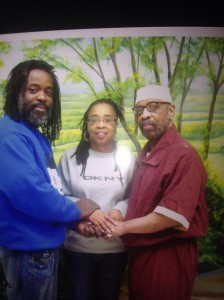
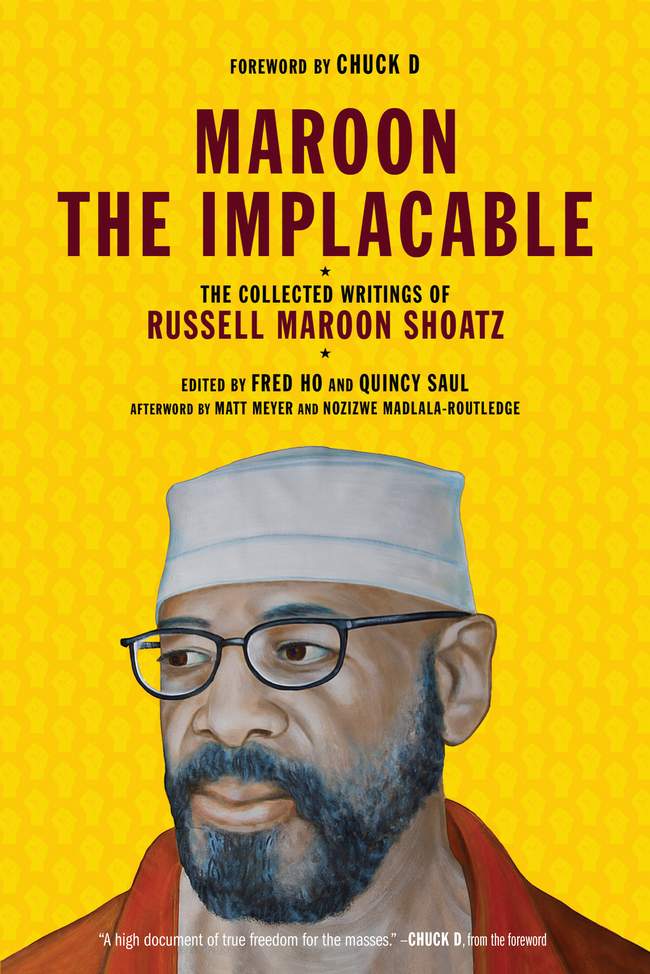
Russell “Maroon” Shoatz Released Into General Population After 22 Years of Solitary
Here on Law and Disorder we’ve been keeping you updated on the campaign to release Russell “Maroon” Shoatz from solitary confinement. We’re heartened to broadcast the news that he has been released from solitary confinement and is now in the general prison population. Maroon has spent 40 years in the U.S. prison system and 22 of those years were spent under intense lock down. He was allowed only one hour a day outside of that cell. In May of 2013 Maroon brought a lawsuit on the grounds that he was subjected to cruel and unusual punishment in violation of the Eighth Amendment of to the U.S. Constitution and that he was denied his legal rights to proceed with a case.
- We had a legal phone scheduled to take place Thursday February 20, when we received notice from the prison that the housing unit that he was in. The restricted housing unit was not going to be able to facilitate that phone call because he was not longer on the unit.
- I received a call from him at 1PM confirming that he had been released from solitary confinement just hours before that very morning. We notified his family. That same night he had his first contact visit in more than 20 years when his son Russell III, and his daughter Sharon were able to go see him. There’s a real wonderful picture of the 3 of them circulating on the internet.
- A constellation of forces and various tactics and strategies that had been deployed over a course of 3 years of renewed, reinvigorated effort to get Maroon out of solitary confinement.
- It started back in August of 2010 when State Representative Ron Waters held a hearing on solitary confinement in front of the House Judiciary Committee and Maroon’s daughter Theresa Shoatz was there and seeing former survivors of solitary confinement and advocates testify in the presence of DOC officials and state legislators inspired her.
- She said on that very day. I remember it crystal clear. “I’m going to get my Dad out of solitary.”
- That began a series of advocacy efforts including phone calls, including action alerts that saw the construction of a coalition of more than 30 organizations including the National Lawyers Guild, the Center for Constitutional Rights, the Human Rights coalition in Pennsylvania.
- There was no change in condition or indication that anything was going to change until late March of 2013. What had been happening at that time was Maroon was getting increasing visits from lawyers. There were more correspondence coming from the legal team.
- Right when we were about to send the Department of Corrections our demand letter that he be released in 30 days or else they’d be hit with a civil rights lawsuit, they abruptly without any notice that this was going to happen, transferred him from the state correctional institution at Greene where he’d been for 18 years to SCI Mahanoy.
- In my experience of 6 years of being a human rights advocate for prisoners in Pennsylvania, I’ve never heard of prison officials going to somebody in the solitary units and telling them we’re going to do what you want.
- In the process of constructing this massive imperial prison state they have resorted to similar ideology, punitive ideologies and tactics to manage that prison population once they’re behind the walls, and that includes widespread use solitary confinement in a way that is qualitatively different than it had been used throughout most of the 20th century.
- It had been used as a long term affirmative strategy for managing the prison population for warehousing for people that were problematic for prison officials because maybe they filed a lot of grievances, or they were jailhouse lawyers, maybe they were political prisoners or dissidents . . .
- In the 30 years that this has been ongoing, there have been waves of activism that really at the outset were led by people like Bonnie Kerness, director of AFSC’s Prison Watch Project.
Guest – Attorney Bret Grote, a member of the Russell Maroon Shoatz legal team and the Abolitionist Law Center. Bret has worked with the Human Rights Coalition since 2007 as an investigator, organizer, and researcher. He was the Isabel and Alger Hiss Racial Justice Fellow at the Center for Constitutional Rights in 2012. He graduated from the University of Pitt Law School in May 2013 and was recognized as the school’s Distinguished Public Interest Scholar.
—–
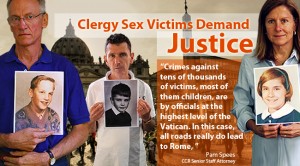

U.N. Expresses “Deepest Concern” over Widespread Sexual Abuse by Clergy
Here on Law and Disorder we continue to report on the work of the Center for Constitutional Rights and SNAP, the Survivor’s Network of Those Abused By Priests in bringing accountability within the Catholic Church for widespread sexual violence against perhaps hundreds of thousands of victims, mainly children. Recently, the Vatican was summoned before the United Nations Committee On the Rights of the Child to respond to allegations of systemic sexual violence and practices that have allowed abuse to continue.
- We were in Geneva with members of the Survivors network, those abused by priests because the Vatican was having to report to the UN Committee of the Rights of the Child for the first time ever on the issue of sexual violence.
- This is in the wake of more than a decade of scandals that have broken out in different parts of the world and investigations in different countries which really revealed that the Vatican has a system in place that actually facilitates this widespread sexual violence.
- The treaty set up a committee of independent experts. Their job is to see compliance with the treaty and review different countries that have ratified this convention, basically in a dialogue with them in how they’re complying with the treaty, protecting children’s rights.
- The committee had asked for data on the scope of sexual violence. The information the Vatican has about it. What was done in these cases, with individual priests but also evidence of higher officials who helped cover up these crimes around the world.
- Vatican officials are claiming that this is a thing of the past and that they’ve made changes. They point to 2011 when Pope Benedict issued a new set of guidelines, essentially an instruction to Catholic authorities around the world that they should comply with civil laws.
- We’ve seen similar types of policy and language in the U.S. We’ve seen similar language in Ireland. But what has happened in Ireland and the U.S. is in that realm, officials at the Vatican have overridden the national level bishops plan to require mandatory reporting of sexual violence.
- The same practices are happening behind the policies, and the policies have no teeth.
- You have a former archbishop in Wisconsin who has talked about shredding documents on a routine basis under sworn testimony, he had admitted to this, but the priest-shifting is just common. One former cannon lawyer said its part of the DNA of the church.
- We know sexual violence can occur in every institution but when you have a closed system like the Vatican that is saying it can police itself and its really not. It’s actually continuing to enable – they (the committee) got the way it was operating and that was really important for the survivors to be there and they called them out on that.
- It’s not just putting the blame on individual perpetrators, its about changing the system fundamentally and the way it operates.
- We’ve seen Vatican officials come out in two ways and criticize the report. One is the focus on the committees questions about non-discrimination issues.
- The treaty is a wide ranging treaty that sets out a number of rights that are to be protected, respected and fulfilled by the state’s parties.
- The Vatican has operated as a state when its convenient and then falls back to its religious entity status when its not convenient to be a state.
- What’s coming up next is UN Committee Against Torture has decided to call the Holy See for review. That will be happening in April, again in Geneva.
Guest – Pam Spees, senior staff attorney in the international human rights program at the Center for Constitutional Rights. She has a background in international criminal and human rights law with a gender focus, as well as criminal trial practice. She serves as lead counsel on several of CCR’s cases and initiatives including, Sexual Minorities Uganda v. Lively, a case brought against a U.S. based anti-gay extremist for his role in the persecution of LGBTI people in Uganda; Murillo v. Micheletti, a case brought by the parents of a youth killed by the coup regime in Honduras; and in the legal effort to hold Vatican officials criminally responsible for the crimes against humanity of rape and sexual violence within the church.
——————————————————————————————