Welcome to Law and Disorder Radio
Law and Disorder is a weekly independent civil liberties radio program airing on more than 150 stations and on Apple podcast. Law and Disorder provides timely legal perspectives on issues concerning civil liberties, privacy, right to dissent and practices of torture exercised by the US government and private corporations.
Law and Disorder September 30, 2013
Podcast: Play in new window | Download
Updates:
—-
Economic Update: Professor Rick Wolff
We welcome back returning guest Professor Rick Wolff to get an economic update. Recent news of Janet Yellen emerging as a frontrunner to succeed Ben Bernanke as Federal Reserve chairman garnered the support of many Democrats in the House and Senate, yet she urged to lower payments for senior citizens on Social Security and voted to repeal the Glass-Steagal Act. Meanwhile, President Obama with the support of the Republican Party has targeted Social Security and medicare for cut backs. We talk about these topics and more with Professor Rick Wolff who hosts Economic Update on WBAI Saturdays at Noon.
- The Federal Reserve is an enormously important institution all of the time.
- It has nothing less than the mandate in this economy to control and manage and manipulate the monetary system.
- It is a wonderful reality to throw at anyone who thinks we live in a free market economy where the government plays a marginal role.
- When the government controls the quantity of money and the cost of borrowing it, its not a marginal role, its most central role a government can play.
- We have a dysfunctional Congress and President who can’t figure out what to do, unwilling to take serious steps to deal with this crisis, leaving it to the Federal Reserve.
- We are now in the worst economic crisis since the Great Depression.
- Clearly, now that we’re entering the 6th year of this calamity, and we have huge unemployment, huge foreclosures, the Federal Reserve also failed to make it short and shallow it is in fact long and deep.
- Ms. Yellen’s nomination would go through quickly and more smoothly than Summers would have. Obama and his folks don’t want a big review of how they manage the economic system since its an unmitigated disaster.
- Enough extreme right Republicans exist now in the House of Representatives to make serious the threat of denying the Federal Government the right to raise the debt ceiling.
- The President has already signaled his willingness to compromise with Republicans around Social Security, Medicare and Medicaid.
- There’s a long standing debate about measurements on the cost of living. That’s a very difficult thing to do and perfectly reasonable economists disagree.
- All they’ve done is picked the one that looks the smallest (cost of living for Social Security) to use as a benchmark to therefore give the smallest increase.
- The first thing you should understand, which is an outrageous injustice, is that the money for Social Security is only withheld from a wage or a salary.
- It’s not withheld if you earn interest income, if you earn dividend income or if you earn capital gain income.
- That’s why the tax for Social Security is called a payroll tax.
- Currently, its a payroll tax but its only on the first 113 thousand dollars a year that you earn.
- For every dollar above 113 thousand, you don’t pay anything.
- Saez and Piketty
- The inequality of wealth in the United States has gotten much worse in the last 30 years and more interesting has gotten worse across this crisis.
- That’s interesting because in the Great Depression, the crisis collapsed the gap between the rich and the poor.
- The top ten percent of American income earners this last year 2012, took home more than half the total income.
- Ten percent have half the income and the other 90 percent share the other half.
- The 400 richest people in America have more total net worth than half the population.
- There’s been movement of sheer outrage of what it means when you read about this extraordinary wealth that some people are earning 7.25.
- There are signs of upset within the United States beginning to build around this. (inequality of wealth)
- We have a minimum wage at the federal level, 7.25. We also have state minimum wages that vary all over the place.
- We have now a situation where wealth is so concentrated at the top that the folks who have that wealth understand perfectly the situation. They love the way the economy is going. They’re gathering the wealth into their own hands, but they’re not stupid.
- They understand that when you concentrate wealth that much you’re creating an impossible tension between an ostensibly democratic political system where universal sufferage means the mass of people vote on the one hand, and their concentrated wealth.
- “We have to worry that the political system will be used by the masses to undo politically the benefits we get economically.”
- A billionaire from California buys the Washington Post and a billionaire from Boston, buys the Boston Globe.
Guest – Richard D. Wolff is Professor of Economics Emeritus, University of Massachusetts, Amherst where he taught economics from 1973 to 2008. He is currently a Visiting Professor in the Graduate Program in International Affairs of the New School University, New York City. Democracy At Work.
—-


Lawyers You’ll Like – Attorney Jan Susler
Attorney Jan Susler joined the People’s Law Office of Chicago in 1982. Before that she worked as a Clinical Law Professor at the legal clinic at Southern University’s School of Law, Prison Legal Aid. Susler continues to her litigation and advocacy work on prisoner’s rights issues and also represents people wrongfully imprisoned, falsely arrested, strip searched or subjected to excessive force by police officers.
- The National Lawyers Guild was an amazing refuge. When I went to law school women were 10 percent of the class and really resented.
- It was a hostile environment, lots of rich white boys who thought they were all that.
- The GI Bill actually even things out class-wise which was a delight.
- I worked at Legal Aid, while I went through law school it kept me sane. My first job was at Law School Clinic.
- We provided civil legal services to state prisoners.
- Through the process of doing abortion rights work, anti death penalty work and prisoner’s rights work through the Guild, and then I met the folks at the People’s Law Office.
- Even to today, there’s only a handful of people who do that work and we tend to know each other.
- Michael Deutsch whose been my law partner for the last 3 decades called me up and said we have a couple of Puerto Rican radicals who have been sent to the state prison near where you’re doing your work and you need to go see them. They’re quite at risk the state considers them to be enemies.
- I knew nothing about Puerto Rico being a US colony, having been invaded, them resisting colonialism. I learned about international law making it a crime against humanity.
- They really opened my world, what gift its been for me.
- The National Lawyers Guild created a Puerto Rican project to work with Puerto Rican lawyers and activists in the Independence Movement and people who were trying to get the Navy out of the small Puerto Rican island of Vieques.
- It’s culminating in this wonderful convention we’re going to have in the middle of October in San Juan.
- There’s going to be a panel and workshop on the death penalty in Puerto Rico which the US imposes on its colony.
- There will be workshops about labor, and political prisoners.
- I think people in this country understand who Nelson Mandela is and what he stood for and sacrificed and what he meant for his country. These men and women are the same for the people of Puerto Rico.
- They were artists and working in universities. Most had college degrees, but really understood that colonialism is a crime against humanity.
- They organized clandestinely into an organization called the Armed Forces for National Liberation. They were arrested in the early 1980s and accused of seditious conspiracy.
- My job was to advocate for their human rights and educate about their situation. They refused to accept the jurisdiction of a US court.
- For the National Lawyers Guild, I’ve gone to the United Nations Decolonization Committee to present.
Guest – Attorney Jan Susler, In her 36 years as a lawyer, Jan Susler has worked with the Puerto Rican Independence Movement and with progressive movements challenging U.S. foreign and domestic policies. She was an adjunct professor of criminal justice at Northeastern Illinois University, and taught constitutional law at the University of Puerto Rico. Attorney Jan Susler joins us today as a guest on our Lawyers You’ll Like series.
——————————————————————
Law and Disorder September 23, 2013
Podcast: Play in new window | Download
——

Corrections Association Program Releasing Aged Prisoners
Here on Law and Disorder we’ve reported about the Compassionate Release Program regarding Lynne Stewart’s condition. The CRP is designed to reduce the number of elderly and sick in prison, if they have a terminal health condition or a significant and permanent non-terminal health condition, disease or syndrome. This program is part of a larger effort to release aging prisoners in the United States. Nationally, the number of prisoners over age 55 nearly quadrupled from 1995 to 2010, eight times the pace of growth for the total prison population, according to a recent Human Rights Watch report. Because of long sentences handed out in the 70’s and 80’s, American prisons now serve as quasi-nursing homes, albeit lacking the long-term care we associate with geriatric facilities. We talk today about a major new initiative called the Corrections Association Program Releasing Aged Prisoners that’s working to make prison parole boards correctly assess elderly prisoner risk and get them out.
- In New York State, there are about 9200 at the moment above the age of 50.
- By 2030, its estimated that about a third of the entire incarcerated will be over the age of 40. There will be at least 400 thousand.
- For the last 20 years this country has been drunk on the concept of lock em up and throw away the key.
- You lock em up and throw away the key. . .they’re gonna get old.
- Our project is called Releasing Aging People In Prison.
- These people have done a lot of time and the lowest rate of recidivism is in this group. They’re over the age of 50, have done 15-20 years in prison and have committed murder.
- This group is ready to be released without a threat to public safety.
- You’ve advocated for Lynne Stewart on this show for compassionate release. She’s in the Federal System.
- The Feds are very stingy with compassionate release, so is the state of New York. In 2011, I think it was, they let out 8 people on compassionate release, in a year when 200 people died in the system.
- I’m now 68, but I feel about 78 on some days.
- We don’t really need a new law to release the people we’re talking about.
- What we need is the parole board to follow the law. What we need is the state to follow the law for compassionate release for those who are ill.
- One thing we’re doing is we’re trying to join with other people in the state who’ve had enough of the way that parole board denies people over and over again and say use actual risk assessments that do exist.
- If the risk is low let them go.
- RAPP – Release Aging People In Prison – Harlem, NY – 2090 Adam Clayton Blvd, NY – 212-254-5700
- Email – mfarid@correctionalassociation.org
- www.nationinside.org/campaign/release-of-aging-people-in-prison
- The issue of mass incarceration has many facets. The impact on some communities is from the cradle to the grave.
- The prison population has somewhat stabilized. It’s still at a rate that beats out every other country. Although that rate has stabilized it hasn’t done so with the elderly.
- In New York State, the prison population has gone down 24 percent in the last 10 years.
- During that same 10 years the population of the elderly (in prison) increased by 64 percent.
- The zeitgeist in this country is about punishment and never giving up on punishing a person, especially those committed for serious crimes.
- In my own case, I had a sentence of 15 years to life, you would assume if I did the minimum sentence, if there were indications I had rehabilitated myself and shown that I was a changed person that I would’ve been released. But that didn’t happen. I served 18 years above and beyond that 15 year sentence.
- The sentencing structure that allows what we’re talking about is called an indeterminate sentencing structure. That means you’re given a minimum and a maximum.
- Some people get 10 to 20, some people get 10 to 15, and other with the most serious crimes get a number and on the end they get letters.
- In that indeterminate sentencing structure, there’s an indication that the prisoner should be released if they’re reformed or rehabilitated at that minimum posed term.
- In my case, I received a 15-life on attempted murder of a police officer. He didn’t get a scratch.
- That was the least amount imposed on me, I couldn’t get any less.
- So a person who is serving a sentence such as that would have an expectation of 15 years or whatever they have to be released if they change.
- To not give them a reason for the denial, saying its the nature of the crime, takes away hope from a person.
- I was arrested in 1978, I went upstate within 6 months. Before that 6 months came I had earned my GED. I did that while facing trial.
- I went upstate with no expectation of serving 15 years. I actually thought that because of the facts I was convicted for that I would eventually win on appeal.
- Within a few years, I had earned an Associates Degree in Business. I went on and got a Bachelor’s Degree in Liberal Arts.
- Shortly after that, I earned a Master’s Degree in Sociology and then I earned another Master’s Degree in Ministry.
- All of that happened before that 15 year period.
- None of that was considered by the parole board when I entered that 15 year mark.
- They simply denied me and didn’t give me any guidance of what I could do to better myself to earn release.
Guest – Laura WhiteHorn is an ex-political prisoner and native New Yorker, who was active in supporting groups such as the Black Panther Party, the Black Liberation Movement and was active with Students for a Democratic Society and the Weather Underground. Laura also worked to expose the FBI’s Counter Intelligence.
Guest – Mujahid Farid is investigating potential mechanisms for increasing release rates for incarcerated aging people at the Correctional Association in New York. He’s spent more than three decades incarcerated in New York and co-founded the Prisoners AIDS Counseling & Education program and helped design prison-based sociology and theology courses that allowed others to earn college-credited in prison. He also earned four college degrees and other certifications while in prison, including his paralegal certificate, New York State Department of Labor Certificate in Human Development Counseling, and New York City Department of Health Certificate in HIV/AIDS Counseling.
——-
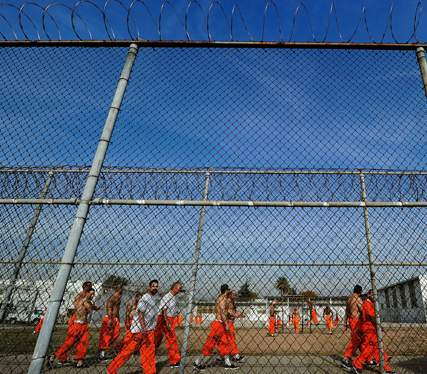
Mandatory Minimum Sentencing Circumvented For Non Violent Drug Offenders
When Attorney General Eric Holder announced that the Justice Department would begin reassess the harsh mandatory minimum sentences on non-violent drug offenders that unfairly target young African Americans and Hispanics, some drug reform advocates said it was a breakthrough. However, our guest Ethan Nadelmann, executive director of the Drug Policy Alliance, says there was no mention of clemency or pardons for those imprisoned with disproportionately long sentences. Attorney General Holder did mentioned that the United States represents about 5 percent of the world’s total population and it incarcerates nearly 25 percent of the world’s prison population. The Drug Policy Alliance has made great strides in criminal justice reforms and to help decriminalize marijuana in states such as Colorado and Washington.
- Early on in the first term, President Obama and Attorney General Holder working with Drug Policy Alliance and a whole range of allied groups did actually change the penalties, the mandatory minimum for crack cocaine.
- Then they dropped the ball. They did nothing in the following years.
- The substance of the speech (recent by Holder) was important. By saying he was going to issue explicit directives to US attorneys around the country that would effect the way they charge people especially low level players in drug trafficking organizations. They’re really pushing this through in a bipartisan way.
- I think he (Holder) does regard this as a legacy issue.
- Obama has recently mentioned incarceration and the need to reduce it in the context of memorializing Martin Luther King Jr.
- We’ve seen the drug law violators from 65 percent of the total of federal prisoners to 48 percent of the total even as the absolute numbers have gone up.
- I think we’re going to see low level drug violators charged in different ways. One thing about mandatory minimums is they shift the discretion from judges to prosecutors.
- Mandatory minimums empower prosecutors at the hand of judges.
- I think what we’ll see is a downshifting in how much prosecutors are looking for. We’ll see fewer people going to prison on federal drug charges.
- Legislators are notoriously resistant to having sentencing reforms be retroactive. They’re willing to say going forward we’ll reduce the sentence but we’re not going to touch the issue of the people who are locked up under the old laws.
- I bet we would see some movement on behalf of the people who are behind bars as well.
- Non violent drug law offenders, sitting there for 10 or 20 years. Statewide 20 percent of all inmates are in for drugs and in the federal prisons its 50 percent.
- Half of all drug arrests in America are for marijuana. Overwhelmingly for marijuana in small amounts.
- When states move forward with the ballot initiative process to legalize marijuana either for medical purposes, which 20 states have now done, or more broadly for all adults which Washington and Colorado have done, that presents a basic issue for the federal government.
- What the US attorney general’s office can do is offer guidelines saying to US attorneys around the country, here are our priorities, here’s how we think you should handle this.
- The feds are basically saying, we get it. That legally regulating marijuana may accomplish the objectives of federal drug control, more effectively than continuing an ineffective prohibitionist policy.
- New York was one of 11 states that decriminalized the possession of marijuana of less than ounce, back in the 70s. Which means you could have less than ounce in your pocket or home and its like a traffic ticket.
- But if its in public view, than you can be arrested. It’s a misdemeanor offense.
- New York is the only state in the Northeast that hasn’t legalized medical marijuana.
- Every 2 years we organize the leading gathering in the world of people who are against the drug war. (reformconference.org) Denver, CO – Oct 4, 5, 6
Guest – Ethan Nadelmann, founder and executive director of the Drug Policy Alliance, the leading organization in the United States promoting alternatives to the war on drugs.
——-
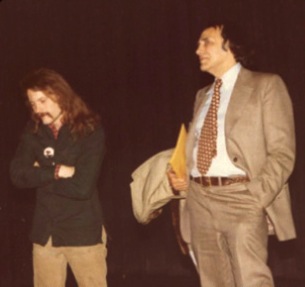
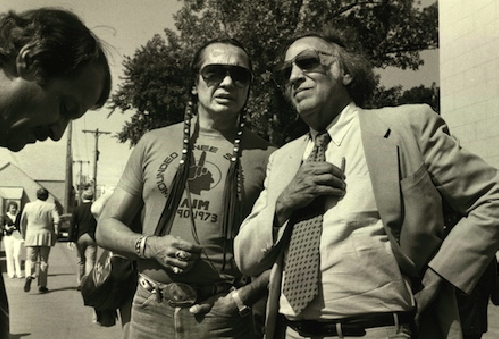
William Kunstler’s Performance at Caroline’ Comedy Club
We hear a part of William Kunstler’s presentation at Caroline’s Comedy Club. This was his last public appearance. He shares a great story about a particular dialogue with a judge and an envelope of marijuana.
———————————————————————–
Law and Disorder September 16, 2013
Podcast: Play in new window | Download
Updates:
- Lynne Stewart’s September Letter
- National Lawyers Guild Letter Urging Compassionate Release For Lynne Stewart
- Chuck D Performance In Philadelphia and Mumia Protest
- US Pulling Back From War?
- NSA Shares US Intel With Israel – Guardian
- Barrett Brown Case: Gag Order
—–
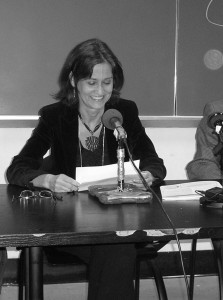
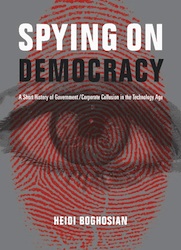
Spying on Democracy: Government Surveillance, Corporate Power, and Public Resistance Part II
This is part 2 of our interview with our own Heidi Boghosian who wrote the newly published book is titled Spying On Democracy: Government Surveillance, Corporate Power, and Public Resistance and it reveals in detail how the government acquires your information from sources such as telecommunications companies to compile a data base on “persons of interest.” Since ex-CIA staffer Edward Snowden’s release of top secret documents to the Guardian and Washington Post many are now aware of the frequency and scope to which they are being monitored. What this book has unveiled is how your personal consumer data is being gathered, bundled and sold. The spying, the collecting of phone records, accessing your online activity, all of it is unconstitutional says Heidi Boghosian, co-host of Law and Disorder and the National Lawyers Guild’s Executive Director.
- They create dossiers of our spending habits, of our communication habits.
- The corporations benefit from this which makes them create more equipment for surveillance and almost makes it impossible for the government to perform traditional government functions because they’re so reliant on corporate partners.
- There’s also a revolving door among CEOs of these big companies and high level positions within government intelligence.
- The National Lawyers Guild was spied on by the FBI. More than 1000 agents were assigned to us for nearly 3 decades. They rummaged through our members garbage. We had an infiltrator in Washington DC serving as a staff person.
- They tried to label us (and failed) as a subversive organization.
- The People’s Law Office had also been monitored for years. Apparently across the street from the office an apartment was taken by the FBI who spied on them for their work representing politically active individuals.
- With all of this spying, the chilling effect of knowing that you may be spied on, you conversations may be listened to, changes the way you do business.
- I’ve always been interested in cooperation between municipal public police and private security organizations.
- We’re seeing an entire industry giving birth to Stratfor and other intelligence organizations that exist just to conduct intelligence be it on activists or critics of corporate or government policies, as well as defense contractors beefing up and creating a whole sector of intelligence.
- They are in big contracts with the US government.
- One of the problems constitutionally is they’re not held as private businesses to the same strictures as the US Constitution as we saw recently with the Hemisphere program revelations. We have our government paying AT&T staff to sit next to drug enforcement officers and go through AT&T’s files that go back 26 years. They’re not overseen by a judge.
- My question is how many more agencies of the government are doing this?
- They are getting access to this information through what’s called administrative subpoenas.
- Many mannequins have small cameras embedded in the eyeballs.
- When you’re spying on the fourth estate as its called which is intended to be a watch dog on government you really get to the heart of what democracy is about.
- Without a free press, we don’t have any chance of preserving those fundamental freedoms of First Amendment association and the ability to bring our grievances to the government for redress.
- A student group working with the Coalition of Immokalee Workers got suspicious because a new member on their listserve started asking questions and they did some research and found she owned her own private security company, in fact she was spying on them for Burger King.
- Congress is calling for an investigation for these large data aggragators. Once again, there’s no oversight, there’s no accountability, they go to a variety of sources to gather personal information on us. Some in the public domain, others not.
- They have vast troves, electronic dossiers on each of us.
Guest – Heidi Boghosian, executive director of the National Lawyers Guild. She is the co-host of the weekly civil liberties radio show Law and Disorder on Pacifica’s WBAI in New York and over 40 national affiliates. She received her JD from Temple Law School where she was the editor-in-chief of the Temple Political & Civil Rights Law Review. She also holds an MS from Boston University and a BA from Brown University.
—–

Syria: U.S. Humanitarian Intervention
What is the difference between an illegal war and humanitarian intervention? At the 2005 United Nations World Summit, government leaders agreed unanimously that “each individual State has the responsibility to protect its populations from genocide, war crimes, ethnic cleansing and crimes against humanity.” If a state fails to protect its own citizens from such atrocity as its known, the agreement implies a collective responsibility of humanitarian intervention upon other agencies. President Obama has threatened to use military force against Syria and recently commented during a speech that “we cannot and must not turn a blind eye to what happened in Damascus” The US, however has in the past, turned a so called blind eye to other alleged chemical weapons attacks in other countries. Why would President Obama now want to go forward with a Navy missile strike in Syria and try to do so without UN Security Council approval?
- There’s no basis in international law that allows the US or any sovereign state to take that kind of unilateral action.
- This notion of humanitarian intervention and this responsibility to protect, is a particular type of creation that’s been cooked up in the west that has provided some kind of moral justification to engage in unilateral action on behalf of the world community.
- To circumvent the United Nations and impose their own vision and understanding of international order on any nation they see fit.
- This is no more than a dressed up, rearticulation of the white man’s burden.
- This notion that the US and the European, ex-colonial nations, have a right and a responsibility to impose their particular interests and world views on the rest of humanity is a notion that needs to be rejected but its something that many people in the west have embraced.
- It was the foundation for the NATO intervention of Libya. It has been the justification for intervention in Kosovo.
- It’s been very skillfully implanted into the minds of many people in this country as a justification for unilateral actions on the part of the US or in conjunction again with European allies.
- What about the images we were bombarded with, the rows of piled up bodies in Egypt? Why are those lives less important than those who died in Syria?
- Is it the mode in which they were murdered, gas as opposed to US supplied weapons?
- I think the US objective is the dismemberment of the Syrian state. They are in almost a win-win situation. Either they affect regime change and allow this motley crew of oppositional forces much aligned with jihadist movements, come to power or they force the state to become a non-functional state.
- The long term objective is to further isolate Iran, to diminish the power of Russia.
- Right at the moment when it was clear that the Assad government had turned the tide militarily on the ground, the US decided it was going to intervene to effect the equalization of forces in Syria.
- The US found itself in a very unique isolated position. Kerry has been given an opportunity to pull back from this ill-advised strike.
- I think the Obama Administration is one of the most effective weapons ever deployed against the progressive and radical movement here in this country, perhaps in the whole post-war period.
- He had been the answer to Ronald Reagan, but even a more effective communicator.
- A more effective demobilzer if you will. (Obama Administration) has demobilized the anti-war movement, it has disarmed radicals, confused traditional liberals.
- I think we use this last incident to intensify the conversations around exposing the interests of this administration.
Guest – Ajamu Baraka, Longtime activist, veteran of Black Liberation Movement, Human Rights defender, Former founding director of US Human Rights Network, currently Public Intervenon for Human Rights with Green Shadow Cabinet, member of Coordinating Committee of Black Left Unity Network and Associate Fellow at IPS.
———————————————————————–