Welcome to Law and Disorder Radio
Law and Disorder is a weekly independent civil liberties radio program airing on more than 150 stations and on Apple podcast. Law and Disorder provides timely legal perspectives on issues concerning civil liberties, privacy, right to dissent and practices of torture exercised by the US government and private corporations.
Law and Disorder August 19, 2013
Podcast: Play in new window | Download
Updates:
- Stop and Frisk Victory
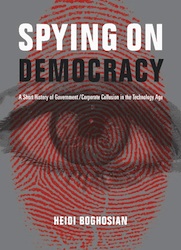
- Spying on Democracy: Government Surveillance, Corporate Power and Public Resistance.
—-

Lynne Stewart: Compassionate Release Decision
Last week Federal District Court Judge Koetl in New York stated he couldn’t consider Lynne Stewart’s request for compassionate release because by law the request needs to come from the Federal Bureau of Prisons. Judge Koetl also pointed out that the Bureau of Prisons didn’t properly consider Lynne’s medical evidence by saying her condition was improving. Meanwhile, Lynne’s doctors have given her a prognosis of 24 to 18 months to live.
Attorney Jill Shellow Levine:
- One of the things his opinion makes clear (Judge Koetl) is that the Bureau of Prisons under the statute makes a motion, he will swiftly and compassionately view the motion.
- Our application would have required him to think outside the box. I think he’s reluctant to do that at least now.
- You can continue your letter writing campaign to the director of the Bureau of Prisons in Washington DC. You can contact your Congress people both on the Senate side and the House side and urge them to get involved and to make known to the director that this is important to them.
- Those are probably the things that count the most.
- Please call to push for Lynne’s release from prison.
- U.S. Bureau of Prisons Director Charles E. Samuels – 202-307-3198 Ext. 3
- U.S. Attorney General Eric Holder – 202-514-2001
- President Barack Obama – 202-456-1111
- Please Write to: Charles E Samuels Jr. / Federal Bureau of Prisons / 320 1st Street Northwest / Washington DC 20534
Guest – Attorney Jill Shellow-Levine, Lynne’s attorney and National Lawyers Guild member.
—–
One Nation Under Surveillance Campaign: Partnership For Civil Justice Fund
In the wake of leaks about the National Security Agency’s massive surveillance program, many ask what legal steps to stem the pervasive breach of civil liberties. We’ll talk with attorney Carl Messineo from the Partnership for Civil Justice Fund about their campaign One Nation Under Surveillance. Years before 9/11 the Partnership was engaged in litigation and advocacy about the ways in which the government and corporations spy on individuals.
The FOIA request reads in part: “The people of the United States have an urgent need for disclosure of the requested information regarding what appears to be the largest covert surveillance program directed against them in U.S. history. The U.S. government and its agencies that are carrying out these unprecedented surveillance programs are not entitled to hide these programs from the public.”
Attorney Carl Messineo:
- One Nation Under Surveillance campaign is a composite of multiple programs that the PCJF has undertaken to challenge and to fight against the surveillance state.
- The program includes public records demands, FOIA requests, lawsuits, litigation as well as campaign and advocacy.
- We’ve been looking at the issue of anti-terror authorities and surveillance authorities being misused to target law abiding people in the United States and in particular those engaged in political activity, well before even 9/11.
- These anti-terror and surveillance authorities, while they were pumped up dramatically after 9/11 were actually being utilized to disrupt, to monitor, surveil, peaceful, political activists even before that catastrophic event occurred.
- The monitoring is done at the behest of private corporations and that’s revealed most clearly in the public records disclosure that we have secured as related to the Occupy Movement.
- Those documents reveal corporations working hand in glove with law enforcement to surveil, to counter, to disrupt the political messaging that this grassroots peaceful movement had.
- This is a movement that came about because of tremendous economic insecurity. People are one pay check away from not being able to meet their basic needs.
- The Wall Street corporations sit in the command centers of law enforcement, so that they have free access to the same flow of information.
- What Manning and Snowden have revealed to us is really a clarion call to action.
- What the NSA does intercept comprehensively, gmail communications, telephone logs of all of our communications.
- Who is that targeting? It’s targeting the law abiding person in the United States. Think about it for a second. What competent terrorist is going to be relying on gmail or google in order to conspire or plan?
- The “undernet” is not being captured. The virtual private networks.
- It completely eliminates the concept of privacy. The privacy implications are staggering. It’s all been done secretly, with secret courts in the United States.
- Senators who had knowledge of this information, and critical of the programs did not possess the First Amendment right to bring or focus attention to these details by citing specifics because they were under gag orders.
- We certainly know the surveillance complex is massive. Edward Snowden didn’t access the top secret documents that he did by working at the NSA. He had to work as a private contractor at Booz Allen.There’s a huge profit incentive. The use of permanent war. There must be a declaration of war in order for emergency powers that are ancillary to those powers to come into effect.
- There needs to be public debate before there is war. But a new concept was developed under the Bush Administration and is perpetuated under the current.
- The notion that there is a permanent state of undeclared war.
- Anti-crime and anti-terror authorities have been used by the government as tools.
- This is a predominant threat of having these tools of social and political control out there and systematically deployed so that the government and the corporations with who they work hand and hand, can anticipate, can know and can suppress and disrupt, democratic action. The lifeblood of a democracy.
- The government governs only by consent and that’s part of the violation here of all of this secrecy.
- A new debate is starting across this county of how do we seize control over these technologies.
- What we’re doing at the Partnership for Civil Justice Fund is a combination of activism and litigation.
- The government has operated in secret because it fears the public’s reaction.
- We have filed public records demands with the NSA, the FBI, the CIA, with other defense and military entities because that’s who is doing this. It’s coming out of the military.
- Our requests demand disclosure to the public, what are the record keeping systems, what are the safeguards, what are the rules, what are the authorities?
Guest – Attorney Carl Messineo, legal director and co-founder of the Partnership for Civil Justice Fund.
———

The Struggle Continues: Seeking Compensation for Vietnamese Agent Orange Victims, 52 Years On
The long term damage left by Agent Orange upon millions of Vietnamese, and the many thousands of U.S. soldiers has yet to be properly accounted and compensated for. Agent Orange’s long term damage set upon the ecosystems of Vietnam 52 years later include long term poisoning of soil and ground water, and near permanent destruction of mangrove forests. Chemical companies such as Monsanto and Dow have profited from defoliant chemical and has paid very little to settle veteran’s lawsuits for Agent Orange related illnesses. Meanwhile, second and third generation of Vietnamese civilians are seriously effected by Agent Orange exposure.
- Studies show that between 2 million 4 hundred thousand and 4 million 8 hundred thousand Vietnamese and tens of thousands of Americans were exposed to Agent Orange during the spraying of Vietnam from 1961 to 1971.
- The Department of Veterans Affairs recognizes certain illnesses and diseases as being associated with the use of Agent Orange. Lists diseases. . .
- During the Nixon Administration there was a promise, in 1973 as part of the Peace Accords that were signed in Paris. The Nixon Administration promised to contribute 3 billion dollars toward reconstruction and healing the wounds of war and that money has not been forthcoming.
- The chemical companies, Dow and Monsanto paid a pittance to settle a lawsuit to compensate unintended victims for Agent Orange related illnesses.
- The intended victims, the Vietnamese sued the chemical companies in U.S. Federal Court and were unsuccessful. But the lawsuit spawned to hold the United States accountable for using these dangerous chemicals.
- HR 2519, The Victims of Agent Orange Relief Act of 2013. It would provide medical and rehabilitative compensation to Vietnamese victims of Agent Orange and medical services for children of U.S. Vietnam veterans and Vietnamese Americans who have been born with these same diseases and birth defects.
- It would also remediate or clean up hot spots which have been contaminated by dioxin.
- Dioxin is the culprit in Agent Orange. Dioxin the most toxic chemical known to science.
- The US government and the chemical companies did know about it (harmful effects) and they covered up a report and it wasn’t until the late sixties that they stopped spraying Agent Orange because of the negative publicity.
- Now it falls to the Peace Accords in 1973.
- Vietnam Agent Orange Relief and Responsibility Campaign. I would urge everyone to make sure your Congress person is a co-sponsor of HR 2519. The Victims of Agent Orange Relief Act of 2013.
- Obama who was 14 at the time of the Vietnam War, has come out with a campaign to which looks to rewrite the history of the Vietnam War in a way that actually lies about what the U.S. did in Vietnam.
Guest – Attorney Marjorie Cohn, professor at Thomas Jefferson School of Law and on the board of the Vietnam Agent Orange Relief and Responsibility Campaign. Her latest article The Struggle Continues: Seeking Compensation for Vietnamese Agent Orange Victims, 52 Years On, details a strategy for compensating victims of the Agent Orange chemical.
—————————————————————-
Law and Disorder August 12, 2013
Podcast: Play in new window | Download
—-

Israel-Palestine Peace Talks
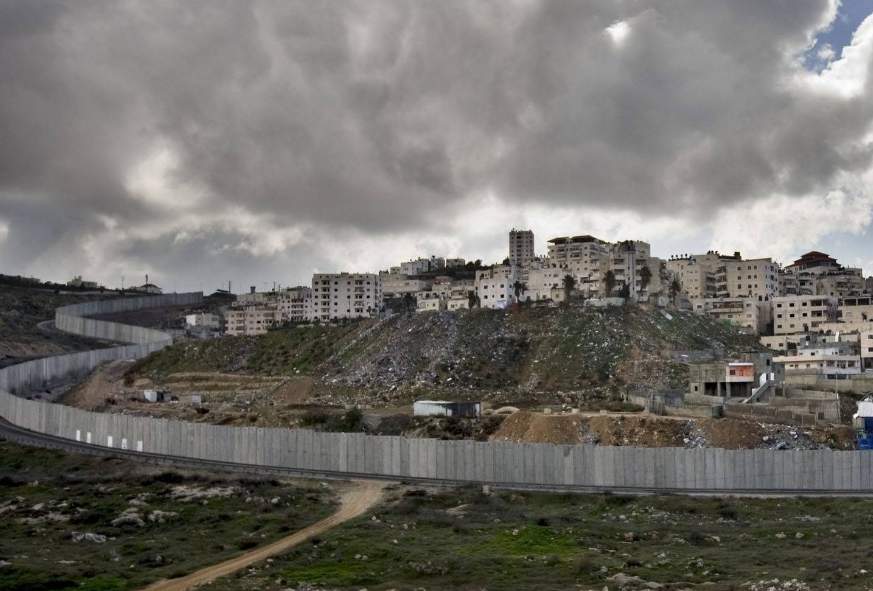
Could the timing of the recent Israel-Palestine peace talks be related to the crisis erupting across the Middle East region? The escalating war in Syria and the massive coup in Egypt have reflected US strategic failures. Now, the U.S. led effort to re-start 22 year old peace talks with Israel and Palestine has again raised suspicion of again benefiting the side of Israel.
Interestingly, former U.S. ambassador to Israel and former deputy research director of AIPAC, the pro-Israel lobby, Martin Indyk will be acting as the U.S. envoy in the negotiations. The stated goals of these new peace talks according to our guest Phyllis Bennis, director at the Project Institute for Policy Studies will not end the occupation, or the siege of Gaza, or the decades of dispossession and exile of Palestinian refugees but only current tension and dispute.
- 1947 is when the British really threw up their hands and said we don’t want to be the official colonial power in historic Palestine any more so we’re going to turn it over to the UN.
- At the end of November in 1947, the UN decided to divide Palestine and make two states.
- It started out incredibly unfair because what they decided to do is give 55 percent of the land to become a quote Jewish state but that was a time when the Jews amounted to 30 percent of the population.
- The Palestinians who were 70 percent of the population were supposed to get what was to become a state only 45 percent.
- The war that broke out that was as much against the British as it was against the Palestinians and what were to become the Israelis but were at the time Zionist militia, the war led to the expulsion, many at gun point of 750 thousand who were driven into exile, off their land. At the end of the war, the Palestinians were left with only 22 percent.
- The Israelis controlled 78 percent of historic Palestine and all of western Jerusalem. Jerusalem was supposed to be separate under international law, it was called corpus separatum, that was to be governed internationally and not governed by either of these states.
- That’s what led up to the period from 1948 and 1967. Jordan took over administering the West Bank, and East Jerusalem – and Egypt took over administering the Gaza Strip.
- In 1967, war breaks out, what became known as the Six Day War. The Egyptian Air Force is the first target of the Israeli military.
- The Israeli military was really good, they had gotten their arms mainly from France and Czechoslovakia. It’s interesting because in that period from 1948 and 1967, the U.S. supported Israel but it wasn’t the kind of special relationship we see now.
- At the end of 6 days, they now controlled 100 percent of historic Palestine. They now had been occupying what had been left to the Palestinians after 1948, which meant the West Bank, the Gaza Strip and East Jerusalem.
- We can look back at this particular process, it goes back 22 years to Madrid Conference of 1991.
- I was at Madrid, I was really young, Netanyahu, was the spokesperson for the delegation. I went head to head with him at a press conference in Madrid.
- That led to the Oslo process, and what we have now. We’ve had the “road map” we’ve had the Anapolis meetings, we had the Y-River Accord.
- In 1967, the US is desperate for allies it can rely on, against the Soviet Union, against the anti-colonial movements that are springing up across Africa.
- Here’s Israel that just trounced 6 Arab armies and the Pentagon looked at that and said, we could do business with these people.
- So the Pentagon starts to build this relationship with Israel that goes beyond joint training. Soon you have the beginning of the interlocking connection between the Israeli military, military producers, war profiteers, military corporations and that gives rise to the whole new influence to the long standing pro-Israel lobby.
- At the end of the cold war, the value of Israel begins to be a liability. That’s when you see some changes in US policy.
- Then you have 9/11 and the global war on terror and Israel is a great strategic ally again. It’s an asset again, not a liability anymore.
- This idea of land swap is the code word that the U.S. and Israel have been using for the last 7 or 8 years. That is based on the idea that Israel will keep all its major settlement blocs – about 80 percent of the current 600 plus thousand illegal Israeli settlers that are living in illegal Jews-only settlements in the occupied West Bank, and the occupied East Jerusalem.
- About 80 percent of the settlers would stay, all the major settlement blocs. These are cities of 40-50 thousand people with shopping centers and swimming pools and colleges and industrial zones, with industrial waste going down the hill into Palestinian villages at the bottom.
- Israel will all of those, Israel will keep all the major water aquifers of the West Bank, and they will call that “land swap” because in return they will give Palestine a few acres of desert land, abutting Gaza or some other land that’s not developed.
- The Coalition of the US Campaign To End the Israeli Occupation. EndtheOccupation.org
- The BDS movement. Boycott, Divest and Sanction which is aimed at stopping Israel’s violation of international law. If it doesn’t there will be consequences that we as a civil society can bring in stop buying settlement produced goods. In Europe, the BDS movement has pressured enough countries that the European Union has now issued new guidelines calling to an end of any European Union funding of any institutions or individuals in the occupied territories.
Guest – Phyllis Bennis, directs the New Internationalism Project at IPS. She is also a fellow of the Transnational Institute in Amsterdam. She has been a writer, analyst, and activist on Middle East and UN issues for many years. In 2001 she helped found and remains on the steering committee of the U.S. Campaign to End Israeli Occupation. She works closely with the United for Peace and Justice anti-war coalition, co-chairs the UN-based International Coordinating Network on Palestine, and since 2002 has played an active role in the growing global peace movement. She continues to serve as an adviser to several top UN officials on Middle East and UN democratization issues.
—–

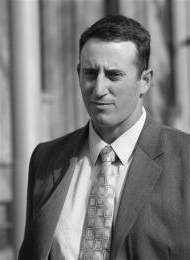
Green Scare Crackdown and Monsanto Political Prisoner Marie Mason
Long time activist in environmental and labor movements Marie Mason continues to serve out a harsh 22 year prison sentence based on her involvement in two attacks of property damage and arson. Marie Mason is considered an eco-terrorist and is serving the longest sentence of any convicted animal rights or environmental militant. In one of the attacks, Mason and her husband Ambrose set fire to a Michigan State University building, targeting a Monsanto funded office in charge of a genetically modified crop research program to create moth resistant crops for Africa. Marie Mason was later set up by her husband who recorded their conversation that led to her conviction. As we continue to report, since 9/11, environmental radicals have been labeled terrorists, and charged with overly long sentences. This is part of what’s known as the “Green Scare” campaigns that seek to put a chill on dissent.
- Marie Mason was an environmental activist from the Detroit area.
- In January 2000 she committed a number of acts the government considered illegal. They were eco-sabotage. Frustrated by her lack of ability, her and others to mobilize great numbers of people to defend the environment against things like genetically modified organisms.
- She and her husband at the time entered a research lab at Michigan State University and set fire to these records. Arson under the law. She also damaged logging equipment in an area where they were doing clear-cutting.
- When you get these “frankenstein” genes into the environment, there’s no longer a debate. When you clear cut an old growth forest, that’s the end of debate as well.
- She was desperate. She actually escaped apprehension until her husband who actually became estranged from her was caught in another matter and ratted her out in 2007.
- She was brought to trial. He actually wore a wire taping her and going around the country, making 140 other recordings of environmental activists but was only able to ensnare her.
- She was tried for these acts in Federal Court, and found guilty. She pled guilty. The judge gave her 22 years.
- She is now the longest serving prisoner of this nature. (Federal Terrorism Enhancement Law) No one was ever injured in any of these.
- There are these Catholic peace activists who regularly go down to Tennessee to protest against nuclear facilities there and previously they were convicted under misdemeanors. They are now facing up to 15 years in prison on federal charges.
- Marie Mason appealed her sentence saying it was disproportionate to other federal guidelines for sentencing. Unfortunately, the right-wing Bush appointed judge wrote the sentencing guidelines so she didn’t get anywhere with the Circuit Court of Appeals.
- She was sent to a federal woman’s facility in Minnesota where she did good work. She was a model prisoner, but one day about two and a half years ago – in the middle of the night she was taken to administrative segregation. The hole. Held there for a couple of months and suddenly in the middle of the night in chains, taken in a small plane and took off. She said she thought she was going to Guantanamo or something like that.
- She wound up in the Special Administrative Unit in Carswell Federal Medical Center. Lynne Stewart is in Carswell but she’s in the general population. Women are sent there with medical difficulties but its a horror show.
- She was told she was moved because she was recruiting for the Earth Liberation Front, that she maintained a connection via email that was provided by the prison.
- They don’t want to restrict her communications, they want to see who is writing her.
- She has written extensively for the Fifth Estate Magazine.
- Marie’s support is worldwide. SupportMarieMason.org
Guest – Peter Alexander Werbe, American radio talk show host and a progressive political activist. His home is Detroit, where he has become a fixture spinning discs and hosting Nightcall Sunday nights on Detroit’s WRIF 101.1 FM. Peter Werbe’s tenure, having commenced in 1970 has resulted in 2 popular radio programs: Nightcall and The Peter Werbe Show. He currently hosts a Mon-Fri classic (webstream) rock show Deep Trax on WCSX. He is also a staff member of Fifth Estate magazine.
—–
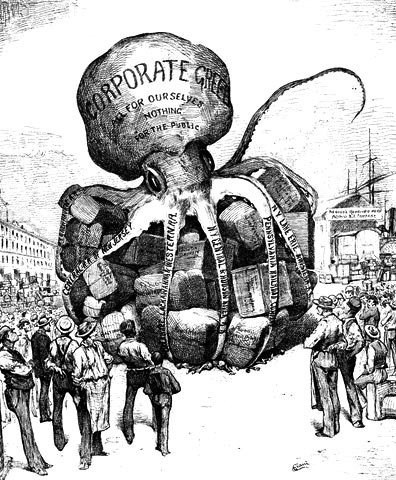
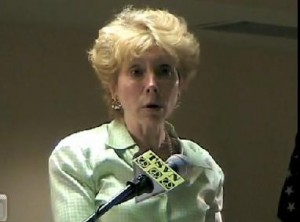
Left Forum 2013: Dr. Harriet Fraad
We hear an excerpt of a presentation from Harriet Fraad is a hypnotherapist & psychotherapist in Manhattan. She writes regularly for Truthout, Tikkun and The Journal of Psychohistory. Her blog with Richard D. Wolff, Economy and Psychology appears at HarrietFraad.com and RDWolff.com. Her latest book is Bringing It All Back Home ed. Graham Cussano. Her article on Emotional and Sexual Life in a Socialist America written with Tess Fraad Wolff will appear in the book Imagine A Socialist America- (Harper Collins 2013). This panel explores what Socialism could look like in the United States.
———————————————
Law and Disorder August 5, 2013
Podcast: Play in new window | Download
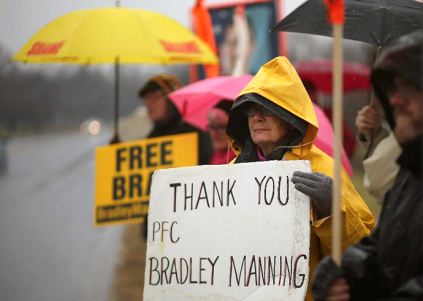
Michael Ratner: Bradley Manning Verdict Update
- I’ve been doing a lot of media on this lately, doing a lot of debates. I take a firm position. He should never have been tried in the first place.
- He’s a hero, he’s a whistle-blower. He publicly exposed the truths about the nature of this country particularly its human rights violations, its criminality and its corruption.
- That constitutes whistle-blowing and whistle-blowing is a legal defense to whatever kinds of crimes the United States wanted to try him. He shouldn’t have prosecuted at all.
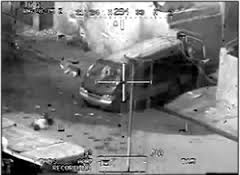
- First we’ve all seen the collateral murder video. The killing of 2 Reuters journalists and I believe 10 civilians shot with a gung-ho blood lust.
- Those crimes were never really investigated, no one was prosecuted for them and yet it was cold-blooded murder taking place from an Apache helicopter on the streets of Baghdad.
- Think about what the Iraq war logs revealed. 20 thousand more civilians killed in Iraq then the U.S. said were killed.
- That fact alone caused the government of Iraq to not sign another Status of Forces agreement with the United States, because it would have given immunity to U.S. troops. Because there was no immunity for U.S. troops, the U.S. said we’re not staying in Iraq. Think about how important that is.
- Then there was a story last year taken from Wikileaks and Iraq war logs of torture centers run in Iraq in 2003-2004.
- The only reason we knew about that was because of Bradley Manning.
- That is a little example of what Bradley Manning has revealed to all of us of the criminality of our own country and information we ought to know and debate.
- The only reason we consider anything to be positive in this verdict is because Bradley Manning was so overcharged to begin with a ridiculous charge of aiding the enemy that was sustained by a judge with a motion to dismiss and let go til the end until she finally acquitted him of it – that we’re relieved that he wasn’t convicted of it.
- He was convicted of 20 charges. Six of them were espionage charges each of them carrying 10 years.
- Six of them were theft of government documents, each of them carrying 10 years.
- This is the first ever conviction of anyone in the United States who is a whistle-blower, who is a quote leaker for espionage. There is great fear being sown by Obama, Holder and others both in regard to whistle-blowers and to journalists.
Law and Disorder Co-host Attorney Michael Ratner, President Emeritus of the Center for Constitutional Rights (CCR), a non-profit human rights litigation organization based in New York City and president of the European Center for Constitutional and Human Rights (ECCHR) based in Berlin. Ratner and CCR are currently the attorneys in the United States for publishers Julian Assange and Wikileaks. He was co-counsel in representing the Guantanamo Bay detainees in the United States Supreme Court, where, in June 2004, the court decided his clients have the right to test the legality of their detentions in court. Ratner is also a past president of the National Lawyers Guild and the author of numerous books and articles, including the books The Trial of Donald Rumsfeld: A Prosecution by Book, Against War with Iraq and Guantanamo: What the World Should Know, as well as a textbook on international human rights.
———
Pelican Bay Prison Hunger Strike
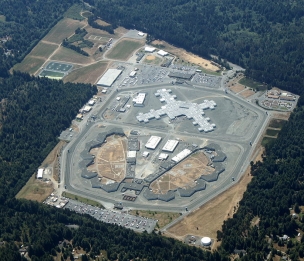
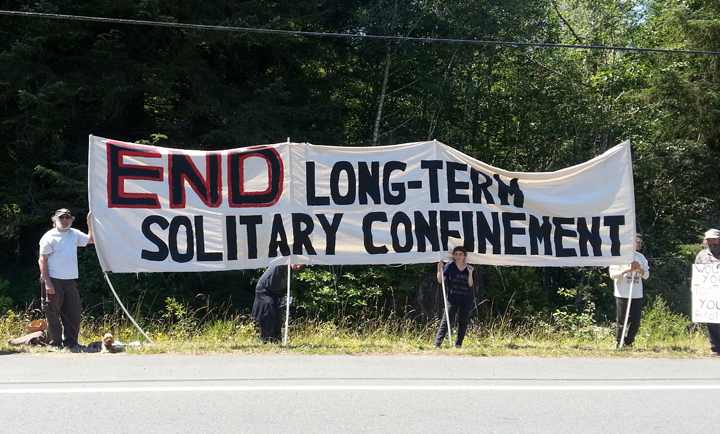
Last month, prisoners at Pelican Bay Prison went on another hunger strike to protest solitary confinement and security unit conditions. What does solitary confinement mean at Pelican Bay Prison? Well, prisoners spend 22 to 24 hours a day in a cramped, concrete windowless cell. The food is often rotten. Temperatures are extremely hot or cold. Within 15 days, these conditions can cause psychological damage.
Jules Lobel, who represents the prisoners at Pelican Bay in a lawsuit challenging long-term solitary confinement in California prisons says prisoners land in solitary confinement not for crimes they were convicted of, not for any rule violation or violent act while in prison, but based on the slimmest pretext of “affiliation” with a gang.
Attorney Jules Lobel:
- At any one time around the country there are about 80 thousand people that are in some form of solitary confinement.
- In California alone there are 4000. What makes California somewhat unusual is there are a large number of prisoners who’ve been in solitary confinement for over a decade and many over 20 years.
- In Pelican Bay Prison there are over 400 hundred who have been in solitary confinement for over ten years and about 80 for two decades.
- The conditions they’re place under are draconian.
- The cells my clients are in, there are no windows. People spend 20 years without seeing trees, birds, the grass.
- That’s unusual to have a whole prison without any windows.
- They put in thousands of people in solitary simply for gang affiliation. You don’t have to have committed any crime (disclipinary infraction) in prison.
- You get a birthday card from a member of a gang.
- There are things society will look back on, and say how could this have been done in a civilized society. We look back at slavery and segregation now and say that.
- They say that they will force feed only when the prisoner loses consciousness.
- These folks are on a no solid food hunger strike and they’ve been willing to take salt tablets, vitamins.
- We looked at the situation in California as I described and we also knew that 2 years ago hundreds of thousands of prisoners went on hunger strikes in California protesting this and were promised reforms that were never delivered.
- We decided that the time was right for a class action lawsuit.
- We brought the lawsuit in May 2012.
- We claim 2 things. To keep people in these conditions for over a decade is cruel and unusual punishment. It’s a violation of the Eighth Amendment.
- To keep someone in these conditions because they think they’re gang affiliated is disproportionate.
- The case only deals with one, and that’s the most notorious, and that’s Pelican Bay Prison.
- There are a thousand prisoners in solitary confinement at Pelican Bay.
- They deliberately place this prison where its 7 hours from any nearest major metropolitan area by car.
- It’s like a gulag there in that they don’t want any media exposure or attention being placed on them.
- It’s way more costly to put someone in solitary confinement. It’s a waste of tax payer resources.
Guest – Attorney Jules Lobel, has litigated important issues regarding the application of international law in the U.S. courts. In the late 1980’s, he advised the Nicaraguan government on the development of its first democratic constitution, and has also advised the Burundi government on constitutional law issues. Professor Lobel is editor of a text on civil rights litigation and of a collection of essays on the U.S. Constitution, A Less Than Perfect Union (Monthly Review Press, 1988). He is author of numerous articles on international law, foreign affairs, and the U.S. Constitution in publications including Yale Law Journal, Harvard International Law Journal, Cornell Law Review, and Virginia Law Review. He is a member of the American Society of International Law
—–
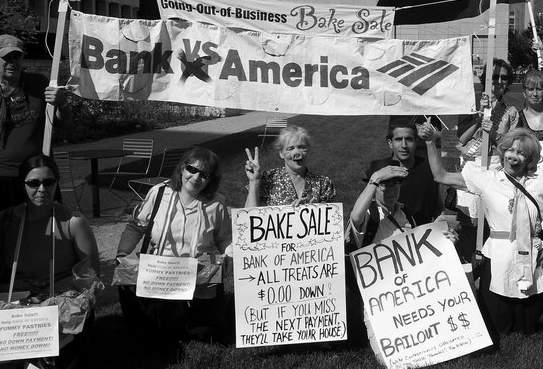
Who Will Bell The Cat? . . . Working People : Michael Zweig
2013 Left Forum Presentation by Michael Zweig is Professor of Economics at Stony Brook University and director of the Center for Study of Working Class Life. His most recent books are What’s Class Got to Do with It: American Society in the Twenty-first Century (Cornell University Press, 2004), and The Working Class Majority: America’s Best Kept Secret (Cornell University Press, 2000 – 2nd edition due December, 2011). In 2005-2006, he served as executive producer of Meeting Face to Face: the Iraq – U.S. Labor Solidarity Tour. He wrote, produced, and directed the DVD Why Are We in Afghanistan? in 2009.
————————————————————————–