Welcome to Law and Disorder Radio
Law and Disorder is a weekly independent civil liberties radio program airing on more than 150 stations and on Apple podcast. Law and Disorder provides timely legal perspectives on issues concerning civil liberties, privacy, right to dissent and practices of torture exercised by the US government and private corporations.
Law and Disorder April 22, 2013
Podcast: Play in new window | Download
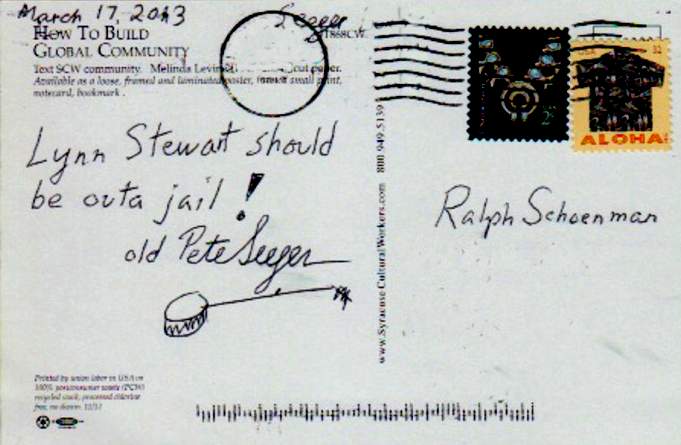
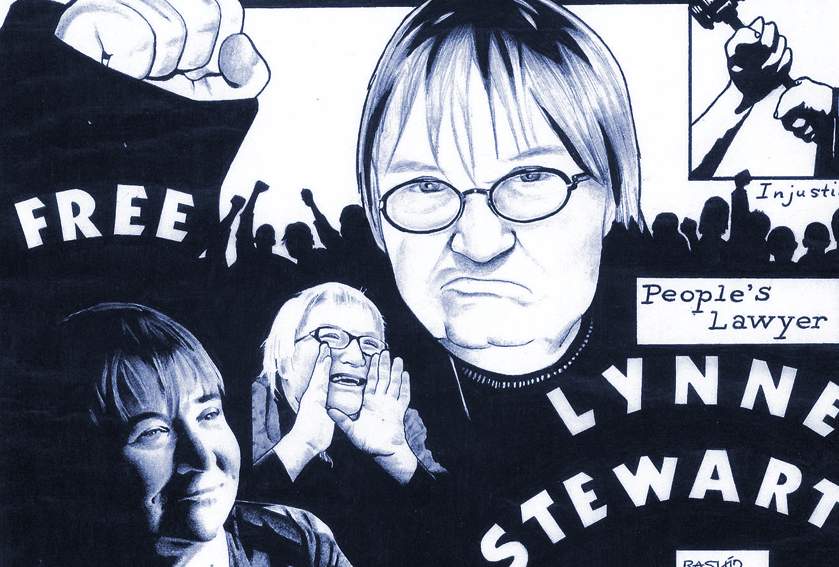
Please Sign Petition To Help Lynne Stewart
Long time literary agent Francis Goldin has for years visited inmates on death row. She’s recently returned from visiting Lynne Stewart in the Carswell Medical Facility in Texas. She joins hosts to talk about her visit.
- We were there for 4 days and most of the time we were in the prison with her.
- If we kissed more than once, or hugged more than once she would be fined.
- That’s how they become correctional by denying kissing and hugging and loving.
- We were only there for about 70 hours, we didn’t have enough time to talk.
- The day we left, all the plans were changed, no more 4 day visits, only Saturday and Sunday. The inmates were heart broken.
- The breast cancer has moved to her lungs. The reason she has it in her lungs is because they didn’t treat her when they should have.
- It’s tremendously important to go to LynneStewart.org and sign on for this release.
- When you sign on, email every person on your list whether its 10 or 500.
- It’s really important that we send a million signatures.
- I visited Maroon for 27 years, every 3 months. I was there for 2 whole days.
- Lynne Stewart Compassionate Release Petition
- Please Also Write to: Charles E Samuels Jr. / Federal Bureau of Prisons /
- 320 1st Street Northwest / Washington DC 20534
Guest – Francis Goldin, has worked in publishing for 63 years, as an agent and as editor-in-chief of a children’s publishing company; she founded the Frances Goldin Literary Agency and sold her first book in 1977. Authored by Black anthropologist Betty Lou Valentine and titled Hustling and Other Hard Work, the book continued to receive royalties for 32 years. Among her clients are Barbara Kingsolver, who she has represented for all of her 14 books, Mumia Abu-Jamal, Dorothy Allison, Frances Fox Piven, Martin Duberman, iconic feminists including Charlotte Bunch and Esther Newton, more.
——–
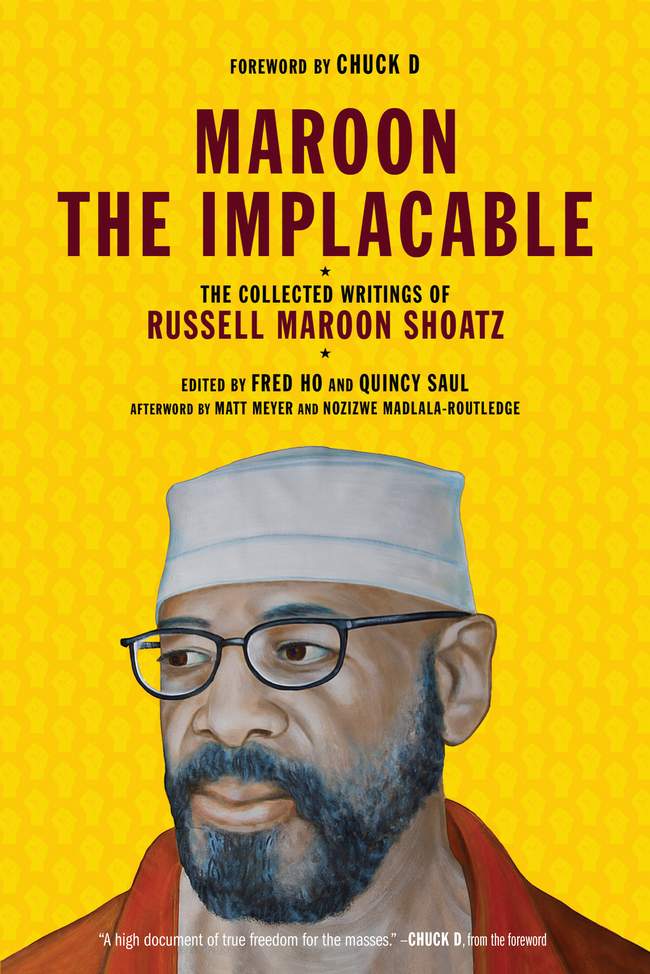
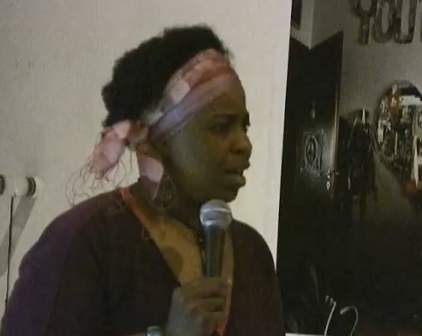
We welcome back Teresa Shoatz, daughter of political prisoner Russell Maroon Shoatz who has spent 39 years in the US prison system. As many listeners may know, Russell Shoatz has been held under intense lock down spending no more than one hour a day outside of his cell for the past 21 of those years. He was locked up in 1972 for his activity as a member of the Black Liberation Army.
Meanwhile, Theresa Shoatz is on book tour promoting her father’s book titled Maroon The Implacable. We catch up with her in Chicago while on tour. Maroon The Implacable is the first published collection of his accumulated written works analyzing the prison system, imperialism, the drug war. He also writes with great insight about the Maroon communities throughout America. Newer essays examine current political movements including eco-feminism and matriarchy
- Maroon had been told that he would die at SCI Greene. For him to be free from prison in general, would be when I would say we have won.
- We’ve been fortunate to have Bret Grote, assistant to the legal team. Dan Kovalic and we just got a major commitment from a big law firm.
- Maroon has been writing since the eighties. In the nineties, some anarchists took his writings and put them in a zine, and took them throughout the United States and into Canada. They were used for education.
- So you get Maroon’s span from the eighties, to the present day.
- His view now on women is so incredible because he stressed how important women are to the movement throughout the sixties and the seventies.
- At that time he didn’t recognize how important the women were. The women, I would say are really the back bone of any community.
- On his second escape we was returned to prison an inmate said to him, they had a hell of a manhunt on you, you were chased down like a “Maroon.”
- He didn’t know anything about the Maroons. He dug in deep about their history and how they came about.
- The Maroons were slaves who had escaped from plantations, some went deep into the woods and joined with Native Americans and some poor whites who were totally against this slave thing.
- His digging into the history of the Maroons, he also involved me and my siblings. They were so awesome because they were fighting off attacks, also in the Caribbean areas, even into Mexico.
- Maroon has endured such torture, just outrageous treatment. Twenty plus years of no-contact visits. The impact of this really does control mindsets.
- Maroon doesn’t have computers nor has he seen one up close. He does everything long hand, and through snail-mail.
- Right now, I’m at the University of Texas. I’m presently with the dean and a professor in a writing class.
- If they haven’t heard of him, they want to know more.
- We have to step over what this government has thrown at us.
- They have more a hand on these youth than some these youths own parents.
- When you can punch right through that wall that’s candy coated reality system that our youth are mixed up in, its not only uplifting for me but for them.
Guest – Theresa Shoatz, a Philadelphia-based prison justice activist and the daughter of Russell “Maroon” Shoatz.
——-

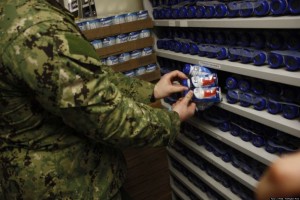
Shadow Lives: How the War on Terror in England Became a War on Women and Children
It’s obvious and yet an unfortunate reality, war, prisoners of war and the prison industrial complex tear apart families. Very seldom are the voices of family members heard that were left behind by the tragedies of war. In the book Shadow Lives: How the War on Terror in England Became a War on Women and Children, author Victoria Brittain brings the reader close to these individuals who’s lives were capsized by war. They’re usually socially invisible and their civil liberties are often trampled by the state under the guise of the “war on terror.”
- I got involved way back when people began disappearing and they were described as the worst of the worst by Donald Rumsfeld and George Bush. Some of those people came from Britain and we didn’t know anything about them.
- A friend of mine had a project to do verbatim plays about the families, and he asked me to be the person to interview the families to try to find out who these people were and what had brought them together in Guantanamo Bay.
- I find complete confusion. Nobody in the families knew anything about why their son or their brother had ended up in Guantanamo Bay. In the course of that I got to know some of the families.
- I was particularly curious about one family that didn’ t want to cooperate in the play which was a Palestinian woman with five children, living alone and not speaking much English.
- I wrote to her about the play and told her how ashamed I was of my country from the research that I’ve done.
- We became close friends. Through her and her children, I met other women.
- Over these past ten years its been a rich experience, and sobering experience about injustice.
- I think she was suppressing the agony and loneliness and fear that she was in, course she was so desperate to have her children approach something of a normal life.
- It was only when other people began to come back to Britain from Guantanamo, that we began to get a picture the conditions in which people were.
- Her husband had gone off to west Africa with 3 or 4 other men to try and start a peanut business. This was his idea as a refugee Palestinian in Britain. He wanted to find a way of making a life for his family.
- When she found out he was taken from Afghanistan to Guantanamo, she was completely, . . there was no explanation.
- There was absolutely no recourse for her for a long time.
- It’s so sad, the Obama administration, he said he was going to close Guantanamo, here we are years down the road, these innocent people are still there and in the last 3 months, these people have become so desperate, because Congress is blocking them from getting out.
- Again and again, every legal victory from CCR has been overturned by a higher court.
- For these men, they really feel they’re at the end of the road.
- The horror of this has been so well laid out by so many lawyers. I find it astounding that there isn’t an uproar in Congress.
- Thank goodness Sami-Al-Arien is no longer in prison, but he’s under house arrest.
- Most of their friends turned away from them.
- He spent about five years in about a dozen maximum security prisons.
- FreeSamiAlArian
- The British and American intelligences work so closely together.
Guest – Victoria Brittain has lived and worked as a journalist in Washington, Nairobi, Saigon and London. She worked at the Guardian for 20 years and is the author of Death of Dignity: Angola’s Civil War, and Enemy Combatant.
———————————————————————————
Law and Disorder April 15, 2013
Podcast: Play in new window | Download
Political Prisoner Russell Maroon Shoatz Update
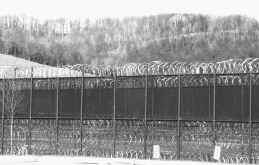
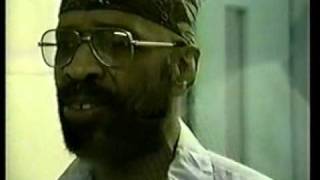
We welcome back Bret Grote, a member of Russell Maroon Shoatz’s legal team. Political prisoner Russell Maroon Shoatz who has spent 39 years in the US prison system. As many listeners may know, Russell Shoatz has been held under intense lock down spending no more than one hour a day outside of his cell for the past 21 of those years. He was locked up in 1972 for his activity as a member of the Black Liberation Army. Bret gives us an update in recent developments of the case.
Bret Grote:
- Almost 2 weeks ago, I went to SCI Greene with a member of the legal team and Maroon’s son, Russell Shoatz III, and when we went into the visitor’s lobby we were informed that he was no longer there.
- After 18 years at SCI Greene which has the largest restrictive housing units which is the solitary confinement units, he had been transferred to SCI Mahanoy which is where Mumia Abu-Jamal is currently located in the general prison population.
- He was transferred there Thursday March 28, 2013, we put in calls the next day to inquire what was going on.
- We actually know this move is in response to the growing pressure campaign that is being waged. The growing support around the country and the legal team having increasing visits.
- The legal team is Dan Kovalic who represented Maroon in his due process based challenge in solitary confinement in the late 90s. There are also 2 attorneys from a large international litigation firm.
- There’s Dustin McDaniel, who along with myself has formed an organization called the Abolitionist Law Center and five students working on his case.
- There was a letter sent to Secretary Wetzel’s office stating that if he’s not released into the general prison population within 30 days a civil action will be filed.
- The major one is the 8th Amendment on prohibition of cruel and unusual punishment. The law on solitary confinement is not very good but its also emerging in response to the 30 year emergence of this type of supermax style long term lock down as an affirmative policy of prison management.
- The basic rule of law is that solitary confinement is not unconstitutional per say, but there needs to be a fact specific inquiry into conditions of confinement and also the degree of harm that is imposed upon the prisoner.
- The prison officials need to demonstrate indifference to the deprivation of basic human needs.
- There are some other grounds that are being put forward to challenge solitary confinement. One of these is happening in the state of New York right now, where the NYCLU has begun representing an individual who was bringing a case pro se.
- Duration is one of the considerations that’s supposed to be taken into account by the court.
- The Supreme Court has been clear that the duration of deprivation is very significant for constitutional purposes.
- Maroon escaped from prison twice. After solitary confinement he was released in the general prison population at the state correctional institution in Pittsburgh in 1982.
- At this point Maroon had made a political decision. He had become part of the Pennsylvania Association of Lifers. This was a group approved by the prison authorities. After Maroon became involved and other lifers became involved to take more active role in their interest, more than 100 people began attending meetings there.
- They put him in solitary confinement based on participation in unauthorized meetings even though all the meeting spaces had to be opened by staff.
- Since 1989 he’s had only one disciplinary infraction while in the prison.
- Covering the vent in his cell, it was blowing cold air – SCI Greene.
- Maroon was constantly engaging all the other prisoners in educational seminars, studying lessons on geography, on history on working with people to transform their criminal consciousness into community oriented activist consciousness.
Guest – Bret Grote, member of the Russell Maroon Shoatz legal team and member of the Abolitionist Law Center.
—–
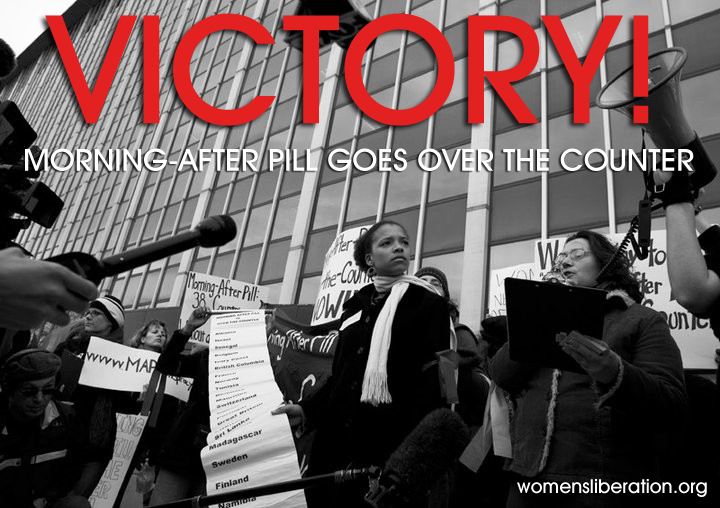
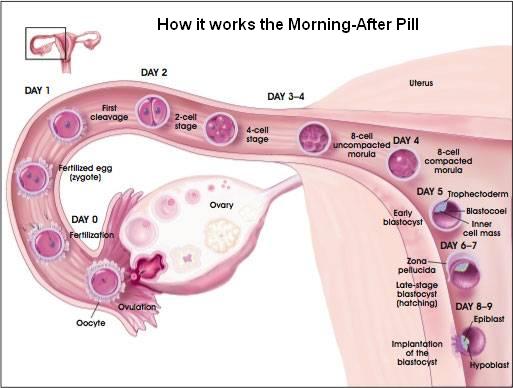
Court Orders FDA to Remove All Restrictions on the Morning-After Pill
After a multi-year grassroots campaign and an equally long lawsuit, the morning after pill will finally be available to females of all ages on the pharmacy shelf, without a prescription or point of sale or age restriction. This is thanks to a recent federal court reversal of decisions from the FDA and DHHS, under both the Bush and Obama Administrations. The US now joins at least 63 other countries including the UK, Denmark, France and Ghana in making the morning after pill available without a prescription.
- The case was originally file in 2005 and this was after the FDA had really stalled out and delayed for years in its decision making in whether to put the morning after pill over the counter.
- Originally the morning after pill was prescription only and had to show identification in order to get it.
- In 2005, the government made a decision to make Plan B available for women over 18.
- Under President Bush, decisions were made by high level officials within the FDA to deny access to the morning after pill to women and girls. That was really an effort to appease the administration’s constituents.
- It was based on anti-birth control politics and not science.
- In 2011 for the first time in history, we saw Health and Human Services under the Obama Administration overruling a decision by the FDA when the FDA decided it wanted to put the morning after pill over the counter without an age restriction.
- The lawsuit has always asked for unrestricted access to the morning after pill and all forms of the morning after pill meaning emergency contraception for all women and girls in the United States regardless of age without any restriction on how its sold.
- In the history of our country no one has ever had to show their identification in order to get birth control.
- I think of this victory as building on the pioneering work of our feminist sisters in the National Lawyers Guild that I’ve had the opportunity and honor to work with.
- Catherine Roraback and Rhonda Copeland, Carol Sobel, Mara Verheyden-Hilliard
- We will be looking forward to seeing it in the grocery stores in 30 days.
Guest – Attorney Andrea Costello, Partnership for Civil Justice Fund Senior Staff Attorney representing the NWL Plaintiffs.
—
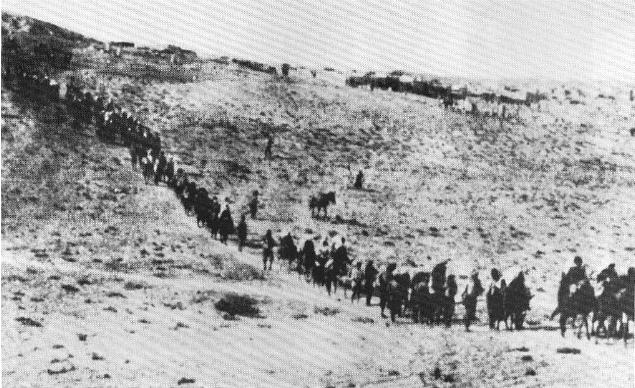
It Was Genocide: Armenian Survivor Stories
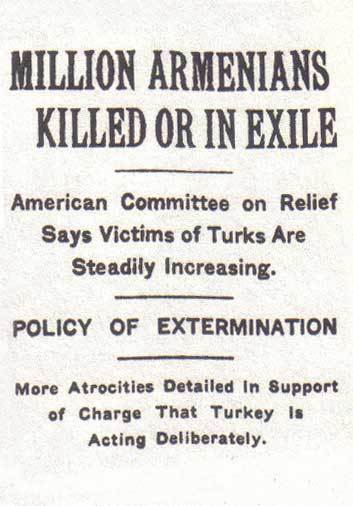
99 years ago this month marks the beginning of the systematic implementation of a plan to exterminate the Armenian race. Carried out by the Young Turk government of the Ottoman Empire, over half of the Armenians living in the Empire were killed.
To commemorate this, the first genocide of the 20th century, Law and Disorder co-host Heidi Boghosian and producer Geoff Brady present part of the 90-minute program titled, It Was Genocide: Armenian Survivor Stories.
We wish to thank WBAI for their commitment to recognizing the Armenian genocide, and are grateful to the following individuals for opening their hearts and sharing the difficult memories of the past: Jennie Garabedian, Harry Mazadorian, Roxy Garabedian, Lucy Simonian, Roxie Maljanian, Mary Abrahamian, John Maljanian, Agnes Karanian, Ruth Swisher, and Artie Shahverdian.
For stations that want to air full 90 minute documentary
————————————-
Law and Disorder April 8, 2013
Podcast: Play in new window | Download
Updates:
- Please Sign the Lynne Stewart Compassionate Release Petition
- Please Also Write to: Charles E Samuels Jr. / Federal Bureau of Prisons /
- 320 1st Street Northwest / Washington DC 20534
- Anniversary of Collateral Damage Video Release
- University Stadium Victory – GeoCorp Prisons
—

Guantanamo Hunger Strike Update
Attorney Omar Farah speaks with Michael Ratner about a hunger strike at Guantanamo Bay Prison with more than half of prisoners from Camp 5 and 6f participating. Farah says the hunger strike was triggered by an arbitrary crackdown by the prison administration including cell searches and a search of the prisoner’s Qurans. This is viewed as out right desecration. More than half of the entire prison population has been cleared for release by every prominent national security and law enforcement agency in the US government, that includes the DOD, DHS.
Guest – Omar Farah joined the Center for Constitutional Rights in 2012 as a staff attorney in the Guantanamo Global Justice Initiative. Omar was previously in private practice, working mostly in the area of international commercial arbitration. Since 2008, he has represented several prisoners detained at Guantanamo Bay in habeas corpus litigation in federal court.
———
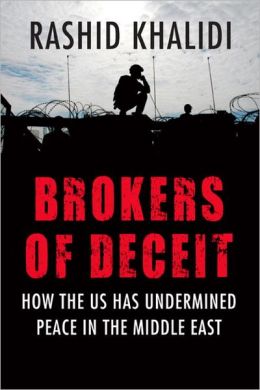
Brokers of Deceit: How the U.S. Has Undermined Peace in the Middle East
While adviser to the Madrid and Washington Palestinian-Israeli negotiations, author and historian Rashid Khalidi collected documents, memos and meeting minutes as a research foundation for his recently published book Brokers of Deceit: How the U.S. Has Undermined Peace in the Middle East. The book focuses on 3 periods of opportunity for the United States to broker peace, one in the late seventies, the early nineties and 2010. This critical analysis addresses the basic distortions in language that has corrupted the peace processes. Rashid Khalidi is an American historian of the Middle East, the Edward Said Professor of Modern Arab Studies at Columbia University, and director of the Middle East Institute of Columbia’s School of International and Public Affairs, he joins us today to talk about his book and also the ongoing destabilizing hostility in Syria.
- Let me read to you what Orwell says, “the slovenliness of our language makes it easier for us to have foolish thoughts. If thought corrupts language, language can also corrupt thought. Bad usage can spread by tradition and imitation even by people who should and do know better.”
- The argument I’m making in this book is much of the language used by pundits and politicians about the Middle East and the so called peace process, between the Palestinians and the Israelis is really corrupt language.
- One of the chapters in the book is devoted to the period when I was an adviser to the Palestinian delegation and negotiations from 1991-1993 starting in Madrid and continuing to Washington.
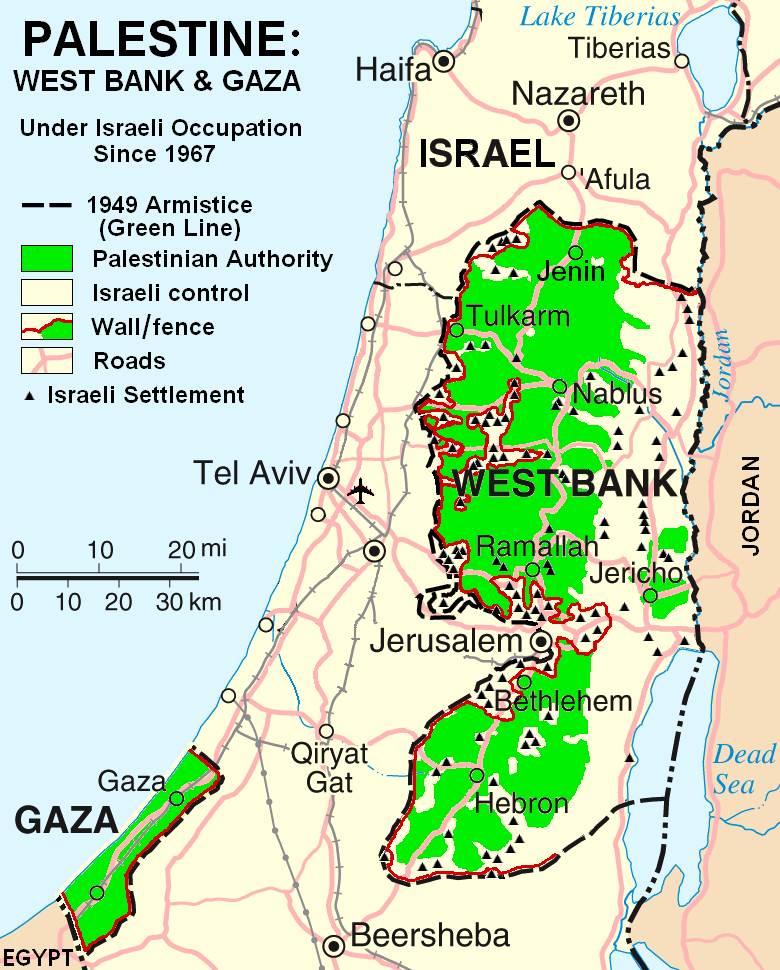
- If you go back to Madrid in October 1991, there were under 200 thousand Israelis living in the occupied West Bank and occupied East Jerusalem. Today, there are nearly 600 thousand of them.
- United States has been responsible for exacerbating the problem in effect by saying the only way to deal with this issue of occupation and settlement is through negotiations mediated by us.
- The United States in the meantime has put its big thumb on the scale in favor of the Israelis preventing a resolution of the problems.
- The first episode I talk about in the book has to do with the follow on to Camp David in the wake of the Lebanon War in 1982 when Israel invaded and 50 thousand Palestinians and Lebanese were killed and wounded.
- I site at great length a now declassified document by a CIA analyst which one of my students actually found.
- The idea of Palestinian self determination doesn’t exist anywhere in the Oslo Accords signed by the PLO and Israel in 1993 and afterward.
- Autonomy and self determination are used by people in American political parlance and Israeli political parlance in ways that do violence to the real meanings of these words.
- Obama fits the pattern of every president since President Carter, with the sole exception of George W. Bush.
- Obama has adopted wholesale and entire Israeli narrative as to the idea that Israel is the victim.
- There is a people in existential danger that’s the Palestinians, the people faced with elimination, extermination, not physically but as a collective.
- Oslo was a terrible deal for the Palestinians. As a result of Palestinian failures since the 90s, a situation has emerged where we have one state and one sovereign body between the Mediterranean and the Jordan River.
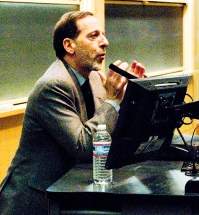
Guest – Professor Rashid Khalidi, is the Edward Said Professor of Arab Studies at Columbia University. He received his B.A. from Yale University in 1970, and his D.Phil. from Oxford in 1974. He is editor of the Journal of Palestine Studies, and was President of the Middle East Studies Association, and an advisor to the Palestinian delegation to the Madrid and Washington Arab-Israeli peace negotiations from October 1991 until June 1993.
—–
Judge Oks Civilians Right to Sue Military For Spying On Peace Activists
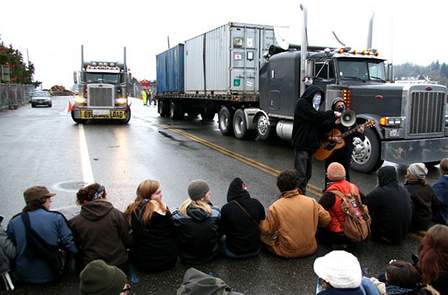
In a recent ruling, the Ninth Circuit Court of Appeals ruled that a lawyer’s challenge to military spying on peace activists can proceed. This ruling is the first time a court allowed civilians to sue the military for violating their First and Fourth Amendment rights. National Lawyers Guild attorney Larry Hildes brought the lawsuit Panagacos v Towery in 2009 on behalf of a group of Washington state antiwar activists who discovered they were infiltrated for 2 years by John Towery, an employee at a fusion center inside a local Army base. The antiwar activists group Port Militarization Resistance sought to oppose the wars in Iraq and Afghanistan through civil disobedience. The lawsuit also names, the Army, Navy, Air Force, FBI, CIA, Department of Homeland Security and other law enforcement agencies.
Attorney Larry Hildes:
- Brendan Dunn was activist in Olympia, he was arrested in Seattle basically for sitting while anarchist.
- The Olympia Police Department cracked down on the Wobblies and the IWW for having newspaper boxes for which they paid for and took all the papers.
- We got them back, but Brendan got curious about what was going on, did a state public records act request for all emails and all intelligence to the city of Olympia concerning anarchists or the IWW.
- What he got back instead was hundreds and hundreds of pages of what are called “force protection memos” and “threat assessments” from Ft. Lewis about Port Militarization Resistance, a group that he was involved with that did protest against the use of public ports for shipment of Striker Brigade equipment to the occupation in Iraq and Afghanistan.
- He started looking at them and every police department and every military agency from north of Seattle to Portland was on this list. The FBI was on this list, Homeland Security, every branch of the military.
- It was detailed discussions of what PMR was planning, what they were going to do, how to fight it. The author of a lot of this was John Towery.
- PMR looked Towery up on Facebook and there’s a picture on Towery’s FB page of John Jacob who had been coming to PMR meetings for several years. Very closely involved with PMR in fact he ran their list serve on Rise Up.
- So they did some more checking. They looked up his voter registration, they got an address and the address matched John Jacobs.
- He was 20 years older than everyone else. I don’t know how but he blended in. He went to events, he brought his kids. He was very very good at what he did.
- Brendan considered him a close friend. Brendan and another member confronted him at a cafe in Tacoma and he said “yes, I’ve been spying on you. I’m doing it for your own good, there are other spies watching you that mean you much more harm than I do.”
- We do know that the Army at least one more spy. We caught the Coast Guard spy. There were 2 officers from the Tacoma Police Department’s Homeland Security Committee.
- The police would show up at unannounced demonstrations. The MP’s, local police and state patrols would already be there and everyone would be arrested as they were getting out of their cars.
- The Portland Militarization Resistance was a few dozen people. They were very creative, they had figured out a choke point for the military.
- The equipment would go out 3 weeks before the troops. If they couldn’t get the equipment there. They couldn’t send the troops.
- If they couldn’t send the equipment and the troops then no war.
- The succeeded in scaring the heck out of the military by these very peaceful acts of civil disobediance.
- They can’t arrest them before they get to the demonstration or before they even do anything.
- They think dissent against their wars is the enemy which scares me a great deal.
- Where else are they doing this, how much are they doing this?
Guest – Attorney Larry Hildes, an NLG member and one of the attorneys involved in bringing the case Panagacos v Towery.
————————————————————————–