
Welcome to Law and Disorder Radio
Law and Disorder is a weekly independent civil liberties radio program airing on more than 150 stations and on Apple podcast. Law and Disorder provides timely legal perspectives on issues concerning civil liberties, privacy, right to dissent and practices of torture exercised by the US government and private corporations.
Law and Disorder April 1, 2013
Podcast: Play in new window | Download
Updates:
- MOMA Suggested Donation Lawsuit
—-

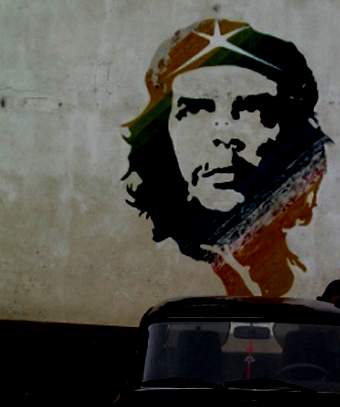
Michael Smith and Dennis James Discuss Cuba Trip
Co-host Michael Smith and attorney Dennis James recently returned from Cuba on a trip led by the Center for Cuban Studies. Dennis is a civil rights lawyer formerly of Detroit and former Executive Director of the National Lawyers Guild. The trip was undertaken to appreciate the fundamental changes now going on in Cuban law with respect to travel, home, car and business ownership. The discussion leads into the possibilities of an economic rejuvenation in Cuba.
Attorney Dennis James:
- The people of Cuba had a strong identification with the revolution they made.
- Cuba is theirs and nobody else is going to tell them how to run it.
- They have a lot of complaints about shortages, but they’re very appreciative of the basic needs of life that are provided for.
- The Cuban government did a thorough and multi-level canvassing of the population through its national assembly and committees for the defense of the revolution.
- Talking to the people on the street, they remember this process that went on.
- The government watches which enterprises make sense, which ones are succeeding.
- The ones that are succeeding and paying taxes, employing people are encouraged.
- Book: The Man Who Loved Dogs
- Book: Cuba, What Everyone Needs To Know – Julia Sweig
- There’s a colony of people in Melia Cuba that practice what they call naive art.
- I think its naive in the sense that it’s self taught.
- They do wonderful paintings, these are doctors, lawyers, bakers, bus driver, cops, sugar mill workers.
- Their work is encouraged, given exhibits in Havana.
- Sandy Levinson – The Center for Cuban Studies.
- We’re not talking about the flag waving, hammer and sickle brandishing socialist realism of China and Russia, we’re talking about wonderful expressions of culture.
Guest – Dennis James, a civil rights lawyer formerly of Detroit and former Executive Director of the National Lawyers Guild.
——–
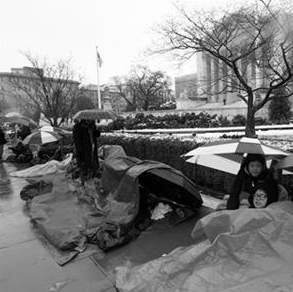
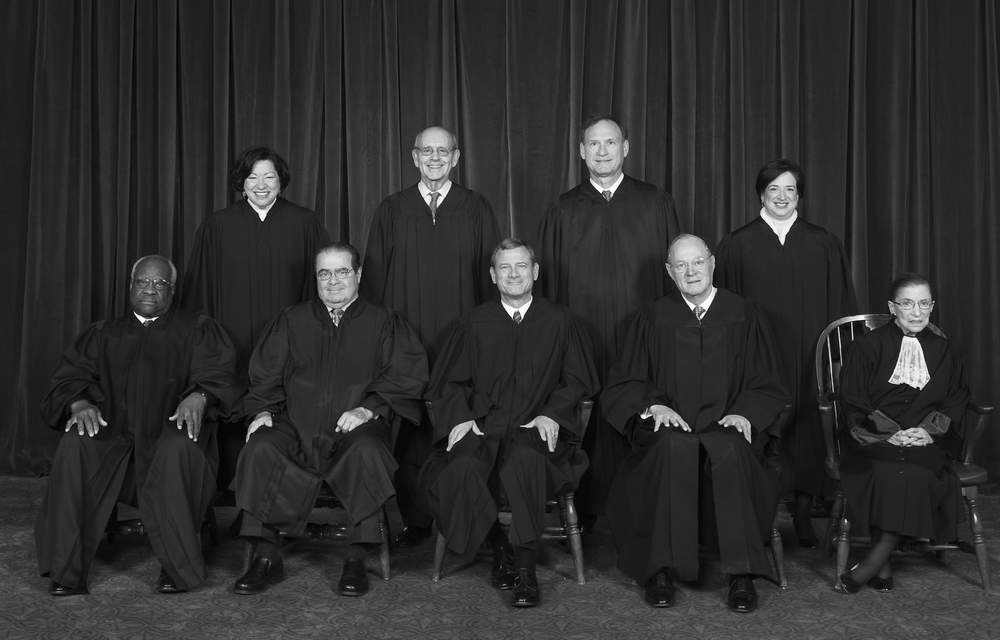
Supreme Court On Gay Marriage
Last week the Supreme Court heard oral arguments on two historic cases that could establish the constitutional right for gay marriage. The first case, Hollingsworth v. Perry is a challenge to California’s voter-approved ban of same-sex unions in 2008. Six months after the California Supreme Court endorsed gay marriage, voters passed Proposition 8 which amended the state’s constitution to only recognize marriages between a man and a woman. Lower courts had declared the gay marriage ban to be unconstitutional. The second case the Supreme Court heard was a challenge to the 1996 Defense of Marriage Act. This act bars married gay couples from receiving federal marriage benefits such as Social Security and family medical leave.
- On the Prop 8 case, I would certainly question the issue of standing which the court is from their argument also taking quite seriously.
- It’s actually an incredibly important issue in civil rights law where groups of people want to assert an interest in an overarching public issue like the right to marry.
- I’m of the view that this should never have been brought.
- The movement lawyers really argued for Boise and Olsen not to bring the case. Boise and Olsen lobbied quite hard to keep the movement lawyers out of the case.
- When the law gets out ahead, and the lawyers get out ahead of the movement that support them, often we do more damage than good when we get to the Supreme Court too soon.
- We have movement lawyers in the lesbian and gay community and of course they don’t all agree with each other, its a complicated movement. But there was a sense that they were going to go state by state, and build legal consensus around the issue of marriage rights and around a set of arguments that weren’t going to hurt gay and lesbian people who didn’t marry.
- Boise and Olsen thought they would do a better job raising the issue of marriage than the movement lawyers have. They’re carrying a brief for marriage, not a community who have a diverse set of interests, marriage being only one of them.
- DOMA, the Defense of Marriage Act is a law that unfortunately President Clinton signed in 1996. It was basically a homophobic cry from the Congress to limit on the federal level any definition of a marriage to between a man and a woman.
- If you’re a federal employee, if you’re married you can put your spouse and dependent children on you health insurance.
- If you’re not married, you can’t.
- Edie Windsor is the plaintiff in the DOMA case but when her partner of many many years past away, Edie inherited under the will, her partner’s property they jointly owned together. Under federal tax law it says if they were strangers to one another, so Edie had to pay about 360 thousand dollars in inheritance taxes for the property she had owned with her partner.
- There was a coalition of large corporations that filed a brief and said actually
- The political alignment on this issue has really shifted at a rapid pace in the last year.
- I direct our center on gender and sexuality law.
- I’m actually now teaching for the first time a class on the law of occupation so we’re looking at Iraq and Palestine and the United States, Puerto Rico and Hawaii. To understand whether the law can be a force for good when military force is like the Israelis or like the Americans occupying other sovereign states.
- We’ve got a really great new project engaging tradition and thinking about arguments based in tradition, that have been used traditionally to undermine sexually based justice claims.
- Those issues come up in the marriage context all over the place.
Guest – Professor Katherine Franke, the Isidor and Seville Sulzbacher Professor of Law; Director, Center for Gender and Sexuality Law at Columbia Law School.
—————————————————————–
Law and Disorder March 25, 2013
Podcast: Play in new window | Download
Updates:
- New York Times Continues To Deceive About Iraq War
—

New York City Stop and Frisk Trial Begins
Here on Law and Disorder, we’ve been covering the stop and frisk case known as Floyd v City of New York and the New York Police Department. This is a federal class action lawsuit challenging New York City Police Departments’ practice of stopping and frisking hundreds of thousands of New Yorkers each year. Some five million within the last few years. The high majority of which are Latino and African American. It’s taken the Center for Constitutional Rights along with its allies united with a group called Communities United for Police Reform many years to bring this case to trial. It’s an historic moment for challenging these practices in New York and a precedent that will hopefully lead to ending this practice, not only here in New York but throughout the country. The trial began last week in federal court in Manhattan. It will last some 4 to 6 weeks.
- In order to be legal the stops need to be based on reasonable suspicion of criminal activity and we’re challenging the city’s use of these illegal stops.
- They violate the 14 Amendment guarantee of equal protection because they are racially discriminatory.
- 87 percent of those stopped are black and Latino.
- The NYPD commissioner seemed to have dug in his heels deeper, as has the mayor in defending the program.
- There is no empirical data that “stop and frisk” has a role in reducing crime.
- It severely damages relationships between the police and the community.
- This is an historic moment in the lifelong struggle of members of the community and organizations like CCR. Our first case against the police department was Daniels which was filed in 1999 in the aftermath of the shooting of Amadou Diallo.
- David Floyd was actually helping someone who was locked out of their apartment, he had an extra set of keys.
- In 2011 685 thousand people stopped.
- There are many other people in the community who are stopped including members of the LGBT community, the immigrant community, people who are homeless, women.
- There is a presumption of criminality.
- On the first day of trial, the courtroom was packed, as was the overflow room.
Guest – Annette Warren-Dickerson, the Director of Education and Outreach at the Center for Constitutional Rights (CCR), is responsible for overseeing the development of CCR’s political and public education strategies as a companion to CCR’s litigation. Annette served as the Statewide Coordinator of the New York Campaign for Telephone Justice, which successfully ended the high collect call rates for the families of those incarcerated in New York State prisons.
—-
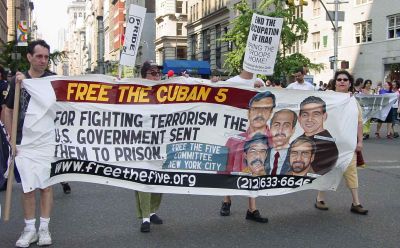
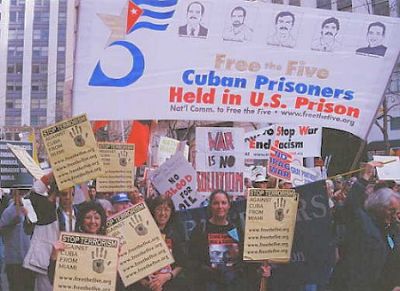
Cuban Five Case Update: Free The Cuban Five – Columbia University 2013
Fourteen years ago, the Cuban Five were convicted on conspiracy to commit espionage at some time in the future. Recently, prominent First Amendment attorney Martin Garbus joined the case of the Cuban Five. He’s help expose how US government paid journalists in Miami who received hundreds and thousands of dollars of payments from the office of Cuba broadcasting. A fact unknown to the defense at the time of the trial. As listeners may know, those paid reporters covered the case in an almost hysterical and prejudicial fashion. This month, Martin Garbus and many others will be discussing the case of the Cuban Five during an event held at Columbia University March 29.
- During the time the jury was deliberating, the television media bombarded the Miami area with pictures of the jurors. The judge barred any pictures of the jurors going out because she didn’t want the jurors intimidated by a public awareness of who they were.
- Because she was concerned pressure would be put on them.
- Unknown to the judge and defense lawyers at the time, the channels each day repeatedly showed the faces of the jurors, sometimes identifying them so that the entire community knew who they were.
- And they presented very slanted interpretations of the case.
- Television misuse: we found it not only for the time the jurors were deliberating but we’ve now traced it throughout the entire trial.
- Where are now is we’ve submitted our papers and the judge is sitting on it.
- Radio Marti was made to beam into Havana, it can most anything it wants. What happened hear is that Radio Marti beamed into the entire Miami area. You have a 38 million dollar budget beaming into Miami endless stories. Then you have the US government through Radio Marti and various democracy projects also paying the print media to write propaganda. Each one of these articles are a violation of the law.
- On March 29, at the Roone Arledge Auditorium, Lerner Hall, Columbia University, 116th Street and Broadway in Manhattan.
- Martin Garbus, Lead Attorney for the Cuban Five
Ambassador Rodolfo Reyes, Cuban Ambassador to the United Nations
Ambassador Julio Escalona, Venezuelan Deputy Ambassador to the United Nations
Luis Rosa, Puerto Rican independence fighter, political prisoner for 19 years
Imani Brown, Columbia University Caribbean Students Association
Guest – Attorney Martin Garbus, one of the country’s leading trial lawyers. He has appeared before the United States Supreme Court and the highest state and federal courts in the nation. Time Magazine has named him “legendary . . . one of the best trial lawyers in the country.” He’s also known as the most prominent First Amendment lawyer.
—
Racism, Torture, and Impunity in Chicago
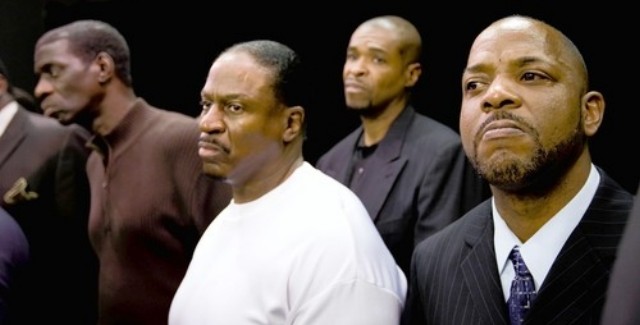
Here on Law and Disorder, we continue to follow up on the Chicago torture cases and since the conviction and sentencing of former Chicago Police Commander Jon Burge in 2011, the Chicago criminal courts have become a model in seeking justice for crimes of torture. Last year we discussed with our guest attorney Flint Taylor how the city’s new administration will handle the hundreds of ongoing torture cases of African American men. The question is answered in Flint Taylor’s recently published article in the The Nation titled Racism, Torture and Impunity in Chicago.
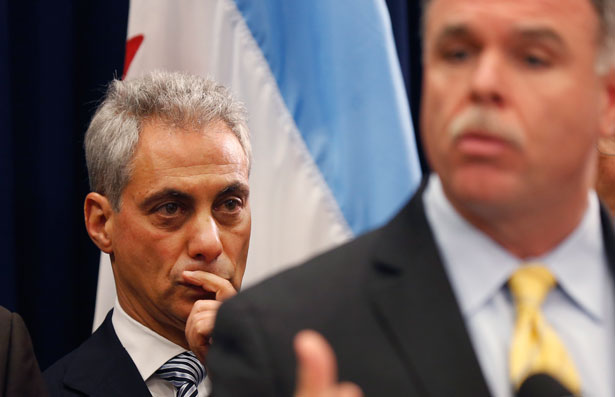
In the article, Flint writes “Chicago City Council and Mayor Rahm Emanuel signed off on a settlement for another torture survivor, Michael Tillman, who was exonerated in 2010. It was the perfect chance for the mayor to apologize on behalf of the city to the African-American community that helped elect him. He chose not to do so. Instead, picking up where the Daley administration left off, the mayor has continued to fund Burge’s defense, paying private lawyers a total of $3.8 million to date in the Cannon and Kitchen cases alone.”
- In the civil rights cases we are seeking the testimony of Richard Daley, the former mayor and former states attorney to question him in detail of his long standing and central role of the police torture scandal here in Chicago.
- Evidence was brought directly to Daley through the Chicago Police Superintendent of the torture of a specific man by the use of electric shock, bagging, beating and burning to get a confession.
- Daley decided not to investigate Jon Burge, not to prosecute Jon Burge and as a result of that over 75 African American men were tortured, gave confessions, many of them went to death row.
- At this point we’ve tried to negotiate with his lawyers (Daley) they are paid for by the tax payer. We moved in court to compel him to testify.
- It took a long time, very hard struggle by community groups, lawyers activists and of course the families of the victims themselves.
- The media (local) is interested when the name Daley comes up.
- The called the box that they electrocuted them with the “n*****” box.
- We see the attacks on the genitals again and again.
- It’s a remarkable racist conspiracy. We’re using the Civil Rights Act that was used during Reconstruction, right after the Civil War, which is called the Anti Klu Klux Klan Act.
- We’re trying to get a statute passed in Congress to make torture a Federal crime.
Guest – G. Flint Taylor, a graduate of Brown University and Northwestern Law School, is a founding partner of the People’s Law Office in Chicago, an office which has been dedicated to litigating civil rights, police violence, government misconduct, and death penalty cases for more than 40 years.
—-
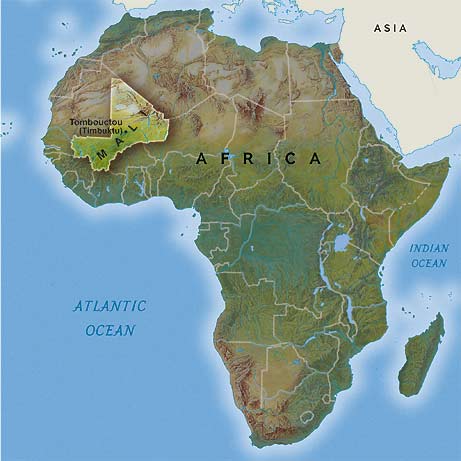
French-led Invasion of Mali, Africa
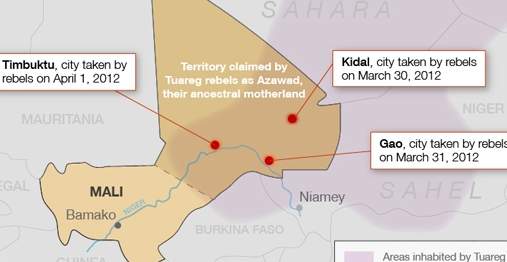
The Obama Administration has recently stepped up US military deployment within the French led military offensive to force out Islamist rebels in Mali, Africa. The U.S. Reaper drones are helping to provide targeting information for French aerial attacks. Those countries publicly supporting France include Canada, Belgium, Denmark and Germany. Meanwhile, human rights groups call for independent investigations into civilian deaths in Mali.
Ernie Harsch:
- The stakes are not so much Mali. Some of the insurgent forces, some have local grievances, like the Tuareg in Northern Mali.
- Others consider themselves Jihadists. They also target, US, French and other European in the region and elsewhere in the world.
- Whatever happens in Mali, could have wider implications. The situation in Mali is quite serious. There are lots of risks.
- Mali, Africa is a former French colony and after decolonization the French were active in intervening into the former colonies of Africa.
- There was a popular upsurge in the 90s, (in Mali) that regime was ousted by a military coup. That leader of the coup quickly transitioned to an elected leader of a civilian government.
- In Mali in particular you also had a series of rebellions in the North by an ethnic group called the Tuareg.
- The basic issues never got resolved. You didn’t have development up in the North, you didn’t have autonomy which is what they were pressing for.
- What happened in 2011, we had the Arab Spring, in like many periods of revolution or popular upsurge, old coercive states may collapse and you have opportunities for popular action but you also have other people who come in because states are fragmented.
- Some of the fighters that had been with Gaddafi, they were from Mali, and they had been Tuareg.
- Now its sort of dragging down into a protracted guerrilla phase.
- To be clear, the French intervention has gotten political backing from the African Union and from the economic community group, the Economic Community of West African States or ECOWAS.
- The French PR justification has worked fairly well.
- This is open terrain, this is semi-desert area. With air power and heavy equipment you can push far and very quickly. You can take cities and towns. The Islamists, there’s a few thousand. They’ve pulled back up into the mountains. They know the terrain better than the French actually.
- The chance of French mounting losses is there.
- Since 2005, the US has spent 1 billion dollars for counter-terror operations in the region.
- This isn’t all military by any means. A lot of it has to do with training local African military forces in counter-terrorism operations and coordinate and logistics support.
- Also, basically propaganda.
- They do humanitarian actions to curry favor with local populations.
- This isn’t well known, but the US has air bases all across Africa.
- Sometimes they’re simply a hangar operated in secret at some African military or civilian air base.
- They’re (U.S. Government) setting up an airbase in Niger, that’s openly acknowledged.
- They started out with surveillance drones in Somalia but then they used a few strikes against Islamists leaders there in Somalia.
- Everything is going to be framed in the language of the war on terror. That’s the justification. That’s a real concern for the US authorities.
- Also material resource interests. Not so much gold, but Mali does have gold in the northwest.
- Things that are very vital to the Western dominated global economy.
- There is a rivalry that’s developed with China, it’s not been terribly direct at the moment.
- It’s blowback.
Guest – Ernie Harsch, a 40 year journalist who has made numerous trips to Africa. He’s a former editor of the magazine Africa Renewal. He joins us today to discuss the conflicts in Mali and the big picture regarding the seizure of natural resources in Africa.
————————————————————————-
Law and Disorder March 18, 2013
Podcast: Play in new window | Download
Updates:
- Bradley Manning Plea Update:
- Freedom of the Press Foundation Bradley Manning Audio
- Michael Ratner On The Bill Keller’s Bradley Manning/Wikileaks NYT Op Ed
- Ten Years Later: Iraq US-led Invasion
- Remembering Hugo Chavez
- Free Lynn Stewart: Compassionate Release Petition
—

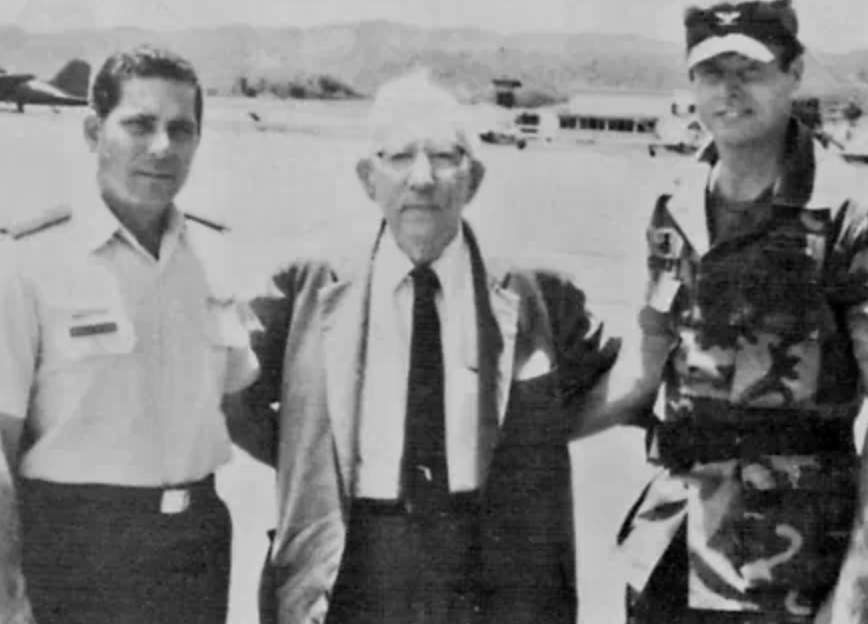
The Search for Colonel James Steele: US Special Forces Veterans Links General Petraeus With Torture In Iraq
A 15-month investigation and documentary film by the Guardian and BBC Arabic James Steele: America’s Mystery Man In Iraq has revealed how US colonel James Steele, a veteran of American proxy wars in El Salvador and Nicaragua, played a key role in training and overseeing US-funded special police commandos who ran a network of torture centers in Iraq. Steele and another special forces veteran retired Colonel James Coffman reported directly to General David Petraeus. Petraeus as listeners may know was tasked with organizing Iraqi security services.
- The projections that they made about being welcome in Iraq were just not true.
- It looked like the insurgency at that point in 2004 was just getting off the ground.
- This is where they turned to General Petraeus, I know he’s seen in the think tanks in Washington as the scholar warrior.
- Rumsfeld called upon him to go back into Iraq and to organize a pretty massive police force in Iraq.
- He hooked up with 2 people there, Colonel James Coffman and Colonel James Steele.
- Mill Group is essentially a bunch of military advisers who are training the Salvadorian security forces to fight the guerrillas.
- Colonel James Steele was the guy in charge of the American advisers who were training these people and also directing these forces.
- Counter-insurgency force went from 400 to 17 thousand.
- What the United States needs really badly is intelligence, they need to know who the insurgence are and where they can get them.
- That’s Steele’s expertise, having these guys on the ground, they draw in thousands of people and basically torture them for information.
- It’s Steele’s job to collate that information so that they can then hand it over to the US military. The US can then go after the insurgence informed for the first time.
- Part of the Wikileaks discovery, in terms of the war-logs which was released by Bradley Manning to wikileaks, shows this entire pattern of US soldiers coming across these detention centers,
- – they’re giving consistent reports of seeing torture of seeing abuse.
- Frontline: The Gangs Of Iraq.
- It’s a production line. These young men come in, these people were hung up on ceilings, nails pulled out with pliers, it was water boarding.
- They turned the city library (in Iraq) into a torture center.
- It became this interrogation and torture mill, that no doubt produced a lot of information.
- For empire, people like James Steele are very very important.
- Empires tend to roam into other people’s countries, and you know.
- Where did the sectarian civil war come from? Who played a part in bringing this about?
- James Steele, lives in Texas, at one point he was Vice President of Enron.
- The public is not really aware of what’s being done in the name of US taxpayers in foreign lands.
- I think its clear that the Sunni community is completely disenfranchised. I think its still in a state of terror.
Guest – Patrick Farelly, a TV, radio and print journalist who has worked in the US and Ireland. Farrelly was producer of Michael Moore’s Emmy award-winning NBC/BBC2 series TV Nation and later Bravo/Channel 4 co-production Awful Truth. He was the founding editor of the New York based weekly newspaper Irish Voice and has also been features editor of the New York Post. He has also worked for HBO, Discovery, PBS and Irish broadcasters RTE and TG4.
————–