Welcome to Law and Disorder Radio
Law and Disorder is a weekly independent civil liberties radio program airing on more than 150 stations and on Apple podcast. Law and Disorder provides timely legal perspectives on issues concerning civil liberties, privacy, right to dissent and practices of torture exercised by the US government and private corporations.
Law and Disorder January 7, 2013
Podcast: Play in new window | Download
Updates:
- Chile: 40 Years Later Eight Former Army Lieutenants Charged in the Killing of Communist Performer/Songwriter Victor Jara.
- Heidi Boghosian and Johanna Fernandez Visit Mumia Abu-Jamal During Holidays
- Death Penalty States In The United States Update
- Jeremy Hammond’s Judge Refuses To Recuse Herself : Contrary to what has been reported on Democracy Now and Law and Disorder, a motion has been filed (not ruled) for the judge to recuse herself.
——-
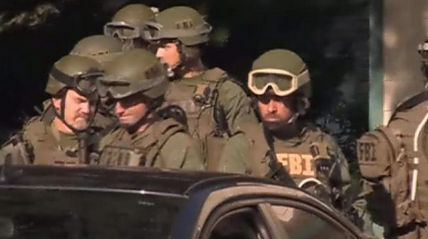
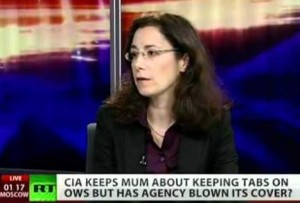
FBI Considers The Occupy Movement A Terrorist Threat: The State of Civil Rights and Public Policy
A few weeks ago the Partnership for Civil Justice Fund released secret documents obtained by Freedom of Information Act requests revealing that the Occupy movement was treated as a terrorist threat by the FBI. This is despite agency acknowledgement that the organizers called for peaceful protests. The documents also show massive resources used to track the Occupy movement, a month prior to the encampment in Zuccotti Park. FBI and counter-terrorism agents in offices across the country, from Anchorage to Jacksonville, to Tampa, Virginia, Milwaukee, Birmingham, Memphis and Denver, coordinated with various local and federal law enforcement, to monitor and collect intelligence on OWS. The documents obtained by the PCJF are heavily redacted and the tip of the ice berg says our guest attorney Mara Verheyden Hilliard. We also talk with Mara about her thoughts on the state of civil rights for the year moving forward.
Attorney Mara Verheyden-Hilliard:
- The Partnership For Civil Justice Fund filed a series of Freedom of Information Act requests with federal agencies, as well as with municipalities and police departments around the country.
- Prior to the FBI materials we have obtained a lot of documents showing the Department of Homeland Security’s involvement as well as local police involvement around the country.
- It doesn’t come as a shock to people that the FBI has continued unabated its historic role as the secret police in the United States, acting against the social justice movement in the US.
- The documents also show us this deep and close partnership the FBI and DHS have with Wall Street, and with the banks and businesses in the United States.
- The documents show the U.S. intelligence agencies and supposedly security agencies really working as the private intelligence arm for private businesses.
- You have the people in the United States rising up in opposition to an economic devastation caused by the banks and by Wall Street and the U.S. government acting in partnership with the banks and Wall Street against those people.
- These documents show for example the FBI was communicating with the New York Stock Exchange in August of 2011, a month before the first tent was set up in Zucotti Park.
- One of the documents we have involves the Domestic Security Alliance Council, where they’re planning on the West Coast port actions of the Occupy movement.
- The DSAC is a government agency that describes itself as a partnership between the FBI, DHS and the private sector. The Lower Manhattan Security Initiative.
- It shows that we’re not looking at something anomalous and aberrational, its pulling back the cloak on what the U.S. government, its intelligence agencies and its “terrorism” authorities is really doing and who its partnering with. It’s against the people of the United States and not for the people of the United States.
- Those people and that movement is then treated by the government as a potential criminal or terrorist threat.
- It helps understand when the government uses the terms of terrorism so broadly and how it uses the authority and the money that it takes from the people of the United States.
- If the FBI had materials that showed criminal activity, they would’ve been delighted to produce some and make those public. That’s not an uncommon action by the FBI given its routine willingness over the years to set people up and announce a big terrorism arrest.
- The sniper reference is a reference in Houston.
- I think it bares pointing out that this FBI, is President Obama’s FBI.
- When the feel the power of the people in the streets, the U.S. intelligence agencies and the local law enforcement agencies go into high gear, because it really is the movement of the people that does cause change.
- At times when it peaks like this, you can really see the truth of their operation.
- It is illegal to use administrative raids for other pretexts.
- We’re appealing both redactions as well as scope of production and scope of search.
Guest – Mara Verheyden-Hilliard, co-chair of the Guild’s national Mass Defense Committee. Co-founder of the Partnership for Civil Justice Fund in Washington, DC, she recently secured $13.7 million for about 700 of the 2000 IMF/World Bank protesters in Becker, et al. v. District of Columbia, et al., while also winning pledges from the District to improve police training about First Amendment issues. She won $8.25 million for approximately 400 class members in Barham, et al. v. Ramsey, et al. (alleging false arrest at the 2002 IMF/World Bank protests). She served as lead counsel in Mills, et al v. District of Columbia (obtaining a ruling that D.C.’s seizure and interrogation police checkpoint program was unconstitutional); in Bolger, et al. v. District of Columbia (involving targeting of political activists and false arrest by law enforcement based on political affiliation); and in National Council of Arab Americans, et al. v. City of New York, et al. (successfully challenging the city’s efforts to discriminatorily restrict mass assembly in Central Park’s Great Lawn stemming from the 2004 RNC protests.)
———
Challenging The National Defense Authorization Act of 2012
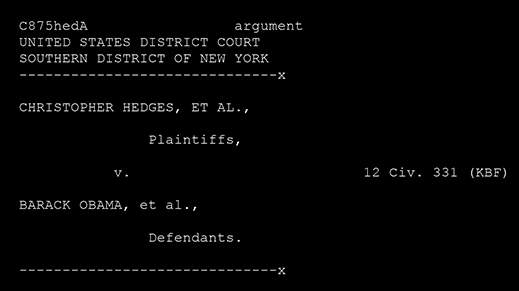
Last September a federal judge struck down part of the National Defense Authorization Act signed by President Obama that gave the government power to indefinitely detain anyone, anywhere in the world it considers to substantially support or be in associative force with terrorism. This includes US citizens. Judge Katherine Forrest of the Southern District of New York had ruled the indefinite detention provision of the National Defense Authorization Act likely violates the First and Fifth Amendments of U.S. citizens.
- Some people call it (NDAA) the Homeland Battlefield Act because it treats the United States as a battlefield and allows the military to exercise power over civilians which is antithetical to our democracy and to our 200 years of Constitutional precedence.
- In May of 2012, we after a trial before Katherine Forrest who’s a federal judge in the Southern District of New York we achieved a preliminary injunction. That was then appealed but the appeal would stay pending a trial on a permanent injunction and on September 12, 2012, Judge Forrest issued a permanent injunction against the NDAA.
- The NDAA was stopped between May 16, 2012 and December 12, 2012.
- However, once that happened, the Obama Administration went into overdrive and immediately appealed that to the Second Circuit and asked for a stay of Judge Forrest’s order pending appeal.
- That stay lifted Judge Forrest’s injunction unfortunately the NDAA of 2012 now operates.
- In their papers, the government promised our clients would not be touched under the NDAA and they seemed to imply that no one in their (clients) position would be touched under the NDAA.
- StopNDAA.org
- People can go there and read Judge Forrester’s 112 page opinion and all the documents from the case.
- What’s at stake is the liberty and the right to free speech of all journalists and all activists and indeed any citizen of the United States of America.
- Because the military has never had the power to detain civilians.
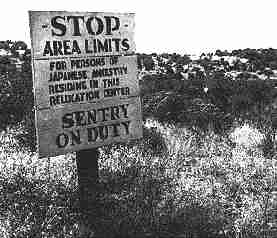
- The only exception to that was during World War 2 when Japanese-Americans were interred in prison camps.
- There’s not right to a trial by jury, there’s no right to an attorney. This an authoritarian measure.
- I would venture to guess your hosts and co-hosts are on a list somewhere.
- Chris Hedges for example was a correspondent for several years that covered not only al-Qaeda but 17 other groups that are one the State Department Terrorism List
- He testified that he had a reasonable fear that the NDAA could put him in jeopardy.
- You know as attorneys what’s incredible about this law is there’s no definitional section.
- It doesn’t define what associated forces are. It doesn’t define what substantially supportive means.
- Chris Hedges was detained by the military for leaving the press pool in Iraq.
- Now the NDAA allows these detentions “until the end of hostilities.”
- It really is a heinous statute.
- We lost the stay but we got an expedited appeal.
- The briefing is complete and we’re waiting for an oral argument date.
- The government has two moves, they say whoever brings the suit has no standing, then if it gets past that point they say, sorry the state’s secrets doesn’t allow you to have discovery here.
- Attorney General Holder stated that Americans are entitled to due process but that doesn’t necessarily means judicial process.
- It takes the view that “during war time” that the judiciary has no role to play.
- The NDAA is the culmination of 10 years of anti-civil liberties measures.
Guest – Attorney Carl Mayer runs the Mayer Law Group LLC and is the author of several books including “Shakedown” and “Public Domain, Private Dominion.” Carl Mayer is a former law professor and served as special counsel to the New York State Attorney General.
——————————————————————————
Law and Disorder December 31, 2012
Podcast: Play in new window | Download
Updates:
- Khaled El-Masri and the European Court of Human Rights Decision
- European Court of Human Rights Labels CIA Interrogation Procedures as “Torture”
—–

Tariq Ali: Turning Points in the History of Imperialism
Today we’re joined by internationally renowned writer and activist Tariq Ali. Tariq is visiting from London where he is editor of the New Left Review.
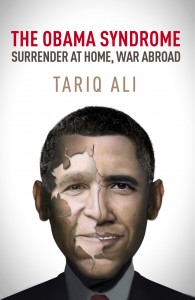
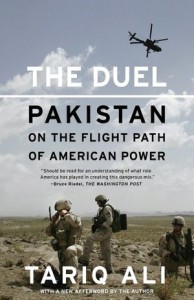
A writer and filmmaker, Tariq has written more than 2 dozen books on world history and politics, including The Duel: Pakistan on the Flight Path of American Power, The Obama Syndrome and On History. We talk specifically about several turning points in global history, the Occupy movement and US elections. .
- The think the first World War was crucial but it wasn’t the war itself it was the consequences of that war. Here you had huge empires.
- The Russian revolution challenged capitalism frontally and its leaders said we want Europe to be with us, on our own we can’t do it. We need the Germans, we need a German revolution. That frightened the capitalist class globally.
- Woodrow Wilson, decided that the time had come to intervene. 22 countries came to intervene.
- This intervention made it impossible for the early infant Soviet Union to achieve what it wanted to achieve.
- The Second World War was an effort by the German ruling class to get its share of the world market in countries.
- The US helped rebuild Japan and Germany. They helped build France and Britain by the Marshal Plan and that has never been done by a big imperial power before.
- They managed to get the Soviet Union to implode by having an arms race. The Russians fell into their trap and decided to go for the arms race, had they not history might have been different.
- I hope the Chinese do not fall into the same trap, threatened by Obama’s puny little bases in Australia.
- People, early settlers in the United States got land totally free and they took it and that created the belief in the American psyche of private property.
- The Soviet Union imploded because the people lost faith in the system.
- The entire elite in the United States and Western Europe is wedded to the Washington consensus that emerged after the collapse of communism. The center piece of this consensus was a system which believed in market forces. I refer to it as market fundamentalism.
- We are confronting the extremism of the center and the result of this is no alternatives exist within mainstream politics. The effect that this is having is hollowing out democracy itself.
- Occupy: What we need is for these movements to call an assembly nationally and discuss a charter of demands for progressive America which need only be ten demands but something around which people can rally. I think its a movement that should be created bearing what the needs of ordinary people are.
- In order to understand the laws of motion of capital, you have to read Marx. It’s true capitalism has become much much more complex. Zombie capitalism, or fictitious capitalism, where money is used to make more money.
- It’s not money that’s creating productive goods.
- I had written a book on South American because I got very engaged in the Venezuela-Boliverian struggle and got to know Chavez very well.
- If Americans had access to Cuban medicine, the pharmaceutical companies would collapse, they would never let it happen.
Guest – Tariq Ali, writer, journalist and film-maker, born in Lahore and educated at Oxford University. He writes regularly for a range of publications including The Guardian and The London Review of Books. He has written more than a dozen books including non-fiction as well as scripts for both stage and screen.
—–
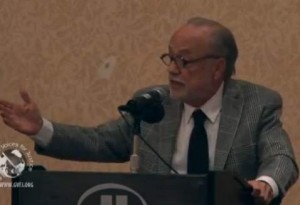
National Lawyers Guild 75 Years
Hundreds of National Lawyers Guild members and allies gathered to celebrate the organization’s 75th anniversary at the Law for the People convention in Pasadena, California. We hear excerpts from speeches from the National Lawyers Guild Convention by Attorney Jim Lafferty The 2012 Law for the People Award was given to Jim Lafferty.
Scholar and activist Angela Davis delivered the keynote address and among the convention honorees will be Margaret Burnham, a professor of civil rights law who, as a young lawyer, helped secure Davis’s 1972 acquittal on high-profile charges.
Founded in 1937, the National Lawyers Guild is the oldest and largest public interest/human rights bar association in the United States. Its headquarters are in New York City and it has members in every state.
Jim Lafferty, Executive director of the National Lawyers Guild in Los Angeles and host of The Lawyers Guild Show on Pacifica’s KPFK 90. 7 FM.
——————————————————————-
Law and Disorder December 24, 2012
Podcast: Play in new window | Download
Updates:
- Hosts Discuss War Culture and the Newtown Connecticut School Massacre
- Letter to University of California President Advising Him of Need to Protect Protect Pro-Palestinian Speech on Campus
- Michael Ratner Remembers Former Federal Judge and Conservative Legal Scholar Robert Bork
- Six Month Anniversary Julian Assange at Ecuadoran Embassy: Free Press Foundation
——
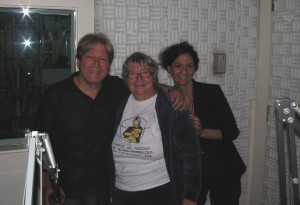
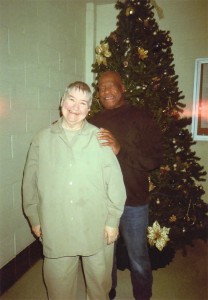
Political Prisoner Lynne Stewart – December 2012 Update
Criminal defense attorney, political prisoner and good friend, Lynne Stewart continues to inspire people around her while serving a 10 year sentence at the Federal Medical Center in Fort Worth Texas. As many listeners know, Lynne was convicted on charges related to materially aiding terrorism, related to her representation of Omar Abdel Rahman. Her original 2 year sentence was increased to 10 years after the government pressured the trial judge to reconsider his sentencing decision.
Co-host Michael Smith reads a few paragraphs from a recent letter by Lynne. Lynne Stewart turned 73 this past October, she’s a breast cancer survivor and has recently come out of surgery. She says she’s feeling better and ready to take on the next step in her case.
“I am now beginning my fourth (4th) year of imprisonment. It does not get better and I have to gut check myself regularly to be certain that I am resisting the pervasive institutionalization that takes place. A certain degree of reclusiveness with the help of good books, interesting people to correspond with, writing on topics of public interest, seems to work for me. Of course I still am working with any woman who needs help but I know that my sometimes truth-telling self is not what folks here want to hear. I do try to give folks whatever comfort I can. An old timer here, 18 years in, has begun an initiative to mobilize for prison reform by getting people on the outside to sign off on her well written petition to the White House. She is straight out of the courage and style of the old southern civil rights struggle but has now dedicated herself to this. The demands are modest. I have placed her petition on this, my website. Please sign on.”
Guest – Ralph Poynter, activist and Lynne’s partner. Please write to Lynne Stewart: #53504-054 / Federal Medical Center, Carswell / PO Box 27137 / Ft. Worth, TX 76127
——
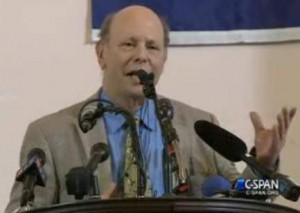
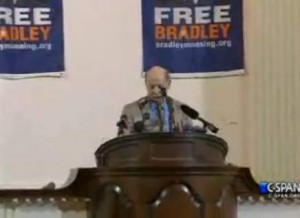
Michael Ratner Speech On Bradley Manning in Washington DC.
We hear a speech by our own Michael Ratner delivered at the Bradley Manning support event. Michael Ratner, President Emeritus of the Center for Constitutional Rights, who represents WikiLeaks and Julian Assange. Attorney David Coombs also speaks about the case of his client, Bradley Manning. He is preceded by Emma Cape of the Bradley Manning Support Network. The event was held at All Souls Church Unitarian in Washington DC, December 2012.
—————————————————–