Welcome to Law and Disorder Radio
Law and Disorder is a weekly independent civil liberties radio program airing on more than 150 stations and on Apple podcast. Law and Disorder provides timely legal perspectives on issues concerning civil liberties, privacy, right to dissent and practices of torture exercised by the US government and private corporations.
Law and Disorder September 17, 2012
Podcast: Play in new window | Download
Updates:
- US Refuses To Extradite Former Bolivian President
- Jose Padilla Re-Sentencing
- Ward Churchill Case Update – Are University Board of Regents Immune?
- Armenia Protests Extradition of Axe Murderer
——
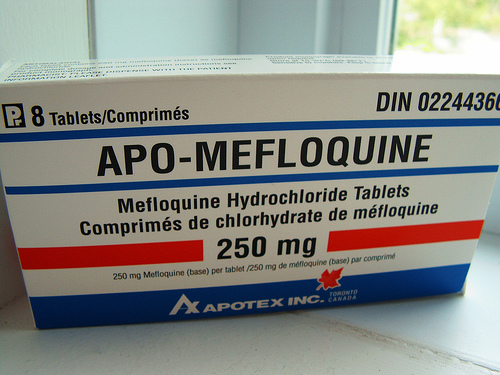
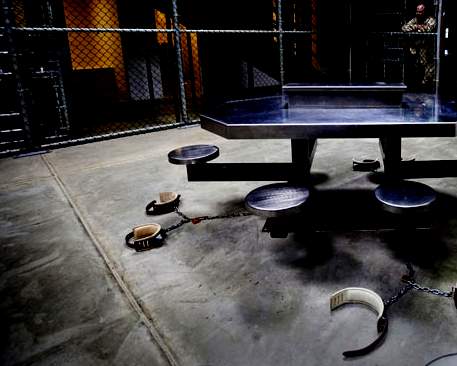
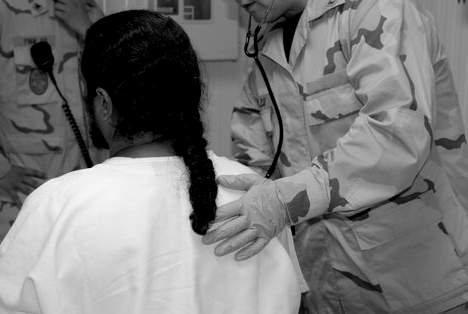
Department of Defense Declassifies Report on Alleged Drugging of Detainees
Hosts discuss a recently declassified report on alleged drugging of Guantanamo detainees with Attorney Shane Kadidal.
Guest – Attorney Shane Kadidal, senior managing attorney of the Guantánamo Global Justice Initiative at the Center for Constitutional Rights in New York City. He is a graduate of the Yale Law School and a former law clerk to Judge Kermit Lipez of the United States Court of Appeals for the First Circuit. In his eight years at the Center, he has worked on a number of significant cases in the wake of 9/11, including the Center’s challenges to the detention of prisoners at Guantánamo Bay (among them torture victim Mohammed al Qahtani and former CIA ghost detainee Majid Khan), which have twice reached the Supreme Court, and several cases arising out of the post-9/11 domestic immigration sweeps.
——
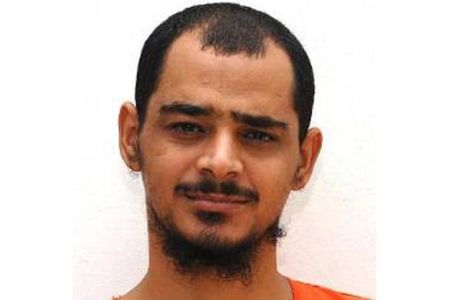
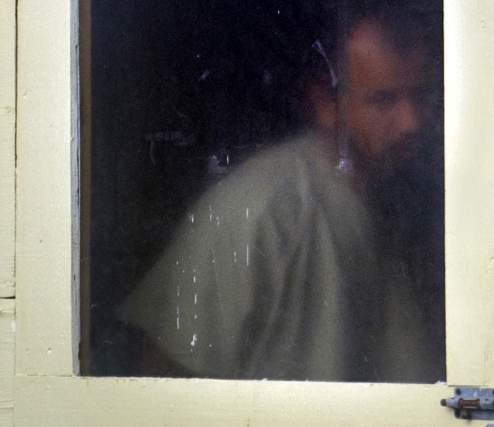
Adnan Latif – the Face of Indefinite Detention – Dies at Guantánamo
A prisoner held at Guantanamo Bay Naval Base since 2002 died last week. Adnan Farhan Abdul Latif was a 32 year old from Yemen who was allegedly suicidal and mentally ill. Latif won a U.S. court order for his release but it was overturned on appeal. In 2009, President Obama imposed a moratorium on Guantanamo prisoners from Yemen after a Yemeni trained Nigerian was found with a bomb in his underwear on a Detroit bound plane in 2009. Latif is the ninth prisoner to die at Guantanamo Bay prison.
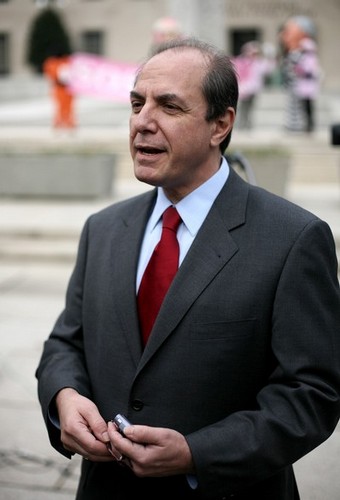
Attorney David Remes:
- We decided to put out a statement by the lawyers. We wanted to call his family but the government said let the ICRC do it.
- He was approved in 2004, he was approved in 2007, and approved in 2009 for transfer out of Guantanamo.
- Adnan filed a habeas corpus petitions in 2004. In 2008 those cases began to move forward, Adnan was among them. He won his habeas case. The whole case against him hinged on an intelligence report that the district court judge said was unreliable. The case was appealed by the Obama Administration.
- He was a very sweet man, he was small, he was thin.
- He was very sensitive and a fine poet. He felt everything more keenly, perhaps more keenly than any of the other detainees.
- He felt that his spirit was being crushed. That he was always being roughed up by the guards. He was on long hunger strikes, he was held in isolation for the majority of his time in Guantanamo.
- He was mentally very fragile.
- At one point in my representation of him in 2009, he slit his wrists as I was speaking with him . . by chipping formica from under the table and cutting into his vein let the blood drip into a little cup and then threw his blood on me.
- I took an inventory of his various bumps, bruises and swellings. It was almost like a doctor’s visit.
- He was a small guy.
- He could be very lucid, he was very intelligent.
- You just have to question the NCIS reports from the beginning.
- Whatever the conclusions that were announced it was Guantanamo that killed Adnan. It ruined his health, it ruined his spirit, it may have led him to suicide.
Guest – Attorney David Remes, a human rights lawyer who has been deeply involved in the litigation on behalf of Guantanamo prisoners since 2004. He represents 16 Yemenis and has made several visits to Yemen to press for his clients’ release and brief their families. He was among the first lawyers to visit Guantanamo after the Supreme Court ruled in Rasul v. Bush in 2004 that the prisoners had a right to legal counsel.
————————————————————————–
Law and Disorder September 10, 2012
Podcast: Play in new window | Download
Updates:
- Bradley Manning Public Access Case: Amicus Brief Filed by Reporters’ Committee for Freedom of the Press
- Southern Poverty Law Center Lawsuit Against Chemically Spraying Students
———
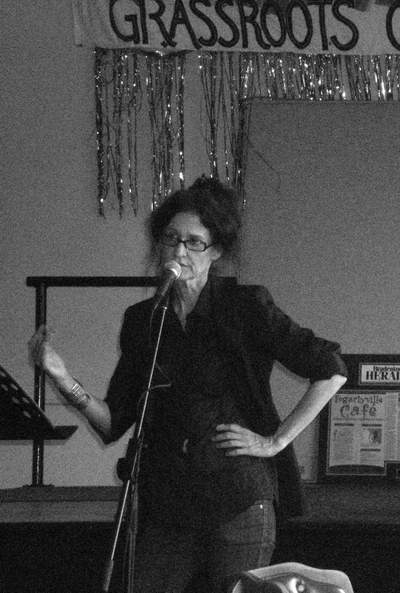
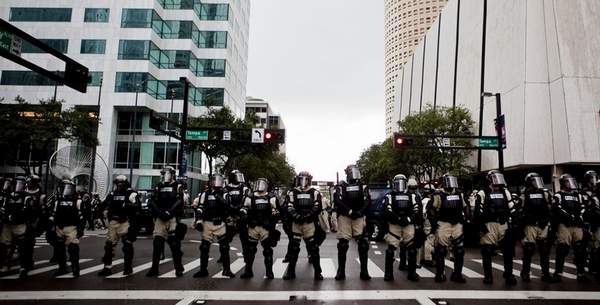
Attorney Heidi Boghosian Speech: National Special Security Events – RNC / DNC
We hear a presentation by our own Heidi Boghosian. Heidi spoke at an event sponsored by station affiliate WSLR FM 96.5 – Sarasota, Florida. As the executive director of the National Lawyers Guild, Heidi had coordinated and organized legal observers during the Republican National Convention in Tampa and the Democratic National Convention in Charlotte. While in Florida, Heidi delivered a talk about the eroding civil rights of protesters during National Special Security events, pre-event surveillance and tactical strategies deployed by police.
Heidi Boghosian is the executive director of the National Lawyers Guild, a progressive bar association established in 1937. She has published articles on policing, protest and the First Amendment including Punishing Protest and The Assault on Free Speech, Public Assembly, and Dissent (North River Press, 2004). Her book reviews have been published in The Federal Lawyer magazine and the New York Law Journal.
———
CCR Stop and Frisk Suit NYC: Floyd et al. v. New York City
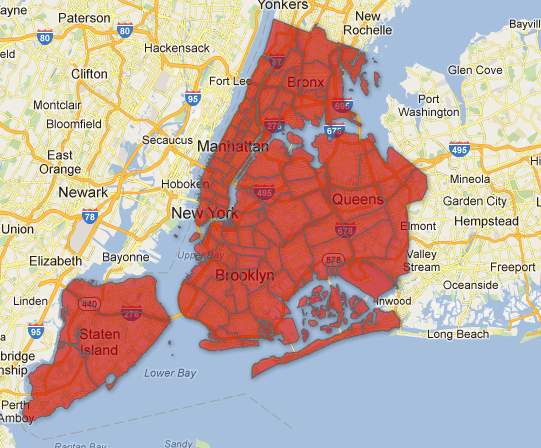
Last month, a federal judge excluded portions of proposed testimony from New York City’s key witness in the Center for Constitutional Right’s Stop and Frisk class action lawsuit Floyd v. City of New York. Judge Shira A. Scheindlin of the U.S. District Court for the Southern District of New York ruled the defendants’ testimony untested and unreliable. The ruling supports that there isn’t evidence that the “Stop and Frisk” practice reduces crime.” said CCR Legal Director Vince Warren (quote) “The ruling soundly rejects the false choice propounded by the NYPD, between living in a safe city and being free of unconstitutional, racially discriminatory policing.”
In 2009 New York City, a record 576,394 people were stopped, 84 percent of whom were Black and Latino residents — although they comprise only about 26 percent and 27 percent of New York City’s total population respectively. Ten years of raw data obtained by court order from the New York City Police Department (NYPD) showed that stop-and-frisks result in a minimal yield of weapons and contraband.
- When we say “stop” were really talking about a detention of somebody’s liberty by the police. Frisk is a pat down of the outside of somebody’s clothing.
- For purposes of the 4th Amendment we are talking about a seizure when somebody is stopped, their liberty is taken away from them for a period of time and when they’re frisked, they’re searched.
- About 99.3 percent of the time the police find no gun.
- According the Supreme Court in a case they decided about 44 years ago, called Terry v. Ohio, for a police officer to stop someone on the street they have to have what’s called reasonable, articulatable suspicion.
- It has to be more than a hunch, or a whim or a subjective belief that somebody’s doing something wrong. It has to be articulatable specific facts that the officer is aware of that would cause him or her to reasonably believe that this person has committed a crime, is in the process of committing a crime or is about to commit a crime.
- If they have reasonable suspicion and they stop to ask you questions, you’re supposed to answer the questions.
- They may ask you for identification, that’s not against the law in New York state. You don’t have to provide it to them.
- You’re free to not answer but depending on what the questions are and if you don’t answer them, that may give the officer a basis to have probable cause to arrest you.
- For the officer to then put their hands on you, they have to have reasonable suspicion that you’re armed and dangerous.
- It can’t be that they think you have drugs in your pocket. Officers often get angry or irritated if you assert the rights that you have.
- What commonly happens in New York and other places is that somebody does assert their rights the officer may retaliate against them by issuing them a ticket for disorderly conduct.
- The person has a right to say “show me your badge” to a plain clothes police officer.
- Stop and Frisk has increased over 600 percent in New York City.
- In New York police are arresting 50 thousand people a year with small amounts of marijuana.
- The New York Police Department Stop and Frisk practices are literally going to be put on trial in a federal court in Manhattan this coming Spring.
- We were certified for a class action in May, so we have a website for class members. Stopandfrisk
- In order to fight crime you need to work together with the community and if the community doesn’t trust you, fear you, that’s not going to happen.
Guest – Attorney Darius Charney, senior staff attorney in the Racial Justice/Government Misconduct Docket. He is currently lead counsel on Floyd v. City of New York, a federal civil rights class action lawsuit challenging the New York Police Department’s unconstitutional and racially discriminatory stop-and-frisk practices, and Vulcan Society Inc. v. the City of New York, a Title VII class action lawsuit on behalf of African-American applicants to the New York City Fire Department which challenges the racially discriminatory hiring practices of the FDNY.
—————————-
Law and Disorder September 3, 2012
Podcast: Play in new window | Download
Updates
- Michael Ratner: Update on Verdict – Corrie v State of Israel
- Cardinal Dolan Who Approved Payoffs For Priests Accused of Sex Abuse To Leave Priesthood Gives Speech At RNC and Closing Speech for DNC
—–
Islamophobia: Anatomy of an American Panic
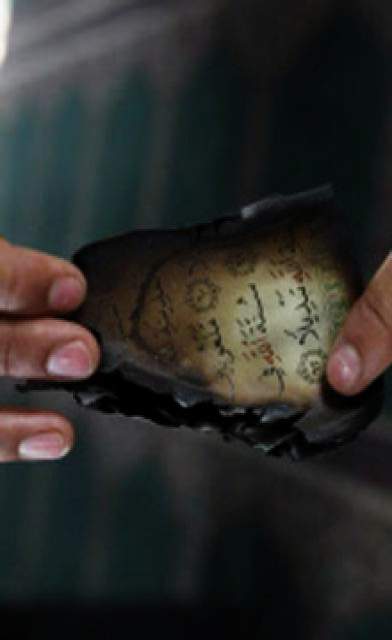
In the last few weeks, 8 places of worship connected with South Asians or Middle Easterners have been targets in the United States. As many listeners know, six people were murdered at a Sikh temple in Oak Creek, Wisconsin but later that evening a mosque in Joplin Missouri was burned down. Other targets recently included mosques in Rhode Island, Southern California, Oklahoma City and Dearborn, Michigan. These tragic events mark another wave of existential Muslim threats inciting fear and violence against Middle Eastern people while helping to justify the ongoing war on terror.
According to the University of Maryland’s National Consortium for the Study of Terrorism and Response to Terrorism, since 9/11 to 2010 there have been 155 terror incidents in the U.S., and exactly two of them or 1.3 percent have been attributed to international Islamist terror groups. The majority of events involved individuals such as anti-abortionists, right-wing extremists, or extreme animal rights activists.
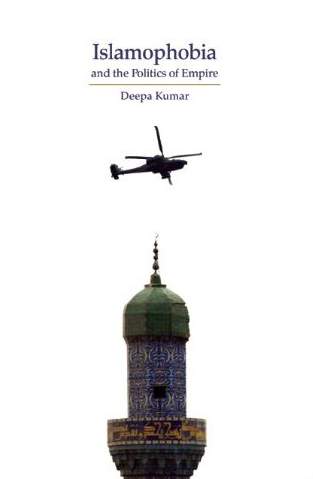
The Nation Magazine has highlighted the disproportional focus put on Muslim communities in a special issue titled “Islamophobia: Anatomy of an American Panic.” We talk with journalist Lizzy Ratner and authors Deepa Kumar and Moustafa Bayoumi who contributed articles to the Nation Magazine special.
- The Nation did a special issue about Islamophobia. It came out in the beginning of July. You can still find the majority of the articles online. The real credit has to go to Abdeen Jabara whose idea this really was.
- The civil rights attorney came to me last year and said the anti-Arab, anti-Muslim has reached fever-pitch.
- So I began to do some research about what exactly was going on and very quickly compiled a massive roster of possible articles.
- For the most part, the Left and Progressives have been far too quiet.
- This bigotry that is flourishing right now has a real history, it’s not a just a product of 9/11 and the post 9/11 era.
- Some of the seeds of bigotry have to do with the role of the United States historically in the Middle East.
- Islamophobia served an agenda and a number of purposes.
Guest – New York City journalist Lizzy Ratner has written extensively for the Nation and Alternet on issues involving Islamophobia. Lizzy is also co-editor of The Goldstone Report: The Legacy of the Landmark Investigation of the Gaza Conflict.
——
- I was happy to see that the Nation was happy to take on the question of Islamophobia for a double issue.
- There’s been a shift in the last ten years from paranoia around security to a paranoia about the basic facts of Muslim life in the United States.
- In a way you can say it’s a shift from security to culture.
- At any stage, anything that has to do with a daily concerns about living a life as a Muslim American, somehow now becomes charged with sedition. Part of the funding of the anti-Muslim movement in the United States is basic conservative politics and extreme conservative politics.
- And also due to the Israel-Palestine conflict. So people who want to come aboard Israel will make a very distorted picture of what Muslim life is like.
- The NYPD has now a decade long history of “othering” the Muslim-American community.
- The NYPD had been screening The New Jihad for its new recruits.
- It’s a crazy film saying that all of the American Muslims are here as a fifth column ready to pounce. It’s a training film for new recruits. That’s true for the Pentagon and the FBI.
- Muslim Americans are still seen as perpetual foreigners.
- That Muslim American rights are different than everyone else’s rights.
- You’re average American consumer of media does not relate to the victims of the Oak Creek massacre because they don’t see them as being part of the American family.
- They asked American’s in this poll, and 62 percent of the population has never met a Muslim.
- If you’ve never met a Muslim then it’s very easy to believe all these boogey man ideas. That’s why media plays an important role in this issue.
- The FBI (training manual) said that it was in the nature of Muslims to try to take over this country.
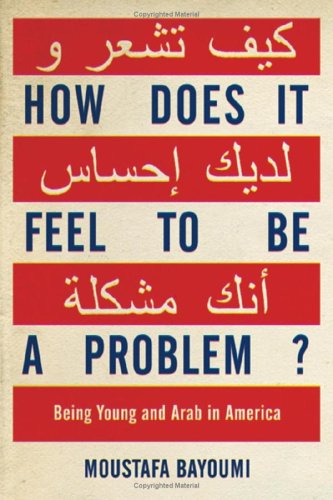
Guest – Author Moustafa Bayoumi wrote Fear and Loathing of Islam joins us, his book : Being Young and Arab in America, won an American Book Award and the Arab American Book Award for non-fiction. He is also a professor of English at Brooklyn College, City University of New York.
——
- As of late the anti-Muslim statements coming from Michelle Bachmann, Joe Walsh, all of whom are Republicans, there is a sense of which it is the Republicans who are responsible for Islamophobia, for the demonization of Muslims and so on.
- This brand of the war on terror gets hatched and part of that was language developed in the 1990s, called the Clash of Civilizations. It was a man named Bernard Lewis who first penned this term.
- It’s not so much we’re going to carry out revenge on Osama Bin Laden but that we’re going to rescue Afghan women. In the case of Iraq, we’re going to bring democracy when no weapons of mass destruction were found.
- This rhetoric has a long history it goes back to the 19th century.
- Both presidents need Islamophobia. They need to generate this fear and hatred of the “Muslim other.”
- Operation Boulder
- The Jonathan Institute holds this conference in Jerusalem . . Islamofacism, the roots are sown at that conference.
- The idea of this menacing Muslim enemy is not new. It was not something created after 9/11 but in fact it goes back a millennium.
- It’s about political goals but religious rhetoric gets used. Same thing with the re-conquest of Spain.
- The Islamophobic rhetoric is one that’s mobilized by the elite.
- I hold both Republicans and Democrats responsible. These rabid right wingers get their confidence from mainstream figures like Walsh, like Bachmann and others.
- The sad reality is that the Democrats have done nothing to counter this.
- The Democrats are not an ally in this fight.
- I take inspiration from 2 movements in the sixties, the civil rights movement and the anti-war movement. I think these 2 strategies need to come together in fighting Islamophobia.
- We have to take on both the far right and challenge the priorities of empire and bring together a multiracial coalition that can actually change a generation.
- It was President Clinton with Anti-Terrorism and Effective Death Penalty Act in 1996 which made it legal to actually deport people with secret evidence. We know this lays the basis for the Patriot Act. This has really been a bipartisan project in the interest of empire.
Guest – Deepa Kumar, an Associate Professor of Media Studies and Middle Eastern Studies at Rutgers University. Her work is driven by an active engagement with the key issues that characterize our era–neoliberalism and imperialism. Her first book, Outside the Box: Corporate Media, Globalization and the UPS Strike (University of Illinois Press, 2007), is about the power of collective struggle in effectively challenging the priorities of neoliberalism.
———————————————–