Welcome to Law and Disorder Radio
Law and Disorder is a weekly independent civil liberties radio program airing on more than 150 stations and on Apple podcast. Law and Disorder provides timely legal perspectives on issues concerning civil liberties, privacy, right to dissent and practices of torture exercised by the US government and private corporations.
Law and Disorder December 17, 2012
Podcast: Play in new window | Download
Updates:
- Heidi Boghosian: EyeSee Mannequins and Surveillance State: “In-Person Community” Destroyed
- Michael Ratner: Bradley Manning Case Update
- New York Times Fails To Cover Manning Testimony
- Michael Ratner: Julian Assange Ecuador Embassy Update
——


Marijuana Laws: State Votes v. Federal Government
Washington State and Colorado are the first political jurisdictions to legally approved marijuana to be regulated like alcohol. However, federal laws explicitly criminalize marijuana transactions and the federal government can continue to enforce those laws by blocking the progress of state initiatives. For example, it’s likely that the federal authorities will step in when large transactions and large scale production begin in Washington or Colorado. Meanwhile, the Colorado provision allows personal possession of up to an ounce of marijuana and the growing up to six plants at home.
- Colorado and Washington are the first 2 political jurisdictions in the world to do this.
- The United States of America is emerging as the global leader of marijuana law reform.
- As of now it’s legal under state law to possess up to an ounce of marijuana and in Colorado legal to have up to six plants in the privacy of your own home.
- Parts of the initiative that authorize the state to set up a legal regulatory system like with alcohol that doesn’t kick in in Colorado until July, and in Washington state until next December.
- Not in public, let’s be clear.
- My colleagues at Drug Policy Alliance led a broad coalition effort and pushed back the mayor and police chief, rallied the DA’s to say this policy (stop and frisk) made no sense.
- The opportunity here for the federal government to say, let’s get Washington and Colorado a chance to figure this out; a way to effectively regulate this stuff.
- From the public health perspective if you have something that’s being consumed by millions of Americans you want authorities regulating quality and potency.
- The Federal Controlled Substance Act of 1970 is in conflict with this.
- There are now 18 states that have legalized marijuana for medical purposes. Colorado already has a model of regulation on marijuana in respect to medicinal use.
- The fact is you hundreds if not thousands of dispensaries in many states, some are very open ended such as California.
- If the Feds prevent the state governments in Washington and Colorado from responsibly regulating this stuff, you’re essentially going to have a defacto alliance between the federal government on one side and an irresponsible elements of the marijuana community on the other.
- The worst possible thing in Mexico is the legalize drugs in the US. They would lose out just like Al Capone after the alcohol prohibition.
- Latin American leaders: They know that what Washington and Colorado did is the beginning of the ending of the global drug prohibition system which has wreaked havoc in that region for decades.
- People are realizing that among the other ingredients in marijuana, CBD which is the anti-anxiety and anti-inflammatory property of marijuana.
- It’s all about reducing the harms of drugs and the harms of failed prohibitionist policy.
Guest – Ethan Nadelmann, founder and executive director of the Drug Policy Alliance, the leading organization in the United States promoting alternatives to the war on drugs.
—–
Egypt and Syria Update: Glen Ford
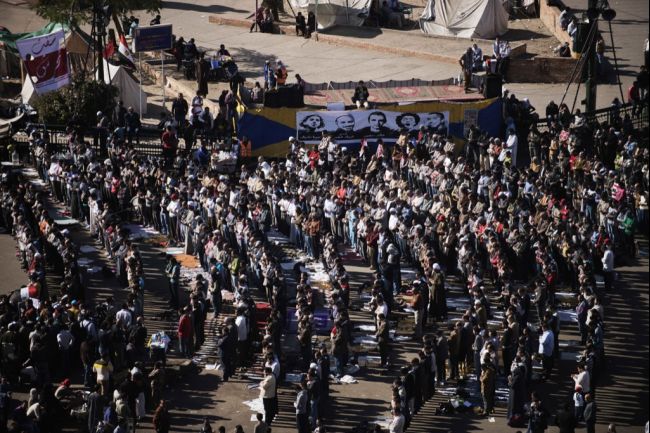
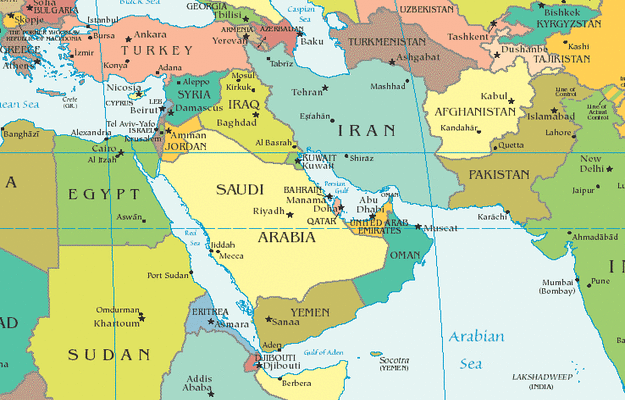
Protests and violence continue in Egypt as Islamist President Mohamed Morsi pushes toward ratifying a draft constitution. Egyptians who oppose the controversial new constitution argue it weakens human rights doesn’t guarantee women’s rights and that it was written by an Islamist dominated assembly. The opposition National Salvation Front says it will not recognize the draft constitution. We talk about that and the disturbing events unfolding within the ongoing conflict in Syria with Glen Ford, founder of the Black Agenda Report. We welcome him back to Law and Disorder. Glen Ford is also a founding member of the Washington chapter of the National Association of Black Journalists.
- In the Muslim world, the Left has been decimated not once, not twice, but over and over again in the last 50 years. That’s occurred in Egypt, in Syria, in Iraq.
- It would be expected that in Egypt, the part of secular Egypt that is Left, secularized would represent 15-20 percent of the people.
- The language of politics in that world is spoken in an Islamic dialect.It’s difficult for Left folks here to understand it.
- Leftists here get confused by the corporate media which inflates business secularists in contests all over the world.
- How many people realize that the opposition party, party number two, in Russia is the Communist Party?
- Everybody is at work in Syria, Qatar and Saudi Arabia and the Emirates, and freelance millionaires from all over the region are sponsoring their own brigades and fighting forces.
- Before the CIA and the Pakistanis got together to create a force to fight the Soviets in Afghanistan no such thing existed as a national Jihadi network.
- Syrian situation really heated up after the fall of the “Libyan regime”. 600 to 900 of the Libyan Jihadis were then sent directly to Syria.
- It’s really not in U.S. hands.
Guest – Glen Ford, founder of the Black Agenda Report and many other media forums. Ford was a founding member of the Washington chapter of the National Association of Black Journalists (NABJ); executive board member of the National Alliance of Third World Journalists (NATWJ); media specialist for the National Minority Purchasing Council; and has spoken at scores of colleges and universities.
————————————————————–
Law and Disorder December 10, 2012
Podcast: Play in new window | Download
Updates:
- Michael Ratner: Attends Bradley Manning Hearing
- Psychiatrist Testimony: Manning Not A Suicide Threat
- Rumsfeld Techniques: Stripping, Lights 24 Hours, Sleep Disruption, Solitary
- Manning Testifies About Torture; Was it Aimed at Turning Him on Assange with Michael Ratner
- First Presentation by David Coombs –Manning Attorney with Michael Ratner
- Michael Ratner Discusses Jeremy Hammond Case On “Hactavist Entrapment” RT TV
- Michael Ratner: Manning Describes Cruel and Unusual Punishment; Offers Plea Deal
- Daniel Ellsberg, Michael Ratner and Jessalyn Radack Discuss Bradley Manning Trial: HuffPost
—-
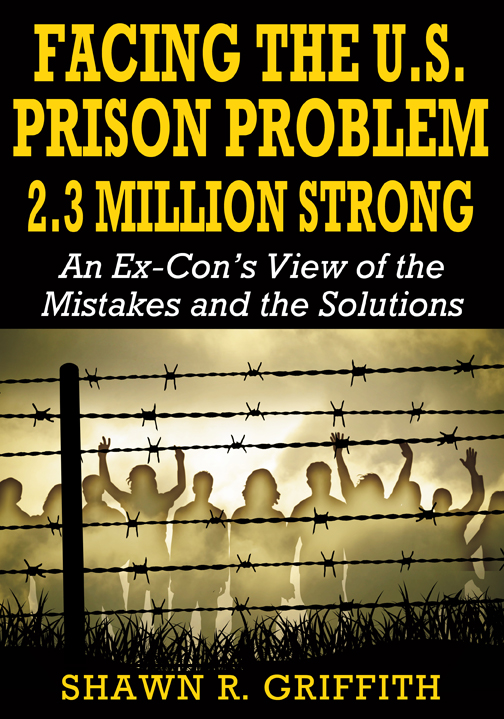
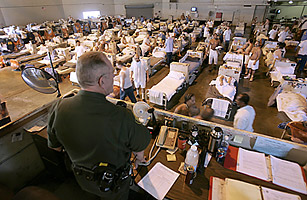
Facing The U.S. Prison Problem 2.3 Million Strong
As many listeners may know the United States has incarcerated more people than any other country in the world, and also within the history of humanity. The newly published book titled Facing The U.S. Prison Problem 2.3 Million Strong by Shawn Griffith gives the reader a rare perspective from an ex convict who served a 20 year sentence in some of the harshest conditions. These include being confined to a small cement cell in the late Florida summer without sheets, laying in pools of sweat on a plastic covered mattress. Vindictive prison guards and case workers in the criminal justice system had made life nearly unbearable for Shawn Griffith. His book hopes to inspire movement building among the families of prisoners to develop a non-profit corporation called the Prisoner Family Union.
- As a youngster, it was a very difficult childhood.
- My parents were very religious, there was a lot of alcohol abuse.
- Early on I went on a truth seeking thing. I also became very rebellious at a young age.
- At 16, I met these people who were crack cocaine addicts. They were the only place I could find to stay off the street. They introduced me to the drug, which I had no knowledge of, how addictive it was.
- Then they told me I had to help them support their habit. They started training me, taking me to homes showing me how to burglarize them, steal cars, a number of things to support our habits.
- When I committed an armed robbery for 100.00 ended up with a 24 year sentenced in which I did 20 years.
- I knew that I had some emotional problems, I started studying psychology for about 4 years. By the age of 23, I attempted to escape initially.
- In Chapter 1, where I explain in detail, some of the sentencing laws that were passed in Florida, those same laws that were passed show decreases in crime rate before the laws were instituted.
- Inmates and their families are by majority below the poverty line. They don’t have a lot of resources to fight back.
- These large groups that influence the correctional system, they are unionized.
- Speakoutpublishing.com
Guest – Shawn Griffith, founder of Speak Out Publishing and has been an institutional teacher of adult basic education for the past sixteen years. He has received many teaching and writing awards from professors and others with whom he has worked, as recently as 2011. He is author of the recently published book Facing The U.S. Prison Problem 2.3 Million Strong
———-
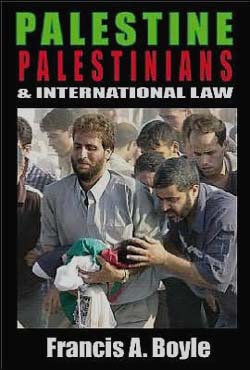

Professor Francis Boyle: Palestine Observer Status
Now that Palestine has been voted in as a new non member state status within the United Nations, Palestinian leaders can join the International Court of Justice and the International Criminal Court and challenge Israel’s violations of international law. We talk with Professor Francis Boyle, the leading expert in international about his role as a Palestine observer. In his book Palestine, Palestinians and International Law, Professor Boyle outlines 6 critical points, among them are:
1. “Palestine can join the Rome Statute for the International Criminal Court and file a Complaint with the ICC against the illegal settlements and settlers, who are committing war crimes;
2. “Palestine can join the Statute for the International Court of Justice, sue Israel at the World Court, and break the illegal siege of Gaza;
3. “Palestine can join the Law of the Sea Convention and get its fair share of the enormous gas fields lying off the coast of Gaza, thus becoming economically self-sufficient;
4. “Palestine can become a High Contracting Party to the Four Geneva Conventions [this deals with the laws of war];
5. “Palestine can join the International Civil Aviation Organization and gain sovereign, legal control over its own airspace;
6. “Palestine can join the International Telecommunications Union and gain sovereign legal control over its own airwaves, phone lines, bandwidths.”
Professor Boyle is the author of many books including Palestine, Palestinians and International Law, The Palestinian Right of Return Under International Law, and United Ireland, Human Rights and International Law.
- The negotiations between Israelis and the Palestinians broke off because Israel continued to build settlements. The Palestinians took the position that well, we’re negotiating over a pizza while you eat it.
- I went back with them with a proposal longstanding with President Arafat, that we apply for membership in the United Nations organization.
- That was approved by the PLO executive committee. The Obama Administration bottled the application up in the UN Security Council.
- The mainstream news media has it wrong, Obama can exercise over their admission if they want to, but under the Uniting For Peace Procedure, they can turn it over to the General Assembly where Palestine can be admitted as a full fledged state by a 2/3 vote.
- They took an intermediate step last Spring, the PLO executive committee that serves as the provisional government for the state of Palestine created by the 1988 Declaration of Independence, voted to apply for UN observer status.
- Look at what Switzerland did from the founding of the United Nations to about 10 years ago as a UN observer state. Palestine can now if it wishes join pretty much every international organization in the world and treaties.
- They can simply use the Swiss model, join the International Criminal Court, join the International Court of Justice, join the Law of the Sea convention, join the International Civic Aviation Convention.
- We already filed a complaint with the ICC after Operation Cast Lead.
- If you follow the Israeli press they’re deathly afraid of prosecution by the ICC.
- The step we saw last week, took two years in the making. The Palestinians had to go all over the world to line up that support.
- It’s been my advice, we go after the settlements now – what they do is up to them (PLO)
- The second legal step is to sue Israel at the International Court of Justice at the Hague. The so called World Court of the United Nations system.
- I’ve offered to do that work for them and try to break that genocidal siege of Gaza.
- You or I aren’t going to decide this.
- We have to stand back and support the Palestinians and let them decide what they’re going to do.
Guest – Professor Francis Boyle, leading American expert in international law. He was responsible for drafting the Biological Weapons Anti-Terrorism Act of 1989, the American implementing legislation for the 1972 Biological Weapons Convention. He served on the Board of Directors of Amnesty International (1988-1992), and represented Bosnia-Herzegovina at the World Court. He served as legal adviser to the Palestinian Delegation to the Middle East peace negotiations from 1991 to 1993.
In 2007, he delivered the Bertrand Russell Peace Lectures. Professor Boyle teaches international law at the University of Illinois, Champaign and is author of, inter alia, The Future of International Law and American Foreign Policy, Foundations of World Order, The Criminality of Nuclear Deterrence, Palestine, Palestinians and International Law, Destroying World Order, Biowarfare and Terrorism, Tackling America’s Toughest Problems, and The Tamil Genocide by Sri Lanka. He holds a Doctor of Law Magna Cum Laude as well as a Ph.D. in Political Science, both from Harvard University.
—————————————————————————-
Law and Disorder December 3, 2012
Podcast: Play in new window | Download
Updates:
- Judge Shira Scheindlin of Federal District Court in Manhattan To Rule In Stop and Frisk Case
- NYPD Subpoena Phone Records of Stolen Phones – Amassing Database
- Julian Assange Book – Cypherpunks
- Bradley Manning Hearing Update
- Husband of Jeremy Hammond’s Judge Victim Of Stratfor Email Hack
——–


Who Bombed Judi Bari? is a recently released documentary film about the car bombing of labor and environmental organizer Judi Bari. Judi Bari was a natural leader that rallied thousands of activists to camp out and protest the clearcutting of red wood forests during the timber wars in 1990’s. Though Judi was crippled and in chronic pain from the car bomb, she went on to sue the authorities for civil rights violations winning a settlement but eventually died from cancer seven years after the bombing.
- Judi Bari was a union organizer and an Earth First organizer, she was the mother of two children, a professional carpenter, here in the Redwood region of California.
- That in a way is what made her so dangerous to the status quo because that what we know so well, a world divided and conquered by those that would rather us fight each other than those at the top.
- Judi Bari was a unifier, she was somebody who brought loggers, timber workers, mill workers, truck drivers together with environmentalists to find our common goals, and to focus attention on the corporate elites who are manipulating all of us.
- The issues are the same today as they’ve been for the last 6000 years of recorded history.
- Human beings have been logging the forests since the cedars of Lebanon. Judi was taking on the issue of mowing down ancient Redwood trees that stand 350 feet tall, 15 feet wide, 2000 years in age.
- A single Redwood can hold 4000 gallons of water. They’re worth 50 thousand dollars a piece.
- Redwood Summer did emulate Freedom Summers sometimes called Mississippi Summers in the deep South.
- The point was the same as long as things happened in the deep South without anybody looking, they could continue, Jim Crow would continue.
- The mowing down of our eco-system which we believe is a civil rights movement as much as a environmental movement because our ability to live on this planet depends on our ecosystem staying intact.
- We invited college kids as well as anyone who wanted to participate and that’s what Redwood Summer was.
- We received about 3 dozen death threats mostly by letter, by phone and some in person over a short period of time, about a month and a half, right after we announced Redwood Summer.
- We decided to get out of rural areas, so we were touring universities, as we were leaving Oakland, where Judi had spent the night heading toward Santa Cruz. Judi ordered me into her car, we drove for a couple of minutes a bomb exploded under her seat.
- Fracturing her pelvis, causing intestinal damage, pulverizing her lower vertebrae.
- Instantly within 5 minutes the FBI and Oakland Police showed up.
- They knew the bomb was a booby trap, designed to only go off in a moving car.
- They looked at the death threats and immediately dismissed them as irrelevant.
- Violence is a dominant gene. You can have a thousand peaceful people but one violent person can ruin for everybody else.
- The FBI and the Oakland Police were eventually found liable for violating the First Amendment of the US Constitution. It wasn’t that they were mistaken, they knew we were innocent.
- They found the motion trigger that said the bomb could only go off in a moving vehicle.
- Right to her death, the FBI and the Oakland never asked Judi one question.
- Judi Bari was a full-time working carpenter. She supervised a construction crew.
- WhoBombedJudiBari.com
Guest – Darryl Cherney, born in New York City where he was a child actor. For 20 years he has been an activist, topical singer -songwriter and organizer in Humboldt County California. He helped spearhead the successful campaign to protect the redwoods, including Headwaters Forests, now a national preserve. As creator and president of Environmentally Sound Promotions, the non-profit organization, he has produced five albums of his original songs dedicated to environmental protection. He also produced Judi Bari?s spoken word CD, Who Bombed Judi Bari?, and the benefit compilation, If a Tree Falls.
—
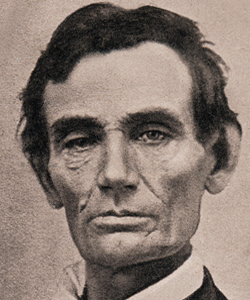
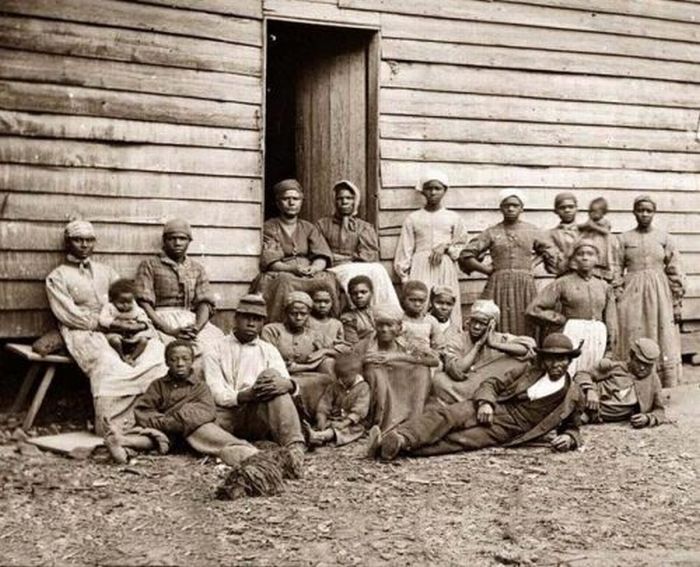
Lincoln 2012: Analysis
As many listeners may know the recent film titled Lincoln hit theaters this fall. The film recounts how President Abraham Lincoln’s efforts to pass an amendment to the United States Constitution that would formally abolish slavery in the country. In January of 1865, Lincoln was expecting the Civil War to end within a month but concerned that his 1863 Emancipation Proclamation may be discarded by the courts once the war ends and the 13th Amendment defeated by the returning slave states. In the film, we see Abraham Lincoln working to pass the amendment by the end of January.
- Its a civil war movie that unlike so many others properly places slavery and the Republican Party’s determination to see slavery die at the center of the story.
- I think the movie is deficient in a number of ways. The prior course of the war. The growth of anti-slavery sentiment in the Union.
- It wasn’t Lincoln who came up with the idea of the 13th Amendment.
- Compromise and political manipulation was not at the heart of the success of Lincoln’s presidency.
- What we should be recognizing as Lincoln’s greatness is not is ability to bend, but his refusal to do that at most of the important points on which he was challenged.
- By the end of the civil war closer to 200 thousand black men served either as Union soldiers or sailors.
- This is somebody who grew during his presidency. He grew intellectually, and he grew politically and morally.
- Fall of the House of Dixie attempts to tell the story of the American Civil War as a social and political revolution.
- As slavery began to break down during the course of the US Civil War.
Guest – Professor Bruce Levine, is the James G. Randall Professor of History at the University of Illinois, Urbana-Champaign. A noted scholar of the Civil War, he is author of Half Slave and Half Free: The Roots of Civil War (2nd ed., 2005), Confederate Emancipation: Southern Plans to Free and Arm Slaves during the Civil War (2005), and The Fall of the House of Dixie: The Destruction of Slavery and the Old South during the Civil War (2013). Levine will deliver a lecture on recent trends in Civil War scholarship.
—————————————————————