Welcome to Law and Disorder Radio
Law and Disorder is a weekly independent civil liberties radio program airing on more than 150 stations and on Apple podcast. Law and Disorder provides timely legal perspectives on issues concerning civil liberties, privacy, right to dissent and practices of torture exercised by the US government and private corporations.
Law and Disorder June 4, 2012
Podcast: Play in new window | Download
Updates:
- Law and Disorder Tip of the Hat Award – EPIC – DHS Words
- Julian Assange Case Update – Extradition In Sweden – Hillary Clinton Going To Sweden
- Bradley Manning Support Committee
————–
Wisconsin Governor Recall Election
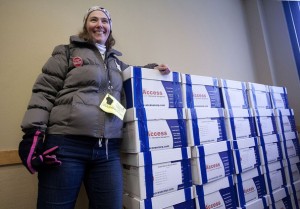
As many listeners may know, it’s a crucial week for Wisconsin and perhaps the country. Since February of last year, Wisconsin’s left leaning capitol city has been filled with demonstrations, mass mobilization, and amazing citizen activism that has led up to the Governor’s recall election this week. This also comes after 30 thousand volunteers throughout the state gathered more than a million signatures on recall petitions. It’s been framed by United Wisconsin, the group who organized the recall, as the ability of the people in Wisconsin to control their own destiny versus money from millionaires outside the state. Governor Walker has made deep cuts to public education, he’s taken away public worker bargaining rights, and has moved to take away state legislature open meetings.
- What’s going on here is a grassroots rebellion of a corporate take over of our state.
- It’s been a really dramatic time here beginning Walker in his own words, dropped the bomb by ending public employees collective bargaining rights, etc.
- It’s been out and out war on society here.
- What we’ve seen in response to this very right wing radical take over is a democratic movement that is almost unprecedented. Hundreds of thousands of people in these mass rallies a year ago and now this grass roots petition drive
- There was so much pressure from grassroots volunteers and neighbors to gather signatures, to recall our governor and now we’re going to have an election.
- Governor Walker actually wrote a piece of legislation for pharmacists to decide whether to dispense birth control to women.
- He’s pushed through a variety of his agenda items that include closing Planned Parenthood clinics across our state which provide basic healthcare, very often the only healthcare provider to rural women in Wisconsin.
- He’s criminalized abortion doctors whose patients fail to jump through some onerous hoops which has made medical abortion a thing of the past in Wisconsin.
- He rolled back our pay equity law here.
- I think women in particular have been hurt by Walker’s agenda, and have led a lot of the rebellion against Walker.
- A lot of these are ALEC American Legislative Exchange Council bills that are being pushed nationally and in states across the country. Walker himself was a member of ALEC, where we have a number of state legislators who are members of ALEC so its been quite aggressive.
- There’s a sense that the grassroots is really dragging the leadership along on this.
- This is really about a fight over democracy and whether citizens have a voice in their democracy.
- We’re expecting a turnout on par with a presidential election on this recall race.
- It’s a battle between the citizen uprising and the incredible power of all this money. It’s a multi-front attack, the electoral part is a piece of it.
- There was a really spontaneous thing that happened, it wasn’t such a coordinated, planned event and it was incredibly thrilling to be part of it with my kids and their teachers.
- By re-opening the Las Vegas loophole in Wisconsin which allows corporations to hide their profits out of state and pay no corporate income tax, our state has lost the same amount of money that Walker took out of our technical college system.
- We (Wisconsin) are transferring wealth to corporations. Undoing the damage in Wisconsin is going to take a lot of time.
Guest – Ruth Conniff, Political Editor of the Progressive Magazine, a native of Madison, WIsconsin, she first joined the magazine when she was hired as a summer intern by the late Erwin Knoll after her sophomore year at Yale. Shortly after graduating from college in 1990, she came to work as Associate Editor for the Progressive, becoming Washington Editor and opening the Progressive’s Washington, DC, office in 1997. During the 1990s, Conniff covered welfare reform in Wisconsin and around the country, as well as the drug war in Colombia, and other topics, including women’s sports (an avid runner, Conniff coached her old high school track and cross-country teams at Madison East High School for many years).
————-


ACLU Tries To Halt Single-Sex Classes In Maine
Single-gender classes may violate federal law by relying on gender stereotypes. That’s what the ACLU is saying in several states, including Massachusetts, Indiana, Idaho, Washington, Illinois and Maine. The Maine ACLU is calling for the Sanford school district to stop offering single gender classes which they say may violate Title IX, the federal law that addresses gender equity in federally funded education programs.
Examples of improper gender stereotypes include sixth-grade girls discussing current events over cocoa while boys create an exercise area in the classroom and earning points toward prizes from the National Football League.
The ACLU has asked for public request requests public records requests and is reviewing records or has pending requests in other states, including Alabama, Wisconsin, North Carolina, South Carolina and Virginia.
- All children are entitled to equal access to education regardless of their sex, that’s what the law says, that’s what the Constitution says.
- These same sex classrooms have a danger of reinforcing stereotypes about learning. They separate kids out by sex, and then apply these outmoded stereotypes.
- In terms of how they conduct those classes, and that does a terrible disservice to both boys and girls.
- In the boys program, the boys have signed up for this exercise program called NFL experience where the boys could do exercise in the morning and earn different points, depending on how much exercise they do. In the girls class, no NFL experience the girls have hot cocoa, read the local newspaper and discuss current events.
- There’s a national organization that’s been promoting these same sex programs around the country. They have this totally unscientific idea about how their brains develop and the scientific literature is very clear, that same sex classes don’t actually connect well with the physiology of boys or girls.
- We’re seeing it play out across the country, where people object to these program, because they are being excluded, and that’s what Title IX says – you can’t exclude students from educational programs on the basis of sex.
- I think what we are seeing, the large trajectory of public education in this country has been toward breaking down these stereotypes, of more opportunities for girls who have been traditionally excluded because of these stereotypes.
- In Wood County WV, for example, the girls sit in their class room in circular tables and the boys sit in rows – then you look at the reasoning why they do that.
- Boys apparently if they have to look at each other in the eyes, they will become aggressive.
- Girls don’t learn well under pressure, they don’t respond well to deadlines.
- You start telling girls from a young age you don’t respond well under pressure, guess what they’re not going to learn how to deal with pressure as well, and that is dangerous.
- ACLU – Women’s Rights Project
Guest – Zachary Heiden, Legal Director of the Maine Civil Liberties Union Foundation, the Maine state affiliate of the ACLU. He received his A.B. from Bowdoin College, his M.A. in English from the University of Florida, and his J.D. from Boston College Law School, where he was the managing editor of the International and Comparative Law Review.
———


Quebec Students Protest Against Tuition Hikes and Bill 78
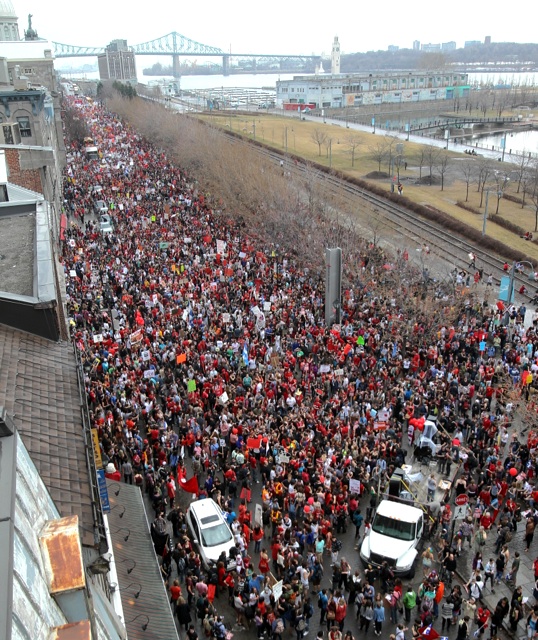
Austerity is taking its toll in many countries, as public services are cut, federal jobs are slashed and tuition hikes are pushed onto the younger generations. Canada is no exception. For the past 3 months, students in Montreal, Quebec, Canada have poured into the streets waging a massive strike against rising college tuition fees. Last week, the government proposed an offer to end the strike but student leaders have so far refused to recommend the deal to students.
Meanwhile, the Quebec government introduced an emergency legislation Bill 78 – the bill would suspend the academic year and make demonstrations of more than 50 people illegal unless police had been served with an itinerary 8 hours in advance. The new law, however hasn’t stopped the unpredictable pots and pans demonstrations as protesters on balconies around the city make noise to express solidarity in opposing tuition hikes.
Guest – Beatrice Vaugrante, Amnesty International Canada, Francophone Branch Director.
————————————————————-
Law and Disorder May 28, 2012
Podcast: Play in new window | Download
Updates:
- Chris Hedges – NDAA
- Grant Of Review In The Supreme Court On Warrantless Wiretapping ACLU Case
- CCR Bradley Manning Case Update
- Palestinian Prisoner Hunger Strike Update
—
Police Entrapment of the NATO 3
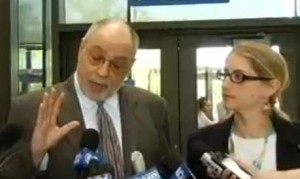
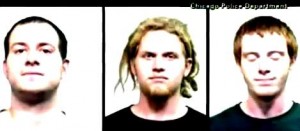
Last week, as many listeners may know, more than 100 protesters were arrested at the NATO summit in Chicago. Five activists were charged with terror related crimes, two were accused of attempted possession of explosives, 3 were accused of conspiracy to commit terrorism, material support for terrorism and possession of explosives. Sarah Gelsomino, with the People’s Law Office says three of these activists were set up by government informants who had planted the explosives.
- The National Lawyers Guild of Chicago learned that at 11:30 at night, a home in the Bridgeport area of Chicago had been raided by the Chicago Police Department.
- People were concerned because several people had gone missing, and we couldn’t find them.
- This raid was completely unprofessional from the beginning.
- Three other apartment units were just neighbors. Police removed them from their apartment, detained them, interrogated them, and then without consent or a warrant, went in and searched their home.
- The city refused to acknowledge that they had them in custody (their clients) that they had any arrests and also refused to acknowledge that that had a raid in that neighborhood.
- Over the next day or so, 6 of the 9 were released without any charges, after being held for over 30 hours. A good part of that time shackled at their feet and hand cuffed to a wall.
- There 2 additional people that were also arrested, and those are the 2 people that haven’t been seen since they were arrested in the raid and who we now believe were working for the police department as a part of this investigation.
- We believe they infiltrated Occupy Chicago a month ago.
- As a criminal defense attorney, we have a duty to vigorously defend our client.
- Members of Occupy Chicago have been coming forward very concerned about the 2 people who had been working for the police department – passing information to the police department.
- The state’s case will never be as strong as it is right now, when they have not yet come forward with any evidence whatsoever, all they’ve made is allegations that have yet to be substantiated.
- People are very afraid, particularly people in the occupy movement because they now feel so violated.
- It is an alarming pattern that states are turning to terrorism charges in these types of cases.
Guest – Sarah Gelsomino joined People’s Law Office in the Fall of 2008. She concentrates her practice on police misconduct, wrongful conviction, representation of political activists and criminal defense cases. During law school, Sarah clerked with the Cook County Public Defenders’ Office and was the recipient of various awards, including the Sonnenschein Scholar Award which funded Sarah’s pro-bono public interest work. She is a current board member of the Chicago chapter of the National Lawyers Guild and is the co-founder of the NLG Chicago Next Gen Committee. Sarah also sits on the Advisory Board of the Irwin W. Steans Center for Community-based Service Learning at DePaul University.
—-
Lawyers You’ll Like: Anne O’Berry
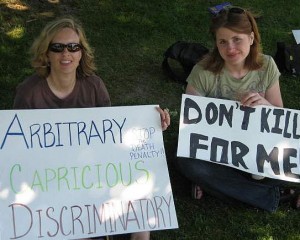
As part of our Lawyers You’ll Like series we’re joined by attorney Anne O’Berry, she’s the Vice President of the Southern Region of the National Lawyers Guild and the author of The Law Only As An Enemy: The Legitimization of Racial Powerlessness Through the Colonial and Antebellum Criminal Laws of Virginia. While in law school, she served as Director of the Women in Prison Project at Rikers Island, where she taught incarcerated women how to prevent termination of their parental rights.
Anne clerked for federal judges in New York, New Jersey and Pennsylvania, including Judge A. Leon Higginbotham, Jr. of the U.S. Court of Appeals in Philadelphia, with whom she co-authored an article on the law as a tool of oppression against slaves and free blacks in pre-Civil War Virginia and taught civil rights and South African apartheid law at the University of Pennsylvania. She later taught Race and the Law at St. Thomas University Law School in Miami, Florida.
In the last 12 years, Anne has served as counsel at a Florida law firm that specializes in class action litigation, particularly in the areas of securities, consumer and economic fraud, as well as some environmental and privacy rights litigation.
- We did a lot of historical research in terms of racism and the law back in pre-civil war Virginia.
- We focused on Virginia because it was a paradigm for slavery basically in the slave laws that were in place.
- We wrote an article for publication, it was published in the University of North Carolina law review. The Law Only As An Enemy:’ The Legitimization of Racial Powerlessness Through the Colonial and Antebellum Criminal Laws of Virginia.
- Depending on your status, if you were a free white person or a slave, you were treated differently by the law.
- As an overall theme, depending on the race of the victim was that would effect what your sentence would be.
- For example, if a black woman was raped, that was not considered a crime. If you were a black person and you stole something, you would be put to death.
- It was ironic for the slave owner because if their slave was put to death, they would have to be compensated by the state.
- If the victim was black, the crime was treated less seriously than if the victim was white.
- I started out working at a firm in New York, a large prominent, Wall Street type.
- Among some people I was known as the pro-bono queen.
- I was there for 2 and a half years and the first pro-bono case was a death penalty case.
- The court ruled back then (1990s) that it was ok to execute the mentally retarded.
- I was so moved by that experience that I gave up my cushy job in New York and go do death penalty work full time.
- I ended up at the Federal Resource Center doing death penalty work in Tallahassee Florida.
- I worked for the Battered Women’s Clemency Project in Florida.
- More recently the Supreme Court did rule that it is unconstitutional to execute people who were juveniles at the time of the offense and unconstitutional to execute people who are mentally retarded.
- I believe in my lifetime we will see the end of the death penalty in this country.
- It’s just an amazing system that we have where the courts will say – yes you’ve got compelling evidence of innocence but we’re not going to hear your case.
- I would say what got me through was the victories.
- Presently, I’m working with an attorney Jim Green, who’s a prominent civil rights attorney in West Palm Beach, kind of a legend down here.
- I also some volunteer work with El Sol. It’s a day laborer center in Jupiter, Florida.
Guest – Anne O’Berry, National Lawyers Guild’s Regional Vice President for the Southern Region and a member of the Guild’s South Florida chapter. She obtained her undergraduate degree from the University of Pennsylvania in 1983 and her law degree from New York University Law School in 1986. While in law school, she served as Director of the Women in Prison Project at Rikers Island, where she taught incarcerated women how to prevent termination of their parental rights. She was a member of the law school’s civil rights clinic and an editor on one of the law school’s journals, and authored a law review article on prisoners’ rights. During and after law school, she clerked for federal judges in New York, New Jersey and Pennsylvania, including Judge A. Leon Higginbotham, Jr. of the U.S. Court of Appeals in Philadelphia, with whom she co-authored an article on the law as a tool of oppression against slaves and free blacks in pre-Civil War Virginia and taught civil rights and South African apartheid law at the University of Pennsylvania. She later taught Race and the Law at St. Thomas University Law School in Miami, Florida.
——————————————————————-
Law and Disorder May 21, 2012
Podcast: Play in new window | Download
Updates:
- Federal Appeals Court Revives Lawsuit Brought By Two Iraqi Detainees
- Palestinian Prisoner Hunger Strike Update
—–
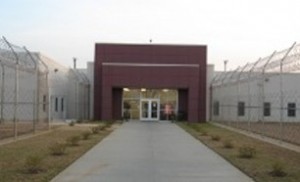

ACLU of Georgia to Release Report on Immigration Detention in Georgia
A report released by the American Civil Liberties Union Foundation of Georgia exposes the privatized corporate immigrant detention facilities in that state. The report contains interviews from more than 60 individuals detained inside four different detention centers.
Guest – Azadeh Shahshahani, the National Security/Immigrants’ Rights Project Director with the Georgia ACLU.
—–

HIV Specific Criminal Laws
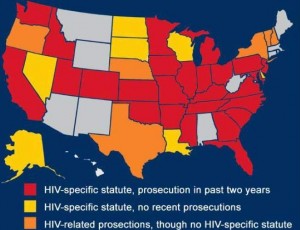
We talk today about HIV-specific criminal laws and sentence enhancement. HIV criminal prosecution of occurs when an HIV-positive individual does not disclose their HIV status to a partner before engaging in sex. The person charged may face decades in prison, life time registration as a sex offender and stigmatization. While there have been hundreds of prosecutions for HIV crimes in the United States, disclosure and consent is a defense but is difficult to prove and actual transmission of HIV is unnecessary.
- About 35 states and territories have HIV specific statutes that only apply to people with HIV that mandate disclosure of their HIV status prior to engaging in intimate contact with another person, independent of whether there is any risk present, independent of whether there is any harm incurred and independent of any intent.
- The statutes have created a viral underclass that is pretty concerning. Right now there’s an explosion of laws based on people’s viral status.
- The vast majority of the prosecutions do not involve the transmission of the virus.
- There are also a number of HIV prosecutions that fall within the phenomenon we call HIV criminalization that aren’t about sex but are heightened charges for other behaviors.
- Willie Campbell in Texas is serving 35 years for spitting on a cop because the court found his saliva to be a deadly weapon even though saliva doesn’t transmit HIV.
- We’ve been alerting people to the fact that this horrific public health policy, that increasingly you hear, take the test, risk arrest.
- The best defense (under the current laws) for not getting prosecuted for HIV criminalization is not getting tested. Not knowing your status in the first place.
- A man in Iowa just had a 50 year sentence upheld. These forms are driving the criminalization specifically as well as contributing to the stigmatization that makes people reluctant to get tested, reluctant to disclose.
- These states that HIV specific statutes, they don’t have specific statutes for hepatitis or HPV. Four thousand women last died from cervical cancer, almost every single one of them got it from Human Papilla Virus. HPV – genital warts.
- But we’re not out prosecuting people for HPV.
- The answer is obvious those sexually transmitted diseases aren’t associated with an outlaw sexuality. They’re not associated with people of color or gay men, with anal intercourse or people who use drugs.
- Poz Magazine The SERO Project
Guest – Sean Strub, writer and activist who founded several magazines and websites, including POZ magazine and POZ en Español, (for people impacted by HIV/AIDS), Mamm (for women impacted by breast cancer), He is the founder of the SERO project to help oppose the use of HIV specific criminal laws.
—–
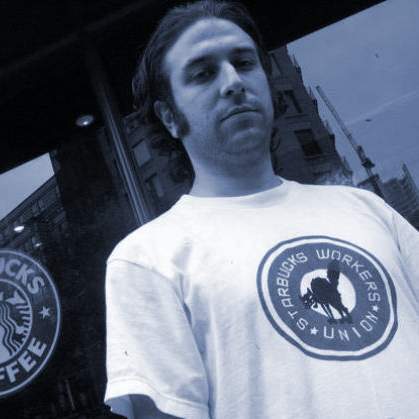
Lawyers You’ll Like: Attorney Daniel Gross – Focus On the Food Chain Victory
Victories continue for Brandworkers, a non-profit organization protecting and advancing the rights of retail and food employees. Last fall we talked with Attorney Daniel Gross, Executive Director of Brandworkers about the 470 thousand dollar settlement reached in a labor dispute with Pur Pac, a food distribution warehouse giant that illegally withheld wages from their workers. Today we discuss the latest victory in another settlement recovering nearly 600 thousand dollars in unpaid wages and compensation for workers at Flaum Appetizing. According to Daniel Gross, the Latino workers there were subjected to constant verbal harassment and forced to work at unsafe speeds.
- New York City economy has a burgeoning food processing and distributing sector. There are 35 thousand workers, the vast majority are immigrant workers of color.
- The vast majority depend on this sector for their livelihood.
- The business model is simple. It’s exploiting recent immigrant workers of color through wage theft, through reckless disregard of health and safety and egregious discrimination of workers from Latin America, China, Haiti, Nepal.
- Flaum Appetizing , regrettably but not surprisingly really fit the mold. Flaum is a hummus manufacturer and distributor of kosher food products based in East Williamsburg, Brooklyn.
- It starts the sector of the food corridor of food manufacturing and sweatshops.
- Flaum Appetizing engaged in a tremendous amount of wage theft, a failure to pay overtime and in some cases, minimum wage.
- Millions and millions of dollars of real wealth had been illegally withheld from workers.
- There was offensive and insulting discrimination against Latino workers including Latino workers being called cockroaches and aliens.
- The Flaum Appetizing workers approached me in 2010 with some hope and energy because they had seen the victories of our members at the Wild Edibles Seafood had won.
- The workers through incredibly persistent grassroots energy persuaded over 120 of the best most prominent grocery stores in New York to stop selling Flaum products including their Sunny and Joe’s Hummus until workers’ rights were respected.
- Our commitment with Brandworkers, if fight to win. When we engage with an adversary, they should know if we have to, we will chase them to the gates of hell and back.
- Almost all of our members in the Flaum campaign are raising young children.
- There were two components we were able to bring home which was really a hard fought struggle.
- One was our members were proud to report they recovered 577 thousand dollars in wealth that will help them transform their families lives both here and in their home countries, Mexico and El Salvador.
- They also one a binding code of conduct which will force Flaum Appetizing into full compliance of workplace protections.
- Our model is the labor movement of the late 19th century. Unions like Local 8, the great IWW on the Philadelphia docks that used worker direct action and everyday solidarity.
- Unions and worker centers and community groups are going to converge at the New School on June 6, 2012. Food Justice Movement Food Chain Workers
- I owe my politicization to a company that’s now bankrupt. That was Borders Books and Music.
- I come out of working in retail and fast food and Starbucks as you mentioned.
- My grandfather was a member of the teamsters union. He drove a liquor truck out of the Bronx. So I knew in the back of my mind he was able to live the last years of his life as amazing grandfather with dignity because he had his union pension.
- Fighting Starbucks honed my skills because they are such a sophisticated and determined adversary.
- The evil brilliance of the Starbucks union busting operation.
- I had the unique pleasure which I will remember all my life to be represented by Leonard Weinglass.
Guest – Attorney Daniel Gross, Executive Director of Brandworkers, a non-profit organization protecting and advancing the rights of retail and food employees.
————————————————————