Welcome to Law and Disorder Radio
Law and Disorder is a weekly independent civil liberties radio program airing on more than 150 stations and on Apple podcast. Law and Disorder provides timely legal perspectives on issues concerning civil liberties, privacy, right to dissent and practices of torture exercised by the US government and private corporations.
Law and Disorder August 13, 2012
Podcast: Play in new window | Download
Updates:
- Heidi Boghosian Updates on RNC/DNC Demonstrations
- Michael Ratner: Julian Assange and Bradley Manning Update
- You Have The Right To Remain Silent Booklet
—-
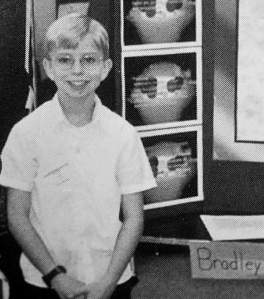
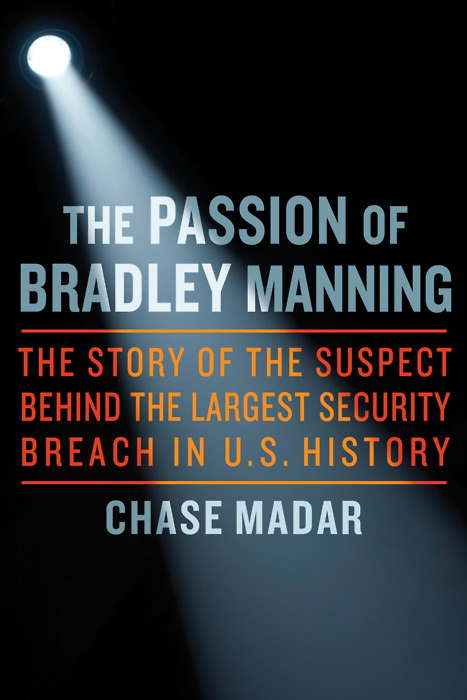
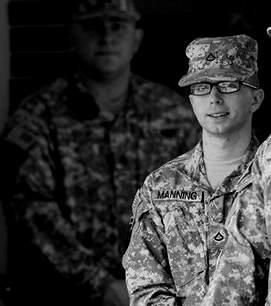
We continue to look into the the Bradley Manning story, the biggest whistle-blower case in US history. Attorney Chase Madar joins us in the studio, he’s the author of The Passion of Bradley Manning: The Story of the Suspect Behind the Largest Security Breach in U.S. History. The book moves through Manning’s childhood and up to what led him to allegedly upload volumes of classified secret information to Wikileaks. Madar highlights the value of publicly exposing the endless criminal and immoral actions while government secrecy spins out of control, classifying 77 million documents a year. He also asks what can be done to protect Bradley Manning as a whistle-blower. Since his arrest 2 years ago, Manning’s formal court martial proceedings are not scheduled to begin until February 2013, and as many listeners know the most lethal charge is aiding the enemy.
Attorney Chase Madar:
- I worked as a staff attorney for many years at a great non-profit in Bushwick section of Brooklyn doing all kinds of low tech services for Spanish speaking immigrants.
- I quit that and have been writing about foreign affairs. I got put on the sight of Bradley Manning by Tom Englehart, who edits the great TomDispatch web project.
- So many important issues collide in this case, whether its the comparative risk to our security of secrecy versus leaks. How we judge threats, how we misassess threats. How we use solitary confinement as punishment, is it an acceptable punishment?
- What power does information have anyway? A lot of intellectuals think that information has an incredible catalytic effect.
- Bradley Manning enlisted in the Army in October 2007. He’s deployed to Iraq after all kinds of training in Army intelligence in 2009.
- He allegedly begins leaking things in early 2010 and he’s arrested in late May 2010 over 2 years ago now. He was held in solitary confinement, very strict punitive isolation in Quantico Marine Corp base in Virginia, from July 2010 to April 2011.
- We’re looking at 2.5 years of pretrial confinement.
- You can divide up the Wikileaks leaks allegedly supplied by Bradley Manning in 3 categories. Iraq material, thousands of war logs: raw reports file by soldiers, Afghan war logs, it’s a composite of a war that’s weirdly aimless.
- Obama did campaign as the whistle-blower’s best friend, and he has prosecuted twice as many as all previous administrations.
- Here’s one theory I find persuasive. It’s important for Obama to have the intelligence services on his side. This was a way for him to show the CIA that he would go along them.
- I would like to see a serious change in foreign policy which has gone off the rails.
- We haven’t the kind of course correction with Obama that many had hoped for.
- I hope Wikileaks do disrupt foreign policy more. There’s been all kinds of smack talked about Bradley Manning, he’s a weirdo, a malcontent, he did what he did because he’s screwed up, he did because he’s gay.
- His motives are very plain to see in the chat logs between him and the informant.
- The Manning chat logs – they read like a tragic novella.
- So much of our secrecy law is designed to keep the American public in the dark.
- I think we have badly confused being clueless with being safe.
- He comes across as an immensely thoughtful, courageous and very principled young man. In some ways he’s an extreme version of the millennial generation who have a lot of education and potential but find themselves not doing too well.
- His father was in Naval Intelligence and he’d grown up with a sense of patriotic responsibilities.
- What makes him turn on the inside and leak these things?
- He’s asked to look into the arrest and capture by the Iraqi authorities a group of non-violent Iraqi protesters who were handing out pamphlets that were all about corruption in Iraqi government.
- We are light years away from total transparency.
- The main thing is to make records of the court proceedings publicly available.
- I think a guilty conviction and a heavy sentence of at least 50 years is a foregone conclusion.
- The wages of government secrecy, not security but disaster.
- It looks like the court martial won’t begin until January or February.
- Go to the Bradley Manning support network website. Send him a postcard.
- It’s your patriotic duty to browse the leaks.
- Legal Atrocities – by Chase Madar
Guest – Attorney Chase Madar , a TomDispatch regular and author of a new book, The Passion of Bradley Manning (OR Books). Madar tweets @ChMadar. He’s a contributor to the London Review of Books and Le Monde diplomatique and the author of a new book, The Passion of Bradley Manning (OR Books).
——————————————————-
Law and Disorder August 6, 2012
Podcast: Play in new window | Download
Updates:
- Maryland Law Allows Police To Collect DNA During Arrests
- Heidi Boghosian: National Lawyers Guild Monitoring RNC / DNC Demonstrations
- In Memory: Michael Nash
- In Memory: Alexander Cockburn
- In Memory: Professor John (Tito) Gerassi
- You Have The Right To Remain Silent Booklet
———–
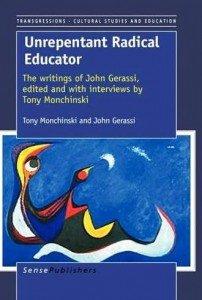
Unrepentant Radical Educator: The Writings of John Gerassi
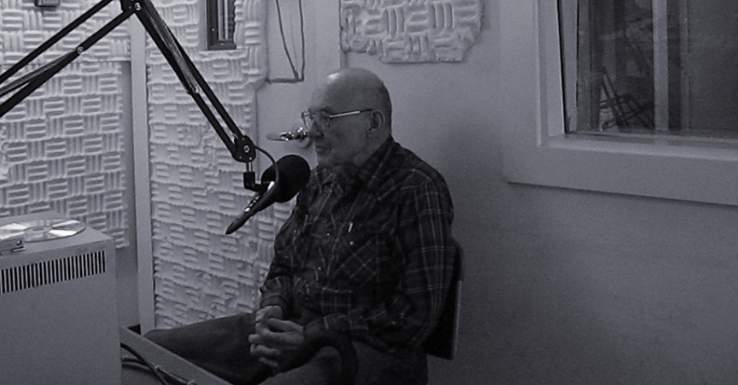
Professor John (Tito) Gerassi, once an editor at Time magazine, then at Newsweek. He obtained his PhD at the London School of Economics and Political Science. He was a long time civil rights and anti-war militant and author / editor of ten books plus scores of articles and pamphlets published on both sides of the Atlantic. He was Professor of Political Science at the City University of New York. Professor Gerassi discussed his book, Unrepentant Radical Educator: The writings of John Gerassi, edited and with interviews by Tony Monchinski (Transgressions: Cultural Studies and Education) Indypendent Book Review
The book joins personal narratives from Gerassi’s days of journalism and activism, featuring Che Guevara, Fidel Castro, Jerry Rubin, Eldridge Cleaver and others of the era, with essays on figures such as Sartre, Camus, and Julius and Ethel Rosenberg. One review writes, (Especially fascinating are the tales of deliberate misreporting by the major media outlets for which he worked, epitomized by the words of owner Henry Luce when Gerassi was hired: “We here at Time believe that objectivity is neither feasible nor desirable.”)
- Time Magazine: I hear you’re coming aboard Mr. Gerassi. In the long run, it was great that I got kicked out
- Met Che Guevara in Uruguay, as a journalist for the New York Times, there was a fight with anti-Castro students, the police were scared, one man fired his gun in the air, it ricocheted and hit and killed a USIS Cuban.
- Che told me I don’t talk to the imperialist press. At the hotel, they had reserved a large table where all the left-wing characters sat around with Che. Argentines say chez vous, that’s how Che got his nickname Che.
- The Great Fear in Latin America – John Gerassi
- Che Where Are You? Eventually there will be many Che’s.
Guest – Professor John Gerassi, once an editor at Time magazine, then at Newsweek, who obtained his PhD at LSE, is a long time civil rights and anti-war militant. He is the author or editor of ten books and scores of articles and pamphlets published on both sides of the Atlantic. He is currently Professor of Political Science at the City University of New York.
——————————————————
Law and Disorder July 30, 2012
Podcast: Play in new window | Download
Updates:
- Lynne Stewart Update
- Please Write to Lynne at:
- LYNNE STEWART, # 53504-054 /
- FMC CARSWELL / FEDERAL MEDICAL CENTER UNIT 2N
- PO BOX 27137 / FT. WORTH, TX 76127
- You Have The Right To Remain Silent Booklet
—
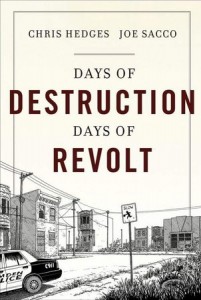
Days of Destruction Days of Revolt – Chris Hedges
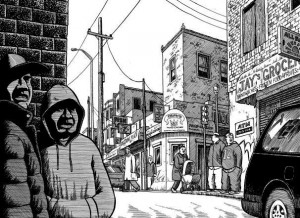
We go now to an interview with Pulitzer-Prize winning author and journalist Chris Hedges. His latest book Days of Destruction Days of Revolt sends a powerful message about the perils of staying on the current destructive track in post capitalist America. The book is also filled with line drawing graphics, illustrating some of the most depraved areas in the United States. The book explores what Chris describes as the country’s sacrifice zones, areas that have been torn apart in the name of greed, progress and technological advancment. These areas include the streets of Camden New Jersey, the coal fields of West Virgina, the Lakota reservation of Pine Ridge in South Dakota. This interview was recorded live during a WBAI fund raiser.
- One of my frustrations is the people who keep plowing back their hopes into the democratic party and the formal structures of power. If you challenge the approved narrative (political debates) you’re out.
- When you look at the structures of power and you grasp what we’ve undergone is a corporate coup de tat in slow motion, starting with the Reagan Administration.
- It’s utterly impossible within the system to vote against the interest of Goldman Sachs.
- Karl Marx: his analysis of capitalism is pretty remarkable.
- They understand that unfettered, unregulated capitalism is a revolutionary force. It knows no limits. It will commodify everything until it destroys it – until exhaustion or collapse.
- Since there are no impediments within the mechanisms of power to disrupt essentially a corporate cannibalization then the only thing to impede that is popular unrest.
- Book – Anatomy of Revolution
- What they (Occupy Movement) fundamentally wanted was something the power elite couldn’t hear.
- They wanted to rest power back from the hands of a corporate oligarchy class and put back in the hands of citizens.
- A democratic administration was behind a coordinated federal effort to shutdown the Occupy Encampment.
- When Marx and Engels did their work they did a very close study of the Iroquois in how they governed themselves and functioned as a society.
- We begin with an indigenous culture essentially about breaking a culture replacing a self sufficiency and dignity with a culture of dependence.
- What that engenders is this horrific despair that consumes to this day in indigenous communities.
- The average expectancy for males in Pine Ridge is 48. That’s the lowest in the Western hemisphere except for Haiti.
- We are fed this utopian ideology that if somehow we build our culture and society around the demands of the marketplace we’ll get some sort of utopian heaven on Earth.
- We didn’t want a book of polemics, you couldn’t argue with what’s taken place.
- Immokalee becomes emblematic with what the corporate state wants.
- Workers are told they have to be competitive in a global market place which means being competitive with sweat shop workers in Bangladesh.
- It’s only through acts of disobedience and civil resistance that we have any hope.
- The decision to completely erase the Occupy Encampment exposed their hand.
- There is a backlash outside the traditional mechanisms of power.
- Hundreds of thousands of Americans have lost their unemployment benefits.
Guest – Chris Hedges, Pulitzer-Prize winning author and journalist. He was also a war correspondent, specializing in American and Middle Eastern politics and societies. His most recent book is ‘Death of the Liberal Class (2010). Hedges is also known as the best-selling author of War is a Force That Gives Us Meaning (2002), which was a finalist for the National Book Critics Circle Award for Nonfiction.
—
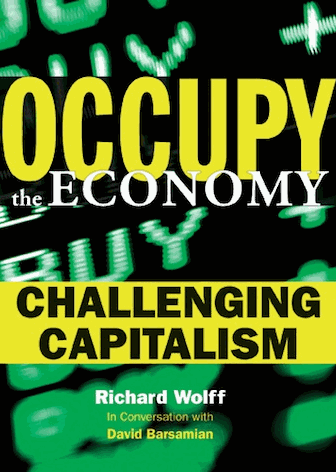
Occupy the Economy: Challenging Capitalism PART 2
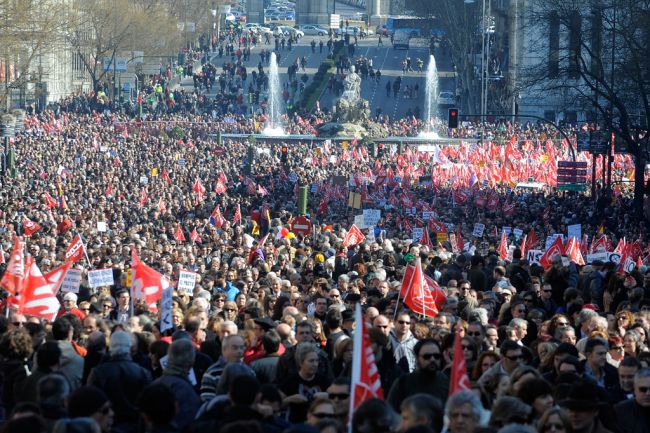
Occupy the Economy: Challenging Capitalism is the title of Professor Rick Wolff’s new book. After more than a dozen interviews with Rick Wolff since 2008, the theme is consistent, beyond the corrupt banks and stock markets is a flawed economic system. A system that at worst needed to change direction in the 1970s when wages stopped increasing and the cost of living continued to rise. As we look around, the collapse has been coming down in steps, and many have been trying to dial back, save and prepare. This, as millions have lost their jobs, 401ks, pensions, and homes. Overseas, the waves of austerity continue to push through Europe as protests have erupted again in Spain.
- The book is an interesting venture for me, it’s done with David Barsamian, with Alternative Radio.
- He did 3 major interviews with me, the response was so heartwarming, we published a written version of them.
- The book is an overview of how we got into this mess, why it’s lasting so long, why it’s hurting so badly, why government policies have in fact, not succeeded.
- A number of the economies in Europe are on the edge of major breakdown. Spain is already in that situation, Italy is right on its heels. This is not like Greece or Portugal, Ireland or Hungary who are smaller economies, these are major economies.
- There is active debate in the highest circles of Europe, both critics of capitalism and its leaders, questioning whether the European Union can survive . . its a measure of how serious the problem is.
- China, by its own announcing running at a rate of growth of 7- 8 percent which is half of what it had very few years ago.
- It can’t also escape the effect of Europe which is its second most important market.
- China is trying to reorient the economy away from their dependence from exports to the rest of the world because frankly that’s not a reliable situation for them. To give you one index.
- As wages in the United States stagnated, wages in China have gone up 20 percent.
- The slow downs in India, very sharp. The slow downs in Brazil, very sharp.
- The consensus is what Bernanke said. Things are very poor, very weak and we really have to be alert.
- The situation is only going to deteriorate over the rest of 2012 and into early 2013.
- When a capitalistic economic system begins to unravel. . . we’re in the fifth year of this crisis. It officially began in December 2007.
- Every major government program, the bailouts, the stimulus has not achieved the goals it said it could and would.
- The biggest capitalist institutions in this country at this time, the banks. . .are in such trouble are so worried about their own prospects in an economy in such difficulty that what they are doing is taking excessive risks, pushing the envelope of what’s ethical and moral and crossing the thin and blurry lines of legality.
- LIBOR – London Interbank Offered Rate – Starting in the 1980s, London which had been the financial center of the world economy realized what we all understood at that time which was the world economy was becoming dependent on credit.
- Every corporation was borrowing money all the time, every government was borrowing money on a scale we’ve never seen before, the really innovative thing was the development of consumer credit.
- The LIBOR became the benchmark for the world.
- Everyday the British Bankers Association polls the 16 biggest banks who have offices in England, what they are charging each other.
- It takes an average and it announces that. That number is a standard number for example, variable rate mortgages in the US where the mortgage goes up and down those are based on LIBOR.
- It’s factored into everybody’s borrowing. If you’re going into store to buy a pair of pants, that store also borrowed money which is also shaped by a relationship to LIBOR.
- These banks are the biggest holders of debt instruments. Derivatives of all kinds, mortgages of all kinds. You are relying on information from somebody who has an active interest in the information they’re supplying.
- What we now know is these banks often reported an interest rate different from what they were actually charging.
- There was no oversight.
- The world of superbanking is a very cozy world. Barclay’s had admitted to reporting a number that was actually the case. . . and had paid fines now totalling 450 million dollars to both US and British authorities.
- To be blunt they screwed everybody to save themselves.
- How could we defend private banking on this scale ever again?
- The big ones are Bank America and Wells Fargo.
- Both of them have both agreed to pay fines. Bank of America – 300 million. Wells Fargo 175 million.
- Here was what their fine was for. They went and charged African American and Hispanic families more interest for mortgages than they did for whites who had identical credit scores.
- Five of the biggest banks in the world Barclays, Wells Fargo, HSBC, and JP Morgan Chase have all admitted major breaches of minimal ethics, minimal morality, legality all to advantage themselves at the expense of the public.
- Private monster banks are an unsafe way for any society to manage the credit that has now become central to the economy. It is inappropriate for us to have banks that have more money than the government supposedly regulating them.
Guest – Richard D. Wolff is Professor of Economics Emeritus, University of Massachusetts, Amherst where he taught economics from 1973 to 2008. He is currently a Visiting Professor in the Graduate Program in International Affairs of the New School University, New York City. He also teaches classes regularly at the Brecht Forum in Manhattan.