Welcome to Law and Disorder Radio
Law and Disorder is a weekly independent civil liberties radio program airing on more than 150 stations and on Apple podcast. Law and Disorder provides timely legal perspectives on issues concerning civil liberties, privacy, right to dissent and practices of torture exercised by the US government and private corporations.
Law and Disorder July 23, 2012
Podcast: Play in new window | Download
Updates:
- Bradley Manning Trial Update: System of a Star Chamber
- Julian Assange Extradition / Asylum
- Occupy Chicago Tribune WIPO Lawsuit Update:
- Donating to Wikileaks
—

Judge Dismisses Lawsuit Filed Over Boycott of Israeli Goods
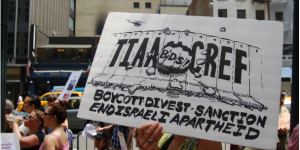
We follow up on the Olympia Food Co-op lawsuit filed over boycott of Israeli goods earlier this year. For listeners unfamiliar with the case, a judge in Olympia, Washington dismissed a lawsuit tailored to force the Olympia Food Co-op to rescind its boycott of Israeli goods. The judge ruled that the lawsuit brought by opponents of the boycott violated a Washington State law designed to prevent abusive lawsuits which are aimed at suppressing lawful public participation. Interestingly, an investigation by ElectronicIntifada had unearthed that the lawsuit against individuals with the Olympia Food Co-op Board was also planned in collusion with a national anti-Palestinian organization called StandWithUs that was working with the Israeli government. Lawyers with the Center for Constitutional Rights argued that the lawsuit qualified as a SLAPP, that stands for – – Strategic Litigation Against Public Participation. SLAPPs are lawsuits that target the constitutional rights of free speech and petition in connection with an issue of public concern. Recently, the five Olympia Food Co-op members who had sued to overturn the store’s boycott of Israeli goods must pay $160,000 in damages.
Attorney Barbara Harvey:
- The judge had before him the issue whether to assess a single statutory penalty of 10 thousand dollars on behalf of all 16 co-op members who served on co-op board members who were sued by the defendants, or would the judge order each individual statutory penalties to each defendant.
- He decided to order individual statutory penalties to each defendant for a total 160 thousand dollars.
- The plaintiff sued 16 board members past and present. Standwithus produced a youtube video of the five plaintiffs just before they filed the litigation.
- The five co-op members didn’t look upset given the judge’s decision. If they’re not upset, why not? – which suggests the costs will be covered but we really have no way of really knowing that.
- This victory discourages the opponents of the movement for Palestinians to engage in this kind of litigation.
- TIAA-CREF which manages financial assets of 470 plus billion dollars announced that they had decided to remove Caterpillar from their Socially Responsible Investing Accounts.
- That’s because Caterpillar supplies Israel with these militarized bulldozers that are sold under Department of Defense contracts to Israel which are used to tear down civilian homes in Palestine.
- Caterpillar is the poster child of divestment and boycott and TIAA-CREF has done that.
- All other customers that use that SRIA account will be divesting from Caterpillar.
- Our campaign is to persuade companies like TIAA-CREF to divest from companies around the world that profit from the occupation.
Guest – Barbara Harvey, a Detroit attorney who has worked with BDS activists and a former JVP Board Member
———

Occupy the Economy: Challenging Capitalism PART 1
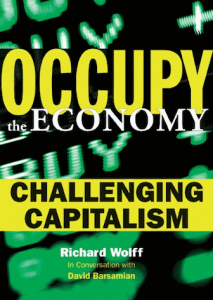
Occupy the Economy: Challenging Capitalism is the title of Professor Rick Wolff’s new book. After more than a dozen interviews with Rick Wolff since 2008, the theme is consistent, beyond the corrupt banks and stock markets is a flawed economic system. A system that at worst needed to change direction in the 1970s when wages stopped increasing and the cost of living continued to rise. As we look around, the collapse has been coming down in steps, and many have been trying to dial back, save and prepare. This, as millions have lost their jobs, 401ks, pensions, and homes. Overseas, the waves of austerity continue to push through Europe as protests have erupted again in Spain.
- The book is an interesting venture for me, it’s done with David Barsamian, with Alternative Radio.
- He did 3 major interviews with me, the response was so heartwarming, we published a written version of them.
- The book is an overview of how we got into this mess, why it’s lasting so long, why it’s hurting so badly, why government policies have in fact, not succeeded.
- A number of the economies in Europe are on the edge of major breakdown. Spain is already in that situation, Italy is right on its heels. This is not like Greece or Portugal, Ireland or Hungary who are smaller economies, these are major economies.
- There is active debate in the highest circles of Europe, both critics of capitalism and its leaders, questioning whether the European Union can survive . . its a measure of how serious the problem is.
- China, by its own announcing running at a rate of growth of 7- 8 percent which is half of what it had very few years ago.
- It can’t also escape the effect of Europe which is its second most important market.
- China is trying to reorient the economy away from their dependence from exports to the rest of the world because frankly that’s not a reliable situation for them. To give you one index.
- As wages in the United States stagnated, wages in China have gone up 20 percent.
- The slow downs in India, very sharp. The slow downs in Brazil, very sharp.
- The consensus is what Bernanke said. Things are very poor, very weak and we really have to be alert.
- The situation is only going to deteriorate over the rest of 2012 and into early 2013.
- When a capitalistic economic system begins to unravel. . . we’re in the fifth year of this crisis. It officially began in December 2007.
- Every major government program, the bailouts, the stimulus has not achieved the goals it said it could and would.
- The biggest capitalist institutions in this country at this time, the banks. . .are in such trouble are so worried about their own prospects in an economy in such difficulty that what they are doing is taking excessive risks, pushing the envelope of what’s ethical and moral and crossing the thin and blurry lines of legality.
- LIBOR – London Interbank Offered Rate – Starting in the 1980s, London which had been the financial center of the world economy realized what we all understood at that time which was the world economy was becoming dependent on credit.
- Every corporation was borrowing money all the time, every government was borrowing money on a scale we’ve never seen before, the really innovative thing was the development of consumer credit.
- The LIBOR became the benchmark for the world.
- Everyday the British Bankers Association polls the 16 biggest banks who have offices in England, what they are charging each other.
- It takes an average and it announces that. That number is a standard number for example, variable rate mortgages in the US where the mortgage goes up and down those are based on LIBOR.
- It’s factored into everybody’s borrowing. If you’re going into store to buy a pair of pants, that store also borrowed money which is also shaped by a relationship to LIBOR.
- These banks are the biggest holders of debt instruments. Derivatives of all kinds, mortgages of all kinds. You are relying on information from somebody who has an active interest in the information they’re supplying.
- What we now know is these banks often reported an interest rate different from what they were actually charging.
- There was no oversight.
- The world of superbanking is a very cozy world. Barclay’s had admitted to reporting a number that was actually the case. . . and had paid fines now totalling 450 million dollars to both US and British authorities.
- To be blunt they screwed everybody to save themselves.
- How could we defend private banking on this scale ever again?
- The big ones are Bank America and Wells Fargo.
- Both of them have both agreed to pay fines. Bank of America – 300 million. Wells Fargo 175 million.
- Here was what their fine was for. They went and charged African American and Hispanic families more interest for mortgages than they did for whites who had identical credit scores.
- Five of the biggest banks in the world Barclays, Wells Fargo, HSBC, and JP Morgan Chase have all admitted major breaches of minimal ethics, minimal morality, legality all to advantage themselves at the expense of the public.
- Private monster banks are an unsafe way for any society to manage the credit that has now become central to the economy. It is inappropriate for us to have banks that have more money than the government supposedly regulating them.
Guest – Richard D. Wolff is Professor of Economics Emeritus, University of Massachusetts, Amherst where he taught economics from 1973 to 2008. He is currently a Visiting Professor in the Graduate Program in International Affairs of the New School University, New York City. He also teaches classes regularly at the Brecht Forum in Manhattan.
————————————————-
Law and Disorder July 16, 2012
Podcast: Play in new window | Download
Updates:
- ACLU and Canyon County Jail Reach Settlement Agreement
- EU Parliament Requests Member States To Look Into CIA Secret Prisons and Renditions
—
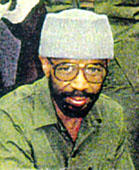

Campaign To Release Russell Shoatz From Solitary Confinement Into General Population
Last year, the National Lawyers Guild called on Superintendent Louis Folino to support the Program Review Board’s recommendation to release Russell Maroon Shoatz into the general prison population at SCI Greene in Waynesburg, Pennsylvania. As many listeners may know, Russell Maroon Shoatz has been held as a political prisoner under intense lockdown spending no more than one hour a day outside of his cell for the past 21 of those years. He was locked up in 1972 for his activity as a member of the Black Liberation Army. We follow up on the international campaign to release Shoatz. The effort was launched in New York City and London and sponsored by the Scientific Soul Sessions.
- He goes before the Program Review Board every 90 days, its about 68 visits since he’s been in solitary confinement. He hasn’t had any infractions in 30 years.
- If you look at that, they don’t intend to release him into general population.
- It’s a check-off, how has response been around the guards? What’s your response when you’re taken to the shower?
- Russell had become disappointed with the Program Review Committee and said “I’m not going anymore.”
- I called the Program Review Committee at SCI Greene, and said we’re getting tired of this no-movement forward.
- They said they look down on that as not cooperating with the prison. We look at as they’re not cooperating with all the rules they set forth. There is a step down program, they don’t use it as much as they should.
- When you talk about holding one person in solitary confinement, he has to be transferred, whatever his movement, to the shower, to the one hour cage, it takes two guards.
- SCI Greene released at least 20 prisoners from solitary confinement who they had no intention of releasing but because the state budget is in jeopardy now.
- They left Daddy back there. Daddy’s approaching 70 years of age, he hasn’t had an infraction in 30 years, you would’ve thought he’d be the perfect person for this step down program, and we questioned that.
- When I talk to the staff in solitary confinement, they all say he needs to be general population.
- Superintendent Folino retires in 2 years and I think he may want to slide out without releasing him into population.
- Russell escaped in 1977, in the 80s, he was in population at SCI Pittsburgh.
- He had been voted the first black president of the Lifers Association.
- Folino states that he is a leader and he is to remain in solitary. The director of the Program Review Committee actually stated that he is a leader. Obviously Theresa, you don’t know he’s a leader?
- Outside of him being a leader, he’s been able to withstand this 23 hour a day lockdown.
- I do see there are some changes with Russell. I’m talking emotionally, he’s very distraught now.
- I’m shocked that he hasn’t totally broken down.
- He gets a lot of mail. He’s busy with letter writing.
- I found there have been a lot of suicides in SCI Greene’s solitary confinement unit. Boys in their twenties hanging themselves. You don’t hear about it.
- This is torture. In 2005, there were 80 thousand people in solitary confinement.
- Juan Mendez’s report on Russell Maroon Shoatz
- My focus is on getting Maroon into population. I’m concerned with stopping the expansion of prisons being built. It costs millions of dollars to build new prisons, instead of using that for education for prisoners being released.
- Put that money back into public schools instead of building new prisons.
- We’re being assaulted by this present day prison system and our government nor our state seems to mind locking up folks or taking away money from our public school education and putting it into prisons.
- Congressional Hearing on Solitary Confinement
- hrcoalition.org / Russell Maroon Shoatz
Guest – Theresa Shoatz, a Philadelphia-based prison justice activist and the daughter of Russell Shoatz.
—–
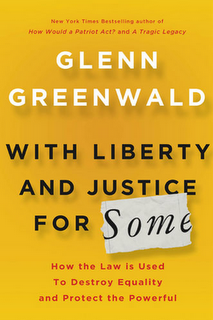
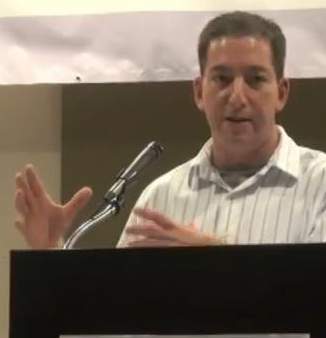
Glenn Greenwald: Challenging the Surveillance State, Breeding Conformists
Glenn Greenwald, author and contributor (columnist and blogger) to Salon.com. During his book tour for the release of With Liberty and Justice for Some, (paper back release) he gave a impactful speech in Chicago titled Challenging the Surveillance State.
—————————————
Law and Disorder July 9, 2012
Podcast: Play in new window | Download
—-


ACLU Files Lawsuit For Second Parent Adoption
The American Civil Liberties Union and the ACLU of North Carolina Legal Foundation filed a lawsuit on behalf of six same-sex couples and their children seeking the right to obtain second parent adoptions for their children. What is a second parent adoption? That’s when one partner in an unmarried couple adopts the other partner’s biological or adoptive child. This can occur in both gay and straight relationships. In December 2010, the North Carolina Supreme Court banned second parent adoptions for same-sex couples.
- We brought it on behalf of six families here in North Carolina where one parent has parental rights and a legal relationship with their child or children that they’re raising and the other parent that is playing an equivalent role in raising the child that does not have a legal relationship. . . and is treated as a stranger by the law.
- The lawsuit seeks to make uniform adoption laws in North Carolina such that they focus exclusively in what’s the best interest for the child.
- Each of the families in the lawsuit have a compelling story to tell.
- It just makes a lot of sense for the parents to provide care then for the child to be a ward of the state.
- It (the state law) does apply to unmarried couples whether they are gay or straight.
- The reason why all six of the parents involved are gay couples is because in North Carolina there is at least a remedy to unmarried straight couples. They could always get married and rectify the problems.
- This litigation is being brought on behalf of same sex couples here.
- My understanding is that 20 states including the District of Columbia permit second parent adoption.
- If there’s not a legal relationship with the second parent and the child, they may not be able to get health insurance through that parent. Similarly for worker compensation benefits.
Guest – Attorney Chris Brook, Legal Director with the ACLU of North Carolina
—-
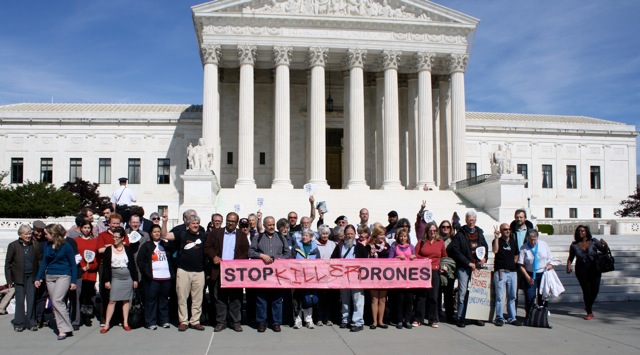
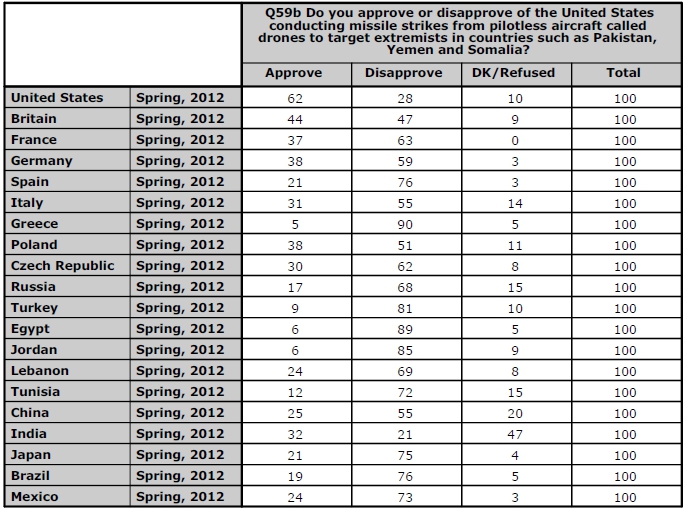
Drone Summit: Killing and Spying by Remote Control
Earlier this year, human rights advocates, robotics technology experts, lawyers, journalists and activists gathered to bring detailed up to date information about the widespread and rapidly expanding deployment of both lethal and surveillance drones, including drone use in the United States. We hear excerpts of 2 presentations delivered at the drone conference in Washington DC titled Drone Summit: Killing and Spying by Remote Control.
Medea Benjamin , co-founder of the human rights group Global Exchange and the peace group CODEPINK. She’s also the author of the new book Drone Warfare: Killing by Remote Control. It’s a comprehensive look at the growing menace of drone warfare, with analysis of who is producing the drones, where they are being used, and who pilots the unmanned planes.
Trevor Timm, activist at the Electronic Frontier Foundation, who specializes in free speech issues and government transparency.
—-

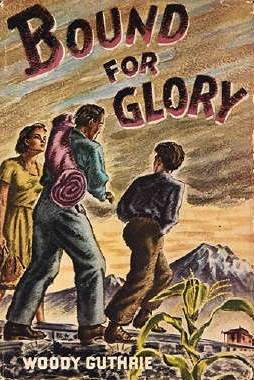

Woody Guthrie – 100th Centennial Celebration
Woodrow Wilson Guthrie was born on July 14, 1912, in Okemah, Oklahoma. Music festivals around the country mark his centennial. Many know Woody Guthrie by the song, “This Land Is Your Land” but he recorded much more and the bulk of those songs are archived in the Library of Congress. Woody was very productive, he was a writer, a cartoonist, and a biographer. “Roots of Woody Guthrie: Celebrating Woody at 100” Down Home Radio Show
- He was born on July 14, Bastille Day. He moved to Brooklyn in 1940. He was a radical guy, a socialist. His father was a successful business man in Oklahoma during the boom times.
- He had grown up in a stable middle class family. His mother suffered from Huntington disease which killed Woody Guthrie in 1967 at the age of 55.
- Woody Guthrie did travel with migrant workers, of course there were hundreds of thousands of migrants riding the rails.
- In California, Woody started his career also as a radio personality, he was already writing and painting, he was a multi-faceted artist.
- Woody loved Will Rogers, another Oklahoman, he was a Native American and stand up comic.
- Not only was he (Woody) a writer and performer of songs, he also wrote poetry and prose and newspaper opinion pieces.
- He was also a talented painter and visual artist.
- His autobiographical novel, Bound for Glory was published in 1943.
- Woody Guthrie had 8 children over the course of his life. He did several albums of children’s songs for the Folkways Records.
- He composed This Land Is Your Land to a response to that song (God Bless America)
- Since that time its been sanitized because they took out the more communistic verses, it’s kind of a second national anthem.
- “Roots of Woody Guthrie: Celebrating Woody at 100” Down Home Radio Show
Guest – Eli Smith (host/producer) is a banjo player, writer, researcher and promoter of folk music living in New York City. Eli is a Smithsonian Folkways recording artist. Eli organizes two folk festivals annually, the Brooklyn Folk Festival in the Spring and Washington Square Park Folk Festival in the Fall.
——————————-