Welcome to Law and Disorder Radio
Law and Disorder is a weekly independent civil liberties radio program airing on more than 150 stations and on Apple podcast. Law and Disorder provides timely legal perspectives on issues concerning civil liberties, privacy, right to dissent and practices of torture exercised by the US government and private corporations.
Law and Disorder April 2, 2012
Podcast: Play in new window | Download
Updates:
—
Vodak Settlement: Setting Precedence For Demonstrations
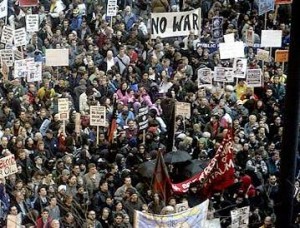
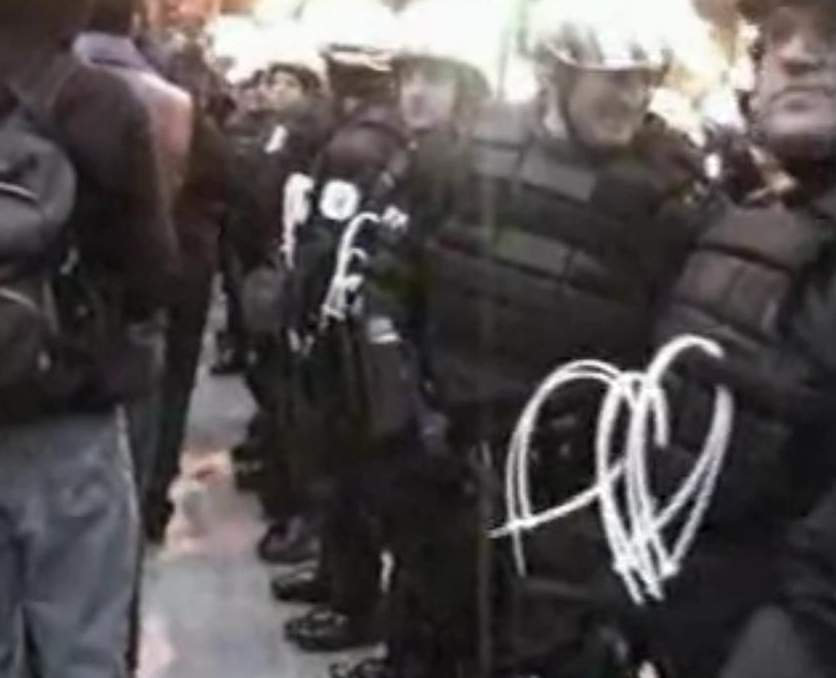
Attorneys with the National Lawyers Guild recently settled a class action lawsuit brought against the Chicago Police Department on behalf of protesters falsely arrested during a 2003 anti-war demonstration. On March 20 2003 nearly 10 thousand anti-Iraq War protesters marched through downtown Chicago before police surrounded a large group, trapping and arresting more than 700 people without ordering them to disperse. A Seventh Circuit ruling on the case (Vodak v. City of Chicago, 639 F.3d, 738 (2011)) held that police can’t arrest peaceful protesters without warning because the demonstration lacks a permit. This decision bears new weight in light of mass arrests within the Occupy movement. The National Lawyers Guild attorneys reached a 6.2 million dollar settlement in this case on the eve of a scheduled trial. The suit was litigated over the course of almost nine years by a team of NLG lawyers and legal workers including People’s Law Office attorneys Janine Hoft, Joey Mogul, Sarah Gelsomino, and John Stainthorp, as well as People’s Law Office paralegal Brad Thomson, and attorneys Melinda Power and Jim Fennerty.
- We think it sends a significant message to Chicago and the Chicago Police Department that it must honor and respect people’s right to protest.
- It was the day that Bush had dropped bombs on Iraq. There was a massive out pouring of opposition, and people came down to the center of Chicago, to the Federal Plaza which is the heart of downtown. There were 10 thousand people and they marched on Lake Shore drive, and this was all permitted by the Chicago Police Department. This was a spontaneous demonstration, there was no written permit, but the CPD allowed it.
- Toward the end of the march, they decided that they wanted it to be over. They proceeded to surround everyone on Chicago avenue, and they prevented them from leaving, trapped them there for hours.
- They then proceeded to take over 500 people into police custody. 200 hundred were released, the rest were arrested with bogus phony charges of wreck-less conduct.
- They mass arrested everyone in that area including joggers and people shopping. It had an extremely chilling effect for people participating or near a demonstration.
- The message to the Chicago Police is that they cannot mass arrest people without giving orders to disperse.
- The new changes in the Chicago ordinances are very scary, it does allow for this increased surveillance of protesters and individuals seeking to protest.
- We’re very well aware of what the law is and we will seek to vindicate people’s constitutional rights.
—–
Brad Thompson:
- I’ve been working on this case since 2004, when I first started at the People’s Law Office.
- The work that I’ve done is a tremendous amount of discovery work in terms of going through the video work that was shot that night, by protesters, independent journalists, mainstream media and by the police.
- I did a lot in maintaining communication with class members. We had over 800 people that were taken into custody or held in the street for over 90 minutes.
- We did obtain over 250 affidavits by people who had their rights violated that night.
- The majority of protesters were from Chicago or the Greater Chicago area.
- I was one of the people taken into custody that night and released without being charged.
- I was witnessing the police aggressively arrest someone and I started to point and chant “shame” and then I became targeted. The police tackled me, and pulled me to my feet and struck me in the face which broke my nose and had a wound that required five stitches.
- I spent the night in jail bleeding all over myself.
Guest – Attorney Joey Mogul, partner at the People’s Law Office in Chicago and director of the Civil Rights Clinic at DePaul University’s College of Law. She focuses on civil rights cases involving police misconduct, criminal cases brought against individuals engaged in street demonstrations and other forms of First Amendment expression, and capital defense cases.
Guest – Brad Thompson, legal worker with the People’s Law Office in Chicago.
———–
Locking Away Children For Life Without Parole
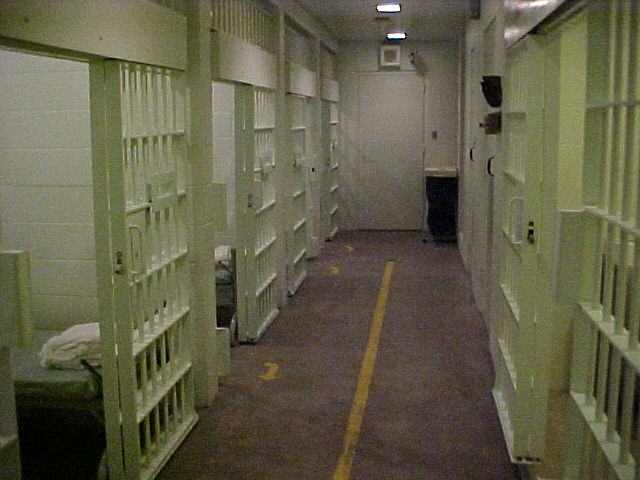
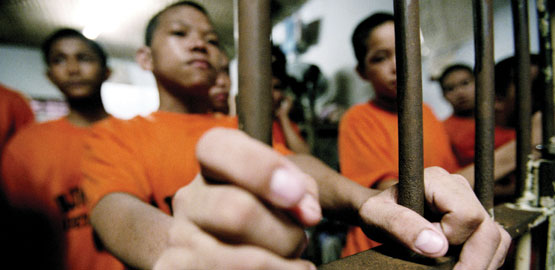
The United States is the only country in the world that sentences children to life, without the possibility of parole. Last month, the US Supreme Court revisited the question of whether juveniles convicted of murder should be given mandatory life sentences without the possibility of parole. The Supreme Court had once ruled against imposing death sentences on juveniles and imposing life sentences on youth who aren’t convicted of murder. Currently, 2500 kids in jail are serving life sentences without parole in the US. 371 of those individuals are in Michigan prisons. Our next guest has been working on a lawsuit on behalf of 9 Michigan individuals who were sentenced to life in prison for crimes committed when they were minors and who are being denied the possibility of parole.
Attorney Deborah LaBelle:
- The concept that we’ve been talking about that these are children both under international law and US law for civil matters, children are different from adults.
- The Supreme Court seemed to readily grasp that, they weren’t speaking about juveniles or teenagers or young adults, they spoke continuously on what to do about children who are involved in homicide crime.
- The court had two cases in front of them, both involving 14 year olds, one in which the 14 did not commit a homicide, but convicted of either felony murder or aiding and abetting.
- That juvenile got mandatory life without possibility of parole, because the child was sentenced as an adult, the other case, the 14 year old actually committed the homicide.
- There is a handful of states, Michigan and I think 8 others who treat 17 year olds always as adults for all purposes in the criminal justice system.
- Under the 38 states, there’s a whole range, some you can only get life without parole, if you’re 16 and up, some allow it for 15, some states allow it for a child of any age, Michigan is one of them.
- One of the justices talked about that. Is there an age in which we would all share a collective cringe. What about a 5 year old, what about a 10 year old.
- The frontal lobe area of the brain that really addresses impulse control and long term consequences, and control issues of risk management, is developing through adolescence.
- People draw the age at different points, some say not til 19, some not til 23 as you say.
- There’s a bright line in civil law that’s been drawn in civil law that youth have a maturity that they can vote, when they can decide to leave school, when they can drink in some places, when they can drive.
- There are these bright lines.
- Every other country who has signed on to the conventions of the rights of the child which prohibits putting children in prison for life without possibility of parole explicitly has recognized that this practice is banned.
- The only other country that hasn’t signed on is Somalia and they don’t quite have a government right now to do that.
- We stand alone in not adhering to that convention on the rights of the child as well as we stand alone on approving this sentence.
- We have over 2500 youth who are serving of life without any possibility of parole. About 70 percent are children of color. A third of them, did not commit homicides.
- No one is arguing that there might not be circumstances, that a state couldn’t decide upon review that child couldn’t be released. What the argument is, you can’t keep them in there without any hope. You have to give them an opportunity to demonstrate upon maturation that they have been rehabilitated and they aren’t a threat to public safety.
- We should think of putting children in places where we can nurture, council and believe in their rehabilitation and give them a second chance.
- I read transcript after transcript of judges saying, – listen I don’t want to do this to this 14 or 16 year old, but I don’t have any choice. What is the value of putting a child away with no hope. It’s certainly not a public safety issue, because that can be addressed by the state by having parole or review hearings.
Guest – Attorney Deborah LaBelle, an attorney with the ACLU of Michigan’s Juvenile Life Without Parole Initiative.
————————————————————
Law and Disorder March 26, 2012
Podcast: Play in new window | Download
Updates:
- Bradley Manning Update: Michael Ratner – We Have A Secret Trial Going On Right Now
- Park Slope Food Co-op Vote
- Len Weinglass Remembrance
—-
Leonard Weinglass TV Interview: Cuba 2004
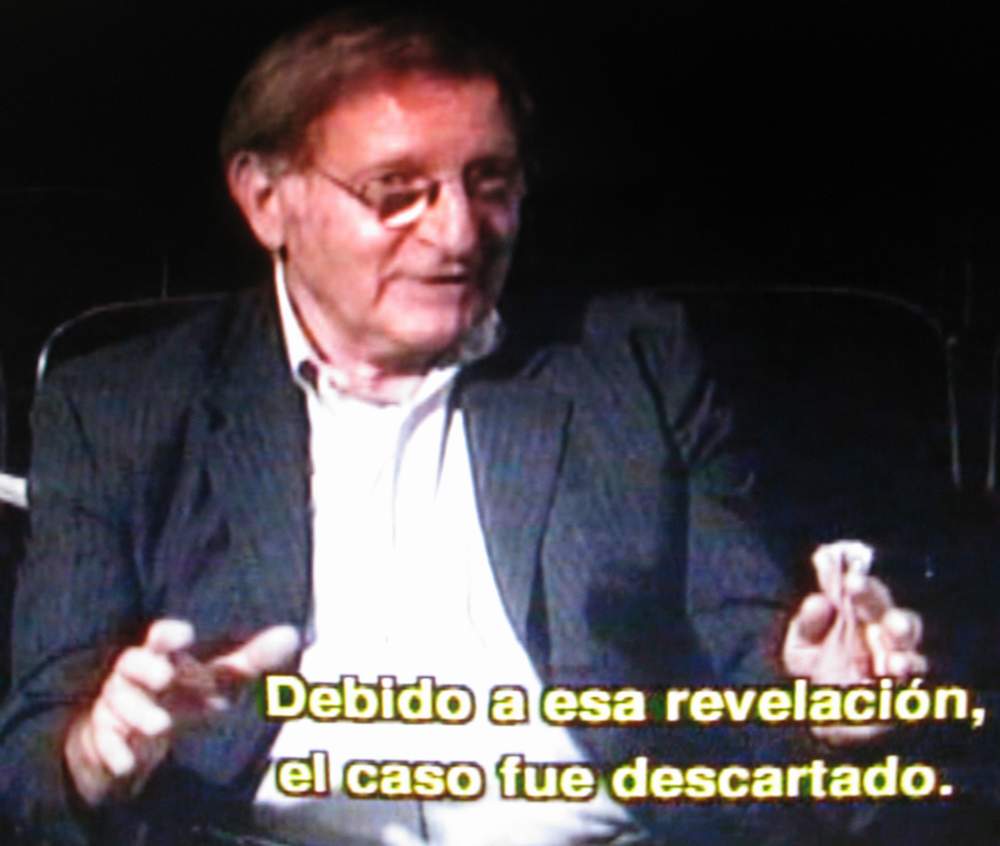
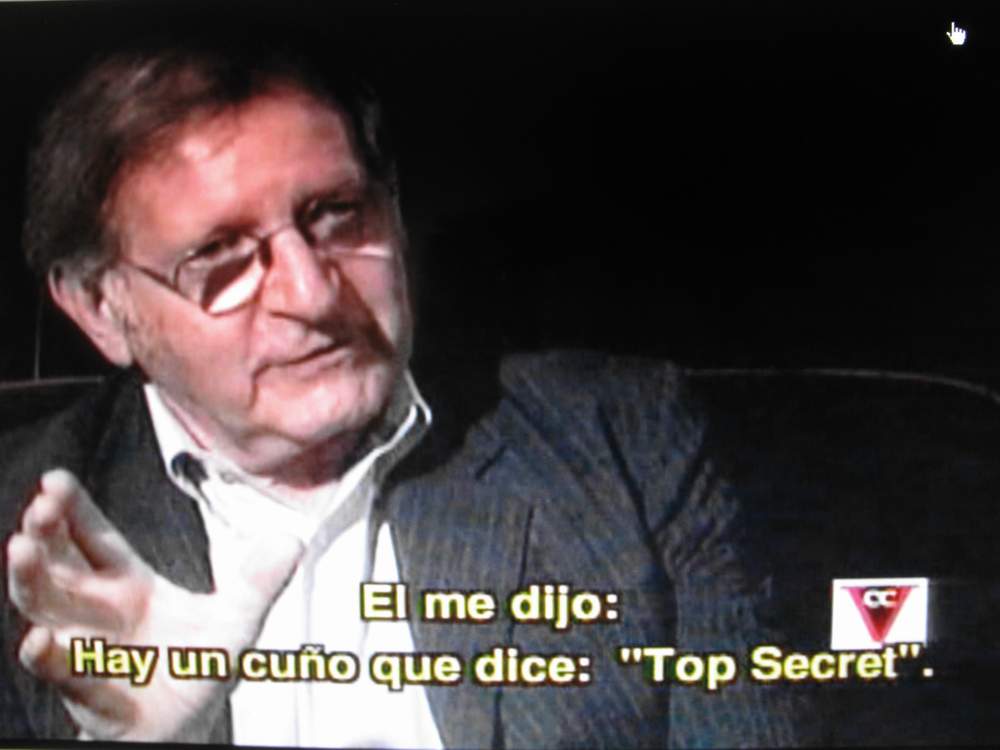
We hear excerpts of an interview with attorney Leonard Weinglass and Miguel Alvarez, adviser on international and political affairs to Ricardo Alarcon, president of Cuba’s National Assembly. In this interview Len Weinglass discusses his early career representing the first African-American mayor of Newark, New Jersey, Daniel Ellsberg and the Pentagon Paper, plus crucial turning points that shaped his life story as a people’s lawyer.
———
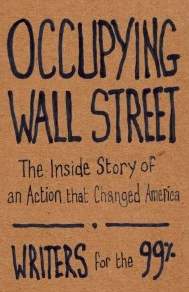
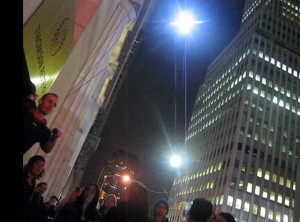
Occupying Wall Street: The Inside Story Of An Action That Changed America – Writers For The 99%
A collective of writers for the 99 percent have created a very interesting new book for OR Books, distributed by Haymarket Books. They’ve employed a unique writing method to chronicle the many details within the movement of Occupying Wall Street. A team of nearly 60 writers with rotating membership, collaborated on the describing the intricate structures and daily life of the movement such as running the general assembly, how the security and medical center operate and then the stories of the activists involved.
- We were supportive of what was going on down in Zuccotti and I thought we should do a book about this too.
- Beginning of October I went down to the trash cans outside my apartment and pulled an old Budweiser carton out of the trash and cut it into the shape of a book cover and wrote on it with a Sharpie, “Occupying Wall Street, By Writers With the 99%.
- I photographed it with my iPhone at home, and sent it out with a press release, and New York Magazine picked it up saying Occupy Wall Street has a book and it then went everywhere.
- The journalists were calling me up saying, who are the writers for the 99 percent?
- So then I had to get some volunteers. We went down to Zuccotti and talked to some of the facilitators down there. They said you should just come to a General Assembly and we’ll put it on the agenda.
- Tell the GA about the book, get some volunteers and you’ll be fine.
- So we went down on a Wednesday night, in early October. I was not feeling comfortable about this.
- I was a little nervous about speaking at the GA to try and get permission to publish the book.
- They suggested to go to and Education and Empowerment Meeting Committee at 60 Wall Street and take it up there and ask for volunteers there.
- The following week we went the meeting and the response at that point was not very encouraging.
- People were suspicious of who we were. Whether this book was going to be seen as the official book of Occupy Wall Street, which we were saying it wasn’t but they thought it would be. And that it was going to develop an analysis that they didn’t agree with.
- No, we were saying its going to be descriptive, it’s not analytical. A lot of the twinkling was out flat, some of it was down. In the end, some guy stood up in the back and said I don’t think we should support this.
- We got blocked, he crossed his arms in front of chest. If this goes through, I’m walking out. We felt really wounded by it.
- But afterward some people from the committee came up and said we feel badly about the way you were treated, we’ll volunteer to help. We started meeting weekly at 60 Wall Street and the meetings got bigger and bigger.
- We came up with a structure, chapter by chapter. There were 2 themes in the book, one was a chronological account of the action. The day the occupation started on September 17.
- The drilling down of the daily detail for what life is like in the square. We’ve got sections in the book of how the kitchen worked, how the library worked, how the general assembly worked.
- I thought at first, what I would do would be to interview the people who are volunteering to write, pick the ones who could write well, and as kindly as possible tell the ones who couldn’t write they couldn’t be part of it.
- I soon realized that was not is the spirit of Occupy Wall Street.
- We were trying to reproduce the book in a way that reflected the values of Occupy Wall Street that meant it was produced in a very democratic, horizontal fashion. Anyone who wanted to participate could.
- We came up with a chapter structure, we sent people out into the square and we did about 200 interviews in the square. We allocated the interviews to each chapter and we tried to find 3 or 4 people to write each chapter.
- The whole book was written by 60 people in 2 weeks. This book absorbed the ethos of Occupy Wall Street.
- If you repress a little bit of it, its going to spring up somewhere else.
Guest – Colin Robinson, former Publisher, Verso Press and The New Press, and Scribner senior editor; John Oakes, former Grove Press Editor and founder of 4 Walls, 8 Windows and ORBooks. He’s written for magazines and newspapers including the New York Times and the London Guardian.
——————————————————
Law and Disorder March 19, 2012
Podcast: Play in new window | Download
Updates:
- Rene Gonzalez – Cuban Five Update: Contact Form
- CIW: Publix Campaign Fast – Publix Surveillance Truck
- Ugandan LGBT Activists File Case Against Anti-Gay U.S. Evangelical in Federal Court
- The Progressive: Michael Smith’s Book Interview “Who Killed Che?”
——

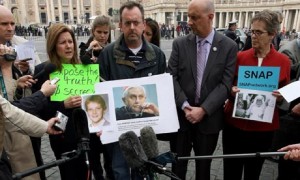
Church Puts Legal Pressure on Abuse Victims’ Group
Earlier last year, we reported on the Vatican revising its laws making it easier to discipline sex abuser priests. This month, lawyers for the Roman Catholic Church and priests accused of sexual abuse and pedophilia have used the courts to force the group SNAP Survivors Network of those Abused by Priests to disclose more than two decades of e-mails that could include correspondence with victims, lawyers, whistle-blowers, witnesses, the police, prosecutors and journalists. A Kansas City judge decided SNAP must comply with lawyers because it had relevant information regarding 2 cases in Missouri.
- As you know we are a not for profit, self help support group run by and for people who have been victims of clergy sexual abuse. We have been providing support information to each other since 1988.
- The church officials have taken an unprecedented move and they have subpoenaed records from our SNAP leaders.
- We are an international group, we have groups forming in other countries as well.
- Here in the United States, we have support groups meeting in about 70 cities. In these support groups people share their feelings and tidbits of information on how to cope with the repercussions of sexual violence.
- There are subpoenas from 2 different cities, 2 different cases, both from the state of Missouri.
- In Kansas City, what’s happen in the past year, is a lot of sex abuse by priests has been uncovered, exposed and brought to light. In the process, the Bishop himself was indicted for failure to protect children.
- In one particular civil case, the church attorneys have subpoenaed the records of our national director and they are looking for very extreme information.
- These subpoenas are not tailored to be helpful to get information for the case, SNAP is not a party to either of these cases. They ask for records with no date, from the very beginning of SNAP, from 1988.
- They’re asking for all the information in our emails, in our files, and they’re looking for any information that names any priest from the diocese of Kansas City, St Joseph.
- We do believe that the victims who have spoken out in Kansas City, have had an impact. I think its empowered other victims to come forward. I think they’re trying to shut down SNAP in Kansas City.
- The biggest concern we have now is the fear that this is spreading. In many ways, the intended effect has already taken place.
- I started SNAP, I did so, after I was raped and sexually violated by a priest in my parish growing up.
- Stop The Legal Bullying Petition.
Guest – Attorney Barbara Blaine, founder of SNAP the nation’s oldest and largest self-help organization for victims of clergy sexual abuse 10 thousand survivors.
——–
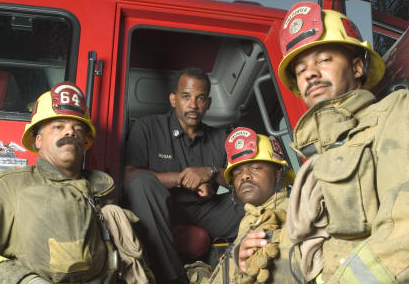
Court Rules FDNY Liable for Up to $128 Million in Back Pay to Black and Latino Applicants
Last week, a US District judge awarded plaintiffs back pay in a class action lawsuit that found the New York Fire Department to have racially discriminatory hiring practices. US District Judge Nicholas Garaufis also ruled that the City of New York is liable for nearly 129 million in lost wages. This amount will be distributed to Black and Latino applicants, 82 and 42 million dollars respectively. The judge also ordered the FDNY to hire 186 Black firefighters and 107 Latino firefighters.
- The Vulcan Society which is the Black fraternal organization for New York City brought a lawsuit in the early 1970s challenging the hiring practices of the department as violative of the equal protection clause of the Constitution, saying that they racially discriminated.
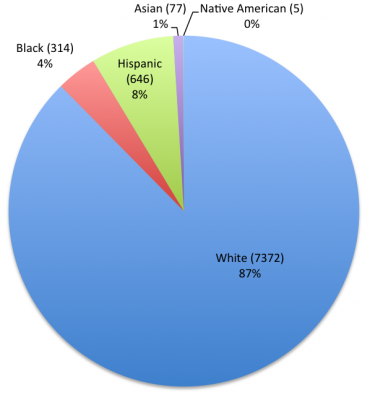
- Blacks and Latinos, its over half of the city’s population today. If you look at the fire department today, its roughly if you combine Blacks and Latinos about 10 percent.
- A federal judge in New York found that the hiring practices were discriminatory and violated the 14th amendment, the 2nd Circuit Court of Appeals upheld that decision and the Fire Dept was ordered to make some changes in 1970s.
- As of 2002 when we actually formerly brought this case, the department was 3 percent Black, 5 percent Latino, which is not much different than it was in 1970. The city was asked to work out a settlement, the city refused for 2 years.
- So, the EEOC referred the case to the Department of Justice, Civil Rights Division. This was during the Bush Administration and as you know the Civil Rights Division didn’t do much.
- We’ve proven discrimination about 3 times over now to the judge. Last year we had a big federal trial in Brooklyn on what relief the court should order because of the discrimination that was found.
- If you try to obstruct a federal court order, that could lead to some serious penalties.
- Our clients, the Vulcans first met with Mayor Bloomberg when first came to office in 2002 about this problem.
- We felt it was a purposeful and intentional effort by the city to exclude people of color.
- There have been incidence, we think retaliatory incidence we think against Vulcan members for there efforts in this case.
- The FDNY has really dropped the ball in responding to these acts of discrimination.
- The court has to oversee a lot of different aspects to this case. There’s a new test being developed, they’re going to start administering this week. There’s now the piece about the compensation for the plaintiffs.
- Federal judges can’t closely supervise the case so they appoint these monitors to simply act in the role of the judge and oversee each of these aspects of the case.
- We hope that the city will at some point stop fighting because all the things the judge has ordered for changing, I think benefits the fire department.
- A group of women sued in the early 1980s alleging sex discrimination and again they pointed to the test and other aspects of the hiring process.
- They were victorious and the court ordered them to hire 50 women, which they did do.
Guest – Attorney Darius Charney, senior staff attorney in the Racial Justice/Government Misconduct Docket. He is currently lead counsel on Floyd v. City of New York, a federal civil rights class action lawsuit challenging the New York Police Department’s unconstitutional and racially discriminatory stop-and-frisk practices, and Vulcan Society Inc. v. the City of New York, a Title VII class action lawsuit on behalf of African-American applicants to the New York City Fire Department which challenges the racially discriminatory hiring practices of the FDNY.
—————————-