
Welcome to Law and Disorder Radio
Law and Disorder is a weekly independent civil liberties radio program airing on more than 150 stations and on Apple podcast. Law and Disorder provides timely legal perspectives on issues concerning civil liberties, privacy, right to dissent and practices of torture exercised by the US government and private corporations.
Law and Disorder January 30, 2012
Podcast: Play in new window | Download
Updates:
- Michael Smith visits political prisoner David Gilbert and discusses David’s book Love and Struggle.
- Genocide Bill Angers Turks – It Was Genocide Radio Documentary by Heidi Boghosian
- Supreme Court: GPS Tracking Device Illegal
- Lizzy Ratner Co-hosts Beyond the Pale on WBAI
—

Tariq Ali: Turning Points in the History of Imperialism
Today we’re joined by internationally renowned writer and activist Tariq Ali. Tariq is visiting from London where he is editor of the New Left Review.
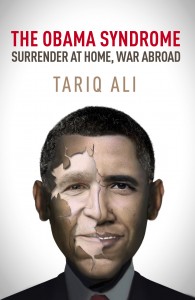
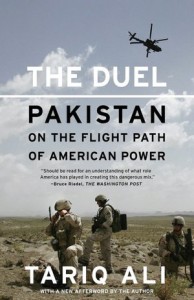
A writer and filmmaker, Tariq has written more than 2 dozen books on world history and politics, including The Duel: Pakistan on the Flight Path of American Power, The Obama Syndrome and On History. We talk specifically about several turning points in global history, the Occupy movement and US elections. .
- The think the first World War was crucial but it wasn’t the war itself it was the consequences of that war. Here you had huge empires.
- The Russian revolution challenged capitalism frontally and its leaders said we want Europe to be with us, on our own we can’t do it. We need the Germans, we need a German revolution. That frightened the capitalist class globally.
- Woodrow Wilson, decided that the time had come to intervene. 22 countries came to intervene.
- This intervention made it impossible for the early infant Soviet Union to achieve what it wanted to achieve.
- The Second World War was an effort by the German ruling class to get its share of the world market in countries.
- The US helped rebuild Japan and Germany. They helped build France and Britain by the Marshal Plan and that has never been done by a big imperial power before.
- They managed to get the Soviet Union to implode by having an arms race. The Russians fell into their trap and decided to go for the arms race, had they not history might have been different.
- I hope the Chinese do not fall into the same trap, threatened by Obama’s puny little bases in Australia.
- People, early settlers in the United States got land totally free and they took it and that created the belief in the American psyche of private property.
- The Soviet Union imploded because the people lost faith in the system.
- The entire elite in the United States and Western Europe is wedded to the Washington consensus that emerged after the collapse of communism. The center piece of this consensus was a system which believed in market forces. I refer to it as market fundamentalism.
- We are confronting the extremism of the center and the result of this is no alternatives exist within mainstream politics. The effect that this is having is hollowing out democracy itself.
- Occupy: What we need is for these movements to call an assembly nationally and discuss a charter of demands for progressive America which need only be ten demands but something around which people can rally. I think its a movement that should be created bearing what the needs of ordinary people are.
- In order to understand the laws of motion of capital, you have to read Marx. It’s true capitalism has become much much more complex. Zombie capitalism, or fictitious capitalism, where money is used to make more money.
- It’s not money that’s creating productive goods.
- I had written a book on South American because I got very engaged in the Venezuela-Boliverian struggle and got to know Chavez very well.
- If Americans had access to Cuban medicine, the pharmaceutical companies would collapse, they would never let it happen.
Guest – Tariq Ali, writer, journalist and film-maker, born in Lahore and educated at Oxford University. He writes regularly for a range of publications including The Guardian and The London Review of Books. He has written more than a dozen books including non-fiction as well as scripts for both stage and screen.
———————————
Law and Disorder January 23, 2012
Podcast: Play in new window | Download
Updates:
- Heidi Boghosian: Mumia Abu-Jamal Update
- Support Mumia Here
- Michael Smith: Occupy Chicago Tribune Lawsuit Is On
- Michael Ratner: Tenth Anniversary of Guantanamo Prison: Cage Prisoners
- Movie: Death In Camp Delta
- Iranian Scientist Murdered: Mossad, CIA, ISI
- Covert War Against Iran
- Michael Ratner Speaks At Occupy London About Bradley Manning Case
- Julian Assange Extradition
- Judge Goes Forward With Investigation Of Guantanamo Torture Cases
- UK Transferring People To Qaddafi To Be Tortured
—

Newly Launched Whistle Blower Site – Honest Appalachia
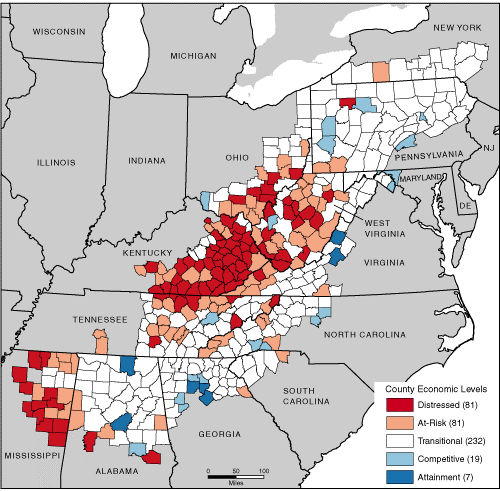
Activists in Virginia have launched a website appealing to whistleblowers wanting to reveal evidence of corporate and government wrongdoing. The site is called honestappalachia.org, it uses a security technology to protect citizens who upload documents and it keeps their identity hidden if there’s legal action. Inspired by Wikileaks, honestapplachia is a low cost model that can be adapted by others worldwide.
- The site is meant to be a resource for whistle blowers, that allows them to anonymously upload documents to our site. We will take those documents and vet them, and distribute them to journalists.
- SOPA is definitely a risk to transparency and whistle blower resources on the web.
- You go on our site, and you read our submission guide which is a step by step.
- The guide will tell you to download TOR. A simple piece of software which routes your activity through servers across the world, which essentially makes your activity anonymous.
- Your IP address basically gets lost in the crowd. We will never know who you are uploading to our site.
- We also encrypt the documents we receive.
- We have information on our site where others can take our open source software and use 80 percent of it.
- Our project is focusing outreach in Ohio, Pennsylvania, West Virginia, Kentucky, Tennessee, North Carolina, Virginia, also includes Georgia and South Carolina.
- We’re really hoping to receive documents about wrongdoing at the state and local level of government, from corporations in the region.
- Appalachia is a very industrialized region but its also very rural.
- We were funded with a grant from the Sunlight Foundation.
- Generally there’s a lot of cozy relationships in the states, between industry and government.
- We’re focusing on a broad array whether they’re coal or gas companies, banks, zoning boards, state and local governments, anything that could engage in corruption at the expense of the public.
Guest – Jim Tobias, activist and direct action protester.
—-
Law and Disorder January 16, 2012
Podcast: Play in new window | Download
Update:
- Michael Smith: Newt Gingrich Attacks Capitalism
—
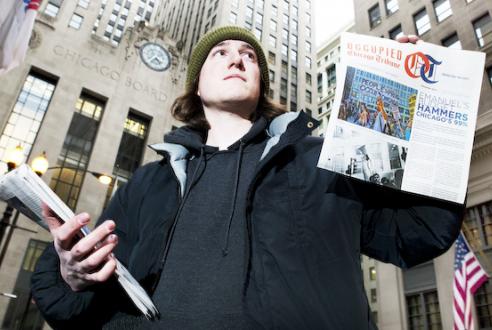
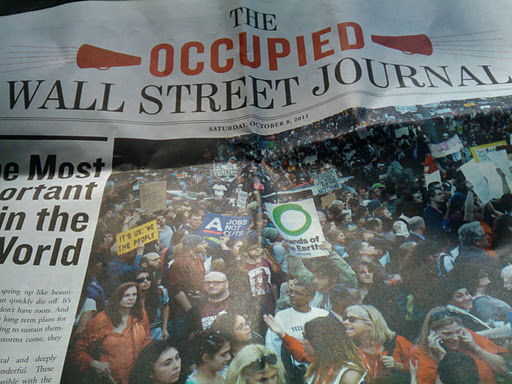
Occupy Wall Street Parody Papers Spark Legal Action From Big Newspapers
Occupy Wall Street Newspapers such as The Occupied Wall Street Journal or The Occupied Chicago Tribune have prompted lawyers to take Occupy protesters to court. In Chicago, a law firm is attempting to prevent the OWS movement from using The Occupied Chicago Tribune. We’re joined today by attorney Michael Deutsch with the People’s Law Office who has been involved with this issue in Chicago.
- The Chicago Tribune contacted some of the OWS people and threatened to shut down their website and facebook page and to go into federal court and sue them for trademark infringement.
- They said the word “Chicago Tribune” is a trademark that belongs solely to the Chicago Tribune and no one else can use it for any purpose or any way.
- Even if they do sue them I think the publicity not be good for the tribune and good for the occupy people.
- There is the Lanham Trademark Act that protects them from people appropriating them.
- There’s also this Dilution Act which prevents people from using or diluting their trademark by using it some unnecessary or dismissive way.
- When the people of Occupy were first contacted they were fearful of being sued by the Chicago Tribune.
- They offered to change it to the Occupy Chicago Times but they turned it down and said you can’t use any name that references a newspaper.
- With Peter Weiss’s help we realized this is a classic parody case, that’s basic First Amendment rights.
- The law isn’t that clear but the courts usually balance whether there will confusion of the name against First Amendment rights.
- In their masthead they’re now saying they’re not affiliated with the Chicago Tribune Corporation.
- Their website is still up, facebook is still up, they haven’t gone to court, so maybe they realize for us its a win / win situation.
- If we go to court we’re going to win on the legal grounds, plus we’re going to get a lot of publicity.
Guest – Attorney Michael Deutsch, partner with the Peoples Law Office.
—–
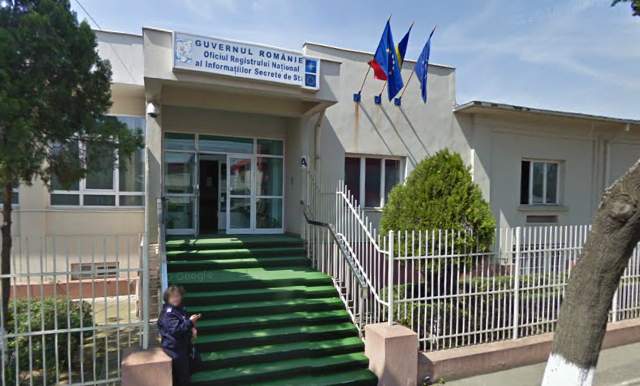
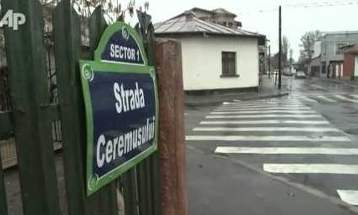
Inside the CIA Black Site in Bucharest
Reporters for German network ARD’s Panorama news magazine and the Associated Press have pieced together key details surrounding the CIA’s operation of a black site in Bucharest, Romania. AP’s Adam Goldman and Matt Apuzzo write:
In northern Bucharest, in a busy residential neighborhood minutes from the center of Romania’s capital city, is a secret that the Romanian government has tried for years to protect. For years, the CIA used a government building — codenamed Bright Light — as a makeshift prison for its most valuable detainees. There, it held Al-Qaida operatives Khalid Sheik Mohammad, the mastermind of 9/11, and others in a basement prison until 2006, the year some were sent to Guantánamo Bay, according to former U.S. intelligence officials familiar with the location and inner workings of the prison.
John Goetz:
- We’ve had a description of the CIA site, which is where one of the secret prisons were located.
- We had a description from some that worked there.
- The prison we’re talking about was used by the CIA in 2004 / 2005.
- The CIA secret prison was held in a Romanian government organization which gets called either ORNSS or NSA.
- It’s an organization that is used to get Romania up to speed on NATO classification rules.
- It’s a building that has a big NATO flag on top of it.
- In the back section of the building is where the secret prison was located.
- What I understand is that in Poland, when Bush came over, right after the beginning of the Iraq War.
- When they didn’t find weapons of mass destruction, he was there in May and early June 2003.
- We know that Al-Nashiri in his various times in CIA prisons, that his family members, I believe his mother was threatened with rape. He was water boarded, a drill was used on him.
- There was a mock execution, things like that. We’re not exactly sure what happened in Poland and Bucharest.
- There’s a little known site in Bosnia, that was used in days and weeks, right after 9-11.
- In Bagram, there’s a military prison there and there’s a CIA prison.
- I do know that in Africa there are prisons that run under a new model, where the state runs the prison and is quarterbacked, is the expression that’s used by the CIA who asks questions through others.
- It makes it easier to deny. Many people think . . .oh, the secret prison story is over.
- The facts are that outside of flight logs and some locations of prisons, no one really knows what happens inside these places.
- No one knows how they were run, no one knows perimeter security, how food was brought in, it remains a real black box in American history.
Guest – John Goetz, reporter with the German network ARD’s Panorama news magazine.
—–
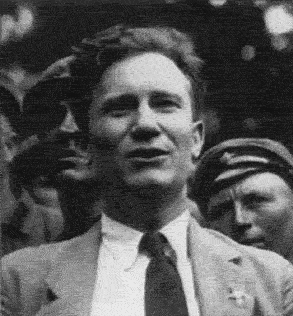
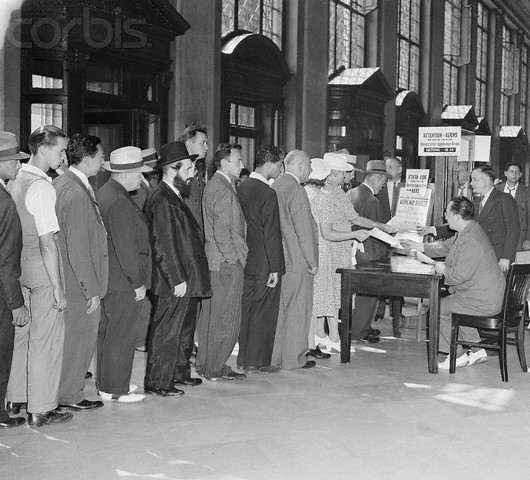
70th Anniversary of the First Smith Act Prosecution: Proto-Thought Crime Legislation
This year marks the 70th anniversary of the first Smith Act trial of revolutionaries accused of wanting to overthrow the government. The law was intended to destroy the 100,000-strong American Communist Party however, the Smith Act was first used against the much smaller, revolutionary rival to the Communist Party, the Socialist Workers Party. Our returning guest, author and activist Joe Allen writes about this 70th anniversary. The Alien Registration Act of 1940 is also known as the Smith Act after its sponsor Rep. Howard Smith of Virginia, a Democrat and leader of the anti-labor bloc in the House of Representatives. The Smith Act became the legal weapon against critics of the government and stipulates that:
Whoever organizes or helps or attempts to organize any society, group or assembly of persons who teach, advocate, or encourage the overthrow or destruction of any such government by force or violence; or becomes or is a member of, or affiliates with, any such society, group or assembly of persons, knowing the purposes thereof–
Shall be fined under this title or imprisoned not more than 20 years, or both, and shall be ineligible for employment by the United States or any department or agency thereof, for the five years next following his conviction.
Joe Allen:
- For many people in the United States, the defense of civil liberties, has always been an important and constant feature of our history and most of that time the defense of civil liberties has not been primarily against vigilantism, or rogue elements of the government or corrupt public officials. While that’s an important part of that, it has always been dealing with the actual laws that have been attempting to undermine civil liberties most of the time they’ve been federal laws.
- You can go back to the Alien Sedition Act of the Adams Administration, the Espionage Act of WWI. They were always used against opponents of the government and not spies as they were sold to people.
- James Canon was one of the most important figures in American Socialist history, his life traverse the history of the American far left.
- He began in the IWW. The radical militant trade union that organized the most oppressed sector of American workers.
- He was a founding member and later a national chair of the American Communist Party. Like many Wobblies and members of the Communist Party he was very concerned of the civil liberties of radicals and trade union organizers and was the head organizer of International Labor Defense in the 1920s.
- Canon developing a criticism of and his descent within the American Communist Party as the ILD moved away from its original mission and Canon himself to begin along with a number of significant figures of the American Communist Party and other people who sided with Trotsky in the dispute with Stalin over not only the Soviet Union also the International Communist Movement. He was the founder of early American Trotskyism in the 1920s and 1930s.
- It was the broad layer of people who were ultimately indicted under the Smith Act in 1941 primarily for advocating the overthrow of the United States government.
- Smith Act – Proto-Thought Crime Legislation
- It’s also in a sense a response to a dispute inside the labor movement.
- The first that a prosecutor tries to do is get a jury that is predisposed of the prosecution and not the defense.
- That’s one of the great travesties of the Smith Act, not only can you be indicted by the things you do but by the things you say.
- In that sense it really is a thought-control crime.
- The most important part of the Smith Act in this country is it effectively destroyed the left in this country during the late 1940s and the early 1950s.
Guest – Joe Allen, a frequent contributor to the International Socialist Review and a long-standing activist, based in Chicago.
——————————————