
Welcome to Law and Disorder Radio
Law and Disorder is a weekly independent civil liberties radio program airing on more than 150 stations and on Apple podcast. Law and Disorder provides timely legal perspectives on issues concerning civil liberties, privacy, right to dissent and practices of torture exercised by the US government and private corporations.
Law and Disorder April 9, 2012
Podcast: Play in new window | Download
Updates:
- Mumia Abu-Jamal Appeal Rejected
- Supreme Court Ruling Allows Strip Search For Any Arrest – Targets Minorities
- ICC Declined Investigation Into Operation Cast Lead
————-
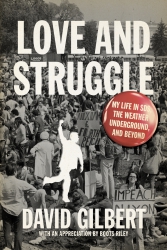
Love and Struggle: My Life in SDS, the Weather Underground, and Beyond
Love and Struggle: My Life in SDS, the Weather Underground, and Beyond is the title of a new book chronicling the militant career of radical activist David Gilbert. As many listeners may know David Gilbert was the founder of SDS, Students for a Democratic Society at Columbia University and he helped build an underground resistance to war and racism known as the Weathermen, one of the most radical movements in the United States. Gilbert was incarcerated because of his involvement in the 1981 Brinks robbery that resulted in four deaths. His book is a very personal account told from first person that marks his various stages as a liberal, a radical and then revolutionary. Gilbert has been in jail for the past 3 decades and readers get a rare glimpse into this retrospective.
- David has been in prison my whole life. As a teenager and activist I needed a mentor.
- I started writing political prisoners and David Gilbert was one of them.
- He was patient and gracious in answering my many questions. Helping me think about race and empire and my role in the world.
- I think he’s done a phenomenal job of walking us through the thought process.
- In his own case, David was reluctant to write about prison conditions, and Love and Struggle is not at all a prison memoir.
- I think its quite rare to have a prisoner write a book that’s not about prison conditions.
- The humanizing effect he writes about is not about the abuse he’s suffered inside. Video with readings
—–
Naomi Jaffe:
- David and I met when we were both graduates at the New School in New York, in ’67 it must’ve been.
- We were co-founders of New School SDS, we were fire-y young students together for several years in New York.
- David wrote (Love and Stuggle) because young people were asking him, what the lessons were from that period. Lessons- the way that our generations have much to learn from each other, passing a legacy from generation to generation.
- There’s a huge amount on racism and white supremacy and being a white ally, an analysis of how you move in a way as a white person to oppose white supremacy.
- To me, its not only the connection but learning from who you learn from.
- His (David Gilbert) ability to figure out that the clearest analysis of an oppressive system comes from people who are on the receiving end of it.
- David says Malcolm X opened the eyes of his generation.
- People are beginning to read it for the transfer of information from one generation to another.
- I think one of the lessons is how has David survived as a prisoner.
- He wrote an earlier book which was a collection of essays called No Surrender. It meant; how do you maintain your spirit?
- From the point of view of the Occupy Movement, the ability to center the narrative of people of color and of the most oppressed people.
Guest – Dan Berger, a writer, activist, and the George Gerbner Postdoctoral Fellow at the University of Pennsylvania. He writes about race and postwar American social movements. His latest book is The Hidden 1970s: Histories of Radicalism
Guest – Naomi Jaffe, writer and prison activist who helped to proof read Love and Struggle, add political and other detailed commentary.
————-
Guatemalan People Experimented On And Used As Test Subjects
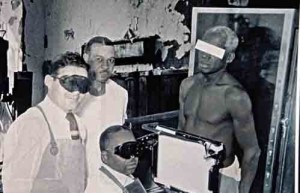
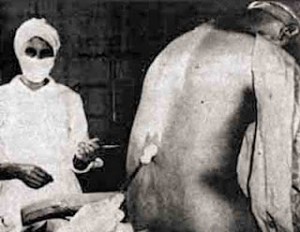
We discuss a very shocking story today, about tests conducted by the U.S. Public Health Service on more than five thousand individuals in Guatemala. From 1946 to at least 1953, more than a thousand people were deliberately infected with sexually transmitted diseases. The victims included prisoners, soldiers, the mentally ill and commercial sex workers none of the had consented to this egregious treatment.
In November 2010, President Obama demanded an investigation regarding what he called the “intentional infection of vulnerable human populations.” He noted that “The research was clearly unethical.” President Obama, Secretary Clinton, and Secretary Sebelius have publicly apologized. Last fall, the Presidential Commission for the Study of Bioethical Issues released a report on its investigation into medical experimentation that took place in Guatemala. The Commission called these experiments “especially egregious”.
It’s important to note that the experimentation in Guatemala was overseen by the same lab — the Public Health Services Venereal Disease Research Laboratory — as the STD experiments at Tuskegee. In fact, some of the same researchers were involved and some of the same diseases. In the Tuskegee matter, the parties reached a $10 million settlement in 1974 in which the United States promised to provide medical benefits to the participants and established the Tuskegee Health Benefit Program (now the CDC’s National Center for HIV/AIDS, Viral Hepatitis, STD and TB Prevention).
Meanwhile, a class action lawsuit was filed on behalf of 8 individuals who claim to have been victims in the Guatemalan case, spouses or descendants of victims and is now moving its way through federal courts.
- There were experiments going on in Terra Haute, Indiana and Tuskegee, Alabama.
- There were ethical limitations with what they could do within the United States.
- The US medical researchers went down to Guatemala and targeted vulnerable populations including ophans, mental health patients, prisoners, soldiers; people who never gave consent to be part of these experiments.
- They used different methods, bringing fluid out of the spinal column, mixing that with Syplitic material and injecting that back into the person. Mixing material from genitalia into water and having people drink it.
- The populations that they were working with were in institutions already.
- Susan M. Reverby is the Marion Butler McLean Professor in the History of Ideas and Professor of Women’s and Gender Studies at Wellesley College, and an historian of American women, medicine, public health and nursing.
- There wasn’t a known treatment for syphilis at the time and they wanted to watch the course of the disease, what does it do to the human body left untreated.
- But when penicillin became a known remedy for syphilis, the fact that it was withheld, and that people were intentionally misled.
- In Tuskegee, you have a population that’s not as well protected, not respected, this pre-civil rights movement.
- We’ve brought several claims, some under International Law and some as Constitutional violations.
- International law claims, look at specifically the non-consensual human medical experimentation and also bring a claim of cruel and degrading treatment.
- The statute that we’re proceeding under, the Alien Tort Statute is one you can’t use in court unless you clear the hurdle of having a violation of international law.
- Given the nature of the disease this is something pass on to your spouse, and potentially to your children.
- The defendants in this case are the US Government and the Pan American Health Organization which is the subsequent organization from the Pan American Sanitary Health Bureau.
- They’re arguing that they should be substituted under the Westfall Act for any individual defendants.
- When you substitute the US Government you’re then proceeding under the Federal Tort Claims Act.
- In sum, you can only sue the US Government when the US Government gives you permission to do so.
- Change.org link
Guest – Piper Hendricks, an attorney working on the Guatemalan case, she has served as the International Justice Project Director of The World Organization for Human Rights USA in Washington, D.C
————————————————————–
Law and Disorder April 2, 2012
Podcast: Play in new window | Download
Updates:
—
Vodak Settlement: Setting Precedence For Demonstrations
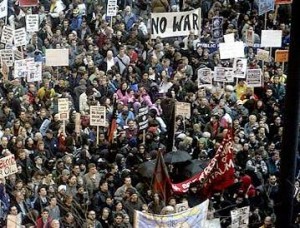
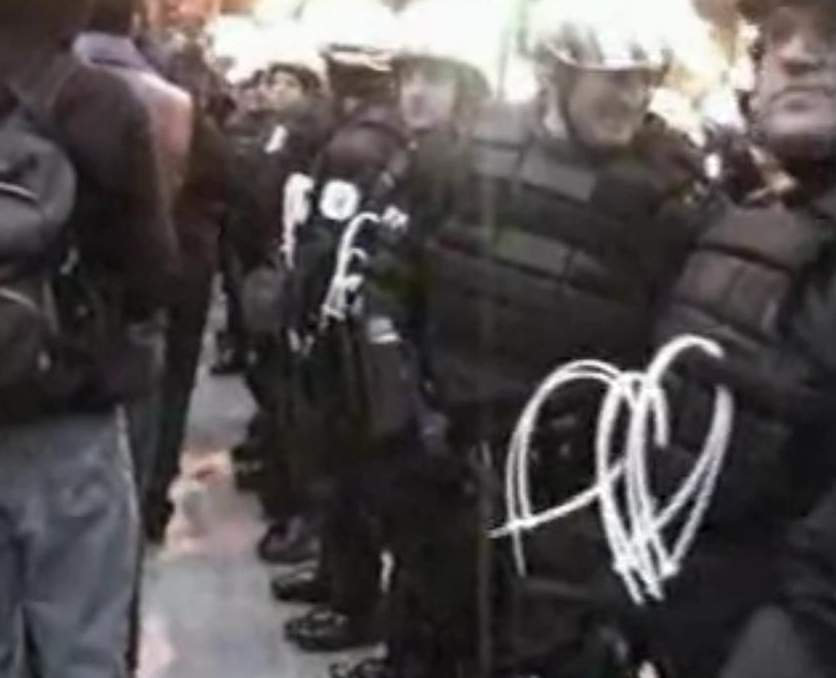
Attorneys with the National Lawyers Guild recently settled a class action lawsuit brought against the Chicago Police Department on behalf of protesters falsely arrested during a 2003 anti-war demonstration. On March 20 2003 nearly 10 thousand anti-Iraq War protesters marched through downtown Chicago before police surrounded a large group, trapping and arresting more than 700 people without ordering them to disperse. A Seventh Circuit ruling on the case (Vodak v. City of Chicago, 639 F.3d, 738 (2011)) held that police can’t arrest peaceful protesters without warning because the demonstration lacks a permit. This decision bears new weight in light of mass arrests within the Occupy movement. The National Lawyers Guild attorneys reached a 6.2 million dollar settlement in this case on the eve of a scheduled trial. The suit was litigated over the course of almost nine years by a team of NLG lawyers and legal workers including People’s Law Office attorneys Janine Hoft, Joey Mogul, Sarah Gelsomino, and John Stainthorp, as well as People’s Law Office paralegal Brad Thomson, and attorneys Melinda Power and Jim Fennerty.
- We think it sends a significant message to Chicago and the Chicago Police Department that it must honor and respect people’s right to protest.
- It was the day that Bush had dropped bombs on Iraq. There was a massive out pouring of opposition, and people came down to the center of Chicago, to the Federal Plaza which is the heart of downtown. There were 10 thousand people and they marched on Lake Shore drive, and this was all permitted by the Chicago Police Department. This was a spontaneous demonstration, there was no written permit, but the CPD allowed it.
- Toward the end of the march, they decided that they wanted it to be over. They proceeded to surround everyone on Chicago avenue, and they prevented them from leaving, trapped them there for hours.
- They then proceeded to take over 500 people into police custody. 200 hundred were released, the rest were arrested with bogus phony charges of wreck-less conduct.
- They mass arrested everyone in that area including joggers and people shopping. It had an extremely chilling effect for people participating or near a demonstration.
- The message to the Chicago Police is that they cannot mass arrest people without giving orders to disperse.
- The new changes in the Chicago ordinances are very scary, it does allow for this increased surveillance of protesters and individuals seeking to protest.
- We’re very well aware of what the law is and we will seek to vindicate people’s constitutional rights.
—–
Brad Thompson:
- I’ve been working on this case since 2004, when I first started at the People’s Law Office.
- The work that I’ve done is a tremendous amount of discovery work in terms of going through the video work that was shot that night, by protesters, independent journalists, mainstream media and by the police.
- I did a lot in maintaining communication with class members. We had over 800 people that were taken into custody or held in the street for over 90 minutes.
- We did obtain over 250 affidavits by people who had their rights violated that night.
- The majority of protesters were from Chicago or the Greater Chicago area.
- I was one of the people taken into custody that night and released without being charged.
- I was witnessing the police aggressively arrest someone and I started to point and chant “shame” and then I became targeted. The police tackled me, and pulled me to my feet and struck me in the face which broke my nose and had a wound that required five stitches.
- I spent the night in jail bleeding all over myself.
Guest – Attorney Joey Mogul, partner at the People’s Law Office in Chicago and director of the Civil Rights Clinic at DePaul University’s College of Law. She focuses on civil rights cases involving police misconduct, criminal cases brought against individuals engaged in street demonstrations and other forms of First Amendment expression, and capital defense cases.
Guest – Brad Thompson, legal worker with the People’s Law Office in Chicago.
———–
Locking Away Children For Life Without Parole
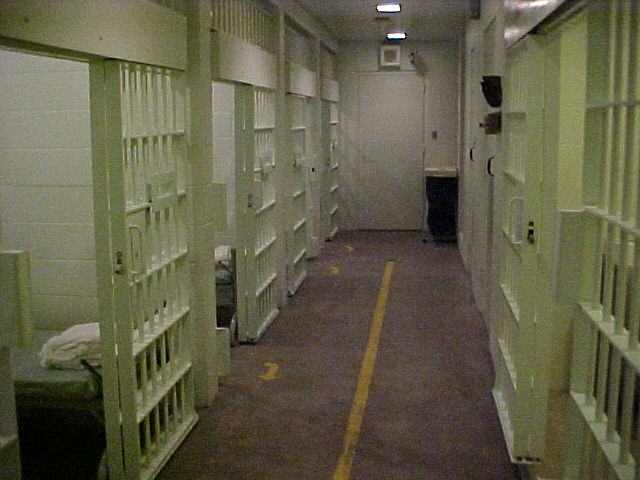
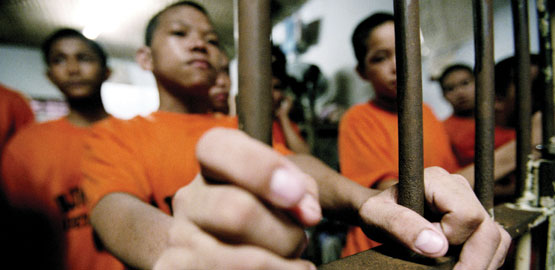
The United States is the only country in the world that sentences children to life, without the possibility of parole. Last month, the US Supreme Court revisited the question of whether juveniles convicted of murder should be given mandatory life sentences without the possibility of parole. The Supreme Court had once ruled against imposing death sentences on juveniles and imposing life sentences on youth who aren’t convicted of murder. Currently, 2500 kids in jail are serving life sentences without parole in the US. 371 of those individuals are in Michigan prisons. Our next guest has been working on a lawsuit on behalf of 9 Michigan individuals who were sentenced to life in prison for crimes committed when they were minors and who are being denied the possibility of parole.
Attorney Deborah LaBelle:
- The concept that we’ve been talking about that these are children both under international law and US law for civil matters, children are different from adults.
- The Supreme Court seemed to readily grasp that, they weren’t speaking about juveniles or teenagers or young adults, they spoke continuously on what to do about children who are involved in homicide crime.
- The court had two cases in front of them, both involving 14 year olds, one in which the 14 did not commit a homicide, but convicted of either felony murder or aiding and abetting.
- That juvenile got mandatory life without possibility of parole, because the child was sentenced as an adult, the other case, the 14 year old actually committed the homicide.
- There is a handful of states, Michigan and I think 8 others who treat 17 year olds always as adults for all purposes in the criminal justice system.
- Under the 38 states, there’s a whole range, some you can only get life without parole, if you’re 16 and up, some allow it for 15, some states allow it for a child of any age, Michigan is one of them.
- One of the justices talked about that. Is there an age in which we would all share a collective cringe. What about a 5 year old, what about a 10 year old.
- The frontal lobe area of the brain that really addresses impulse control and long term consequences, and control issues of risk management, is developing through adolescence.
- People draw the age at different points, some say not til 19, some not til 23 as you say.
- There’s a bright line in civil law that’s been drawn in civil law that youth have a maturity that they can vote, when they can decide to leave school, when they can drink in some places, when they can drive.
- There are these bright lines.
- Every other country who has signed on to the conventions of the rights of the child which prohibits putting children in prison for life without possibility of parole explicitly has recognized that this practice is banned.
- The only other country that hasn’t signed on is Somalia and they don’t quite have a government right now to do that.
- We stand alone in not adhering to that convention on the rights of the child as well as we stand alone on approving this sentence.
- We have over 2500 youth who are serving of life without any possibility of parole. About 70 percent are children of color. A third of them, did not commit homicides.
- No one is arguing that there might not be circumstances, that a state couldn’t decide upon review that child couldn’t be released. What the argument is, you can’t keep them in there without any hope. You have to give them an opportunity to demonstrate upon maturation that they have been rehabilitated and they aren’t a threat to public safety.
- We should think of putting children in places where we can nurture, council and believe in their rehabilitation and give them a second chance.
- I read transcript after transcript of judges saying, – listen I don’t want to do this to this 14 or 16 year old, but I don’t have any choice. What is the value of putting a child away with no hope. It’s certainly not a public safety issue, because that can be addressed by the state by having parole or review hearings.
Guest – Attorney Deborah LaBelle, an attorney with the ACLU of Michigan’s Juvenile Life Without Parole Initiative.
————————————————————
Law and Disorder March 26, 2012
Podcast: Play in new window | Download
Updates:
- Bradley Manning Update: Michael Ratner – We Have A Secret Trial Going On Right Now
- Park Slope Food Co-op Vote
- Len Weinglass Remembrance
—-
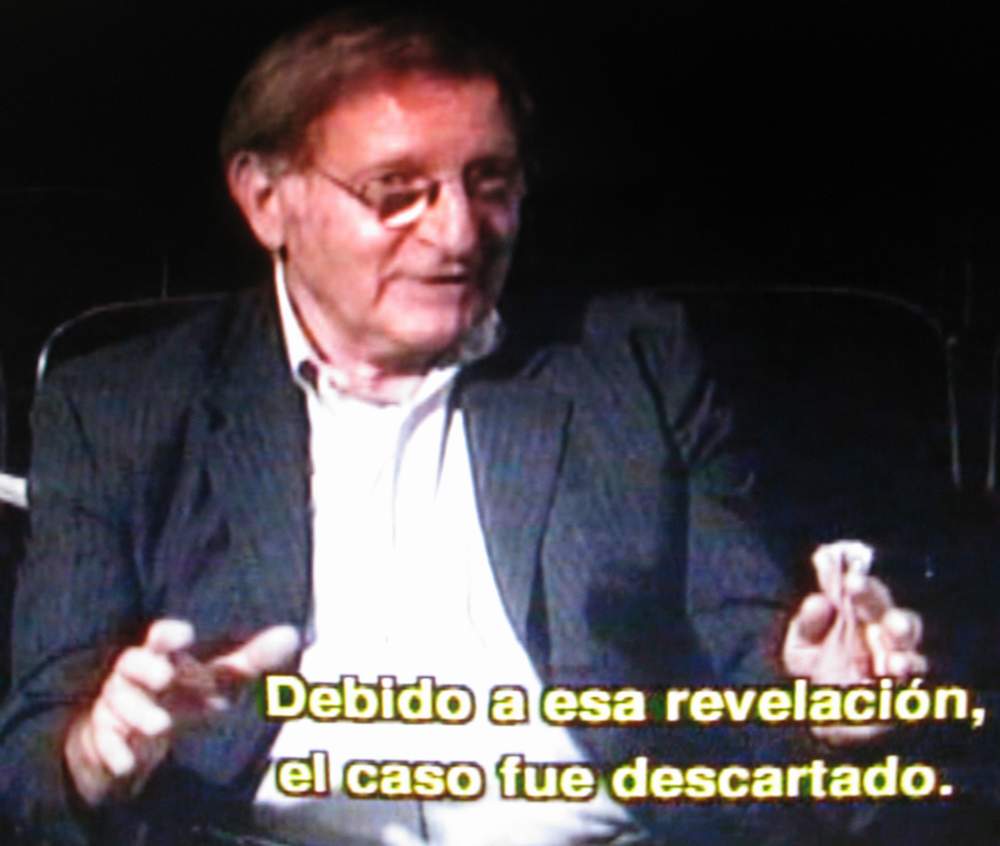
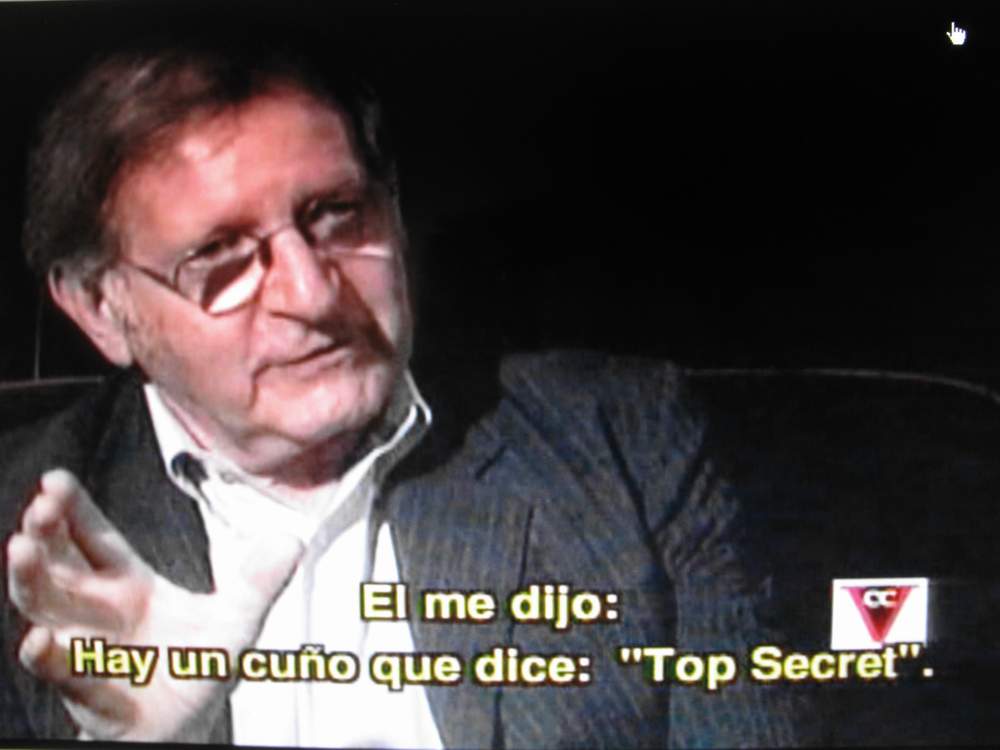
Leonard Weinglass TV Interview: Cuba 2004
We hear excerpts of an interview with attorney Leonard Weinglass and Miguel Alvarez, adviser on international and political affairs to Ricardo Alarcon, president of Cuba’s National Assembly. In this interview Len Weinglass discusses his early career representing the first African-American mayor of Newark, New Jersey, Daniel Ellsberg and the Pentagon Paper, plus crucial turning points that shaped his life story as a people’s lawyer.
———
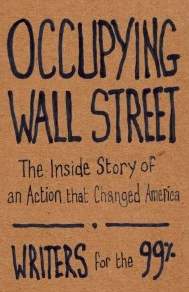
Occupying Wall Street: The Inside Story Of An Action That Changed America – Writers For The 99%
A collective of writers for the 99 percent have created a very interesting new book for OR Books, distributed by Haymarket Books. They’ve employed a unique writing method to chronicle the many details within the movement of Occupying Wall Street. A team of nearly 60 writers with rotating membership, collaborated on the describing the intricate structures and daily life of the movement such as running the general assembly, how the security and medical center operate and then the stories of the activists involved.
- We were supportive of what was going on down in Zuccotti and I thought we should do a book about this too.
- Beginning of October I went down to the trash cans outside my apartment and pulled an old Budweiser carton out of the trash and cut it into the shape of a book cover and wrote on it with a Sharpie, “Occupying Wall Street, By Writers With the 99%.
- I photographed it with my iPhone at home, and sent it out with a press release, and New York Magazine picked it up saying Occupy Wall Street has a book and it then went everywhere.
- The journalists were calling me up saying, who are the writers for the 99 percent?
- So then I had to get some volunteers. We went down to Zuccotti and talked to some of the facilitators down there. They said you should just come to a General Assembly and we’ll put it on the agenda.
- Tell the GA about the book, get some volunteers and you’ll be fine.
- So we went down on a Wednesday night, in early October. I was not feeling comfortable about this.
- I was a little nervous about speaking at the GA to try and get permission to publish the book.
- They suggested to go to and Education and Empowerment Meeting Committee at 60 Wall Street and take it up there and ask for volunteers there.
- The following week we went the meeting and the response at that point was not very encouraging.
- People were suspicious of who we were. Whether this book was going to be seen as the official book of Occupy Wall Street, which we were saying it wasn’t but they thought it would be. And that it was going to develop an analysis that they didn’t agree with.
- No, we were saying its going to be descriptive, it’s not analytical. A lot of the twinkling was out flat, some of it was down. In the end, some guy stood up in the back and said I don’t think we should support this.
- We got blocked, he crossed his arms in front of chest. If this goes through, I’m walking out. We felt really wounded by it.
- But afterward some people from the committee came up and said we feel badly about the way you were treated, we’ll volunteer to help. We started meeting weekly at 60 Wall Street and the meetings got bigger and bigger.
- We came up with a structure, chapter by chapter. There were 2 themes in the book, one was a chronological account of the action. The day the occupation started on September 17.
- The drilling down of the daily detail for what life is like in the square. We’ve got sections in the book of how the kitchen worked, how the library worked, how the general assembly worked.
- I thought at first, what I would do would be to interview the people who are volunteering to write, pick the ones who could write well, and as kindly as possible tell the ones who couldn’t write they couldn’t be part of it.
- I soon realized that was not is the spirit of Occupy Wall Street.
- We were trying to reproduce the book in a way that reflected the values of Occupy Wall Street that meant it was produced in a very democratic, horizontal fashion. Anyone who wanted to participate could.
- We came up with a chapter structure, we sent people out into the square and we did about 200 interviews in the square. We allocated the interviews to each chapter and we tried to find 3 or 4 people to write each chapter.
- The whole book was written by 60 people in 2 weeks. This book absorbed the ethos of Occupy Wall Street.
- If you repress a little bit of it, its going to spring up somewhere else.
Guest – Colin Robinson, former Publisher, Verso Press and The New Press, and Scribner senior editor; John Oakes, former Grove Press Editor and founder of 4 Walls, 8 Windows and ORBooks. He’s written for magazines and newspapers including the New York Times and the London Guardian.
——————————————————