Welcome to Law and Disorder Radio
Law and Disorder is a weekly independent civil liberties radio program airing on more than 150 stations and on Apple podcast. Law and Disorder provides timely legal perspectives on issues concerning civil liberties, privacy, right to dissent and practices of torture exercised by the US government and private corporations.
Law and Disorder February 27, 2012
Podcast: Play in new window | Download
Updates:
- Camp Delta Cases Won’t Proceed
- NLG 75 Year Anniversary February 20th, 2012
- Supreme Court Chooses To Take Review Affirmative Action Case In Austin, Texas
- Coalition for Immokalee Workers Update
- Groups Condemn Appointment of Archbishop Dolan to Cardinal of New York
———-
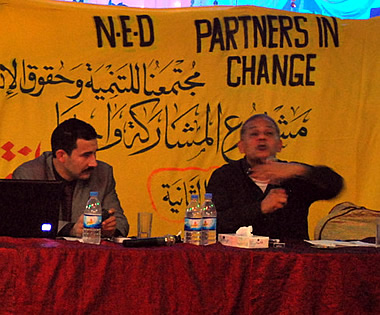
Egypt Places Travel Ban On US Citizens: NDI / IRI and Freedom House
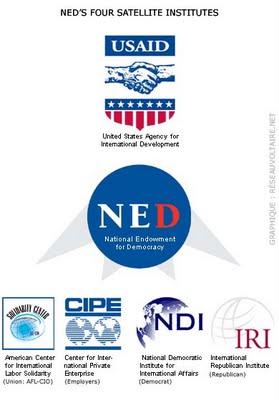
Egypt Places Travel Ban and Charges Against US Citizens Working With NDI / IRI and Freedom House In the last few weeks, the military backed Egyptian government has targeted the National Democratic Institute, the International Republican Institute and Freedom House–U.S. government funded groups working in Egypt. These groups have often come under attack as tools of US foreign policy. For example the IRI was blamed for playing a role in the coup against President Aristide of Haiti. As part of its crackdown, the Egyptian authorities raided the offices of some of these organizations and brought charges against at least 16 US citizens, six of whom remain in Egypt.
Three of them including the son of the US Transportation Secretary, Sam LaHood have taken refuge at the US embassy. They’re cases have been referred to criminal courts in Egypt. Recently, Egypt refused to back down despite a US threat to cut aid. We bring you two perspectives on the NDI/IRI and the charges against them. Paul Sullivan from the National Defense University raises serious questions as to whether these US funded organizations should be in Egypt at all. Then, Sally Sami, a human rights activist, is unwilling to be as critical presumably because she sees the crackdown as past of a larger crackdown on democracy advocates in Egypt even if NDI and IRI are not playing a constructive role.
- Essentially these NGOs are not registered in this country. There was an NGO law in 2002 that required these NGOs to register.
- These NGOs state they did put in the documents to register and they didn’t hear anything back and assumed everything was going well.
- They’re also unlicensed. That is also true.
- They’re funded by the US government. The required duties is to train people in exactly what voting is, what is democratic development.
- One of the charges that has been leveled against them is paying political certain parties and of course both these groups deny it. Freedom House, the third one involved also denies it.
- There are certain charges that neither the IRI or the NDI deny.
- The emotions are very high, and the issues are becoming more hardened on both sides.
- When Mubarak was in charge, these organizations were in a wink and a nod were allowed to be in the country.
- Now some of the NGOs that had nothing to do with anything political are now having a difficult time even on the streets of Egypt.
- There has always been a certain degree of anti-Americanism in Egypt. This is starting to stoke anti-Egyptian sentiment on the Hill and in the public. . .many of whom don’t understand Egypt as people who’ve live there, such as I understand Egypt, really quite wonderful people.
- It’s much more important to build friendships, to build relations, to help them get jobs. Investment, education, and human development, and leave the politics to the country.
Guest – Professor Paul Sullivan, professor of economics at the National Defense University (NDU) since July 1999. He is an Adjunct Professor of Security Studies and Science, Technology and International Affairs at Georgetown University, where he teaches classes on global energy and security, energy security in the Middle East, and natural resources and conflict in Africa and the Middle East. Dr. Sullivan was the Vice President, Programs, for the United Nations Association, National Capitol Area, where he was a strategic leader and adviser for the many programs and committees run by UNA-NCA during June 2010 to June 2011.
——
We get another perspective on the ground in Cairo, Egypt. Sally Sami, former director with the Cairo Center for Human Rights Studies and human rights activist.
Sally Sami:
- We’re talking about a moment, a time when the essence of the revolution itself is being stolen.
- We see a revolution that is being arrested, attacked, harassed.
- It seems like we’re being punished for taking the stand, for continuing it to be outspoken about the violations that are taking place, even after the revolution.
- One of the worst attacks was during a Christian protest, and people were killed enmass, we’ve seen this becoming more and more frequent.
- The continued denial of taking the responsibility to the protect the lives of Egyptians.
- We want it clear that should not be any double standards, its a human rights thing, ok? There shouldn’t be any double standards.
- Some countries deserve human rights, some don’t, it depends on the concept of national security, until now we don’t know what it means.
Guest – Sally Sami, former director with the Cairo Center for Human Rights Studies and human rights activist.
——————————————————————
Law and Disorder February 20, 2012
Podcast: Play in new window | Download
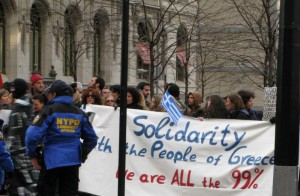

Greece, the EU, the United States and Fight Back
The huge and sustained fight back against massive austerity cuts continues in Greece, in that small southern European country of 11 million people, half of whom live in Athens, there’s been a wave of general strikes going back to August of last year. Not only are the economic powers that be particularly in Germany forcing terrible cut backs on the standard of living of the Greek people, there also hollowing out democracy in that country. The country, after all, the birth place of democracy. Despite their efforts, the Left in Greece has grown enormously and now rivals in size the combination of the right wing parties. What happens in Greece is going to have a ripple effect in other European countries particularly, Portugal, Italy, Spain, Ireland and Hungary.
- In Europe, we see the rich countries working really hard to punish the debtors.
- Not to ask what the conditions were that got them into debt, not to admit that for the years these people were in debt, they paid off handsomely to the creditors in high interest rates.
- Nor is there any examination of the conditions under which this happened so that there’s nothing being done to change those conditions.
- We are instead engaged in a vicious punishment of a small country, 11 million people. It’s attempt to terrorize the rest of Europe into thinking of not resisting.
- Those that are closest to Greece that are in trouble are the following: Portugal, Spain, Ireland, Italy, Hungary.
- How did it come that the Germans are doing so well and the Greeks so badly?
- The Europeans as a people had gone through 2 of the worst wars human beings had ever experienced, fought overwhelmingly on European soil.
- So they embarked on a unity starting in 1945 and came about in the 1990s. Took them a long time.
- In order for a unified Europe to be, a source of peace and prosperity, it’d have to balance out the rich and the poor.
- Who were the poor ones coming into the European Union. Greece and Portugal and Spain, and later eastern Europe.
- None of that was done under the unified Europe the equalizing process. The Germans the French and the Dutch were terrified of unity, they wanted the big market, but they were afraid that businessmen would move production from the high wage parts of Europe, Germany, Scandinavia, etc. to the poorer places where wages were lower.
- The extreme example is Greece. They lost out, they had to pay high European prices, they are stuck with the currency of Europe, they’re buying more German products, as their own industries disintegrate.
- German wealthy people took the profits they earned and lent them to the Greeks and the other southern Europeans. To blame the borrower and exonerate yourself as the lender is to not see the entire disaster.
- This is capitalism delivering a disaster to the majority of people.
- Greece is also a population coming out of shock and its very very angry.
- A socialist party that imposed austerity on the mass of the people has now got the people’s response, 8 percent support you.
- It’s hard to imagine that you’re not moving toward a fundamental civil conflict.
- Workers taking over the enterprises is number one. Number two there ought to be a nationalization of wealth in this society, so that its redistributed in a way that makes society fair and equitable.
- Socialism has its problems too, but we have a capitalism that is becoming intolerable for tens of millions of people.
- We have to recognize that not making a dramatic break is plunging people into an even greater degree of risk.
- The Iowa Farmer’s Militia issued a decree. The next judge that authorizes a foreclosure, we’re going to kill him.
- Roosevelt had to mobilize the Army and the National Guard to protect the judges.
- This is a re-run of an old movie and it never ends well.
Guest – Richard D. Wolff is Professor of Economics Emeritus, University of Massachusetts, Amherst where he taught economics from 1973 to 2008. He is currently a Visiting Professor in the Graduate Program in International Affairs of the New School University, New York City. He also teaches classes regularly at the Brecht Forum in Manhattan.
——-
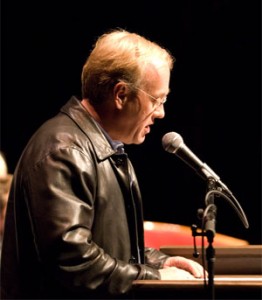
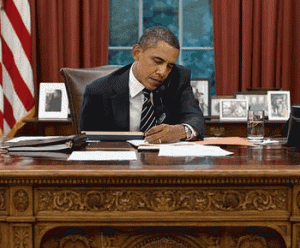
Why I’m Suing Barack Obama: Chris Hedges
In March of this year, the latest version of the National Defense Authorization Act signed by President Barack Obama on Dec 31, 2011 will take effect. As many listeners know, this act authorizes the military for the first time in more than 200 years to begin domestic policing. That means the military can indefinitely detain without trial any US citizen deemed to be a terrorist or an accessory to terrorism. You could then be shipped to a black site or offshore prison. We’ve discussed in past shows the vague premise of materially aiding terrorism or in this bill the terms “substantially supported,” “directly supported” or “associated forces.” We’re joined today by returning guest Chris Hedges to talk about his recent article Why I’m Suing Barack Obama which examines why the National Defense Authorization Act was passed.
- It turns over almost 200 years of legal precedence so that the military is allowed to engage in domestic policing.
- Diane Feinstein had proposed that US citizens be exempt from this piece of legislation both the Obama Whitehouse and the Democratic Party rejected that.
- Obama issued a signing statement saying this will not be used against American citizens.
- That fact is that it can be legally used against American citizens.
- There was an opportunity to protect American citizens and due process, the chose not to do that.
- It expands this endless war on terror.
- There are all sorts of nebulous terms such as associated forces, substantially supported.
- When you look at the criteria by which Americans can be investigated by our security and surveillance state, its amorphous and frightening.
- People who have lost fingers on a hand, people who hoard more than 7 days of food in their house, water proof ammunition. I come from rural parts of Maine, that’s probably most of my family.
- Its a very short step to adding the obstructionist tactics to the Occupy Movement.
- The very agencies that are being pulled into domestic policing, especially the Pentagon, didn’t push for the bill.
- They approached me and said they needed a credible plaintiff, because I had been the Middle East Bureau Chief for the New York Times.
- I spent considerable time with both individuals and organizations that are considered by the US State Department to be either terrorists or terrorist groups.
- I’m trying to be proactive, I’m trying to fight it while we can still fight it. The reason we filed in the Southern District Court is because they have a fairly good record of at least being open to issues of civil liberties.
Guest – Chris Hedges, American journalist, author, and war correspondent, specializing in American and Middle Eastern politics and societies. His most recent book is ‘Death of the Liberal Class (2010). Hedges is also known as the best-selling author of War is a Force That Gives Us Meaning (2002), which was a finalist for the National Book Critics Circle Award for Nonfiction.
——-
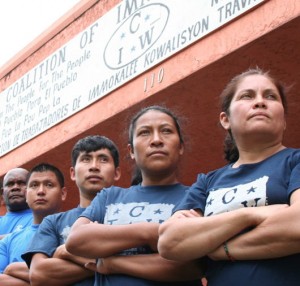
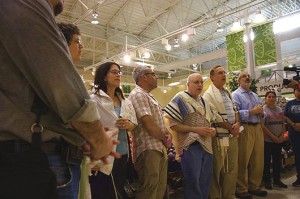
Immokalee Workers: Trader Joe’s Victory, Campaign Turns To Publix Supermarkets
Earlier this month, Trader Joe’s and the Coalition of Immokalee Workers (CIW) announced they have signed an agreement that will formalize the ways in which Trader Joe’s will work with the CIW and Florida tomato growers to support the CIW’s Fair Food Program. The efforts to push the farm worker living standards above slave labor is gathering momentum in Florida. Now efforts turn to Publix supermarkets. The 28 billion dollar supermarket giant has refused to pay a single penny more to help end farm worker poverty. The Fair Food Program campaign has shifted its focus onto Publix and we get an update from Jake Ratner and CIW member Elbin Perez.
- We finally won with Trader Joe’s and its extremely important for us.
- One of the main tactics we use is protest. We were planning an enormous protest the day Trader Joe’s opened their first Florida store about 30 miles from Immokalee in Naples.
- With that pressure, the day before they opened the store, they signed an agreement with us.
- Historically some received some poverty wages there are no rights in the fields and workers have had no voice in the work place. What are rights without enforcement.
- Workers are now seeing an increase in their paychecks in the form of a bonus that they are receiving from companies like Trader Joe’s.
- Currently we’re also asking Publix to do the same thing and to sign on to the Fair Food Agreement.
- What we’re calling for is a fast. A fast to begin outside of the Publix headquarters which is located in Lakeland Florida. There refusal to participate in these agreements will result in more hunger from more workers.
Guest – Elbin Perez, Coalition of Immokalee Workers member.
Translator: Jake Ratner -son of co-host Michael Ratner. Jake graduated from the University of Pennsylvania. He’s traveled and studied in Cuba and Bolivia, South America. He now works with the Coalition of the Immokalee Workers.
Law and Disorder February 13, 2012
Podcast: Play in new window | Download
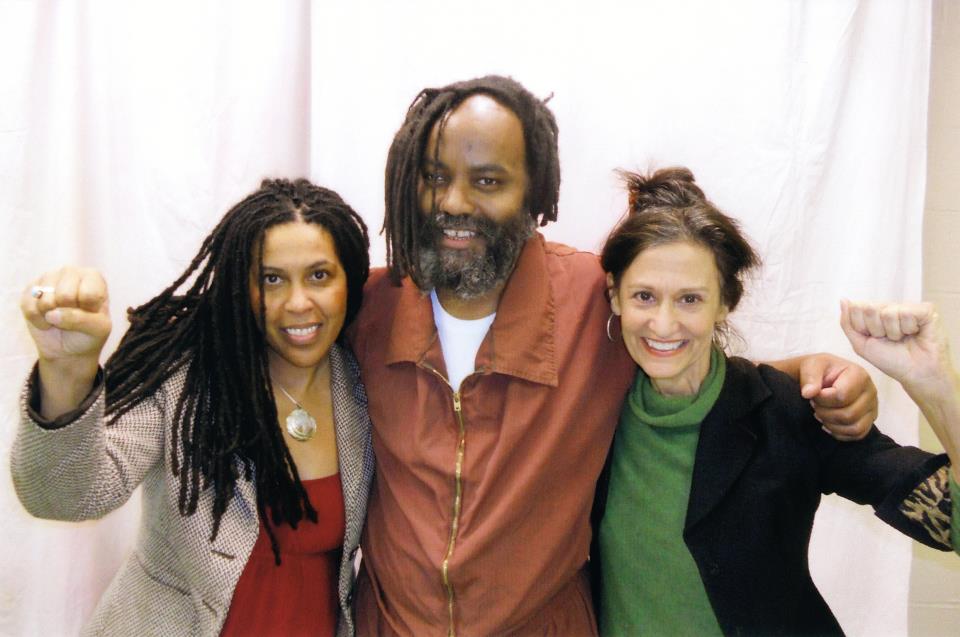
Heidi Boghosian Updates on Mumia’s Visit
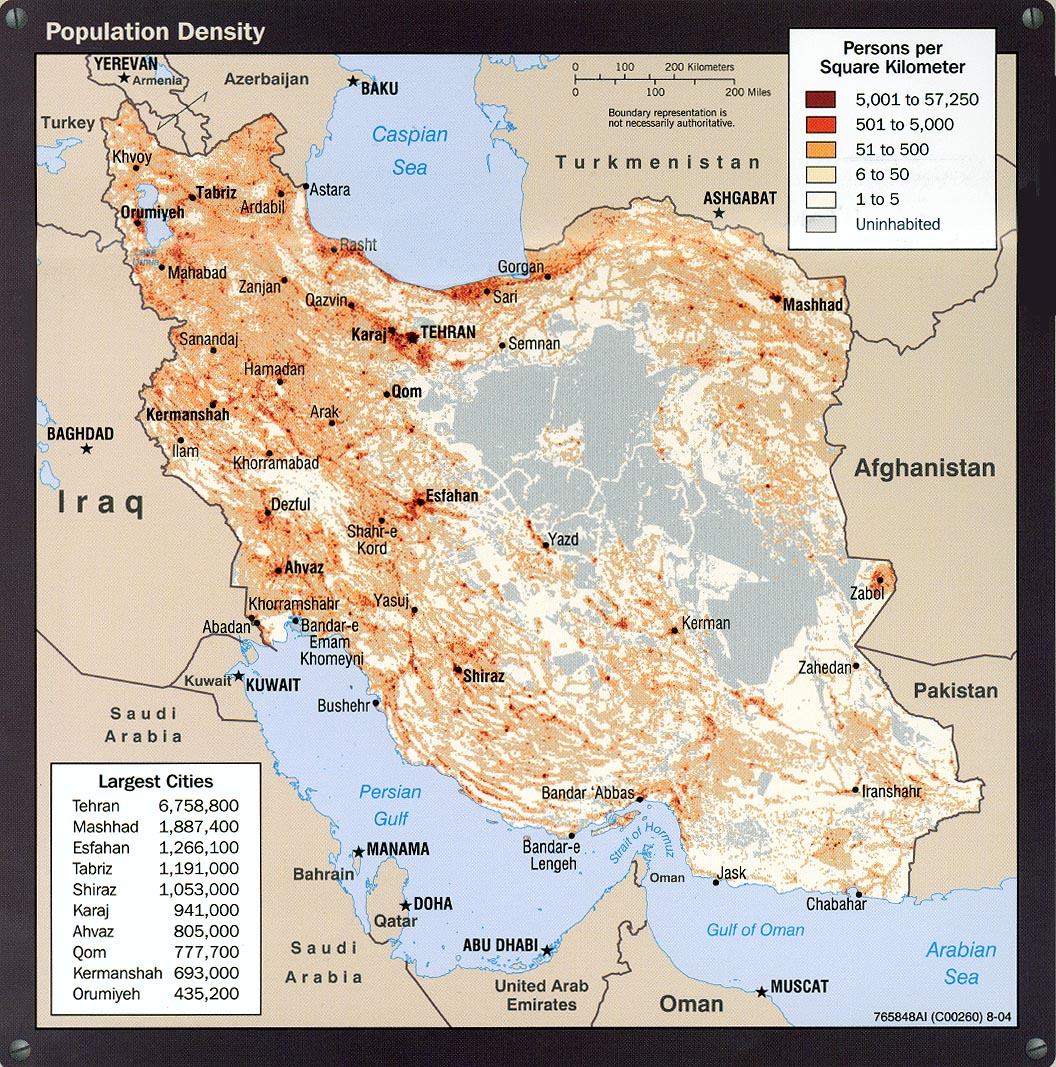
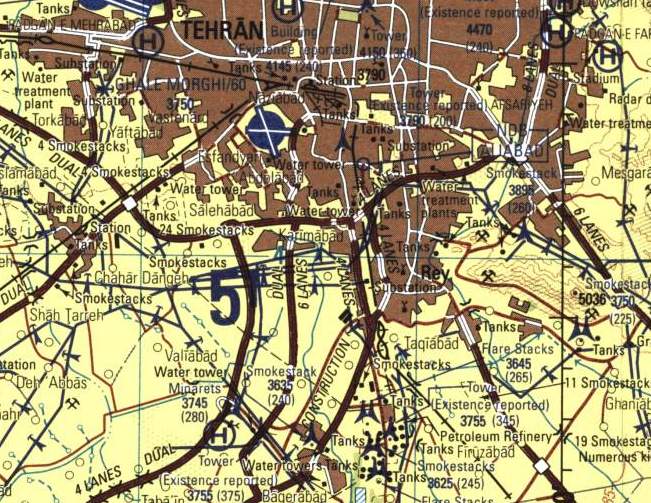
Iran: Sanctions and Syria
Israel and the United States continue to assert that Iran is enriching uranium to make nuclear weapons. As we’ve recently reported, the main stream media has followed lock step with this assertion by printing false claims and half truths about Iran’s nuclear facilities. Hinged on these false assertions, and baseless assumptions, sanctions are now being imposed by the EU and the United States against Iran.
Phyllis Bennis:
- The escalation of rhetoric, having nothing to do with reality, is boxing in a incredibly dangerous situation, in which political leaders are boxing themselves into situations they can’t walk back from.
- It’s a little bit different than the weapons of mass destruction, when you had leading neocons in those positions, in the pentagon, in the CIA, saying there is no question, there are WMDs.
- They were all lying. The difference here is that the key people in these positions are saying directly we don’t even know whether Iran has even decided in this case to build a nuclear weapon.
- At the same time, they’re allowing this unquestioned ratcheting up of the rhetoric for purely political motivations.
- We’re seeing the same situation in Israel.
- The main factor right now is Israel. The US Congress, the US press, are responding to these false claims from Israel that Iran represents an existential threat.
- The role of the Israeli lobbies is an old story.
- Republicans are saying Obama is soft on Iran. In that context an election year there’s no way that President Obama is going to be willing to walk back from this escalating rhetoric that we heard right before the superbowl on Sunday night.
- I’m always astonished when I hear it from anybody, that after the war in Iraq, after the war in Afghanistan people somehow still have the idea that you can just go in with a few air strikes and that’ll be all it takes.
- There are inspectors on the ground, they’re watching 24/7 video from inside the enrichment centers.
- If Iran wanted to the divert the enriched uranium for weapons purpose, they would have to kick out the inspectors, or slash the locks that the inspectors put in, either way the world would know about it within hours.
- War with Iran, should be off the table.
- I don’t think its inevitable. I think its 70/30 right now. Meanwhile, nobody’s going to think about pressuring Israel on the issue of Palestine.
- There ha’ve been 5 high profile assassinations of Iranian nuclear scientists.
- Syria: On the one hand you have an incredibly repressive regime, responding to a domestic uprising with amazing horrifying levels of force. And parts of the resistance taking up arms in response.
- Syria is a strategic ally of Russia. For Russia that is the most important thing.
Guest – Phyllis Bennis, director of the New Internationalism Project at the Institute For Policy Studies. She is also a fellow of the Transnational Institute in Amsterdam. Phyllis has been a writer, analyst, and activist on Middle East and UN issues for many years. In 2001 she helped found and remains on the steering committee of the U.S. Campaign to End Israeli Occupation. Phyllis is also the author of many books including Understanding the US-Iran Crisis: A Primer (2009).
—–
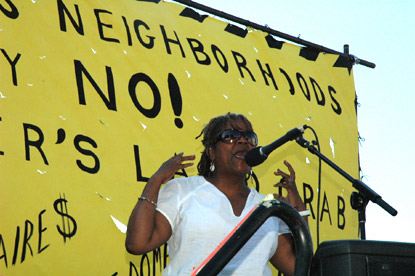
3 Year Evaluation of the Obama Administration
The Obama Administration has expanded wars abroad from Iraq, Afghanistan, Pakistan, Yemen and Libya. It’s continued and expanded detention policies for Guantanamo Bay prisoners and US citizens. Wall Street and big banks have been bailed out and the Healthcare bill was used a bargaining chip for insurance companies. The cautious optimism that progressives and the African American community initially had for the Obama Administration is long gone. However, there were some that were never taken in or mesmerized by the possibility of hope. Our guest today, Nellie Hester Bailey calls this administration a browner hue of imperialism and asks how long can people be herded like sheep into this nightmare of compromise. We welcome her back to the show, she’s a long time human rights activist from early organizing with the Student Non-violent Coordinating Committee, to tenant rights and anti-war demonstrations, to advocacy on behalf of women, Bailey has been at the forefront of social justice and social change organizing. We look back at the last 3 years of the Obama Administration and take a look ahead.
Nellie Hester Bailey:
- President Barack Obama, he is a gatekeeper for imperialism.
- They chose him to be their standard bearer for this new era of redefined politics down to this humanitarian intervention I think has proven to be the worst of any forboding that in fact in goes beyond the right wing politics of President Bush.
- Sidetracking OWS: This new movement Occupy the Dream making it an extension of the Democratic Party. This cooptation process is in full throttle.
- One would hope that this Occupy Wall Street above all would retain its independency.
- 2008 Presidential Election: Extremely promising because it gave the appearance of the attempt of the government to face head on the entrenched and historic racism in this country.
- A very powerful symbol of the a black family in the Whitehouse and what that would mean in the public consciousness on race here in America.
- Once Barack Obama was elected president to the US, it did give rise to a paralysis of the movement.
- What we saw with the advent of the Occupy movement was the stimulation of white America to fight back against the anti-working class measures coming down.
- The Occupy movement was our own Arab Spring, if you will by the communities coming under increasing assault.
- There is a direct action working group within the Occupy Wall Street movement that recently announced it was laying out a six month plan of action.
- One would hope that would be independent of the Democratic Party.
- The conditions on the ground have began to organize people and effect their consciousness.
- I do not believe that capitalism can be reformed.
- We need a new political paradigm that is founded on principles of humanity, on principle of respect to the environment, an anti-war principle, the respect of sovereign nations.
- Radio Show: Inside Housing on WHCR 90.3 FM. Mondays 6-7PM – The Voice of Harlem.
Guest – Nellie Hester Bailey, is a human rights activist who has worked in peace and justice movements for over forty years. From her early organizing with the Student Non-violent Coordinating Committee, to tenant rights and anti-war struggles, to advocacy on behalf of women Bailey has been at the forefront of social justice and social change organizing. Bailey co-founded the Harlem Tenants Council (HTC) in 1994. She currently serves as Director of the tenant led grassroots organization based on the self-determination tradition of radical activism that provides anti-displacement organizing for poor and working class families primarily in Central Harlem.
————————————–