Welcome to Law and Disorder Radio
Law and Disorder is a weekly independent civil liberties radio program airing on more than 150 stations and on Apple podcast. Law and Disorder provides timely legal perspectives on issues concerning civil liberties, privacy, right to dissent and practices of torture exercised by the US government and private corporations.
Law and Disorder October 17, 2011
Podcast: Play in new window | Download
Updates:
- Jose Couso Murdered By US Military In Iraq:
- Sami al-Hajj – Former Guantanamo Prisoner, Now Al-Jazeera Correspondent
- 44th Anniversary of Che Guevara’s Murder
- Who Killed Che? How The CIA Got Away With Murder
- Groups Follow Former U.S. President George W. Bush’s Path to Canada
- UK Protects Israeli War Criminal
- Anwar al-Awlaki’s Extrajudicial Murder – Michael Ratner
- Richard Falk – Afghanistan War
—-
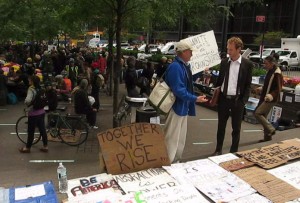
Occupy Wall Street: Attorney Margaret Ratner-Kunstler
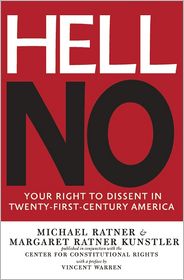
There is a North America-wide strategy to take away the right to mass protest. We’ve talked about the book Hell No: Your Right To Dissent in 21 Century America, but today we have both authors of this book in the studio, attorney Magaret Ratner Kunstler and our own co-host Michael Ratner.
In Hell No, the Center for Constitutional Rights, the country’s leading public interest law organization, offers a timely report on government attacks on dissent and protest in the United States, along with a readable and essential guide for activists, teachers, grandmothers, and anyone else who wants to oppose government policies and actions. Hell No explores the current situation of attacks upon and criminalization of dissent and protest, from the surveillance of activists to the disruption of demonstrations, from the labeling of protestors as “terrorists,” to the jailing of those the government claims are giving “material support” to its perceived enemies. Offering detailed, hands-on advice on everything from “Sneak and Peak” searches to “Can the Government Monitor My Text Messages?” and what to do “If an Agent Knocks,” Hell No lays out several key responses that every person should know in order to protect themselves from government surveillance and interference with their rights.
Attorney Margaret Ratner-Kunslter:
- This is a time that we don’t know the return dates are because they weren’t put throught the system, they were given desk appearance tickets or summons, people arrested on the Brooklyn Bridge and elsewhere.
- Politically what do you make of the fact that they let these people stay in the park? Perhaps Michael they had an opportunity to do something about it if they did something quickly.
- In Boston, they closed it down much more quickly. Each Lawyers Guild office has a hotline.
- They (the NYPD) actually led people down to the bridge walkway. There’s a law in New York that says you can’t block roadways, but you can march on sidewalks.
- They led people down to the roadway, then announced with a bull horn that not everybody could hear of the more than 800 people on the bridge – – you’re now doing something illegally and we’re going to disperse immediately or we’re going to arrest you. Most people were chanting, nobody could hear that announcement.
- Why do this? There was no place to put these 800 people. To get their names, to get their pedigree information, to do intelligence work.
- Early on with the RNC arrests, they had a sheet of paper asking what political affiliations they had. We stopped that quickly. The police department in New York City has a tremendous intelligence division.
- Some people we have no idea why they were arrested.
- Yesterday morning a young woman was chalking on the sidewalk, “good morning NYPD.” Not only was she arrested, but the people photographing her arrest, were arrested.
- Much of the planning on how to stop demonstrators, happened after Seattle 1999. At that point there was this training program that began with all of these local police forces across the country and the FBI. It wasn’t til 9/11 that they were fully funded.
- When Michael Ratner and I wrote this, we were totally depressed because we thought that demonstrations were over. There were so many ways of preventing demonstrations and people were penned.
- You can film the police in NYC. The law may be on your side, but the police don’t follow the law.
- If you’re recording audio, and only one party knows you’re recording, that’s ok in New York.
- The cop doesn’t have to give you his name, or badge number. If you ask a cop his badge number, he’ll give you the wrong number.
- I’d like to last through winter, I’m worried about these children. The demand for justice and equality is the demand basically all over the world.
- How can we say this is too abstract for us, isn’t this what we all want?
Guest – Magaret Ratner-Kunstler, an attorney in private practice. As education director at the Center for Constitutional Rights, she originated the Movement Support Network and authored “If an Agent Knocks.” Margaret is the President of the William Moses Kunstler Fund for Racial Justice, a foundation established in 1995 in the memory of her late husband to combat racism in the criminal justice system.
———
Law and Disorder October 10, 2011
Podcast: Play in new window | Download
Updates:
- Dean Christopher Edley – Prosecution of Torturers in the Bush Regime
- Anwar al-Awlaki’s Extrajudicial Murder – Michael Ratner
- Occupy Wall St Brooklyn Bridge Arrests – Magaret Ratner Kunstler
—
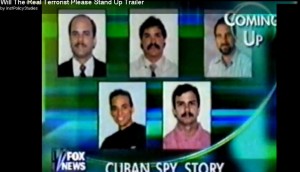
Saul Landau – Will the Real Terrorist Please Stand Up
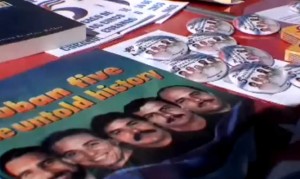
We welcome back internationally known scholar and film maker, Saul Landau. We talk with Saul about his recent article, A Judge Grants Dubious Probation and his film, Will the Real Terrorist Please Stand Up? In his article, Saul writes about the release of Cuban Five member Rene Gonzalez who was released on parole in Miami for 3 years. Miami isn’t a good place for an admitted Cuban agent, Saul writes, and he’s a man who infiltrated the anti-Castro Brothers to the Rescue; his life would be in danger from Cuban exile terrorist groups. Earlier this year, Gonzalez had asked the court to allow him to return to Cuba where his family lives. As many listeners may remember the Cuban Five are five Cuban men who are in U.S. prison, serving four life sentences and 75 years collectively after being wrongly convicted in U.S. federal court. They were accused of committing espionage conspiracy against the United States.
- The classification of terrorist fall into 3 categories. The good, the bad and the crazy.
- The good terrorists are freedom fighters. Those are people still walking around Miami because they’ve directed their violence against Cuba, who is a bad guy.
- Then there are the bad terrorists and of course they’re all Muslims. Then there are the other terrorists who are neither good or bad, simply crazy like the guy who did the Oklahoma City bombing and this Norwegian guy who did this massacre.
- The idea in the film “Will The Real Terrorist Please Stand Up” is that people don’t know what the Cuban Revolution was and they don’t much about US policy. Ironically, Cuba is now showing this film in their high schools having found out their own students are ignorant about their own history.
- Cuba had very little recourse over terrorism for decades, other than to infiltrate the groups that were planning violence against Cuba and try therefore to impede their terrorist actions.
- The Cuban Five were looking for information that would help them stop bombings in Cuba.
- They were spying on Cuban exile groups that were based in south Florida.
- When the Soviets went away in 1991, Cuba had very little recourse in terms of economic survival other than tourism. As she began to get her tourism revved up, so to did the Cuban exiles in Miami start to level their guns; deterring tourists from going.
- Posada Carriles: We have interviews of him in the film, and of course he denies he did any of it in the New York Times.
- He gets honored, he got the keys to Hialeah, Florida for doing things he denies he has done. If he hasn’t done all these things, why would they honor him?
- Posada Carriles and Orlando Bosch hired two Venezuelans to plant bombs in an airplane bathroom, which would go off after the two bombers left the plane.
- The Venezuelans confessed they were hired by Posada and Orlando. The Venezuelan police arrested them. They both got out for weird reasons. Posada escaped with the help of a 50 thousand dollar bribe to the warden of the prison.
- When Posada got out he went to work for Col. Oliver North. His next job was financed by the Cuban American National Foundation, which was the heart of the anti-Castro lobby. Orlando Bosch died after getting honored at the University of Miami. Orlando Bosch was pardoned by George HW Bush.
- Rene Gonzales: Essentially she’s put a bulls eye on his chest.
- After the United States assassinates a U.S. citizen abroad because it is said he planning terrorist acts against the United States. Under that precedent would Cuba not have the same right to send assassins into Miami and gun a whole bunch of people who are Cuban citizens in the United States who are plotting against Cuba?
- People can screen the film at CinemaLibreStudio.com
Guest – Saul Landau, a senior fellow at the Institute for Policy Studies at the Berkeley Graduate School of Journalism, has produced more than 40 films in his career, most concerned with human rights. His latest documents 50 years of US-Cuba relations in which violent Cuban exiles–backed by the CIA–tried to dislodge Cuba’s government, and of five Cuban spies, now in US prisons, who tried to stop this US-sponsored terrorism.
——-
Occupy Wall Street: Liberty Square, New York City
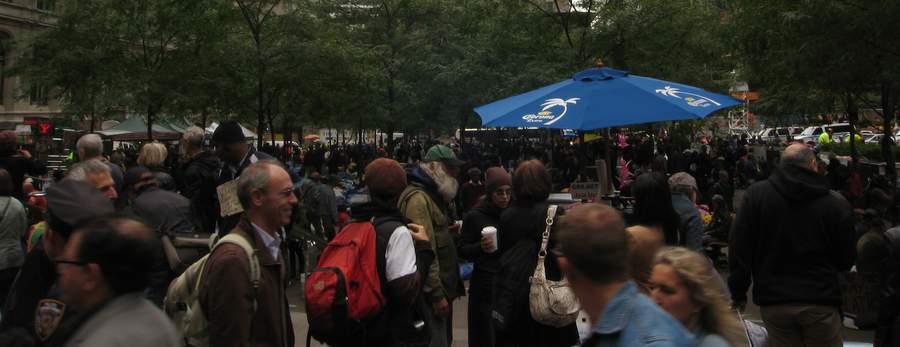
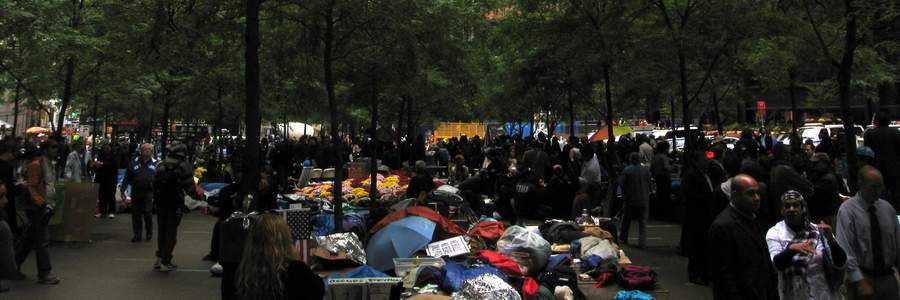
We go now to hear a wide range of voices from One Liberty Plaza at the Occupy Wall Street encampment. During these interviews, the Occupy Wall Street movement remained a collective with people of many political persuasions. In this early period of austerity measures, they call themselves the 99% that will no longer tolerate the greed and corruption of the 1% and claim they’re using the revolutionary Arab Spring strategy to achieve results and encourage the use of nonviolence and civil disobedience.
Our own Heidi Boghosian spoke with activists, union workers, a lawyer and many more about where the movement is going, the support for it and a focus on demands such as pushing for the redistribution of wealth from the top 1 percent of Americans.
Law and Disorder October 3, 2011
Podcast: Play in new window | Download
Updates:
- Occupy Wall Street Protest Update
- Law and Disorder on Troy Davis – July 2007 /April 2008/ October 2008 / November 2008 /
- Israelis Announce They Want To Build 1100 Houses in East Jerusalem
- 75th Anniversary of the First Brigades Going To War In Spain
- Anwar al-Awlaki’s Extrajudicial Murder – Michael Ratner
————–

Earlier this year 11 Muslim students were arrested on charges for disrupting a speech of the Israeli ambassador to the United States, Michael Oren. The incident took place last year on the campus of the University of California at Irvine. The local District Attorney claims that the students had no right to disrupt the event, charging them with conspiracy to shut down the ambassador’s speech, even though he was able to complete the speech. Supporters claim that the Muslim students’ actions are protected by the first Amendment, and that are being charged for being vocal critics of Israel.
Last month, an Orange County court has found 10 Muslim students guilty of two misdemeanors. Facing up to one year in jail on multiple misdemeanor charges, they were sentenced to three years of probation, 56 hours of community service and fines. Each was convicted of one misdemeanor count of conspiring to disrupt Oren’s Feb. 8, 2010 speech and a second count for disrupting it.
- I knew there were some very difficult challenges in this case. The students modeled their protest after a protest that took place in Chicago.
- There 11 students who stood up serially, one after the other, with about 3 or 4 minutes in between.
- Each student made a short statement of protest. None of the protesters in Chicago were arrested.
- A lot of the students who had a pro-Palestine perspective were targeted.
- The prosecutor framed his whole case on the notion that the students shut down the First Amendment rights of the speaker.
- This is the way they framed it at the beginning; in the statements they made to the media.
- In terms of their framing, it makes no sense from a legal perspective.
- The way the Bill of Rights work, is to protect individuals from the government. In terms of the First Amendment which protects free speech, the Fourth Amendment that protect against unreasonable searches and seizure.
- It protects the individual from the government impeding on those rights.
- An individual can’t impede or violate another individual’s First Amendment rights, only the government can do that.
- The prosecutor should not have been allowed to argue to the jury, these students violated Mr Oren’s free speech rights.
- These are wonderful young men, they’re very gracious people and there’s no way that the judge could lose sight of that. It was outrageous, because really what was being prosecuted in their conspiracy charge was their First Amendment right to assemble.
- Penal code section 403a violates the First Amendment essentially says you can’t disrupt a meeting, violates our First Amendment to free speech.
—-
Attorney Dan Stormer:
- Islamophobia is really taking hold.
- I tend to believe it is Islamophobia, 9/11 hysteria, more Arab / Muslim focus than Israeli / Palestine focus.
- The use of conspiracy in this case allowed them to get in all sorts of evidence that might not otherwise be admissible.
- Penal Code 403 says if you upset a meeting and substantially interfere with its progress, you can be criminally prosecuted.
- I think the statute is unconstitutional and that’s going to be a primary basis for our appeal.
- The district attorney was calling for jail time. The D.A. attacked the judge subsequently for failing to give jail time. I think it is a severe sentence but given Orange County, and given the nature of hysteria against our clients, I’m ultimately please with the sentence.
- The background is they actually took this to a Grand Jury, and alleged they might file a felony conspiracy and felony allegation against them.
- Its shocking and horrifying that this prosecution went forward.
–
Guest – Attorney Lisa Holder, Los Angeles, criminal trial attorney since 2000. Ms Holder is a member of the California Bar, The National Lawyers Guild and the California Employment Lawyer’s Association. She is a member of the board of directors for the Southern California ACLU. In addition she is an adjunct professor at Occidental College, teaching pre-law classes. Ms. Holder graduated from New York University School of Law in 2000 after obtaining a Bachelor of Arts degree at Wesleyan University.
Guest – Attorney Dan Stormer, a Civil Rights, International Human Rights and Constitutional lawyer for thirty-five years and has been recognized internationally, nationally and locally as one of the top attorneys in the United States. A graduate of New York University School of Law and Wagner College, Stormer has lectured and published extensively and has taught law school at Hastings College of Law and Loyola Law School. He has obtained a number of large verdicts in gender discrimination in employment, civil rights violations, and age discrimination. He has appeared before the U. S. Supreme Court and is currently one of the attorneys on a Guantanamo Bay case.
————-
People Wasn’t Made to Burn – Joe Allen
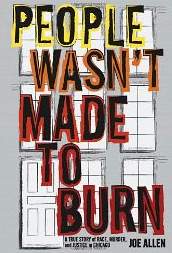
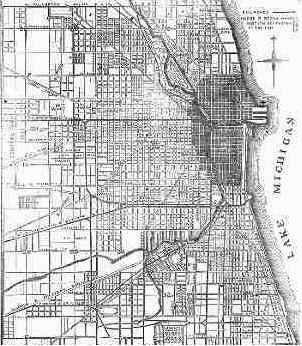
People Wasn’t Made to Burn is a shocking personal story of a Mississippi Black share cropping family that faced incredible hardship and tragedy after moving to Chicago in 1947. Within the year, 4 of their infant children perished in a massive blaze in an overcrowded tenement. The father sickened with grief took justice in his own hands and shot the landlord, thought to have the set the fire. James Hickman was jailed and facing murder charges. The story takes off, author Joe Allen gives the reader an inside look into the strategy to defend Hickman in the most racist area of the country.
Joe Allen:
- I think his story is really symbolic of a whole generation of African Americans who left the South for the North or the West to find a better life and a measure of dignity and freedom.
- He came to Chicago and permanently settled here in 1945. He got a job in the steel industry which was very typical of African American men who came to the Midwest.
- While you were sort of welcomed here for the hard work and labor you would give particularly to the big steel plants, finding a home was the thing which was a source of incredible frustration and humiliation.
- Housing is the whole that Joe Hickman’s trial really revolves around.
- The African American population really up until the second world war, was really confined to a thin sliver of land on the south side of the city (Chicago)
- It was overcrowded, and what the banks do is try to use this limited space to make as much money as possible.
- Kitchenette apartments, one room hovels, that didn’t have running water, no electricity, rat infested.
- Richard Wright’s book – Native Son.
- James Hickman would go from one end of the city to the other looking for a place and would have the door slammed in his face each time.
- Black landlords were not very common at that time. Coleman took his money and never gave the apartment that he wanted. When James Hickman raised the issue of what happened with the money, Coleman threatened to set fire to the place.
- On January 16, 1947, a fire breaks out, it spread so quickly that Annie Hickman, the mother and wife, and one of the eldest sons, made it out of their attic apartment and jumped to safety.
- Because of the speed of the fire and incredible smoke, the four youngest kids, they suffocated and burned to death.
- Six months to the day of the death of children, he confronted Coleman at his home.
- The police acted very quickly in this case. He faced execution in the electric chair or minimum 14 years in prison.
- They pulled together a Hickman defense committee. They organized a very broad based campaign.
- Even though he was a man racked by grief he went out to find some measure of justice for his children when he couldn’t get that from the criminal justice system.
- Housing is still a crucial issue for working class people.
Guest – Joe Allen, a frequent contributor to the International Socialist Review and a long-standing activist, based in Chicago.
——————————————————–