Welcome to Law and Disorder Radio
Law and Disorder is a weekly independent civil liberties radio program airing on more than 150 stations and on Apple podcast. Law and Disorder provides timely legal perspectives on issues concerning civil liberties, privacy, right to dissent and practices of torture exercised by the US government and private corporations.
Law and Disorder November 14, 2011
Podcast: Play in new window | Download
Updates:
- Ohio Voters Override Restrictions on Collective Bargaining For State Employees
- Arun Gupta On New York Times Panel
- Two Month Anniversary of OWS
- Generators Return to OWS
- National Lawyers Guild – Legal Help Center
- Mic Check Poster with Rick Wolff
—–
US Boat To Gaza Violence November 2011
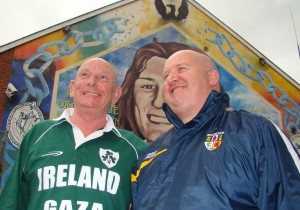
Earlier this month, two civilian boats destined for the Gaza Strip and carrying medical cargo set sail from Fethiye, Turkey. As many listeners may know, the boats, one Canadian (“Tahrir”) and one Irish (“Saoirse”), carried 27 people–including journalists and crew—from nine different countries were met with a violent take over by Israeli military. The crew of both boats were attacked by high pressure hoses, there was heavy damage. The crew of the Canadian boat were beaten and tasered. Passengers remain in the Givon detention center. President Obama says the passengers are defying Israeli and American law. Past Law and Disorder shows last year’s flotilla. June 7, 2010 / June 21, 2010 / October 2010 / June 13, 2011
- Some are still in prison, the process of getting people out is very opaque. The Israeli courts told them if they wouldn’t sign a false confession, to confess they had entered Israel illegally that they could be held for 2 months in jail. There were 18 people still left in Israeli jail.
- I would like to point out that this is exactly what happens to Palestinians every day.
- There are more than 6 thousand Palestinian political prisoners who go through this same opaque legal process, tortured. 90 percent of the people who have been arrested by the Israelis, Palestinians, have been tortured.
- Forty percent of the male population at one time has been held by the Palestinians for more than a week. We’re talking about a little over 3 million people.
- It’s endemic process its happening to foreigners at this point. The little kids are hit and shouted at and hooded. I think the Israelis taught the Americans.
- The Israelis are regarded as experts in with what they call terrorists.
- These boats were eagerly anticipated in Gaza. Thousands of people came down to the Gaza harbor and hundreds went out on boats hoping to greet the boats.
- Since 2006 Gaza has been under complete siege and blockade, everything that is allowed in is under Israeli control, almost nothing is allowed out.
- There is no economy, without exports, you really can’t have much of an economy. You’ve got 40 percent unemployment. 90 percent of the population is drinking polluted water because the crucial parts of the water treatment plants have not been allowed in by Israel.
- There’s only one reason Israel has been able to maintain this occupation, and that is because the United States abets it.
- There are no consequences for expanding settlements (from the Obama Administration)
- Right now the Israeli government is trying to get the US to attack Iran.
- Instead of Israel being regarded as an out of control, militarized bully is regarded as a close US ally who should determine our foreign policy.
- Endtheoccupation
Guest – Felice Gelman is with the Steering Committee that organized The Gaza Freedom March and has traveled to Gaza twice since the Israeli invasion.
—–
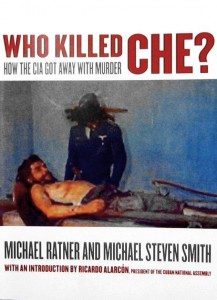
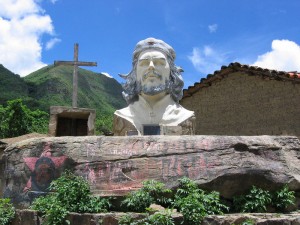
Who Killed Che? How The CIA Got Away With Murder
Co-hosts Michael Smith and Michael Ratner discuss their upcoming book Who Killed Che? A groundbreaking examination based on documents obtained from a Freedom of Information Act requests filed in 1995. This new information helps dispel the stories that the US was not involved with the murder of Che Guevara. Morning Star Review
“Ratner and Smith cut through the lies and distortions to provide a riveting and thoroughly documented history of the murder of Che Guevara. In an era when ‘targeted assassinations’ and ‘capture and kill operations’ have become routine, and are routinely glorified by the mainstream U.S. press, their examination of the U.S. role in Che Guevara’s death could not be more timely.” —Amy Goodman, host and executive producer, Democracy Now.
Michael Ratner / Michael Smith:
- One day when I was a baby I filed a Freedom of Information Act request for all the documents the FBI and the CIA had about Che Guevara.
- You and I had received the first documents 15 years ago and we wrote the first book Che Guevara and the FBI
- Ten or twelve years later I get another document drop from the CIA and these are the documents that are the most important in my view, relating to Che’s killing in Bolivia.
- The government had changed in Bolivia since 1819, 189 times.
- The book tells his story in Bolivia, and what the US did starting the counter intelligence process against him and supported the Bolivian government.
- Michael and I enjoyed working on it because we got to really know Che in a way we haven’t before.
- This book had its origin first in a document drop that was about Che’s murder and Che’s time in Bolivia. There are maps we put in the book of the last battles, where he was captured.
- The idea of the book really came from Michael Smith.
- A lot of people bought the story that was put out by the CIA agent on the ground.
- We demonstrate that the US was deeply involved in his murder.
- Ricardo Alarcon who is the president of the Cuban National Assembly, wrote the introduction to our book.
- During the Cuban Revolution, it was the Bastista troops that killed tens of thousand of revolutionaries.
- The book follows Che when he’s in Africa and various places, but then we have him going to Bolivia on November 5, 1966.
- There was a split between Che and Fidel. Fidel was worried about Che every single day.
- The first half of the book is a 25 thousand word essay by Michael Smith and Michael Ratner. It links together what happened with Che once he left Cuba.
- It’s also a biography of the US counterinsurgency program and the characters in that program that tried to make sure they would stop the Cuban revolution from spreading to other countries.
- We dedicated this book to our friend, the great movement attorney Len Weinglass. Len was the attorney for the Cuban Five.
- The Cuban Five are an important part of this story, 44 years after Che’s death.
- The US has attempted to completely destroy Cuba, and squeeze it so it could not carry out the social and economic reforms that really would’ve made it a shining example for the world.
Hosts – Michael Steven Smith is the author, editor, and co-editor of six books, mostly recently “The Emerging Police State,” by William M. Kunstler. He has testified before committees of the United States Congress and the United Nations on human rights issues. Mr. Smith lives and practices law in New York City with his wife Debby, where on behalf of seriously injured persons he sues insurance companies and occasionally the New York City Police Department. Michael Smith also organizes and chairs the Left Forum. Check out Michael’s blog here.
Host- Michael Ratner NewYork civil-rights lawyer Michael Ratner was in the U.S. Supreme Court yesterday,flanked by the mother of one of the Guantánamo detainees he has represented for the past two years, unsure what to expect. After an hour, he was pleasantly surprised. First, Sandra Day O’Connor, and then Justices Souter, Breyer, Kennedy and even Scalia, indicated through their questions that they were skeptical of the government’s argument that the men Defense Secretary Donald Rumsfeld calls “the worst of the worst” have no legal right to file habeas corpus petitions in U.S. courts.
—————————————————
Law and Disorder November 7, 2011
Podcast: Play in new window | Download
- National Lawyers Guild List For Occupy Wall Street
- OWS Victories / Albany / Cleveland / Nashville / Oakland /
- OWS Arrests-Problems / Denver / Taking Generators / Arizona /
- Bread and Puppet OWS Theater During Halloween Parade NYC
- GI Occupiers Get Guidance from NLG’s Military Law Task Force
- Listener Question About Obama Killing US Citizen
- Food Co-op Board of Directors Fights Back Against Lawsuit Brought by Five Members Over Boycott of Israeli Goods
—-
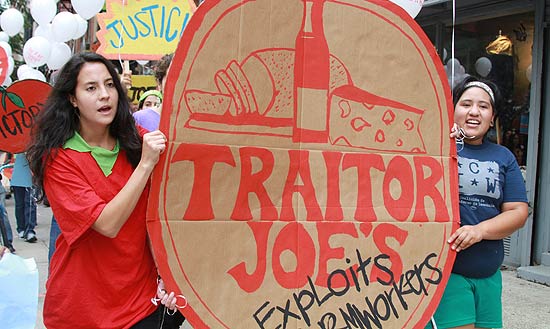

Brooklyn Fair Food Festival Urges Trader Joe’s To Support Fair Labor Standards For Farm Workers.
Brooklyn, community members joined the Coalition of Immokalee Workers an organization of farm workers in Southern Florida to call on Trader Joe’s to live up to its public image as an ethical corporation by participating in the Campaign For Fair Food. The Campaign seeks to improve wages and working conditions for Florida tomato pickers by calling on major buyers of tomatoes to pay a premium of one penny more per pound for their tomatoes, ensure that this penny is passed down directly to farmworkers, and work together with the CIW to establish and implement a code of conduct in their supply chains. Sound gathered and interviews by Michael Ratner.
—
Wall Street Firms Spy On Protesters In Tax Funded Center
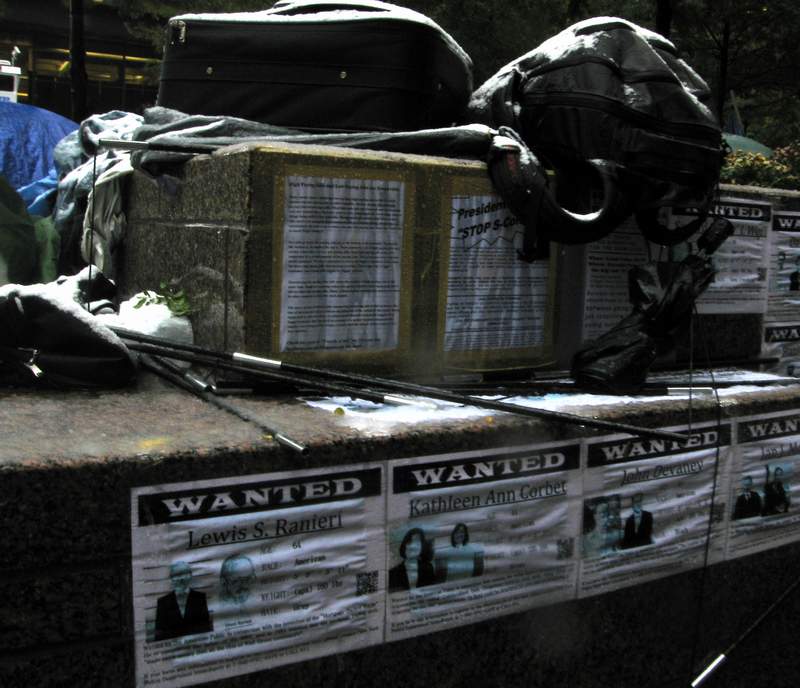
It was six years in the planning according to recently uncovered documents that show 150 million taxpayer dollars funding a round the clock surveillance security center in Lower Manhattan where Wall Street firms sit along side the NYPD. That’s right, high wage Wall Street firm workers will sit next to MTA, NYPD and Port Authority employees and monitor the near 3000 spy cameras installed in the area. Any individual can be tracked by the color of their clothes or face recognition with live feed cameras that also read license plates. In her article Wall Street Firms Spy on Protesters in Tax-Funded Center, investigative journalist Pam Martens also focused on the corrupt alliance of indicted corporate firms merging with police to spy on law abiding citizens funded by tax payer money. Her latest article in Counterpunch titled Financial Giants Put New York City Cops On Their Payroll exposes how private Wall Street corporations are allowed to order a paid detail of New York City Police at an average of 37.00 an hour. The taxpayer again picks up the tab for training, uniforms and any law suit brought from “following illegal instructions from its corporate master.”
- I had the benefit of managing my own client base, so Wall Street did not have the same type of leverage over me that it has over so many of its other workers.
- About 10 years into my tenure, I started reading about the private justice system Wall Street had set up where both customers and employees had to waive their rights to the nation’s courts.
- I started complaining and advocating against that. They were self policing, that was totally corrupt.
- Then I started protesting in the streets, filed a large federal rights action, and testified at several venues, the SEC and the Federal Reserve.
- The story is much more insidious than I first realized. I came across a 60 Minutes expose on the counter-terrorism unit of the NYPD. At the very end of the piece there is a tour of the facility, the one that I’m talking about.
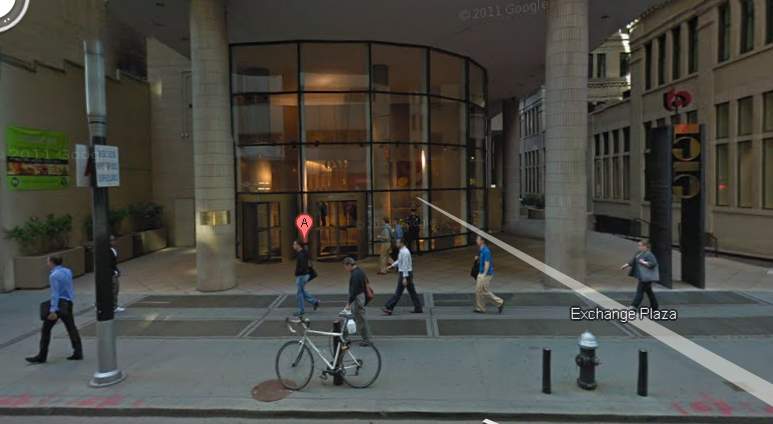
- The Lower Manhattan Security Coordination Center, which is jointly operated by Wall Street’s potential felons and the largest law enforcement police force in the country. It’s actually at 55 Broadway.
- Goldman Sachs and Citigroup, sitting next to public sector employees.
- It consists of 3 rows of computer terminals. 2 of those rows are dominated by Wall Street firms, the NYSE, the Federal Reserve and only one row has uniformed officers.
- I called up the producer at 60 Minutes, and said you had to have seen all these people in civilian clothes.
- The NYPD has used tax payer money to have one massive computer to look at all the individual feeds. That massive computer has artificial intelligence.
- There is absolutely no explanation for why Wall Street firms get to sit there and have access confidential databases that belong to the NYPD. I have 2 FOIA requests with the NYPD. Every detail of us is under surveillance.
- There are some reports, they can zero in and read text messages on your cell phone.
- These Wall Street firms that have committed crime after crime, after crime, they’re currently under 51 separate state and federal investigations for securities fraud and essentially looting the public. They’re the partners, the potential felons, are the partners with the law enforcement.
- Credit Suisse v. Billing, 551 U.S. 264 (2007), was a decision by the Supreme Court of the United States, which held that Congress’ creation of the United States Securities and Exchange Commission (SEC) implicitly exempted the regulated securities industry from antitrust lawsuits under other existing laws. Justice Thomas dissented, arguing that the laws creating the SEC explicitly mention that securities regulations are in addition to, not instead of, existing law.
Guest – Pam Martens worked on Wall Street for 21 years. She spent the last decade of her career advocating against Wall Street’s private justice system, which keeps its crimes shielded from public courtrooms. She has been writing on public interest issues for CounterPunch since retiring in 2006. She has no security position, long or short, in any company mentioned in this article.
—————————————————————————————————-
Law and Disorder October 31, 2011
Podcast: Play in new window | Download
Updates:
- UN Votes 186-2 To Lift Cuba Embargo – US and Israel
- Anxiety Over Economy: Concentration Of Wealth Seen As Key Issue At A Volatile Time
- OWS Albany Arrest Controversy
—
Occupy Des Moines Arrests
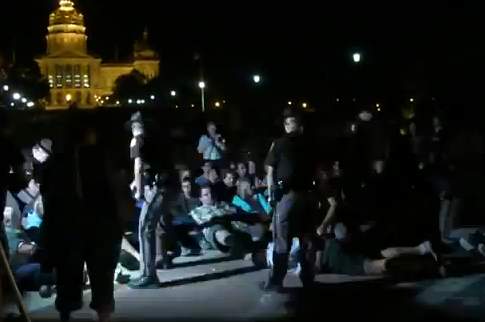
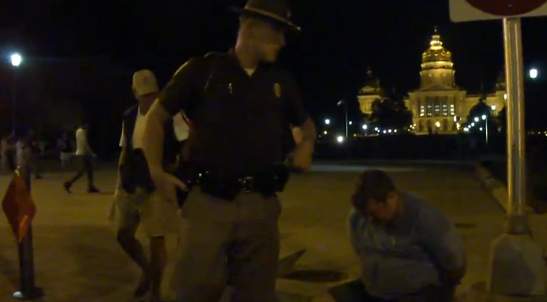
Police abuse of authority including excessive use of force are on the increase as more Occupy movements around the country are forced to disperse. Last week, 37 demonstrators were arrested in Des Moines, Iowa when 24 state troopers closed in on the Occupy movement there, arbitrarily enforcing curfew in a local park. Still more people were arrested in the downtown area that same night. While capturing his friend being pepper sprayed in the face on video, and then arrested, an officer directed Justin Norman to back off the sidewalk into another area. Justin was then arrested for trespassing and interfering with official acts. The officer grabbed his camera, but other protesters were able to wrestle it away from him.
- There’s an 11:00 PM curfew at the park that’s normally not enforced. Some of the people said they would walk their dogs in the park after 11:00 and no one cared. The Iowa State Patrol brought out about 24 state troopers.
- I was down there doing some video taping. The protesters began to sit as the police approached.
- The police began to be strangely brutal with some of the protesters.
- One of the leaders of the chant was asked if would like to be arrested or go. He said he would go. As he was leaving they shoved him on the ground and cut open his knees.
- They dragged him off to a police van anyway. Another person was shoved to the ground, the state trooper stepped on his head and struck him the face multiple times.
- Another guy I believe is a ten year Air Force veteran, was refusing to leave the park, arms linked with another protester, in response, one of the state troopers maced him in the face.
- I was videotaping him from the edge of the sidewalk, the state trooper told me to step back, back into the park. I’m about 20 feet from the trooper and he’s still telling me to move back.
- He tells me if I don’t continue to move back, I’m going to be charged with interference and trespassing.
- They arrested me and tried to take my camera. They took the camera and I yelled out to one of my friends and ran up and tore the camera out of the troopers hands.
- I do a demonstration against torture on a regular basis in west Des Moines.
- People got a bit frightened by the police brutality they witnessed and they decided to apply for a permit in the park. They stayed there for about 3 days, the permit expired in 3 days.
Guest – Justin Norman, activist who has filmed police misconduct, including recent raid on OWS movement in Des Moines, Iowa.
—
Guantanamo Murder Case: Al-Zahrani v. Rumsfeld
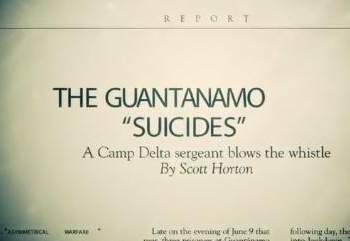
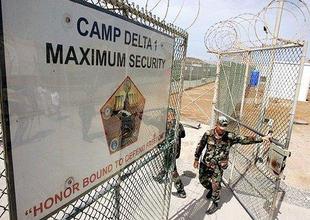
Last week, Center for Constitutional Rights attorney Pardiss Kebriaei present oral arguments before the U.S. Court of Appeals for the District of Columbia Circuit in the case of Al-Zahrani v. Rumsfeld. The case is a civil action filed on behalf of two men who died at Guantanamo Bay Prison in June 2006. There deaths, highly questionable and last year, four soldiers came forward with eye-witness accounts suggesting a cover up of the cause of the deaths and that they may have killed at a black site in Guantanamo. The military has maintained that the deaths were suicides, having once famously called them “acts of asymmetrical warfare.” Also, CCR attorneys have pointed to other documented examples of deaths and killings covered-up by the military in the recent past, including the falsification of records in the death of former football player Pat Tillman and the premeditated murders of Afghan civilians by members of the Army’s Bravo Company. Our own Michael Ratner has recently returned from Norway after meeting with family members of one of the men. Scott Horton article
- This case is on behalf of the families of 2 of the 3 who died in June 2006. They were high profile deaths, the military came out immediately and said they were suicides that the men had died from creating nooses from bed sheets and hung themselves in their room.
- Then there were offensive remarks made by government spokespeople, they called them asymmetric warfare.
- They saw this as an attack, the fact that these men for having taking their own lives, from having been detained without charge in solitary confinement for 4 years, as an attack on the US government.
- They were characterized as a good PR move. These were military and Department of State spokespeople.
- Yasir was 17, he was from Saudi Arabia, he was, almost like everyone there not charged, held for almost 4 years. He was apparently a long time hunger striker.
- Along with the torture and solitary they were subjected to in terms of their condition, just the torture they were subjected to in general, they were forced into restraint chairs. Restrained at five points, their forehead, shoulders wrists and ankles, had a tube inserted up their nose and a liter of fluid pumped into their stomachs.
- In 2008 from a Freedom of Information Act litigation, the government was finally compelled to produced its information, investigation into these deaths. Supporting the claim that the deaths were suicides.
- Our clients were really disadvantaged to find out what’s really going on. I don’t think they believed these were suicides.
- The case was dismissed because the case raised special factors of national security and the military and foreign policy that were issues that were within the realm of political branches and basically not the business of courts to interfere in.
- It’s not enough to criticize the administrations anymore because the courts are accepting those arguments.
- If you’re DC, the district courts and the circuit courts in particular have been accepting those arguments.
- In 2010, 4 soldiers stationed at Guantanamo at the time came forward with eye witness accounts and were actually on duty on the night of the deaths.
- One of the soldiers came forward with direct evidence of a cover up of the actual cause the deaths. They were transported to “Camp No”
- Hickman reported hearing screams for Camp No. They reported seeing plain clothes officers sometimes going there. It was thought to be a site possibly run by the CIA or used by the CIA or Joint Special Operations Command forces of the military who are again, not accountable.
- The disdain from the DC Circuit Court for this case and every case coming out of Guantanamo was absolutely evident from the moment I opened my mouth.
Guest – Attorney Pardiss Kebriaei, she joined the Center Constitutional Rights in July 2007. Since then, her work has focused on representing men detained at Guantánamo Bay in their habeas corpus challenges, before international human rights tribunals, in diplomatic advocacy with foreign governments to secure resettlement for men who cannot return home, and in post-release reintegration efforts. Her clients have included men from Yemen, Syria, Algeria, and Afghanistan. Her work includes seeking accountability for torture and arbitrary detention at Guantánamo.
———————————————————–