
Welcome to Law and Disorder Radio
Law and Disorder is a weekly independent civil liberties radio program airing on more than 150 stations and on Apple podcast. Law and Disorder provides timely legal perspectives on issues concerning civil liberties, privacy, right to dissent and practices of torture exercised by the US government and private corporations.
Law and Disorder July 25, 2011
Podcast: Play in new window | Download
Ten Years after 9/11: War, Operation American Condor (Guantanamo) , Civil Liberties and Hope
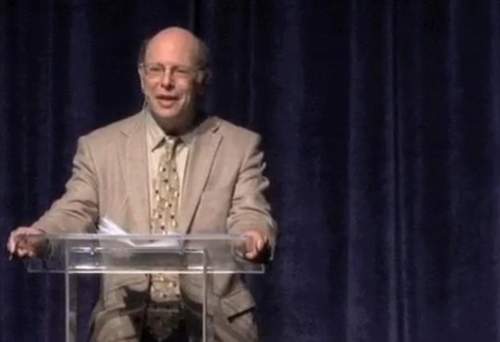
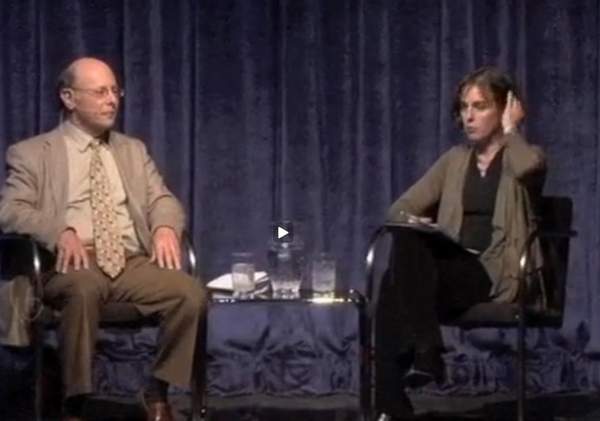
We hear a talk from our own Michael Ratner who spoke at the James A Little Theater in Santa Fe, New Mexico. He was also in conversation with radio host Mary Charlotte Domandi. The event was titled – Ten Years after 9/11: War, Operation American Condor (Guantanamo) , Civil Liberties and Hope.” Michael is introduced by Mary-Charlotte Domandi producer and host of the Santa Fe Radio Cafe on KSFR 101.1 FM (Santa Fe, NM, Public Radio)
Michael Ratner is President of the Center for Constitutional Rights (CCR) in New York and the European Center for Constitutional and Human Rights (ECCHR) in Berlin. Both are non-profit human rights litigation organizations. He was part of the small group of lawyers that first took on representation of the Guantánamo detainees in January 2001, a case that resulted in a victory in the Supreme Court in 2004. CCR established a network of over 600 pro-bono lawyers to represent Guantánamo detainees and continues that work.
He has filed criminal complaints in the courts of Germany, France and Spain against former US officials including Secretary of Defense Rumsfeld seeking the initiation of criminal prosecutions against them for the Abu Ghraib abuse and torture as well as for their actions at Guantánamo. Recently, CCR and ECCHR prepared papers to file in Switzerland against George W. Bush for torture. As a result Bush canceled his trip. A major area of Mr. Ratner’s litigation and writing is the enforcement of the prohibition on torture and murder against various dictators and generals who travel to the United States. He has sued on behalf of victims in Guatemala, East Timor, Haiti, Argentina, among other countries. He has also litigated numerous suits to prevent or stop illegal US wars ranging from Central America to Iraq. A constant in his work has been litigation against government spying and surveillance of activists.
Michael Ratner’s books, authored or coauthored, include the soon to be published, Hell No: Your Right to Dissent in 21st-Century America (2011) and Killing Che: How the CIA Got Away with Murder (2011). Other books include International Human Rights Litigation in U.S. Courts, Second Edition (2008); Against War with Iraq (2003); Guantánamo: What the World Should Know (2004); and The Trial of Donald Rumsfeld: A Prosecution by Book (2008). Ratner has taught human rights litigation at Yale and Columbia Law Schools. A past president of the National Lawyers Guild, Ratner has received many awards including Trial Lawyer of the Year, the Columbia Law School Medal of Honor (2005), the North Star Community Frederick Douglass Award, Honorary Fellow at the University of Pennsylvania Law School (2005), and The Nation Institute/Puffin Foundation Prize for Creative Citizenship (2007). In 2006, the National Law Journal named Ratner one of the 100 most influential lawyers in the United States.
—-

Right-Wing Firms Train Public Servants on Terror Threats
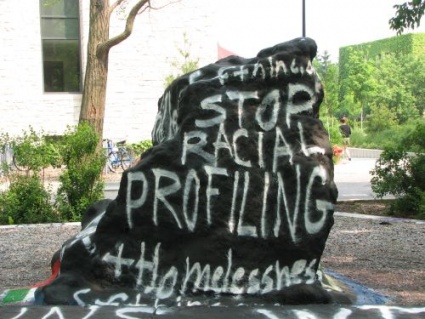
There is a sprawling hidden world of counter-terrorism organizations growing beyond control in the United States. Twenty-four of them were created by the end of 2001, including the Office of Homeland Security and the Foreign Terrorist Asset Tracking Task Force. The next year, 37 more were created to track weapons of mass destruction and collect threat tips. By 2009, nearly 260 organizations were created as 854 thousand civil servants, military personnel and private contractors with top-secret security clearances monitor national security concerns. However, according to a report from the Public Research Associates, those same concerns have bolstered a class of self-proclaimed terrorism experts who decry Islam as an evil religion of terrorists and routinely brand Muslims as primitive, vengeful, duplicitous, and belligerent people who oppress women and gays, and have values irreconcilable with “western Judeo-Christian civilization.”
In fact, when PRA discovered earlier this year that the Massachusetts Bay Transportation Authority (MBTA) had contracted with Security Solutions International to conduct a training on radical Islam, they notified the Muslim American Society, ACLU, and our other advocacy partners, who used PRA’s research to compel the MBTA to cancel the agency’s training.
- As part of the Homeland Security Initiatives and working with the FBI in other aspects of the national security apparatus, there was a need to train thousands as part of a local state and federal counter-terrorism “experts.”
- Some of these trainings are quite good. The problem is that there are a handful of groups that train hundreds and hundreds of local, state and federal counter-terrorism experts, with rhetoric that is basically Islamophobic.
- In the late 1970s there was an attempt to restrain this illegal surveillance. I’d have to say right now it’s worse.
- What used to be done illegally and covertly is now done ostensibly legally and openly and in fact proudly by both Democrats and Republicans who should be ashamed.
- The whole strategic suspicious reporting initiative which basically is a pipeline for unverified rumor and innuendo through local police departments up through a chain of information agencies to the federal government. We know in Europe this kind of reporting is unconstitutional and bad for society.
- Now, everyone that was considered illegal and unconstitutional for which there were Congressional hearings and reforms under Jimmy Carter, now we do it.
- In proper training that is actually looking for criminal activity, not people of color who wear garb that we’re scared of. What’s going on here is untrained, badly trained officers are reporting the names of people up into a huge infrastructure of information data storage, based on bias they’ve not been trained to resist or confront within themselves.
- We described this whole process as a platform for prejudice in a report by Tom Cincotta
- Tom has on his wall a wall chart of all the agencies of this information reporting system and it has 150 dots so inter-connected, no one can control this.
- I’m urging people to form broad coalitions across the political spectrum.
Guest – Chip Berlet, (senior analyst) is a veteran freelance writer and photographer who specializes in investigating right-wing social movements, apocalyptic scapegoating and conspiracism, and authoritarianism. A PRA staffer since 1982, he has written, edited and co-authored numerous articles on right-wing activity and government repression for publications as varied as the Boston Globe, the New York Times, The Progressive, The Nation, The Humanist, and the St. Louis Journalism Review.
Law and Disorder July 18, 2011
Podcast: Play in new window | Download
Updates:
- Monica Shay, Professor at the Pratt Institute in Brooklyn Passes
- Prosecutors Demand Laptop Password in Violation of Fifth Amendment
- Human Rights Watch: US Investigates Bush, Other Top Officials For Torture
- Ban BDS Movement – The Bill For Prevention of Damage of the State of Israel Through Boycott
- Jeremy Scahill Report On US Secret Site in Somalia
——–
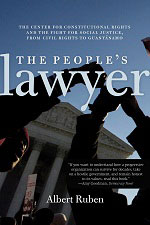
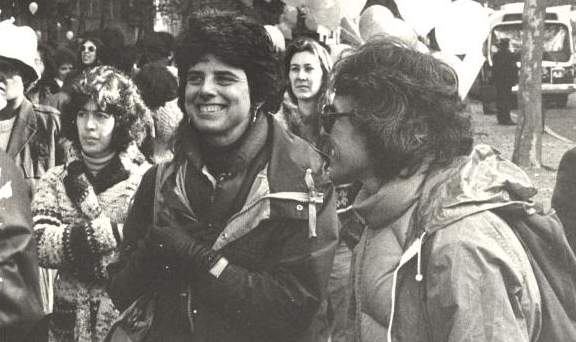
The People’s Lawyer by author and Guild writer Albert Ruben, is the first comprehensive history on the Center For Constitutional Rights and tells the Center’s story from the civil rights era to today’s legal battles on habeas corpus, torture and Guantanamo Bay Prison. The book highlights critical legal fights taken on by CCR revealing innovative tactics that have evolved within the radical organization. Albert Ruben points how the Center for Constitutional Rights continues to fight with the same spirit, audacity and courage it was founded with. As many listeners may know, CCR has been an important corner stone to this radio show because our own Michael Ratner has been with the Center for 4 decades.
- The founders (of CCR) were 4 in number. They were Arthur Kinoy, Morton Stavis, Bill Kunstler and Ben Smith. Smith was a Southerner, he had an office in New Orleans, and Stavis, William Kunstler, and Arthur Kinoy were northerners who were working for civil rights in the South.
- They were all working their separate beats, they all knew each other and were in communication about the work they were doing. They decided that they needed something, primarily financially, to keep their work going.
- So they got in touch with a lawyer they all knew with financial means named Robert Boem. They incorporated it in New Jersey, and it became ultimately the Center for Constitutional Rights.
- They had a very small office at the beginning with one lawyer in Newark.
- The anti-war movement, the McShirley Case. It threw the Center into the government misconduct orbit. It was in the course of litigating that the Center became aware that the Federal Government was not going to be on the side of the angels.
- (From Wikipedia) Dombrowski alleged that members of his organization, the Southern Conference Educational Fund, were subjected to continuous harassment, including arrests without intent to prosecute, and seizures of necessary internal documents. Furthermore, the State was threatening to use anti-subversion statutes to prosecute the organization, which was a group of Southern liberals dedicated to fighting for civil rights for Blacks in the South.
- The Dombrowski case, allowed the Center and a lot of lawyers to use that decision to challenge cases that brought against civil rights attorneys and a lot of people who were working in the South and caught up in state laws, that were using anti-red laws to take them out of state courts and bring them into federal courts.
- So, the Center lawyers were very acutely aware that they had on their side the federal courts. What happened with McShurley, was that it overturned that faith in the federal court system. The case led the Center to realize that government misconduct was an area that would be of interest. They could no longer count on federal court to be their allies.
- There were women on the staff of the Center who were both Center lawyers as their occupation but they were also women, and as women they were caught up in the womens movement. They brought the two together.
- It was the early days of the womens movement. The Center didn’t see itself as a place that would take on criminal law, it was more of a movement organization. The politics of the founders were central to their beings. They made their politics guide them in whether a case was something that they should adopt.
- Part of the Center for Constitutional Right’s mission was educational, that’s not understood I think.
Guest – Albert Ruben, screen and television writer and has served as an officer of the Writers Guild of America East.
—
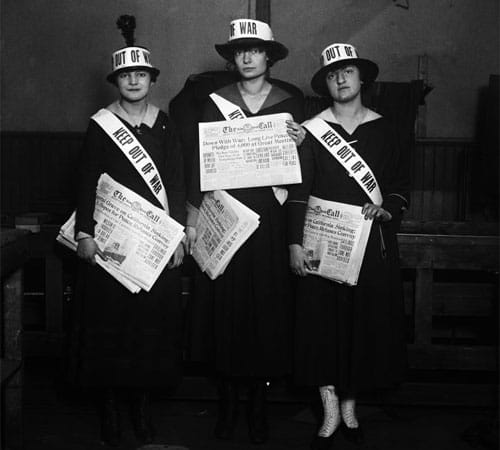
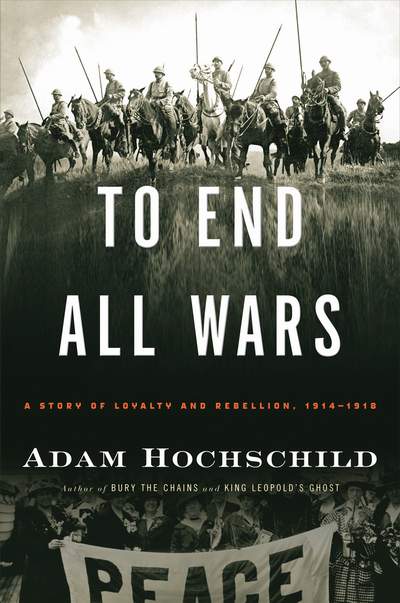
TO END ALL WARS: A Story of Loyalty and Rebellion 1914-1918
We welcome returning guest Adam Hochschild, historian and author of the new book TO END ALL WARS: A Story of Loyalty and Rebellion 1914-1918. In the book, Hochschild has focused on the antiwar movement in Great Britain. Near the beginning of World War I, 20 thousand British men refused the military draft on principle, others were conscientious objectors and nearly 6 thousand of the men were sent to prison. Hochschild relied on personal letters, diaries and memoirs to assemble this unique historic report on Britain’s powerful anti-war movement. The book also unearths how anti-war activists were monitored constantly by civilian and military intelligence as agent provocateurs bragged about their accomplishments. To End All Wars is a compelling account of the heroic anti-war struggle while top writers in that period such as Rudyard Kipling and H.G. Wells, contributed rhetoric to support the war propaganda.
- I always like to think we can learn things from history. I think you learn to be inspired by people who stuck to their ideals, even in very difficult times,
- I thought it would be a challenge to write a book centering around people who I admire tremendously although they lost, the cause that they were struggling for. I’ve always been fascinated by the first World War, which remade the world for the worst in every conceivable way and killed around 20 million people in the process.
- I’ve been particularly struck by those resisted that war on both sides, who said this war is not worth these millions of lives and we’re not going to fight.
- I wanted to talk about 2 different people in this war, the generals who fought this terrible war filled with illusions, that the next battle would bring a great victory, and then I was also fascinated by these pacifists and war resistors.
- 20 thousand men of military age, refused to go into the British Army. The largest outright refusals in any of the warring countries. Of that number many of them accepted alternative service under conscientious objector. Driving ambulances, or work in war industry factory.
- Many men refused that and more than six thousand went to prison.
- Aggression among Germany and Austria-Hungary did really ignite the war. You can’t really say its a war between good guys and bad guys, because the allies at first were Britain and France allied with Russia. The absolute last remaining monarchy in Europe.
- Wonderful trilogy of novels by Pat Barker, The Eye In the Doors. Had I been alive in that time in 1917, I would like so many people did at that time, who greeted the Russian Revolution with enormous hope.
- I guess I’m thinking more than anything else, of the way the first world war, made the second world war almost certain. There was something about the way the war ended that gave rise to bitterness and the Nazis in Germany.
- Right up to the very last minute, the German people were fed a diet of totally triumphant propaganda.
- Eugene Debbs got up of his sick bed to do a speaking tour against the war. The Wilson administration charged him with subversion, he was still in prison when got nearly a million votes for president of a Socialist party ticket.
- Illusion that the war is going to solve more problems than it causes. Another illusion is that it will be over quickly, you remember George Bush on the aircraft carrier.
Guest – Adam Hochschild, award-winning author and journalist who has written for The New Yorker, Harper’s, The New York Review of Books, and The New York Times Magazine. His books, King Leopold’s Ghost: A Story of Greed, Terror, and Heroism in Colonial Africa (1998) and Bury the Chains (2005) were finalists for the National Book Award and have won numerous other prizes. Hochschild teaches narrative writing at the Graduate School of Journalism at the University of California at Berkeley.
—————————————————-
Law and Disorder July 11, 2011
Podcast: Play in new window | Download
Updates:
- CCR: Somalian Captured Held On US Ship Since April 2011
- President Barack Hussein Obama is Impeachable
- US To Gaza Flotilla Update
—-
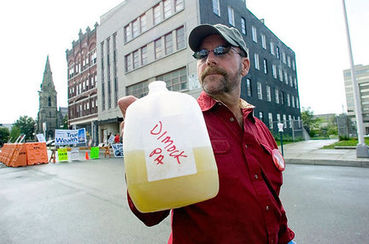

Natural Gas Drilling Moratorium To Be Lifted in New York
New York Governor Andrew Cuomo is pushing to lift the moratorium on natural gas drilling, known as hydraulic fracturing in New York State. Hydro-fracking as its called is in many opinions an environmentally wreck-less technique to extract natural gas from shale. While the lifting of the moratorium is still months away, it comes despite the massive efforts from environmental and community groups in New York, New Jersey and Pennsylvania who have protected the Marcellus Shale watershed.
In a statement released by the State Department of Environmental Conservation, there will be environmental restrictions placed on the natural gas drilling permits in New York State, such as no drilling within 2000 feet of a public reservoir.
However, ninety percent of the New York City’s drinking water comes from ground zero of where various oil companies want to drill into the Marcelle Shale for natural gas. Every time a well is drilled, the companies use an estimate of 5 to 9 million gallons of water. Each time a well is fractured, it’s another 5-9 million gallons of water, a well can be fractured multiple times. Up to 275 different toxic chemicals are used in the process and after the well is drilled, there are millions of gallons of industrial waste, it’s essentially radioactive water. 40-70 percent of this water stays underground.
The watershed is 13 thousand square miles and includes four and those that want to mine this resource say it will reduce dependence on foreign oil and boost the economy. However, many have shown this statement to be false as the natural gas from the United States is being sold to foreign countries such as Norway and France.
Meanwhile, a lawsuit is pending against several federal agencies affiliated with the Delaware River Basin Commission to block final regulations on hydro-fracking until a full environmental review can be conducted. Past shows on hydro-fracking: Law and Disorder March 21, 2011 / Law and Disorder March 29, 2010
- Hydro-fracking is part of a broader industrial practice. Basically what we’re doing is allowing companies to drill down a mile deep through our aquifers, which we all depend on for our drinking water.
- Once they get down there, they start to drill horizontally, they’re aiming for the shale formations underground.
- In order to release the gas from the shale, they blast it with this nasty stuff, chemicals that they don’t want to disclose.
- They’re also developing and industrializing large swaths of land. When they do that they’re polluting the waters of New York and Pennsylvania and every place where this is happening.
- Generally what is proposed is to allow around 85 percent of New York State that has Marcellus Shale to be open to drilling that they would not allow drilling to take place in the New York City and Syracuse watersheds. And they would not allow it to take place within what they primary aquifers and state owned game land.
- But all other places and private land, they would allow it to happen.
- Those people who live in New York City, and in Syracuse, those people would be protected from this activity, but the people in the rest of the state would be subjected to it.
- For every 17 or 18 gas wells that you drill, you can expect to see water contamination from that.
- But then we’d ask why would we allow the rest of New York to be exposed to it?
- In Pennsylvania, its completely ruining the roads in the northern half of the state, its tearing up communities. In Bradford County we had a blowout, not too long ago, which caused damage not only to streams but to drinking water in that area.
- We are going to see continued failures wherever this happens. The question is . . . are we going to allow it to happen? Are we going to force this practice to follow the science and only allow it to happen if the science says it can be done safely? We’re simply not there.
- In Pennsylvania, what we’re seeing is most of those jobs they’re talking about are going to folks outside the state. They’re bringing in people from the western states, who have experience in drilling. You to also look at the broader economic impact. When a community loses its water supply, that is bigger impact than a handful of jobs.
- If we don’t have clean water in order to live and for other businesses to operate, we’re going to see much greater economic damage.
- We’ve been dealing with the Delaware Water Basin Commission to make sure they don’t allow the Delaware River to be poisoned by these activities.
- When the people of Pennsylvania, the people of New York and New Jersey, are fully awakened to the dangers of this activity, we’ll be able to build a movement and reign it in.
- There are dangers associated with these industrial activities, and we have to look at the dangers in the broadest sense.
- Natural gas has been identified by some as a clean fuel, but that’s when they compare it to how it burns and how coal burns. That’s one part of the natural gas story.
- You have to also look at the dangers in the process of extraction. When we drill down a mile deep, we’re finding naturally occurring radioactive material and as part of the drilling process, we’re then bringing that up to the surface.
- Look, we need energy. We need to decide what level of risk we’re comfortable with. In my opinion, we need to be looking at renewable energy, like solar, like wind, get investments, and get them to a larger scale.
- With this new direction from New York, we need to make sure there’s adequate time public participation and what was announced last week, is they would only allow a 60 day public comment period. That’s simply not enough. They haven’t looked at the research that’s been established since they closed the record in 2009.
- The public needs more than 60 days to educate the folks at the state level about what we’ve been learning since December 2009. We ought to be looking at a 6 month period on what was proposed for New York State.
Guest – Attorney Jordan Yeager, a National Lawyers Guild member, a cooperating attorney with the Center for Constitutional Rights and member of Damascus Citizens. Curtin & Heefner LLP recently elected leading public interest attorney Jordan B. Yeager to its partnership. Mr. Yeager is a member of the firm’s Employment and Public Sector Section. Formerly in private practice as the named partner in a public interest law firm, Mr. Yeager served successfully as counsel in several groundbreaking cases, including matters involving constitutional rights issues; claims of reasonable accommodation against a municipal defendant; and the right to a jury trial in a whistle-blower retaliation case.
——
Second Austerity Measure Imposed On Greece
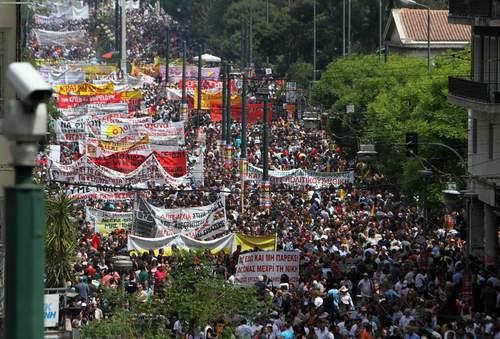
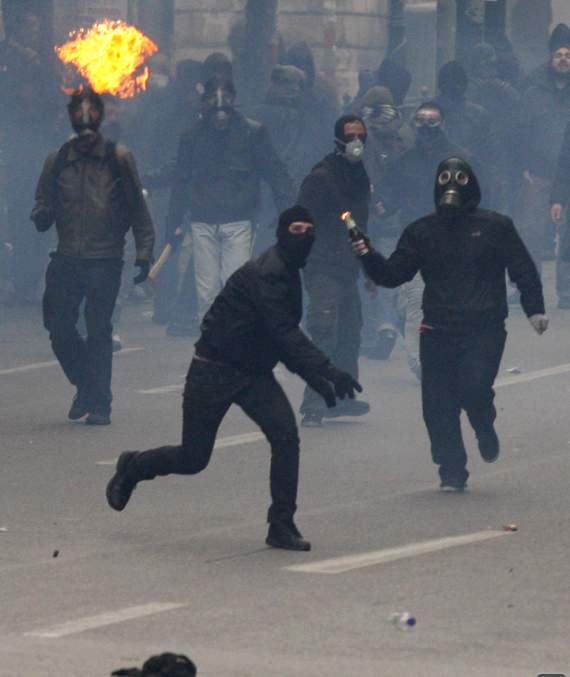
Protests and demonstrations continue to erupt in Greece as demonstrators rise up in the streets against deep cuts in services and jobs from austerity. Austerity is the name of the government’s response to the demand of its creditors. Austerity imposes on society a severe regimen of rising taxes, or cut government spending to please and satisfy creditors. Greece as predicted by Economics professor Rick Wolff a year ago has been hit the hardest by the global economic disaster. Why? For many reasons, it has a strong working class, socialist roots and a public sector made primarily of union jobs. The austerity has cut into the working class jobs as the country privatizes the post office, gas, water works and railway. Meanwhile, the wealthy continue to evade taxes in Greece and in the United States. Past shows on Greece: Law and Disorder
- I was in Athens that last few days, what you have in the European Union is imbalances that resulted partly from the introduction of the Euro, but also, by the general phenomena in the division of the world of some countries more technologically advanced and others that are not.
- Right now you have a crisis, partly a European crisis, its not that the Greek culture is a pathological culture, as the mainstream media sometimes presents. Each crisis has its specifics, Ireland, Portugal, in Greece, the specificity is that the wealthy are not paying taxes.
- There are tax evasion problems, the problem in Greece is of primarily of revenues rather than spending.
- The mainstream media talks about the “bloated” public sector of Greece. The public sector is aligned with other public sectors in other countries. Now what they’re trying to do of course, traffic out jobs from the public sector to make Greece a public sector a small part of the economy as it is in developing countries in Africa.
- Because its debt has become so unmanageable, there was an austerity pack that was adopted last year that 110 billion dollars. Drastic cuts in public spending, welfare state,
- Now what’s happened as is often the case, with IMF problems, the program didn’t work the way they said it was going to. Now Greece needs another loan to keep servicing its debt. One of the conditions is that Greece has this huge fire sale of all its public assets. The hope is that its going to raise 50 billion Euros.
- Because values in all the public companies have shrunk rapidly, whoever buys them will buy at a really low price. Many Greeks are up in arms about that. Now they see the banks wanting to follow up with more of the same, that’s why 80 percent of the Greeks oppose this policy.
- We had a 2 day general strike last week, a 48 hour general strike had not happened in Greece for decades.
- You also have a demand for real democracy, direct democracy. One of the demands was not to pass the austerity package.
- Every 3 months there are news measures that have to be adopted in order for Greece to get the next installment of the loan. If Greece defaulted on their loan, it would effect the Eurozone in a very direct way, it would effect European banks.
- I think the lesson to take away from this is fighting back is necessary.
Guest – Costas Panayotakis, a professor at the New York City College of Technology.
———————————————–