Welcome to Law and Disorder Radio
Law and Disorder is a weekly independent civil liberties radio program airing on more than 150 stations and on Apple podcast. Law and Disorder provides timely legal perspectives on issues concerning civil liberties, privacy, right to dissent and practices of torture exercised by the US government and private corporations.
Law and Disorder October 3, 2011
Podcast: Play in new window | Download
Updates:
- Occupy Wall Street Protest Update
- Law and Disorder on Troy Davis – July 2007 /April 2008/ October 2008 / November 2008 /
- Israelis Announce They Want To Build 1100 Houses in East Jerusalem
- 75th Anniversary of the First Brigades Going To War In Spain
- Anwar al-Awlaki’s Extrajudicial Murder – Michael Ratner
————–

Earlier this year 11 Muslim students were arrested on charges for disrupting a speech of the Israeli ambassador to the United States, Michael Oren. The incident took place last year on the campus of the University of California at Irvine. The local District Attorney claims that the students had no right to disrupt the event, charging them with conspiracy to shut down the ambassador’s speech, even though he was able to complete the speech. Supporters claim that the Muslim students’ actions are protected by the first Amendment, and that are being charged for being vocal critics of Israel.
Last month, an Orange County court has found 10 Muslim students guilty of two misdemeanors. Facing up to one year in jail on multiple misdemeanor charges, they were sentenced to three years of probation, 56 hours of community service and fines. Each was convicted of one misdemeanor count of conspiring to disrupt Oren’s Feb. 8, 2010 speech and a second count for disrupting it.
- I knew there were some very difficult challenges in this case. The students modeled their protest after a protest that took place in Chicago.
- There 11 students who stood up serially, one after the other, with about 3 or 4 minutes in between.
- Each student made a short statement of protest. None of the protesters in Chicago were arrested.
- A lot of the students who had a pro-Palestine perspective were targeted.
- The prosecutor framed his whole case on the notion that the students shut down the First Amendment rights of the speaker.
- This is the way they framed it at the beginning; in the statements they made to the media.
- In terms of their framing, it makes no sense from a legal perspective.
- The way the Bill of Rights work, is to protect individuals from the government. In terms of the First Amendment which protects free speech, the Fourth Amendment that protect against unreasonable searches and seizure.
- It protects the individual from the government impeding on those rights.
- An individual can’t impede or violate another individual’s First Amendment rights, only the government can do that.
- The prosecutor should not have been allowed to argue to the jury, these students violated Mr Oren’s free speech rights.
- These are wonderful young men, they’re very gracious people and there’s no way that the judge could lose sight of that. It was outrageous, because really what was being prosecuted in their conspiracy charge was their First Amendment right to assemble.
- Penal code section 403a violates the First Amendment essentially says you can’t disrupt a meeting, violates our First Amendment to free speech.
—-
Attorney Dan Stormer:
- Islamophobia is really taking hold.
- I tend to believe it is Islamophobia, 9/11 hysteria, more Arab / Muslim focus than Israeli / Palestine focus.
- The use of conspiracy in this case allowed them to get in all sorts of evidence that might not otherwise be admissible.
- Penal Code 403 says if you upset a meeting and substantially interfere with its progress, you can be criminally prosecuted.
- I think the statute is unconstitutional and that’s going to be a primary basis for our appeal.
- The district attorney was calling for jail time. The D.A. attacked the judge subsequently for failing to give jail time. I think it is a severe sentence but given Orange County, and given the nature of hysteria against our clients, I’m ultimately please with the sentence.
- The background is they actually took this to a Grand Jury, and alleged they might file a felony conspiracy and felony allegation against them.
- Its shocking and horrifying that this prosecution went forward.
–
Guest – Attorney Lisa Holder, Los Angeles, criminal trial attorney since 2000. Ms Holder is a member of the California Bar, The National Lawyers Guild and the California Employment Lawyer’s Association. She is a member of the board of directors for the Southern California ACLU. In addition she is an adjunct professor at Occidental College, teaching pre-law classes. Ms. Holder graduated from New York University School of Law in 2000 after obtaining a Bachelor of Arts degree at Wesleyan University.
Guest – Attorney Dan Stormer, a Civil Rights, International Human Rights and Constitutional lawyer for thirty-five years and has been recognized internationally, nationally and locally as one of the top attorneys in the United States. A graduate of New York University School of Law and Wagner College, Stormer has lectured and published extensively and has taught law school at Hastings College of Law and Loyola Law School. He has obtained a number of large verdicts in gender discrimination in employment, civil rights violations, and age discrimination. He has appeared before the U. S. Supreme Court and is currently one of the attorneys on a Guantanamo Bay case.
————-
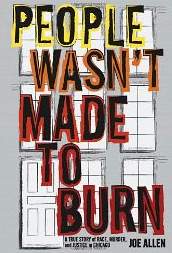
People Wasn’t Made to Burn – Joe Allen
People Wasn’t Made to Burn is a shocking personal story of a Mississippi Black share cropping family that faced incredible hardship and tragedy after moving to Chicago in 1947. Within the year, 4 of their infant children perished in a massive blaze in an overcrowded tenement. The father sickened with grief took justice in his own hands and shot the landlord, thought to have the set the fire. James Hickman was jailed and facing murder charges. The story takes off, author Joe Allen gives the reader an inside look into the strategy to defend Hickman in the most racist area of the country.
Joe Allen:
- I think his story is really symbolic of a whole generation of African Americans who left the South for the North or the West to find a better life and a measure of dignity and freedom.
- He came to Chicago and permanently settled here in 1945. He got a job in the steel industry which was very typical of African American men who came to the Midwest.
- While you were sort of welcomed here for the hard work and labor you would give particularly to the big steel plants, finding a home was the thing which was a source of incredible frustration and humiliation.
- Housing is the whole that Joe Hickman’s trial really revolves around.
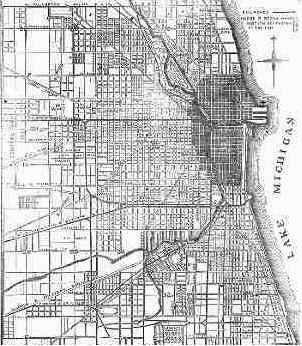
- The African American population really up until the second world war, was really confined to a thin sliver of land on the south side of the city (Chicago)
- It was overcrowded, and what the banks do is try to use this limited space to make as much money as possible.
- Kitchenette apartments, one room hovels, that didn’t have running water, no electricity, rat infested.
- Richard Wright’s book – Native Son.
- James Hickman would go from one end of the city to the other looking for a place and would have the door slammed in his face each time.
- Black landlords were not very common at that time. Coleman took his money and never gave the apartment that he wanted. When James Hickman raised the issue of what happened with the money, Coleman threatened to set fire to the place.
- On January 16, 1947, a fire breaks out, it spread so quickly that Annie Hickman, the mother and wife, and one of the eldest sons, made it out of their attic apartment and jumped to safety.
- Because of the speed of the fire and incredible smoke, the four youngest kids, they suffocated and burned to death.
- Six months to the day of the death of children, he confronted Coleman at his home.
- The police acted very quickly in this case. He faced execution in the electric chair or minimum 14 years in prison.
- They pulled together a Hickman defense committee. They organized a very broad based campaign.
- Even though he was a man racked by grief he went out to find some measure of justice for his children when he couldn’t get that from the criminal justice system.
- Housing is still a crucial issue for working class people.
Guest – Joe Allen, a frequent contributor to the International Socialist Review and a long-standing activist, based in Chicago.
——————————————————–
Law and Disorder September 28, 2011
Podcast: Play in new window | Download
Mother Jones: The Informants
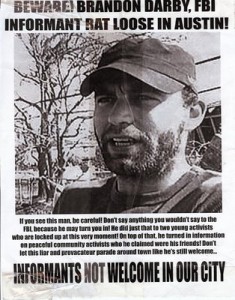
Since 9-11, the FBI now spends more than 3 billion dollars a year on counter-terrorism, the bureau maintains a team of 15 thousand spies in a nationwide network of informants. Many of these informants are tasked with infiltrating Muslims communities in the United States. We’ve discussed in the past, the expanded FBI guidelines plus the broad over reaching powers and underhanded tactics the FBI use when targeting Mosques and Muslim Americans. We talk with investigative reporter, Trevor Aaronson, about his recent article titled “The Informants” in Mother Jones Magazine. The FBI has built a massive network of spies to prevent another domestic attack. Aaronson asks “are they busting terrorist plots—or leading them?”
- There are as many as 45 thousand hip pockets. A hip pocket is somebody who isn’t on the FBI’s books.
- Could be a store clerk, – you should go check out this guy. It’s never information that can be used in court or any sort of criminal affidavit. It’s what the FBI could use to build information and get tips.
- It’s all part of the FBI’s effort to build a larger network of people, that could provide information to the FBI of potential terrorist threats.
- Money is the incentive for informants. In the case of the Newburg Four outside of New York City, the informant earned 100 thousand dollars for his role in that case.
- What the FBI has been particularly fond of is using immigration as a form of leverage.
- To find people who are trying to get family over from overseas and use that as leverage, saying well, if you work with us as an informant. . .
- In the 500 defendants we looked at, 49 involved what we considered an agent provocateur, which is an informant which provided the opportunity and/or the means to move forward with a terrorist plot.
- We were able to identify by name, 13 informants who were these high level operators who moved from case to case, in some cases state to state.
- When someone pleads guilty a lot of the information about the behavior of the informant and the actions of the FBI never sees the light of day.
- Domain Management was a program that took crime data and looked for trends.
- In 2004, the FBI hired a man from the CIA named Phil Mudd to help it transition to an intelligence gathering organization.
- It started to allow the FBI to create demographic maps of specific cities. The technology that the FBI uses today are small transmitters. Informants: One thing we did find is that they usually have checkered pasts.
- They tend to be economically desperate, if not poor. In many cases they’re converts to Islam, with such an elementary understanding of Islam that the informant is able to use that against them.
- What we tried to do is build a database that we could draw conclusions from.
- I think at the this point the FBI has gone too far the other way, bringing in people who don’t have the capacity to commit these crimes.
- The FBI would admit they create a hostile environment for people who would commit terrorism. You engender this fear among the potential terrorist.
- The problem is that you create fear in the community of people that aren’t terrorists either.
Guest – Trevor Aaronson, an Investigative Reporter and Program fellow at the University of California-Berkeley.
——-
Fear Inc., The Roots of the Islamophobia Network in America
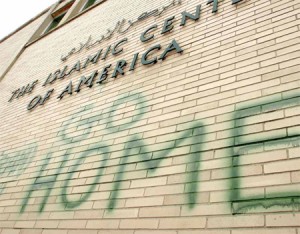
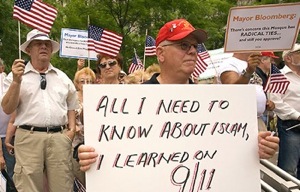
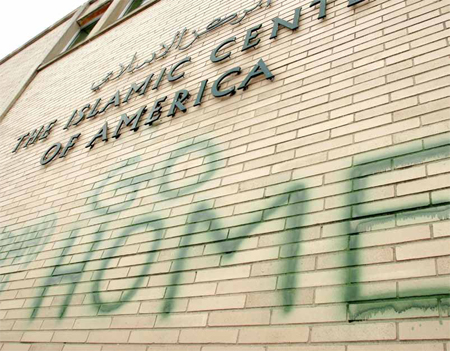
As many suspected, the attacks on September 11, 2001 didn’t drive anti-Muslim sentiment by itself. There was some help, a lot of help. In a shocking new report, seven foundations have been part of a 10 year campaign to spread Islamophobia in the United States. The 130 page report by the Center for American Progress titled Fear Inc., The Roots of the Islamophobia Network in America (PDF link) names the foundations and key individuals who have promoted Islamophobia from 2001 to 2009. The report mentions that the funds from these foundations such as Lynde and Harry Bradley Foundation, Newton D. & Rochelle F. Becker foundations and charitable trust, Russell Berrie Foundation went to think tanks and grassroots organizations to spread messages of hate and fear as far as they can. The Donor Capital fund was the single biggest contributor donating 18 million out of the 42 million in the 8 year span.
- This is an investigative report, an expose on how 7 funders had given 43 million dollars over 10 years to a small interconnected group of individuals and organizations responsible for mainstreaming fear bigotry and hate against Muslims and Islam in America.
- What we do for the first time is dissect and expose this network, categorize it, name the names, connect the dots.
- The network is broken into five categories.
- There are 7 funders. The next group is what I call the Islamophobia scholars and experts, which is the nerve center of this Islamophobia network. A group of about 5 individuals and organizations that are primarily responsible for creating the manufactured talking points we just heard.
- Some were mislead by these individuals, within the network who are by the way very successful, by posing as legitimate experts and scholars on Islam.
- Rush Limbaugh from the hate radio section.
- Bridget Gabriel said a practicing Muslim can’t be a loyal American.
- This group is so effective because it is so self reliant and incestuous.
- Islamophobia is an exaggerated fear, hatred and hostility toward Islam and Muslims, that is perpetuated by negative stereotypes resulting in bias, discrimination and the marginalization and exclusion of Muslims from America’s social, political and civic life.
- The report is intended for a mainstream audience. This report inoculates Americans. Inoculates them from the fear and misinformation. This report has gone viral. It’s all over facebook, its all over twitter.
Guest – Wajahat Ali, a researcher at the Center for American Progress and a researcher for the Center for American Progress Action Fund. Wajahat is a playwright, essayist, humorist, and Attorney at Law, whose work, “The Domestic Crusaders” is the first major play about Muslim Americans living in a post 9-11 America, and was published by McSweeney’s in 2011.
——-
Audio Collage – Muslim Surveillance
————————————–
Law and Disorder September 19, 2011
Podcast: Play in new window | Download
Updates:
- From Attica To Pelican Bay – By Michael Ratner
- Inmates_of_Attica_Correctional_Facility_v_Rockefeller_(PDF)
- Clergy Sex Victims Demand Justice – CCR Lawsuit
- People Living In Poverty At All Time High
- Law and Disorder Show – Troy Davis – July 2, 2007
—
Medical Professionals Complicit In US Torture Policy
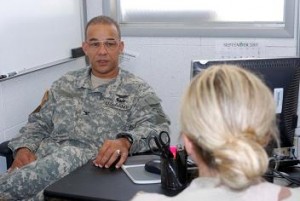
As many listeners know, health professionals were front and center and complicit in the US policy of torture. The torturers relied heavily on medical opinion. Medical professionals provided sanitizing and rationalization for the infamous torture memos. During water boarding procedures, a doctor would be present. Psychologists were directly involved in the supervision, design and execution of torture at US military and intelligence facilities. This is a violation of state laws and professional ethics. These “health professionals” that were involved with torture still hold their professional licenses to practice. Meanwhile a legal battle continues against the Louisiana Psychology Board for refusing to investigate professional misconduct allegations against Dr. Larry James. He’s a retired US Army Colonel and high ranking adviser on interrogations for the US military in Guantanamo Bay.
We talk more about this case and the breach of ethics in the medical profession since 9/11 with Dr. Stephen Soldz, former president of Psychologists for Social Responsibility. Stephen is a psychologist, psychoanalyst and public health researcher in Boston, he is also co-author of PHR’s report in Experiments in Torture.
- Psychologists played a central role, there were 2 professions, one was lawyers, the other less well known was psychologists. It turns out that it was psychologists that designed and implemented, the enhanced interrogation torture program, who monitored it, who trained others in it and who researched it and provided all the legal protection.
- It’s believed that it was psychologist James Mitchell who was present there, who was in charge.
- There’s the CIA program that was for so called high value detainees in CIA custody in various secret prisons called black sites. This is where the psychologists were central, they designed the whole thing.
- There was a black site at Guantanamo where a few people were held at various points.
- Guantanamo was technically under the military control, not CIA control.
- The CIA: like I said the psychologists designed this stuff, it was quite brutal. Forcing people to stand, shackling them up, with their arms out, naked in cold air. For 7 days at a time.
- Being forced to stand day after day is extraordinarily painful. Think about having to do that without using the toilet, with liquid food being forced into you. They at times used small boxes where a person could neither stand or sit.
- The boxes were banged on at times, they would throw people against walls, with special devices around their neck supposedly to protect them from permanent damage. There were various slaps that were authorized.
- The American Psychology Association has an ethics code and its binding on all members. Not all psychologists are members, but all the states base their own ethics code for licensed psychologists upon that of the APA, some mandate it exactly some adopt their own.
- The CIA and military insist that the psychologists that do this stuff be licensed by the state.
- Many of them are APA, so the APA ethics are intimately involved here.
- The APA equivocated and formed a task force. They said that psychologists had an obligation to keep interrogations, safe legal and effective. This language it turns out was taken from the Bush torture memos at the Justice Department. The task force was dominated by the military.
- They claim to be resolutely against torture, they make statement after statement. Psychologists shouldn’t be safety officers.
- In all 3 states, lawyers have joined my colleagues to force the APA board to do their job. The board doesn’t have the leeway to dismiss claims of torture without clearly investigating them.
- Larry James was a Biscuit 1 and later served at Abu Ghraib after the scandals there, he claims to have been the person who cleaned it up.
- He admits that he observed abuse by other people and didn’t report it to the commanders.
- He’s now out of the military and the Dean of the School of Psychology at Wright State University in Ohio.
- It’s rather sad, instead investigating what did or did not happen, they attack those who raise issues about Colonel James.
- Physicians For Human Rights / When Healers Harm
Guest – former President of Psychologists for Social Responsibility, Stephen Soldz is a psychologist, psychoanalyst, and public health researcher in Boston, and was a co-author of PHR’s report Experiments in Torture. He is the Director of the Center for Research, Evaluation, and Program Development at the Boston Graduate School of Psychoanalysis. He was Adjunct Assistant Professor of Psychology (Psychiatry) at Harvard Medical School, and has taught at the University of Massachusetts Boston, Boston College, and Boston University.
——–

Guantanamo Bay and Offshore Prisons
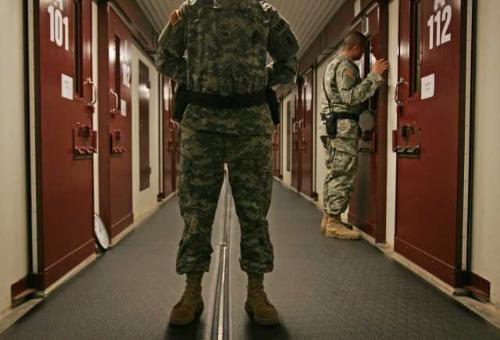
The Obama Administration has allowed the Bush policy to continue allowing for the practice of torture, rendition and secret prisons to continue. We talk about the ongoing practice of torture, secret sites and Guantanamo Bay. There are 3 groups at Guantanamo, the first is 2 dozen that are genuinely Al Qaeda. The second group shouldn’t have been there in first place, around 200 of them will be sent home. The third group are refugees who are from countries with horrible human rights records.
Attorney Vince Warren:
- What role do the people play in order to stop this? (wars) We are at war to make war is what the public has bought into. By using the war paradigm, the president seized power that belonged to Congress, seized power that belonged to the Courts and seized power that belonged to the people.
- You can’t be at war with the “concept” of terror.
- Prior to 9-11 when terrorism would happen. There was an investigation, an indictment, prosecution and if there was a case, they were to be convicted.
- As of 2011, more people in Guantanamo have died than have been referred for criminal charges.
- We shouldn’t fool ourselves into thinking that this was a genuine reaction to a tragic event.
- This aggressive war(s) that are based on lies, without any legitimate security threat, is a crime.
- The other piece since 9-11 is the interesting double speak. Torture and aggressive war become justifications since 9-11.
- The Bush Justice Department said that the law simply does not just apply to the President, when he’s acting as Commander In Chief. It doesn’t matter if Congress passed a law that we expect the President to be bound, the Justice Department said he could ignore it if it didn’t fit in to what he wanted to do.
- That led to the Bush lawyers counseling him that he could ignore a law that said torture was illegal or could ignore a law that says the government can’t wiretap without a warrant.
- President Obama talked very big about ending torture and about ending these policies.
- What is happening now in the United States is that local police forces, immigration forces, private contractors are colluding and conspiring to infiltrate political movements and largely peaceful political movements.
- – in order to “uproot the terrorist.”
- Course there are no terrorists there, what there are are people who have a very vibrant and credible claim.
- Myself and a number of other human rights people went to a meeting with President Obama in May 2009. I was shocked at how President Obama completely understood the legal issues we were raising.
- The very next day he essentially came out with a preventive detention scheme. An indefinite detention scheme in Guantanamo.
- What really troubled me is that he knows. He knows precisely what the right thing to do is.
- This thing is not going to fix itself. CCR Facebook – Twitter @theCCR
Guest – Attorney Vince Warren, Executive Director of the Center for Constitutional Rights, a national legal and educational organization dedicated to advancing and defending the rights guaranteed by the United States Constitution and the Universal Declaration of Human Rights. Vince oversees CCR’s groundbreaking litigation and advocacy work which includes using international and domestic law to hold corporations and government officials accountable for human rights abuses; challenging racial, gender and LGBT injustice; and combating the illegal expansion of U.S. presidential power and policies such as illegal detention at Guantanamo, rendition and torture.
—————————————-