Welcome to Law and Disorder Radio
Law and Disorder is a weekly independent civil liberties radio program airing on more than 150 stations and on Apple podcast. Law and Disorder provides timely legal perspectives on issues concerning civil liberties, privacy, right to dissent and practices of torture exercised by the US government and private corporations.
Law and Disorder September 12, 2011
Podcast: Play in new window | Download
Updates:
- Michael Ratner: The Other 9-11s
- NEW – From Attica To Pelican Bay – By Michael Ratner
- Inmates_of_Attica_Correctional_Facility_v_Rockefeller_(PDF)
—
The State of Perpetual War
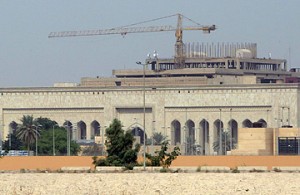
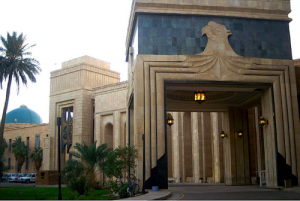
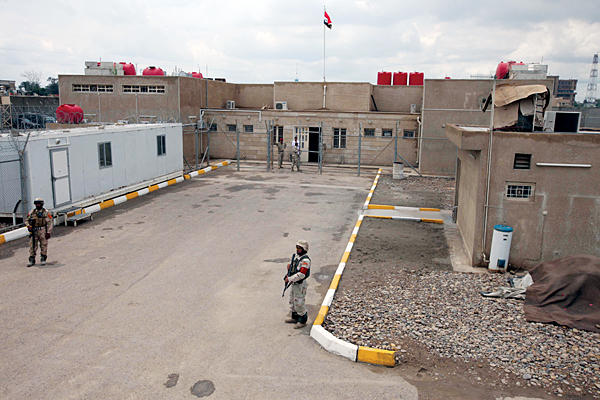
Since September 11, 2001 the US global war on terror has reached beyond Afghanistan and Iraq. The US constructed the largest embassy ever in Baghdad to control the resources of Iraq. Meanwhile strikes against Pakistan, Yemen, and Somalia, led an air war against Libya without any Congressional authorization continue as pointed out by author Anthony Arnove. In his article titled The 10th Anniversary of 9/11 Arnove describes US foreign policy of preventive war and how the US continues to use drone strikes against Pakistan, Yemen and Somalia. Now other countries are adopting the preventive war idea to fight (quote) terrorism. Today, the Obama Adminstration has gone beyond the Bush policies as trillions are spent on perpetual war while schools, health care and social needs crumble.
Anthony Arnove:
- 911 was seized upon by the Bush Administration as an opportunity. Condoleezza Rice specifically used the word opportunity to describe the geo-political shifts that she saw occurring in the wake of 9-11.
- We’ve seen the invasion of Iraq, the invasion of Afghanistan, covert operations and Arab bombardment of dozens of countries. There’s an estimate now that this year the US will be operating in 120 countries in some capacity through use of commandos.
- You’ve seen increased troop levels in Afghanistan so that even with the current so called draw down of the troops in Afghanistan, even with the reductions that are currently being undertaken, we’re still going to be ahead of the number of troops that were in Afghanistan at the end of the Bush Administration.
- Withdrawal, the word no longer has any meaning. It actually means slight reduction of troops after they’ve been increased.
- There are 46 thousand active duty troops in Iraq. The claim is that those 46 thousand will leave at the end of 2011 after an agreement reached under pressure from social movements in Iraq.
- Then you look at the military installations that scatter the country, they’re not going to walk away from that easily.
- In Afghanistan, they’re literally talking about dates as far as 2024 in terms of troops on the ground involved in a number of capacities.
- I think Libya is truly an opportunistic action by the United States concerned its losing control in the middle east. You’ve had uprisings and revolutions that have toppled governments aligned with the United States.
- The US has been so contemptuous of the freedoms of people around the world. So contemptuous of democracy, so contemptuous of people fighting for self determination.
- So contemptuous of nationalist movements that would have put resources into the control of the people.
- The actions of the Bush Administration and now Obama have only made us more hated, and made the world more dangerous.
- They claim they’re making the world more safe, and protecting us. The reality is the opposite.
- At least Barack Obama will be more responsive to social movements, we’ll be able to pressure him. It is clear that is not the case, there has been a demobilizing of sections of the anti-war movement who define the political horizons as the debate between the Republicans and Democrats.
- The anti-war movement has been silenced.
- The people who most vociferously supported invading Iraq, claimed there would be weapons of mass destruction, all of those things we now know to be lies, those people are regularly asked to be commentators on Iraq and Afghanistan.
- Yet the people who got it right, saying this is what will happen if we invade, those people are never heard from.
- The gap between what the elite are doing and what they are saying, and what is in their interest and the interest of ordinary people has never been wider.
- On October 6, 2011, a number organizations have called for demonstrations in Washington DC and solidarity actions in other cities. On October 15 actions have been called for by the United National Anti-War Coalition. NationalPeaceConference.org
Guest – Editor and writer Anthony Arnove. He is best known for his books on Iraq and the Iraq War. Arnove is the author of the book Iraq: The Logic of Withdrawal, published in hardcover by the New Press and in paperback by Haymarket Books. Arnove toured the country promoting the book in spring 2006 as part of the New Press’ “End the War Tour”.
Arnove is also the editor of Iraq Under Siege, published by South End Press, the co-editor with Howard Zinn of Voices of a People’s History of the United States, published by Seven Stories Press, and the editor of The Essential Noam Chomsky, published by the New Press. He writes frequently for left-wing publications; he is a featured author at ZNet, a columnist for Socialist Worker, and on the editorial board of the International Socialist Review.
—
The Guantanamo Syndrome
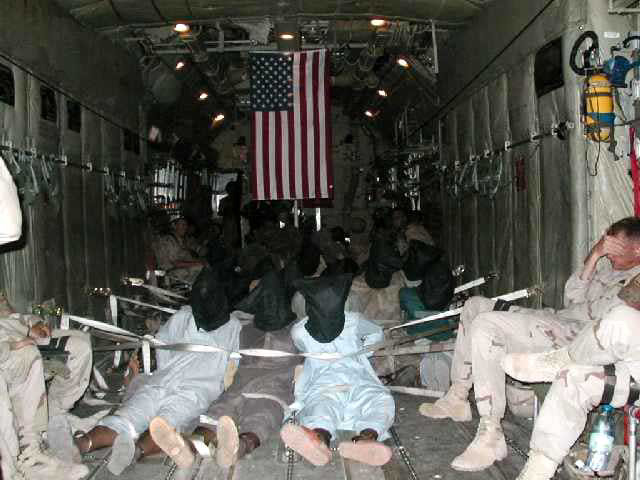
- Pinochet’s Operation Condor was to round up opponents all over the world to torture and imprison them. This is now an American Operation Condor.
- AUMF and Military Order #1 allow the administration to use drones around the world. This is the key piece of legislation. Out of the AUMF came military order # 1, November 13, 2001. The president can arrest anybody, they can be kept anywhere, American citizen or not.
- From there flows the Guantanamo Syndrome. Habeas Corpus, a person who’s the prisoner of the executive can go to court and say put the executive on the defensive. Why am I being held? You have to have a legal basis.
- After many years of litigation representing this incommunicado people at Guantanamo, we ended up representing their parents or relatives, because we couldn’t represent them, the Supreme Court finally said, it’s a Constitutional right to go to court to test your detention. They said that about the people in Guantanamo in particular, they didn’t say that about the people in Baghram or other places.
- Once we won that right, the Bush Administration and the Obama Administration went into court and completely opposed that right having any meaning. It is really an unrecognizable world from what we had ten years ago.
—-
Audio Collage
- Surveillance State: The 51st State
- Targeting Muslims Since 9-11
——————————————————————
Law and Disorder September 5, 2011
Podcast: Play in new window | Download
Updates:
—
Workers Win Large Settlement at Supplier to Chinese Restaurants After Hard Fought Campaign
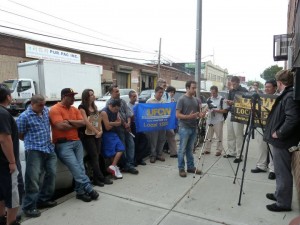
A bitterly contested campaign against Pur Pac, a food distribution warehouse giant reached a settlement of 470 thousand dollars for workers who had their wages illegally withheld and more. The workers organized with Focus on the Food chain, Brandworkers and International Workers of the World to challenge sweatshop conditions, wage theft, retaliation and discrimination in the sprawling industrial corridor of food processing and distribution that service New York City markets and restaurants. Daniel Gross, the executive director of Brandworkers said – quote – The conditions in the sector are deplorable and systemic but, as the Pur Pac workers have shown, positive workplace change can and will be won.”
- Pur Pac is typical of an industrial corridor of food processing and distribution warehouses that service a tremendous amount of food to restaurants and supermarkets in New York. Much of what we eat in restaurants is processed in sweatshops.
- Pur Pac is a distributor of restaurant and food supplies to Chinese Restaurants, cafes and bakeries. They distribute huge quanitities of rice, cooking oil, chopsticks.
- Sweatshop, tremendous amount of wage theft, hundreds of thousands of dollars. Vicious retaliation for workers who stand up for their rights, exhausting long shifts, very heavy work.
- We facilitate worker led, comprehensive campaigns. The company used several tactics to avoid accountability here, the main approach that they used is they engaged in sham sales.
- They would fraudulently transfer assets, rebrand the company. The company was originally called Easy Supply. Easy Supply escaped accountability by purporting to go out of business, now same factory, same trucks, same products was called Sunrise Plus. We caught up with Sunrise Plus and they engaged in another sham sale and that created Pur Pac.
- We were also able to win a binding code of conduct, which creates very powerful protective mechanisms for collective activity, going forward.
- We were able to win recognition for the IWW, as exclusive bargaining agent for Pur Pac workers. It was really the biggest victory for Focus On The Food Chain.
- I was a low wage worker mostly in retail and fast food. I was working at Borders Books and Music and really felt the sting of a multi-national employer which at the time was highly profitable. It didn’t pay a fair wage, offered an insecure and unpredictable schedule.
- It employed a management force that really showed tremendous disrespect for rank and file workers.
- We had 44 Starbucks stores that were infested with rats and insects. We did worker-citizen journalism and we got photos and video of these rats and roaches, we inflated a huge, inflatable rat in front of the stores and shared our video and photographic evidence.
- Starbucks is still engaged in really a scorched Earth effort, complete disrespect for the right to organize and free association.
- The National Labor Relations Board (NLRB) is the administrative agency charged under federal with administering union management affairs. They have jurisdiction over cases under the National Labor Relations Act.
- Mezonos Maven Bakery is a food production sweatshop. Mezonos Maven was cheating workers out of their wages, disrespecting workers, and the workers came together, they didn’t join a union but they came together with community groups, etc. Mezonos Maven, started illegally firing workers.
- When the workers stood up to the most basic worker’s rights, they were subjected to fierce immediate retaliation.
Guest – Attorney Daniel Gross, Executive Director of Brandworkers, a non-profit organization protecting and advancing the rights of retail and food employees.
—–
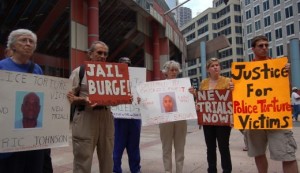
Federal Judge Rules Former Mayor Daley Can Be Sued For Alleged Torture Cover Up
We continue to bring updates on the ongoing police torture and abuse scandal revolving around former Chicago police commander Jon Burge. Recently, a federal judge has now ruled that former Chicago Mayor Richard Daley can be allowed to be kept in the lawsuit where he is charged with conspiracy to cover up police abuse and torture. As many listeners may know, Burge has been sentenced to 4 and a half years in prison for obstruction of justice and lying about torturing prisoners to obtain coerced confessions. The People’s Law Office brought the case in 2005 and the city of Chicago refused to settle while pumping hundreds of thousands of dollars into the case.
In the beginning of September, attorney Flint Taylor will depose former mayor Richard Daley which will force him to answer questions about the abuse of African Americans under Burge’s command. This case has already cost Chicago taxpayers more than 43 million dollars in settlements and legal fees. Past shows with Attorney Flint Taylor
- Daley was the state’s attorney for Cook County for eight years in the 80s during that time he was specifically informed of police torture.
- Instead of doing anything about it and dealing with the torturers, Jon Burge and company, he continued to encourage it by prosecuting men who had been falsely arrested and charged based on tortured confessions sending as many of them to death row.
- When he became mayor, he continued to have an active role in the cover up of the torture practice.
- He had at various times as chief of law enforcement and chief executive of the city of Chicago, the power and obligation to act and if he did, we wouldn’t have had all these men on death row, and in the penitentiary and we wouldn’t have had all these men tortured.
- We brought it several times in lawsuits starting in 2003. Judges had consistently turned their backs on that claim.
- The new Chicago mayor Rahm Emmanuel who has successfully tip toed past this both in his campaign and now as the first 100 days of being mayor had to respond to it.
- They’ve paid over 13 million dollars to defend these civil cases that we’re in. We take the mayor at his word, and we hope this leads to settlements and compensation for the men who’ve been tortured.
- There are six men who have lawsuits in court. Unfortunately because of statute of limitations most torture survivors don’t have lawsuits.
- There are still 15 men behind bars in Illinois, based on tortured confessions that Jon Burge and the Area 2 torturers coerced from them. We’re fighting to have them all get new hearings.
- I don’t know if a Daley denial in some of the actions in this case would tantamount to perjury that Fitzgerald would be interested in.
- There is a major memoranda that was sent from the police superintendent at that time to Daley, a kind of CYA saying “I’ve been giving this powerful evidence of torture from a doctor over at the county hospital.
Guest – Attorney Flint Taylor, a graduate of Brown University and Northwestern University School of Law and a founding partner of the Peoples Law Office. More bio
———————————————-
Law and Disorder August 29, 2011
Podcast: Play in new window | Download
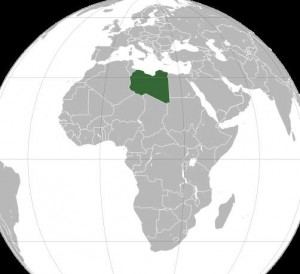
The Truth About the Situation in Libya Cutting Through the Government Propaganda and Media Lies
Libya, a country of 6 million people possesses the largest of Africa’s oil reserves. It’s oil is of a particular high quality. Since March 19 2011 the Air Force of Britain, France and the United States have conducted nearly 7500 bombing attacks. Meanwhile, ground forces made up of special operations and commando units are NATO led and direct the military operations of the so called rebel forces. In his recent article titled The Truth About the Situation in Libya Cutting Through the Government Propaganda and Media Lies, Answer Coalition National Coordinator Brian Becker lays out the history and facts about the ongoing Libya invasion. See Partial Interview Transcript
- Unfortunately there’s a large number of people who have accommodated themselves to a full scale demonization to the targeted government, the government in this case Qaddafi and Libya.
- Targeted comprehensively by the corporate sponsored media in the United States, in Britain and France. The United States, Britain and France the former colonizers and slave traders of Africa, always assigned their bombing missions, invasions a noble cause.
- They characterized the targeted government as having threatened a full scale massacre in Benghazi. There was no proof offered of that. The propaganda campaign is always part of the overall war effort.
- Qaddafi came to power in 1969, he immediately evicted the (US)Air Force base and the two British bases that were the dominant powers inside of Libya.
- The National Transition Council, the group that is fighting Qaddafi, and is sponsored by NATO, their first act when they formed a government coming into being was to invite those same powers to begin bombing the country.
- In 2004 after the invasion of Iraq, George W Bush and the European powers there ended the sanctions on Libya.
- Libya attempted to accommodate itself to the western powers.
- He was a player, they don’t want players, they want puppets.
- He let the companies come in but he kept irritating and annoying them.
- In the recent months we’ve seen demonstrations of hundreds and thousands of Libyans, maybe as many as a million gathering in Green Square against the bombing of Tripoli.
- Not all of them were with Qaddafi, some of them were but they nonetheless were against the bombing of their city by a foreign power.
- In the last days, there’s been a psychological war to over throw the government in Tripoli.
- What we don’t see is NATO carried out 7,500 bombing missions many of them against military formations of the Qaddafi government, many against civilian and communication centers.
- Why don’t they start bombing Saudi Arabia? There’s no elections in Saudi Arabia, women can’t drive cars in Saudi Arabia, the punishment for women committing adultery is stoning to death. There’s no protest in Saudi Arabia because they’re met with torture, imprisonment and execution.
- Why because the Saudi government functions a proxy, puppet client regime of the United States.
- If you watch TV or read US media you’d think there was 40 years of dark grim dictatorship with nothing good, the nightmare is finally ending.
- There was mass illiteracy in 1969, today 92 percent of the people are literate. Life expectancy of Libyans today is 77 years old. The entire operation is a NATO operation.
- The slogan of self determination has no credibility except in that struggle against imperialism.
- In World War I when that war was about to end, there was a secret treaty called the The Sykes–Picot Treaty. What that treaty showed was despite the utterances of self determination at that time by Woodrow Wilson and the other western leaders, that these powers were secretly dividing the spoils of war.
- If this operation in Libya succeeds, the use of foreign military forces and intelligence forces, and drone aircraft and military operations, the same tactics will be applied to countries deemed to independent of the dictates in Washington.
- Because its Obama and not the Republicans, too many progressive anti-war normally active people are sitting on the sidelines, watching, wondering rather than building the kind of militant anti-war movement in the United States that says to the people of the world
Guest – Brian Becker, National Coordinator for the Answer Coalition, he’s also been a central organizer of the mass anti-war demonstrations that have taken place in Washington, D.C. over the past decade.
—-
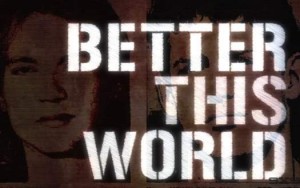
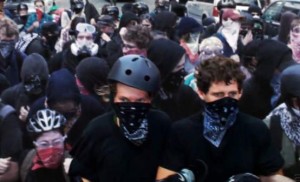
Better This World: Katie Galloway
In recent shows we’ve talked about the cases involving the FBI’s targeting of protesters, over-zealous prosecutors, and their collective impact on domestic dissent. These topics are just part of a riveting story in the documentary titled Better This World, directed and produced by Katie Galloway and Kelly Duane dela Vega, produced also by Mike Nicholson.
It’s a story of two boyhood friends from Texas who travel to the 2008 Republican National Convention in Minnesota and find themselves embroiled in an FBI case involving multiple domestic terrorism counts. Better This World gets right to the heart of the so called War on Terror, its impact on civil liberties and protest activities. One review described the film as “Riveting. Structured like a taut thriller, it delivers a chilling depiction of loyalty, naivete, political zealotry and the post-9/11 security state — and it features one doozy of a kicker in the “where are they are now” category.”-
- It was early 2009 and we saw a headline in the New York Times about the arrest of two young activists at the Republican National Convention. I didn’t hear about the story until David McKay was going to trial.
- His co-defendant had taken a plea, that’s what most people do in the federal system for sure.
- David had decided to roll the dice and he was going to federal trial. He was alleging that he had been entrapped.
- David and Brad went to an informational meeting in Austin, Texas about protesting at the Republican National Convention. Anarchist collective.
- While there they were approached by a well known activist Brandon Darby, who had gained some measure of fame after Hurricane Katrina and co-founded an organization called Common Ground.
- Two years leading up to the convention, multiple law enforcement and federal agencies had been involved in pro-active investigations into activist groups who might be coming to the RNC.
- David and Brad by coming to this meeting raised the suspicion of the government.
- There’s a lot of love in both families for these two guys.
- It’s a story about friendship and loyalty against the back drop of the post-9/11 domestic security apparatus with the full weight of the state on these guys trying to turn them against each other.
- What I learned is that the “war on terror” is really an extension, a continuation of the “war on drugs.” The rampant yet increased use of informants in the “war on terror.”
- David who built Molotov cocktails but didn’t use them was facing 30 years. Our sentences are 5 to 12 times longer than other countries. We get a strong sense of collateral damage of federal prosecutions, what it puts the families through. The tendency is to absolutely demonize the defense.
- We’re trying to make sure this film becomes part of the national dialogue about life after 9/11, about the legal system, the tension between civil liberty and security.
- When we got to Minneapolis we thought we would follow the legal cases as they unfolded. Our normal style is verite, letting things play out before the camera. We quickly realized that the heart of the story is what led to the six months leading up to the convention.
Guest – Katie Galloway, director producer of the Better This World. Katie has directed and produced numerous award winning films and series for PBS Frontline and POV, among others. Her feature documentary Prison Town, USA (POV 2007) called “documentary making at its best” by The San Francisco Chronicle and “intriguing” by The New York Times, was developed as a fiction series by IFC, for which she co-wrote the first 3 episodes. Her critically acclaimed film Better This World (POV 2011) has won 3 top doc awards on this year’s festival circuit. Galloway taught documentary production at the Columbia Journalism School and now teaches Media Studies at U.C. Berkeley.
——————–