
Welcome to Law and Disorder Radio
Law and Disorder is a weekly independent civil liberties radio program airing on more than 150 stations and on Apple podcast. Law and Disorder provides timely legal perspectives on issues concerning civil liberties, privacy, right to dissent and practices of torture exercised by the US government and private corporations.
Law and Disorder August 1, 2011
Podcast: Play in new window | Download
Updates:
- Tim DeChristopher Sentencing – Bidder # 70
- Aaron Schwartz, Anonymous Activists and Paypal
- Australian Government Seize Profits from David Hicks’ new book – Guantanamo, My Journey
—-
From Economic to Social Crisis: Deficits, Debt and a Little Class History
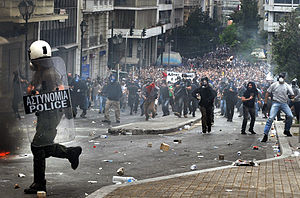
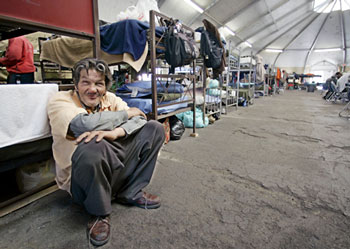
We welcome returning guest Rick Wolff, Professor of Economics. We talk with him about his latest article, From Economic to Social Crisis: Deficits, Debt and a Little Class History. Earlier this year Rick pointed out how the Democrats and Republicans debate over spending cuts at around 40 to 60 billion. Rick says the debate is inconsequential, when the federal budget’s projected deficit of $1.5 trillion will carry an annual interest cost of $40-60 billion. Now, as both parties are committed to a broken, corrupt system, Rick points out that historically transitioning to another economic system is not in the public discussion. He says, the tools used to recover from the 1930s economic collapse can’t be used today mainly because of the last 75 years of rising national debt and budget deficit.
- This is mostly theater, the people I talked to in the business of finance and government are quite clear that the United States will work this out.
- It is a sign of the political dysfunction that they can’t do it in a reasonable way.
- It is a normal procedure to periodically ask for the debt ceiling to be raised, so that they can borrow the amount of money stipulated by the budgets they have passed. The sitting president asks for the debt ceiling to be raised, Bush did it eight times. It’s normal.
- The only thing the Democrats have left, to not look defeated, is to make a big deal out of the cuts they’re willing to accept are smaller than the “draconian” version that the Republicans want.
- The Republicans don’t know, the Democrats don’t know (what will happen). They fundamentally don’t care, because they have long ago decided that their political needs and strategies are unhooked from the underlying economic situation.
- We’re spending 3.5 trillion dollars this year as a Federal Government. We’re raising 2 trillion. That means 1.5 trillion has to be borrowed otherwise its not going to happen.
- That’s money that will be used to help old people’s needs, help fight wars in Iraq, Afghanistan, Libya, Pakistan, to help cities and states that need support, etc.
- The actual creditors in the immediate situation have nothing to fear.
- For the rest of the world you have a double whammy, which is what we should be thinking about.
- We have the driver of the world’s economy collapse in 2007/2008 and having been unable to recover since.
- The bottom line is this economy isn’t working well and isn’t solving its crisis. This is now a deeper, longer crisis than any since the Great Depression.
- That means every other player in the world, from a Chinese official, to a Spanish bank to an investor in Brazil has to rethink what he or she thought.
- A thousand small decisions are going to be made a little differently from now on.
- There is no proposal working its way through Congress to provide employment to the tens of millions of people who have no work.
- The president’s statement (is a bipartisan commitment to ignore the problem of unemployment.)
- The most extreme proposal is to cut 4 trillion dollars in the next ten years. This year alone the US deficit will run one thousand five hundred billion. 1.5 trillion.
- The debtors know that at a certain point there’s going to be trouble.
- You can’t continue to cut the masses’ standard of living to make money for big bankers, that’s not a political sustainable program. Not here, not in Greece, not anywhere else.
- The silence of the press here is stunning. There have been multiple general strikes across Europe.
- The greed of the corporations, they’ve had their way for 30 years. Republicans and Democrats alike, have basically gone in the direction they want. Corporate taxes have been cut, regulations relieved, money is everything, wealth is everything, consumption is where you are.
- The smaller business (corporations, etc) are late to party. They still want to get theirs. Those who already got theirs don’t want them to mess up the game. I believe you will see big splits emerging among the Right in America because these are different attitudes.
- They want a stable United States so that they can grow in the rest of the world, because that’s where they think growth is coming.
- They don’t need to maintain the roads like they did, they don’t need to maintain the education in this country.
- You can appeal to them, you need these workers, you need these consumers. No we don’t. We don’t need them as workers, and we don’t expect them to be much in the way of consumers, because they would have to borrow and we’re not going to lend to them.
- They would have to have higher wages, and we’re not going to give that to them. We have no reason to, we have cheaper better workers elsewhere.
- You are subjecting your working class to a major sustained attack on its standard of living. To believe this is all going to happen and they’re quietly going to sink some resignation with no consequence is nutty.
- The attempt to isolate, to freeze, to inoculate the population so they don’t fear what’s coming. It’s falling apart in Europe, but it will fall apart here too.
Guest – Richard D. Wolff is Professor of Economics Emeritus, University of Massachusetts, Amherst where he taught economics from 1973 to 2008. He is currently a Visiting Professor in the Graduate Program in International Affairs of the New School University, New York City. He also teaches classes regularly at the Brecht Forum in Manhattan.
Law and Disorder July 25, 2011
Podcast: Play in new window | Download
Ten Years after 9/11: War, Operation American Condor (Guantanamo) , Civil Liberties and Hope
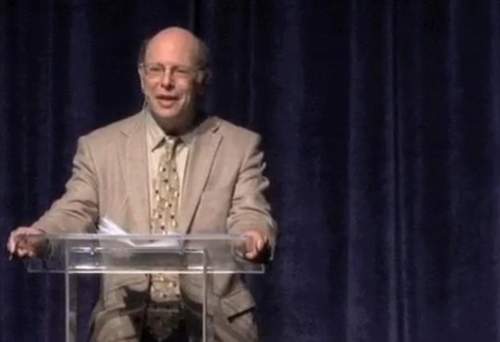
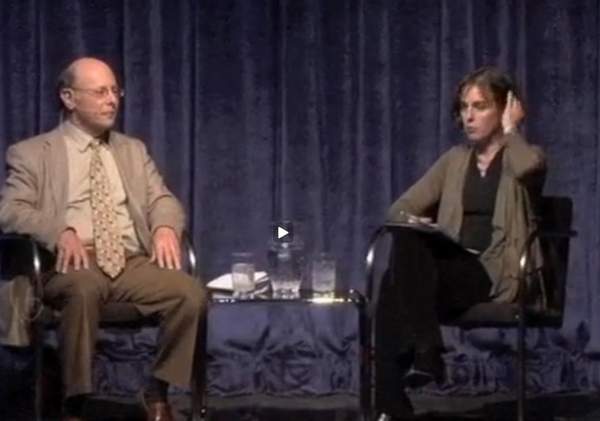
We hear a talk from our own Michael Ratner who spoke at the James A Little Theater in Santa Fe, New Mexico. He was also in conversation with radio host Mary Charlotte Domandi. The event was titled – Ten Years after 9/11: War, Operation American Condor (Guantanamo) , Civil Liberties and Hope.” Michael is introduced by Mary-Charlotte Domandi producer and host of the Santa Fe Radio Cafe on KSFR 101.1 FM (Santa Fe, NM, Public Radio)
Michael Ratner is President of the Center for Constitutional Rights (CCR) in New York and the European Center for Constitutional and Human Rights (ECCHR) in Berlin. Both are non-profit human rights litigation organizations. He was part of the small group of lawyers that first took on representation of the Guantánamo detainees in January 2001, a case that resulted in a victory in the Supreme Court in 2004. CCR established a network of over 600 pro-bono lawyers to represent Guantánamo detainees and continues that work.
He has filed criminal complaints in the courts of Germany, France and Spain against former US officials including Secretary of Defense Rumsfeld seeking the initiation of criminal prosecutions against them for the Abu Ghraib abuse and torture as well as for their actions at Guantánamo. Recently, CCR and ECCHR prepared papers to file in Switzerland against George W. Bush for torture. As a result Bush canceled his trip. A major area of Mr. Ratner’s litigation and writing is the enforcement of the prohibition on torture and murder against various dictators and generals who travel to the United States. He has sued on behalf of victims in Guatemala, East Timor, Haiti, Argentina, among other countries. He has also litigated numerous suits to prevent or stop illegal US wars ranging from Central America to Iraq. A constant in his work has been litigation against government spying and surveillance of activists.
Michael Ratner’s books, authored or coauthored, include the soon to be published, Hell No: Your Right to Dissent in 21st-Century America (2011) and Killing Che: How the CIA Got Away with Murder (2011). Other books include International Human Rights Litigation in U.S. Courts, Second Edition (2008); Against War with Iraq (2003); Guantánamo: What the World Should Know (2004); and The Trial of Donald Rumsfeld: A Prosecution by Book (2008). Ratner has taught human rights litigation at Yale and Columbia Law Schools. A past president of the National Lawyers Guild, Ratner has received many awards including Trial Lawyer of the Year, the Columbia Law School Medal of Honor (2005), the North Star Community Frederick Douglass Award, Honorary Fellow at the University of Pennsylvania Law School (2005), and The Nation Institute/Puffin Foundation Prize for Creative Citizenship (2007). In 2006, the National Law Journal named Ratner one of the 100 most influential lawyers in the United States.
—-

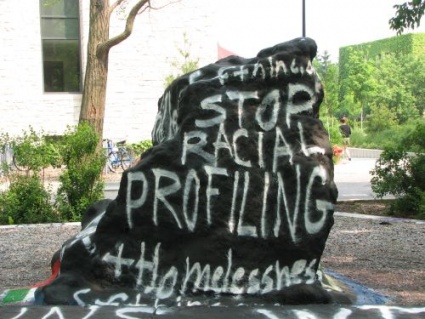
Right-Wing Firms Train Public Servants on Terror Threats
There is a sprawling hidden world of counter-terrorism organizations growing beyond control in the United States. Twenty-four of them were created by the end of 2001, including the Office of Homeland Security and the Foreign Terrorist Asset Tracking Task Force. The next year, 37 more were created to track weapons of mass destruction and collect threat tips. By 2009, nearly 260 organizations were created as 854 thousand civil servants, military personnel and private contractors with top-secret security clearances monitor national security concerns. However, according to a report from the Public Research Associates, those same concerns have bolstered a class of self-proclaimed terrorism experts who decry Islam as an evil religion of terrorists and routinely brand Muslims as primitive, vengeful, duplicitous, and belligerent people who oppress women and gays, and have values irreconcilable with “western Judeo-Christian civilization.”
In fact, when PRA discovered earlier this year that the Massachusetts Bay Transportation Authority (MBTA) had contracted with Security Solutions International to conduct a training on radical Islam, they notified the Muslim American Society, ACLU, and our other advocacy partners, who used PRA’s research to compel the MBTA to cancel the agency’s training.
- As part of the Homeland Security Initiatives and working with the FBI in other aspects of the national security apparatus, there was a need to train thousands as part of a local state and federal counter-terrorism “experts.”
- Some of these trainings are quite good. The problem is that there are a handful of groups that train hundreds and hundreds of local, state and federal counter-terrorism experts, with rhetoric that is basically Islamophobic.
- In the late 1970s there was an attempt to restrain this illegal surveillance. I’d have to say right now it’s worse.
- What used to be done illegally and covertly is now done ostensibly legally and openly and in fact proudly by both Democrats and Republicans who should be ashamed.
- The whole strategic suspicious reporting initiative which basically is a pipeline for unverified rumor and innuendo through local police departments up through a chain of information agencies to the federal government. We know in Europe this kind of reporting is unconstitutional and bad for society.
- Now, everyone that was considered illegal and unconstitutional for which there were Congressional hearings and reforms under Jimmy Carter, now we do it.
- In proper training that is actually looking for criminal activity, not people of color who wear garb that we’re scared of. What’s going on here is untrained, badly trained officers are reporting the names of people up into a huge infrastructure of information data storage, based on bias they’ve not been trained to resist or confront within themselves.
- We described this whole process as a platform for prejudice in a report by Tom Cincotta
- Tom has on his wall a wall chart of all the agencies of this information reporting system and it has 150 dots so inter-connected, no one can control this.
- I’m urging people to form broad coalitions across the political spectrum.
Guest – Chip Berlet, (senior analyst) is a veteran freelance writer and photographer who specializes in investigating right-wing social movements, apocalyptic scapegoating and conspiracism, and authoritarianism. A PRA staffer since 1982, he has written, edited and co-authored numerous articles on right-wing activity and government repression for publications as varied as the Boston Globe, the New York Times, The Progressive, The Nation, The Humanist, and the St. Louis Journalism Review.
Law and Disorder July 18, 2011
Podcast: Play in new window | Download
Updates:
- Monica Shay, Professor at the Pratt Institute in Brooklyn Passes
- Prosecutors Demand Laptop Password in Violation of Fifth Amendment
- Human Rights Watch: US Investigates Bush, Other Top Officials For Torture
- Ban BDS Movement – The Bill For Prevention of Damage of the State of Israel Through Boycott
- Jeremy Scahill Report On US Secret Site in Somalia
——–
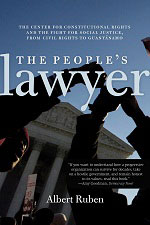
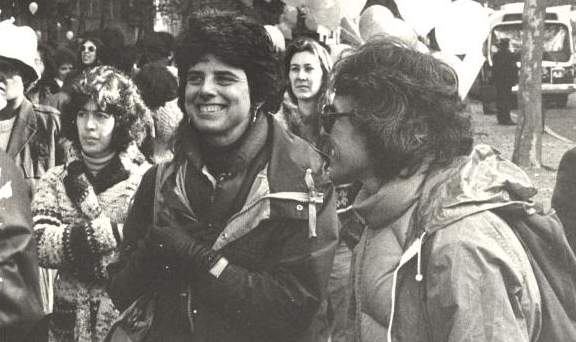
The People’s Lawyer by author and Guild writer Albert Ruben, is the first comprehensive history on the Center For Constitutional Rights and tells the Center’s story from the civil rights era to today’s legal battles on habeas corpus, torture and Guantanamo Bay Prison. The book highlights critical legal fights taken on by CCR revealing innovative tactics that have evolved within the radical organization. Albert Ruben points how the Center for Constitutional Rights continues to fight with the same spirit, audacity and courage it was founded with. As many listeners may know, CCR has been an important corner stone to this radio show because our own Michael Ratner has been with the Center for 4 decades.
- The founders (of CCR) were 4 in number. They were Arthur Kinoy, Morton Stavis, Bill Kunstler and Ben Smith. Smith was a Southerner, he had an office in New Orleans, and Stavis, William Kunstler, and Arthur Kinoy were northerners who were working for civil rights in the South.
- They were all working their separate beats, they all knew each other and were in communication about the work they were doing. They decided that they needed something, primarily financially, to keep their work going.
- So they got in touch with a lawyer they all knew with financial means named Robert Boem. They incorporated it in New Jersey, and it became ultimately the Center for Constitutional Rights.
- They had a very small office at the beginning with one lawyer in Newark.
- The anti-war movement, the McShirley Case. It threw the Center into the government misconduct orbit. It was in the course of litigating that the Center became aware that the Federal Government was not going to be on the side of the angels.
- (From Wikipedia) Dombrowski alleged that members of his organization, the Southern Conference Educational Fund, were subjected to continuous harassment, including arrests without intent to prosecute, and seizures of necessary internal documents. Furthermore, the State was threatening to use anti-subversion statutes to prosecute the organization, which was a group of Southern liberals dedicated to fighting for civil rights for Blacks in the South.
- The Dombrowski case, allowed the Center and a lot of lawyers to use that decision to challenge cases that brought against civil rights attorneys and a lot of people who were working in the South and caught up in state laws, that were using anti-red laws to take them out of state courts and bring them into federal courts.
- So, the Center lawyers were very acutely aware that they had on their side the federal courts. What happened with McShurley, was that it overturned that faith in the federal court system. The case led the Center to realize that government misconduct was an area that would be of interest. They could no longer count on federal court to be their allies.
- There were women on the staff of the Center who were both Center lawyers as their occupation but they were also women, and as women they were caught up in the womens movement. They brought the two together.
- It was the early days of the womens movement. The Center didn’t see itself as a place that would take on criminal law, it was more of a movement organization. The politics of the founders were central to their beings. They made their politics guide them in whether a case was something that they should adopt.
- Part of the Center for Constitutional Right’s mission was educational, that’s not understood I think.
Guest – Albert Ruben, screen and television writer and has served as an officer of the Writers Guild of America East.
—
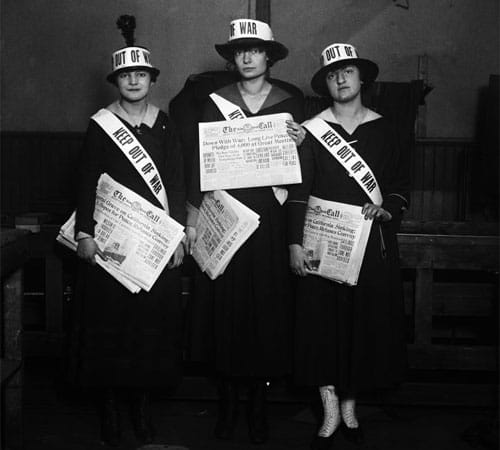
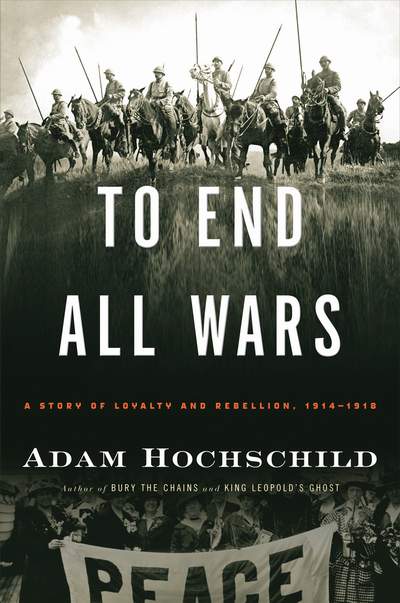
TO END ALL WARS: A Story of Loyalty and Rebellion 1914-1918
We welcome returning guest Adam Hochschild, historian and author of the new book TO END ALL WARS: A Story of Loyalty and Rebellion 1914-1918. In the book, Hochschild has focused on the antiwar movement in Great Britain. Near the beginning of World War I, 20 thousand British men refused the military draft on principle, others were conscientious objectors and nearly 6 thousand of the men were sent to prison. Hochschild relied on personal letters, diaries and memoirs to assemble this unique historic report on Britain’s powerful anti-war movement. The book also unearths how anti-war activists were monitored constantly by civilian and military intelligence as agent provocateurs bragged about their accomplishments. To End All Wars is a compelling account of the heroic anti-war struggle while top writers in that period such as Rudyard Kipling and H.G. Wells, contributed rhetoric to support the war propaganda.
- I always like to think we can learn things from history. I think you learn to be inspired by people who stuck to their ideals, even in very difficult times,
- I thought it would be a challenge to write a book centering around people who I admire tremendously although they lost, the cause that they were struggling for. I’ve always been fascinated by the first World War, which remade the world for the worst in every conceivable way and killed around 20 million people in the process.
- I’ve been particularly struck by those resisted that war on both sides, who said this war is not worth these millions of lives and we’re not going to fight.
- I wanted to talk about 2 different people in this war, the generals who fought this terrible war filled with illusions, that the next battle would bring a great victory, and then I was also fascinated by these pacifists and war resistors.
- 20 thousand men of military age, refused to go into the British Army. The largest outright refusals in any of the warring countries. Of that number many of them accepted alternative service under conscientious objector. Driving ambulances, or work in war industry factory.
- Many men refused that and more than six thousand went to prison.
- Aggression among Germany and Austria-Hungary did really ignite the war. You can’t really say its a war between good guys and bad guys, because the allies at first were Britain and France allied with Russia. The absolute last remaining monarchy in Europe.
- Wonderful trilogy of novels by Pat Barker, The Eye In the Doors. Had I been alive in that time in 1917, I would like so many people did at that time, who greeted the Russian Revolution with enormous hope.
- I guess I’m thinking more than anything else, of the way the first world war, made the second world war almost certain. There was something about the way the war ended that gave rise to bitterness and the Nazis in Germany.
- Right up to the very last minute, the German people were fed a diet of totally triumphant propaganda.
- Eugene Debbs got up of his sick bed to do a speaking tour against the war. The Wilson administration charged him with subversion, he was still in prison when got nearly a million votes for president of a Socialist party ticket.
- Illusion that the war is going to solve more problems than it causes. Another illusion is that it will be over quickly, you remember George Bush on the aircraft carrier.
Guest – Adam Hochschild, award-winning author and journalist who has written for The New Yorker, Harper’s, The New York Review of Books, and The New York Times Magazine. His books, King Leopold’s Ghost: A Story of Greed, Terror, and Heroism in Colonial Africa (1998) and Bury the Chains (2005) were finalists for the National Book Award and have won numerous other prizes. Hochschild teaches narrative writing at the Graduate School of Journalism at the University of California at Berkeley.
—————————————————-