Welcome to Law and Disorder Radio
Law and Disorder is a weekly independent civil liberties radio program airing on more than 150 stations and on Apple podcast. Law and Disorder provides timely legal perspectives on issues concerning civil liberties, privacy, right to dissent and practices of torture exercised by the US government and private corporations.
Law and Disorder April 11, 2011
Podcast: Play in new window | Download
Updates:
- Israeli Arab Actor, Juliano Mer-Khamis, Killed In Jenin’s Refugee Camp
- Professor Shanara Gilbert and Professor Haywood Burns
- Military Commissions Guantanamo
- Law and Disorder National Pacifica Radio Special: Class Warfare – Click Here
—
New York City Rent Laws Set To Expire June 15, 2011
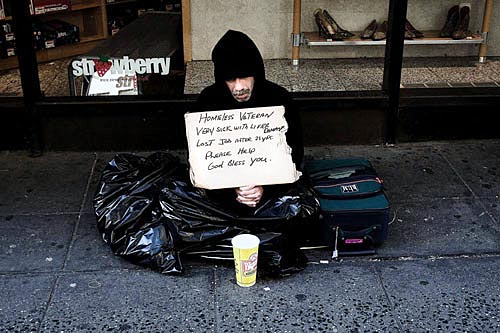
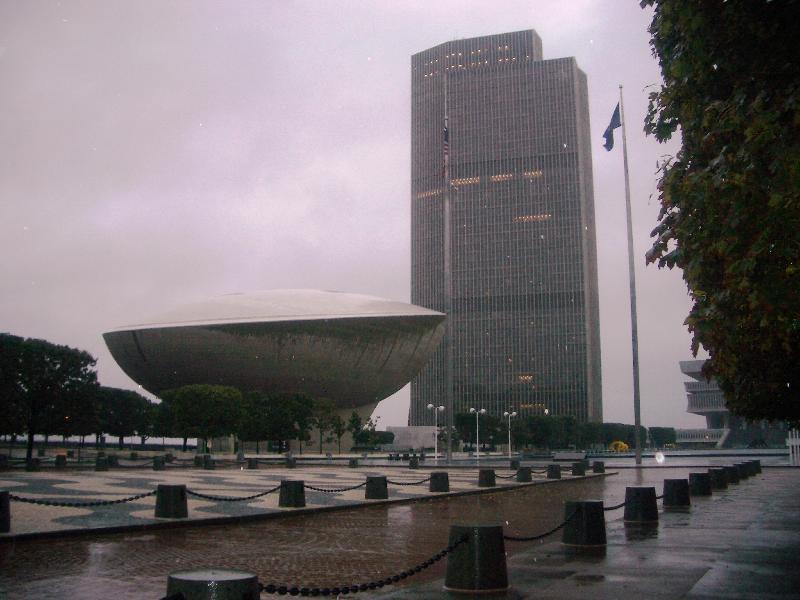
Rent and tenant protections for half of all New York City renter households plus thousands more are set to expire on June 15, 2011. These laws have been the foundation for affordable rental housing for middle-class and low-income New Yorkers. If the rent laws are not renewed, it could lead to unprecedented evictions and homelessness could spiral even further out of control. It’s explained in the above linked article by Patrick Markee Senior Policy Analyst at the Coalition for the Homeless, titled Tell Albany: Renew and Strengthen Rent Laws.
- Two out of three households in New York City are renters. Half of all New York City renters are protected by rent and eviction protection laws that go back 60 years to the New Deal era.
- Right now the stakes are as high as they could be and the political environment is as bad as it can be.
- We have a governor who’s been strongly supported financially by the real estate industry.
- Fortunately we have a state assembly there that is strongly pro-tenant. Half of all New Yorkers are rent stabilized apartments which means rent increases are regulated each year.
- The fundamental protection for tenants is they can’t be evicted except for just cause.
- Those protections have been weakened by vacancy destabilization. Because of that we’ve lost 300 thousand rent stabilized apartments over the last decade and a half.
- Right now we have 39 thousand people including 16 thousand children bedding down in the municipal shelter system.
- Just this past month we’ve reached the highest census in the shelter system since the city has been keeping records. Forty percent more people are cycling through the shelter system than when (mayor) Bloomberg took office in 2002
- We’ve had a perfect storm, loss of affordable rental housing across the country, due to Bush Administration cut backs, at the same time, we get the economic recession, and unemployment, add on top of that the foreclosure crisis. 3 out of 4 homeless people are families with kids.
- New Yorkers have a state constitutional right to shelter.
- Contact Governor Cuomo, contact your state legislator.
Guest – Patrick Markee, Senior Policy Analyst at the Coalition for the Homeless and writer of many of the fine articles on the Coalition For the Homeless website.
———-

The Goldstone Report Now Belongs to the World
Lead author of The Goldstone Report, detailing the 2008-2009 Israeli assault on Gaza has changed his position on the issue of targeting civilians. In an editorial by the Washington Post, Judge Richard Goldstone said, “Civilians were not intentionally targeted [by Israel] as a matter of policy.” And then Israel has called on the United Nations to retract the report on Operation Cast Lead, the war that led to the death of about 1,400 Palestinians, including hundreds of civilians, and 13 Israelis. Earlier this year, Law and Disorder talked with co-editors of the book titled, The Goldstone Report: The Legacy of the Landmark Investigation of the Gaza Conflict.
- Our book came out 2 years after the Gaza conflict and people said why now, who cares about this? Now we see why.
- This statement by him (Judge Goldstone) was immediately seized upon as a disavowal of the report by many supporters of Israel.
- Prime Minister Netanyahu of Israel immediately called on the UN to withdraw the report.
- The US State Department came out and said this just shows there were no war crimes committed during the Gaza conflict.
- What remains in the Goldstone Report? Geneva Convention: Principle of Distinction and Disproportional Attack
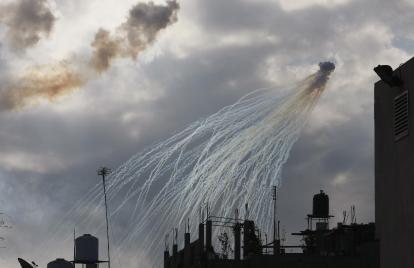
- Other important crimes noted in the report: using white phosphorus, targeting infrastructure, destroying a water treatment facility, destroying a flour mill, destroying food production.
- Even you have a military target, you have to attack that proportionately. One Israeli commander said, we don’t want a hair of our soldiers to fall here.
- This (Gaza) is the size of the Bronx and Queens put together
- The central case that Goldstone based his reconsideration was one of the most horrific cases during the war.
- That took place on January 4, 2009 in a village outside of Gaza City.
- The Israelis were trying to secure parts of Gaza City from the east. They seized this area as a strategic base. They had herded 120 members of an extended family into one house. They had forced them to stay there for a couple of days.
- In the midst of this operation, on that morning, helicopter gun ships came and shelled that house, killing 29 people. In the report Goldstone offered this as another case of targeting civilians.
- I would say “because” this report came out, Israel has produced evidence that the helicopter gunship guys misread drone images. Showing men carrying firewood back to this house as being men carrying rocket launchers.
- Goldstone is saying, I accept the Israeli version here, I think that it was out of negligence or a mistake.
- This reconsideration has got more attention than the whole report.
- This fall the UN General Assembly could vote to establish to make Palestine, a Palestinian state.
Guest – Philip Weiss, founder of the blog Mondoweiss, longtime journalist and regular contributor to the Nation and a fellow at the Nation Institute Philip is the author of two books a political novel, Cock-A-Doodle-Doo, and American Taboo, an investigative account of a 1976 murder in the Peace Corps in the Kingdom of Tonga. Weiss is one of the editors of The Goldstone Report: The Legacy of the Landmark Investigation of the Gaza Conflict.
——————————–
Law and Disorder April 4, 2011
Podcast: Play in new window | Download
Updates:
- In Memory: Attorney Leonard Weinglass
- To Hell With The Constitution, Obama Goes To War – Michael Ratner – How is it that Congress isn’t screaming at President Obama for usurping its power to take this nation to war against Libya?
- Triangle Shirtwaist Fire Anniversary
- Dr. Martin Luther King Jr: Beyond Vietnam, A Time To Break Silence
- Law and Disorder National Pacifica Radio Special: Class Warfare – Click Here
——
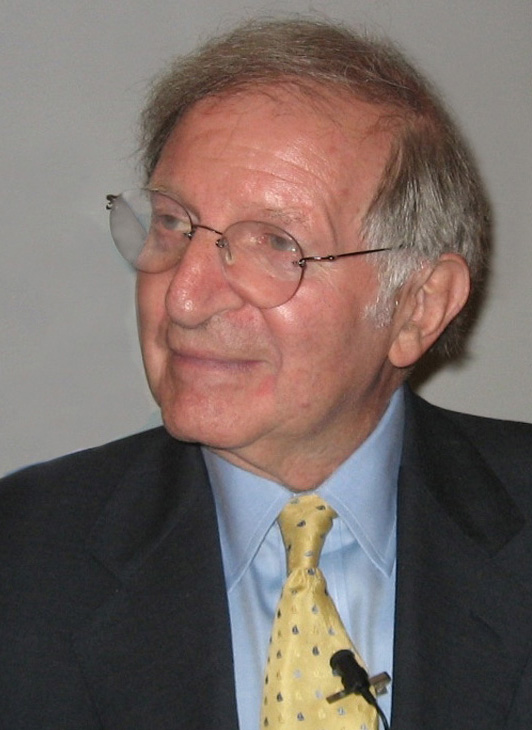
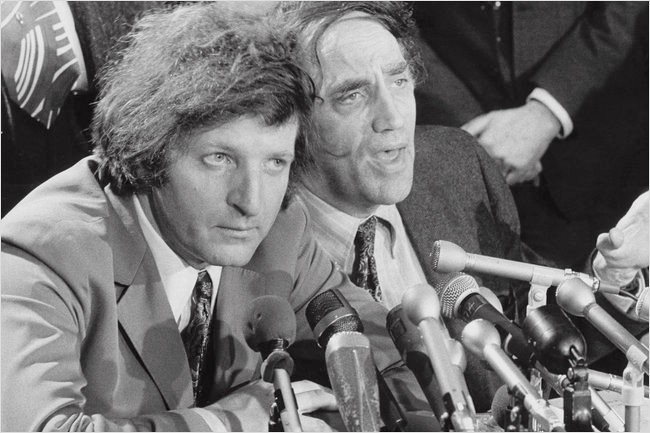
In Memory of Attorney Leonard Weinglass
Hosts remember one of the great civil rights attorneys, Leonard Weinglass from his early years as a lawyer in the Air Force to his big cases. Michael Smith shares a great anecdote. Len vigorously defended a black soldier and upset the Air Force brass. They sent him to Iceland for 2 years. Much later in the late fifties, he moved to Newark, NJ, set up a one man office and represented black people in police abuse cases.
The remarkable and heroic progressive lawyer Len Weinglass died on March 23. Among his cases were the Chicago 8, the Ellsberg case and the Cuban 5. He was our close comrade and will be missed by his friends and all those seeking a better world. – Michael Ratner.
- Len Weinglass November 9, 2009
- Len Weinglass June 29, 2009
- Len Weinglass June 16, 2008
- Len Weinglass September 24, 2007
——–
A Poem for Len Weinglass by Linda Backiel
Almost Ready
“I have everything almost ready for the spring,”
you said. Brush cut, brambles cleared, new trees
planted. A lop-sided smile flit across your silver
stubble beard, a late winter field momentarily lit
by a break in a fleet of migrating clouds.
——–
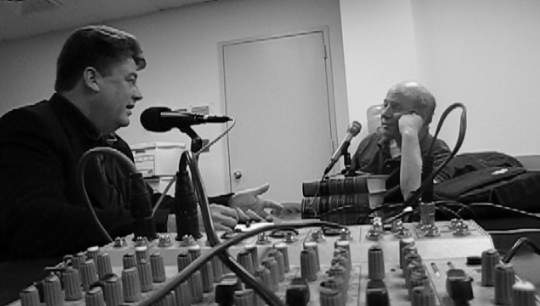
Universal Jurisdiction: Attorney Wolfgang Kaleck
Co-host Michael Ratner interviews attorney Wolfgang Kaleck, German civil rights attorney and General Secretary for the European Center for Constitutional and Human Rights. They discuss the effectiveness of Universal Jurisdiction cases. The cases that helped international human rights prosecutions. Specifically the cases in Argentina against corporations that profited from dictatorships and human rights abuses and how Argentina can be used as a model to bring cases against other powerful leaders or corporations. Optimism overcomes cynicism, Wolfgang says its not easy, it’s work bringing cases against the powerful of the world.
- I have the privilege to work on behalf of Germans and Argentinian victims of the Dirty War between 1976 and 1983 in Argentina.
- The Argentinian cases and the Chilean cases were the most important phase in universal jurisdiction.
- We filed cases in Germany, Italy and France.
- The idea to file Argentinian and Chilean cases in European courts was not to try Argentinians and Chileans in Europe but to impose accountability in Chile and Argentina.
- That’s what people call the Pinochet Effect.
- In 2005 and 2006 when the amnesty laws were abolished. If you go to Buenos Aries now you will observe military junta tribes from Monday to Friday and you will police officers, military leaders, torturers, guards.
- At this point, special prosecutors and parts of the civil society are demanding an investigation and prosecution into crimes committed by corporations who aided and abetted the dictatorship, or who profited from the dictatorship.
- The history in Argentina, 30 thousand people disappeared, 100 thousand were tortured.
- The human rights movement in Argentina was so strong, that they maintained a certain presence, a certain public attention.
- For us, Argentina is like the blue print. They inspired the human rights movement not only in Europe
- I filed a case at Mercy Dispense because in Buenos Aires, 15 trade unionists were disappeared. We filed the criminal case in Germany against a German-Argentinian manager who had duel citizenship which allowed us to bring the case in Germany. Then we filed a case in the US, an alien tort claims which is still pending. We filed a case in Argentina which is still pending.
- One line is to blame the torturers and the torturer leaders, we want to talk about why these human rights violations have been committed. Why the Argentinian military took the decision to oppress their populations and our explanation is that they wanted to install a political and economic system which needed the extermination of the trade unionists.
- Actually to demand accountability and do these investigations is trauma work. Society that hasn’t dealt with its past has some problems in the present. Argentina is worth studying as an example.
- Universal Jurisdiction is showing its limits. So far it was very difficult to bring cases against the powerful of the world.
- The suspicion that the criminal justice system is just another tool of the powerful against the powerless,
- We have to try to bring cases against the powerful, Russian, China, the US, or Sri Lanka or Israel, who all undertake actions to avoid prosecution.
- We are very optimistic that some investigation will be carried out in Spain but some people are over-pessimistic, because even now, we achieved that several former US officials, or from the CIA or from the Army, or politicians can’t travel anymore, without running the risk to be arrested.
- We achieved something, I’m also not satisfied from it but still its more than we thought possible.
- President Bush wanted to go to Switzerland.
- It’s always an argument against those cynical people who say nothing is possible. Yes there is, something is possible. We do have to struggle to maintain this, the whole international criminal justice system is at stake.
Guest – Attorney Wolfgang Kaleck, a German civil rights attorney. He is also the General Secretary for the European Center for Constitutional and Human Rights. On November 14, 2006, Kaleck sought criminal prosecution charges in German court against a number of US officials and military personnel in connection with alleged human rights abuses at the prison facilities at Abu Gharib and Guantanamo Bay on behalf of eleven plaintiffs. Approximately 30 human rights activists and organizations participated as co-plaintiffs
Law and Disorder March 28, 2011
Podcast: Play in new window | Download
Updates:
- Cigar Arsonist
- Lawsuit Against U.S. Federal Reserve Seeks Armenian Gold Looted by Turkey
- IDF Monitors BDS Movements Around the World
—
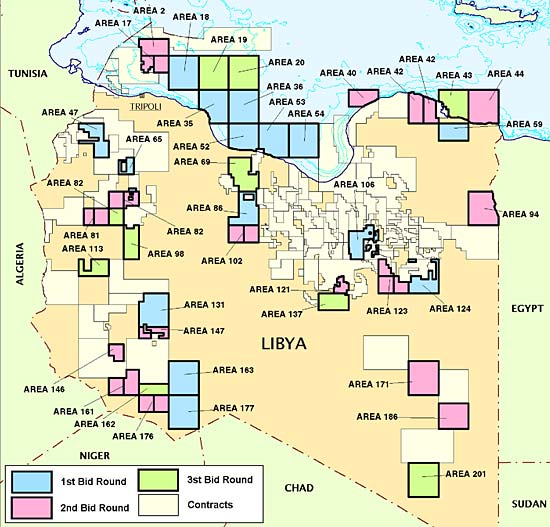

“Operation Libya” and the Battle for Oil: Redrawing the Map of Africa
The US and allied air strikes on Libya will have far reaching geopolitical and economic implications. Libya is the among the world’s largest oil economies with near 3.5 percent of global oil reserves, twice that of the United States. What’s going here? As Professor Michel Chossudovsky writes in his article “Operation Libya” and the Battle for Oil: Redrawing the Map of Africa.” there is no such thing as a just war. This is part of US imperialism as drafted in the 2000 Report of the Project of the New American Century entitled “Rebuilding Americas’ Defenses.” One of the main components of this military agenda is: to “Fight and decisively win in multiple, simultaneous theater wars”. Libya counts as the fourth theater of war along with Palestine, Afghanistan, Iraq. In all of this the mainstream media has used a massive disinformation in justifying this military agenda.
Professor Michel Chossudovsky:
- This is not a humanitarian intervention. It is a carefully planned military operation. This was on the drawing board of the Pentagon, well before the protest movements in Egypt.
- It is a war theater, and should be viewed in the broader context of the war theater, namely Iraq, Afghanistan and Palestine. It opens up a new area of militarization in North Africa. It has devastating consequences and is part of a global war.
- The object of coming to the rescue of civilians by bombing with cruise missiles is an absurd proposition. They’re bombing civilian infrastructure. The same agenda as the previous war theaters, they have a list of targets and go ahead and bomb. This whole notion of responsibility to protect is nonsense.
- They’re getting away with it because the media is lying through their teeth.
- Clearly there are Al-Qaeda elements that are supported by the CIA. Two years ago, the Gaddafi government made a deal with the CIA. We know that Al-Qaeda is an intelligence asset. It can be used precisely to create these conditions of insurrection as occurred in Bosnia and in Kosovo. We have to investigate a little more, who is behind the insurgency. The insurgency is not there to win a civil war, the insurgency is there to create a pretext for an intervention.
- I suspect this opposition is heavily divided in any event. Obama has ordered drone attacks in Pakistan.
- The Chinese have sizable interests in Libya. This is also directed against France and Italy, its France and Belgium that are being shoved out of Central Africa.
- Libya borders on Niger, its the entry into central Africa. Niger is important because it has large reserves of Uranium, which is in the hands of a French conglomerate.
- The conquest of Libya is the battle for oil, the same logic as Iraq.
- I estimated that Muslim countries have about 65-75 percent of global oil reserves. That is why we’re demonizing Muslims, they happen to inhabit.
- Bahrain and Yemen peaceful protesters getting hit with nerve gas.
Guest – Professor Michel Chossudovsky, director of Global Research.ca , Center for Research on Globalization. An independent research and media organization based in Montreal, Quebec, Canada.
————-
Community Service Society Report: Black Youth Unemployment
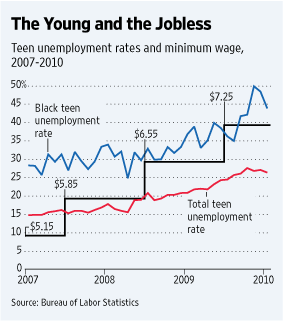
Unemployment in a jobless economic recovery has hit young African American men the hardest according to a recent report by the Community Service Society. PDF The highest unemployment rate in 2009 was among men 16-24 years of age—their overall unemployment rate hit 24.6 percent during the recession. Breaking it down by race, young black men had the highest unemployment rate in this group at 33.5 percent. While only one in four black men ages 16-24 have a job in the city, that figure drops to an astounding one in ten for young black men without a high school diploma.
“The recession has created a landscape of the unemployed and underemployed with particular catastrophic consequences for young African American men,” said David R. Jones, president and CEO of the Community Service Society of New York. “We have long known the struggles of the more than 200,000 youth in New York City who are out of work and out of school. Now young black men between 16 and 24 years have become the banner of hopelessness, particularly here in New York City.”
- Those who’ve never made the connection to work or those who’ve ceased trying. We’re talking hundreds of thousands of people involved here. African Americans constitute about a third of New Yorkers.
- I think people have to recognize we’re in something totally new.
- At least anecdotally, the Great Depression didn’t have this kind of impact on the black community that this recession is having on them.
- New York in the Great Depression was a segregated city, were working exclusively in black communities or trades that were circumscribed.
- You get pullman porters and restaurant work which were the reserves for African Americans before the civil rights movement hit. The homeless of New York were white on Bowery.
- While we’re seeing a better recovery, the number of long term unemployed is actually greater than New York than other municipalities.
- The trouble is you start to lose job skills, you lose hope, all sorts of with friends and employment start to disintegrate.
- We did a report on security guards and I went back to look at it. There are 63 thousand security guards in the city of New York and virtually none of them are unionized, their average wage was $10 an hour, no health insurance, no paid sick leave.
- New York has an usually high concentration of the working poor.
- We’ve been focusing all our efforts, in terms of how we deal with poverty on the issue of on this nexus between work and getting to a position where they can support themselves and their families.
- This is not limited to the South Bronx or Crown Heights, this is a national phenomenon.
- We know when we did our report on disconnected youth, we had 200 thousand disconnected youth in New York, there were nearly 5 million disconnected youth scattered across the country before the recession.
- We’re never going to go back, to the unemployment levels that we found unacceptable in New York of 5% again. That we’re going to back down from the 9.5 %.
- It was always the expectation, if you worked really hard, there’s was going to be a way, sort of a seat at the table here. New York has one of the highest recidivism rates, we’re doing a couple of things, we’re making it impossible to get work, once you’ve been incarcerated.
- We are going to get a group of young people who feel betrayed.
- I think this scapegoating that has taken on a really powerful voice, is partially because people want to blame someone for why they can’t get employment.
Guest – David Jones, President and Chief Executive Officer of the Community Service Society of New York , a nonpartisan, not-for-profit organization that promotes economic advancement and full civic participation for low-income New Yorkers.
Mr. Jones, an outspoken advocate for low-income New Yorkers, writes bi-weekly newspaper columns in the New York Amsterdam News and El Diario/La Prensa and a weekly blog on the Huffington Post website that serve to educate the public and government officials on issues of importance to minority and poor communities.
——————————-