Welcome to Law and Disorder Radio
Law and Disorder is a weekly independent civil liberties radio program airing on more than 150 stations and on Apple podcast. Law and Disorder provides timely legal perspectives on issues concerning civil liberties, privacy, right to dissent and practices of torture exercised by the US government and private corporations.
Law and Disorder July 11, 2011
Podcast: Play in new window | Download
Updates:
- CCR: Somalian Captured Held On US Ship Since April 2011
- President Barack Hussein Obama is Impeachable
- US To Gaza Flotilla Update
—-
Natural Gas Drilling Moratorium To Be Lifted in New York
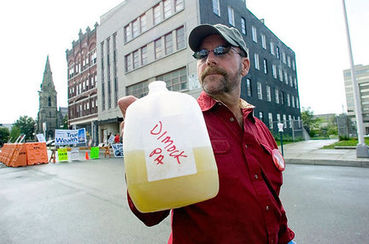
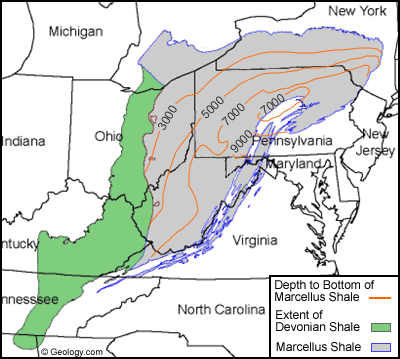
New York Governor Andrew Cuomo is pushing to lift the moratorium on natural gas drilling, known as hydraulic fracturing in New York State. Hydro-fracking as its called is in many opinions an environmentally wreck-less technique to extract natural gas from shale. While the lifting of the moratorium is still months away, it comes despite the massive efforts from environmental and community groups in New York, New Jersey and Pennsylvania who have protected the Marcellus Shale watershed.
In a statement released by the State Department of Environmental Conservation, there will be environmental restrictions placed on the natural gas drilling permits in New York State, such as no drilling within 2000 feet of a public reservoir.
However, ninety percent of the New York City’s drinking water comes from ground zero of where various oil companies want to drill into the Marcelle Shale for natural gas. Every time a well is drilled, the companies use an estimate of 5 to 9 million gallons of water. Each time a well is fractured, it’s another 5-9 million gallons of water, a well can be fractured multiple times. Up to 275 different toxic chemicals are used in the process and after the well is drilled, there are millions of gallons of industrial waste, it’s essentially radioactive water. 40-70 percent of this water stays underground.
The watershed is 13 thousand square miles and includes four and those that want to mine this resource say it will reduce dependence on foreign oil and boost the economy. However, many have shown this statement to be false as the natural gas from the United States is being sold to foreign countries such as Norway and France.
Meanwhile, a lawsuit is pending against several federal agencies affiliated with the Delaware River Basin Commission to block final regulations on hydro-fracking until a full environmental review can be conducted. Past shows on hydro-fracking: Law and Disorder March 21, 2011 / Law and Disorder March 29, 2010
- Hydro-fracking is part of a broader industrial practice. Basically what we’re doing is allowing companies to drill down a mile deep through our aquifers, which we all depend on for our drinking water.
- Once they get down there, they start to drill horizontally, they’re aiming for the shale formations underground.
- In order to release the gas from the shale, they blast it with this nasty stuff, chemicals that they don’t want to disclose.
- They’re also developing and industrializing large swaths of land. When they do that they’re polluting the waters of New York and Pennsylvania and every place where this is happening.
- Generally what is proposed is to allow around 85 percent of New York State that has Marcellus Shale to be open to drilling that they would not allow drilling to take place in the New York City and Syracuse watersheds. And they would not allow it to take place within what they primary aquifers and state owned game land.
- But all other places and private land, they would allow it to happen.
- Those people who live in New York City, and in Syracuse, those people would be protected from this activity, but the people in the rest of the state would be subjected to it.
- For every 17 or 18 gas wells that you drill, you can expect to see water contamination from that.
- But then we’d ask why would we allow the rest of New York to be exposed to it?
- In Pennsylvania, its completely ruining the roads in the northern half of the state, its tearing up communities. In Bradford County we had a blowout, not too long ago, which caused damage not only to streams but to drinking water in that area.
- We are going to see continued failures wherever this happens. The question is . . . are we going to allow it to happen? Are we going to force this practice to follow the science and only allow it to happen if the science says it can be done safely? We’re simply not there.
- In Pennsylvania, what we’re seeing is most of those jobs they’re talking about are going to folks outside the state. They’re bringing in people from the western states, who have experience in drilling. You to also look at the broader economic impact. When a community loses its water supply, that is bigger impact than a handful of jobs.
- If we don’t have clean water in order to live and for other businesses to operate, we’re going to see much greater economic damage.
- We’ve been dealing with the Delaware Water Basin Commission to make sure they don’t allow the Delaware River to be poisoned by these activities.
- When the people of Pennsylvania, the people of New York and New Jersey, are fully awakened to the dangers of this activity, we’ll be able to build a movement and reign it in.
- There are dangers associated with these industrial activities, and we have to look at the dangers in the broadest sense.
- Natural gas has been identified by some as a clean fuel, but that’s when they compare it to how it burns and how coal burns. That’s one part of the natural gas story.
- You have to also look at the dangers in the process of extraction. When we drill down a mile deep, we’re finding naturally occurring radioactive material and as part of the drilling process, we’re then bringing that up to the surface.
- Look, we need energy. We need to decide what level of risk we’re comfortable with. In my opinion, we need to be looking at renewable energy, like solar, like wind, get investments, and get them to a larger scale.
- With this new direction from New York, we need to make sure there’s adequate time public participation and what was announced last week, is they would only allow a 60 day public comment period. That’s simply not enough. They haven’t looked at the research that’s been established since they closed the record in 2009.
- The public needs more than 60 days to educate the folks at the state level about what we’ve been learning since December 2009. We ought to be looking at a 6 month period on what was proposed for New York State.
Guest – Attorney Jordan Yeager, a National Lawyers Guild member, a cooperating attorney with the Center for Constitutional Rights and member of Damascus Citizens. Curtin & Heefner LLP recently elected leading public interest attorney Jordan B. Yeager to its partnership. Mr. Yeager is a member of the firm’s Employment and Public Sector Section. Formerly in private practice as the named partner in a public interest law firm, Mr. Yeager served successfully as counsel in several groundbreaking cases, including matters involving constitutional rights issues; claims of reasonable accommodation against a municipal defendant; and the right to a jury trial in a whistle-blower retaliation case.
——
Second Austerity Measure Imposed On Greece
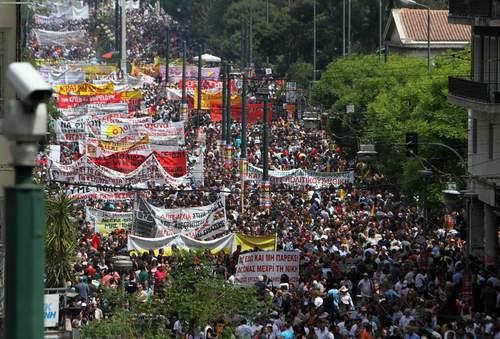
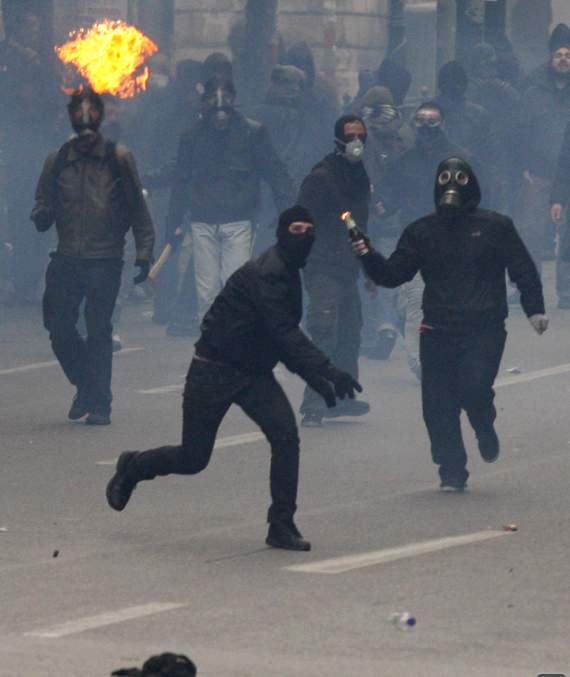
Protests and demonstrations continue to erupt in Greece as demonstrators rise up in the streets against deep cuts in services and jobs from austerity. Austerity is the name of the government’s response to the demand of its creditors. Austerity imposes on society a severe regimen of rising taxes, or cut government spending to please and satisfy creditors. Greece as predicted by Economics professor Rick Wolff a year ago has been hit the hardest by the global economic disaster. Why? For many reasons, it has a strong working class, socialist roots and a public sector made primarily of union jobs. The austerity has cut into the working class jobs as the country privatizes the post office, gas, water works and railway. Meanwhile, the wealthy continue to evade taxes in Greece and in the United States. Past shows on Greece: Law and Disorder
- I was in Athens that last few days, what you have in the European Union is imbalances that resulted partly from the introduction of the Euro, but also, by the general phenomena in the division of the world of some countries more technologically advanced and others that are not.
- Right now you have a crisis, partly a European crisis, its not that the Greek culture is a pathological culture, as the mainstream media sometimes presents. Each crisis has its specifics, Ireland, Portugal, in Greece, the specificity is that the wealthy are not paying taxes.
- There are tax evasion problems, the problem in Greece is of primarily of revenues rather than spending.
- The mainstream media talks about the “bloated” public sector of Greece. The public sector is aligned with other public sectors in other countries. Now what they’re trying to do of course, traffic out jobs from the public sector to make Greece a public sector a small part of the economy as it is in developing countries in Africa.
- Because its debt has become so unmanageable, there was an austerity pack that was adopted last year that 110 billion dollars. Drastic cuts in public spending, welfare state,
- Now what’s happened as is often the case, with IMF problems, the program didn’t work the way they said it was going to. Now Greece needs another loan to keep servicing its debt. One of the conditions is that Greece has this huge fire sale of all its public assets. The hope is that its going to raise 50 billion Euros.
- Because values in all the public companies have shrunk rapidly, whoever buys them will buy at a really low price. Many Greeks are up in arms about that. Now they see the banks wanting to follow up with more of the same, that’s why 80 percent of the Greeks oppose this policy.
- We had a 2 day general strike last week, a 48 hour general strike had not happened in Greece for decades.
- You also have a demand for real democracy, direct democracy. One of the demands was not to pass the austerity package.
- Every 3 months there are news measures that have to be adopted in order for Greece to get the next installment of the loan. If Greece defaulted on their loan, it would effect the Eurozone in a very direct way, it would effect European banks.
- I think the lesson to take away from this is fighting back is necessary.
Guest – Costas Panayotakis, a professor at the New York City College of Technology.
———————————————–
Law and Disorder July 4, 2011
Podcast: Play in new window | Download
Updates:
- Food Not Bombs Plans To Sue Orlando Mayor
- Pelican Bay Hunger Strike
——–
Supreme Court Decision On Climate Change
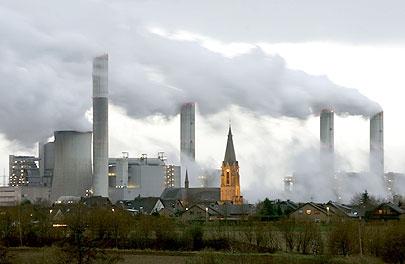
Last month the Supreme Court, reaffirmed that it is the job of the Environmental Protection Agency to curb carbon pollution under the Clean Air Act. This was decided in the Connecticut v. American Electric Power case which doesn’t allow states to directly bring a lawsuit against five of the largest power companies to regulate their emissions as a public nuisance. As many listeners may know, power plants are the nation’s biggest climate polluters. They can pump more than two billion tons of carbon dioxide into the air each year. Other polluters include automobile emissions and housing stock. Some of the world’s top scientists report that pollution has been linked to climate change.
- In the 2004 case, the court decided the EPA had to assess any air pollutant and decide whether it endangered public health and welfare and if it found that it did, it would have to set limits on that pollutant.
- The EPA had refused to do that, this is the Bush era EPA and said we don’t have the authority under the Clean Air Act to do it, and even if we did, this is essentially a problem for the president to solve, and he’s doing a great job.
- The court found that unsatisfactory and held that the EPA had an obligation to regulate if it found endangerment.
- This case 2011, reaffirmed the central core of the Massachusetts decision, which is the EPA has the authority and the responsibility to regulate green house gases.
- The 2nd Circuit in a ringing militant statement on climate, reversed the district court and squarely held that states could bring this lawsuit which is against the five biggest CO2 emitters in the country, under a common law theory of public nuisance.
- The heart of the petitioners camp were a group of attorneys generals from several states, the fundamental authority of an attorney general is to bring lawsuits in a state against public nuisances of all kinds.
- So they had this idea to elevated this authority into a federal common law claim.
- The court endorses no particular view of the complicated issues related to carbon dioxide emissions.
- For this they cite an article in the New York Times 2 years from Princeton physicist Freeman Dyson who said a lot of climate denier stuff and is kind of a gadfly, who is not a climate scientist.
- In New York City for example, we burn a great deal of natural gas to heat our houses. #6 heating oil both heavy emitter of CO2
- We’re creating a layer that is preventing reflection of solar rays back out into space.
- Much more of it is being trapped into the atmosphere than pre-industrial times.
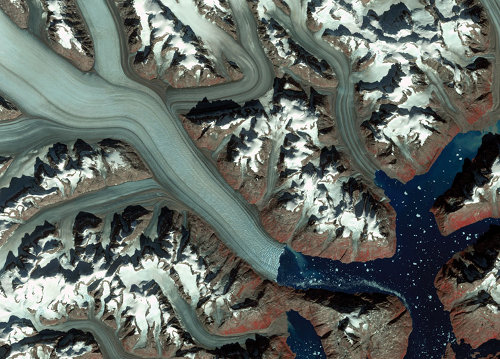
- There’s uncertainty about how fast and what kind of changes, but there are some things that are confidently predicted. We’re already seeing tremendously fast melting of ice in Greenland and the polar cap.
- There’s no question that this is a product of both rapid industrial development, of uncontrolled growth policies, without any consideration of the impacts of growth, especially when you talk about the disparity of impact.
- www.350.org
Guest – Law Professor and Attorney Eleanor Stein teaches the Law of Climate Change: Domestic and Transnational at Albany Law School and SUNY Albany, jointly with the Environmental and Atmospheric Sciences Department at SUNY.
—–

Michigan Citizens File Suit Challenging Unconstitutional Emergency Manager Law
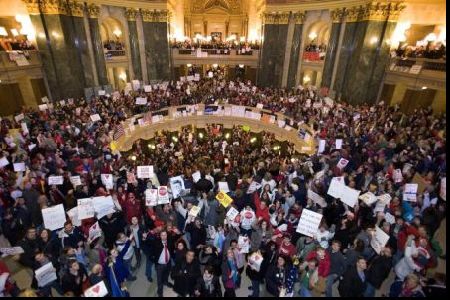
Twenty-eight citizens of Michigan have filed a lawsuit in an effort to bring down the recently signed Emergency Manager Law, claiming it will give Governor Rick Snyder and his appointees vast, unlawful power over financially struggling cities and school districts. Bill Goodman, an attorney with the Sugar Law Center of Detroit, the firm that filed the lawsuit called it a power grab by Lansing politicians. Goodman also said the law violates the state constitution by giving Snyder powers over cities normally granted to the state Legislature. Those powers include replacing elected officials, nullifying collective bargaining agreements, privatizing public services and dissolving cities. Earlier this year we interviewed Zainab Akbar, Legal Fellow at the ACLU of Michigan about the same law being used the mostly black community of Benton Harbor. Democracy Emergency
Attorney John Philo:
- We think this is an important issue, not just for Michigan but nationally. We think this is so viable to our notion of fundamental constitutional rights that we could not let this pass without a legal challenge.
- The first constitutional law violation that we see is that it attacks what is known as the democratic form of government. We all believe we have a right to a democratic form of government, that we can elect our officials at the local, state and federal level. This lawsuit is testing, where is that in the Constitution, where is it recognized?
- We think that people would find it in absurdity that they don’t have that right to vote for their local officials.
- We have a provision in our constitution that says that can’t pass unfunded mandates. They can’t put costs on a local government without providing some revenue stream or providing some mandatory adjustment.
- This legislation puts all the costs on the local government that already find to be in distress.
- In Benton Harbor alone, the salary of the “emergency manager” is running 11 thousand a month.
- That’s before we even get to the consultants and the financial review people that they bring in, the staff.
- There are a number of states looking to pass the emergency managers law.
- This is a nationwide problem that everyone recognizes to regulate banks, and Wall St., and national economic policies that have hit the Midwest hardest and we would say below the belt.
- What will the law do to pensions? Contract rights and pension funds.
- There is a provision that says the state treasurer can request the communities to sort of enter into a consent agreement, before they’ve even been found in financial distress.
- There are citizens, conservation folks, in various places who’ve request the state appoint an emergency manager in their community. This sends the mayor and the city council reeling because they don’t feel they have to.
- They’re acting to prevent this because of the broad discretion given to treasurer and the governor, whether there is a financial situation where they could appoint a manager.
- We’re asking for an order of the court that declares the provisions of Public Act 4 unconstitutional and then an injunction that prevents any further implementation.
- I think people would be shocked if they realize people don’t have a right to elected government.
——————
Tova Perlmutter:
- We see this litigation as one tool in a broader people’s movement. Here in Detroit we have some phenomenal leaders. The first day we filed was the biggest day in my career.
- We with a lot of help with allies and friends held seven press conferences in cities across the state.
- We blanketed the airways and the press, that’s how we got national coverage as well.
- The Maurice & Jane Sugar Law Center for Economic & Social Justice
- We’ve been around for 20 years, based in Detroit but we do serve folks nationally, our mission is to use legal and other public advocacy to advance the rights of working people and their communities.
- One of the cities that has had the most extreme emergency managers is Pontiac.
- There’s no coincidence here, this is a very clear effort to exert a paternalistic and corporate friendly control over communities that might otherwise be speaking out and exerting autonomy.
- www.democracyemergency.org
Guest – Attorney John Philo -Sugar Law’s Legal Director, is responsible for litigation, legal research, delivery of training, and supervision of all staff and interns working on legal tasks. John is an attorney with over 18 years of experience representing and advocating for workers and other disenfranchised people.
Guest – Tova Perlmutter – Executive Director, has over 20 years experience in administration, communications, fund raising and public education for nonprofit organizations. She obtained professional certification as a Senior Human Resources Professional while working to promote fair employment practices at a major corporation.
————————————————————–
Law and Disorder June 27, 2011
Podcast: Play in new window | Download
Updates:
- Obama Administration War Powers Resolution – Click Here For Partial Transcript
- Read Michael Ratner’s Article Permanent Gitmo & Permanent War: New Nat’l “Defense”Bill
- Congress Didn’t Fund This War = Unconstitutional
- Juan Cole War Critic?
- Sugar Law Center: Lawsuit Targets Emergency Manager Law
- New FBI Guidelines: Planting INFORMANTS With No Criminal Predicate
- Hell No, Your Right to Dissent in Twenty-First-Century America
- Anthing Goes: The FBI Guidelines – Heidi and Michael Ratner Read Excerpts
—————
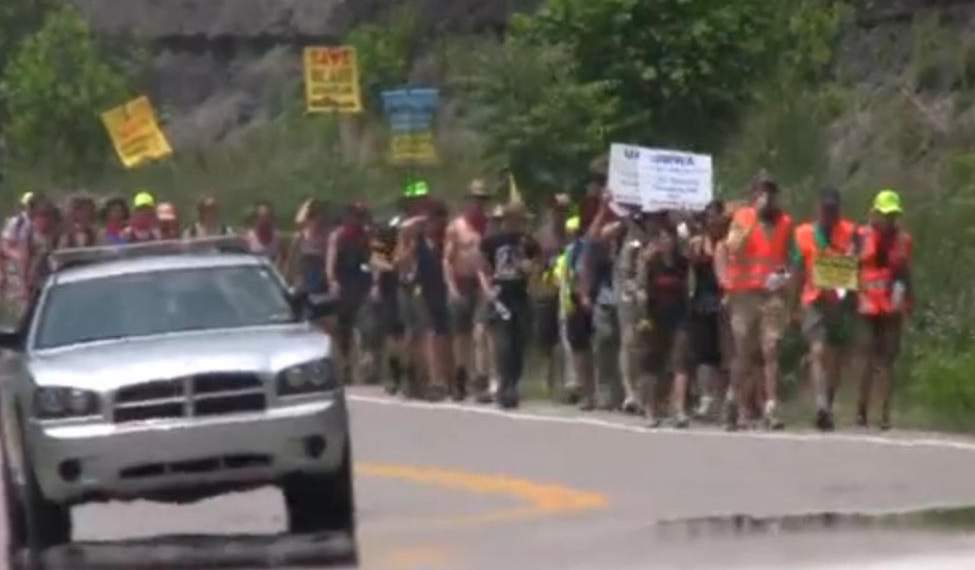
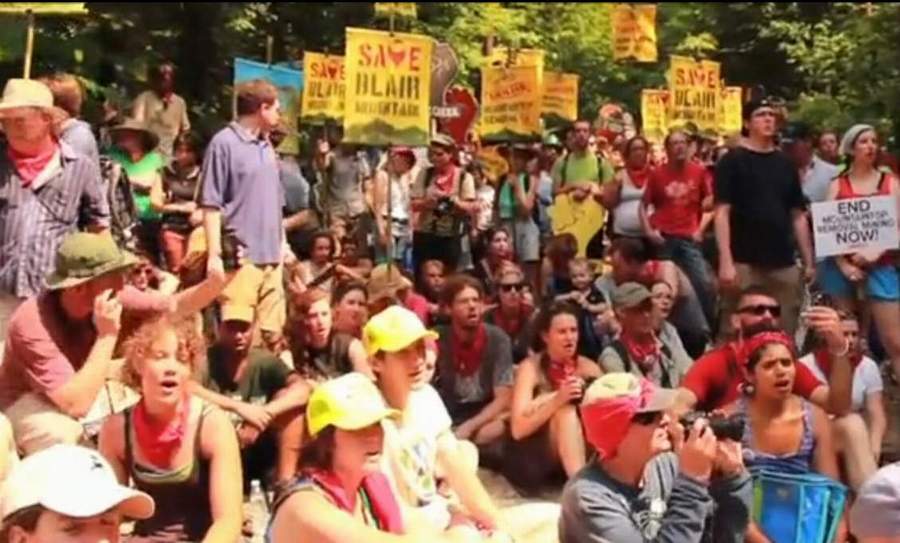
In protest to stop mountain top removal mining, hundreds of activists finished a five day fifty mile march earlier this month from Marmet, West Virginia to Blair Mountain in West Virginia. The massive under publicized march also marked the historic Battle of Blair Mountain, the largest armed conflict in US labor history. In 1921, thousands of miners near the area marched to organize non-union coal mines. This demonstration ended in a rally of speakers, musicians, celebrities, union workers and picketing at the top of Blair mountain. The demonstration drew attention to the demand of sustainable job creation in all Appalachian communities, abolish mountaintop removal, strengthen labor rights and preserve Blair Mountain. As many listeners know, mountain top removal is a highly destructive extraction coal mining process with usually no environmental remediation.
- It is not an exaggeration to say that big coal owns southern Virginia.
- Logan and Boone Counties where we walked through, big coal has more or less owned the politics, the citizenry, the economy for a century.
- The Congressional Delegation is very sympathetic to what they perceive as coal jobs.
- During the marches we had 200-250 people at any given time.
- Putting myself in the best way that I can do legal support, and one of the core logistics organizer of the event, best do organizing support, it put myself in a position where I was knowingly arrestable.
- It was alternately exciting and freeing and terrifying. It’s a very activist lawyer, resistance approach.
- There are locals who don’t understand this doesn’t mean more jobs or it means a fraction of unionized jobs for organized coal workers.
- The Boone County Sheriff department was somewhat less then helpful. For the most part, the West Virginia State Police were professional and did their jobs carefully. We didn’t see police misconduct, or police brutality as you would see in most mass protest situations.
- The broader strategy is calling for an end to mountain top removal coal mining, transitioning to a cleaner economy with wind and solar.
- One of the reasons you don’t see mountain tops blown up in Tennessee for example, is that the Congressional Delegation there, has been resistant to it, in West Virginia, historically it hasn’t.
- Mountain top removal coal mining produces very high quality, pure Anthracite Coal, this is part of Obama’s “Clean Coal” strategy.
- A great deal of my practice is resistance law, and is assisting resisting communities.
- I’ve been able to make this a significant focus of my life as an attorney.
- Ilovemountains.org / allianceforapplachia.org
- We can always use more people, more attorneys. It took six months to organize this March on Blair Mountain, no ordinary task for volunteers.
Guest – Dan Gregor, activist attorney whose practice includes protest defense, criminal defense, immigration, and human and civil rights law. This has included assisting and representing activists involved with the annual School of the Americas Watch vigil, the Immigrant Workers Freedom Ride, people being harassed by Green Scare grand juries, and many other activist causes. Dan is a graduate of Northeastern University School of Law and Hampshire College. He is an active member of the National Lawyers Guild, and former National Vice President of the Guild.
——————
National Lawyers Guild Report: Human Rights In Tunisia
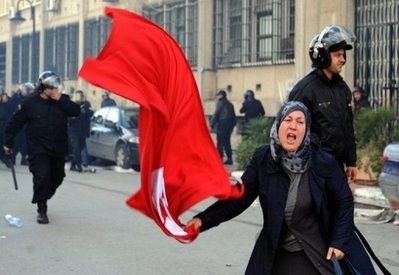
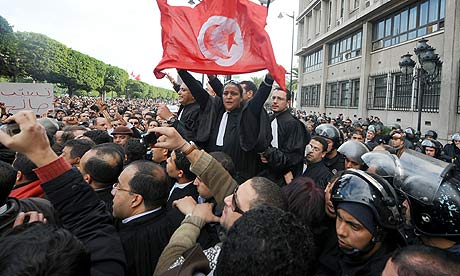
A wave civil resistance continues throughout the country of Tunisia, Africa sparked from high unemployment, food inflation, corruption, and lack of freedom of speech. During the country’s civil unrest, President Zine El Abidine Ben Ali was ousted as president, fleeing to Saudi Arabia after 23 years in power. Now, human rights violations are being investigated. A group of lawyers from the U.S., U.K. and Turkey have been investigating U.S. and European complicity in human rights abuses committed by the Ben Ali regime. The group has recently issued a warning that the U.S. and other Western governments must respect Tunisian sovereignty and not interfere in that country’s path to democracy. Atlanta attorney and National Lawyers Guild Executive Vice President Azadeh Shahshahani, was a member of the delegation and is on a speaking tour.
- The Tunisian government passed this law, the 2003 anti-terror act. US State Department very supportive.
- If you go back to look at the US State Department Human Rights report on this, you can see the human rights violations are documented in the reports.
- It’s not like the US government didn’t know what was happening in those jails. Particularly the Islamists, after the legislation went into effect, a lot of people were picked up, for being a Muslim, for being a devout, perhaps engaging in religious discussions with your friends,
- A lot of youth were arrested and subjected to torture. Torture seemed to be really systematic, you’re arrested, detained, then tortured and confession is obtained.
- One family of a young man arrested, the father asked authorities why his son was arrested, he hasn’t done anything? They said, well, he does pray, doesn’t he?
- That was the sole basis of having been picked up. Arrests: one per day under the auspices of the Tunisian 2003 anti-terror act.
- Revolution in Saudi Arabia? Michael Ratner: That could the greatest thing that could happen.
- This “war on terror” provided the Ben Ali regime, was an enabling mechanism and justification to continue his repressive tactics.
Guest – Azadeh Shahshahhani, the Director of the National Security/Immigrants’ Rights Project at the ACLU of Georgia. The project is aimed at bringing Georgia and its localities into compliance with international human rights and constitutional standards in treatment of refugee and immigrant communities, including immigrant detainees. To that end, a variety of strategies are employed, including the development of impact litigation, legislative advocacy, providing training to attorneys, human rights documentation and the publishing of reports, public education, and coalition and movement building. The current focus areas of the project include: immigration detention, racial profiling and local enforcement of immigration laws, governmental surveillance, discrimination faced by Muslim, Middle Eastern, and South Asian communities, immigrant access to higher education, and language access in the court setting.
——————————————————