
Welcome to Law and Disorder Radio
Law and Disorder is a weekly independent civil liberties radio program airing on more than 150 stations and on Apple podcast. Law and Disorder provides timely legal perspectives on issues concerning civil liberties, privacy, right to dissent and practices of torture exercised by the US government and private corporations.
Law and Disorder June 20, 2011
Podcast: Play in new window | Download
Updates:
- President Obama Visits Puerto Rico
- Michael Ratner: History of Puerto Rico
- Is Common Wealth Status Ok?
- FBI and Intel Dominate Puerto Rico
- Michael Ratner Testified With the Decolonization Committee at the UN
- Internal Politics Have Moved to the Right In Puerto Rico: Privatization of Public Institutions
- Expanding War Powers: Defense Authorization Act Moving Through Congress
- Hialeah, Florida Mayor, Honors Terrorist Luis Posada Carriles With Keys to the City
- CCR: Representing Families of Suicide GTMO Prisoners
- Asymmetrical Warfare Embarrassing the United States
——–

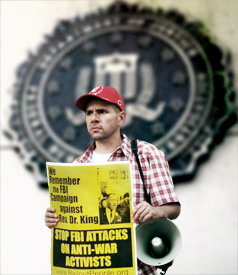
FBI to Expand Domestic Surveillance Powers
On many of our shows, we’ve discussed the broad over reaching powers and underhanded tactics the FBI use when targeting environmental or pro-Palestine activists, Mosques and Muslim-Americans. Now, new expanded FBI guidelines would allow agents easier access to search commercial or law enforcement databases, conduct lie detector tests, search people’s trash and conduct physical surveillance. Read: Anything Goes: The New FBI Guidelines
Though the guidelines are still under review, they would allow agents further access into people’s lives without suspicion of wrongdoing. The guidelines will be part of a new edition of the FBI manual, the Domestic Investigations and Operations Guide. Civil libertarians criticize the guidelines in light of recent cases such as the Fort Dix Five, the Newburgh Four and Yassin Aref in Albany, where the FBI is accused of entrapping people by infiltrating poor or specific ethnic and religious communities. Michael Ratner’s Forthcoming Book: Hell No, Your Right To Dissent
- The government is saying they have unfettered authority to look into your private life without any justification, and they’re claiming they don’t need any factual basis to suspect you of wrongdoing.
- National Security Letters were initially a tool to go after KGB spies, it was expanded to international terrorists. What the Patriot Act did is expand it to anyone who’s relevant to an investigation of spies or terrorists.
- The fact that the government had no reason to suspect you was no longer relevant if they could use this tool.
- That was originally set to sunset in 2005. Inspector General audit on the FBI’s use of this tool. There were five IG reports, that found the FBI were using these tools against people two or three times removed from the person of the investigation.
- Phone records, bank records, credit history and they gag the bank or place from telling you.
- IG audit found between 2003 and 2006 there were over 200 thousand National Security Letters.
- Its the FBI manual, the Domestic Investigations and Operations Guide, the FBI’s internal policy. Their internal authority created by the Department of Justice.
- These were initially designed to curb the abuse. As an FBI agent for 16 years, I found it useful to focus on the people doing bad things, not straying from that and focusing on people saying things I didn’t like, or doing things I didn’t think were right but wasn’t illegal.
- The outgoing administration in 2008 had radically altered the guidelines. People who are completely innocent and not suspected of doing anything wrong can come under suspicion and investigation under these assessments.
- The 2008 guidelines allowed the FBI to map communities based on race and ethnicity and track racial and ethnic behavior and facilities.
- Under these new guidelines 2011, an FBI agent would be allowed to search private databases, data aggregaters, that pull together all sorts of information based on marketing, state and local law enforcement information – includes if you’ve also been a victim of crime or witness to a criminal act. No factual predicate required.
- It doesn’t require attorney general approval to open an assessment. There’s no necessity to identify what federal crime they think you’re violating.
- The tools include physical surveillance, they can stand outside your house, follow you around 24/7. They can get an informant to start engaging you in a false pretense, and your friends or neighbors.
- They can interview your neighbors, they can interview your employer.
- When you become a subject of investigation you get on the terrorist watch list.
- The scary thing the Inspector General revealed, is that these (abuses) were all under the 2002 guidelines. He said where he found violations, under the 2008, this would all be perfectly legitimate.
- We at the ACLU are not just seeing the abuse with the FBI but within state and local law enforcement. You can visit www.aclu.org/spyfiles we’ve documented spying and obstruction of first amendment activity in 31 states and the District of Columbia.
- It was predictable because these laws were put in place to prevent exactly that, because that’s what the state and local police and the FBI were doing in the absence of rules.
- It’s not surprising when you take those rules away, they go into political spying mode.
- It’s very frustrating, because so much of what’s happening is happening is secret.
- Scott Crow: He found under a FOIA request, the FBI had gone to the IRS to find some small tax violation that they could put him in jail for. Because they suspected him of something, yet they had years of investigation and found no wrong doing.
- Mike German’s book – Thinking Like A Terrorist, it’s a look at what terrorists are trying to accomplish, that is to coerce the government into taking measures that actually take away the government’s legitimacy.
- Past Law and Disorder interview with Attorney Mike German.
Guest – ACLU attorney and former FBI agent, Mike German, German develops policy positions and proactive strategies on pending legislation and executive branch actions concerning domestic surveillance, data mining, freedom to travel, medical and financial privacy, national ID cards, whistleblower protection, military commissions and law enforcement conduct. German currently serves as an adjunct professor for Law Enforcement and Terrorism at the National Defense University and is a Senior Fellow with GlobalSecurity.org. German graduated from the Northwestern University Law School , and graduated cum laude from Wake Forest University with a B.A. in Philosophy. A sixteen-year veteran of federal law enforcement, German served as a special agent with the Federal Bureau of Investigation, where he specialized in domestic terrorism and covert operations. As an undercover agent, German twice infiltrated extremist groups using constitutionally sound law enforcement techniques. These operations successfully prevented terrorist attacks by winning criminal convictions against terrorists.
——————————————————————–
Law and Disorder June 13, 2011
Podcast: Play in new window | Download
Updates:
—

The Turkish Islamic group, IHH The Foundation for Human Rights and Freedoms and Humanitarian Relief have organized another flotilla carrying letters of support for the Palestinian people and bring attention to blockade on the Gaza Strip. As many listeners may know, last year’s flotilla ended with the death of nine activists when the Israeli Navy intercepted the Mavi Marmara. Meanwhile, the Israeli Navy is training to confront this years humanitarian effort. Turkish Foreign Minister Ahmet Davuto?lu warned Israel not to “repeat the same mistake” – in using force against the flotilla. Last week, Israeli Deputy Foreign Minister Danny Ayalon said that IHH was deliberately provoking Israel and setting the stage for a confrontation, making it responsible for any clashes that happen, according to an Israeli newspaper. Past Law and Disorder shows last year’s flotilla. June 7, 2010 / June 21, 2010 / October 2010
Felice Gellman:
- I went to Gaza right after the 2008-2009 attack thinking naively that something could be done to rebuild Gaza.
- When I got there, I grew up very quickly and realized the Israeli blockade would prevent any rebuilding from this horrific attack.
- Last year there was a flotilla that sailed at the end of May that was brutally attacked and nine civilians were murdered by Israeli commandos. There will be an American flagged boat and the passengers will be American citizens, and that is to specifically confront the US covert support for the siege of Gaza.
- The flotilla has been very much on the minds of the Israelis because it was not received well to murder nine civilians. One of them was an American citizen and the United States has done near zero to support the family.
- The initial Israeli attack strategy was to use attack dogs and snipers. Israel signed a deal with Cyprus making it the main transshipment point of natural gas from Israels natural gas development out there.
- The next day the prime minister of Cyprus announced he would not allow the flotilla to sail from Cyprus. Israel asked the Greeks not to intervene.
- The idea was to make this as diverse as possible, as representative of America as possible.
- I’ve been to Gaza twice and people say to me over and over, please we want our freedom.
- They’re saying the same thing that people are saying Egypt, Syria, Bahrain. They don’t want to live in a hand out society.
- The Rafah crossing being open doesn’t end the siege of Gaza.
—-
Attorney Richard Levy:
- As an American Jew, I feel a special responsibility to do something around this issue. When Israel first came about and we knew so little about what happened. there. The first reaction was, well this wonderful homeland.
- And then as we grew and the years past and their conduct in the West Bank, their conduct in Gaza, in trapping people, and imposing these horrible checkpoints and settlements that take away the land and take away the water.
- We met with the State Department 2 weeks ago, and pointed out to the State Dept that while the president is applauding peaceful demonstrations across the Middle East, we too are planning a peaceful demonstration.
- Instead of getting a nod and an assurance, we got an email several days later, saying that there was a maritime warning and that people should not go into the zone, everyone can expect interference by the Israelis.
- The thing that is terrible about that we all know if the US said don’t do it, Israel wouldn’t do it. As a recipient of 3 billion dollars annually of US aid, on which it is totally dependent.
- I think the problem with Israel is we’re letting AIPAC be the voice of Jewish people everywhere. We gotta get up and say, they don’t speak for us.
- You take a place like Gaza where more than 40 percent of the population is under the age of 14. It’s kids, its women, they don’t have schools, they don’t have food, they don’t have medical care.
- 90 percent of the people (in Gaza) depend on charitable donations to live at all. The fact that we’re not getting up and being heard on this, is allowing only one voice to be heard.
- And that is a very conservative pro-Israeli voice that I don’t think speaks for the American people at all.
- My optimistic side says we’re going to be massively inconvenienced.
- I think we want to call attention to the Palestinian people that they’re not completely alone. The US boat is going to be carrying a cargo of letters. From Americans to Palestinians saying we understand your plight, we support your effort to live in peace and to live without these horrible restrictions on your life.
- There was so much fear of over reaching by the US government under the Terrorism Support Act that if you brought over the most innocent product, and it found its way into the hands of Hamas, some hyped up prosecutor could go after you in this country under this very draconian statute.
- In Turkey, the Turkish boat had a million applicants to be passengers on this flotilla.
Guest – Felice Gellman, member of the Wespac Middle East Committee and a member of the Steering Committee that organized The Gaza Freedom March. She has traveled to Gaza twice since the Israeli invasion.
Guest – Attorney Richard Levy, a labor and civil rights attorney. (Cornell, B.A., 1964, NYU School of Law, J.D., 1968) is a senior partner at LR. He has practiced labor, employment, employee benefits and civil rights law since 1971. During law school he was associate editor of the Annual Survey of American Law. A member of the United States Supreme Court Bar, Levy has lectured at conferences for the NLRB, AFL -CIO, Practicing Law Institute and has published articles on labor law and civil rights litigation. He has served on the Lawyers Advisory Panel of the AFL – CIO.
—
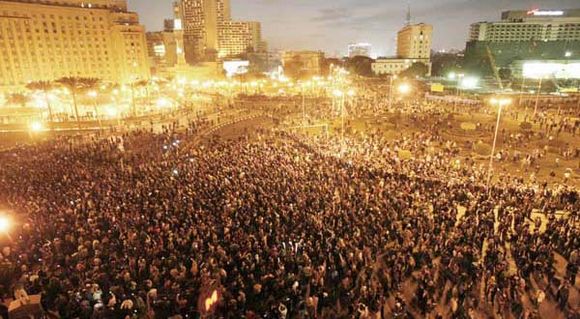

The Arab Revolt and the Imperialist Counterattack by Jim Petras
The Arab Revolt and the Imperialist Counterattack is the title of Jim Petras’ timely new book. It was rushed to print and chronicles the growing militarization of US policy in North Africa and the Gulf region. The essays also give an important historic narrative of the long over due Arab democratic revolution and the popular uprisings. Now as the empire’s crumbling dictatorships began to spread, the United States, France and the UK race to intervene. NATO is deployed using its new “responsibility to protect” doctrine authorizing “humanitarian intervention.”
- Obama supported Mubarak since he (Obama) entered office, and only when it was absolutely clear there were millions of people in the street, the military was divided, there was absolutely no future for Mubarak, Washington then began to leverage Mubarak into a departure which would retain the entire economic, police and military apparatus intact.
- Essentially, sacrifice the dictator to save the neo-liberal, pro-Israeli state.
- The Egyptian economy has been part of a pillage, the US has been giving Egypt, 2 billion a year for decades. This is bribe money so that Egypt will continue collaborating with Israel in keeping the Palestinians under Israeli control.
- Participating in the blockade of Gaza. That’s part of the economy. The other part is that Mubarack family and cronies have essentially run the economy into the ground.
- Egypt draws its income from the Suez Canal, tourism, visiting the pyramids, on a minor scale, agriculture and textiles. But there are enormous disparities in wealth, the per capita of about 40 percent of Egyptians is 2 dollars per day.
- Egypt has a handful of billionaires all organized around the regime.
- It’s a big country with great potential but it was run into the ground by this corrupt family dictatorship.
- The picture now is the ousting of Mubarak has not amounted to substantial change in the governing class. Essentially, the military took over and kept many of the Mubarak personalities in position of power. The minister of the interior is still there, the generals are still there. They’ve been arresting and disappearing some of the pro-democracy people.
- The struggles in Egypt haven’t ended. The Washington Post and the New York Times keep talking as if the democracy process has reached its culmination.
- The surveys show that a vast amount of Egyptians want to renegotiate the arrangement the Egyptians had with the Israelis.
- This is a hot potato because the military wants to continue to get the hand outs from the US.
- The Egyptian military is trying to make a deal with the Muslim brotherhood, especially the elder statesmen.
- There is an attempt here to substitute elections for social changes and economic improvements.
- The business men who’ve been so accustomed to having everything their way are calling on the military to clamp down. To arrest the strikers. There’s been a proliferation of strikers in the hotel industry, manufacturing, public employees.
- We don’t read about those unless you go into some of the Egyptian newspapers.
- The Obama Administration and the Europeans are going to pump in 2 billion dollars on condition that these social reforms are not carried out. That there isn’t any effort to redistribute income. Washington is jumping in at this moment with taxpayer’s money to try to head off any real democratization that effects the great majority of the people.
- You have an opposition that’s divided, you still have the old patronage apparatus of Mubarak. Mubarak had a program of hand outs, never any substantial changes in people’s condition.
- On Libya: This is a war on Libya with the United States and Europe, there’s no question about it.
- The issue here is that Libya has enormous oil and gas wells. We are trying to control Africa through our military operations, while the Chinese are in there making massive investments, establishing economic presence which far surpasses what Washington can imagine.
- This costs the tax payers billions. We don’t get anything back. This isn’t an investment into a coal mine, or diamond mine where you would get returns.
Guest – James Petras, author and former Professor of Sociology at Binghamton University, New York.
—————————————-
Law and Disorder June 6, 2011
Podcast: Play in new window | Download
Updates:
- Justices Block Suit Over Use of Material Witness Law Against Detainee
- Khalid Sheikh Mohammed Re-charged
- The Conspirator Movie and Military Commissions
—-
Chicago Torture Cases and Jon Burge’s Deposition
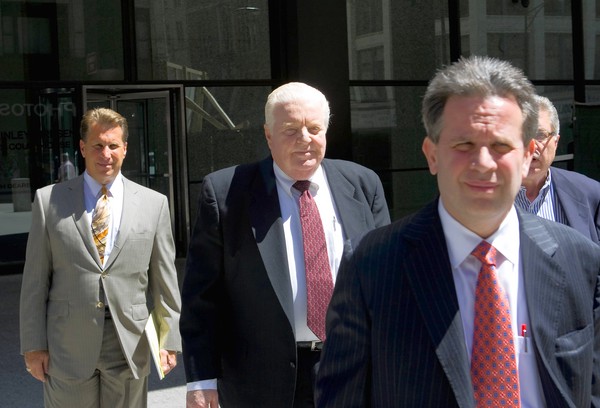
Torture has cast a long shadow over Chicago and its past administrations. Yet in the past year, with the conviction and sentencing of former Chicago Police Commander Jon Burge, Chicago has been a beacon of light in the fight against torture. Many are waiting to see how the city’s new administration will handle the ongoing torture cases of African American men that number in the hundreds. Former Chicago Police Commander Jon Burge was sentenced to 4 and a half years in prison for obstruction of justice and lying about torturing prisoners in the 1960s to obtain coerced confessions. Attorney Flint Taylor and the People’s Law Office in Chicago fought for decades to get prosecutions, and sentencing while the city poured millions of dollars to fund private lawyers for Burge’s defense.
- We’ve been working on these cases since 1986. Deposing Jon Burge: We were reaffirming to the African American community that he was in prison and he is a prisoner.
- He was complaining about the lack of medical care and the kind of treatment he felt he should be getting.
- The struggle to put him behind bars has come to fruition. Pin stripe patronage, the city funding Burge’s defense. Rahm Emanuel needs to change course, he’s very close to Daly.
- Daly’s policy was not to settle these cases, not to apologize to the victims.
- There’s another issue about Burge getting his pension even though he’s in the joint.
- When you’re convicted you’re supposed to lose your pension.
- There’s eight people on the pension board, 4 of them are former cops.
- Several of the men who were responsible for Burge going to the penitentiary don’t have a claim civilly, never got a penny for the torture they suffered.
- There are about 20 men still in jail, still in the prisons, based on tortured confessions by Burge and his men.
- There is a demand to challenge these confessions, its been happening on a piece-meal basis.
- You most often find that torture does not lead to information that is useful. In the situation here it is to punish African American people.
- It’s a very racist type of torture in this city. There’s linkage here in what happened in Guantanamo, what happened in Abu Ghraib.
- The Fraternal Order of Police: They’re a very reactionary force when reforming the police department generally. In the early nineties when they fired Burge, the FOP stood up and paid for his defense.
- In case that has gotten him to prison now, the FOP paid a million dollars for 3 lawyers of his choice. Now, the same lawyers have switched hats, and the city is now paying them in the civil cases that we talked about.
- When it gets to a point where the city can’t pay for his defense, the FOP steps in.
- Burge deposition: I set up a series of questions for 3 hours where he consistently took the fifth amendment to all questions that would have implicated him if he answered truthfully.
Guest – Attorney Flint Taylor, a graduate of Brown University and Northwestern University School of Law and a founding partner of the Peoples Law Office. More bio
—–
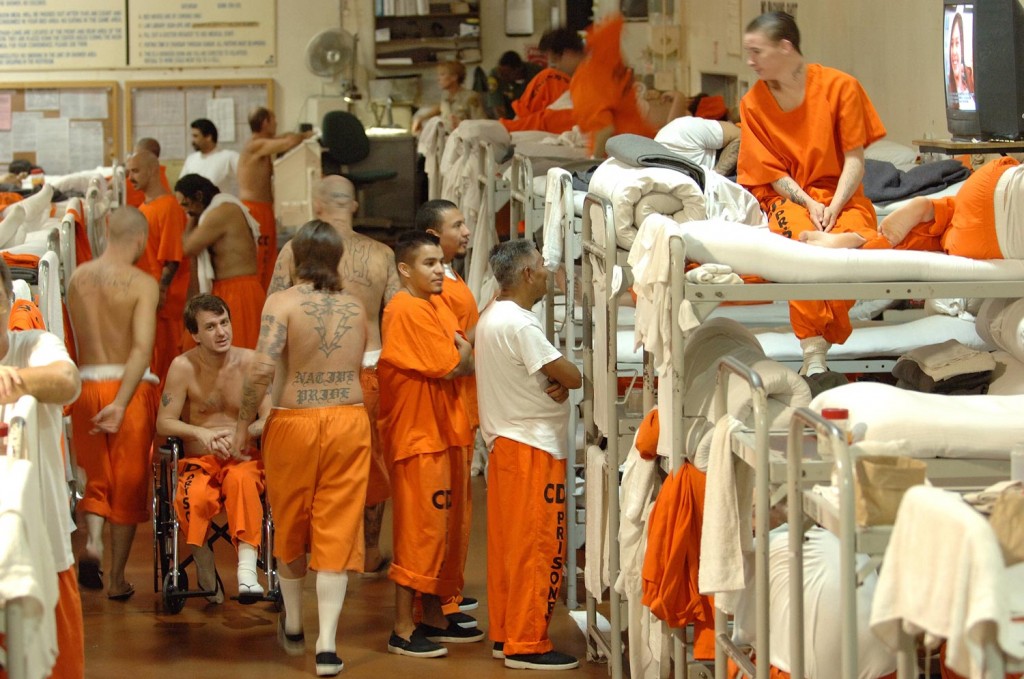
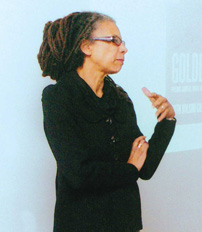
Last month, the U.S. Supreme Court ruling had ordered California to release 46,000 of its 143,435 inmates which has the state trying to figure out what happens next. The SCOTUS ruling affirmed a lower court order that required California to reduce its inmate population to 137% capacity. The state’s prisons are now at about 180% capacity and one cause of overcrowding problems is the state’s “three strikes law” which puts third time offenders in jail for life. Meanwhile, under Governor Brown’s current “re-alignment” program, the tens of thousands convicted of non violent, non-serious, non-sex crimes will serve sentences under county instead of state supervision. Our guest Professor Ruth Gilmore said to one media source, quote – “County jail expansion does not solve the underlying problems,” – -These are goals we can achieve now if we take this opportunity to shrink prisons and jails. Building bigger jails to ease prison numbers is the same as rearranging the deck-chairs on the Titanic: wasting the same dollars in different jurisdictions.
Professor Ruth Wilson Gilmore:
- California is out of line with the rest of country when it comes to parole policy. California sends twice the number of people back to prisons than other jurisdictions, when the person has committed a technical violation, late for a meeting, that kind of thing.
- For that reason, California prisons have been bulging.
- We see that numbers are kept up by this one category, parole violation return to custody. They have to start over and over and over again.
- The Supreme Court ordered the Department of Corrections to reduce the number of people in its custody in its current physical plant. In the 33 prisons, prison camps and dozens of facilities.
- One method to thin the prison population is shipping about 10 thousand prisoners out of the state of California, renting space in other jurisdictions. They’ve been shipping prisoners out of California for 2 and a half years.
- Cost does not seem to have an important effect on the kinds of political decisions, that have been made about prison expansion throughout the United States for the last 30 years.
- A year and a half ago the state presented a plan to the Ninth District court saying here are the changes that we will make to meet the 3 judges’ order that we reduce the number of people in the California State Authority Physical Plant.
- Then, the 3 judges agreed to let California delay in implementing the plan, while they appealed to the Supreme Court.
- California is the proving ground for a new relationship between the state and society. California is a place that started turning its back on public education.
- For some time, the union of California prison guards were a political force and continue to be quite powerful.
- There are many alternatives to locking somebody in a cage for part or all of their life. We should be cautious in thinking GPS tracking is the answer, because one of the huge barriers, that people convicted of a felony face in their lives, is the impossibility of them reintegrating into society.
- My colleague Michelle Alexander has put out a call in a campaign to end The New Jim Crow.
- Criticalresistance.org / Curbprisonspending.org
Guest – Professor Ruth Wilson Gilmore, author of Golden Gulag: Prisons, Surplus, Crisis, and Opposition in Globalizing California. Professor Gilmore has examined how political and economic forces produced California’s prison boom in Golden Gulag: Prisons, Surplus, Crisis, and Opposition in Globalizing California (University of California Press, 2007), which was recognized by ASA with its Lora Romero First Book Award. Gilmore’s wide-ranging research interests also include race and gender, labor and social movements, uneven development, and the African diaspora. She comes to the Graduate Center from the University of Southern California, where she taught courses in race and ethnicity, economic geography, and political geography, was the founding chair of the department of American studies and ethnicity, and won the USC-Mellon Award for Excellence in Graduate Student Mentoring. She also works regularly with community groups and grassroots organizations and is known for the broad accessibility of her research. She holds a Ph.D. in economic geography and social theory from Rutgers University.
————————————————