Welcome to Law and Disorder Radio
Law and Disorder is a weekly independent civil liberties radio program airing on more than 150 stations and on Apple podcast. Law and Disorder provides timely legal perspectives on issues concerning civil liberties, privacy, right to dissent and practices of torture exercised by the US government and private corporations.
Law and Disorder May 30, 2011
Podcast: Play in new window | Download
Updates:
- Supreme Court Gives Police A New Entry Into Your Home
- Subpoena Issued to Writer in C.I.A.-Iran Leak Case
- CCR Launches Case Seeking U.S. Knowledge of and Role in Deadly Israeli Attack on Humanitarian Flotilla to Gaza
——

Middle East Update: Egypt, Israel and the United States
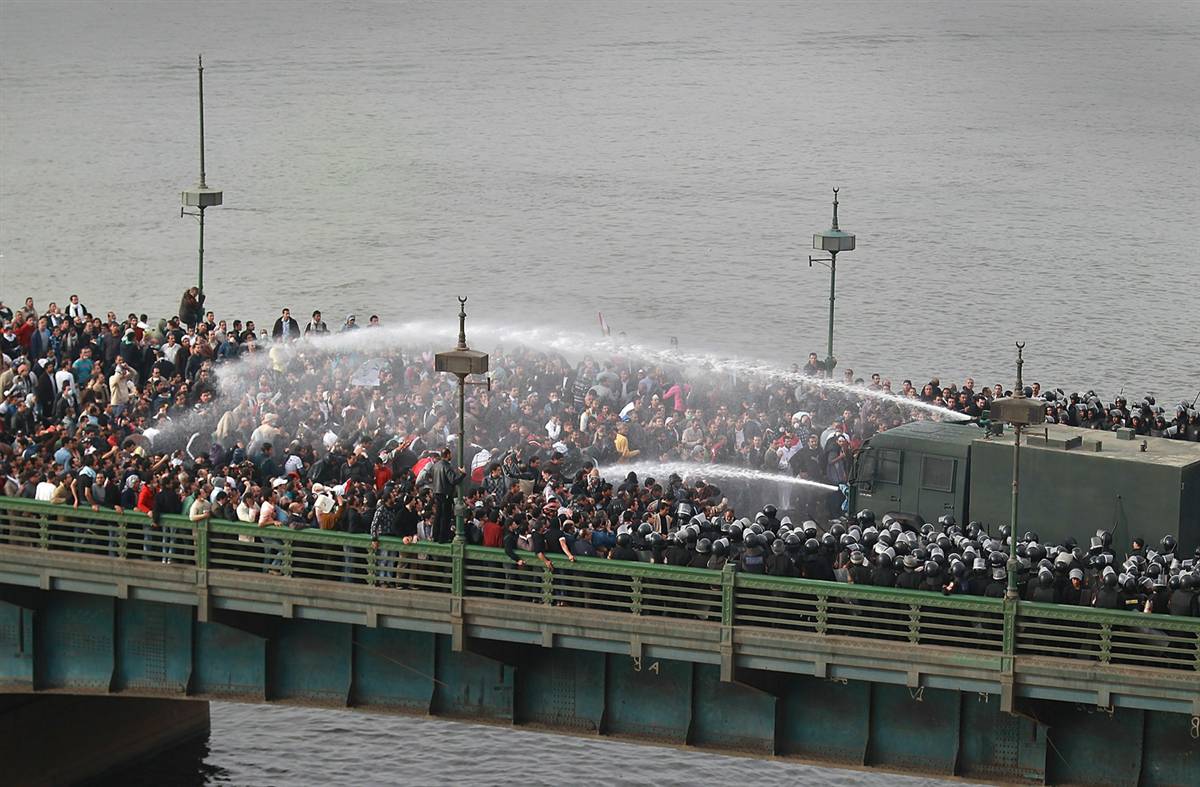
Labor strikes continue in Egypt as tourism declines and the crime rate increases. There have been many strikes including Egyptian police unions who are demanding higher wages. We’re joined by writer and Middle East activist Phyllis Bennis. She is the director at the New Internationalism Project at the Institute for Policy Studies. Phyllis has recently returned from Egypt and she joins us today for an update and analysis. Update on Egypt Gaza Border
- The trip to Egypt merged my work with the Israel-Palestine issue and my broader work in the region of US policy towards the Arab Spring.
- There are no guarantees that the incredible accomplishments of the Arab Spring will lead to the new democratic opening in Egyptian society let alone the Egyptian economy, that people are working for.
- Everybody agrees that the wall of fear that made possible the kind of Mubarak dictatorship, that led to the collaboration of Egypt and Israel, under US auspices in repressing Palestinians and imposing the siege on Gaza, that that’s no longer going to be possible.
- The widespread use of arrests and torture, torture was far more prevalent and routine in Egypt. I’ve studied the region for years, and I didn’t know how ordinary it was.
- Every sector in society in Egypt, were engaged in meetings. Women’s organizations, privacy rights groups, trade unions, the labor movement.
- There’s a lot of fear, but also a sense of excitement in the ability for people to fight back and new levels of unity across sectarian lines, across generational lines, across class.
- The question of the role of the US remains very key. Egypt’s new foreign minister Nabil al-Arabi, says the siege of Gaza must end. Permanently opening the border to Gaza.
- Egypt’s military will play a role in the border to Gaza. Now the foreign minister position is up for grabs again.
- The media in Egypt is overwhelmingly in Arabic. Al-Aron, the flagship daily newspaper in Egypt, longest state run newspaper, now reflects the interest and approach of the new government.
- Regarding elections, I don’t think there was a unified left position and a right.
- If the elections were held soon, there is a sense that Mubarak’s NDP, National Democratic Party and the Muslim Brotherhood, those existing parties would trounce everyone else.
- Many support quick elections which are due to be held next month.
- Anytime you have a progressive revolutionary process underway that’s being guaranteed by the old military, you’re kind of in trouble.
- I heard one Egyptian commentator exalted about one of Mubarak’s son being in the same jail cell that he spent many months in. This has not been a economic revolution, we have not seen an overturning of the neo-liberal economic policies.
- Israel and Palestine: The code for land swaps is that Israel gets to keep the 3 main settlement blocks as a starting point.
- We’re talking 40 percent of the land in the West Bank. Obama’s soaring rhetoric, “we stand with the impoverished fruit seller in the streets of Tunisia, rather than with the dictator”
- Obama’s main challenge was how do we position ourselves to be a friend of democracy while maintaining our strategic alliances with the existing dictators.
Guest – Phyllis Bennis, directs the New Internationalism Project at IPS. She is also a fellow of the Transnational Institute in Amsterdam. She has been a writer, analyst, and activist on Middle East and UN issues for many years. In 2001 she helped found and remains on the steering committee of the U.S. Campaign to End Israeli Occupation.
—–
Resistance Maintains In Wisconsin
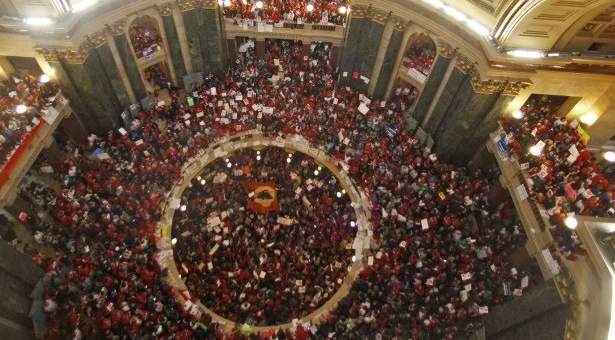
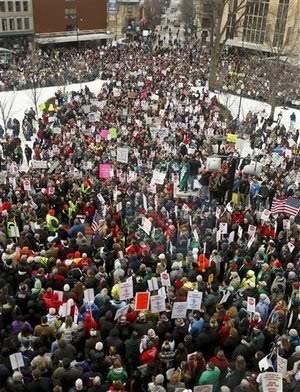
Protests continue in Wisconsin against the union busting bill signed by Governor Scott Walker in March. The demonstrations are also aimed at the anti-people measures contained in the budget proposal that would cut more than 3.5 billion dollars from services that help the poor and working class. There is still a chance that this bill will not become law. An injunction is in place because of the people’s massive resistance. The movement demands are full legalization for immigrants, oppose budget cuts, keep in state tuition for immigrant students and oppose any legislation that targets immigrants in Wisconsin.
- The new governor announced drastic changes under the “budget repair” bill. Virtually a bargaining rights of public union employees would be rescinded.
- Basic environmental laws would be repealed, and communities that came up with a minus budget would fall under the control of political appointees who could replace them.
- As this was attempted to being passed in the Senate, 14 Democrats fled the state and remained sequestered for a couple of weeks.
- While in Madison, crowds ranging from 1000, to 100 thousand, circled the Capitol on an almost daily basis, and sat in, slept in on the Capitol rotunda for 2-3 weeks.
- As in other states and in Congress, the Republicans insist that pay and benefits of public workers were greater than those in private sector, factories have fled and private sector workers are doing so much worse,
- The idea of public unions was illogical and needed to be cut back because they were a powerful voting block.
- The response from the unions was if belt tightening is necessary we expect everyone to do it, but don’t take away our bargaining rights and our basis for dignified labor.
- Not when huge tax benefits are being delivered to corporations. Its not a mystery that the Koch Brothers from Kansas were the major backers of Scott Walker’s campaign. They set up an office only a block from the Capitol. They are very likely the architects of the ideas and the plans.
- Public resources are being sold off with no bid contracts.
- Both sides are geared up around current and ongoing legal processes that are beyond the ken of the ordinary Wisconsinites.
- Some members of the Democratic party were not happy with the mass demonstrations.
- Wisconsin protests effected most emphatically Ohio, Pennsylvania and New Jersey, Maine.
- There has been an occupation at the Capitol of Washington State It was incumbent to us to show up once a day, some of us twice a day, to march around the Capitol. There’s a deep ambiguity here, on the one hand the Republicans have to be smashed.
- The Obama signs all went down from the yards a long time ago. There’s an ambivalence here, and its reflected nationally.
Guest – Paul Buhle, senior lecturer at Brown University, a historian of American radicals, a former member of Students for a Democratic Society and author of many books including images of American Radicalism, Che, A Graphic Biography, and Isordore Duncan, a graphic biography by Sabrina Jones.
—————————————————-
Law and Disorder May 23, 2011
Podcast: Play in new window | Download
Updates
—
Egypt’s Aftermath and Continued Arab Protests
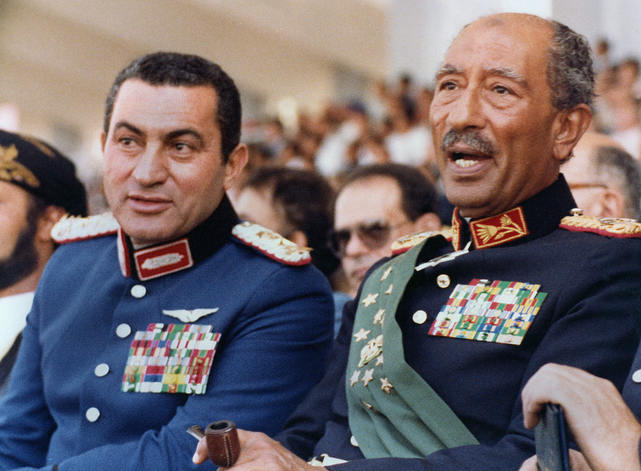
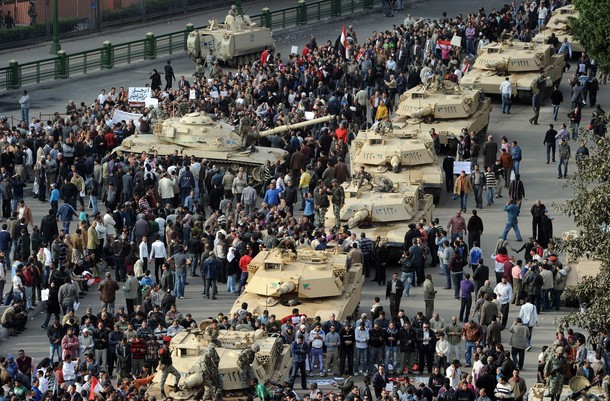
Civil rights lawyer and former president of the American-Arab Anti-Discrimination Committee, Abdeen Jabara joins co-host Michael Smith in the studio. Jabara gives an update and analysis on the current political and economic shifts in Egypt. Meanwhile Israel recently celebrated the day it declared independence on May 14, 1948, the Nakba. More than 60 years later, Palestinian descendants remain the central issue within the Israeli Palestinian conflict. Last week a wave of coordinated Arab protests hit Israel on 4 of its borders. Protesters were shot and killed when they clashed with Israeli forces at the Lebanon, Syrian, West Bank and Gaza borders.
- There’s been a break down of law and order in Egypt, there’s been a rise in the crime rate.
- There’s been a huge drop in income from lack of tourism. There have been various strikes, and even the police went on strike demanding higher wages. People have broken out of various prisons. The situation is very much in flux.
- Two sections of an Egyptian elite maintain control over popular forces.
- There were those that were the nouveau riche, that were being promoted by Gamal Mubarak.
- Many of them have been arrested and are in jail for ill-gotten gains.
- One of the most serious problems in Egypt have been, this neo-liberal development where they were trying to sell off state owned business.
- Open Door Policy, wanting Egypt to become part of the Western camp.
- Will there only be change in a cosmetic fashion where there is no change in the basic relationship with the people. That is the real issue.
- I think a lot depends upon the Army. Egypt is a very poor country and its main sources of income other tourism is the Suez Canal, finished clothes and canned goods.
- Under the Mubarak leadership in order to go on strike you had to get permission from the executive council of the trade union movement. Since the fall of Mubarak, you’ve seen much more labor activism.
- We will be seeing Europe and the United States pouring money into the various formations in the country.
- Israel and Palestine: I think we’re going to see something new now, with all this turmoil.
- We have to understand that the Europeans have been developing some distance on the Middle East issue. The United States and Israel are becoming more isolated in the world. The United States has never been an honest broker in this situation.
- Flotilla will leave in latter part of June, will have ten boats from different European and North American countries. Wednesday May 25, Flotilla Fund Raiser – UStoGaza.org
Guest – Abdeen Jabara, civil rights lawyer and former president of the American-Arab Anti-Discrimination Committee.
——

The American Dream As We Know It Is Obsolete
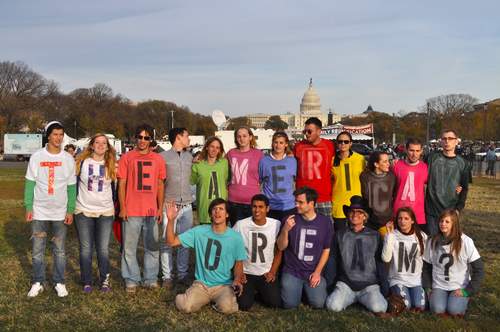
Will the Wisconsin and other state union protests be a catalyst for a general strike? Right now, the Wisconsin demonstrations are aimed at restoring collective bargaining rights for public servants, the goal to a middle class. Reject the opiate of the middle class idealism says our next guest. The revolution must be carefully thought out and be modeled on the ground breaking uprisings in the Middle East and North Africa. How could unions prepare their strategy to include a broader support base? Unions could build alliances with single mothers, the poor, immigrants, the elderly and a wide range of groups.
- It bugged me as all these progressives defended the middle class. I’ve been studying the Tea Party lately. Is the middle class really under attack? The core of the Tea Party is middle class, very entrepreneurial, than more management supervisory.
- There’s a duel movement going on with the Republican attack. Social welfare and public sector jobs.
- In Wisconsin, a population of 5 million, there are 200 thousand public sector jobs
- We should expand our notion of who are defending and what are we fighting for?
- I think Krugman is the most egregious, he says the 1950s was era without great extremes of wealth and poverty.
- Really? There were no Rockefellers and sharecroppers in Mississippi?
- How do we understand the 1950s? We have to go back to the term corporatism. Corporatism doesn’t mean corporation, its derived from corpus meaning body. The government is a mediator between significant sectors of society.
- American capitalism had needed the domestic market. Corporations don’t need internal consumption anymore.
- Capitalism has unmoored itself from geography. For high speed rail in the US, who will build it? The companies that are the most advanced are in China, Germany and South Korea.
- If Obama wanted to spend billions on high speed rail, the US doesn’t have the base, the human intellectual base to compete with Germany and South Korea. We’d have to put tariffs on their goods then you raise the scenario of a trade war.
- Then we’re back in the 1930s which brought on the war. People are not really thinking about the hidden ideologies of green jobs and defending the middle class.
- I’ve seen hopeful potential, these movements pop up and recede so quickly. The immigrants rights movements.
- During revolutions, it is something wonderful, people want to become better people.
- What we don’t hear much about are the little Mubaraks in Egypt, in factories, the workplace, dictators all over the place, and they’re being ousted.
- The Right likes mass movements like the tea party, the Democrats hate mass movements.
Guest – Arun Gupta, Founding editor of the The Indypendent. He recently wrote The American Dream As We Know It Is Obsolete: Why progressives need to think beyond the mantra of creating a “middle class America.”
——————————————————————————
Law and Disorder May 16, 2011
Podcast: Play in new window | Download
In what appears to be a growing government trend of prosecuting outspoken supporters of Palestine, 11 Muslim students were arrested for disrupting a speech–in this case that of the ambassador to the United States, Michael Oren. The incident took place last year on the campus of the University of California at Irvine. The local District Attorney claims that the students had no right to disrupt the event, charging them with conspiracy to shut down the ambassador’s speech, even though he was able to complete the speech. Supporters claim that the Muslim students’ actions are protected by the first Amendment, and that are being charged for being vocal critics of Israel.
Defense attorneys claim that the District Attorney has acted irregularly, first by using an investigative grand jury to look into felony charges, even though the students were charged with two misdemeanors. Second, in the course of the investigation prosecutors obtained vast personal electronic records from Google and Hotmail; they then released some of these documents to the media in what appears to be an attempt to influence public opinion against the 11 students.
Attorney Daniel Mayfield:
- As far as disruptions go it was about the most peaceful you could imagine. Michael Oren is invited to speak on campus, it is a hybrid event. Partially sponsored by off campus organizations and off campus organizations.
- When Mr Oren begins to speak say for a minute or two, the first of the 11 defendants stands up to interrupt him to make a statement about Gaza.
- That person then walks to the edge of the auditorium and submits to an arrest and is removed from the auditorium.
- There are roughly five law enforcement groups present. Campus police, Irvine police, county sherrifs, secret service agents, Israeli agents.
- There’s a lot jeering and clapping on both sides. This happens 11 times.
- After the 11th student stands up, all of the students that are opposed to Mr Oren stand up, start a chant and they leave. Mr Oren then finishes his speech.
- The students are disciplined, the Muslim Student Association at Irvine is ordered off campus for 6 months. By June 2010, everyone thinks the case is over.
- In December of 2010, the District Attorney of Orange County, they convene a Grand Jury.
- Under California law you can only convene a Grand Jury when investigating a felony. They claim they’re investigating a felony. In the affidavits to the judge they swear under penalty of perjury that they’re investigating a felony.
- They call witnesses to this Grand Jury, when they’re challenged, they tell the judge they’re investigating a felony. Then the Grand Jury doesn’t issue an indictment.
- An investigative Grand Jury, not that different from what’s happened in Chicago.
- So the DA has amassed, all of this material, they’ve gotten phone records and email messages.
- They asked Google, Hotmail, Gmail, all of those to turn over the emails and they do. Thousands and thousands of emails, 10 CDs.
- I don’t believe the District Attorney is going to drop these charges. They’ve dumped roughly half a million dollars into this case.
- At this point they’ve assigned 3 deputy attorneys, including 2 of their primary homicide DAs. Pulled off of homicide to work on 2 misdemeanors.
- Our goal is to win this case on motions. Because that meeting was political because poltiical meetings are excluding from the penal code section that we’re interested in here.
- We believe that we can win this case, by arguing on the law before the judge, that they don’t have the right to proceed. The speech by Michael Oren was thought of as a response to the organizing around the Boycott, Divestment, Sanctions work.
Guest – Attorney Daniel Mayfield, one of the attorneys on the legal defense team and co-author of the motion and a National Lawyers Guild member.
———–
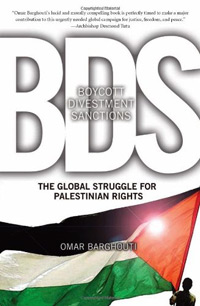
Boycott, Divestment, Sanctions – The Global Struggle for Palestinian Rights by Omar Barghouti
The boycott, divest, sanction movement was launched in 2005. It calls upon conscientious citizens of the world to shoulder the load of responsibility of holding Israel accountable to international law and principles of human rights. The BDS movement urges those citizens to support 3 basic rights. UN sanctioned rights of the Palestinian people, ending the 1967 occupation, and ending the system of racial discrimination in Israel, the right of return of refugees in accordance with UN resolution 194.
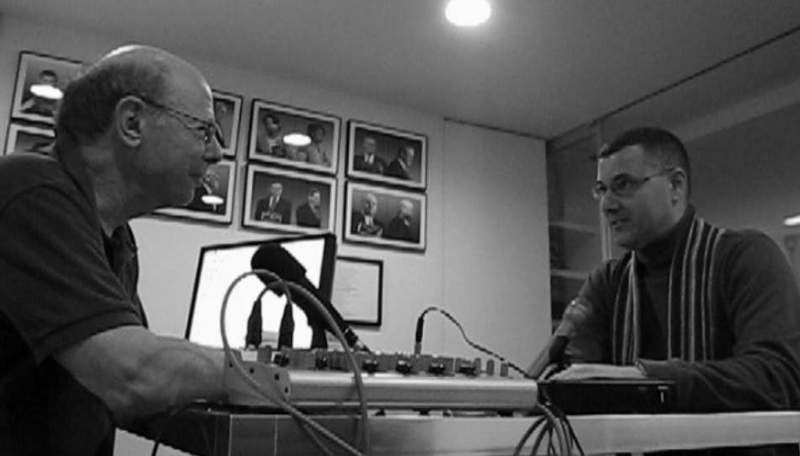
In boycotting, corporations and countries around the world are urges to stop buying products that support Israeli infrastructure such as Loreal, Motorola, Caterpillar, and many more. Sanctions, would target those companies exporting to Israel and applying tariffs or trade barriers. Divest or disinvestment, a call to divest from companies, institutions and universities that support Israel’s occupation and lobby power. Co-host Michael Ratner interviewed independent Palestinian commentator and human rights activist Omar Barghouti in the middle of his book tour.
- The BDS movement was launched in 2005 which calls upon conscientious citizens of the world to shoulder the load of responsibility of holding Israel accountable to international law and principles of human rights.
- The BDS call urges to support 3 basic rights. UN sanctioned rights of the Palestinian people, ending the 1967 occupation, ending the system of racial discrimination in Israel, the right of return of refugees in accordance with UN resolution 194.
- 80 percent of Gazans are refugees. According to International law, they have the right to go back home.
- We look around and look at how International law is being applied in other situations.
- Jewish communities are reclaiming properties stolen by the Nazis or by their collaborators all over Europe.
- Only when it comes to Palestinian refugee rights does it become a demographic threat to Israel.
- There’s some divine right given to Israel to maintain an ethno-centric state, at the expense of applying International law.
- Palestinians of Israel are not considered nationals of Israel. Israel is the only country on Earth that has this two tiered system of nationality. You’re only a national if you’re Jewish.
- Any Jewish person from New York can go tomorrow and can become a national immediately.
- Palestinians in Israel, citizens of Israel, can’t buy, rent or live on about 93 percent of the land.
- Israel’s discrimination acts like a set of sieves, that have finer and finer holes as you move up towards college, filtering out more Palestinians so you have a very small percentage on top.
- Because Palestinians can vote becomes a form of tokenism, when you discrimination in land, jobs, everything.
- Israel is losing the veneer of sophistication and nuance. It’s becoming a brute form of apartheid.
- Loyalty Oath.
- Israel has lost the battle for hearts and minds and its resorting to bigger sticks.
- BDS, in less than six years we’ve achieved more than our comrades in South Africa that lasted 20 years.
- In a study of Israeli academics who had stood up against the occupation: hundreds of academics in a community of 9 thousand have done anything public against the occupation. BDS is not a political party, its not an ideology.
- Those who think they can decide for the Palestinians what our basic rights are, ignoring International law and basic principles of human rights, are racist. BDS is a living movement that is growing tremendously.
Guest – Omar Barghouti, the founding member of the Palestinian Campaign for the Academic and Cultural Boycott of Israel and the Palestinian Civil Society Boycott, Divestment and Sanctions (BDS) campaign.
—–
————–