Welcome to Law and Disorder Radio
Law and Disorder is a weekly independent civil liberties radio program airing on more than 150 stations and on Apple podcast. Law and Disorder provides timely legal perspectives on issues concerning civil liberties, privacy, right to dissent and practices of torture exercised by the US government and private corporations.
Law and Disorder May 9, 2011
Podcast: Play in new window | Download
Updates:
- Osama Bin Laden Story Inconsistencies: Analysis
- CF Law (By analogy in law) Pat Tillman and Jessica Lynch
- Authorization To Use Military Force, the Justification For Torture, Blowback
- Torture Architect John Yoo Writing in the National Review
- Dalia Hashad: Article In The Scoop: Bin Laden Gone Problems Remain
—-


Guantánamo Leaks Must Be Met By Release of Obama Task Force Assessments
The 759 Guantanamo files that were classified “secret” cover nearly every inmate since the camp opened in 2002. The documents obtained by the New York Times and the Guardian last month, reveal how children, the elderly and mentally ill were wrongfully held. The documents also reveal that many prisoners were sent to Guantanamo for nearly nothing or to be interrogated. What did these documents reveal?
- These stories started on Monday morning, because administration officials gave out a briefing saying that the nickname of Osama’s couriers was given out by one of the detainees.
- Assuming information taken from Khalid Sheikh Mohammed
- We do know it took eight months from the time they identified this compound to the point they decided to strike at it. I think its clear, they relied on a whole slew of information from a variety of sources.
- We already know the true name of the courier, which is more important than a nickname came from agents on the ground and electronic surveillance.
- 172 detainees, 90 cleared from release, 2/3 of those from Yemen have been indefinitely suspended for repatriation because of the “underwear bomber.”
- The problem is so much of (media) attention is focused on the ones that will never be released.
- WikiLeaks – 2400 pages of documents almost all risk assessments of about 740 detainees who’ve been to Guantanamo
- They represent the Defense Departments best case for detaining someone.
- You have these long analysis of very shady facts, not detailing where allegations are coming from.
- If you look at the documents as a whole, it shows that most of the detainees were held on flimsy, unreliable information.
- The documents show that people were interrogated in GTMO about nothing to do with terrorist attacks in the United States. You had Samuel Hodge interrogated about the inner workings of Al-Jazzera
- Everyone ended up with the categorization of high or medium risk
- When you see a leak of this magnitude, the only corrective is to release more information and that’s what we’ve called for at CCR.
- The government quickly emailed us – They said consistent with the security clearances you signed on for, you have to treat this information as classified (leaked documents) even though its been scattered to the winds on every newspaper on Earth.
Guest – Attorney Shane Kadidal, senior managing attorney of the Guantánamo Global Justice Initiative at the Center for Constitutional Rights in New York City. He is a graduate of the Yale Law School and a former law clerk to Judge Kermit Lipez of the United States Court of Appeals for the First Circuit. In his eight years at the Center, he has worked on a number of significant cases in the wake of 9/11, including the Center’s challenges to the detention of prisoners at Guantánamo Bay (among them torture victim Mohammed al Qahtani and former CIA ghost detainee Majid Khan), which have twice reached the Supreme Court, and several cases arising out of the post-9/11 domestic immigration sweeps.
——-

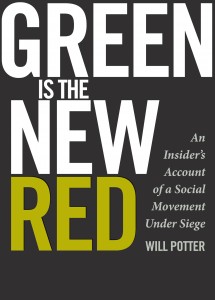
Green Is The New Red: An Insiders Account of A Social Movement Under Siege
We welcome Will Potter award-winning independent journalist and now the leading authority on “eco-terrorism.” He’s the author of the new book ,Green Is the New Red: An Insider’s Account of a Social Movement Under Siege, and it reveals a complex environmental movement emerging amid police state pressure. As we’ve reported here on Law and Disorder, environmental activism have been labeled terrorism under certain interpretation of the Patriot Act, essentially criminalizing dissent and chilling free speech in this country at a critical time. Our guest was an FBI target for merely leafleting against animal testing, and he was threatened to be put on the domestic terrorist watch list if didn’t comply with FBI demands. We talk more about that, the environmentalist movements and his new book.
- My background is in mainstream newspapers. As I was working as a reporter at the Chicago Tribune, about 9 months after 9/11. I was covering breaking news, blood and guts.
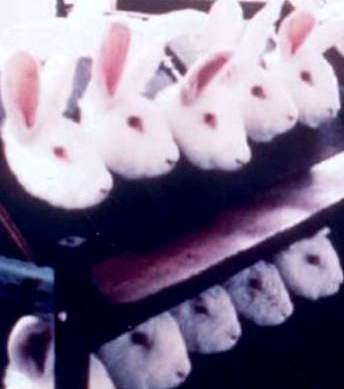
- I decided to go out leafleting on a campaign I became aware of against a controversial animal testing company.
- Couple weeks later the FBI knocks on my door telling me I need to become a government informant and help infiltrate animal rights and environmental groups and if I didn’t they’d put me on the domestic terrorist list.
- It scared the tar out of me. I wish I could say it didn’t.
- Afterward it really lit a fire under me to figure out what was going on.
- One of the reasons I started the website was because of this new law being considered called the Animal Enterprise Terrorism Act.
- What I decided to do with the book is tell the personal stories of the people involved.
- I followed Daniel McGowan a few days before his sentence to how he ended up in this facility, his own journey as an activist. Daniel was convicted of serious crimes, two arsonists that didn’t harm anyone and he was labeled a terrorist.
- The book looks at the wide range of activity being labeled “eco-terrorism”
- The FBI has labeled the environmental and animal rights movement the number one domestic terrorism threat.
- These corporate campaigns were pushed for so long through the courts, politicians, and the press that over time they began to dovetail with government policy.
- The Animal Enterprise Terrorism Act is so broad it can even wrap up non-violent civil disobedience as terrorism, only if its directed at what is called animal enterprises.
- The real power of this is fear.
- The activists who are really effective and pushing the boundary are the ones being labeled eco-terrorists.
- I recently wrote about 3 bills that are under consideration for the Huffington Post. What Is Big Ag Trying To Hide.
Guest – Will Potter, award-winning independent journalist based in Washington, D.C., who focuses on “eco-terrorism,” the animal rights and environmental movements, and civil liberties post-9/11. Will’s work has appeared in publications including the Chicago Tribune, the Huffington Post, and the Vermont Law Review, and he has testified before the U.S. Congress about his reporting. He is the author of Green Is The New Red: An insider’s account of a social movement under siege forthcoming from City Lights Books.
Law and Disorder May 2, 2011
Podcast: Play in new window | Download
Updates:
- Federal appeals court orders a new sentencing hearing for Mumia Abu-Jamal
- CCR Says Guantánamo Leaks Must Be Met By Release of Obama Task Force Assessments
- Memorial for Leonard Weinglass Friday May 13 At the New York Ethical Culture Society
—-
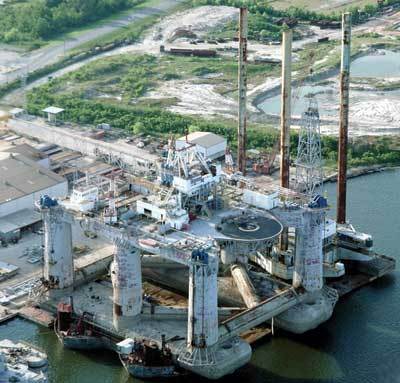
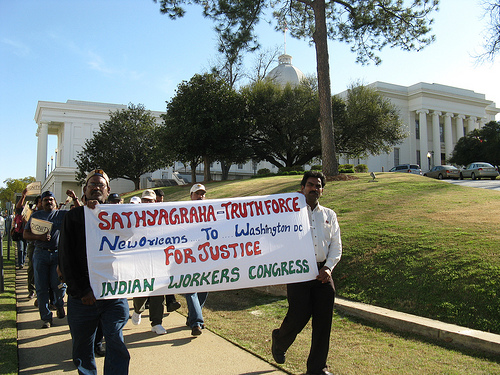
In what may be the largest human trafficking case in US history, Indian guest workers are suing Signal International for human trafficking ad racketeering. Several law firms filed the lawsuit on behalf of seven plaintiffs representing 500 formers guest workers lured into the US after Hurricane Katrina. The guest workers were subjected to racial discrimination, forced labor and other abuse.
Signal is a multi million dollar marine fabrication company with shipyards in Mississippi, Texas and Alabama. They repair and build oil rigs and ships and subcontract with the Dept of Defense and multinational companies. After Hurricane Katrina, Signal’s workforce scattered and they used the government’s guest worker program to import employees as welders and pipe fitters. Between 2004 and 2006 hundreds of Indian men were paid up to 20 thousand dollars each for travel, visa and other fees after being told it would lead to good jobs and permanent US residency.
When the men arrived at Signal they discovered they would not receive green cards, but instead were given 10-month guest worker visas. Signal forced the men to pay $1,050 a month to live in overcrowded, unsanitary and racially segregated labor camps with no visitors allowed. To talk more about this case, we’re joined by Chandra Bhatnagar is a Staff Attorney with the Human Rights Program and Sabulal Vijayan, a former guest worker involved in the lawsuit.
- Signal used the opportunity of the storm to seek out new labor pools. Signal in partnership with an American labor broker, an American Immigration lawyer and an Indian recruiter, conspired to bring in a group of 500 men from India as H2B guest workers.
- The workers were promised green cards, permanent residency, and the opportunity for long term jobs.
- Sabulal Vijayan: I was working in the middle east, the United Arab Emirates, I saw the ad by Signal that said we would get permanent residency in America. I paid about 18 thousand dollars, I cut my wrists in fear, I tried to kill myself because I spent a bunch of dollars. I was in the hospital for 3 days. I couldn’t go back to my family in India with bare hands, because I spent all the money on this job. Not only me but 500 workers, sold all their land and houses for this job.
- The EEOC, brought a separate lawsuit against Signal, alleging racial and national origin discrimination and hostile work environment.
- Because Sabulal was one of the workers seeking his rights under the law, he was particularly targeted by Signal and rounded up in an early morning raid. The camp was built on a lead contaminated waste site.
- It’s not OSCHA compliant to have 24 guys jammed together in a temporary trailer.
- These are in the United States and in debt. The average income in India is 3000 dollars a year for a ship worker. To pay 20 thousand dollars, you have to sell your property, borrow money from loan sharks. You have to mortgage your whole life for the opportunity to come here. Signal also said if you file a lawsuit, we’ll send all of you back.
- Signal is a marine fabrication company, a multi-million dollar company. They repair and build oil rigs and ships. They have yards in Mississippi, Alabama and Texas. They provide services to the Department of Defense and major corporations.
- It was a conspiracy between the Immigration lawyer, the Indian recruiter, the labor broker and Signal.
- Signal got this vulnerable pool of workers who they could throw away whenever they wanted to.
- You don’t have freedom of contract as a guest worker, you’re the disposable property of the employer.
Guest – Chandra Bhatnagar, ACLU Staff Attorney with the Human Rights Program. He leads the domestic and international advocacy around racial profiling, affirmative action, and juvenile justice issues, and is engaged in federal court litigation and litigation in international tribunals involving the rights of low-wage immigrant workers, undocumented workers, and guest-workers.
Guest – Sabulal Vijayan, guest worker from India, who is involved in the case. Sabulal, a pipefitter, paid nearly 20 thousand dollars to work in the United States as a guest worker. He worked with others in slave labor-like conditions for Signal International.
———–
Professor John Ehrenberg: Class Warfare Update and Analysis
Returning guest, professor and author John Ehrenberg joins us in the discussion of where the last 3 years the Obama Administration has led the country. The United States is pouring trillions into multiple war theaters, unemployment continues to rise, CEOs of banks and corporations have been rewarded with taxpayer bonuses and bailouts, and a massive unequal distribution of wealth has polarize the country. Meanwhile, the very rights that protect organized labor and the benefits of workers are attacked and disassembled during one of the worst economic downturns to hit the United States. Corporations and the far right wing of the Republican Party are behind some of the union busting yet even President Obama turned his back on supporting union labor demonstrations. Most recent show with John Ehrenberg
- The elephant in the room that nobody talks about is the role of the state and the role of the government.
- Winner-Take-All Politics: How Washington Made the Rich Richer–and Turned Its Back on the Middle Class
- What you had since the 1980s is a policy pushed by the Republicans and acquiesced by the Democrats of undoing the Great Society. We’ve seen this in the union busting and refusing to tax the rich. It’s been happening because the Republican party is getting more radical.
- The villan in the room is governmental and fiscal policy.
- The top 1 percent of the population received more than a third of all the wealth created in the country from 1979 to the beginning of the recession. The top 1/10 of one percent, that’s one out of every thousand households, received over 20 percent of all the after tax gains between 1979 and 2005.
- It was a conscious policy. It began in the late 70s by business. If you look at the neo-conservatives of that period, their target is the Great Society.
- Basically in the late 60s and the early 70s, the traditional stimulus programs of the Democrats failed.
- Along comes Reagan and he takes on a radical restructuring of the economy.
- Which began this process of shoveling huge amounts of wealth to the rich, hoping that it would trickle down and you’d have sustained growth.
- Consider that Obama is going to raise a billion dollars for his reelection campaign. Where is he going to get it from?
- Look, anybody at this stage of the game who continues to trust the Democratic party to lead the country out of this mess, is a fool.
- The Democratic Party by itself is incapable of democratic initiative and progressive change unless forced to respond from pressure from outside.
- When do they have enough? The answer in 1100 pages of Capital: A Critique of Political Economy is it’s never enough. That the logic of capital is to reduce everybody to starvation and take everything they have.
- This is the motor of the system, this has nothing to do with the Koch Brothers.
- Hopefully people are tired of being pushed around. American exceptionalism, meant that Americans were more tolerant of inequality, than were people from a stronger labor tradition.
- That American’s didn’t care so much if other people got rich as long as they got rich too.
- If you have a situation where Americans are misinformed about the distribution of wealth and are open to appeals to redistribute wealth in the name of fairness and equity, then this is the time for a redistributus Democratic party to step forward.
- If the Democratic Party is even a modicum of sanity in America, it’s because its going to have be pushed again. Pushed and pushed and pushed from outside.
- 55 percent of Republicans want higher taxes on the rich.
- There are local manifestations of outrage and rebellion, in Wisconsin, Indiana, Ft Lauderdale, around different aspects of the mal-distribution of wealth. – but nothing has been coordinated on the national level.
- There are as yet, no forces talking about the system as a whole, as a state.
- There are a lot of indications across the board that people have had enough.
- Go out there and join something and get involved.
- UNICEF publication. The Children Left Behind. Indices: Health, Education, Material Well Being. The United States is last of the 24 countries.
- If you look at the fall of any of the world’s empires, it was a combination of the over reach and the refusal of the rich to pay their share of taxes.
Guest – John Ehrenberg, author of Servants of Wealth, The Rights Assault on Economic Justice, he’s also professor of political science at Long Island University.
————————————————————————-
Law and Disorder April 25, 2011
Podcast: Play in new window | Download
Updates:
- Pfc. Manning To Be Transferred To Army Prison
- New York State Assembly Passes Rent Regulation Bill
- Michigan: Police Search Cell Phones During Traffic Stops
- Using Emergency Powers to Dismantle Unions In Michigan – Update with Zainab Akbar Legal Fellow at the ACLU of Michigan
—–
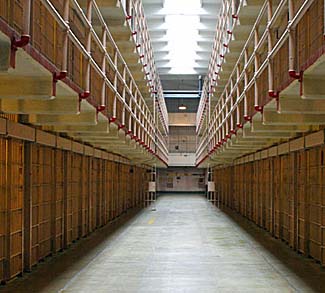
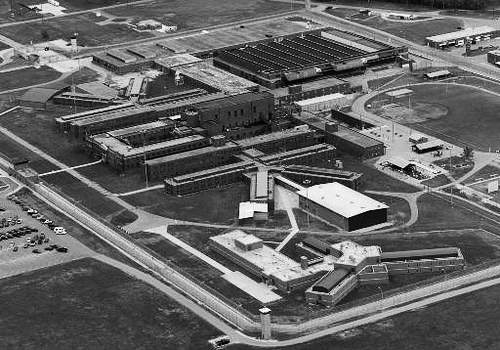
Last month, the Center for Constitutional Rights won the right for prisoners to challenge a violation of their constitutional rights. Prisoners in 2 experimental federal prison units called “Communications Management Units” or CMUs, will have their claims heard in court. About 70 percent of CMU prisoners are Muslim men. Judge Urbina agreed that the prisoners raised serious constitutional questions about CMUs. The Center for Constitutional Rights filed Aref v. Holder in the D.C. District Court on behalf of current and former prisoners of the units in Terre Haute, IN and Marion, IL; two other plaintiffs are the spouses of those prisoners.
As many listeners may know, these CMUs were secretly opened under the Bush administration in 2006 and 2007. They were designed to monitor and control the communications of certain prisoners and to isolate them from other prisoners and the outside world. The five plaintiffs in Aref were designated to the two CMUs despite having relatively or totally clean disciplinary histories, and none of the plaintiffs have received any communications-related disciplinary infractions in the last decade.
In addition to heavily restricted telephone and visitation access, CMU prisoners are categorically denied any physical contact with family members and are forbidden from hugging, touching or embracing their children or spouses during visits.
- We’re very troubled about policies and conditions at these units. A number of the restrictions imposed at the CMUs are severe. They are truly cutting people off from their loved ones, they’re community and the outside world
- Blanket ban on physical contact, unparalleled to any other single unit anywhere, including Supermax.
- We feel this needlessly impinges on their right to family integrity and their need to maintain these ties to the outside world.
- What we’re challenging is that there is no due process attached to designation to these (CMU) units.
- Without a disclosure of factual allegations that were used to designate them, without a demonstration of past abuse of communication devices, without a hearing, without an appeal. Once you’re there, no one is told how to earn their transfer to get out. Our clients have benign or in some cases perfectly clean histories.
- What is happening is that Muslim prisoners are being designated there, based on the discriminatory belief that as Muslims they inherently pose a great danger to institutional security, than do other prisoners.
- We’re very concerned also about a pattern of designation of political prisoners and specifically includes environmental and animal rights activists.
- We do believe these are acts of retaliation for protected First Amendment activity, such as speaking out on social justice issues.
- What we’ve asked for in the case is a thorough review of polices and practices in the CMUs.
- What’s next is we’re going into discovery, which is our opportunity to learn a lot more about the CMUs, about their inception, who was involved in designing them and why and about how designations are made.
- CMUs were opened quietly.
Guest – Alexis Agathocleous, staff Attorney at the Center for Constitutional Rights and works on CCR’s Government Misconduct and Racial Justice docket. He is lead counsel in Aref v. Holder, challenging policies and conditions at the federal Bureau of Prisons’ Communications Management Units, and Doe v. Jindal, challenging a Louisiana law that requires individuals convicted of Crime Against Nature to register as sex offenders.
—–


Financial Regulators Failed: Crooks Go Unpunished
Last week, the Securities and Exchange Commission Friday charged Goldman Sachs & Co. and one of its executives with fraud in a risky offshore deal backed by subprime mortgages that cost investors more than $1 billion. The SEC also contends that Goldman allowed a client, Wall Street hedge fund Paulson & Co., to help select the securities to be sold. Paulson in turn bought insurance against the deal and when the securities sank, losing nearly all value, Paulson then made a $1 billion profit.
While these are not criminal charges, the recently released 650-page report of the Senate Permanent Subcommittee on Investigations, Wall Street and the Financial Crisis (PDF) had exposed the deceptive and risky practices within major financial institutions, that deceived clients and the public. New Economics Perspective Blog
- Many people still call it the subprime crisis, it would be far better to call it, the liar’s loan crisis.
- Roughly half of all subprime loans by 2006.
- Somewhere between a quarter and 49 percent of new home loans, were in the form of liar’s loans.
- The incidence of fraud when there have been independent studies has ranged from 90 to 100 percent.
- A liar’s loan is when there is no underwriting, no verification of what’s put into the loan application.
- Overwhelmingly, it was the lenders who put the lie is liar’s loans.
- You can sell these loans in the secondary market if they appeared to have 2 characteristics that finance has told us you can’t have simultaneously.
- A premium interest rate and low risk. You could have the best of both worlds. The way to do that was to gimmick two ratios. Debt to income ratio and loan to value ratio.
- Inflating the value of homes, covered up by industry. An honest secure lender would never inflate value.
- It makes perfect sense for a fraudulent company to inflate the value of the house so they can sell the loan on the secondary market for a higher profit.
- Then Attorney General Cuomo, now governor found this as a common practice at Washington Mutual, the biggest bank failure. WAMU had a blacklist of appraisers, you were blacklisted if you refused to inflate value of property. None of these people are being prosecuted.
- In 2004, the FBI testified there was an epidemic of mortgage fraud and predicted that it would cause a financial crisis.
- The Savings and Loans debacle cost 150 billion, the current crisis is costing over 10 trillion.
- The Office of Thrift Supervision, Chainsaw James Gilleran
- Instead of being embarrassed that they were working hand in glove with the lobbyists, they were proud of this and put this in their annual report.
- Geithner and Cuomo urged there not be investigations much less prosecutions of the elite financial frauds because he thought the financial system was too fragile.
- The Justice Department ruined an FBI initiative to try and investigate the elite frauds.
- If you are powerful enough, if you have enough ties, after citizens united, and make enough political contributions, you will not be prosecuted.
- You can’t have crony-capitalism and democracy either.
- Big finance is only supposed to be a middle man, it’s supposed to help the real economy, by simply allocating most efficiently capital to the most productive uses.
- Like any middle man you want absolutely minimal profits going to the middle man.
- Under some measures, finance has 40 percent of the total profits of all American businesses.
- This is the worst group of people you can possibly imagine having power.
- We’ve turned too many of our schools into fraud factories, where we train people how to gimmick accounting.
- Citizen’s United is a fragile case, it doesn’t make much sense in terms of the law.
- What these people are, engines for destroying wealth
- They only get 10 billion, they destroy 10 trillion dollars in wealth. They cost 10 million Americans their jobs.
Guest – William K. Black, a professor of law at University of Missouri, Kansas City who has criticized the absence of any criminal referrals or national task force to effectively punish the elite fraudsters. Professor Black teaches White-Collar Crime, Public Finance, Antitrust, Law & Economics.
——————————————————-