Welcome to Law and Disorder Radio
Law and Disorder is a weekly independent civil liberties radio program airing on more than 150 stations and on Apple podcast. Law and Disorder provides timely legal perspectives on issues concerning civil liberties, privacy, right to dissent and practices of torture exercised by the US government and private corporations.
Law and Disorder March 28, 2011
Podcast: Play in new window | Download
Updates:
- Cigar Arsonist
- Lawsuit Against U.S. Federal Reserve Seeks Armenian Gold Looted by Turkey
- IDF Monitors BDS Movements Around the World
—


“Operation Libya” and the Battle for Oil: Redrawing the Map of Africa
The US and allied air strikes on Libya will have far reaching geopolitical and economic implications. Libya is the among the world’s largest oil economies with near 3.5 percent of global oil reserves, twice that of the United States. What’s going here? As Professor Michel Chossudovsky writes in his article “Operation Libya” and the Battle for Oil: Redrawing the Map of Africa.” there is no such thing as a just war. This is part of US imperialism as drafted in the 2000 Report of the Project of the New American Century entitled “Rebuilding Americas’ Defenses.” One of the main components of this military agenda is: to “Fight and decisively win in multiple, simultaneous theater wars”. Libya counts as the fourth theater of war along with Palestine, Afghanistan, Iraq. In all of this the mainstream media has used a massive disinformation in justifying this military agenda.
Professor Michel Chossudovsky:
- This is not a humanitarian intervention. It is a carefully planned military operation. This was on the drawing board of the Pentagon, well before the protest movements in Egypt.
- It is a war theater, and should be viewed in the broader context of the war theater, namely Iraq, Afghanistan and Palestine. It opens up a new area of militarization in North Africa. It has devastating consequences and is part of a global war.
- The object of coming to the rescue of civilians by bombing with cruise missiles is an absurd proposition. They’re bombing civilian infrastructure. The same agenda as the previous war theaters, they have a list of targets and go ahead and bomb. This whole notion of responsibility to protect is nonsense.
- They’re getting away with it because the media is lying through their teeth.
- Clearly there are Al-Qaeda elements that are supported by the CIA. Two years ago, the Gaddafi government made a deal with the CIA. We know that Al-Qaeda is an intelligence asset. It can be used precisely to create these conditions of insurrection as occurred in Bosnia and in Kosovo. We have to investigate a little more, who is behind the insurgency. The insurgency is not there to win a civil war, the insurgency is there to create a pretext for an intervention.
- I suspect this opposition is heavily divided in any event. Obama has ordered drone attacks in Pakistan.
- The Chinese have sizable interests in Libya. This is also directed against France and Italy, its France and Belgium that are being shoved out of Central Africa.
- Libya borders on Niger, its the entry into central Africa. Niger is important because it has large reserves of Uranium, which is in the hands of a French conglomerate.
- The conquest of Libya is the battle for oil, the same logic as Iraq.
- I estimated that Muslim countries have about 65-75 percent of global oil reserves. That is why we’re demonizing Muslims, they happen to inhabit.
- Bahrain and Yemen peaceful protesters getting hit with nerve gas.
Guest – Professor Michel Chossudovsky, director of Global Research.ca , Center for Research on Globalization. An independent research and media organization based in Montreal, Quebec, Canada.
————-
Community Service Society Report: Black Youth Unemployment
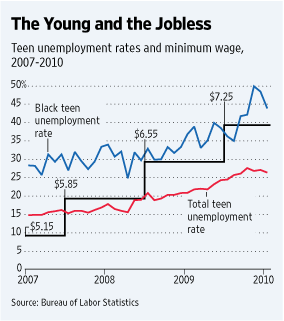
Unemployment in a jobless economic recovery has hit young African American men the hardest according to a recent report by the Community Service Society. PDF The highest unemployment rate in 2009 was among men 16-24 years of age—their overall unemployment rate hit 24.6 percent during the recession. Breaking it down by race, young black men had the highest unemployment rate in this group at 33.5 percent. While only one in four black men ages 16-24 have a job in the city, that figure drops to an astounding one in ten for young black men without a high school diploma.
“The recession has created a landscape of the unemployed and underemployed with particular catastrophic consequences for young African American men,” said David R. Jones, president and CEO of the Community Service Society of New York. “We have long known the struggles of the more than 200,000 youth in New York City who are out of work and out of school. Now young black men between 16 and 24 years have become the banner of hopelessness, particularly here in New York City.”
- Those who’ve never made the connection to work or those who’ve ceased trying. We’re talking hundreds of thousands of people involved here. African Americans constitute about a third of New Yorkers.
- I think people have to recognize we’re in something totally new.
- At least anecdotally, the Great Depression didn’t have this kind of impact on the black community that this recession is having on them.
- New York in the Great Depression was a segregated city, were working exclusively in black communities or trades that were circumscribed.
- You get pullman porters and restaurant work which were the reserves for African Americans before the civil rights movement hit. The homeless of New York were white on Bowery.
- While we’re seeing a better recovery, the number of long term unemployed is actually greater than New York than other municipalities.
- The trouble is you start to lose job skills, you lose hope, all sorts of with friends and employment start to disintegrate.
- We did a report on security guards and I went back to look at it. There are 63 thousand security guards in the city of New York and virtually none of them are unionized, their average wage was $10 an hour, no health insurance, no paid sick leave.
- New York has an usually high concentration of the working poor.
- We’ve been focusing all our efforts, in terms of how we deal with poverty on the issue of on this nexus between work and getting to a position where they can support themselves and their families.
- This is not limited to the South Bronx or Crown Heights, this is a national phenomenon.
- We know when we did our report on disconnected youth, we had 200 thousand disconnected youth in New York, there were nearly 5 million disconnected youth scattered across the country before the recession.
- We’re never going to go back, to the unemployment levels that we found unacceptable in New York of 5% again. That we’re going to back down from the 9.5 %.
- It was always the expectation, if you worked really hard, there’s was going to be a way, sort of a seat at the table here. New York has one of the highest recidivism rates, we’re doing a couple of things, we’re making it impossible to get work, once you’ve been incarcerated.
- We are going to get a group of young people who feel betrayed.
- I think this scapegoating that has taken on a really powerful voice, is partially because people want to blame someone for why they can’t get employment.
Guest – David Jones, President and Chief Executive Officer of the Community Service Society of New York , a nonpartisan, not-for-profit organization that promotes economic advancement and full civic participation for low-income New Yorkers.
Mr. Jones, an outspoken advocate for low-income New Yorkers, writes bi-weekly newspaper columns in the New York Amsterdam News and El Diario/La Prensa and a weekly blog on the Huffington Post website that serve to educate the public and government officials on issues of importance to minority and poor communities.
——————————-
Law and Disorder March 21, 2011
Podcast: Play in new window | Download
Updates:
- Bradley Manning Update
- State Department Spokesman P.J. Crowley Resigned Over Controversial Comments
- CCR Lawsuit – Aref, et al. v. Holder, et al.
————-
In Memory:
The remarkable and heroic progressive lawyer Len Weinglass died on March 23. Among his cases were the Chicago 8, the Ellsberg case and the Cuban 5. Listen to the 4 interviews Law and Disorder did with him over the last 4 years. He was our close comrade and will be missed by his friends and all those seeking a better world. – Michael Ratner.
- Len Weinglass November 9, 2009
- Len Weinglass June 29, 2009
- Len Weinglass June 16, 2008
- Len Weinglass September 24, 2007
————-
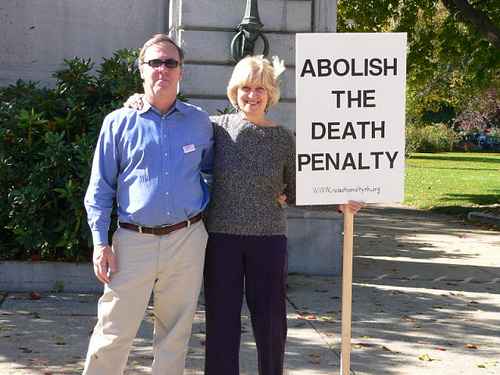
Death Penalty Abolished In Illinois
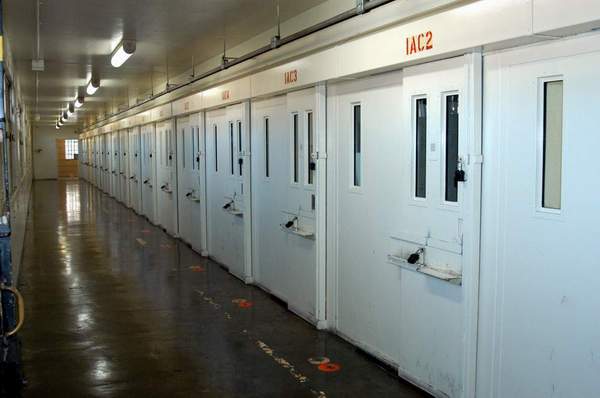
Last week, Governor Pat Quinn of Illinois signed into law SB3539, which repeals the death penalty in that state. This development is yet another in what appears to be signal a trend of moving away from capital punishment. Early last year we covered the American Law Institute’s declaration that the death penalty in this country has been a failure. Listeners may recall that the A.L.I. created the intellectual framework and justification for the current capital justice system. The movement away from this most final form of punishment seems to be due in large part to the public’s increased awareness about its inherent flaws such as great racial disparity on who gets executed and for what reason. Publicity around exonerations stemming from DNA evidence has also added to general awareness of procedural errors in the system.
- In 2003, Governor Ryan cleared out death row, he granted to the 167 men and women on death row and pardoned four.
- that prompted the legislature to pass a modicum of reform. The governor afterward assembled a commission that recommended 85 reforms.
- The legislature passed five or six. The legislature also created a death penalty reform study commission.
- One of the reforms was that all confessions in police custody had to be videotaped in murder cases.
- No matter what safeguards you implement, there’s no system that can prevent the conviction and condemning of an innocent person.
- Prosecutors around the state were asking for the death penalty in cases that weren’t death penalty prosecutions just so the state would bear the costs rather than the county.
- The legislature is cash-strapped and we were wasting millions and millions of dollars prosecuting capital cases when here in Illinois we have the very strict alternative of life without parole.
- Final Report: Death Penalty Legislative Study Committee. Illinois Death Penalty Reform Study Commission PDF
- After Governor Ryan cleared out death row in 2003, Illinois put 17 men on death row. 2 had committed suicide, which left 15 on death row when Governor Quinn signed the abolition bill and also granted sentence commutation to all 15. He commuted their death sentences to life without parole.
- As the problems with the death penalty have been exposed, the arbitrariness, the racism, as mistakes have gone into public consciousness, juries have been rejecting the death penalty.
- Illinois has become the 16th state to abolish the death penalty, following on the heels of New Mexico, New Jersey and New York. The federal government and the military do have it.
- The “deathbelt” in this country is in the South and Texas, and is just a legacy of slavery in this country.
- Most executions occur in former slave states. One obvious flaw of the death penalty, studies have shown the death penalty is most likely to be inflicted in a case when the victim is white and the odds go up even further if the defendant is black or Hispanic.
- Its very gratifying to get rid of this barbaric practice. I represented 35 men and women who were sentenced to death. I do the direct appeals. I’ve had one client executed, I’ve had one client go home.
- Some states have made illegal purchases of the drug. (lethal injection drug shortage)
- Some states are using just one drug, a massive overdose of a barbiturate.
- Life without parole is very draconian, it means there’s no prospect for rehabilitation.
Guest – Assistant Defender in the Supreme Court Unit at the Office of the State Appellate Defender, and member of the board of directors of the Illinois Coalition to Abolish the Death Penalty.
———
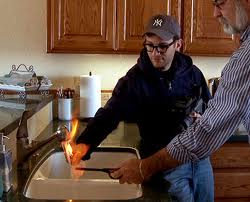

Communities Battle Against Gas Drilling To Protect Water, Way of Life
Environmental community groups from New York, New Jersey and Pennsylvania continue to band together and try to protect the Marcellus Shale watershed from natural gas drilling and hydraulic fracturing. The EPA has stated it will investigate how hydraulic fracturing impacts water supplies and water quality in New York State yet the drilling moratorium ends this June. The shale is believed to hold some of the world’s largest deposits of natural gas, and those that want to mine this resource say it will reduce dependence on foreign oil and boost the economy. However, many have shown this statement to be false as the natural gas from the United States is being sold to foreign countries such as Norway and France.
Ninety percent of the New York City’s drinking water comes from ground zero of where various oil companies want to drill into the Marcelle Shale for natural gas. Environmental and public health costs are enormous for each well. Every time a well is drilled, the companies use an estimate of 5 to 9 million gallons of water. Each time a well is fractured, it’s another 5-9 million gallons of water, a well can be fractured multiple times. Up to 275 different toxic chemicals are used in the process and after the well is drilled, there are millions of gallons of industrial waste, it’s essentially radioactive water. 40-70 percent of this water stays underground. The hydro-fracturing process has no federal regulating body. Some of the companies involved are Halliburton, Chesapeake Energy, Fortuna, and Talisman Hess.
- My organization has been working on the issue for a few years to try to keep gas drilling from moving ahead.
- Right now there is a moratorium in place on the Delaware River Watershed. It took a year and a half to get that into place. Regulatory measures that are in place now for gas drilling are not doing their job.
- The bottom line is we’re facing an industry that wants to move ahead.
- The industry is very strong. There are international concerns.
- They’re backed by the government in many ways, they enjoy subsidies.
- This industry is going to move like heck to drill everyplace gas can be gotten.
- The Delaware River Watershed has its origins in the Catskill region of New York State.
- The east and west branches come together in Hancock, New York.
- 330 miles from Hancock to the Atlantic Ocean.
- The watershed is 13 thousand square miles and includes four states. It’s overseen by an agency that was born out of water wars.
- Back in the 1950s, all the states were suing each other about who would get water for development.
- In 1961, there was a Supreme Court decree and compact and President Kennedy signed a document that began the Delaware River Basin Commission. As a result of this compact, a large part of the Delaware River goes to New York City.
- There have been regulations federally (Represented by the Army Corp of Engineers) and regionally laid out by the Delaware River Basin Commission
- New York moratorium on gas drilling is tied to late June when there is supposed to be a new draft of the Draft Supplemental Generic Environmental Impact Statement on high volume hydraulic fracturing.
- In order to crack the rock to get at the gas is intrinsically polluting and there’s no way out of that.
- The question of how to stop it is tied to the scientific analysis free from bias.
- Without that bottom up movement, without that cry for government regulators, the industry would be moving ahead exactly as planned.
Guest – Tracy Carluccio, deputy director with Delaware Riverkeeper Network. Delaware Riverkeeper – a watershed wide advocacy program, Delaware Riverkeeper Network takes a strong stance on regional and local issues that threaten water quality and the ecosystems of the Delaware River and its watershed. In fact, Delaware Riverkeeper Network is the only advocacy organization working throughout the entire Delaware River Watershed.
—–
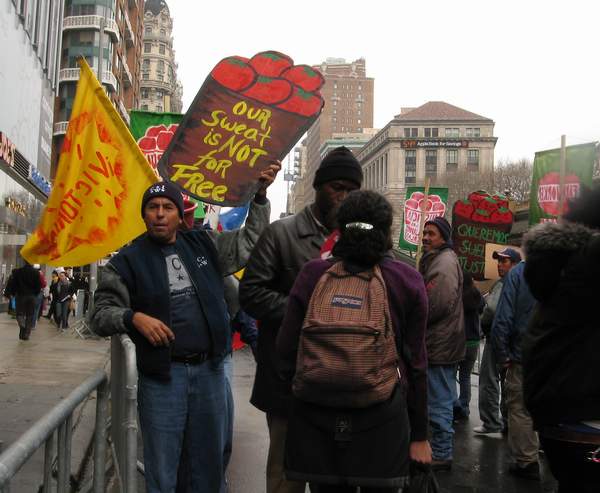
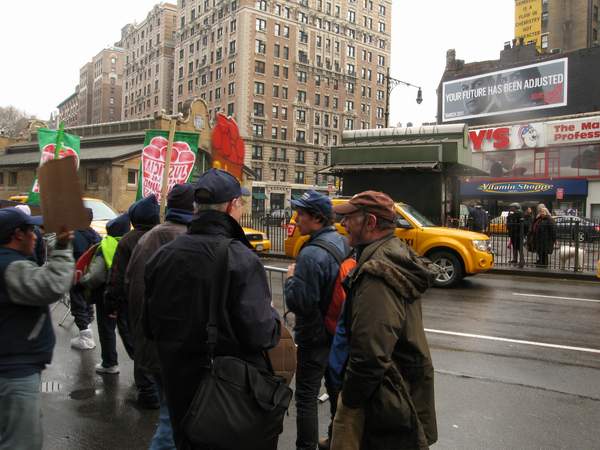
Farmworkers, Consumers Protest Trader Joe’s Demanding Fair Labor Standards for Farmworkers
Late last month, a busload of farm workers from Florida joined members of the NYC Community Farm worker Alliance at Trader Joe’s Upper West Side store. Men and women who pick tomatoes under very harsh conditions demand to be treated more humanely and with improved farm labor wages. Our own Michael Ratner was at the demonstration, we hear some of the interviews.
———————————————————————-
Law and Disorder March 14, 2011
Podcast: Play in new window | Download
Updates:
- NLG Send Attorneys To Tunisia
- No Libyan Style “Humanitarian Intervention” While Hundreds Killed in the Ivory Coast
- 172 Detainees in Guantanamo. 89 Are Innocent Approved For Transfer
- Leaving 36 People Referred For Prosecution – Military Commissions Return
- Extremely Dangerous: Executive Order on 47 Detainees – Preventive Detention
—

Wisconsin Labor Demonstrations Update
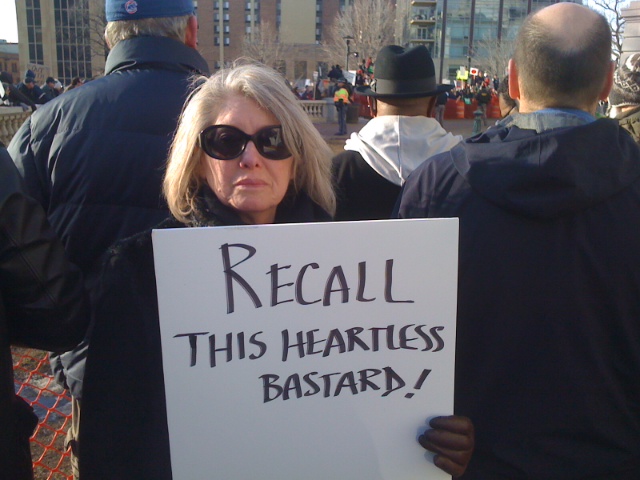
Organized labor is in the cross-hairs to be taken apart by the American elite. Last month, 10 thousand people continued a multi- day occupation of the Wisconsin State Capitol building while tens of thousands chanted outside. Meanwhile the country is gripped by the drama unfolding in Wisconsin and it has inspired unions in other states to move in solidarity. Among those states are Montana, Indiana, Ohio, Michigan, Pennsylvania and New Jersey. Listeners may remember that Wisconsin trade unions have already conceded to wage and benefit cuts. Now the state is voting to repeal Section 11170, the Public Employee Bargaining Chapter. Update: Wisconsin GOP Allows State To Fire Employees For Strikes, Walkouts
Attorney Lester Pines:
- Governor Walker is clearly a stocking horse for the far right wing of the Republican Party.
- I’m not surprised at his behavior, he behaved this way as a Milwaukee County executive.
- I told people he was going to try to repeal section 11170 which is the Public Employee Bargaining Chapter
- What’s at stake is an attempt by the governor and the legislature to strike at the heart of the Wisconsin tradition of organized labor.
- Public employee bargaining has been in Wisconsin for 50 years. This is an attempt to tear apart generations of how Wisconsin operated.
- On a federal level, this is an attempt to wipe away outside groups that democratic and progressive candidates.
- Wisconsin has a bi-annual budget. The legislation is part of budget repair bill. In that legislation is a bill to eliminate all collective bargaining for all municipal and school district employees as well as for state employees.
- There will be no bargaining if this bill passes. The only thing that can be bargained with is wages.
- The bill also imposes a cap on wages. These are designed to essentially make it impossible for public employee unions to function in any meaningful way.
- Scott Walker didn’t talk about what he would actually do.
- If we look at the mass demonstrations in Madison. These are the biggest demonstrations I’ve ever seen here.
- Impeachment is impossible because Republicans control the legislature and Senate, however he can be recalled.
- The Democrats can’t be arrested in a criminal sense,
- Governor Scott Walker has reignited the progressive movement in Wisconsin.
- Until you get these Republicans out of office they’re going to do a lot of damage. They’re nihilists. They care nothing for public services. They care only for what their corporate puppeteers want them to do.
- It looks like this whole anti-public union movement was actually planned out amongst all these new governors.
Guest – Labor attorney Lester Pines, in practice since 1975, he leads the Litigation area, concentrating in civil trials, criminal defense, labor & employment, and business. A Fellow in the American College of Trial Lawyers, Mr. Pines is a highly respected civil and criminal litigator who has appeared in courts throughout Wisconsin and litigated federal matters in Wisconsin, Illinois, Iowa, Ohio and New York.
————————–
Human Rights Crisis Continues In Puerto Rico
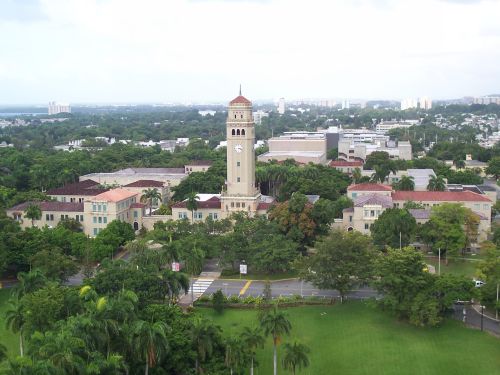
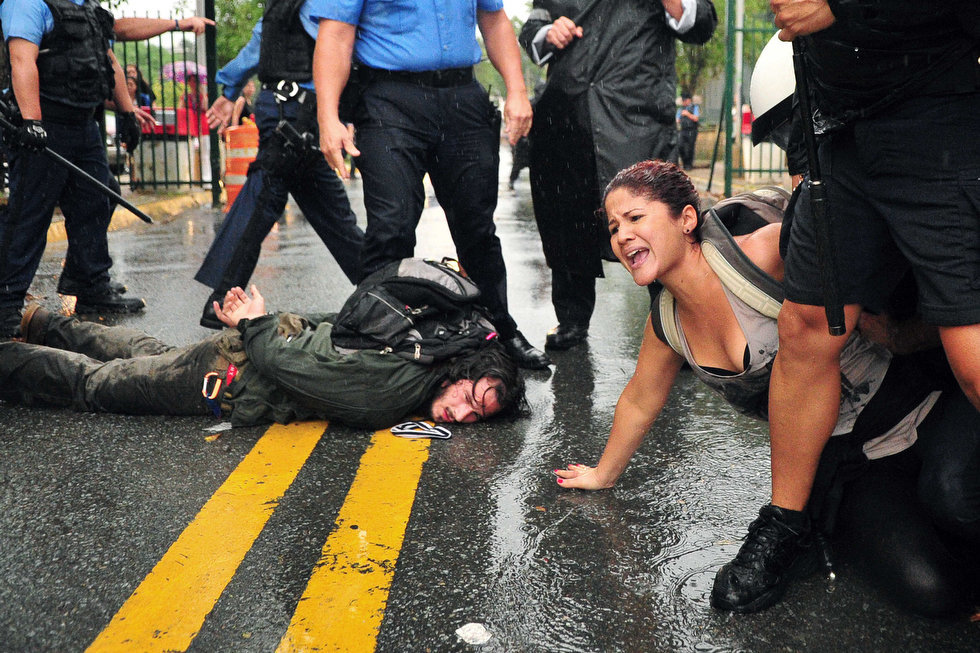
More than a year ago nearly 100 thousand people took to the streets of San Juan, Puerto Rico to protest the lay off of about 17 thousand public employees. The demonstration shut down all state-owned enterprises including the island’s schools and colleges. Two days before that strike the governor passed a bill aimed at dismantling the Bar Association. Protesters were warned that if they stopped commerce, particularly the docks and airports, that action would be sanctionable to federal law. Now, as human rights violations continue, as students and faculty demonstrate against dismantling of progressive curriculum and tuition hikes. ACLU of Puerto Rico, “Human Rights Crisis in Puerto Rico: First Amendment Under Siege.” Law and Disorder Interview with Judy Berkan October 2009
Attorney Judy Berkan:
- Wholesale attack on institutions of Puerto Rican society where any dissent could be lodged.
- The Puerto Rican Bar Association, a real forum for those without a voice. Attacks have come to the Bar Association, elimination of mandatory Bar membership and imposed draconian restrictions upon the Bar Association. They took away a great deal of our funding.
- The president of the Puerto Rican Bar Association was jailed for speaking out against a lawsuit that could take away life insurance from poor lawyers.
- There’s a one month prohibition on leafleting and expression in the University of Puerto Rico.
- The closing of the legislative chambers. Right now there is a US Department of Justice investigation and talk of a trusteeship of the police department here.
- The use of the tactical operations of the police to repress dissent has been intensified.
- All of our public spaces are being closed off to legitimate dissent, while people engaged in peaceful dissent are being attacked.
- Austerity: Part of the remedy of the economic crisis there was an increase in tuition of 800.00. But much more at stake.
- More than that there is question of the vision the University of Puerto Rico will take in the future.
- The emphasis appears to be on privatization as it is throughout the government. We been suffering these programs since 2009.
- We were the guinea pigs. There’s more violence here, if we occupied the state house here, we would’ve been met with pepper spray, gas and beatings as we were when we attempted to demonstrate outside the state house last June.
- The economic programs are really the model that’s being used by Republican governors in the US
- The University situation is really wallowing in the wind without a real solution.
- The Bar Association and their presence is very crucial to public debate in Puerto Rico.
- I think people are getting tired, we do have 2 more years left of this administration.
- The police department is still in the hands of a former FBI agent who has openly encouraged violence against protesters. We have a raging crime rate.
- What’s distressing for all of us here who care about these matters is the media black out in the United States.
- Are we training people to be managers at McDonald’s or are we training people to think about the future of Puerto Rico?
Guest – Attorney Judith Berkan, is a partner in the San Juan law firm of Berkan/Mendez. She specializes in government misconduct litigation and employment discrimination cases. Berkan worked as an attorney in New Haven, Connecticut before going to Puerto Rico as the staff attorney for the Puerto Rico Legal Project of the National Lawyers Guild, now the Puerto Rico Civil Rights Institute. For twenty-seven years, she has been teaching, primarily in the Constitutional Law area, at the Inter American University Law School in San Juan, Puerto Rico.
A frequent speaker and author of many articles on civil rights issues, she was the President of the Human Rights Commission of the Puerto Rico Bar Association in the mid-1990?s and a member of the Commonwealth Supreme Court’s task force on gender discrimination.
————————–

The 2011 Left Forum convenes this Spring, March the 18 to the 20th. This is the largest annual conference of a broad spectrum of left and progressive intellectuals, activists, academics, organizations and the interested public. Conference participants come together to engage a wide range of critical perspectives on the world, to discuss differences, commonalities, and alternatives to current predicaments, and to share ideas for understanding and transforming the world.
Guest – Stanley Aronowitz Distinguished Professor of Sociology at CUNY Graduate Center, where he is Director of The Center for the Study of Culture, Technology and Work. He has taught at Staten Island Community College, University of California-Irvine, University of Paris, Columbia University, and University of Wisconsin.
——————————————————————————————–