
Welcome to Law and Disorder Radio
Law and Disorder is a weekly independent civil liberties radio program airing on more than 150 stations and on Apple podcast. Law and Disorder provides timely legal perspectives on issues concerning civil liberties, privacy, right to dissent and practices of torture exercised by the US government and private corporations.
Law and Disorder November 22, 2010
Podcast: Play in new window | Download
Updates:
- “Know Your Rights” booklet from the National Lawyers Guild
- Michael Ratner Interview in the ISR: Obama’s National Security State
- British Settlement with Guantanamo Prisoners: Leveraged Against Disclosure of Court Ordered Documents
- Serious Criminal Investigations Ongoing In Europe
- TSA Back Scatter Scanner Machines and Groping
- Former Homeland Security Secretary: Chertoff Group Ties To Full Body Scanners
- Trial begins in Austria for case of slain Chechen
- Manfred Novak – UN Special Rapporteur on Torture, “Is the World Completely Hopeless?”
——-

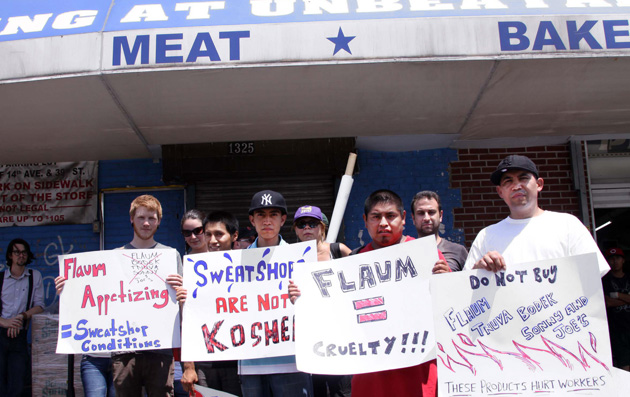
Brandworkers Defeats Anti-Speech Legal Action from the Flaum Appetizing Corp.
Workers of the Campaign for Justice at Flaum Appetizing Corporation stand up. Immigrants for Mexico and Ecuador challenged sweatshop conditions at a New York City processor and distributor of kosher foods. The workers used innovative legal advocacy and organizing tools to win justice at the company. The company Flaum Appetizing illegally withheld hundreds of thousands of dollars in compensation owed to the workers and used anti-immigrant retailiation when workers stood up for their rights.
- Brandworkers work on a joint campaign called Focus on the Food Chain.
- Much of the food that we consume at markets and restaurants is distributed by a corridor of sweatshops that line southern Queens and northern Brooklyn.
- Overtime is hardly ever paid, no retirement benefits, no health care, extreme discrimination, extremely heavy work without appropriate health and safety standards.
- The company owes them 260 thousand in this labor board case after a full trial.
- The employer had the chance to make their case, call their witnesses, they lost. That order has been enforced, but Flaum is still resisting. They’re resisting for one reason. Immigration.
- We’ve had members there at Flaum, no question where they’re from, say no to abuse, say no to conditions where Latino workers are called cockroaches.
- It’s despicable, we need to put all our energy and all our heart into opposing this type of discrimination.
- Brandworkers: We’re very pleased to report we stared down their Taft-Hartley charges at the board.
- December 8th, 2010 at the Labor Board of Brooklyn / 2 Metro Tech Center / Brooklyn, NY /
- Focus On The Food Chain / Facebook
Guest – Daniel Gross, attorney, co-founder and executive director of Brandworkers International, a non-profit organization protecting and advancing the rights of retail and food employees.
—
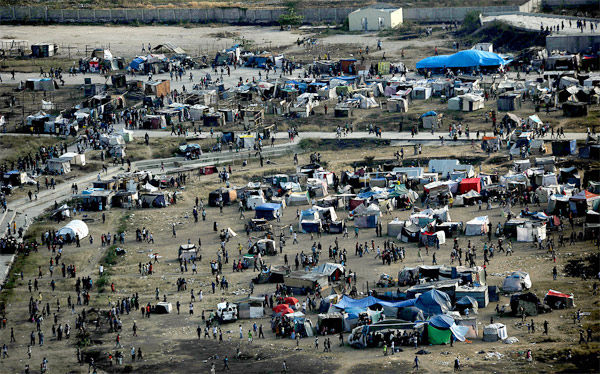
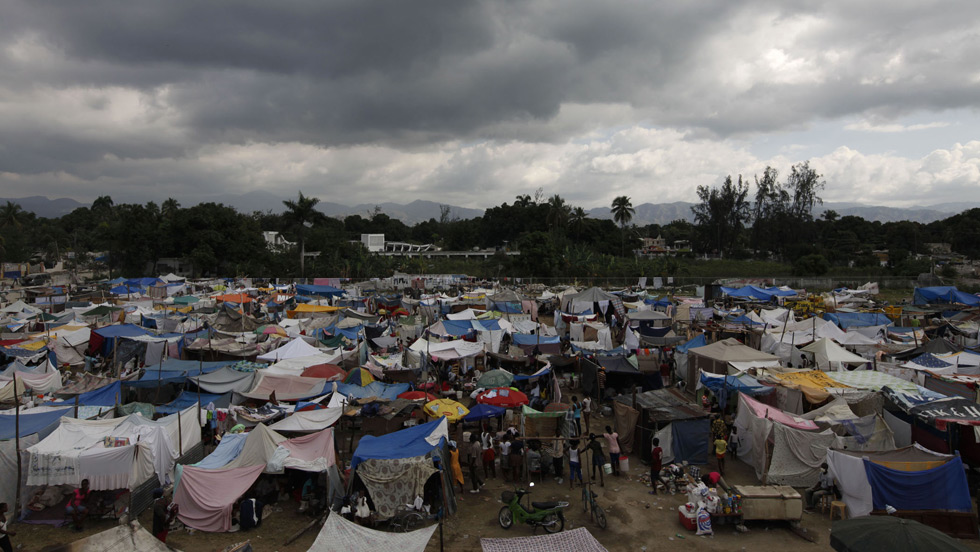
It’s been almost a year since Haiti’s catastrophic earthquake took the lives of nearly 200 thousand people and left 1.5 million homeless. Now, women and girls living in the camps have lived in fear of the constant threat of rape and violence.
Groups of attorneys and advocates for displaced women in Haiti are calling for urgent action to confront an epidemic of sexual violence in the camps. On-the-ground investigations have revealed a shocking pattern of rape, beatings and threats against the lives of Haitan women and girls. A petition submitted by the groups to the the Inter-American Commission on Human Rights calls for the IACHR to require the Haitian government to take action such as installing lighting in the camps and provide housing.
Bill Quigley, Legal Director of the Center for Constitutional Rights, said “The ultimate solution here is permanent, safe housing for Haitians. Unfortunately, the international community has reneged on its commitment to provide essential funds for rebuilding and the U.S., in particular, has not delivered even one cent of the reconstruction funding it pledged. Women are being forced to live in extremely unsafe conditions for the foreseeable future and it is a deplorable failure on the part of those who made such a show about standing with the Haitian people in their greatest hour of need.”
- I was in Haiti, and visited a number of the camps with some grass roots womens’ organizations.
- I really was shocked by how terrible things were there. Still over a million people who are homeless. They’re really not camps. Every park, every school yard, every backyard, every churchyard has people living in it. Over 1300 hundred of these camps.
- None of these camps have running water or electricity or proper sanitation or food availability.
- Women and children are much more vulnerable when chaos hits.
- In one community, tens of thousands line up in the morning and afternoon just to get water. If you go to the bathroom at night, you run a real risk of being assaulted or raped.
- The Institute for Justice and Democracy in Haiti.
- They don’t want the UN to be the security down there, by and large they’re considered occupiers by the people of Haiti.
- They’re preserving order but the order is that 90 percent of the people are disenfranchised.
- Somebody with a gun or machete is empowered when all you have for protection is a plastic sheet.
- A few people can terrorize thousands and thousands of folks. Every single day is a survival day.
- Only 2 percent of the rubble has been removed.
- You can’t depend only on volunteers. Volunteers can’t build hospitals.
- The legal action filed is asking to hold the United Nations and the international community in the way the aid is being spent that is not prioritizing the safety of women and girls.
- We included in that dozens of reports of kidnapping, starving and women having to sell themselves to survive.
- I’m not sure I could live that way for a month, less than a month. Toilet facilities used by thousands of people that’s far away to get to. Mario Joseph, Haitian human rights lawyer.
- Three sources of power in Haiti, the Haitian government, the US-UN and the NGO community.
- Five cents out of every dollar actually goes to the Haitian government. Bill Clinton has more power than anybody else in Haiti.
Guest – Bill Quigley, Legal Director for the Center for Constitutional Rights, a national legal and educational organization dedicated to advancing and defending the rights guaranteed by the United States Constitution and the Universal Declaration of Human Rights. Bill joined CCR on sabbatical from his position as law professor and Director of the Law Clinic and the Gillis Long Poverty Law Center at Loyola University New Orleans. He has been an active public interest lawyer since 1977.
———————————————————————————–
——
Law and Disorder November 15, 2010
Podcast: Play in new window | Download
Updates:
- Federal prosecutors opt against charging CIA officials in destruction of interrogation tapes
- Bush on waterboarding: ‘Damn right’
- Heidi Boghosian attends last weeks oral arguments for Mumia Abu-Jamal’s case
—


Drone Based Targeted Killings of U.S. citizens. Anwar Al-Aulaqi
Can the Obama Administration or any future administration use lethal force against US citizens who the executive office unilaterally determines as a threat to the nation? Not yet, but in recent government arguments, in the Anwar Al-Aulaqi case, the executive branch would have unreviewable authority to carry out targeted killings of Americans deemed to be enemies of the state. The ACLU and the Center for Constitutional Rights filed a lawsuit in the U.S. District Court for the District of Columbia on August 30, and the government filed its reply brief on September 25.
The ACLU and CCR were retained by Nasser Al-Aulaqi to bring a lawsuit in connection with the government’s decision to authorize the targeted killing of his son, U.S. citizen Anwar Al-Aulaqi, whom the CIA and Defense Department have targeted for death.
- This will be our first chance to defend our motion for a preliminary injunction and respond to the government’s arguments. The sum and substance of the government’s arguments is that there should be no rule for the court at all in the question we presented. Whether the government has authority to execute one of its citizens without any kind of due process.
- There should be absolutely no judicial review at all. They have not got into the merits of why they believe they should have this authority. They assert the US is involved in a global war against Al-Qaeda, by virtue of the war the US has the ability to target any suspect of Al-Qaeda.
- Outside of Iraq and Afghanistan, the question of whether armed conflict exists, is a factual objective question. It’s not a matter of which the president declares and that the level of hostilities and the organization of groups in Yemen are just not such that they to the level of war.
- Anwar Al-Alwaqi is not Al-Qaeda, he is associated with Al-Qaeda.
- The US is not only claiming broad authority geographically but global authority in terms of any and all groups they deem somehow linked to Al-Qaeda.
- They’re claiming AUMF but they’re also claiming a very vague principle of self defense which is tricky. They are claiming self defense under article 51 of the UN charter.
- They’re going around criminal law and claiming un-reviewable authority to carry out global assassination. This is an escalation of what we saw under the Bush Administration with global detention authority, this is global killing authority.
- The authority could reach any citizen they deem a threat to national security. It could reach someone in the United States, the full contours of the government’s arguments would be that the decision to kill is for the executive to determine and that should be an un-reviewable decision.
- The mechanized disconnected nature of the killing is alarming, both by an accountability point of view and a moral point of view.
- The drone project is operated by the CIA and by a covert unit in the Department of Defense called the Joint Special Operations Command.
- Documenting them is incredibly hard, but yet you have the expansion of the war and killings, in this shadow war way. You have this parallel secret war being conducted by the CIA and JSOC largely through the use of unmanned drones. What we have here is the pre-determination of the ability to kill.
- There’s been a steady increase of rhetoric about Yemen and an escalation in the language of war.
Guest – Pardiss Kebriaei, she joined the Center Constitutional Rights in July 2007. Since then, her work has focused on representing men detained at Guantánamo Bay in their habeas corpus challenges, before international human rights tribunals, in diplomatic advocacy with foreign governments to secure resettlement for men who cannot return home, and in post-release reintegration efforts. Her clients have included men from Yemen, Syria, Algeria, and Afghanistan. Her work includes seeking accountability for torture and arbitrary detention at Guantánamo.
———————————-
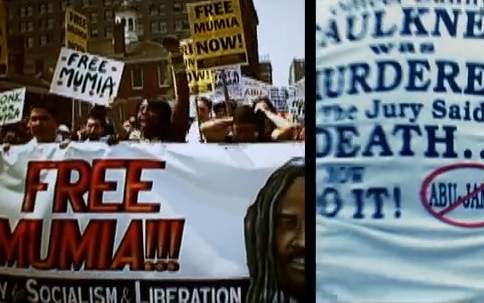
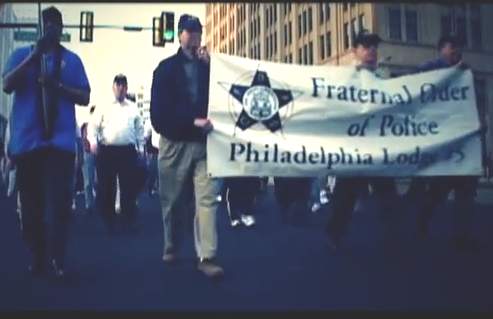
Justice On Trial: Documentary on Mumia Abu-Jamal
We’re pleased to have with us today the director Kouross Esmaeli of the new documentary Justice On Trial. The film focuses on the case of Mumia Abu-Jamal, one of the most scrutinized and contested legal cases in American history. Justice on Trial examines the facts of the case, the judicial bias, racial discrimination in jury selection, prosecutorial misconduct and tampering with evidence to obtain a conviction. The injustices and problems in Mumia’s case as many listeners know, are common within the criminal justice system in the United States.
- I tried to get an interview with the wife of the police officer who was killed on the night of December 9, 1981
- I thought it was important to show what drives that side I came to realize that Tigre Hill was making a film (about Mumia, titled Barrel of A Gun) that was propaganda for the other side.
- We had to make sure that film doesn’t become the voice of the nation.
- (Film includes photos 12 minutes after shooting occurred)
- The photos were discovered by an activist and scholar in Germany. He found them online, Michael met the photographer in the US, and realized there were 22 photographs from that night.
- They were offered to the prosecution, they refused.
- What the photographs show is incredible, they show a roving police hat.
- Officer Faulkner’s hat is placed in different spots on the crime scene.
- They show police handling the gun that was supposedly used in this crime. Handling it without gloves.
- There’s this push to kill Mumia and silence him physically. I’m interested to know what drives these people.
- For a screening in your area contact – – Kouross by email – – Kouross@bignoisefilms.org
Guest – Kouross Esmaeli, independent filmmaker and journalist.
—-


Final Verdict : What Really Happened in the Rosenberg Case.
In 1965, Walter and Miriam Schneir published Invitation to an Inquest, it was among the first critical accounts of the Julius and Ethel Rosenberg case. They were executed in 1953 for passing atom bomb secrets to Soviet Russia. In that book the Schneirs presented exhaustive evidence that key witnesses in the trial had changed their story after prompting from prosecutors. Their conclusion was, the Rosenbergs were innocent. Now after 30 years, Walter Schneir returned to the case with new evidence. Schneir had found that Julius Rosenber was marginally involved in the atom bomb spy ring and Ethel wasn’t involved at all. However they both lied about not knowing about espionage because of their earlier activities in World War II. All of this unravels in the Final Verdict : What Really Happened in the Rosenberg Case.
- The case began in 1950, 60 years ago. American cities were vulnerable to nuclear attacks. In that climate the Rosenbergs were arrested. The legal charge was conspiracy to commit espionage. During the trial, they were charged with stealing the secrets of the atomic bomb.
- The principle witnesses were Ethel Rosenberg’s brother, David Greenglass and his wife Ruth.
- David was in the Army and serendipitously was sent to Los Alamos, where the atomic bomb was being constructed.
- Julius was a spy during the wartime years. Ethel did nothing, she was not a spy.
- In a report by the Atomic Energy Commission, Greenglass was ranked as the least effective atomic spies back then. There was a lot of effort on the part of the Department of Justice to convict these people.
- This case is relevant today in a larger frame work.
- We can see that the Rosenberg case is like the Dreyfus case or the Sacco and Vanzetti case.
- It’s essential that leftists of each generation should keep that history alive.
- Now it’s Islam fundamentalism. That’s not to say there was no danger.
- You see the government use the courts to advance policies.
- On a personal level, Walter and I learned from the Freedom of Information documents we recieved, on the basis of the Meeropol suit, that while we were researching an Invitation to an Inquest, the FBI had been track our activities.
- We were just two writers who were trying to research a book, they were tapping our phones, and finally they placed us as well as thousands of others on an index of people who would be detained in the event of a national emergency.
- After the book was published, an FBI memo, directed that the book should be smothered and forced out of the public eye.
Guest – Miriam Schneir, editor of Feminism in Our Time: The Essential Writings, World War II to the Present and Feminism: The Essential Historical Writings. In addition to Invitation to an Inquest, she is also the co-author of “Remember the Ladies”: Women in America, 1750–1815.
Walter Schneir, a freelance writer on law, politics, and science. He is the co-author, with his wife Miriam Schneir, of Invitation to an Inquest, long considered the definitive book on the Rosenberg case. He is also the editor of Telling it Like it was: The Chicago Riots, an early account of the 1968 Democratic Convention. He died in April 2009 soon after completing this work.
——————————————————————————————
Law and Disorder November 8, 2010
Podcast: Play in new window | Download
Updates:
Oklahoma:Voters Approve Sharia Law Ban
—
French Labor Activism, US Labor Passivism
In the United States, unemployment rose from its level in 2008 (5.8 %) to its level in the second quarter of 2010 (9.7 %). These are numbers never seen before. However, by comparison, French unemployment rose from 7.4 % in 2008 to 9.2 % in the second quarter of 2010. This data from the Bureau of Labor Statistics show unemployment had risen further and faster in the US than in France across in the last 3 years. This is found in Economics Professor Rick Wolff’s article French Labor Activism, US Labor Passivism.
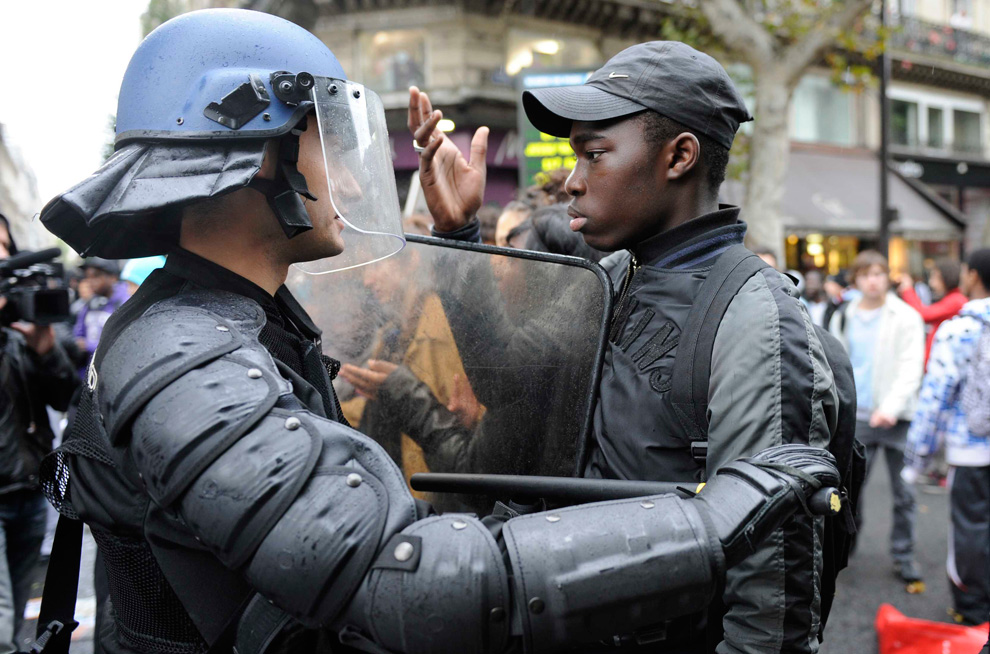
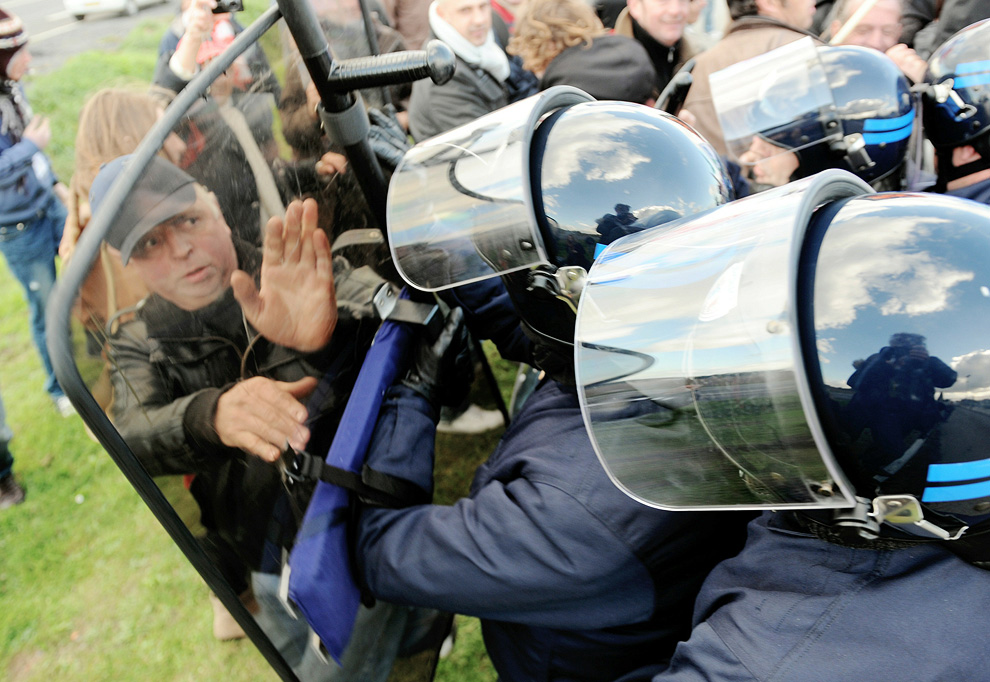
Yet French workers are in the streets by the millions demonstration against anti-worker “austerity policies.” Government policies that could cut workers payroll or the services that are provided to the public. Meanwhile US workers are taking it sitting down, there’s no resistance. In California, there’s now a 22 percent unemployment and it takes the average unemployed American about 35 weeks to find a job. US states and towns cut payrolls and public services and as President Obama’s special commission gets ready to reduce social security benefits to the American people. Consider that in September 2010, according to the BLS, while the total US private sector added 64,000 jobs, state and local governments fired 77,000 people.
- This is a tsunami of a political movement. All the six different organizations of trade unions have unified in organizing and moving these demonstrations. They haven’t unified on anything for a long time. They’ve drawn in students.
- Sarkozy almost in a way provoked the students to join the demonstrations in huge numbers.
- The students quickly understood that if the older workers stayed in their jobs an extra 2 years, those are jobs they’re not going to get. 70 percent of the French people support demonstrations. What we see now is a minority government, isolated, entrenched.
- If you want to see a movement that is doing something, mobilizing mass opinion, you got it.
- If you read what the French are saying, it’s this. We’ve already paid for the crisis, with unemployment, lost homes, insecure jobs.
- We’ve done our part, we’ve accepted that. We’ve drawn our line in the sand. We’re not gonna pay for fixing this mess from which have suffered. Why is this relevant? It is exactly like the United States.
- The atrophy of left here is much more palpable, then what happened there. We’ve had a much worse decline of our trade union movement then they did.
- We have to create anew the organizations that could bring people together into an effective coalition. The last thing we need is 800 single issued groups, cultivating its own garden and not talking to the other.
Guest-Richard D. Wolff, Professor of Economics Emeritus, University of Massachusetts, Amherst where he taught economics from 1973 to 2008. He is currently a Visiting Professor in the Graduate Program in International Affairs of the New School University, New York City. He also teaches classes regularly at the Brecht Forum in Manhattan.
—
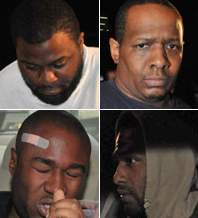
Entrapment and Conviction of the Newburgh Four
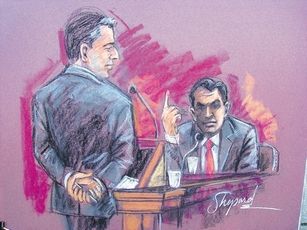
Last week, the four men accused of planting bombs outside synagogues in the Bronx and plotting to fire missiles at military planes were convicted in a case that was the test of the entrapment defense. The jury of the Newburgh 4 trial convicted James Cromitie, David Williams, Onta Williams and Laguerre Payen of plotting to bomb synagogues and shoot military planes. Cromitie and David Williams were also convicted of conspiring to kill officers and employees of the government. Sentencing is scheduled for March. The four face life sentences.
It wasn’t difficult for Shahed Hussain, a government agent provocateur who was facing incarceration, to offer food, money, marijuana, cars and vacations to the four men and ultimately coercing them to collaborate on so-called “terror plots.”
According to a press release by Project Salam (Support And Legal Advocacy for Muslims) The defendants had absolutely no intention to commit any terrorist crimes until the FBI agent provocateur, Shahed Hussain, promised them each $5,000––and in one case $250,000––if they did his bidding. He posed as a rich man who could give the defendants everything they’d ever wanted. He chose the targets, he told them how it would all work, and the FBI paid for everything. The four defendants were petty criminals, none of whom had a car or even a driver’s license. When the so-called leader, James Cromitie, decided to back away from Hussain’s scheme and refused to answer his calls for about a month, Hussain said, “Brother, I told you you could have $250,000, but you don’t want it.” Cromitie’s response: “OK, I’m in.”
- We were really surprised, we thought the edge had been reached here. They (Newburgh Four) were convicted of participating in this plot that had been cooked up, manufactured by the FBI
- These are four individuals who had no way to undertake any kind of terrorist plot. They had no automobile, no driver’s license, no money, no training, they had nothing. The FBI simply provided everything, including driving them to a spot where all they had to do is deliver a package, outside of building to complete this crime which the FBI concocted. There’s no other way to look at it.
- There is the pre-disposition idea and that comes from the ready-response argument. That has simply been misused.
- Example: Would like a loan of 5 thousand dollars, or a gift of 5 thousand dollars? Then only afterward you find out this “gift” has to do with money laundering.
- In the meantime, the person is being asked to make a ready-response. In the Newburgh case, Shahed Hussien, the informant, suggested an illegal plot. The main person he was working on James Crominic, essentially backed out of it.
- There’s a six week period that James didn’t correspond with the government at all. Then finally, Shahed called and said look you’ve got 250 thousand dollars here if you go through with this.
- These people had been somewhat exposed to Islam in prison, but didn’t know much about the religion.
- One of them had a crack-cocaine problem, another had mental problems, very serious mental problems.
- You could’ve gone to any place in upstate New York and found somebody who would grab at a deal like this.
- It was a lot of money for potentially very little activity.
- The building that was going to blow up would be unoccupied, the plane was on the ground without people in it.
- They were paid to make a political statement and not to kill anybody.
- These things are very very cleverly crafted by the FBI.
- Because people don’t know much about Islam, the government is free to play upon stereotypes and fears that people have.
Guest – Attorney Steve Downs, retired chief attorney with the New York Commission on Judicial Conduct, is a founder of Project SALAM (Support and Legal Advocacy for Muslims).
———————————————