Welcome to Law and Disorder Radio
Law and Disorder is a weekly independent civil liberties radio program airing on more than 150 stations and on Apple podcast. Law and Disorder provides timely legal perspectives on issues concerning civil liberties, privacy, right to dissent and practices of torture exercised by the US government and private corporations.
Law and Disorder February 14, 2011
Podcast: Play in new window | Download
Mexico’s Revolution Then and Now
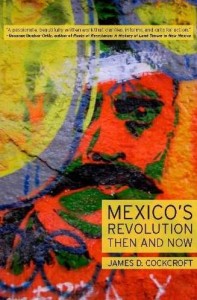
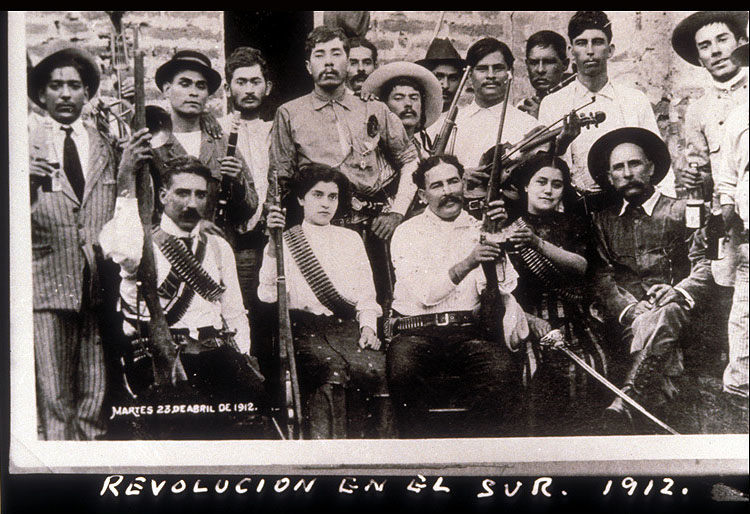
Mexico’s Revolution Then and Now is the title of Jim Cockcroft’s new book. It’s described as the perfect introductory text to the subject, providing readers the historic context within which the Mexican revolution occurred, how the process played out in the past ten decades and where it is today among Mexico’s workers. Jim examines the tensions between the rulers and the ruled inside the country while also exploring tensions with the United States. The prospect of Mexico’s disenfranchised rising up is kept alive and we discuss those possibilities with the author today. A historian and activist, Jim has written 45 books on Latin America. He’s a professor at the State University of New York and is a member of the International Committee for the Freedom of the Cuban Five.
- You should understand Michael, that Mexico has had a long history of the US meddling in its internal affairs.
- Direct military intervention, direct military conquest of half the country.
- There’s a record of the US sponsoring torture and training torturers that goes all the back to the US torturers that goes all the way back to the US-Mexico War of 1846-48.
- What’s really involved is oil, water, natural resources, and cheap labor power.
- What does the US do about it? It first of all gets rid of the old government, the longest ruling single party in the history of human kind, the PRI in 2000 by supporting the more conservative option to that government.
- the PAN, the Party of National Action which has governed Mexico from 2000 to the present.
- A government by, of and for big business. US imperialism has a very direct goal to annex Mexico economically which is partially done already and if need be militarily occupy it.
- Propaganda: Mexico is a failed state and that there are these narco gangs cutting off people’s heads and killing civilians.
- It’s a state of failed law. It’s a very successful state as a puppet of US goals.
- The Narco gangs, some of them are actually integrated in the Mexican government.
- The vast majority of the 34 thousand killed, civilians mostly, in four years of this current illegitimate government. Feminicide and youthicide, to be female or young in Mexico is to be criminal.
- It’s a fake war (war on drugs) always has been for about 30 or 40 years.
- Follow the dollar. Where does the laundered money end up? In the hands of the 6th largest banks in America.
- The bailout of the banks is chicken feed compared to what’s really saving the banks, drug money.
- Obama was wrong in his State of the Union speech, the United States is only number one militarily.
- That’s why you have a return to dirty wars, militarization, military coups in Latin America.
- Mexican 1917 Constitution establishes that oil and other natural resources belong to the nation, not the private corporations. We have to take the banks out of the hands of the bankers, and take the factories out of the hands of the industrialists and let the people run them.
- The Mexico state is a fascist state in the broad sense of the word. The first thing a fascist does is crush labor.
- But labor is resisting and that’s what is so dynamic about Mexico today. The movement’s alive but it’s being repressed.
- I’m a member of 2 civil society international tribunals. Trade Union Freedom, the Conscience of the Movement of People.
- Mexico is the key to the future of Latin America.
Guest – Dr. James D. Cockcroft – A bilingual award-winning author of 45 books on Latin America, US hidden history, culture, migration, and human rights, (Ph.D., Stanford University) is Internet professor for the State University of New York. A bilingual poet, three-time Fulbright Scholar, and Honorary Editor of Latin American Perspectives, he serves on the Coordinadora Internacional de Redes en Defensa de la Humanidad, the International Committee for the Freedom of the Cuban Five, and civil society’s Benito Juárez Tribunal (vice-president, 2005) that judged U.S. terrorism against Cuba and International Tribunal of Trade Union Freedom (2009-10) that judged Mexico for its violations of labor and human rights. A Canadian immigrant, he is a member of the UNESCO-sponsored World Council of the José Martí World Solidarity Project, la Table de Concertation de Solidarité Québec-Cuba, la Société Bolivarienne du Québec, la Base de Paix Montréal, le Comité Fabio Di Celmo pour les 5, and the Canada-Cuba Literary Alliance.
—
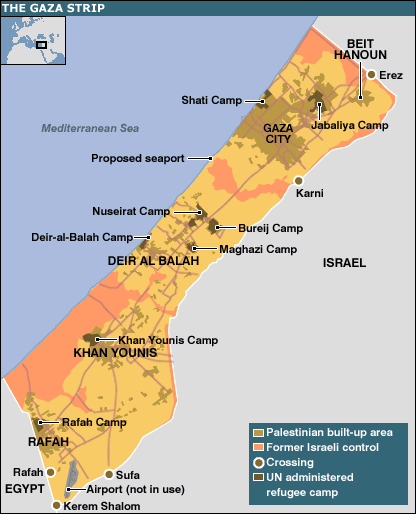
Gaza In Crisis: Reflections on Israel’s War Against the Palestinians, by Ilan Pappé
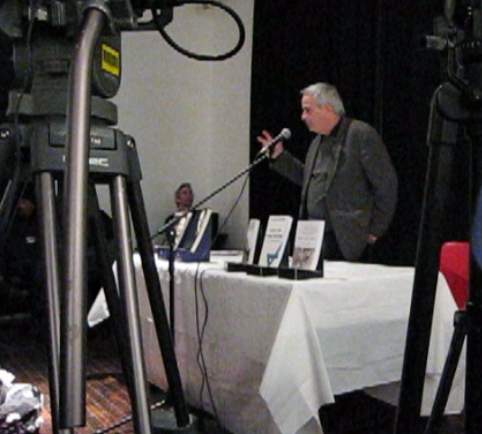
We listen to excerpts from a speech plus question and answers from acclaimed Israeli New Historian Ilan Pappe. Ilan Pappé surveys the fallout from Israel’s conduct in Gaza and places it in the context of Israel’s longstanding occupation of Palestine. Israel’s Operation Cast Lead thrust the humanitarian crisis in the Gaza Strip into the center of the debate about the Israel/Palestine conflict.
Speaker – Ilan Pappé is professor of history at the University of Exeter in the UK, where he is also co-director of the Exeter Center for Ethno-Political studies, and director of the Palestine Studies Centre. He is author of the bestselling The Ethnic Cleansing of Palestine (Oneworld), A History of Modern Palestine (Cambridge), The Israel/Palestine Question (Routledge). Ilan is also a long-time political activist.
——————————–
Law and Disorder February 7, 2011
Podcast: Play in new window | Download
Updates:
- Jimmy Carter Sued For Allegedly Supporting Anti-Israeli Agenda In 2006 Book ‘Palestine: Peace Not Apartheid’
- Brooklyn College Teacher Fired For Writing On Israel/Palestine Then Reinstated
- Groups File Federal Gas Drilling Lawsuit against DRBC Delaware River Basin Commission Served Notice
- Egyptian Revolt Update: Endgame Approaching.
—

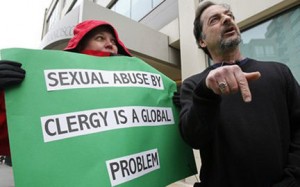
New Vatican Rules On Handling Priest Sexual Abuse Cases
Earlier this year, the Vatican had revised its laws making it easier to discipline sex abuser priests. The new internal of the Vatican will use faster judicial procedures instead of full ecclesiastical trials. Critics of the revisions, say the Vatican merely tweaked the process and the new rules don’t hold bishops accountable for abuse by priests on their watch or require that they report the sexual abuse to the authorities. In the same report was the inclusion that attempting to ordain women as priests was comparable to heresy, apostasy and pedophilia. To many it was a comparison meant to resist any suggestion that pedophilia can be addressed by ending the requirement of celibacy.
- SNAP is now a worldwide movement of survivors. We invite supporters join us, we have approximately 10 thousand survivors. Some are spouses and family members but most are survivors; survivors of sexual abuse by priests or other clergy members. Sometimes by religious brothers, by nuns, deacons even bishops.
- We grew in 2002 and 2003 as the headlines were exploding of abuse by priests.
- We have support group meetings in the United States in about 65 different cities. We were extremely naive, not to mention wounded trying to figure out how to make it from day to day. Its empowering for us if we can protect someone who is 12 or 13 from being abused.
- Some documents was released in 2009 in Ireland. Those were the result of government investigations into the allegations of priests and other religious figures sexually abusing children. Victims across Europe, in Germany and Belgium, Austria, Netherlands, England began speaking out and reporting their abuse. In Ireland at the end of 2009, four bishops were resigning their positions.
- From our perspective, what comes out of the Vatican is a lot of lofty words and empty promises. If you look for concrete action, you’ll see very little if any. We as victims are devout Catholics and its really incredible for us to comprehend that someone in the position of authority in the church would not want us to be protected.
- It was heartbreaking and devastating to learn the policy of the church officials is to protect the predators and their assets and their reputations, not the children.
- They’re accountable to no one and its okay for them to continue and commit these crimes.
- The vast majority of victims still do not report. More than 5 thousand priests have been identified are sexual offenders who have abused children between 1950 and 2008.
- 5 percent of priests abusing children. When someone rapes a child they get fired, in the church they get promoted. SNAPnetwork.org / bishopaccountability.org
- We joined a conversation with SNAP looking for ways to insure accountability for what’s going on.
- Is there a legal framework that gets at the widespread nature of this. There’s one book out that discusses the 2000 year old paper trail of sexual abuse in the church.
- You’ll hear things like a cardinal or a pope attempt to make an apology. They’re sorry for what happened to these folks. It didn’t just happen.
- It shows the lack of attention and lack of awareness of the gravity of what’s going on and a prioritization of the church protecting itself and its power, rather than insuring the protection of the kids in the church and others who are vulnerable to abuse by priests.
- It also looks like an attempt to decentralize the responsibility. There are key legal experts who have discussed this as crimes against humanity.
- These are acts that are committed as a widespread or systematic assault or attack on the civilian population.
- When you’re talking about the massive sustained harm that is being caused here and the lack of awareness and acknowledgment. . it’s really astonishing.
- The International Criminal Court is a possible venue that has jurisdiction on crimes against humanity.
- The Church can’t be trusted to police itself.
Guest – Pam Spees, senior staff attorney in the international human rights program at the Center for Constitutional Rights. She has a background in international criminal and human rights law with a gender focus, as well as criminal trial practice
Guest – Barbara Blaine, founder of SNAP, Survivors Network of those Abused by Priests, the nation’s oldest and largest self-help organization for victims of clergy sexual abuse.
——
The politics of abortion continue to divide the country as nearly 38 years have passed since the Roe v Wade decision. January 22, marks the landmark decision by the United States Supreme Court to legalize abortion. Tens of thousands of women have been saved from death and serious injury since abortion became legal in 1973.
Will legal abortions be attacked by the new Congress? Representative John Boehner and 50 supporters seek to codify the Hyde Amendment with The No Taxpayer Funding for Abortion Act. Listeners may remember our interview with Rhonda Copelon who filed a nationwide class action lawsuit that stopped Hyde from taking effect in 1976 which would prohibit Medicaid funded abortions for poor women.
Both sides of this controversial issue will be heard during this anniversary, meanwhile the longstanding clash between anti-choice people and abortion clinics continue. In a Bronx abortion clinic for example, police and National Lawyers Guild legal observers monitor the threats against escorts or anyone interfering with those going into the clinic.
- It’s been over five years that the clinic has been attacked by the right wing.
- The groups that are out there are funded by Chris Slattery, he runs about 26 crisis pregnancy centers, false clinics throughout the different boroughs and also by the Catholic Church.
- There are religious rightists out there, praying, harassing, yelling at women as they enter the clinic, and also yelling at their partners as they enter the clinic.
- They yell, “you’re not a real man.” “We have alternatives.”
- They particularly target the Bronx. It’s a poor neighborhood. It’s the outer boroughs.
- New York Coalition for Abortion Clinic Defense
- There is a clinic access law and they’re supposed to stay behind barricades, 15 feet away.
- Dr Emily’s Clinic there have been situations where they (protestors) have changed womens’ minds.
- We have vests on that indicate we’re escorts. We also act as a guard by putting ourselves between them (the right wing) and the women. We try really not to engage them.
- Franciscan Monks will say you’re out here because you’re angry and never been loved by a real man. Radical Women – 212-222-0633
- We’re out there every Saturday from 8AM to NOON.
- Congress failed by only one vote to sterilize all Japanese women that were interned.
Cristina Lee:
- I’ve been doing legal observing at the clinic for 6 months. The police are very hands off.
- We’ve also seen officers who’ve been very very chummy with the anti-choice activists.
- It doesn’t take much for them to say, you need to be 15 feet back, and they won’t even do that.
- We have legal observers go to clinic to observe how the police are enforcing the laws, are they enforcing the laws. Franciscan Monks go not just to object but are very abusive verbally.
- It’s not something that’s happening in the mid West.
- If you want to get involved as an escort you can go the New City Chapter of the National Lawyers Guild.
Guest – Cristina Lee, law student and National Lawyers Guild legal observer.
Guest – Elizabeth Maloney, member of Radical Women and led a delegation of Radical Women members to Jackson Mississippi to defend the last abortion clinic. In 1984, the group had helped to get the first conviction of a fire bomber.
——————————————-
Law and Disorder January 31, 2011
Podcast: Play in new window | Download

Jon Burge, Former Chicago Police Commander Sentenced to 4 ½ Years
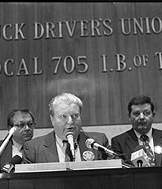
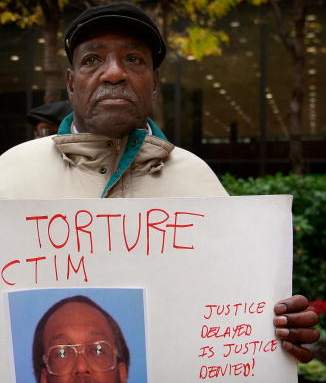
Here on Law and Disorder we’ve reported on the ongoing developments of the Chicago Torture case and former Chicago police commander Jon Burge. Burge has been sentenced to 4 and a half years in prison for obstruction of justice and lying about torturing prisoners to obtain coerced confessions. The People’s Law Office brought the case in 2005 and the city of Chicago refused to settle while pumping hundreds of thousands of dollars into the case. Attorney with the People’s Law Office Flint Taylor says the city has spent over the 10 million dollars in aiding the defense of former Commander Jon Burge. Mr. Burge, who is 63 and in ill health, was fired from the Chicago Police Department in 1993. Attorney Flint Taylor’s Statement on Burge sentencing.
- Burge did not do this alone. Many people working under him or with him, those people are under investigation.
- The city pours millions of dollars into the defense of Burge with private lawyers.
- There needs to compensation and treatment for all the men that were tortured that number is in the hundreds.
- We have a mayoral race here, with 3 Daley clones, none of them have addressed what the judge has said.
- The judge cited the city and the police department as well as the state’s attorneys office under Richard Daley has a dismal failure of leadership with regard to these cases.
- To be in the court room and hear a judge adopt our view that we fought so hard for, that was very rewarding.
- People look at the sentence, it’s a little less than five years, of course you should do much more than that for torture. The judge had her hands tied in some degree and she went as high as she could, going double on the guidelines that were recommended.
- We’ve been raising for decades why Richard Daley didn’t prosecute for torture when he was states attorney.
- The Obama Administration’s failure or refusal to prosecute admitted torturers, I’m talking about Bush who in his book admitted that he authorized water boarding.
- Chicago is a beacon of light in the fight against torture.
- We fought for decades here to get the prosecutions, to get the convictions, to get the sentence.
Guest – Attorney Flint Taylor, a graduate of Brown University and Northwestern University School of Law and a founding partner of the Peoples Law Office. More bio
—-
State of Democratic Rights – Bill Goodman
We’re joined today by attorney Bill Goodman former legal director for the Center for Constitutional Rights. Bill has been an extraordinary public interest lawyer for more than 30 years he’s served as counsel on issues including post-Katrina social justice, public housing, voting rights, the death penalty, living wage and human rights work in Haiti. Bill delivered a speech recently titled the State of Democratic Rights, defining democracy as we now understand it. Everyone of these defining points has been attacked or undermined and very little has been done to repair them under the Obama Administration.
- If you want to define or crystallize what American democracy looks like in maybe 7 concepts you can break down pretty well.
- People can’t be detained without good cause and without being charged with a crime in front of an independent magistrate.
- They can’t be tortured or punished in ways that are extreme.
- They’re allowed to protest publicly. First Amendment rights.
- People can’t be discriminated against based upon religion.
- Separation of powers, so that no single branch of government becomes overly important or overreaches.
- Right to privacy. The government can’t break into our houses, unreasonable search and seizure.
- The right to free and fair elections and have our votes counted.
- From a lawyers perspective, what I see is an unwillingness of the courts.
- It’s shameful that these judges don’t step up to the plate and say that this should not happen and will not happen.
- Humanitarian Law v. Holder. There’s a very serious attempt to extend the concepts of terrorism to protesters right here in the United States.
- People who work on behalf of the environment, animal rights.
- The United States Supreme Court is happy to say that huge corporations can spend as much money as they possibly want to shift and tilt the electoral playing field right here in the United States.
- In order to strengthen the Constitution we need active aggressive organized movements.
- Within the end of a generation we can see the end of public education in the United States.
Guest – Bill Goodman, former legal director for the Center for Constitutional Rights has been an extraordinary public interest lawyer for over 30 years, and has served as counsel on issues including post-Katrina social justice, public housing, voting rights, the death penalty, living wage, civil liberties, educational reform, constitutional rights, human rights work in Haiti, and civil disobedience.
—
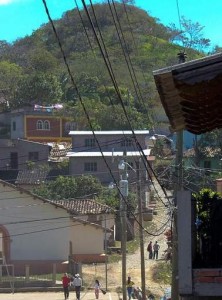
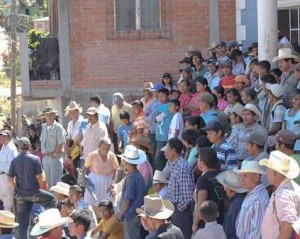
Post Coup Aftermath – Honduras: Sarah Hogarth
Today we are joined by legal worker Sarah Hogarth who has recently returned from a human rights delegation to Honduras through the Friendship Office of the Americas. We talk with her about her observations on the post coup human rights crisis in that country. As listeners may know On June 28, 2009, the Honduran military ousted the democratically elected President Manuel Zelaya. Former Parliamentary speaker Roberto Micheletti was sworn in as Zelaya’s replacement. Repressive tactics were used immediately after the coup–people on the front lines who oppose this regime have been beaten and illegally detained by the state. Journalists and LGBT activists were among the first to be targeted and killed. Dr James Cockcroft joins interview.
Sarah Hogarth/ James Cockcroft:
- The purpose was to meet with the movement leaders and the human rights organizations there.
- Honduras elections broadly considered to be illegitimate. The president who was overthrown, brought Honduras into ALBA.
- The outgoing president was flown out of a US military base in Honduras. The whole world knew this, but the United States said it wasn’t a coup. Now wikileaks shows that the ambassador was already telling Washington, it’s a coup.
- Zelaya was not the most radical of political leaders by any stretch.
- The resistance movement there is truly an inspiration. The new Honduran regime has instituted anti-terrorism legislation.
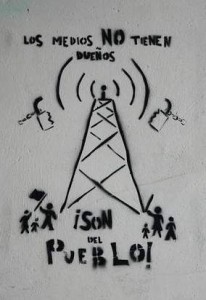
- The community radio movement in Honduras is the primary means, to disseminate real news about what’s happening.
- There was a time after the coup the radio equipment was not only shut down by the military but the equipment destroyed.
- Withing 48 hours, community radio stations from other Latin American countries rushed to the borders of Honduras to keep communications going into Honduras among the resistors.
- The people want the money flow to stop funding the new regime.
- Six thousand Marines were just sent to Costa Rica. Two military bases in Honduras, 6 in Columbia.
- The whole foreign policy of the United States has been and extension of the Bush policy of militarization of the world.
- This is being pitched in the context of the war on drugs. Disguise the imperial intervention with the war on drugs.
- There is an extremely small amount of arable land in Honduras.
- The level of unity among all these people is truly impressive.
- Another thing that is discouraging is the extreme privatization that has happened over the past year.
- They have given away the farm to these large corporations.
Guest – Sarah Hogarth, human rights activist in New York City. She is a freelance legal worker and writer and has recently returned from a human rights delegation to Honduras through the Friendship Office of the Americas. The delegation met with activists to learn about the human rights situation in Honduras in the one year since the elections in November 2009. In June 2009, democratically elected President of Honduras, Manuel Zelaya, was removed in a military coup d’etat.
Guest – Dr. James Cockcroft, historian and activist, Jim has written 45 books on Latin America. He’s a professor at the State University of New York and is a member of the International Committee for the Freedom of the Cuban Five.
—————————–