Welcome to Law and Disorder Radio
Law and Disorder is a weekly independent civil liberties radio program airing on more than 150 stations and on Apple podcast. Law and Disorder provides timely legal perspectives on issues concerning civil liberties, privacy, right to dissent and practices of torture exercised by the US government and private corporations.
Law and Disorder January 24, 2011
Podcast: Play in new window | Download
Updates:
- Heidi Boghosian Visits Mumia and Other Prisoners at SCI Greene Prison
- Update on Mumia’s Case, Mumia Reading Griftopia.
- Mumia Abu-Jamal Comments on The Emerging Police State
- Jean-Claude (Baby Doc) Duvalier Shows Up In Haiti: “It’s Hard To Believe This Wasn’t Worked Out
—
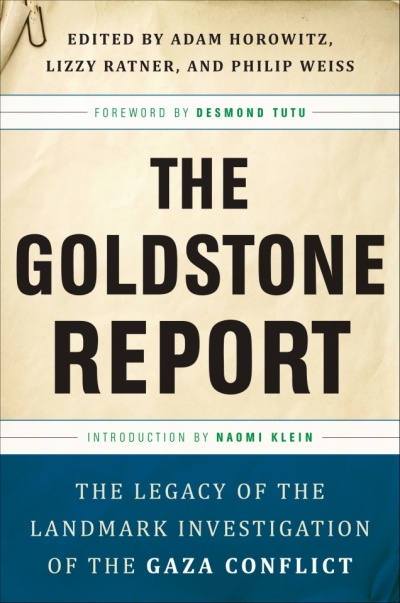
The Goldstone Report: The Legacy of the Landmark Investigation of the Gaza Conflict.
It’s been more than 2 years since Israel’s Operation Cast Lead, a massive surprise air strike against the Gaza Strip. In its aftermath, researchers began to unearth and document evidence of war crimes, human rights violations. Among those investigations was the Goldstone Report officially titled the Report of the United Nations Fact-Finding Mission on the Gaza. The report is based on a course of investigations that include 188 interviews, the review of 10 thousand pages of documents and the inspection of 1200 photographs. While most war crimes reports fade into the night, The Goldstone Report is kept alive in a recent book titled The Goldstone Report: The Legacy of the Landmark Investigation of the Gaza Conflict.
The authors Lizzy Ratner, Adam Horowitz and Philip Weiss have reprinted the central findings of the report and include 11 essays chronicling the report’s ongoing impact. The introduction is written by author Naomi Klein with a forward by Archbishop Desmond Tutu.
The Goldstone Report:
- LR: Operation Cast Lead: I remember thinking, can this just happen? Is there some kind of law that says this can’t happen? Judge Goldstone is South African, he was a member of the Constitutional Court in South Africa. He is seen as someone who really advanced international law.
- He’s a big Zionist. He’s a committed Zionist. In Israel, they loved him before this report.
- He was fast friends with the head of the Supreme Court in Israel.
- He goes to Gaza in 2009. It’s interesting he remark that thought that he would be kidnapped by Hamas. I think what happened, he went and he saw what life was like in Gaza, and had a bit of a conversion.
- This is not somebody you would expect to come out and issue a report like this.
- Our mission was there’s this report out there, it’s controversial, thunderous, it’s convulsive. Not many people have read it. Once we read it, it became clear, it’s contents were extraordinary.
- It lays out the events of Gaza in minute and devastating detail. We wanted to abridge the report and that really forms the core of the book.
- We have a series of 11 different essays. Each take for the Goldstone Report with a different perspective.
- PW: The first and last essays are from Gazans.
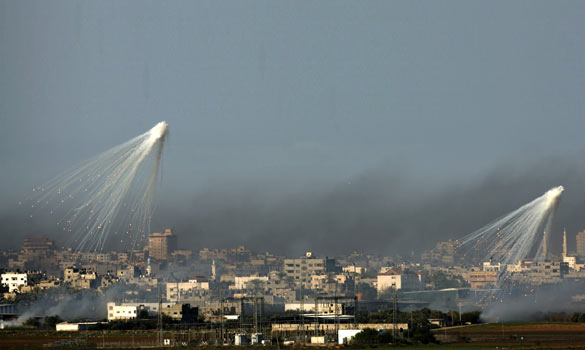
- It’s explained in very vivid terms what it’s like to be under assault, to see white phosphorous raining down on this strip, which is tiny, it’s the size of Martha’s Vineyard and Nantucket put together. 1.5 million people.
- Rogi’s thesis just itemizing this assault on Palestinian dignity, saying this is a basic human right, to live in dignity.
- Goldstone: Lack of discrimination between civilians and combatants. A deliberate attack on the civilian infrastructure on the means of life. Israel had several recourses before it launched an all out assault on civilian infrastructure.
- The Goldstone Report contradicts what Israel tends to say. One of things the report makes clear is there had been a cease fire for 6 months before the attack.
- United States – We’re not going to stop you Israel when you inflict collective punishment on 1.5 million people.
- This book really helps give a window into the current perception of the Israel, Palestinian conflict as a whole and how that perception is changing.
- AH: The anti-Goldstone report speeches were very uninformed. They treated him like a witch and ex-communicated him from the Jewish community. Goldstonereportbook.com
- The criminality, the complete selfishness, the utter indifference to other peoples lives.
- I realize how much I was made to hate Arab people and Palestinian people and to think that they were lesser.
- Everything you’ve heard was wrong about them.
- At the heart of it, the Goldstone Report tells the story of people who had to live through a horribly traumatic event. You won’t be able to dismiss 1300 people being killed as people that should have died.
- LR: Stop it Jewish people, you’re doing the wrong thing, you’re behaving in an immoral, unethical way and its wrong. Any human should be offended from what happens in Gaza and what still happens there.
Guests – Lizzy Ratner, Adam Horowitz and Philip Weiss
Lizzy Ratner a journalist here in New York City, her articles appear in many publications including The Nation and Alternet.
Adam Horowitz is an editor and journalist covering American foreign policy in the Middle East, he co-edits the blog Mondoweiss and is a founding member of Jews Against the Occupation.
Phil Weiss, founder of the blog Mondoweiss, is a longtime journalist and regular contributor to the Nation and a fellow at the Nation Institute He’s the author of two books a political novel, Cock-A-Doodle-Doo, and American Taboo, an investigative account of a 1976 murder in the Peace Corps in the Kingdom of Tonga.
———————————————————————-
Law and Disorder January 17, 2011
Podcast: Play in new window | Download
Updates:
- Guantanamo 9 Years: “89 out of 200 Shouldn’t Be There.”
- The Trial of Posada Carillies: Update: Attorney Len Weinglass
—-

Right-Wing Firms Train Public Servants on Terror Threats
There is a sprawling hidden world of counter-terrorism organizations growing beyond control in the United States. Twenty-four of them were created by the end of 2001, including the Office of Homeland Security and the Foreign Terrorist Asset Tracking Task Force. The next year, 37 more were created to track weapons of mass destruction and collect threat tips. By 2009, nearly 260 organizations were created as 854 thousand civil servants, military personnel and private contractors with top-secret security clearances monitor national security concerns. However, according to a report from the Public Research Associates, those same concerns have bolstered a class of self-proclaimed terrorism experts who decry Islam as an evil religion of terrorists and routinely brand Muslims as primitive, vengeful, duplicitous, and belligerent people who oppress women and gays, and have values irreconcilable with “western Judeo-Christian civilization.”
In fact, when PRA discovered earlier this year that the Massachusetts Bay Transportation Authority (MBTA) had contracted with Security Solutions International to conduct a training on radical Islam, they notified the Muslim American Society, ACLU, and our other advocacy partners, who used PRA’s research to compel the MBTA to cancel the agency’s training.
- As part of the Homeland Security Initiatives and working with the FBI in other aspects of the national security apparatus, there was a need to train thousands as part of a local state and federal counter-terrorism “experts.”
- Some of these trainings are quite good. The problem is that there are a handful of groups that train hundreds and hundreds of local, state and federal counter-terrorism experts, with rhetoric that is basically Islamophobic.
- In the late 1970s there was an attempt to restrain this illegal surveillance. I’d have to say right now it’s worse.
- What used to be done illegally and covertly is now done ostensibly legally and openly and in fact proudly by both Democrats and Republicans who should be ashamed.
- The whole strategic suspicious reporting initiative which basically is a pipeline for unverified rumor and innuendo through local police departments up through a chain of information agencies to the federal government. We know in Europe this kind of reporting is unconstitutional and bad for society.
- Now, everyone that was considered illegal and unconstitutional for which there were Congressional hearings and reforms under Jimmy Carter, now we do it.
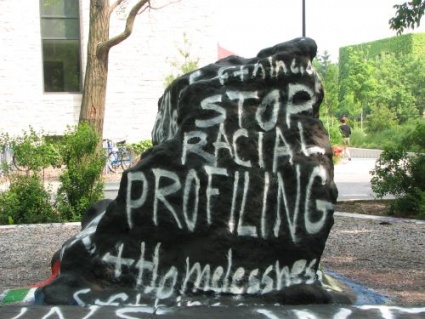
- In proper training that is actually looking for criminal activity, not people of color who wear garb that we’re scared of. What’s going on here is untrained, badly trained officers are reporting the names of people up into a huge infrastructure of information data storage, based on bias they’ve not been trained to resist or confront within themselves.
- We described this whole process as a platform for prejudice in a report by Tom Cincotta
- Tom has on his wall a wall chart of all the agencies of this information reporting system and it has 150 dots so inter-connected, no one can control this.
- I’m urging people to form broad coalitions across the political spectrum.
Guest – Chip Berlet, (senior analyst) is a veteran freelance writer and photographer who specializes in investigating right-wing social movements, apocalyptic scapegoating and conspiracism, and authoritarianism. A PRA staffer since 1982, he has written, edited and co-authored numerous articles on right-wing activity and government repression for publications as varied as the Boston Globe, the New York Times, The Progressive, The Nation, The Humanist, and the St. Louis Journalism Review.
—
Lawyers You’ll Like – Sally Frank
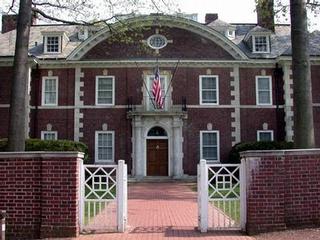
For our Lawyers You’ll Like series, we’re delighted to have with us attorney, activist and Drake University law professor Sally Frank. Sally specializes in family law and domestic violence. Her activism began when she was a student at Princeton University. She filed suit against the Cottage Club, the Ivy Club and the Tiger Inn because they refused to admit her as a member based on gender. 13 years later she won the case and the three eating clubs became coed. Now Sally Frank lectures on women in law and encourages law students to be activists.
- They (Princeton) had 13 eating clubs and 3 of them were all male.
- I sued three of the clubs and the University, it began when I was a 19 year old junior at Princeton in 1979.
- My problem with it was they were very important institutions on campus, they ratified discrimination. A couple of them were the most prestigious clubs, if the most prestigious people discriminated, that kinda made it ok and it radiated it back onto to the campus in other aspects of life.
- The question was whether they were public accommodations or not.
- When I was in 5th grade I watched Inherit The Wind five times.
- Seeing William Kunstler and the Chicago 8 and how he supported the protesters and the rights of the people, and how Clarence Darrow did, made me want to be a people’s lawyer. Clerk for Emily Goodman as first job out of law school. I learned so much from her, I learned how to make a record.
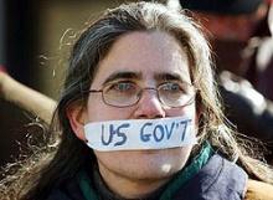
- The Joint Terrorism Task Force began to investigate the peace movement in Des Moines, Iowa.
- There was question that my email was being watched. They subpoenaed 4 peace activists to a grand jury. Drake University was subpoenaed for information on the National Lawyers Guild members.
- After I found out about the Drake subpoena, there was a gag order on the subpoena.
- Leading up to 2008 RNC in Minneapolis, FBI leaving cards with peace activists in Iowa. What was going on here was an intelligence gathering that we were able to stop.
- Do not talk to the FBI, NSA, ICE. It’s very hard for people who were brought up to be polite, not to answer a question.
- We lived in a condo on the 8th floor and Bush came to the senior citizens center next door. We unfurled a banner from the balcony, a half hour before Bush was expected and we got a knock on the door by the secret service.
- I checked with the ACLU and they couldn’t bust in. Exigent circumstances.
- Most of what I do are civil cases.
- There’s certainly more government resentment and government attitude.
Guest – Attorney Sally Frank, longtime activist and law professor at Drake University. As a lawyer and law professor, Sally Frank represents protesters, victims of discrimination and poor people in housing. In her teaching and practice, Sally has helped the disenfranchised in family law and domestic abuse cases. “This is the work of the public interest lawyer. We see the problems of the system and work with our clients and others to achieve justice for them and for society as a whole.”
————————————————
Law and Disorder January 10, 2011
Podcast: Play in new window | Download
Updates:
- Birthright Citizenship Looms as Next Immigration Battle
- Scott Sisters To Be Released On Condition of Donating Kidney
- Former US Vice President Dick Cheney Doesn’t Have A Pulse. Prescribed Warfarin
- IACHR Sets Unprecedented Recommendations for Haitian Govt to Address Wave of Sexual Violence in Camps
—–
Ohio Supermax: Hunger Strike In Long Term Solitary Confinement
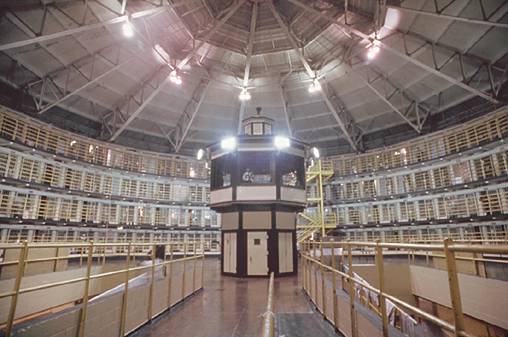
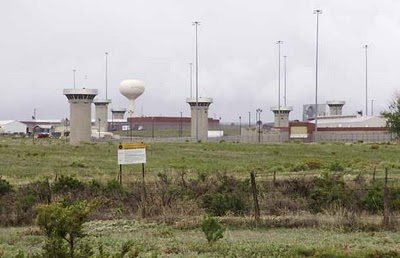
In an Ohio Super Max prison, 4 prisoners facing execution are confined to permanent restrictive solitary confinement. They’re on a hunger strike, bringing attention to their requests to simply be placed on death row. What’s the difference? Death row isn’t as restrictive as permanent solitary confinement. Jules Lobel, Vice President of the Center for Constitutional Rights and Professor of Law at the University of Pittsburgh explains in detail the differences of regular prison, death row and solitary confinement conditions.
Jules is working to defend the prisoners, he says that long term, essentially permanent and very harsh solitary confinement is both cruel and unusual punishment that violates due process requirement of annual review. The state of Ohio has decided to keep these four in solitary confinement permanently. It’s not only in Ohio, permanent solitary confinement is becoming a problem nationally, particularly with people convicted of terrorism related offenses, including material aid to terrorism.
- They’re in cells no bigger than a parking spot in New York City. They’re confined 23 hours a day. They’re allowed out 5 hours a week. The cell doesn’t have bars, like the ones you’d see on television. It’s a solid steel door. The prison officials actually put strips around the door to prevent any sound from getting out.
- There’s a little window. They’ve been locked in this situation for 17 years.
- It’s because they were the leaders of prison rebellion in Lucasville, Ohio, demanding better conditions.
- In that rebellion a guard and inmates were killed. Because they were leaders of that rebellion they were given the death penalty.
- After the prison riot, they built a super max prison with 500 cells.
- And they had no where near 500 people under any conceivable criteria would warrant this kind of confinement.
- The problem in this case which will probably be the problem in Guantanamo, is the annual review.
- One of the prison officials said we’re going to keep you here forever, there’s nothing you can do to get out.
- People on death row have contact visits. They’re not kept in for 23 hours a day. They can eat meals with other prisoners.
- They’re totally isolated from the outside world, and totally isolated from each other. The only thing they said they could do is deprive themselves of basic human needs namely food.
- When you go to these prisons and you look into the cells you see men pacing back and forth.
- If you can get a psychologist to declare you mentally ill, they’ll transfer you out of the super max.
- In the United States I think there is a general tendency in recognizing that this is psychological harm.
- In the last 20 years, there’s been a tremendous growth of super max(s)
- Support the Lucasville Prisoner Hunger Strike
Guest – Jules Lobel, through the U.S. Center for Constitutional Rights, Jules has litigated important issues regarding the application of international law in the U.S. courts. In the late 1980’s, he advised the Nicaraguan government on the development of its first democratic constitution, and has also advised the Burundi government on constitutional law issues. Professor Lobel is editor of a text on civil rights litigation and of a collection of essays on the U.S. Constitution, A Less Than Perfect Union (Monthly Review Press, 1988). He is author of numerous articles on international law, foreign affairs, and the U.S. Constitution in publications including Yale Law Journal, Harvard International Law Journal, Cornell Law Review, and Virginia Law Review. He is a member of the American Society of International Law
——
Defending Grand Jury Protesters
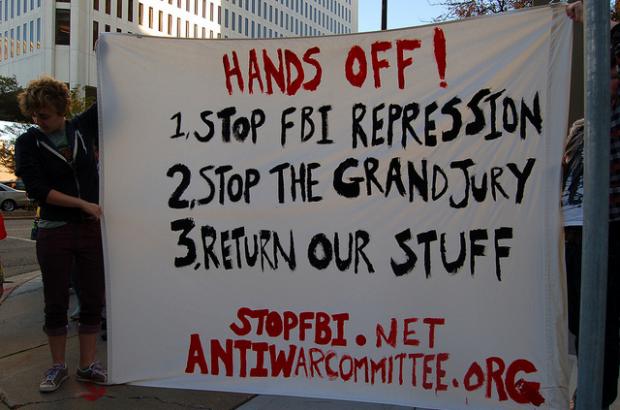
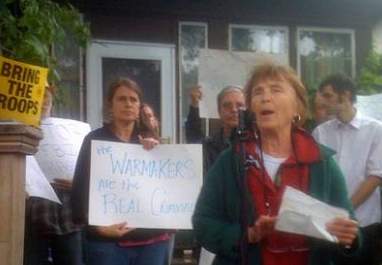
As many listeners know, last September in a nationally coordinated raid, the FBI targeted anti-war and Palestinian solidarity activists, raided their homes and subpoenaed them to appear before a grand jury. The 13 people all of whom were critical of US foreign policy, later withdrew and asserted their right to remain silent. But in early December of 2010 subpoenas were reissued against 4 of those targeted in the raids. Three women in Minneapolis, Tracy Molm, Anh Pham, and Sara Martin were sent reactivated subpoenas by Fitzgerald’s office and new Grand Jury dates.
We’re joined by Chicago based journalist and activist Maureen Murphy who also received a new subpoena. Maureen is managing editor at the website Electronic Intifada, though the site is not being targeted in the FBI probe. In a statement, the Electronic Intifada said, quote, “Although The Electronic Intifada itself has not been a target, we consider the grand jury investigation and all of the subpoenas to be part of a broad attack on the anti-war and Palestine solidarity movements and a threat to all of our rights.”
We are also joined by regular guest, attorney Michael Deutsch from the People’s Law Office and is working with the defense committee.
- I don’t know why its happening, we do know that no crime has been identified. There’s nothing written on my subpoena that I need to bring any documents.
- We believe that the government is subpoenaing us so that we come before a grand jury and name names, and tell them how we organize so they can further disrupt their movement. I’m one of 23 activists now who have gotten the knock at the door. My subpoena says nothing but show up, so I think this is really a fishing expedition.
- In one home they took everything with the word Palestine on it.
- The government has expended a lot of resources on an investigation of a group that has always worked pubicly to advocate for a more just US policy. I was visited by the FBI on December 21, 2010.
- A national committee that has formed around the raids and subpoenas is calling for a day of action January 25, in front of federal buildings and FBI headquarters.
- I’ve already stated that I’m not going to testify.
———
- In December the FBI went out with a stack of subpoenas, and wound up subpoenaing 9 additional people in the Chicago area which then makes 23.
- These people who are subpoenaed are all active in Palestinian support work. Arab American Action Network, Palestinian Support Group. This next wave of subpoenas are people who are they’re trying to gather information from.
- I’ve never in all my experience seen so many people subpoenaed to a grand jury.
- A lot of the Palestine support work has gone on in Chicago.
- Originally 14 people were subpoenaed and each one through their lawyer said they weren’t not going to voluntarily come in. Now they haven’t decided to enforce the subpoena, they said well get back to you when we decide what we’re going to do.
- There are 23 people lined up trying to figure out what the next step of the government is.
- These prosecutors don’t seem to know who they’re dealing with. They see the grand jury as a tool of oppression.
- I believe that the Israeli security apparatus is involved in supplying information to the US government.
- There’s no evidence here of any type of violence or weapons. We’re dealing with advocacy and associations.
- Despite Holder v the Humanitarian Law Project, we believe that it’s a total violation of the First Amendment.
- The underlying tenor is going after people because of their political ideology.
Guest – Maureen Murphy is a journalist and Palestine solidarity activist from Chicago. She spent a few years living and traveling throughout the Middle East, interning for the Palestinian human rights organization Al-Haq in the occupied West Bank in 2004-06 before she was denied entry and deported by the Israeli government. She also lived in Lebanon in 2007, learning about the human rights situation for Palestine refugees and the impact of U.S. foreign policy there.
Guest – Michael Deutsch, attorney with the People’s Law Office in Chicago.