
Welcome to Law and Disorder Radio
Law and Disorder is a weekly independent civil liberties radio program airing on more than 150 stations and on Apple podcast. Law and Disorder provides timely legal perspectives on issues concerning civil liberties, privacy, right to dissent and practices of torture exercised by the US government and private corporations.
Law and Disorder January 3, 2011
Podcast: Play in new window | Download
Updates:
- Year 2011 Law and Disorder Turns Seven
- Listener Comment: Taylor Law – Union Workers Will Be Terminated If They Strike
- Two Year Anniversary of Military Attack on Gaza
- Book: The Goldstone Report: The Legacy of the Landmark Investigation of the Gaza Conflict
—

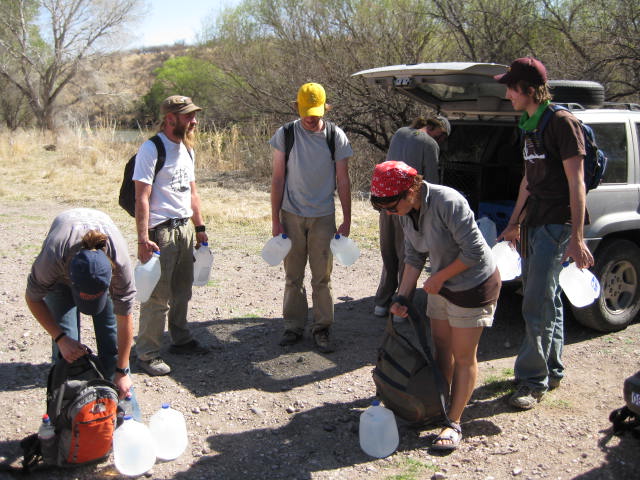
No More Deaths: Jake Ratner and Elena Stein
Hundreds of immigrants are pulled from their families and bused to Nogales, Mexico every day. The families are broken apart as deportees most of whom have been working in the US without a criminal charge, are left in limbo in this foreign city. No More Deaths, the humanitarian organization is also stationed in Nogales to provide basic first reponse aid to deportees. Many immigrants arrive in Nogales after serving months in jail. Jake Ratner and Elena Stein volunteered with No More Deaths and witnessed the sentencing process called Operation Streamline. A system that funnels 75 immigrants every day through a mass court proceeding where they are sentenced up to 6 months in jail. Very few are allowed to explain their situation in court.
Jake Ratner / Elena Stein:
- We were living in Patagonia, Arizona, which is near Nogales, Arizona. There’s a wall in Nogales separating the US and Mexico. The wall is about 15-20 feet high. It was built by the same company contracted to the build the wall in Israel / Palestine.
- It’s right down the middle of the city, so there’s Nogales, Arizona and Nogales, Mexico.
- In the morning we drive 20 minutes to Nogales Arizona. We push our way through a turnstile gate. As we walk in we pass a very long line of those waiting to come in from Mexico.
- No More Deaths provides phone calls to recently deported people so they can have that first phone call to their families. We provide them with property recovery, items that were confiscated can be recovered to them.
- Most the people who we come across have been living the US for a long time. Most have families living in the US. More men than women.
- Some people are found by being pulled over by the police with a broken tail light. They get handed to ICE and then to Border Patrol. Others will get a knock on the door, because there is belief that someone doesn’t have papers.
- This is a new phenomena, that people living in the United States 15 – 20 years are being deported.
- There was a campaign put on by (correction) United Farm Workers saying “Here take our jobs.” (picking tomatos) You want our jobs? Take our jobs. They ran a 2 month campaign. No one. No one wanted those jobs.
- One or two people a day are dying making the trek from Mexico and crossing the desert to the US. The change that we’ve seen is that more people are dying. Streamlining is the process where they take the 75 of the 300 people crossing the border everyday and put them on trial together.
- Corrections Corporation of America wrote this law. This private company sat down with legislators and wrote of Operation Streamline.
- They’re getting money from the tax payers to fill these jails and profit off of Mexican citizens. Operation Streamline has not proven to be a deterrent. The Dream Act / Secure Communities.
- I think there is a responsibility as Americans for us to first understand the realities that people are experiencing everyday as a result of actions that were taken by our country and have a responsibility after understanding it to try and do something about it.
- We have an obligation to have good relationships with our neighbor. It’s Mexico, our neighbor. The more we try to understand the system we’ve become part of, the more we become repulsed at our own participation.
- Corrections sent in from a volunteer at No More Deaths, monitoring Operation Streamline: “the Border Patrol sends up to 70 (never more) of those whom they have apprehended to OS in Tucson, daily, Monday through Friday. The majority are sentenced to “time served” (most have been held 3 or 4 days), given a permanent criminal record and deported. Those who have been deported previously (usually between 20 and 30 people) are charged with the felony of “reentry after deportation” and are sentenced to prison for anywhere from 30 to 180 days. The magistrates always ask the detainees if they want to say anything in court, but few ever do. “
Guest – Jake Ratner -son of co-host Michael Ratner. Jake graduated from the University of Pennsylvania. He’s traveled and studied in Cuba and Bolivia, South America.
Guest – Elena Stein – has worked with recent deportees on the Arizona-Mexico border. She graduated last year from the University of Pennsylvania. She has worked with human rights groups in the US and Central America, specifically with children.
—–
Lawyers You’ll Like – Azadeh Shahshahani
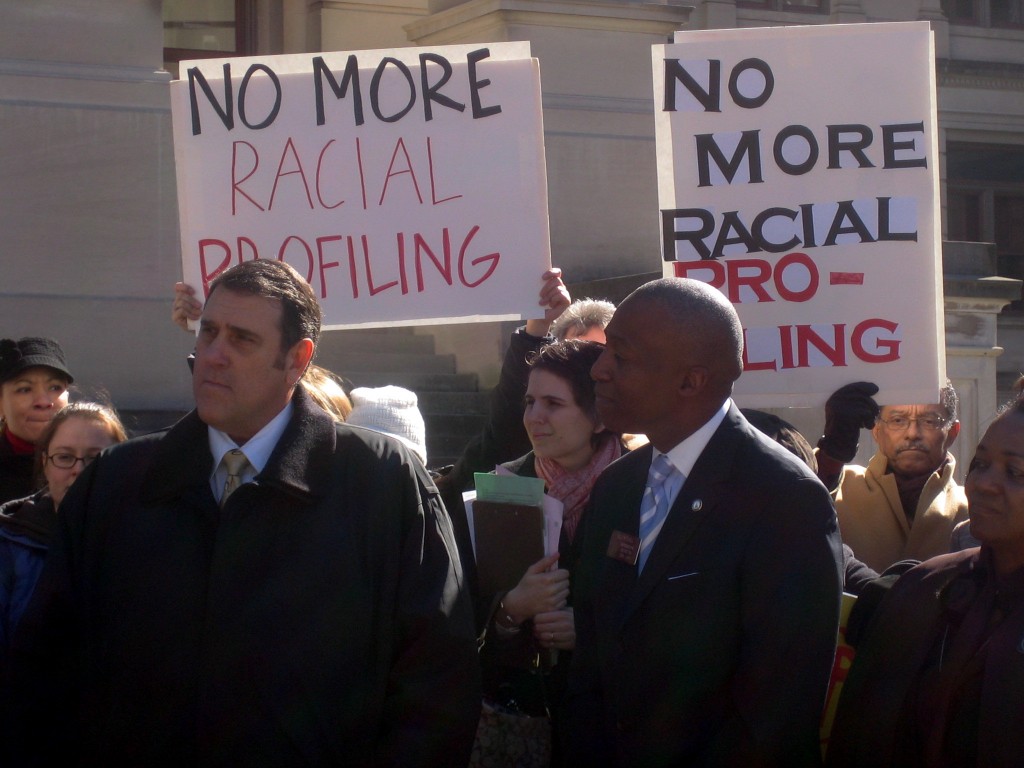
For our Lawyers You’ll Like series, Azadeh Shahshahani joins us. Azadeh is the Director of the National Security /Immigrants’ Rights Project at the ACLU of Georgia. That’s a project aimed at bringing Georgia into compliance with international human rights and constitutional standards in treatment of refugee and immigrant communities. This also included immigrant detainees. She is the editor of two human rights reports one on racial profiling: “Terror and Isolation in Cobb: How Unchecked Police Power under (federal law) 287G Has Torn Families Apart and Threatened Public Safety” and “The Persistence of Racial Profiling in Gwinnett: Time for Accountability, Transparency, and an End to 287G.” Azadeh also serves as Executive Vice President and International Committee Co-chair for the National Lawyers Guild.
- I work on immigrants’ rights and post 9/11 security issues with the ACLU of Georgia
- 287g turns law enforcement into immigration officials.
- There are four counties in Georgia that have 287g. These are counties with long and documented racial discrimination. The numbers (of those picked up and processed through 287g) have gone up tremendously in one county, 2 thousand plus people in Cobb County.
- A lot of them have ties to the community, have US citizen spouses or children.
- Sometimes it’s not clear why people get pulled over, there’s no moving violation on the ticket. Georgia doesn’t have an anti-racial profiling law on the books so there’s no way to hold the police accountable.
- Detention Centers: Some are run by the government, others are run by counties, jails, then private corporations.
- In Georgia, you have 2 operated by the Corrections Corporation of America, then you have City of Atlanta jail that rents space to ICE.
- The Obama administration boasted that it deported 400 thousand people.
- Lawsuit against ICE, seeking safeguards that US citizens aren’t deported and people with disabilities are afforded a measure of due process. Georgia Detention Watch
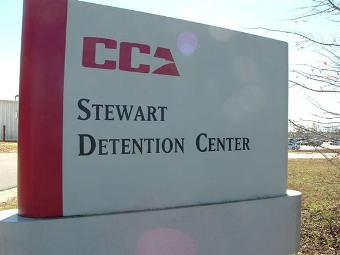
- Stuart Detention Center Report: 16 men per one toilet. No contact visits.
- I came to US when I was 16. I went to law school in Michigan. After law school I knew that I wanted to do human rights work. I approached the ACLU of North Carolina and proposed a project focusing on empowerment, know your rights presentations at the mosques. Also putting together an anti-racial profiling campaign.
- State Must Enact Anti-Profiling Laws
Guest – Azadeh Shahshahani, the Director of the National Security/Immigrants’ Rights Project at the ACLU of Georgia. The project is aimed at bringing Georgia and its localities into compliance with international human rights and constitutional standards in treatment of refugee and immigrant communities, including immigrant detainees. To that end, a variety of strategies are employed, including the development of impact litigation, legislative advocacy, providing training to attorneys, human rights documentation and the publishing of reports, public education, and coalition and movement building. The current focus areas of the project include: immigration detention, racial profiling and local enforcement of immigration laws, governmental surveillance, discrimination faced by Muslim, Middle Eastern, and South Asian communities, immigrant access to higher education, and language access in the court setting. Azadeh’s opinion pieces have appeared in print and online publications such as the Atlanta Journal Constitution, the Fulton County Daily Report, and the Huffington Post.
—————————————————
Law and Disorder December 27, 2010
Podcast: Play in new window | Download
Updates:
- Lynne Stewart Moved to Facility in Fort Worth, Texas
- Please Write to Lynne at:
LYNNE STEWART, # 53504-054 / FMC CARSWELL / FEDERAL MEDICAL CENTER
UNIT 2N / PO BOX 27137 / FT. WORTH, TX 76127 - Italian Appeals Court Increases Sentences of 23 Former CIA Agents
- Obama Administration Issues Executive Order on Indefinite Detentions
- Don’t Re-Package Guantanamo
- Bradley Manning Detention Conditions
—–
Economic Recovery? Austerity in the US and Abroad
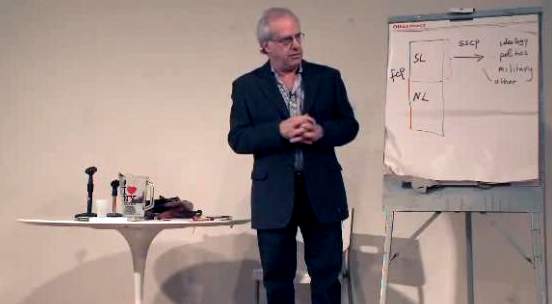
In our previous interview with Professor of Economics, Rick Wolff, we talked about austerity, that is imposing on society a severe regimen of rising taxes, or cut government spending to please and satisfy creditors. Massive protests erupt against austerity in Greece, Portugal, Ireland and soon maybe Spain, as governments raise college tuition, taxes, retirement ages plus cutting worker benefits and wages. These austerity measures are about to hit the United States. Veiled in the recent tax deal with the Republicans is a decision Americans will need to make. Higher taxes or cut services? With growing debts made worse by Obama’s tax deal, the US moves quickly toward austerity while the political establishment and the media mostly pretend all is well says Rick Wolff.
- In order to get anything through, the President had to accomodate the richest people in the United States and the biggest corporations. I’m going to allow you to pass even more wealth to your children or the people who inherit your estate. Here’s an extra gift, the estate tax.
- These are the people who did the best over the last 30 years. Wage earners and salary earners went nowhere, but people rich enough to own shares in the stock market made out like bandits.
- Estate tax, you can earn money for the state to run services we all need by taxing the super-rich so they’re not quite so far ahead. What this last bill does . . rich people in America were already allowed to leave 3.5 million dollars for each person (husband/wife) to their children or anyone else and the federal government wouldn’t touch it.
- Less than one half percent of Americans who even have this amount of money.
- This new law raises the amount from 7 million per couple to 10 million per couple. The new tax law also reduces the amount to pay from 45 to 35 percent. A gift in the millions for the super-rich.
- Translating into billions of dollars that are now going to be saved by the richest people in the United States. We’re going to be talking about the difficulties the government has in doing things because it doesn’t have money. The government just gave away the store to richest one half of one percent.
- What the rich do when they get a break like this, and when you turn to Wall Street, the hottest investments are in other parts of the world. Funding economic development in other parts of the world.
- Unemployment is as high as it was a year ago. Foreclosures are running at a multi-million dollar clip per year.
- Last month the Federal Reserve decided to print another 600 million dollars. My view is we’ve got years of unemployment ahead of us, years of a disasterous housing market, very few signs of recovery.
- The worst has yet to hit. It takes time for states to crumble.
- The municipal bond market, the debts of cities and towns are going to see significant default.
- You need organization to act in historic moments that moments where people need action.
- The flow of jobs from the United States to other parts of the world is continuing. American corporations don’t see the US as a “growth area.” They’re focused elsewhere.
- We’re becoming a society where large numbers of people are living on the margins. It’s a new experience in this country after a century of being a little different from that.
Guest – Richard D. Wolff is Professor of Economics Emeritus, University of Massachusetts, Amherst where he taught economics from 1973 to 2008. He is currently a Visiting Professor in the Graduate Program in International Affairs of the New School University, New York City. He also teaches classes regularly at the Brecht Forum in Manhattan.
———–
Two Year Evaluation of the Obama Administration
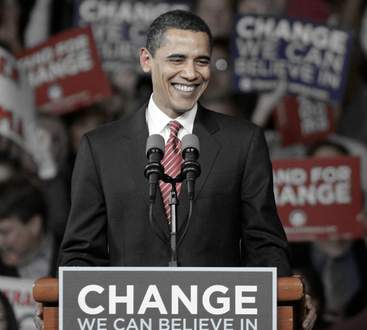
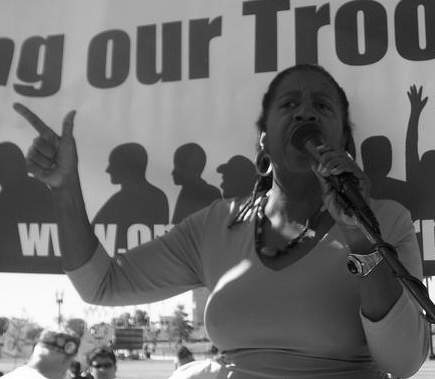
There is a long list of items progressive Americans had hoped to accomplish through the Obama Administration. In our interview with Roger Hodge, author of The Mendacity of Hope: Barack Obama and the Betrayal of American Liberalism, Hodge says Obama didn’t fight for anything worth fighting for. With corporate backers such as Goldman Sachs, Morgan Stanley and Citi-Group, the Obama Administration has been severely compromised. These corporations expect something in return. The Obama Administration has been criticized for expanded the wars abroad from Iraq, Afghanistan, Pakistan and Yemen, criticized for continuing the Guantanamo detention policies, the Wall Street bailouts and bargaining with the Healthcare bill as a bailout for insurance companies. In this aftermath of 2010 and we look back to 2008.
- A browner hue of imperialism. The policy of the US government at home and abroad would remain the same. When we look at the platform of then presidential candidate Barack Obama, he made very clear that he was a centrist candidate. In many instances to the right of Hillary Clinton, if one can imagine that.
- We were never taken in, mesmerized, blinded . . we knew very well who he was.
- He has proven to be much worse than anticipated. Not for me but for my colleagues who were cautiously optimistic.
- On January 20th, President Obama is going to deliver his State of the Union Address. Everyone expects this is going to be the prelude for another deadly compromise for the working class.
- There was a study done in the Guardian newspaper and amazingly African Americans were more optimistic about their economic situation and felt much more secure under Barack Obama’s administration than ever before. When in fact just the opposite is true.
- African Americans have lost trillions of dollars in the housing crisis, the mortgage scam.
- We have to remember it was President Barack Obama that gave the banks a free ride.
- We have added 9 billion dollars to the deficit with this tax cut deal, that is extending the tax cuts to the 2 percent of the wealthy. We are supposed to believe that he did this for us? The poor and the working class?
- Unlike the right wing, I believe he will be a one term president.
- What we need for the working poor and African Americans is the blinders to be pulled off, so people can see what it is that we are dealing with. When you look at the report from the CDC where have a 50 percent increase in the number of people that are uninsured.
- The work force is being reduced, we are expected to work longer hours, we are expected to retire later in life, we are being worked to death. These are the undeniable realities.
- You can no longer herd the people like sheep into this nightmare of compromise.
- After 2 years, I think progressives for Obama need to step back and realize their responsibility for building a working class people, multi-racial movement.
- You have to commit to a movement, you don’t do that as an individual.
- Open Letter to encourage self-proclaimed left leaders such as Bill Fletcher, Tom Hayden and Barbara Ehrenreich to move from critical support into active opposition of the administrations agenda.
- I co-host a program with Glen Ford who is the Executive editor of Black Agenda Report.
- Black Agenda Report, we air on Mondays at 5 PM.
Guest – Nellie Hester Bailey, human rights activist who has worked in peace and justice movements for over forty years. From her early organizing with the Student Non-violent Coordinating Committee, to tenant rights and anti-war struggles, to advocacy on behalf of women Bailey has been at the forefront of social justice and social change organizing. Bailey co-founded the Harlem Tenants Council (HTC) in 1994. She currently serves as Director of the tenant led grassroots organization based on the self-determination tradition of radical activism that provides anti-displacement organizing for poor and working class families primarily in Central Harlem
Bailey is co-founder of Blacks in Solidarity Against the War that in 2005 help stage the largest anti-war demonstration in Harlem since the invasion of Iraq. A founding member of Cuba Solidarity New York, Bailey traveled to Cuba on three separate occasions.
————-
Law and Disorder December 20, 2010
Podcast: Play in new window | Download
Updates:
- Prisoner Strike in Georgia Prisons
- Julian Assange On Ice as US Prepares Indictment.
- Secret Grand Jury Near Pentagon
- Not Easy To Get Assange Extradited to the United States.
- Long Time Social Justice Organizer and CCR Board Chair, Greg Finger passes
- Greg Finger: Defeating Racism Is How We Eventually Define A Just Society.
—-
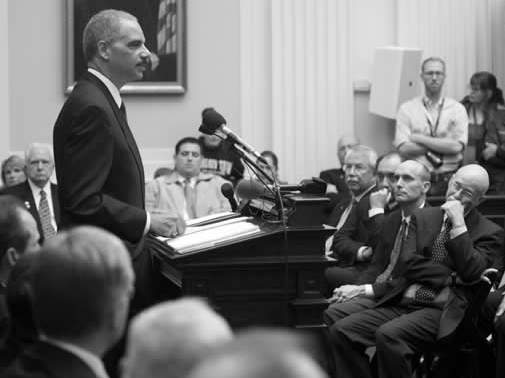
Holder Calls Terrorism Sting Operations ‘Essential’
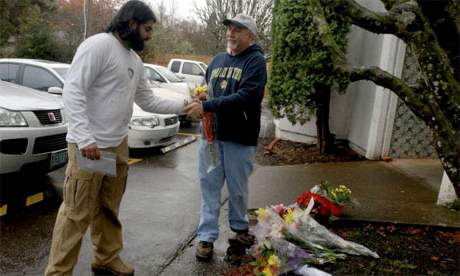
US Attorney General Eric Holder delivered a 20 minute speech last week at the annual dinner of Muslim Advocates a national legal advocacy and civil rights organization. While speaking to a room of nearly 300 Muslim community leaders, Holder defended the sting operation in the Oregon bombing case and called it a “successful undercover operation.” The room fell silent. Holder continued by saying if you think its entrapment, you simply don’t have the facts straight.
Farhana Khera president of Muslim Advocates and a previous guest on Law and Disorder, criticized Holder’s comments saying the FBI is getting people involved with terrorism who wouldn’t have otherwise and resources are being diverted that could be used for actual threats. Holder continued to justify the counter terrorism techniques including sending informers into mosques to find a would-be terrorists and creating elaborate sting operations.
We’ve looked into some of the “undercover operations” and in those cases informants were used, often immigrants offered large sums of money, or plea deals for whatever crime they committed if they agree to work with the FBI. Those cases include the Newburgh Four, the Fort Dix Five and Yassir Aref in Albany. The sting operations create fear among Muslim communities and help prop up the wars raging in Afghanistan, Pakistan, Yemen and Iraq.
- There are 3 things that need to happen for someone to be entrapped by law enforcement.
- The idea of committing the crime had to come from government agents, not from the person accused of committing the crime. The government agent persuaded the person into committing the crime.
- The person wasn’t willing to commit the crime before the government agents spoke to them.
- These cases look the same because the FBI go after the same type of guy.
- I don’t like to get into the details of these cases because the narrative is controlled by the FBI.
- Eric Holder had no business being invited and headlining the event.
- Eric Holder Entraps at Muslim Advocates Dinner
- The FBI has more than 100 Joint Terrorism Task Forces, which includes more than 10 thousand FBI agents.
- They partner with other agents, even IRS agents.
- We basically have law enforcement agents out there spying on people who’ve done nothing wrong.
- I went to this dinner thinking, what are people going to be talking about, are people going to be afraid of hate crimes? People were more worried about the FBI’s tactics than anything.
- The concern is, instead of getting them the help that they need, and preventing an incident and hopefully bettering the community for that, what we’re seeing is the FBI converting them into operational terrorists
- One of the troubles of the war on terror is that we can’t prove whether its successful or not but we want to continue to spend money on it.
- This type of incident justifies that type of offense. The counterproductive measure here is that it puts the community on guard.
- Instead of building relationships with the community they’re trying to work with, they’re burning bridges. This conversation about informants, not knowing who you can trust or who you can candidly speak with, is reminiscent of some of the regimes that people were escaping.
- It’s nothing new. We continue to fall into these patterns.
- An important thing for us as activists and advocates for the community is to insure we’re making these parallels and building coalitions based on that.
- In this last year, people have started to say that it feels as though it’s as bad here as it was a year ago.
- The anti-Muslim sentiment is stronger now in 2010 than it was in 2001.
Guest – former Law and Disorder co-host, Dalia Hashad, attorney and independent consultant specializing in human rights and civil rights. She has run programs at Amnesty International and the ACLU, and she has served as a human rights legal adviser in the Occupied Palestinian Territories. At Amnesty International, Ms. Hashad was the Director of the USA Program, focusing on racial profiling, criminal justice and national security. She also served as AIUSA’s policy specialist in global identity discrimination, addressing issues of race, sexual orientation, religion and gender.
Guest- Attorney Zahra Billoo, executive director of CAIR San Francisco Bay Area CAIR ( the Council on American-Islamic Relations.) Zahra started as an intern for a local chapter of the California Faculty Association, a labor union for California State University (CSU) faculty members. Zahra has also worked as Field Organizer for the Service Employees International Union, and was awarded Peggy Browning Fund Fellowship to work with the National Employment Law Project. Zahra graduated Cum Laude from California State University, Long Beach with a B.S. in Human Resources Management and B.A. in Political Science. She completed her law degree at the University of California, Hastings College of Law.
———-
Entrapped, a documentary film exposing the FBI
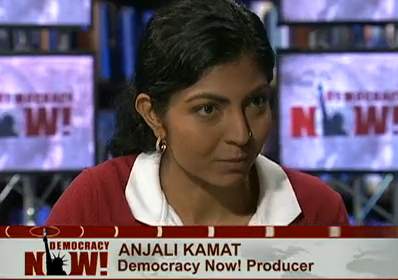
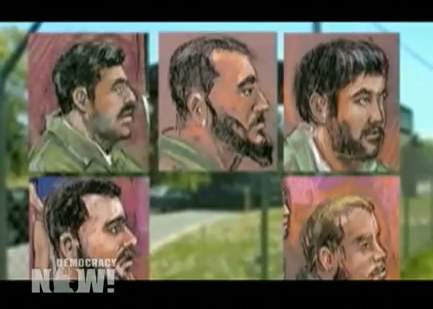
We’ve discussed the many cases of FBI entrapment here on the show and we are delighted to have with us Big Noise film maker and producer for Democracy Now, Anjali Kamat. Anjali had recently finished the film titled, Entrapped, a documentary examing the role of the FBI and government agencies funding and entrapping people by infiltrating specific ethnic and religious communities. She had traveled through Muslim communities in New York and New Jersey interviewing families of those Muslim men arrested on terrorism charges. Recent cases such as the Fort Dix Five, the Newburgh Four and Yassin Aref in Albany are highlighted in the film.
- I did the film as a piece of investigating reporting for Democracy Now along with from Big Noise Films. It’s available at Big Noise Films and Democracy Now DVD
- We had a screening at a restaurant off of Coney Island Avenue, hosted by the Coney Island Avenue Project.
- When these cases come about, they’re often talked about as sting operations. The FBI has been doing undercover work and they discovered this terrorist plot.
- They’re on the evening news, talking about how much safer we all are now as a result of the FBI’s excellent work.
- When you dig a little deeper you realize it’s not really a sting, in most cases. It can be called entrapment.
- Informants: In the cases I looked at, there was a Pakistani immigrant and an Egyptian immigrant, they are offered large sums of money, offered at times a plea deal for whatever crime they committed if they agree to work for the FBI.
- There are 3 cases I looked at, 3 out of dozens of cases. The first case took place in Albany in 2004 that involves a Bangladeshi pizza owner and a Kurdish Imam. They were both convicted and their prison time was reduced from 30 years to 15 years, because the case was very thin and there was an outpouring of community support.
- The second case is the Ft Dix Case, which took place in Pennsylvania. All five of the men were convicted. They are serving life sentences. Four out of the five men were ethnic Albanians from Macedonia. They were construction workers, their father had a roofing business. The fourth was a Palestinian American. Informant encouraged Palestinian American to download more and more jihadi videos.
- These videos are key because they are what was shown at the trial to the jury. The third case, the sentencing hasn’t happened yet. The Newburgh four.
- On the domestic front it allows the government to show its being tough on terror at a time when there is no evidence of where Osama Bin Laden is. At a time when the democrats seem very weak on a number of fronts.
- Another use of this is to create fear among Muslim communities. Now there’s a great sense of doubt whenever someone new comes into the community. Could this person be a government informant?
- It helps justify the wars that are continuing abroad.
Guest – Anjali Kamat, independent radio and print journalist from south India. She has lived in Egypt and Jordan and reported on movements for justice across the Middle East and South Asia. Her work has appeared in Corpwatch, Left Turn, and Samar magazine, and national newspapers in India and Egypt (The Hindu, Frontline, Outlook, and Al-Ahram Weekly). In addition to producing Democracy Now!, she co-hosts and co-produces a weekly radio show on WBAI called Global Movements Urban Struggles.
——————————————————–