Welcome to Law and Disorder Radio
Law and Disorder is a weekly independent civil liberties radio program airing on more than 150 stations and on Apple podcast. Law and Disorder provides timely legal perspectives on issues concerning civil liberties, privacy, right to dissent and practices of torture exercised by the US government and private corporations.
Law and Disorder December 13, 2010
Podcast: Play in new window | Download
Updates:
- Much like the Russian Revolutionaries who opened the books on the Czars’ secret diplomacy and like the Pentagon papers on the Vietnam War, Wikileaks has done a great public service.
- US citizens now have access to the truth, that’s the basis of democracy.
- Julian Assange denied bail.
- Documents show utter duplicity of US government: Hypocritical and lying about fundamentals of democracy.
- Amazon / Paypal / Mastercard quit Wikileaks.
- Isolating, labeling, calling terrorists, but there’s a huge groundswell of support for Wikileaks.
- Wikileaks have struck a real blow against an imperial government.
- Al-Alwaki Decision Judge: The executive decision to kill a US citizen overseas is constitutionally committed to the political branches and judicially un-reviewable.
- Israel to continue building settlements in Palestine.
—–
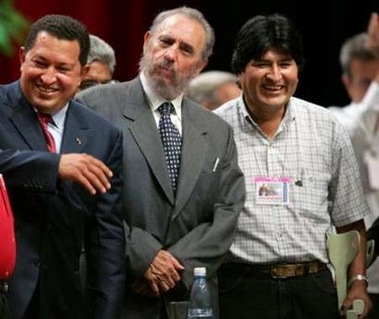
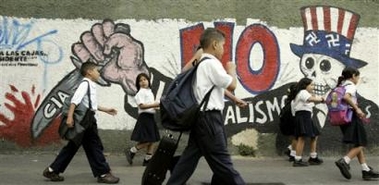
US Congress to Increase Aggression against Venezuela, ALBA Countries
Last week, members of the extreme Latin American right wing held a meeting in Washington with high-level representatives of the US Congress. The event is evidence of an escalation in US aggression toward the region, writes Eva Golinger in her article US Congress to Increase Aggression against Venezuela, ALBA Countries.
The countries in the region include Venezuela, Cuba, Bolivia, Ecuador and Nicaragua – all members of the Bolivarian Alliance of the Peoples of Our America (ALBA) and they were the topic of debates in the meetings that centered around 3 main questions. – and included “debates” centered around three primary questions:
- Are democracy and human rights in danger under the “21st Century Socialism” of Venezuela, Ecuador, and Bolivia?
- Does the ALBA Alliance of Cuba, Venezuela, Bolivia, Ecuador and Nicaragua constitute a threat to US interests and inter-American security?
- Is current US policy toward the region equipped to respond to the erosion of democracy and the pernicious influence of such hostile actors as Iran, foreign and domestic terrorist groups, and narcotics traffickers?
US Congress members at the meeting include House Foreign Affairs Committees, including Elliot Engel, New York democrat and current chairman of the House Foreign Affairs Subcommittee on the Western Hemisphere; Connie Mack, Florida republican and incoming chairman of the same committee; Ileana Ros-Lehtinen, and many more who met with the extreme Latin American right wing responsible for coup d’état’s terrorism and destabilzation.
Eva concludes in her article that this event is proof following the November 2 elections, that Washington’s policies toward Latin America will be more aggressive in the near future.
- The meeting took place in the US Capitol Visiting Center on November 17th 2010, and it was titled Danger in the Andes: Threats to Democracy, Human Rights and Inter-American Security.
- The meeting counted on the participation of several figures, personalities in Latin America from the extreme right.
- There were some people from Bolivia who attempted to overthrow the Morales administration.
- One member participating in the meeting at the US Congress in November was involved with directly in an attempt to assassinate the president of Bolivia. Louis Nunez
- In Latin America there’s been a shift toward more progressive governments and policies, regional integration but at the same time an increased assault on Latin American stability and democracy coming from forces that either held power in prior years or want to take power in the region.
- We’ve seen five coups in the past ten years. Venezuela in 2002, Haiti in 2004, Bolivia in 2008, Honduras in 2009, and Ecuador this year.
- Two of those were successful, Haiti and Honduras. All right wing coups backed by the United States.
- The decision that they (Latin American right wing) came to at the meeting is that the US isn’t doing enough.
- The policy toward Cuba is equated directly with Venezuela, and the policy of Venezuela is going to Ecuador and Bolivia because they all form part of this regional block called ALBA.
- If we have people like Connie Mack running the Subcommittee on Foreign Relations on Latin America who declared in that conference in the Congress last month that with the new Republican majority they need to take action and confront Hugo Chavez head on.
- There are right wing governments in Latin America, we’ve got Peru, Columbia and Chile, but they also rejected the coup attempts.
- Honduras Wikileak memo: The document was an internal memo sent from a US ambassador to the US Secretary of State. It said that the coup that took place June 2009 against President Manuel Zelaya was completely illegal, had no constitutional foundation. It is completely the contrary position the US assumed publicly. The US State Department never declared formally the events as a coup d’état.
- The basis of my work is to use the US Freedom of Information Act to try to declassify US documents, not obtained illegally. One piece of evidence that was demonstrated irrefutably is the increase in funding coming out using US tax payer dollars to fund organizations and political groups in Latin America that are trying to destabilize democratically elected governments.
Guest – Eva Golinger – winner of the International Award for Journalism in Mexico (2009), named “La Novia de Venezuela” by President Hugo Chávez, is an Attorney and Writer from New York, living in Caracas, Venezuela since 2005 and author of the best-selling books, “The Chávez Code: Cracking US Intervention in Venezuela” “Bush vs. Chávez: Washington’s War on Venezuela” ,“The Empire’s Web: Encyclopedia of Interventionism and Subversion.” Since 2003, Eva, a graduate of Sarah Lawrence College and CUNY Law School in New York, has been investigating, analyzing and writing about US intervention in Venezuela using the Freedom of Information Act (FOIA) to obtain information about the US Government’s efforts to destabilize progressive movements in Latin America.
—————————-
Law and Disorder December 6, 2010
Podcast: Play in new window | Download
Updates:
- Renowned author Chalmers Johnson Passes 79
- Oklahoma To Appeal Sharia Law Ban
- Portland Bomb Plot Order Preserves Secret Recordings
—
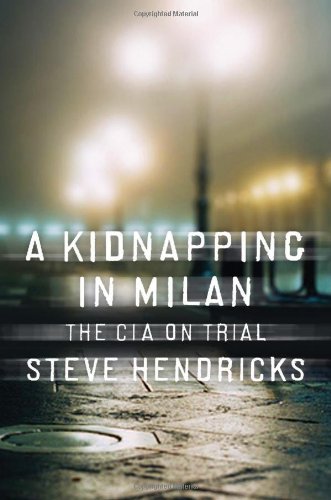
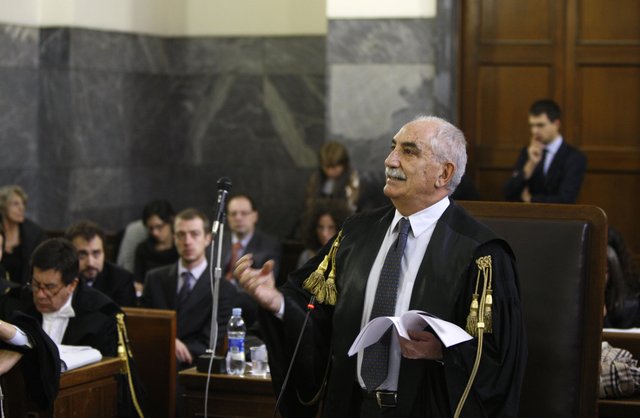
A Kidnapping In Milan: The CIA On Trial
A Kidnapping In Milan: The CIA On Trial is the title of Steve Hendricks’ new book. It is a fast paced account of the realities of counter terrroism. Hendricks gives the reader a beginning to end view of international Islamist terrorist networks in Europre while examining the questions of justice and the rule of law. He writes in detail on the February 2003 disappearance of the radical imam Abu Omar and how under the leadership of prosecutor Armando Spataro, Omar was kidnapped, and sent to be tortured in Egypt. Hendricks traces Omar’s roots in the jihadist world of the Middle East and his travels to Pakistan, Albania and eventually the rundown fringes of Milan. Rivalries, mistrust and bad communication is chronicled amid the CIA, the FBI and the Italian counter terrorism agencies as operatives snatched Abu Omar from the streets of Italy.
- The Italian counterterror police had this imam, Abu Omar under tight surveillance, under suspicion of terrorism. He was one of the ring leaders of a terrorist cell. They were about a month away from arresting him. But one fine day in February 2003, he sets off for his mosque and disappears.
- The CIA had grabbed him off the street literally at high noon. They roughed him up, gagged him, drove him several hours across northern Italy –sent him to Cairo were for months and months he was savagely tortured.
- The Muslim Brotherhood, which really might thought of as the godfathers of radical Islam, got its start in Egypt and toehold in Alexandria. Islam is not going to be re-born simply on its goodness, we have to fight for it.
- The Egyptian authorities cracked down on the radicals and a great number of them fled all over the world, they scattered. Europe was tolerant of foreigners, Italy was one of those countries.
- Abu Omar was tortured for about a year and then they let him out and said don’t talk about it.
- Armando Spataro is this charismatic figure. He did his formative work as a magistrate prosecuting terrorists of the left.
- When the kidnapping in Milan (by the CIA) happened on his watch, he treated it like anything else. He put his foot down on the rule of law.
- SIM Card – Subscriber Identity Module. It’s not just reading the radio waves, it’s in constant contact with the cell tower back and forth. Most cell companies keep record of those interactions. What these kidnappers sloppily did is use their cellphones like teenagers.
- The Italian prosecutors were able to find these kidnappers, they were able to track their movements everywhere they went. Armando Spataro eventually brought charges against 25 CIA agents and one US Air Force Colonel that coordinated the arrival of agents at Aviano Air Base.
- 23 of the 26 of the accused were convicted of kidnapping. They recieved five to eight years depending upon their degree of involvment. What moved me to write this book, over everything was outrage over our inhumanity.
- America has been conducting renditions for about a century.
Guest – Steve Hendricks, a freelance writer living in Knoxville, Tennessee, and Helena, Montana. He is the author, most recently, of A Kidnapping in Milan: The CIA on Trial. His previous book, The Unquiet Grave: The FBI and the Struggle for the Soul of Indian Country, made several best-of-the-year lists in 2006.
—
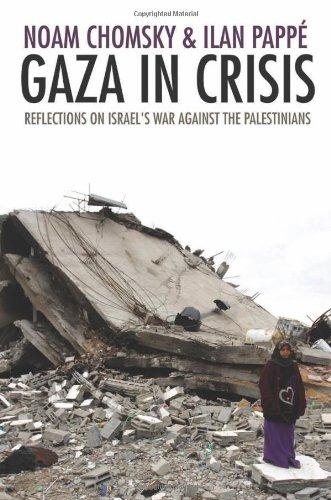
Noam Chomsky – Gaza in Crisis: Reflections on Israel’s War Against the Palestinians
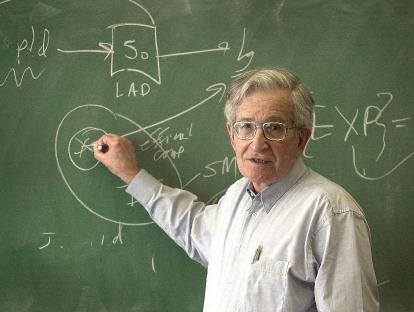
Here on Law and Disorder we’ve chronicled the events of Israeli forces in Gaza and the West Bank. Today we’re delighted to have with us Noam Chomsky, one of the world’s foremost social critics, institute professor emeritus in the MIT Department of Linguistics and Philosophy and author of many books including Failed States and Hegemony or Survival, but we talk with him today about his latest book Gaza in Crisis: Reflections on Israel’s War Against the Palestinians. Noam Chomsky wrote Gaza In Crisis with Ilan Pappé, professor of history at the University of Exeter in the UK. This book surveys Israel’s recent attacks on Gaza from Operation Cast Lead to the Gaza Freedom Flotilla in a very sobering analysis.
- Let’s start with wikileaks. One of the interesting cables from the Tel Aviv embassy and it was to Clinton.
- It was giving her talking points, about the attack on Gaza, and it tells her Israel had to attack on December 2008 in self defense because Hamas had violated the truce.
- In December 2008 Hamas called for a renewal of the truce that Israel had broken. Israel considered it and rejected it. I should say US/Israel because these are joint activities.
- The fact that this can pass without comment, tells you quite a lot.
- In the whole wikileaks episode, in my opinion is the remarkable fact is the absolute contempt of democracy that’s revealed by the embassies.
- The most critical issue is did Israel have any right to use force in the first place? Any right?
- Why have a border cutting Galilee in half?
- The only way I know how to proceed is to get the United States to join the rest of the world and stop its rejectionist opposition to the overwhelming international consensus, agree to a two state settlement.
- The strongest support for Israeli crimes is coming from the business world.
- The most rabid supporter of Israel in the media is the Wall Street Journal. They’re not part of AIPAC, that’s the business world.
- US military intelligence are tightly integrated with Israel. Israel destroyed secular Arab nationalism, that’s when US / Israeli relations took off in their current form.
- It’s about expansion of settlements. Israel already controls 42 percent of the West Bank.
- The issue is the settlements, they are all illegal.
- It designed so that there will be no Palestinian self determination.
Guest – Noam Chomsky, n American linguist, philosopher, cognitive scientist, and political activist. He is an Institute Professor and professor emeritus of linguistics at the Massachusetts Institute of Technology. Chomsky is well known in the academic and scientific community as one of the fathers of modern linguistics, and a major figure of analytic philosophy. Since the 1960s, he has become known more widely as a political dissident and an anarchist, referring to himself as a libertarian socialist. Chomsky is the author of more than 150 books and has received worldwide attention for his views, despite being typically absent from the mainstream media.
————-
Law and Disorder November 29, 2010
Podcast: Play in new window | Download
Updates:
—
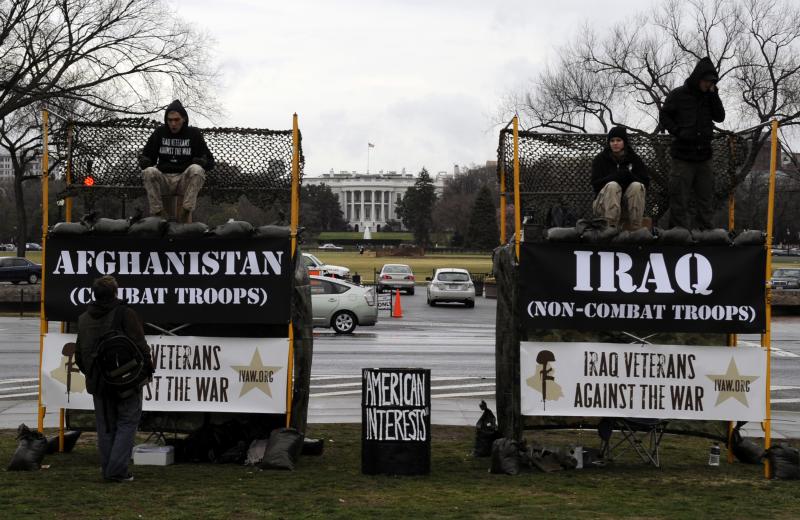
Afghanistan Invasion/Occupation To End Beyond 2014
Thousands took to the streets of London last week to protest against the war in Afghanistan and Iraq, as Nato leaders agreed a strategy to withdraw their troops from the country. US President Barack Obama was expected to announce an exit strategy from Afghanistan at the NATO summit in Lisbon, instead he postponed troop withdrawal beyond 2014. Vice President Joe Biden told one media source “Daddy is going to start to take the training wheels off in October — I mean in next July, so you’d better practice riding.”
- End date 2014, there’s nothing firm about it. “2014 is a goal not a guarantee.”
- Everything is tentative, nothing is concrete. They are pursuing what has been called an “endless war.”
- what is less known is the US Government supported the Taliban, because their priority was a stable government in Kabul, that would permit the construction of a pipeline.
- They needed a pipeline to transfer these giant hydro-carbon reserves, we’re talking about 206 trillion cubic feet of natural gas and 60 to 200 billion gallons of oil reserves.
- This was all before 2001, it was planned. There’s plenty of evidence. There’s a long speech in the Congressional Record in 1998 about the critical importance of building a new pipeline in Afghanistan.
- This is all geo-political and economic, it’s empire building.
- It became converted into a war on terror, after 9/11.
- At the same time there’s no money to pay unemployment compensation and all the urgent social needs at home to put people back to work
- The anti-war movement needs to reiterate the origins of the war and the rationale.
- There’s no draft, only a small percent of the population has placed Afghanistan at the top of the priority list.
- Past anti-war movements: We had a mass base among the students. We need to tie the war to the economic crisis, bring the war dollars home.
- Rethink Afghanistan: Destroys Failed Logic of War by Jeremy Scahill
- When they kill leaders, they get replaced, and it generates recruiting among the insurgents.
- US Law Labor Against the War was able to get the AFL-CIO to take a position of rapid withdrawal from Iraq.
- Our biggest problem in terms of constituencies, we do not have a mass base. It’s the students the labor movement and the religious community. Everything is imploding in this country.
- Contact Jerry Gordon – natassembly(at)aol.com
Guest – Jerry Gordon, the main organizer of the well attended anti-war conference in Albany last summer. He was the leader in the anti-Vietnam movement and recently retired from the SEIU.
—–
CAIR Files Suit Against Oklahoma Vote Opposing Sharia Law
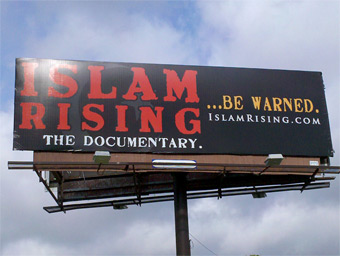
In November, 70 percent of Oklahoma approved ballot initiative “Question 755? — or the “Save Our State” constitutional amendment — which bans Sharia from being considered in Oklahoma courts. The ballot states that Oklahoma courts must “rely on federal and state law when deciding cases” and forbids them from “considering or using international law” and “from considering or using Sharia Law.”
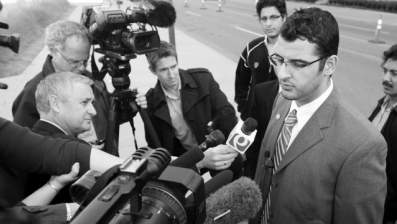
Recently, Muneer Awad, executive director of CAIR-OKC filed a lawsuit challenging the constitutionality of State Question 755, and an Oklahoma City judge extended a temporary ban on implementation of a constitutional amendment. U.S. District Judge Vicki Miles-LaGrange said she will rule after weighing the issues. Muneer Awad, who is Muslim says the amendment demonizes his faith.
Muneer Awad:
- Labeling Islam as a unique threat to Oklahoma courts. It was a clear message that Islam is a threat to Oklahoma.
- I think what happened is a handful of politicians realized that Islamophobia is politically popular.
- I can count on one hand how many politicians didn’t vote to put this on the ballot.
- Those politicians were attacked during the campaign as being people that wanted to bring Sharia to Oklahoma so terrorists can use Islamic law in our courts
- If we don’t act now our state will be in peril. There are politicians that deliberately misinform people, that deliberately lie to people in order to gain political popularity in the polls.
- There are a number of non-Muslim Oklahomans that are concerned by State Question 755 and the perception and effect it has on Oklahoma.
- We’re trying to remind people that this isn’t a reasonable conclusion people made after a lot of thought and reasonable research. These were people that were misled by politicians that have lied to us.
Guest – Muneer Awad, executive director of CAIR-OKC
—–
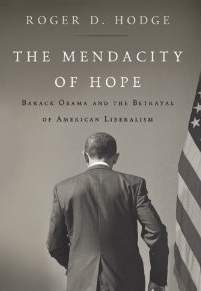
The Mendacity of Hope: Barack Obama and the Betrayal of American Liberalism.
In a scathing attack from the left, former editor in chief of Harper’s magazine, Roger Hodge offers a powerful critique of President Barack Obama in his new book, The Mendacity of Hope: Barack Obama and the Betrayal of American Liberalism. Hodge articulates what many of listeners may already know. President Obama has served the corporate masters. Hodge draws a list of examples, such as cheerleading globalization, designing a health care plan where insurance companies make a killing, extrajudicial assassination of American citizens, boundless state secrecy, and unlimited corporate bailouts, to name a few.
In explaining the book, Hodge told Harper’s magazine in an interview, he used 18th century reflections to James Madison, whose philosophy aligned with republicans such as Machiavelli and James Harrington in the argument that a moderate balance of wealth must be maintained, that too great a distinction between the rich and poor would naturally lead to the decay of republican governance.
- Obama’s most enthusiastic supporters have really been lying to themselves.
- Part of the book is an argument against this tendency for people to deny what’s going on right in front of them.
- We ran a piece in Harper’s by Ken Silverstein, a great investigative reporter who argued, this guy is a conventional machine Democrat.
- He set up shop. Come to me corporate America with your problems and I will try to solve them.
- You listen to this inspiring rhetoric, if you look at it on paper, there wasn’t a lot of content there.
- When it comes to an Obama / McCain-Palin – there’s an arguement to be made constitutionally we might be better off with the Republicans.
- Corporate backers: FIRE sector. Finance/Insurance/Real Estate.
- The number one corporate backer was Goldman Sachs. Goldman Sachs collectively gave Obama, almost 1 million dollars but invested only 230 thousand dollars for McCain.
- Obama’s backers also included, Morgan Stanley, Citi-Group is up there with 750 thousand, JP Morgan Chase . . they don’t do this out of the goodness of their hearts.
- They expect to get something, and as we saw in the rolling bailouts, the financial sector got tremendous return on investments.
- Democratic think tanks set the stage for the financial crisis that we’re still living through, by deregulating finance, by breaking down the New Deal protection, repealing the Glass-Steagal Act, and deregulating derivatives with the Commodities Futures Modernization Act.
- The old idea, that unfortunately is still with us, that the democrats are the liberal party, the party of the common man who are fighting the big business bad guys in the Republican party is really a myth, and it’s a pernicious myth.
- Health Care was a bailout for the insurance companies, Obama and his team always saw that as a bargaining chip, they never really planned on pushing that through. Having health insurance does not guarantee health care.
- Rahm Emanuel, this is a guy without principles, he’s all about winning and raising money.
- You can say, at least he’s tough, but he didn’t fight for anything worth fighting for.
- A president surrounds himself with people who are ill-liberal, who are completely compromised by their connections with Wall Street.
- We have to gain some leverage over our representatives. It’s a real double bind. People don’t want to reckon with the sheer awfulness of the our political culture.
Guest – Roger Hodge, former editor of Harper’s Magazine from March 2006 through January 2010. Hodge attended the University of the South, where he majored in comparative literature. He began graduate work at the New School for Social Research and completed a master’s degree in philosophy, but joined Harper’s before finishing his dissertation. Hodge first came to Harper’s as an intern in 1996 and was subsequently hired as a fact checker. Hodge edited the Harper’s Reading section from 1999 until 2003.
———————————————————————–