
Welcome to Law and Disorder Radio
Law and Disorder is a weekly independent civil liberties radio program airing on more than 150 stations and on Apple podcast. Law and Disorder provides timely legal perspectives on issues concerning civil liberties, privacy, right to dissent and practices of torture exercised by the US government and private corporations.
Law and Disorder August 30, 2010
Podcast: Play in new window | Download
Updates:
- Political Prisoner Lori Berenson Released From Peruvian Prison, Sent Back For 5 Years
- Cordoba Center Near Ground Zero: A Distraction. Michael Smith Update.
——–

Climate Ground Zero – Update with Jimmy Tobias
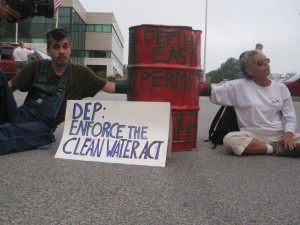
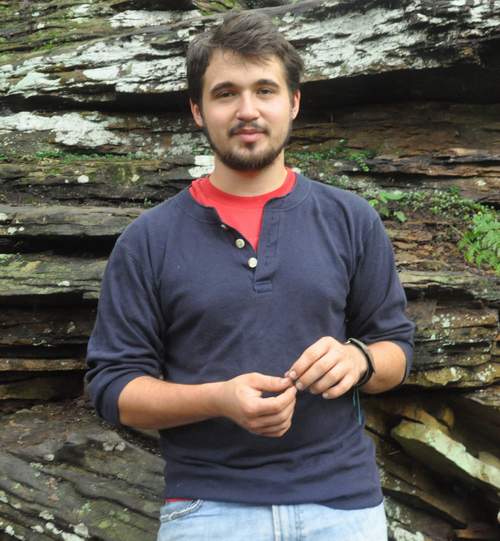
We get an update from Mountaintop Removal activist Jimmy Tobias. Jimmy was arrested this summer with others for using direct action to shut down a coal mining mountaintop removal effort in Virginia. He was held on a 3500.00 bail and later released. A New York Times editorial states that movement to slow down and stop the mountaintop removal mining in that area is gaining traction and the Obama Administration is restricting permits for mountaintop removal mining. Recent Action.
- I’m in Rockcreek, West Virginia where the campaign houses are located. The campaign houses have a big role, but there a million other things people work on.
- At the moment we’re gearing up for a mass mobilization in Washington, that will take place between the 25 and the 27 of September. Appalachia Rising. We’re focused on bringing national attention to the issue.
- I’ve been loathe to put my faith in the EPA to solve these problems. Their actions have been really ambiguous. They go back and forth and its really hard to get a sense of the ultimate outcome of their actions (EPA)
- My passion is for the local organizing, because that will make it or break it basically. We have four campaign houses, a big outdoor kitchen, everyone eats together, organizes together, works on different aspects of the campaign. The civil dis-obediance campaign is called Climate Ground Zero.
- Coal River Mountain Watch, Sludge Safety Project, Mountain Justice.
Guest – Jimmy Tobias, activist and direct action protester against Mountaintop Removal.
———–
Blackwater Reaches Deal on U.S. Export Violations
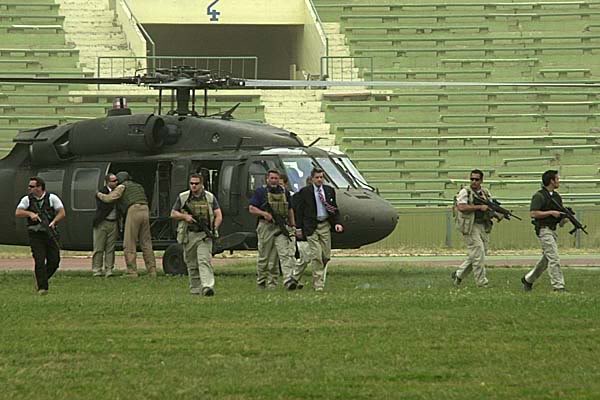
The private security company formerly called Blackwater Worldwide has reached an agreement with the State Department for hundreds of violations of US export control regulations. The company now called US Training Services will pay the US government 42 million dollars in fines to avoid criminal charges on export violations. Violations include shipping weapons to Iraq hidden inside containers of dog food. There are other legal troubles facing Blackwater officials, but the company continues to obtain government contracts. Last June, Blackwater was awarded a 120 million dollar contract to provide security at a State Department regional office in Afghanistan and the CIA renewed the firm’s 100 million dollar security contract in Kabul.
- This is a company that has been repeatedly involved with criminal activity, with murder and has gotten off scott-free. It has been shielded by its handlers at the State Department or at the DOD.
- The idea that this company can pay what amounts to 146 thousand dollars per violation is outrageous.
- The real meat of it is the murder they’re involved with, the human rights violations.
- What would it take for this company to be completely knocked off the US Government payroll?
- US operations in Afghanistan now, have become so dependent on Blackwater, both in the CIA and State Department. Eric Prince, the owner of Blackwater who has since fled to the United Arabs Emirates, which has no extradition with the United States. He moved there after five of his top deputies were indicted on conspiracy and weapons charges. This is a man who knows where the bodies are buried, he was working for the CIA, for the Joint Special Operations Command. They (Blackwater) could reveal details of action that would horrify the average American if they knew this was being done in their name.
- After 9/11, Eric Prince cut a deal with the number 3 man at the CIA, Alvin Buzzy Krongard. Find Fix and Finish Operation.
- There are also cases of I’ve heard of Blackwater working inside of Syria.
- Two former Blackwater employees, a man and a woman, the man worked in war zones, the woman worked on the financial side. They have filed a whistleblower case against Blackwater, alleging extrajudicial killings and bilking US taxpayers. Susan Burke recently deposed Eric Prince.
- Blackwater is involved with secret assassination programs in countries around the world, where we aren’t at war, where we aren’t informing those countries.
- The only serious challenges to Blackwater, aka Xe, aka US Training Services are people like Michael Ratner and Susan Burke. Bill: Stop Outsourcing Security Act.
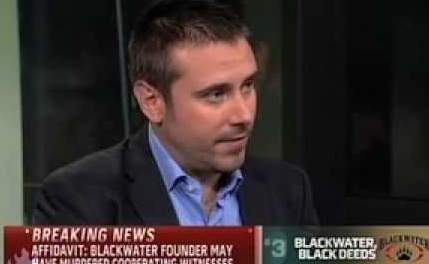
Guest – Jeremy Scahill is the author of the international best-seller Blackwater: The Rise of the World’s Most Powerful Mercenary Army. He is a frequent contributor to The Nation magazine and a correspondent for the national radio and TV program Democracy Now! He is currently a Puffin Foundation Writing Fellow at The Nation Institute. Scahill has won numerous awards for his reporting, including the prestigious George Polk Award, which he won twice. While a correspondent for Democracy Now!, Scahill reported extensively from Iraq through both the Clinton and Bush administrations.
——————–
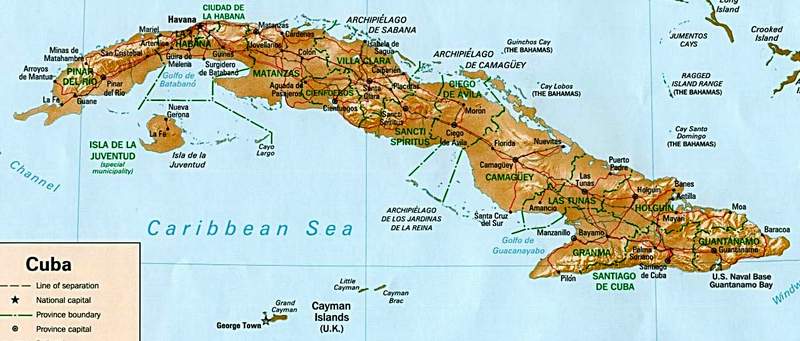
Cuba Travel Ban
Will the Obama Administration come to a decision on how much to enable travel to Cuba. The Administration could simply reinstate President Clinton’s policy which is a costly case by case application or grant general licenses to the remaining 11 categories of travel to Cuba. General license would include schools, cultural institutions, Chambers of Commerce, religious bodies, World Affairs Councils, humanitarian organizations and more.
Sandra Levinson:
- The travel regs are not really travel regs. They are regulations set up by the US Treasury Department at the instigation of the US State Department. You can’t spend money in Cuba.
- President Carter lifted the travel ban, there were direct flights to Cuba during the brief time he was president.
- During the Clinton Administration, we were able to take a number of trips. Ban in effect for a number of rationales, we don’t wanna give money to Castro. It always surprised me that William F. Buckley was in support of ending the travel ban to Cuba.
- We can always do professional trips. I’m leading a trip for professional artists.
- Lawyers traveling to Cuba fall under the general license, it’s by assertion. You simply say as legal professionals you’re doing legal research.
- We’ve been to Cuba so much, our travel is not formal, it’s intimate.
- Although the food and medicine embargo was lifted several years ago, the regulations about payment are so tough on the Cubans, everyone else can buy on credit. The Cubans can’t, they have to buy up front, before a ship leaves US territory with the food, with the medicine.
- I fell in love with Cuba, I arrived on July 4, 1969. I was there for six weeks. Socialism with salsa.
- On the fifth day of my first trip, Fidel Castro taught me how to cut sugar cane. I think he is the one of the smartest leaders we’ve had in this hemisphere. I think he’s been in power that long, because we have not had relations with Cuba.
Guest – Sandra Levinson, Executive Director of the Center for Cuban Studies in New York City and Director of the Center’s Cuban Art Space. Facebook link
——————————————————
Law and Disorder August 23, 2010
Podcast: Play in new window | Download
Updates:
- Rights Groups Release Documents From (ICE) Agency FOIA Lawsuit
Groups Call “Secure Communities” Program a Racial Profiling Dragnet That Undermines Community Policing and Public Safety - Descendents Appeal to UN Over Latest Mamilla Cemetery Demolitions
—
In the Land of the Free, a film by Vadim Jean
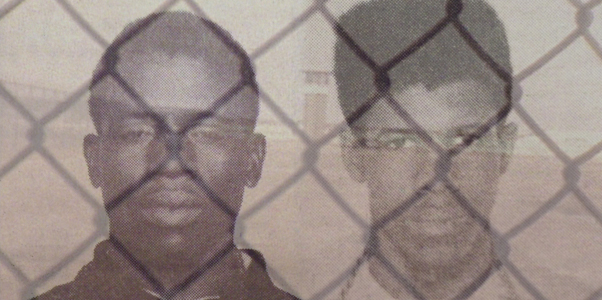
Director Vadim George joins us to discuss his recent documentary film “In the Land of the Free.” As many listeners may know, the Angola 3 are Robert King, Albert Woodfox and Herman Wallace. Each had arrived to the Louisiana State Penitentiary in the late 1960s. While in prison, and in contact with Black Panthers, the men helped build a prison chapter of the Black Panthers. They organized inmates to end systematic rape and violence and worked as jailhouse lawyers. The men have spent a combined century in solitary confinement in the Angola prison. Vadim’s powerful documentary explores the issues of accountability and examines the biases against the sentencing of African Americans compared to Whites and Latinos. The film is narrated by Samuel L. Jackson, and it’s noted toward the end, that there is a pending civil suit ‘Wilkerson, Wallace and Woodfox’ vs the State of Louisiana, ruled by the US Supreme Court and to go to trial based that their 30+ years in solitary confinement is “inhumane and unconstitutional”. This case could stop long-term solitary confinement in US prisons.
Vadim Jean:
- I was friends with Anita Roddick, she knew Robert King, and when she passed away in 2007, Robert King was one of the speakers at her memorial. They wouldn’t let me film in the prison.
- The Angola 3 came together in the New Orleans parrish prison in the 1970s.
- The criminals were put in with the Black Panthers and the Black Panthers educated the criminals.
- In the 1970s Angola was the bloodiest prison in America.
- Robert King was told why he was kept in solitary confinement after 25 years in CCR (solitary confinement)
- Because he was being investigated for the murder of Brent Miller, which happened when he wasn’t even in the prison. They’re incredible human beings. They’re strong men. They’re self educated, in prison.
- I think they have their side, the fact that they know they’re innocent, and that makes you strong, that’s made them incredibly strong. They refused to be beaten.
- Robert is free. His conviction was overturned in 2001. People have reacted strongly to the film.
- I’ve tended to make drama comedies. I made a completely mad film called Jiminy Glick in Lalawood with Martin Short.
- I made this film for Anita. (Anita Roddick) The Roddick Foundation.
Guest – Vadim Jean, began his career directing commercials for products such as Blockbuster Video, Woolworths, The Observer and Mercury 121 Mobile Phones. He then moved on to music videos for Elton John and Oasis before co-directing his first feature film, Leon the Pig Farmer (1992). For his work he won an Evening Standard British Film Award for Most Promising Newcomer, a Chaplin Award for Best First Feature at the Edinburgh International Film Festival.
——–
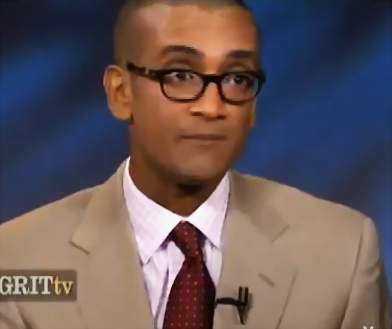
Law and Disorder Barack Obama Series – CCR Staff Attorney Shane Kadidal
We’re joined by Center for Constitutional Rights staff attorney Shane Kadidal to give us an overview on several critical topics we’ve been following over the years here on Law and Disorder. We look at what is happening in Guantanamo right now, the Obama policy of preventive detentions and the state of Habeas Corpus in the United States. In January of 2009 Barack Obama issued orders to close Guantanamo Bay prison. There was talk of transferring prisoners to a supermax prison in the United States. Military tribunals move forward for Guantanamo prisoners.
- What we won is the right to get into court and challenge the legality of your detention. CCR won that in 2008
- Obama gets into office and says he’s going to close Guantanamo Bay Prison in a year.
- Obama to set up expert agency to decide what to do with people in Guantanamo prison
- About 50 cases have gone forward and we (CCR) won 72 percent of the cases
- About 180 left in Guantanamo. Obama has improved physical conditions for detainees in Guantanamo, but they’re still stuck there. Nothing much has changed, we see stasis, there isn’t much political movement.
- About a month into the administration, the Obama Department of Justice says our position is the same as the Bush administrations on Bagram AFB prison
- We’re taking the same legal position about executive power as the previous administration – state’s secrets about rendition
- Six hundred people in Bagram right now. Bagram is an active war zone, can’t have courts interferring
- About 30 of the remaining 180 in Guantanamo will be charged. Most of the people brought there were innocent. The victim of profiling policies.
- General Stone says 400 of the 600 hundred in Bagram Prison have done nothing and should be released immediately. Task Force report on Guantanamo prisoners. 10 percent leaders of Al-Qaeda, 20 percent had a logistics role, others are low level soldiers. This is false.
- There are innocent people in Guantanamo, who have been there for 8 years.
- We still have a military commissions, an indefinite detention system. Lieberman proposing to strip citizenship from terrorism suspects so they can be interrogated without Miranda warnings.
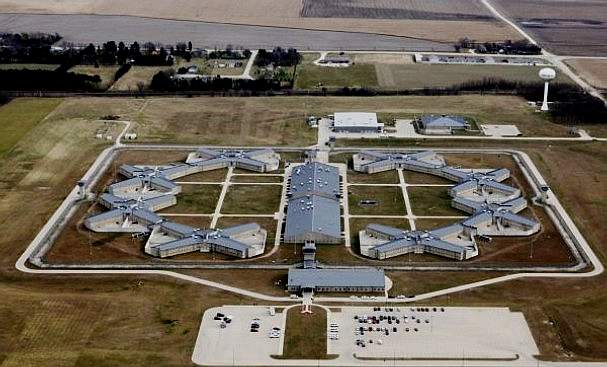
- Moving Guantanamo Prison to Thomson Prison in Illinois.
- Obama as committed to removing checks on executive power
Guest – Shane Kadidal senior managing attorney of the Guantánamo Global Justice Initiative at the Center for Constitutional Rights in New York City. He is a graduate of the Yale Law School and a former law clerk to Judge Kermit Lipez of the United States Court of Appeals for the First Circuit.
Law and Disorder August 16, 2010
Podcast: Play in new window | Download

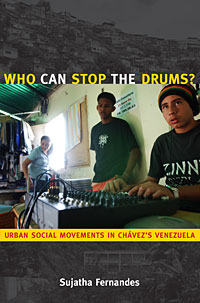
Who Can Stop the Drums?: Urban Social Movements in Chávez’s Venezuela
Who Can Stop the Drums?: Urban Social Movements in Chávez’s Venezuela is the title of Sujatha Fernandes’s new book. Sujatha is an author and assistant Professor of Sociology at Queens College and the Graduate Center, City University of New York. Her book looks at the transformations under way in Venezuela that are shaped by negotiations between the Chávez government and social movements using their own forms of historical memory and local organization. In her book, Sujatha shows everyday life and politics in the shantytowns of Caracas from the perspective of community-based radio, barrio assemblies, and the many interviews she conducted with activists and government officials. Most of the barrio activists in the book are Chávez supporters.
- There’s a real push back against neo-liberal reforms. Chavez who came into office in 1998, have been pursuing an anti-neoliberal agenda, trying to reverse the privatization and extend the social welfare net.
- The argument I make in the book is that Chavez has carved out a space within the global economy and Venezuela is a hybrid state containing both neo-liberal and anti-neoliberal elements.
- Who are these people, the large majority who live in the shanty towns, what do they think?
- The movements date back to before Chavez, the guerilla movements, cultural and community based groups. They trace their trajectory back to a long struggle in Venezuela. They’ve been reinvigorated by Chavez.
- The community based groups demand the very basics, running water, gas and electricity.
- Chavez in the middle between community groups and elite. Chavez has created institutions such as the missions, where some oil profits bypass the elite and toward community groups.
- I lived in a popular housing building, which are projects, (security problems, with gangs, violence and police)
- Bolivarian circles, Chavez’s first attempts to transfer power. 93 percent of Venezuelans are urbanized.
Guest – Sujatha Fernandes is Assistant Professor of Sociology at Queens College and the Graduate Center, City University of New York. She is the author of Cuba Represent! Cuban Arts, State Power, and the Making of New Revolutionary Cultures, also published by Duke University Press.
—-
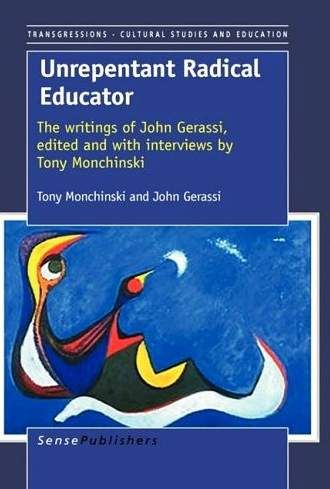
Unrepentant Radical Educator: The Writings of John Gerassi
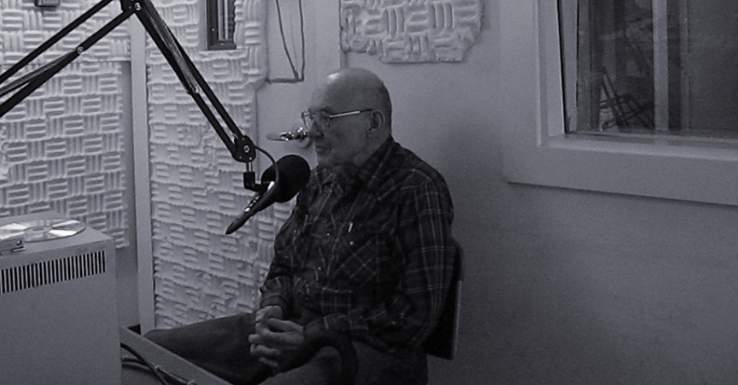
We’re delighted to welcome back Professor John (Tito) Gerassi, once an editor at Time magazine, then at Newsweek. He obtained his PhD at the London School of Economics and Political Science. He is a long time civil rights and anti-war militant and author / editor of ten books plus scores of articles and pamphlets published on both sides of the Atlantic. He is currently Professor of Political Science at the City University of New York. We talk with Tito today about his recent book, Unrepentant Radical Educator: The writings of John Gerassi, edited and with interviews by Tony Monchinski (Transgressions: Cultural Studies and Education) Indypendent Book Review
The book joins personal narratives from Gerassi’s days of journalism and activism, featuring Che Guevara, Fidel Castro, Jerry Rubin, Eldridge Cleaver and others of the era, with essays on figures such as Sartre, Camus, and Julius and Ethel Rosenberg. One review writes, ( Especially fascinating are the tales of deliberate misreporting by the major media outlets for which he worked, epitomized by the words of owner Henry Luce when Gerassi was hired: “We here at Time believe that objectivity is neither feasible nor desirable.”)
- Time Magazine: I hear you’re coming aboard Mr. Gerassi. In the long run, it was great that I got kicked out
- Met Che Guevara in Uruguay, as a journalist for the New York Times, there was a fight with anti-Castro students, the police were scared, one man fired his gun in the air, it ricocheted and hit and killed a USIS Cuban.
- Che told me I don’t talk to the imperialist press. At the hotel, they had reserved a large table where all the left-wing characters sat around with Che. Argentines say chez vous, that’s how Che got his nickname Che.
- The Great Fear in Latin America – John Gerassi
- Che Where Are You? Eventually there will be many Che’s.
Guest – Professor John Gerassi, once an editor at Time magazine, then at Newsweek, who obtained his PhD at LSE, is a long time civil rights and anti-war militant. He is the author or editor of ten books and scores of articles and pamphlets published on both sides of the Atlantic. He is currently Professor of Political Science at the City University of New York.
———————————————–