Welcome to Law and Disorder Radio
Law and Disorder is a weekly independent civil liberties radio program airing on more than 150 stations and on Apple podcast. Law and Disorder provides timely legal perspectives on issues concerning civil liberties, privacy, right to dissent and practices of torture exercised by the US government and private corporations.
Law and Disorder October 11, 2010
Podcast: Play in new window | Download
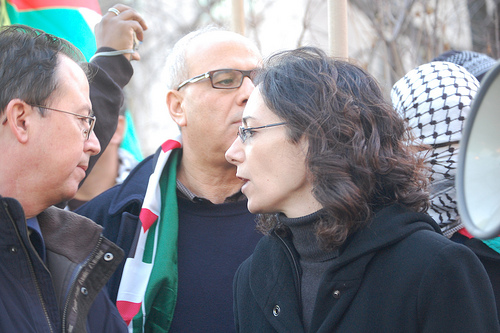
Lawyers You’ll Like Series: Mara Verheyden Hilliard Part II
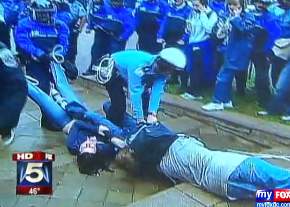
Today we’re joined by attorney Mara Verheyden Hilliard co-founder of The Partnership for Civil Justice Legal Defense & Education Fund in the second part of our Lawyers You’ll Like series. Mara and her partner Carl Messineo have worked to defend and advance fundamental civil, constitutional and human rights secured by the U.S. Constitution and under law. We talk about her work, and criminalizing dissent, surveillance, data mining, and FBI harassment. A lot of Mara’s work is at the intersection of first and fourth amendment rights, such as the assault on free speech, assembly and misuse of datamining tools. The Partnership for Civil Justice has many victories, and recently a settlement was reached in a class action lawsuit about the illegality of the arrests of approximately 700 protesters and other persons on Saturday, April 15, 2000 in Washington, D.C.
Attorney Mara Verheyden-Hilliard:
- I co-founded the Partnership for Civil Justice in 1994 with Carl Messenio. We decided we wanted to do this work specifically, Constitutional rights, civic justice, public interest litigation.
- We began this work right after we left law school. We undertook some of the longest running protest cases that we had, in particular, the recently settled class action from the April 2000 mass arrests.
- I grew up in Washington DC and I spent my childhood going to civil rights demonstrations, anti-war demonstrations, having our house filled demonstrators. Both of my parents are deeply political people who care very much about civil rights, liberation struggles and womens’ rights.
- The core of the work we do we recognize as the underlying social justice movement.
- The municipalities, the governments, they want these cases to go on as long as possible, they want to fight a war of attrition, because they want plaintiffs to feel they have to take toothless settlements.
- The fact is the law has changed in DC, we’ve changed the way police operate. They can’t use these tactics, these tactics we took apart piece by piece have been removed from the arsenal of the police department in DC.
- The DC police can’t use the trap and detain tactic, they can’t hold people, they have to release them within 4 hours now. They can’t use the wrist to ankle handcuff mechanism against people anymore.
- Police need to have their badges plainly available and visible, they can’t come out in riot gear to first amendment assemblies. Now we’re seeing this effort (FBI) against solidarity activists with the raids and subpoenas. I think it is outrageous, and baseless for the government to be coming in and targeting people for solidarity work.
- It’s also reflective of the huge security apparatus that was put in place under Bush and is being accelerated under Obama. Those beliefs, that hope, that thought, that you can change the direction of the country that you live in, is absolutely true.
- All you gotta do is look at the past history of the United States, all 150 years.
- Recognize that it’s no fault to hope and to think that an elected official is going to do it, but historically the elected official has never been the one to do it.
Guest – Constitutional Rights Attorney Mara Verheyden Hilliard co-founder of The Partnership for Civil Justice Legal Defense & Education Fund. Mara Verheyden-Hilliard is an activist, Constitutional Rights attorney, and the cofounder of the Partnership for Civil Justice. She is also co-chair of the National Lawyers Guild Mass Defense Committee.
——
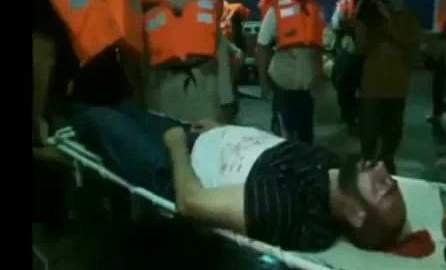

United States Plays Down UN Report on the Gaza Flotilla Attack
A United Nations fact finding mission into the May 31, 2010 Israeli lethal attacks of ships traveling to Gaza, has reported that Israeli forces violated international law, “including international humanitarian and human rights law.” Eight Turkish activists and one Turkish-American were killed in the raid on board the ships attempting to break the Gaza blockade. The UN Human Rights Council’s investigation judged Israel’s naval blockade of the Palestinian territory to be “unlawful” because there was a humanitarian crisis in Gaza at the time. However, the United States criticized what it termed as the report’s “unbalanced language, tone and conclusions.”
The Center for Constitutional Rights, the Free Gaza Movement and the National Lawyers Guild responded to the report and the comments made by the United States at the Council
“Unfortunately, the United States used the opportunity of the Human Right Council’s discussion on the flotilla fact-finding mission’s report to promote its political agenda instead of engaging on the issue of legal accountability for Israel’s illegal blockade of Gaza and the unlawful attack on the Gaza flotilla,” said CCR attorney Katherine Gallagher. “The U.S. must recognize that there can be no peace without justice, and that until it supports accountability for violations of international law–even when violations committed by Israel – instead of a culture of impunity, it lacks the legitimacy necessary to serve as a broker of peace.”
- There were 6 civilian ships and their goal was to both bring humanitarian aid to Gaza which has been under a Naval blockade by Israel for the last 4 years as well as to challenge the legality.
- The United Nations back in June 2010 set up a fact finding mission. The 3 commissioners traveled to London, to Geneva, Istanbul and Jordan to interview passengers. They met with legal experts and others to analyze the evidence they heard.
- The UN fact finding report was submitted last week, 56 detailed pages of what precisely happened that night on those ships on the night of May 31. It was concluded that the blockade is illegal under international law. It found that the 6 ships traveling to Gaza to break the blockade presented no imminent threat to the Israelis.
- The 3 commissioners have experience in international law matters. One had been a judge on the international criminal court. Their conclusions are grounded in law and not political conclusions. They were peaceful protesters preparing for an attack on the ship.
- It’s hard to see what they find as unbalanced. I think the report is carefully written, it’s cautiously written beginning with an analysis of its own mandate. Turkey very much welcomed the report.
- The bulk of the passengers were detained in Israel, at detention sites that had already been established.
- Confiscated property consists of cameras, computer chips, video equipment. It contains electronic equipment that provides first hand evidence of the flotilla passengers activities and then the attack on the ship.
- In the past 4 months Israel has been in possession of that material.
Guest – Katherine Gallagher, Senior Staff Attorney at the Center for Constitutional Rights, where she focuses on holding individuals, including US and foreign government officials, and corporations, including private military contractors, accountable for serious human rights violations. Among the cases she is working on are Arar v. Ashcroft, Matar v. Dichter, Saleh v. Titan and Estate of Atban v. Blackwater.
———
Post Coup Honduran Human Rights Crisis
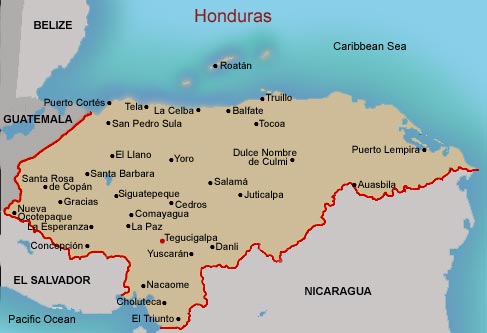
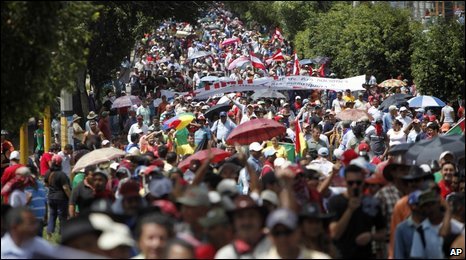
A human rights crisis continues to get worse in Honduras, more than a year after the June 28, 2009 military coup. People on the front lines that oppose the regime installed after the coup are beaten and illegally detained by the state. Nectali Rodezno, Co-Coordinator of National Front of Lawyers in Resistance Against the Coup in Honduras is among the lawyers dircectly involved in defending those are being abused and whose lives are on the line everyday. To inform people about the ongoing crisis in Honduras, there will be a speaking tour this fall called JUSTICE IN HONDURAS: Witness for Peace Mid-Atlantic Fall Speakers Tour will be November 1 – 22.
- From that moment on you began to see alot of repressive tactics immediately after the coup.
- Immediately, leaders of that resistance were being targeted. There were several key people who were killed in aftermath of the coup. Walter Trochez was a key LGBT activist who was targeted and killed in a very brutal way. You also saw the targeting of labor leaders. The killing continue even in this new de facto administration.
- In March you saw the targeting of journalists. In that month alone, 8 journalists were killed.
- The Honduran judiciary were taking certain steps before the coup to help undermine Zelaya and what he was doing. We’re still learning about how much of this was driven by official US policy.
- Before the coup we had the financial crisis in the US that was effecting food security which was making it difficult everywhere. Zelaya was trying to buffer the Hondurans against this. One of the things he did was raise the minimum wage. He raised it and tied it to the food index.
- The Bolivarian Alliance for the Peoples of Our America
- On June 28, the Honduran resistance has set up its own truth commission, The Alternative Truth Commission. The International Criminal Court is an actor and could investigate and potentially prosecute some of these acts.
- In the US we have the Alien Tort Statute. It’s a very old law that allows non-citizens to bring suit in US courts for violations of international law.
- The courage show by all sectors of this resistance is just incredible. www.resistenciahonduras.net
Guest – Pam Spees, senior staff attorney in the international human rights program at the Center for Constitutional Rights. She has a background in international criminal and human rights law with a gender focus, as well as criminal trial practice.
———————————————————————-
Law and Disorder October 4, 2010
Podcast: Play in new window | Download
Updates:
- FBI Coordinated Raids In Minneapolis and Chicago
- Blackberry and Facebook opened up their records to FBI
- National Lawyers Guild Issues New Report on Policing of Protests
- Briana Waters – Conviction Overturned
- National Lawyers Guild Convention – New Orleans
- Lynne Stewart Turns 70, Oct 8. Write to Lynne:
- Lynne Stewart / 53504-054 MCC/NY / 150 Park Row, NY, NY 10007
———-

Nationally Coordinated FBI Raids Minnesota/Chicago
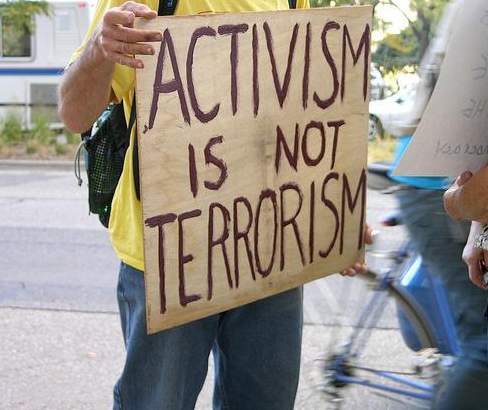
Last week the FBI raided six homes in Minneapolis and two in Chicago allegedly searching for links to terrorism. The Minneapolis raids targeted anti-war activists among them, Jessica Sundin, and Mick Kelly. They were key organizers of the big march on the first day of the RNC in 2008. In one Minneapolis home, FBI agents arrived with warrants, searched every room, attic and basement, looking through CDs DVDs, books, and photos. Passports, travel and phone records were among items seized from the homes. The FBI issued subpoenas for the peace activists to appear before a Grand Jury in Chicago on October 12. FBI’s search warrants indicate agents were looking for connections between local antiwar activists and groups in Colombia and the Middle East. NLG HOTLINE – 888-654-3265
Jim Fennerty:
- We’re putting a group of lawyers together from the National Lawyers Guild. We’re speaking to our clients right now about what a grand jury is, how it functions, and they have a right to refuse to testify at a grand jury or not. A total of 12 people were served with subpoenas.
- Humanitarian Law Project decision emboldens the government to push the envelope and see what they can get away with. I have not been told that anyone is a target, and we’re concerned about what that means.
- Technically the Attorney General’s office is not suppose to issue a subpoena to a target unless they get a higher authority to do that. Historically a grand jury was supposed to be citizens coming together to determine if charges should be filed criminally against somebody.
- Now it’s pretty much a rubber stamp for what the prosecutors want. People should be very concerned about going there, because what you say can be twisted around.
- Most cases, people can say they don’t want to testify at a grand jury, they’re going to exercise their fifth amendment rights against incrimination. However, if they offer you immunity and you refuse to testify, you can be taken to a judge, they’ll read the questions to the judge, and ask you to answer them.
- If you refuse to answer them then a judge can hold you in civil contempt and you can be incarcerated for the length of the remaining time of the grand jury. The government is not showing us all their cards, we don’t know where they’re going with this.
- Regarding activism: I’ve seen some unity here I’ve never seen before in my life, where groups that don’t get along, are now rallying around them.
- Do not speak to federal agent, do not lie to a federal agent. National Lawyers Guild Issues New Report on Policing of Protests
Guest – Attorney Jim Fennerty, attorney, activist and National Lawyers Guild member. Jim has been handling activist cases for 38 years.
——-
Death Penalty Cases -Virginia / Georgia / California
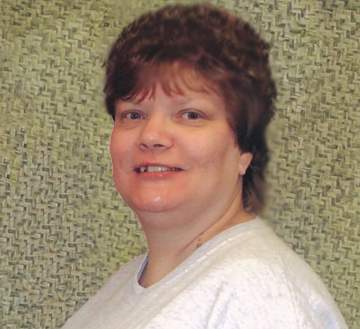
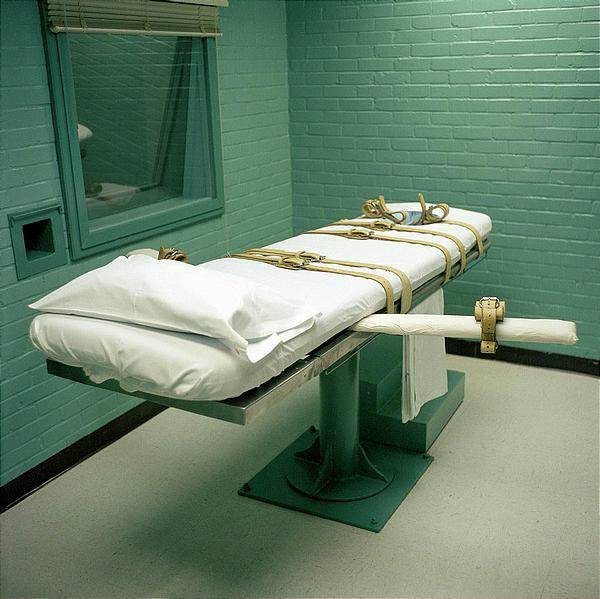
In late 2009, The American Law Institute which created the intellectual structure for the current capital justice system for nearly 50 years, essentially announced that its project has failed. The New York Times, in one article wrote the institute’s move represents a tectonic shift in legal theory. The article also points out that capital punishment was plagued by problems including racial disparities. We continue to see these types of problems in 3 recent death penalty cases in Virginia, Georgia and California. In Virginia, Teresa Lewis, a grandmother was the first woman to be executed in that state in nearly 100 years. Last week Teresa Lewis was given a lethal injection at 9PM in Greensville prison. Teresa was convicted of hiring two gunmen to shoot her husband and stepson to collect on their life insurance policy. Both gunmen were sentenced to life without parole. Attorneys argued that the court consider a key piece of evidence on Teresa’s behalf. That evidence was a letter from one of the gunmen who killed himself in jail in 2006, in which he claimed full responsibility for the murder plot and suggests he pushed Lewis into it. Lewis also had an IQ of 70.
Last week in a Georgia death penalty case, Brandon Joseph Rhode was found in his cell with his arms and neck slashed days before his scheduled execution by lethal injection. According to reports, his lawyers have pleaded clemency, arguing he suffered brain injury from alcoholism and because his mother took drugs during pregnancy. If executed, he will be the 25th person put to death by the state, the last one was in June. Rhode and an accomplice were sentenced to death for murdering an 11-year-old boy, his 15-year-old sister and their father during a botched robbery in 1998.
In California, a federal and state court judge refused death row inmate Albert Greenwood Brown’s request to block his scheduled execution. Brown and another death row inmate have filed a lawsuit challenging the state’s new lethal injection regulations,saying the procedures were improperly adopted. State procedures have since been revised after a federal judge halted the death penalty in California amid concern that it’s method lethal injection amounted to cruel and unusual punishment.
- These are two horrible executions. Teresa Lewis had an IQ of 72. She was executed after Governor MacDonald refuse her clemency requests. The judge said she was the head of the serpent in this particular case and he decided horribly to have her executed.
- There’s no deterrent for people with the IQ of 72 or for someone with an IQ of 150. This murder happened in 1992, this execution happens in 2010.
- There are about 3 dozen states that have capital punishment laws. In California, one of the drugs they use for lethal injection has expired and they can’t get anymore.
- LINKS – NCADP / Death Penalty Information Service
Guest – Attorney David Seth Michaels. David has represented clients for 30 years, clients such as prison inmates in Mississippi and Tennessee. He’s worked with Brooklyn Legal Services B and with the Federal Defenders Service Appeals. He is also a novelist, has his own practice in New York. David Michaels’ Blog
—-

Circuit Court of Appeals Throws Out Nigerian Claims Against Shell Oil
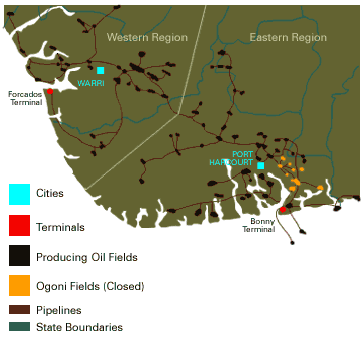
It is now up to the Supreme Court to decide if corporations could be held liable in U.S. courts for violations of international human rights law. Recently, a U.S. Appeals Court dismissed a case against Royal Dutch Shell in which the oil company was accused of helping Nigerian authorities violently suppress protests against oil exploration in the 1990s. One judge on the three-member appeals court panel wrote a strong dissent of the majority opinion, calling it “a substantial blow to international law.” In a past interview with attorney Peter Weiss, Peter explained how a 1789 U.S. statute Alien Tort Claim was used to hold multinational corporations accountable for human rights crimes. The case was brought by families of seven Nigerians who were executed by a former military government for protesting Shell’s exploration and development.
- This was a class action brought by the Ogoni people against Shell parent companies and Nigerian subsidiaries.
- They brought the case because Shell had been complicit with the military dictatorship in the nineties.
- They were detaining, torturing and killing people to oppress the grassroots opposition movement to Shell’s environmental degradation. Shell Oil is the US company.
- Basically, two judges went out of their way to find that corporations can’t be held liable for international human rights violations. The result is that corporations can profit from killing and torturing and can’t be required to compensate the victims.
- Hopefully this decision won’t stand. This is the first Circuit to rule like this.
- Unfortunately I think corporations are going to be submitting this decision in their own cases around the country. Hopefully, that won’t be successful. As it stands the decision applies to the Second Circuit, New York, Connecticut and Vermont.
- Even if this decision stands, the court left open and confirmed you can sue individuals. Even here we can sue CEOs and directors of corporations.
Guest – Attorney Maria LaHood has worked on the case Wiwa v. Royal Dutch/Shell, for the torture, detention and execution of Ken Saro-Wiwa and other human rights activists and protesters in Nigeria. Maria LaHood joined the Center for Constitutional Rights (CCR) in 2004. She specializes in international human rights litigation, seeking to hold government officials and corporations accountable for torture, extrajudicial killings, and war crimes abroad.
————————————————————————————————-
Law and Disorder September 27, 2010
Podcast: Play in new window | Download
Updates:
- Obama Administration To Sell 60 Billion Worth of Advanced Aircraft.
- International Institute For Strategic Studies Report: Threat From Al-Qaeda / Taliban Exaggerated
———-
Census Bureau Case: Johnson v. Locke
Earlier this year, thousands of people of color who applied with the 2010 Census were deemed ineligible or deterred from the application process. The Center for Constitutional Rights co-counsel Outten & Golden and others filed a federal lawsuit in the Southern District of New York against the Census Bureau for race and national origin discrimination in the hiring of temporary workers. In Johnson et al. v. Locke, CCR says that the U.S. Census Bureau’s practice of running job applicants’ names through the FBI criminal records database-a notoriously inaccurate and incomplete database-disproportionally excludes applicants of color and deters them from completing the application process. Basically, anyone with an arrest will not be eligible, including those arrested and not charged in a demonstration for example.
This practice directly undermines the Census Bureau’s self-avowed commitment to hiring temporary workers from within historically under counted communities, such as low-income people of color and immigrants.
African Americans, Latinos and Native Americans are subject to exceedingly disproportionate rates of contact with the criminal justice system, from disparate rates of stops-and-frisks and arrests, to higher conviction rates and harsher criminal penalties. Lawsuit Website.
- I’m one of the litigators of a class action lawsuit against the Census Bureau based on its hiring practices for those who would be doing the counting process.
- The Census Bureau eliminates virtually anyone who has ever been arrested.
- I was arrested for civil-disobedience and if I were to go to the Census and apply for a job and I were to get a letter that your name popped up on the FBI database, you have to get an official court record of your arrest and if you can’t do it. You’re out.
- You get a form letter that says you’re flagged for having some criminal record. Roughly one quarter of the adult US population has a record in the FBI database. The FBI database is flawed with an enormous amount of errors in it. It includes things like an arrest without a prosecution, juvenile records, expungments.
- Tens and even hundreds of thousands of people effected by hiring policy.
- This is what we call a disparate impact lawsuit. The challenge to the policy is, here you have a policy that is checking people’s criminal background and excluding them on the basis of that background. The discrimination occurs because of the enormous disparity that’s in the criminal justice process.
- I believe this is the largest employment discrimination case for many years. We’re talking about 700 thousand were excluded from these jobs, just on the basis of this form letter that went out.
- This information came to us in the Spring 2010 and we got the litigation underway as fast as we could.
- What were looking for now is to change their policy and practice. They can’t deny people employment based on arrest records where there’s never been a prosecution, there’s never been a conviction.
- We’re also asking for damages. We have a class of over 100 thousand people who should be compensated for the jobs they should have gotten. My concern is it’s the tip of the iceberg, that there is a broader problem within the federal government. We learned that the Census Bureau did it the same way 10 years ago.
- The standard question employers should is has there ever been a conviction, it should not be has there ever been an arrest because that’s irrelevant.
- My hope is that word of how completely outrageous the policy in the Census Bureau is gets up high into the government, whether its the Secretary of Commerce, the White House. Credit history is also a very significant issue that’s related.
- The New Jim Crow by Michelle Alexander – furthering the under caste.
Guest – Attorney Sam Miller, with co-counsel Outten & Golden. For more than two decades, he has represented plaintiffs in individual and class action civil rights cases.Prior to joining O&G in July 2009, Sam was the Legal Director at the Center for Constitutional Rights, where he directed a twenty-person legal staff in domestic impact litigation (including a recent victory against the New York City Fire Department based on class-wide race discrimination), international human rights litigation (including a recent multi-million dollar settlement against Shell Oil for human rights abuses and environmental degradation in Nigeria), and the Guantànamo Global Justice Initiative.
—————–
FBI Inappropriately Tracked Domestic Advocacy Groups
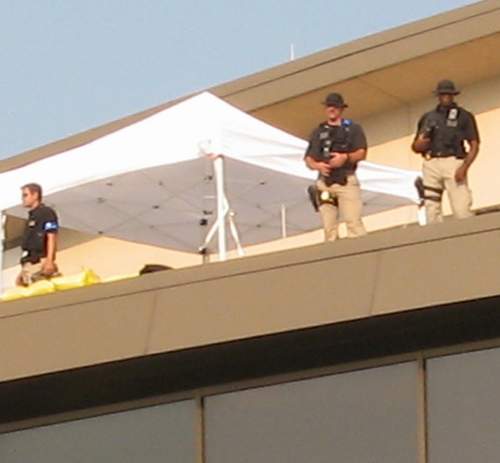
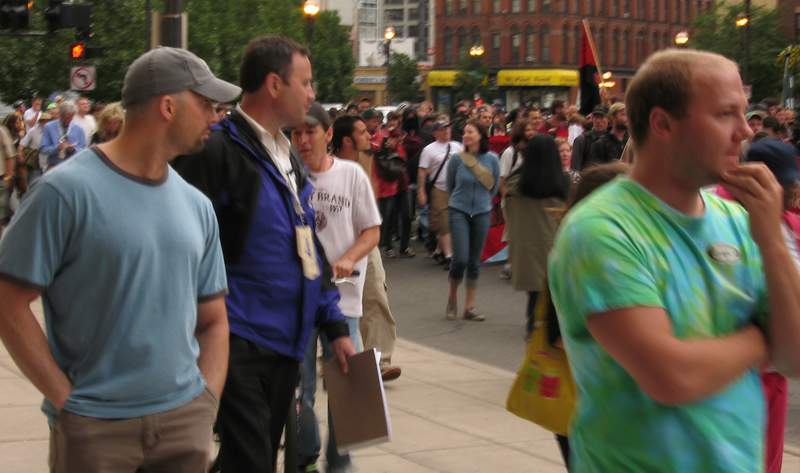
In the last year we’ve reported on the FBI’s over-reaching authority in cases that profile Muslims and the use of informants to entrap people on terrorism charges. Now, in a report released by the Justice Department the FBI is exposed for inappropriately targeting left leaning groups after 9/11. Among those groups surveilled are PETA, Greenpeace and the Catholic Worker. In the case of The Catholic Worker, the OIG report concluded that the FBI inappropriately characterized” certain “nonviolent civil disobedience” as terrorism-related. The Catholic Worker is a group committed to “nonviolence, voluntary poverty, prayer and hospitality for the homeless.
The four year internal investigation “found no evidence that the FBI had any information at the time of the event that any terrorism suspect would be present at the event.” There are many other examples. The report concluded, that FBI Director Robert Mueller “unintentionally provided inaccurate testimony to Congress” in 2006 about an anti-war rally in Pittsburgh four years earlier. Download PDF Copy of Report
- This report was prompted by media reports of FBI surveillance of domestic political organizations.
- These reports came to light through several FOIA requests. The report illustrates a really broad scope of authority that the FBI has right now.
- This report covers from 2001-2006. Sheds a lot of light on what the FBI is doing and what they’re characterizing these days as terrorism. There seems to be some disconnect with reality here because of who the FBI is choosing to investigate.
- Half of the report focused on the investigation of a pacifist group in Pittsburgh called the Thomas Merton Center.
- Why did the FBI focus on an anti war group? These terms forceful and violent spelled out in FBI policy, so there’s a lot of discretion to slap this terrorism label on their investigations which can be extraordinarily prejudicial to their targets.
- An example of the broad definition of terrorism, the FBI made a determination in the case of the Catholic Worker, that spilling human blood on the walls and an American flag were forceful acts and damage to government property. They are immediately put on the VGTOF. The VGTOF list is used by all of the screening centers and by TSA, Customs Bureau. . .
- There’s a complete disconnect here in what the common notion of what terror is is. Michael Ratner: This verifies what we been thinking about for 10 or 11 years.
- There’s an emphasis on ideology, which is a very sloppy way to do criminal law enforcement work. It has a very predictive quality. Meaning, organization X has said this, espouses this in its philosophy that means we can expect that intends to do Y. This report demonstrates we can’t trust the FBI to police themselves.
- We need mechanisms in place so when people are targeted unfairly by the government they can be held to account. Minnesota blog on RNC arrests.
Guest – Thomas Cincotta, Project director with the Political Research Associates. A criminal defense lawyer, he led the Denver chapter of the National Lawyers Guild in support of peace groups and others during the 2008 Democratic National Convention, and connected progressive lawyers with other community efforts around sentencing reform, immigrant rights, and police misconduct. He also represented migrant farm workers and served on the board of El Centro Humanitario, Denver’s first day laborer center. He currently serves on the NLG’s national board and international committee. Before becoming a lawyer, Cincotta worked as a labor representative for UNITE HERE Local 217 in Providence, Rhode Island.
————————————————————————–