Welcome to Law and Disorder Radio
Law and Disorder is a weekly independent civil liberties radio program airing on more than 150 stations and on Apple podcast. Law and Disorder provides timely legal perspectives on issues concerning civil liberties, privacy, right to dissent and practices of torture exercised by the US government and private corporations.
Law and Disorder July 19, 2010
Podcast: Play in new window | Download
Updates:
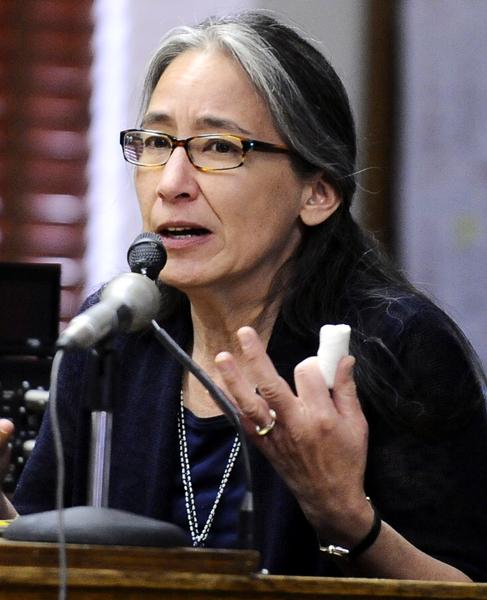
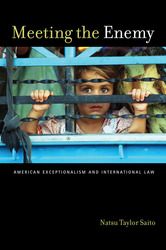
Natsu Saito, Meeting the Enemy: American Exceptionalism and International Law
Meeting the Enemy: American Exceptionalism and International Law is the title of Natsu Saito’s recent book, Natsu is an attorney and professor of Law at Georgia State University’s College of Law in Atlanta. The book boldly points out how the United States violated international law since its declaration of independence. As often discussed here on Law and Disorder, international courts and institutions have been at the forefront of holding the torture conspirators accountable. Meeting the Enemy gives disturbing insight into the origins of American exceptionalism.
- The duality is that the US does exempt itself (from international law) very consistently and very frequently and yet promotes international law very strongly and relies upon it.
- It has relied upon certain premises that are fundamental to the whole outlook and paradigm of colonialism – which is that there is a higher good, a more civilized approach the US embodies.
- The law doesn’t apply because we have a higher aim of civilization and that justifies not playing by the rules.
- The United States making others comply with human rights standards while exempting itself.
- Moving humanity toward this higher goal is so critical because if you strip that away and you look at the realities on the ground, you see what has been termed Western civilization has been incredibly barbaric.
- In order to get around that analysis, you have to say it was for a higher good.
- I think the “left” tends to accept the general framework, and to make particular criticisms of policies and practices that are obviously problematic. The US government engaging in torture for example, but each instant is accepted as anomalous instead of the larger picture.
- It is too frightening even for the people on the left to deal with the reality that this is a country that sits on occupied land, illegally occupied by its own rules. People on the left want to make it a kinder, gentler colonialism.
- I started out thinking I was writing a book about the failure of the United States failure to comply with international law, as I got into it, the more interesting questions were the push / pull dynamics between reliance on international law
- The current system of international law evolved from the international law which was the agreement between the European colonial powers of how they were not going to destroy each other in the process of taking over the rest of the world.
Guest – Natsu Taylor Saito teaches international law and human rights, race and the law, immigration, criminal procedure, and professional responsibility, and is an advisor to the Asian American Law Student Association and the Hispanic Student Bar Association. Professor Saito’s scholarship focuses on the legal history of race in the United States, the plenary power doctrine as applied to immigrants, American Indians, and U.S. territorial possessions, and the human rights implications of U.S. governmental policies, particularly with regard to the suppression of political dissent. Read more.
——-
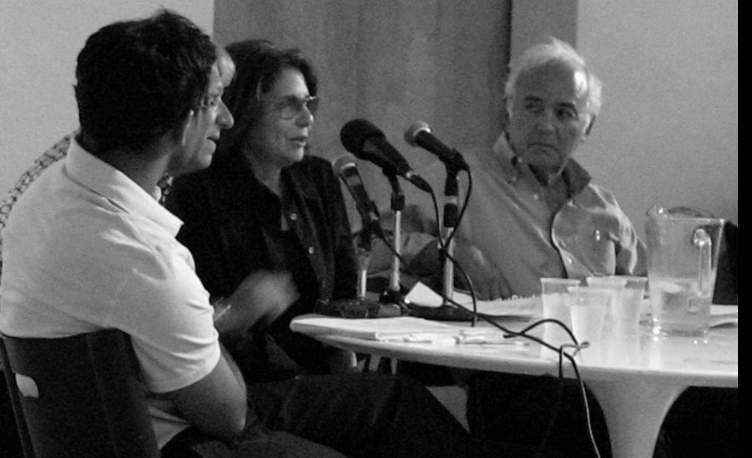
Elena Kagan and the Supremes – Brecht Forum
We hear excerpts from a discussion on the confirmation hearings of Elena Kagan, and how her position may influence the direction of the Supreme Court.
Panelists:
Martin Garbus – one of the country’s leading trial lawyers. Mr. Garbus aggressively represents his clients in the courts and in the media. He has appeared before the United States Supreme Court as well as the highest state and federal courts in the nation. His devotion to ethics, justice and the law has earned him respect among the legal community and beyond as well as prominent awards. Time Magazine has named him “legendary . . . one of the best trial lawyers in the country,” while Newsweek , the National Law Journal and other media agree that Mr. Garbus is America’s “most prominent First Amendment lawyer,” with an “extraordinarily diverse practice.” The National Law Journal named him one of the country’s top ten litigators.
Margaret Ratner Kunstler – former Educational Director at the Center for Constitutional Rights. She’s an attorney and leads the New York City chapter of the National Lawyers Guild and heads the William Moses Kunstler Fund for Racial Justice.
Anand Swaminathan – an associate at Vladeck, Waldman, Elias & Engelhard, P.C. He graduated from the University of Wisconsin in 2001 and the Harvard Law School in 2006. Prior to joining Vladeck he was a law clerk for the Honorable Theodore H. Katz of the United States District Court for the Southern District of New York.
Michael Steven Smith – Law and Disorder co-host, author and New York attorney. Michael Steven Smith is the author, editor, and co-editor of six books, including “The Emerging Police State,” by William M. Kunstler. He has testified before committees of the United States Congress and the United Nations on human rights issues. Mr. Smith lives and practices law in New York City with his wife Debby, where on behalf of seriously injured persons he sues insurance companies and occasionally the New York City Police Department.
———————
Law and Disorder July 12, 2010
Podcast: Play in new window | Download
Updates:
- G20: Canadian Police do not have special powers under their public works act
- New UK government publishes major reports on Bloody Sunday and to settle damages for Guantanamo torture.
—–
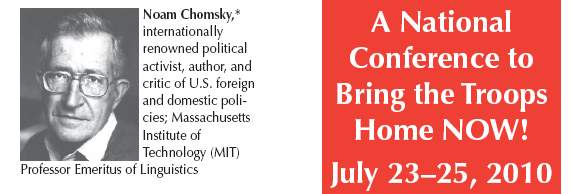
C0-host Michael Smith talks with attorney Jim Lafferty about the upcoming anti-war conference in Albany, New York, July 23-25. Noam Chomsky, internationally renowned political activist, author, and critic of U.S. foreign and domestic policies; Massachusetts Institute of Technology (MIT) Professor Emeritus of Linguistics is the keynote speaker. Click here for flyer (PDF) Groups sponsoring the event: After Downing Street, Arab American Union Members Council, Bail Out the People Movement, Black Agenda Report, Campus Antiwar Network, Campaign for Peace and Democracy, Citizen Soldier, Code Pink, Grandmothers Against the War, Granny Peace Brigade, International Action Center, Iraq Veterans Against the War, Military Families Speak Out, May 1st Workers and Immigrant Rights Coalition, National Assembly to End the Iraq and Afghanistan Wars and Occupations, National Lawyers Guild, Office of the Americas, Peace Action, Peace of the Action, Progressive Democrats of America, Project Salam, September Eleventh Families for Peaceful Tomorrows, The Fellowship of Reconciliation, U.S. Labor Against the War, Veterans for Peace, Voices for Creative Nonviolence, Voters for Peace,Women’s International League for Peace and Freedom, The World Can’t Wait.
—
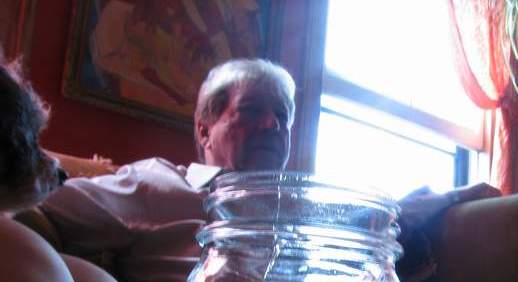
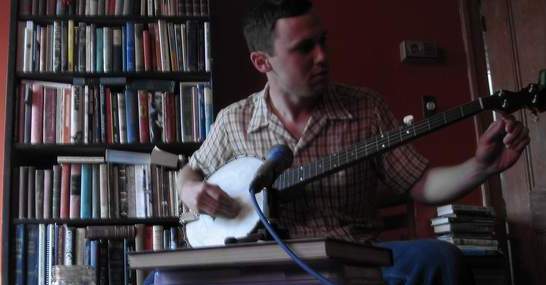
Iraq War Veteran, Conscientious Objector and Musician Clifton Hicks
Clifton Hicks is an activist with the Iraqi Veterans Against the War. Hicks is disabled and enrolled as an Anthropology student at Appalachian State University in Boone, North Carolina. Appalachian State is a center for old-time music, and Hicks is also an accomplished musician and banjo player. Cliff Hicks is psychologically disabled and got out of the Army as a conscientious objector several years ago. In the Spring issue of The Veteran, published by Vietnam Veterans Against the War, there’s printed the following chant, that is repeated by soldiers in training to go to Iraq. “I went down to the market where all the people shop, I pulled out my machete, and I began to chop, I went down to the park where all the children play, I took out my machine gun and I began to spray.” This is the kind of psychological brutalization that our young men are forced to endure that turn them into creatures they never thought they’d become.
- I was in 9th grade when 9/11 happened. I called the recruiter when I was 16, to try and get in.
- I saw Muslim and Arabic people and thought they were all out to get us.
- I listened to a lot of daytime AM right-wing radio. I had the ole cliche patriotic notions going.
- I wanted to go combat arms from the start, I figured if I was going into the Army, I wanted to fight.
- My feet were on the ground in Iraq in October 2003. The guys I was with that had already been there for a while had gotten pretty nasty. Guys get nasty, because their friends get killed and you realized you can’t trust anybody.
- We were the first division in combat to be out there for more than 13 months.
- They would literally give us candy and toys to give out to Iraqi kids at schools, the next day you’re ridin’ around and you see a b unch of kids get shot.
- I became an anti-war activist while I was still in the Army. We started an IVAW chapter in Gainesville Florida
Guest – Clifton Hicks, Branch of service: United States Army (USA) / Unit: C Troop, 1st Squadron, 1st U.S. Cavalry Regiment / Rank: PFC / Home: North Carolina / Served in: Ft. Knox, OIF 1, Germany. Hicks a musician and is currently a student at Appalachian State University in Boone, North Carolina.
——————————————————————–
Law and Disorder July 5, 2010
Podcast: Play in new window | Download
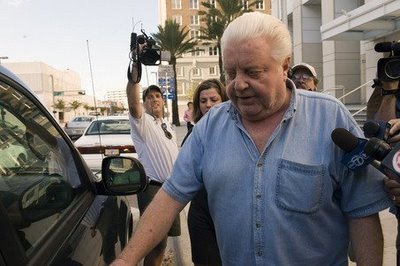
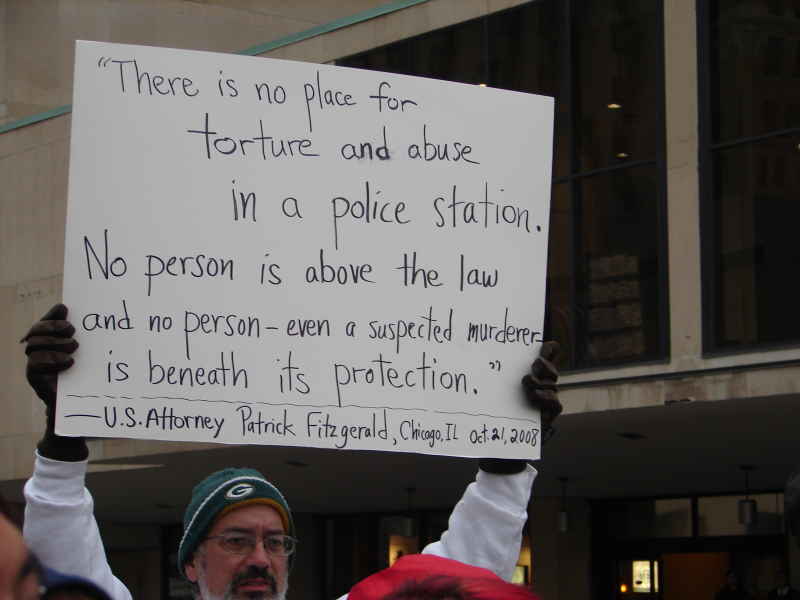
Former Chicago Police Commander Jon Burge Found Guilty
Former Chicago Police Commander Jon Burge was found guilty last week 25 years after the evidence of torture and police abuse was brought forward. Burge was not convicted of abusing prisoners, the statute of limitations on those crimes had passed, he was convicted of perjury and obstruction of justice for lying about the abuse in a civil case.
According to the People’s Law Office in Chicago, at least 24 African American men are still serving sentences for crimes they say they confessed to after being tortured by Chicago Police officers. This happened when the Chicago police precinct was under Commander Jon Burge in the early 70’s to the 1992. Jon Burge is a Vietnam Vet who is said to have brought back torture to Chicago. People’s Law Office Attorney Flint Taylor says Burge shot through the ranks all the way to commander, primarily by leading a band of torturers. They used methods such as electric shock, dry submarino, (suffocating with bags)
The People’s Law Office brought the case in 2005 and the city of Chicago refused to settle while pumping hundreds of thousands of dollars in that case. Attorney with the People’s Law Office Flint Taylor says the city has spent over the 10 million dollars in aiding the defense of former Commander Jon Burge. Mr. Burge, who is 62 and in ill health, was fired from the Chicago Police Department in 1993. He faces up to 45 years in prison.
- As you know the torture allegations started to arise almost 40 years ago. In 1982, there was evidence that would have put Burge away for torture, but then a movement against torture in the early nineties brought the case back, but Justice Departments refused.
- As time went on, there was no longer the ability to go after him for attempted murder, torture and other substantive charges because the statute of limitations ran out on that.
- They appointed a special prosecutor in the early 2000s but he turned out to be very close to Daley, and he wouldn’t indict. If we couldn’t get Burge for torture, we would get him for obstruction of justice, lying and perjury.
- Burge had exercised all his pre-emptory challenges in court on the jury to get rid of all the black jurors.
- Judge brought back one black person to the jury with Batson law. It was an unbridled racist defense. Jury found Burge guilty on one charge of perjury and two charges of obstruction of justice.
- Federal guidelines would probably put him in the 9 to 10 year sentence category.
- As we uncovered many more cases of torture and master minded by the same commander, movements came together. Movements against police brutality and human rights.
- We are also pursuing that torture be a federal crime without statute of limitations.
- Meanwhile statutes are running out on the Bush Administration torture conspirators.
- But it took 30 years to get this man in the dock, and he’s convicted by a Republican US Attorney. What does that say about the torture by Cheney, and others, with their admissions by the way?
- However long it takes you can’t give up.
- The jury: they’re human beings like we are, and they shouldn’t be tortured.
Guest – Attorney Flint Taylor, a graduate of Brown University and Northwestern University School of Law and a founding partner of the Peoples Law Office. More bio
—

US Social Forum in Detroit Part 1
Co-host Michael Smith talks with Detroit attorney Ron Reosti about, US Social Forum in Detroit and the rebuilding of the Detroit area. Attorney Ron Reosti, born and raised in Detroit, Ron represented left union activists and tenant unions. He also did class employment law and was part of a team that represented women prisoners who were sexually assaulted in Michigan. He’s an National Lawyers Guild member and active in the anti-war movement.
Attorney Ron Reosti:
- Detroit had a radical history before the 1950s based on the labor movement and vibrant black community
- Radicalization in the sixties stemmed from the defeat of McCarthyism in the mid-fifties, civil rights movement in the South and revolt of colonies in third world countries.
- In Detroit we continued to experience the de-industrialization of the city.
- There were a significant number of auto plants that were closed in the fifties and sixties.
- During that time the radicalization kept getting channeled through the democratic party.
- US Social Forum: People are grappling with solutions to the capitalist system.
- Some of the young people aren’t misinformed about Leninism.
- The young people at the social forum seemed to be smarter than we were.
- What kind of society do you build after you overthrow capitalism?
Guest – Attorney Ron Reosti, born and raised in Detroit, Ron represented left union activists and tenant unions. He also did class employment law and was part of a team that represented women prisoners who were sexually assaulted in Michigan. He’s a National Lawyers Guild member and active in the anti-war movement.
—–
US Social Forum in Detroit Part 2: Detroit Black Radicals
We another perspective on the US Social Forum from John Williams. John Williams is a long time leader of Detroit’s Black community and central organizer of the historic League of Revolutionary Black Workers in Detroit. Williams worked at Ford and Chrysler while teaching at Wayne State University, he was a member of the Black Panther Party, Detroit chapter and a founding member of the Detroit chapter Labor Party. Contact: Rally Comrades / P.O. Box 477113 / Chicago, Illinois 60647 / 773-486-0028.
- US Social Forum this time, questioning captalism and outright anti-capitalism
- The moral question, what this country is doing is wrong, workers laid off, in the streets, immigration, Gaza, Palestine
- LRNA – League of Revolutionaries for a New America, a group of people coming together paying attention to class consciousness in the rising work force.
- We’re talking about workers in the rust belt who have been thrown out of the production. Good union people can’t fight capitalism with the old union ways.
- LRNA ranges from senior citizens to youth who are bound by an understanding of where America is at this point. It’s like a storm that’s developing.
- Back during the League of Revolutionary Black Workers, we moved the Black Panther chapter into the league.
- The head of the Panther party at the time was a Ford worker who had built FRUM. Ford Revolutionary Union Movement
Guest – John Williams, long time leader of Detroit’s Black community and central organizer of the historic League of Revolutionary Black Workers in Detroit. Williams worked at Ford and Chrysler while teaching at Wayne State University, he was a member of the Black Panther Party, Detroit chapter and a founding member of the Detroit chapter Labor Party.
————————————————–