Welcome to Law and Disorder Radio
Law and Disorder is a weekly independent civil liberties radio program airing on more than 150 stations and on Apple podcast. Law and Disorder provides timely legal perspectives on issues concerning civil liberties, privacy, right to dissent and practices of torture exercised by the US government and private corporations.
Law and Disorder June 28, 2010
Podcast: Play in new window | Download
Updates:
—
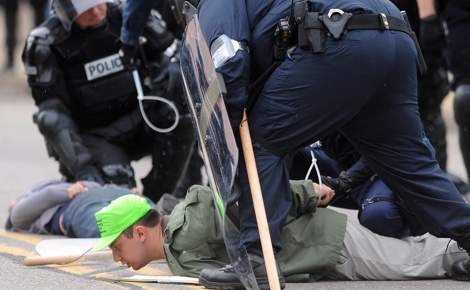
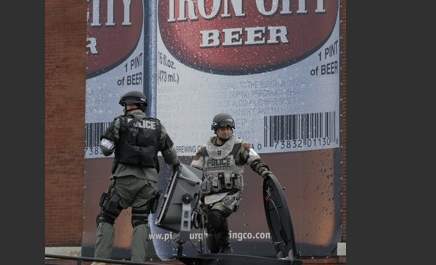
Pittsburgh’s Citizen Police Review Board Demands G20 Police Records, Faces Dismantling
Pittsburgh’s city council is worried that if the city’s Citizen Police Review Board are allowed to scrutinize secret records of officer conduct during the G-20 economic summit, more protesters will sue and possibly jeopardize a $20 million liability insurance policy the city bought before the International Summit last year. We could lose our homes over this,” said City Councilwoman Theresa Smith, chairwoman of the public safety committee.. “If we don’t have insurance, then it falls to us.” The Seeds of Peace Collective and Three Rivers Climate Convergence have filed a joint federal lawsuit against the city charging that police violated their First and 14th Amendment rights at two events. Meanwhile, city hall has started the nomination process to remove most of the members of the Pittsburgh Citizen Police Review Board.
- The Pittsburgh Citizen Police Review Board does have subpoena power and when they initiated their inquiry last October, a general request of a number of documents to be turned over so we could begin the inquiry. The city resisted providing that information.
- In December the chair of the Citizen Police Review Board issued a subpoena demanding that police reports specified by number be turned over in addition to operational material and documents.
- On March 18, the courts issued an order directing the city to provide the documents. They finally gave us a stack of more than 300 pages of police reports that were so heavily redacted they were substantively illegible.
- We went back to court seeking that they would have to provide the information in an un-redacted form and that has led to this controversy with city council.
- The Pittsburgh City Council is coming forward with a document called “the will of council” urging the police review board to slow down its inquiry.
- What has happened now is that the request of these G20 documents is really the vehicle that the city has now created to challenge the board’s right of access to any document.
- Protesters hit with OC Vapor – Invisible Vaporized Pepper Spray
- Law and Disorder Interview from Pittsburgh G20, Oct 2009
- Law and Disorder Interview – Jules Lobel – Pittsburgh G20, Sept 2009
Guest – Elizabeth Pittinger, the Executive Director of the Pittsburgh Citizen Police Review Board.
——–
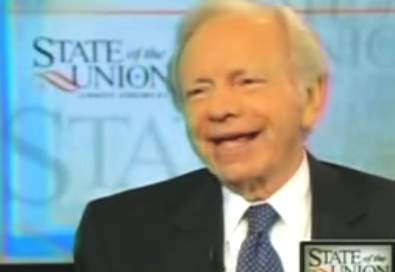
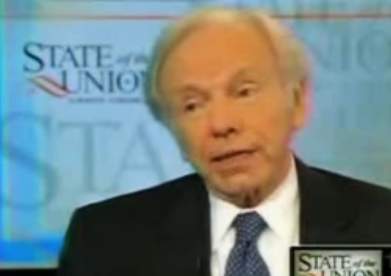
“Cyber War” Creates Need For Internet “Kill Switch”
Senator Lieberman and Senator Susan Collins have the attention of civil liberties and privacy experts as they craft a bill that would allow the take over of the civilian internet network during an emergency. After initial outcry, Senator Lieberman told the media, the Internet Kill Switch bill is a matter of national security, and a kill switch is needed to disconnect immediately from a foreign nation in case of an attack. He continues, “Right now, China, the government, can disconnect parts of its Internet in a case of war. We need to have that here too,” Protecting Cyberspace as a National Asset Act of 2010 is the name of the bill, and supporters argue that it is not a kill switch, but a way to divert traffic away from another country. It is added that the President already has broad powers to shut off any and all regulated telecommunications in the 1934 Telecommunications Act.
- I think its clear by the way the bill is currently written, the president could target political groups, but that’s not the intent of the bill. It doesn’t mean it couldn’t be used in that fashion. The information sharing is quite similar to what happened after 9/11. It potentially creates a situation where corporate providers basically rat out parties at the instructions of the government. That could certainly be directed at political viewpoints.
- Internet sites could potentially be shut down. Information about who is posting to them, who is reading them and who owns them will become the property of the federal government.
- Another motivation behind the bill – Litigation and liability protection for internet companies.
- Internet use in China is considerably compromised
Guest – Tracy Rosenberg, Executive Director of Media Alliance since 2007. She has organized and advocated for a free, accountable and accessible media system,focusing on the protection and sustainability of alternative media outlets from Pacifica Radio to low-power FM, public access and Indymedia, monitored the mainstream media for accuracy and fair representation and facilitated the training of numerous nonprofit organizations and citizen’s groups in effective communications.
—–
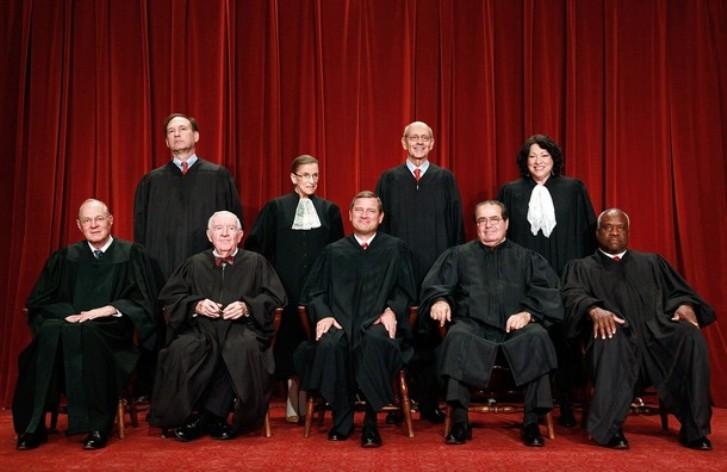
The Supreme Court’s decision to preserve a vague prohibition on aiding and associating with terrorist groups severely reduced the First Amendment rights of American citizens. The decision could have serious impact on lawyers, journalists and academics who represent or study terrorist groups. The new decision came from a case by the Humanitarian Law Project that challenged the law of prohibiting “material support” to terror groups. The law projected wanted to provide advice to two terrorist groups on how to peacefully resolve their disputes with the United Nations and International Law. The Supreme Court ruled that the peaceful assistance is aiding terrorism.
- A number of Justices were skeptical about the ways this law may be applied to journalists, to lawyers representing unpopular clients. “Speech discouraging violence can be banned under the First Amendment.”
- Solicitor General Kagan was asked if a lawyer is entitled to represent someone on the FTO list.
- Foreign Terrorist Organization List.
- Kagan says if you have some Constitutional right to be in court then the statutes should be interpreted in a way to allow the lawyer to represent someone in those circumstances.
- If you think about it, it took the Guantanamo lawyers 7 years to establish if there was a Constitutional right to challenge your detention if you’re a non-citizen.
- Kagan is saying that lawyers were taking their chances to represent Guantanamo lawyers in the first place.
- Lynn Cheney’s group : Keep America Safe.
- You couldn’t send books on Federalism to the Tigers of Tamil Eelam who are on the FTO list.
- The law defines material support to be more than tangible things like guns, and money but also things like personal services, expert advice and assistance. Those terms are so broad.
- (Treating a wounded person with your medical skills) Humanitarian aid during crisis at risk.
- That’s one of the fundamental problems with vague statutes. They give too much discretion to law enforcement, if everything is prohibited than law enforcement is going to be selective on who they choose to prosecute. The government likes that. Greenpeace would easily qualify.
- President Clinton was the first to use this law directed at whole nations such as Nazi Germany or Cuba and instead direct them at political organizations.
- The government has used this law 150 times since 9/11. Statute of limitations of 8 years.
Guest – Shane Kadidal senior managing attorney of the Guantánamo Global Justice Initiative at the Center for Constitutional Rights in New York City. He is a graduate of the Yale Law School and a former law clerk to Judge Kermit Lipez of the United States Court of Appeals for the First Circuit.
————————————————————————
Law and Disorder June 21, 2010
Podcast: Play in new window | Download
Updates:
- Disturbing the Universe – On Point of View PBS June 22, 2010
- Cuban Five Update – Government Paid Reporters To Influence Jury
- Canadian RCMP Investigating U.S. and Syria Regarding Mahar Arar Rendition To Torture
- Newburgh Four – Clear Case of Entrapment (Past shows on Newburgh 4 – June 2009 /April 2010)
- US Should Not Condone Israeli Attack – By Michael Ratner
—

Mavi Marmara Survivors Have A Right To Be Heard
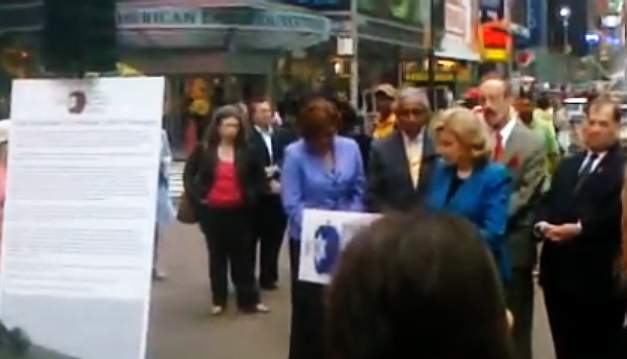
Last week, two eyewitnesses who were aboard the Turkish ship that was stormed by Israeli Naval Commandos told their stories at the Brooklyn’s historic House of the Lord Church. As many listeners know 9 unarmed passengers were murdered, the oldest, Ibrahim Bilgen, was 61, the youngest was 19, a U.S. citizen born in Troy , N.Y. This speaking event almost didn’t happen. Last Monday, June 14, City Council speaker Christine Quinn, Reps. Jerry Nadler, Anthony Weiner, Carolyn Mahoney, Charles Rangel and others, gathered in Times Square to demand the State Department investigate the invited speakers for “ties to terrorism.” They want to prevent or delay their entry the United States. Video
Bill Doares:
- U.S. filmmaker Iara Lee and British political organizer Kevin Ovenden, and Ahmet Unsal, a former Member of Turkey’s Parliament
- Their hands in my opinion are dripping with blood. Anthony Weiner actually called those on the ships “terrorists.” IHH Turkish Charity
- Every bullet fired by Israel is paid for by the United States.
Guest – Bill Doars with New York Labor Against the War / Al-AWDA New York
——–
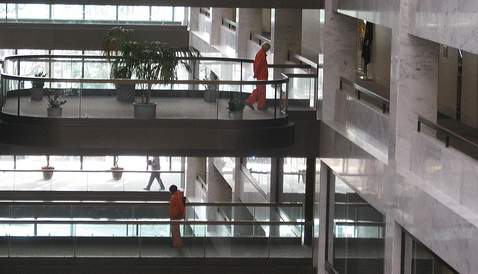
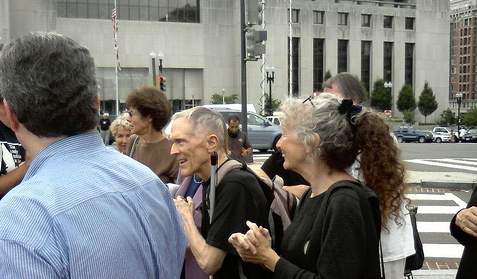
24 Anti-Torture Activists Acquitted
Last week, 24 anti-torture activists were acquitted in trial for protesting at the US Capitol, calling for Guantanamo’s closure and an investigation of deaths at the prisoner detention camp. The activists were aquitted of charges of (quote) unlawful entry with disorderly conduct which stemmed from demonstrations in January 21 of this year. The date President Obama promised to close Guantanamo prison. “With his decision, the judge validated the effort of the demonstrators to condemn the ongoing crime of indefinite detention at Guantanamo,” says Bill Quigley, legal adviser to the defendants and the Legal Director of the Center for Constitutional Rights. FDL story
- There was a big protest on the day that Guantanamo Bay prison was supposed to be closed by Witness Against Torture.
- Witness Against Torture started in 2005 by going to Cuba and marching to the gates of Guantanamo asking that the people there be released.
- In January this year they had a number of people who did a water-only fast for 11 days, it ended on January 21, 2010. They put 20 something people on the steps of the Capitol who were in orange jump suits and black hoods, unfurled a banner with rose petals in the rotunda.
- About 35 people were arrested that day. They were charged with unlawful assembly with intent to breach the peace. The trial was last week, and they were given the option of paying a 50.00 fine. Most wanted to go to court and put Guantanamo on trial in the superior court.
- I prepared and argued for a necessity defense, an international law defense and the importance of the first amendment to what they were doing. I analagized their conduct to the people who resisted in Germany, the illegal crimes of Hitler and the like, the responsibility of citizens to challenge the crimes of their government.
- I think the judge didn’t want to get involved with this (activist work globally to shut down Guantanamo)
- Maybe a sign for a chance to turn the tide.
Guest – Bill Quigley, Legal Director for the Center for Constitutional Rights, a national legal and educational organization dedicated to advancing and defending the rights guaranteed by the United States Constitution and the Universal Declaration of Human Rights. Bill joined CCR on sabbatical from his position as law professor and Director of the Law Clinic and the Gillis Long Poverty Law Center at Loyola University New Orleans. He has been an active public interest lawyer since 1977.
——-
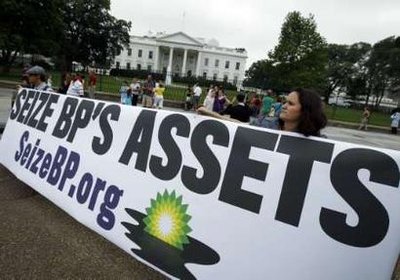
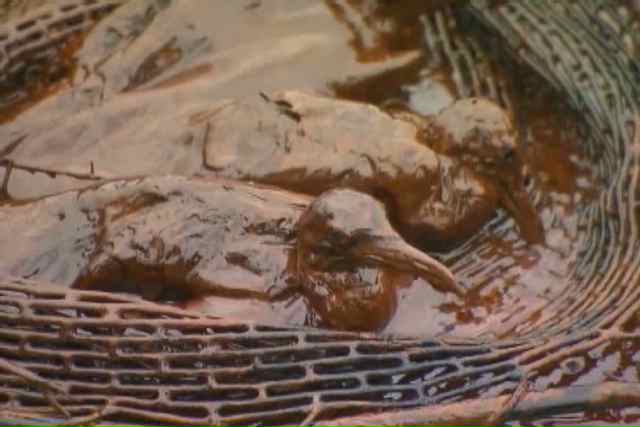
Seize British Petroleum Assets
As the blood red crude oil continues to gush from the bottom of the Gulf of Mexico, many industries and communities are being hit hard economically and environmentally. Meanwhile British Petroleum, Haliburton and Trans-ocean sidestep compensation and trade blame. Organizers of the Seize BP campaign say their demand is straightforward, “Seize assets of BP sufficient to compensate the people they harm.” There are several paths to compensation says Carl Messineo, attorney with the Partnership for Civil Justice and organizer of the Seize BP group. First, the BP claims process whereby BP determines what to cover and how much to pay. On this road all power rests with BP. Second, through the courts, where people can file litigation and lawsuits against BP. Both BP and the Obama administration want to push everyone seeking compensation down these two paths, but these two paths lead nowhere.
Third, the seizure of BP’s assets in an amount commensurate with estimated damages and the delivery of immediate and ongoing compensation to all those who have suffered and will suffer lost jobs, wages and business for years to come.
- Seize BP is a campaign that was started of course a few weeks ago, around a single, simple demand, which is the US government needs to seize assets of BP. Place them in trust and make them immediately available for people in the Gulf coast who are in severe desperation at this time.
- People can’t pay the mortgage with rhetoric, they can’t eat rhetoric. The Obama administration can choose to take action. They can seize assets of BP.
- The president of the United States needs to request that Tony Hayward to please set aside some money? The president has legal authority, the Congress has legal authority. They can compel action.
- That’s their responsibility. Obama has acted like the calm captain of corporate interest within his presidency.
- He funneled health care through the corporations. Instead of serving the people, he’s really been subservient to corporate interest. This is a defining moment for his presidency.
- BP was the responsible party, this was avoidable, why do we turn to BP and ask them “please?”
- Right now, we know that BP can put aside 20 billion dollars. This is the same corporation that chose not to put the 500 thousand dollar safety valve.
- The US government has decided over the years to be willingly incompetent. This is something that they admit. They are incompetent technologically and using government resources.
- Obama can’t say that this is inertia from the bad policy of George Bush. He made personal decisions to expand offshore oil drilling. His administration is no worse than the others. There’s no change.
- Accidents happen, that’s why there needs to be independent redundant systems to respond to catastrophes.
- BP is a profit maximizer. It’s goal is to make as much money as possible, to limit its expenditures in order to maximize its profits.
- These handful of individuals hold in their hand, the safety and the ecology of clearly between 5 and 10 coastal states. It can’t be left to the profit making decisions.
- The largest share and holder of BP is the Chase Bank.
Guest – Attorney Carl Messineo with the Partnership for Civil Justice and organizer of SeizeBP
————————————-
Law and Disorder June 14, 2010
Podcast: Play in new window | Download
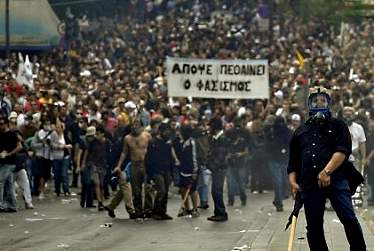
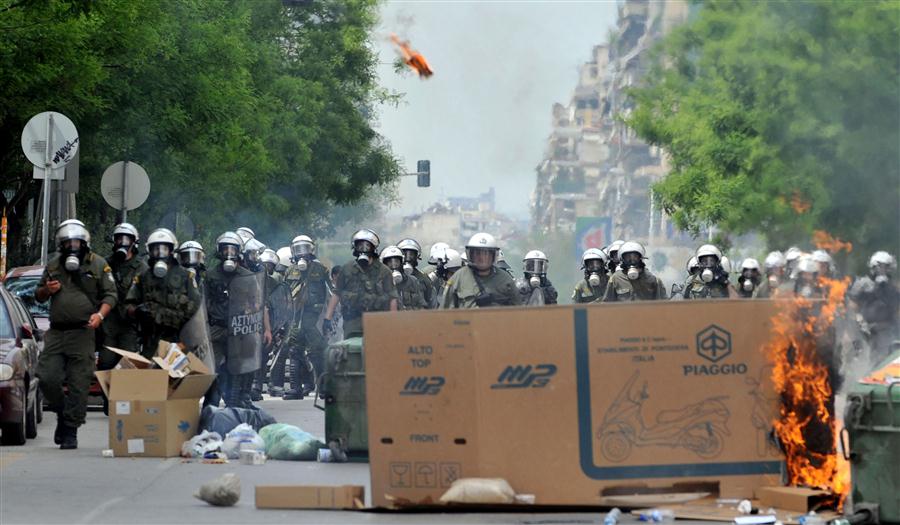
Economic Crisis, Greek Theater, Our Drama
We are joined in the studio by Professor of Economics Rick Wolff and National Lawyers Guild Attorney Eric Poulos. Both have recently returned from Greece. Rick Wolff’s recent articles outline an economic theater playing out in Greece and across the globe. There is no alternative and this is all the worker’s fault, is the mantra from rulers who are cutting wages and pensions in Greece. It’s deceptive and false says Rick Wolff, and the economic conditions in Greece is an old pattern that is replicating everywhere. Greek capitalist enterprises and top shareholders evade paying taxes Rick writes. Meanwhile economic contradictions of Greek capitalism drive employers and employees to demand more from the government. The government can’t finance its expanding services and tries to raise taxes. The masses resist, social movements to tax the rich accelerate, then the rich quickly offer to lend the government more of the money they saved from not paying taxes. There are many more acts to this economic theater , Rick Wolff asks what will the final scenes be in the European working class?
- I looked at the professors faces and I realized the economic crisis had come home and hit them very hard.
- Every single professor received a pay cut, which took a effect as soon as I arrived to Athens. Fifteen to 20 percent less a year for every teacher in the country.
- Not only every teacher, but every public employee, it includes the police, and the foot soldiers in the Army.
- On top of the unemployment, this is a blow against every single working person. We are at the beginning of a major disaster. This also threatens other countries, Spain, Portugal, Italy, Ireland.
- This crisis is showing us we are for years of dysfunctional captialism as a global system.
- Greece is remarkable in that it has a well organized, strong working class. The super rich in Greece do not want to pay taxes. The working class is powerful enough in Greece (unlike here in the United States) to make the government stand up and notice.
- Governments borrow money as a solution for taxation. Lenders ask why lend to a small country with little promise of making good on the loan. Lenders had already loaned to the US. It’s the US crisis that created the dilemma for Greece. The biggest holders of the debt of Greece are French and German banks.
- They turned to the Greek government and said, squeeze them, but don’t squeeze them to the point where they’ll default.
- The people who brought us the crisis are dictating the suffering of masses of people to work their way out of the crisis with no cost to themselves.
- We have a president today in a terrible economic crisis, and not only is there not a government program to hire people, it’s not proposed, it’s defended, our government isn’t explaining our own history has that as the thing we did the last time.
- Those who made out like bandits in the last 30 years, ought to be made to pay, the lion’s share of the cost for cleaning up the economic mess. If democracy means anything it should begin in the place where we spend most of our adult lives. Where we work.
————-
Attorney Eric Poulos:
- Greece is really a society that is smouldering. There have been 3 general strikes since the cutbacks in March.
- 40 thousand jobs a month are being lost in Greece.
- The civil servants in Greece have not had their prescriptions filled since March.
- The country has been run by Socialist for 30-36 years. Socialists and Communists have bought on to this.
- There have already been huge demonstrations in Portugal and Spain. Portugal was huge.
- This is looting. They are looting Greece.
- Greece is now going privatize the post office. The gas, the water works, the railway.
- The banks are really picking off the pieces of Greece.
- They’re interested in suppressing the social wages and whatever they can accumulate.
- The landscape in the United States is not very hopeful because the working class labor movement hasn’t stepped up at all.
- If private corporations want government money to bail them out, we take them over, we run it.
- If there are going to be lay offs. We cut the work week. Work 4 days but the workers get paid 5 days.
- You need the political will and the question is where will that come from and how will that be done.
Guest – Rick Wolff, Professor of Economics at University of Massachusetts at Amherst. In his new book Capitalism Hits the Fan: The Global Economic Meltdown and What to Do About, Rick takes the reader back to 2005 and step by step reveals how policies, economic structures and wage to profit systems led to a global economic collapse.
Guest – Attorney Eric Poulos with the National Lawyers Guild who traveled to Greece.
———-

United National Anti-War Conference
Attorney and radio host Jim Lafferty joins us today. We get updates on the upcoming anti-war conference in Albany New York, the ongoing immigration policy conflicts in Arizona and new developments on the Israeli attacks and killings on the Gaza flotilla. We will also get more information on Attorney Peter Erlinder’s condition in Rwanda. As listeners may know, former National Lawyers Guild president Professor Peter Erlinder was arrested 2 weeks ago by Rwandan Police for allegedly denying the country’s 1994 genocide. He is currently imprisoned in Rwanda and very little information is getting out. Facebook Group – Free Professor Erlinder Now
Jim Lafferty:
- United National Anti-War Conference July 23 / 24
- There’s been an ebb in the anti-war movement in terms of the way it’s manifested itself in the streets.
- US Should Not Condone Israeli Attack – By Michael Ratner
- Sponsored by IVAW / US Labor Against the War / Code Pink / Raging Grannies /
- Hundreds will be gathering in Albany to help revitalize the sentiment.
- During the Vietnam War, the teach-ins preceded the growth of the movement.
- Now that the war has expanded, it’s important to teach to younger generations that this is US imperialism in its worst form. Why it has nothing to do with making us safer.
- Get out of Iraq, get out of Afghanistan and leave the people of Pakistan alone.
- Arizona Immigration Legislation Update
- Peter Erlinder Update – Lawyers have been able to make contact with Peter Erlinder. He was recently denied bail.
- Rwandan Ambassador James Kimonyo – 202-232-2882 / National Lawyers Guild Page Updates
Guest – Jim Lafferty, Executive director of the National Lawyers Guild in Los Angeles and host of The Lawyers Guild Show on Pacifica’s KPFK 90. 7 FM
—————————————————————————–