
Welcome to Law and Disorder Radio
Law and Disorder is a weekly independent civil liberties radio program airing on more than 150 stations and on Apple podcast. Law and Disorder provides timely legal perspectives on issues concerning civil liberties, privacy, right to dissent and practices of torture exercised by the US government and private corporations.
Law and Disorder February 22, 2010
Podcast: Play in new window | Download
Updates:
—
CCR’s Second Stop and Frisk Lawsuit: Floyd, et al. v. City of New York
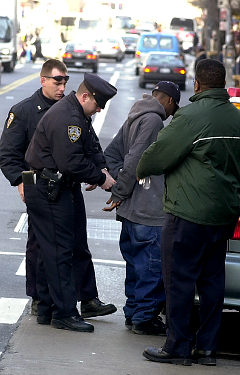
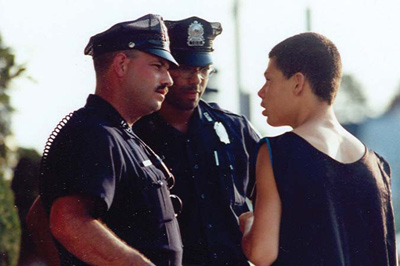
In the beginning of 2009, statistics show that 84 percent of the people who were stopped and frisked by the New York City Police Department were black or Hispanic. Very few stops yielded any contraband or weapons. Critics call these stops, racially oriented harrassement and despicable. Not everyone stopped by police is frisked however. About 59.4 percent of all Hispanics stopped were also frisked, 56.6 percent of blacks stopped were frisked and 46 percent of whites stopped were frisked. Whites had composed less than 16 percent of these stops in early 2009. The New York City Police Department insists the stops help fight crime. The Center for Constitutional Rights has filed a class-action lawsuit against the city and the Police Department over the stops. Please visit MalcolmXGrassRootsMovement.
Plaintiff David Floyd:
- The case is surrounding stop and frisk cases, particularly in black and Latino communities.
- I’ve been stopped in community over the past couple years. I live in Parkchester in the Bronx.
- Both times, I was stopped, I was going about my daily life, I work and go to school. The second time I was stopped, was on the premises where I live. The first time I was stopped, they gave no probable cause and I asked for names and badge numbers.
- The second time they said there were a string of robberies in the neighborhood. It’s a script that we found, the police go by continually.
- It’s almost as if you’re walking down the street and somebody jumps up out of no where to rob you. They go in your pockets, they take your wallet, but in this instance, what they try to walk away with is your dignity.
- There are ways to very calmly challenge and ask questions but they don’t like that. I ask “why is it that I’m being stopped, do you have probable cause?” Part of our response as a community has to support young people, anyone and everyone who are getting stopped illegally.
- You should make sure that they know, that you know your rights. People have cameras now, we need to make sure we document this constantly. Community members become activists so that internationally, there’s a voice that comes out.
- The securities industry is benefiting from tactics being used against black people here in the United States. Tactics that are being used against Palestinians, Iraqis, Afghans. The tactics that the NYPD think are successful are being exported into other cities. There is a veil of accountability with the CCRB
- Challenging state violence is the responsibility of those who go through it.
- The important thing to remember is that the Constitution requires that police have a reasonable suspicion that a crime is about to be committed. In 2005, there were 4 hundred thousand stops.
- We also allege in our lawsuit that there is a failure to train and discipline police officers, that goes all the way up. It’s important that there is still this historic memory of Amu Dudiallo, Abner Louima.
- We are also seeking more accountability within the CCRB, the Civilian Complaint Review Board, the body to hear civilian complaints regarding the NYPD. We think the CCRB should have it’s own prosecutorial or enforcement powers. There is a sense in the community, how can we bring change about when the system is so amomous?
- We also think there has to be a change in the way that police train rookie cops and undercover police officers that are flooding communities. Make the Road By Walking / Malcolm X Grassroots Movement
- We don’t have the breakdown of arrests racially, yet. The number of stop and frisks are on the rise and we should take a stand against it. We think we will be able to obtain information about widespread practices
Guest – Sunita Patel, Center for Constitutional Rights staff attorney, Sunita is involved with racial profiling, immigrant rights and other human rights litigation.
Guest – David Floyd, plaintiff in the case and Bronx resident. MalcolmXGrassRootsMovement
—
Chris Hedges – Empire of Illusion: The End of Literacy and the Triumph of Spectacle
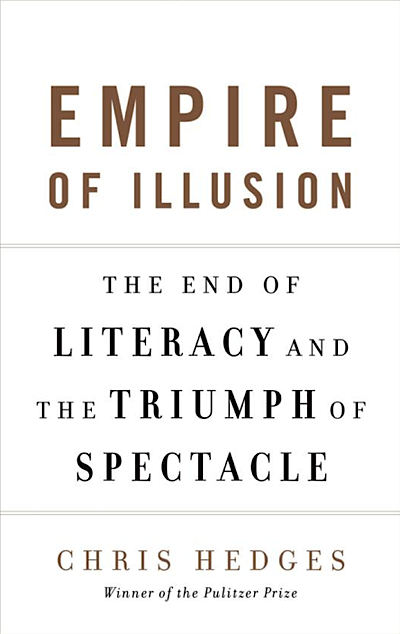
We are delighted to have back with us, award winning journalist and author Chris Hedges. His new book Empire of Illusion: The End of Literacy and the Triumph of Spectacle thoughtfully examines the erosion of American culture and levels a heavy criticism. Chris Hedges says we are living in a totalitarian society that is image based. This image is not benign, he says. It is skillfully manipulated by for-profit corporations to get us to do things not in our interest. Right now, 40 million Americans are illiterate. In this media landscape, nuanced discussions of ideas are replaced by carnival barking and interruption, meanwhile newspapers and publishing companies are in decline. Hedges has called it a slow motion coup d’etat where democracy and the Constitution are held up as ideals while the levers of power are driven by destructive forces.
- I think the best way to see how illusionned we are as a culture is through prism of popular entertainment.
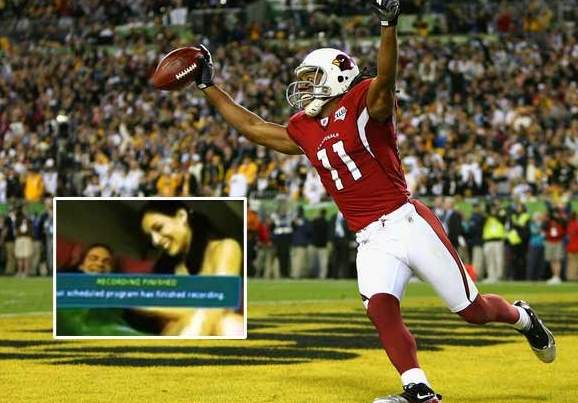
- We’re of course a completely pornified society. The largest users of porn on the internet are teenagers.
- What are the messages being pumped out whether its the WWF or porn.
- Porn isn’t the back lit shaved bodies of the playboy channel. It’s violence and not simulated violence.
- The women are popping pain pills and require surgery after sex. When you look at the stills from Abu Gharib, they could be stills from a set of a porn film, and I don’t think that is accidental.
- The narrative that we use to explain ourselves to ourselves is no longer print based.
- 42 million in the US illiterate, 50 million semi-illiterate.
- 80 percent of American households didn’t buy a book last year. The danger of that is the images we are fed are skillfully done by those with an agenda and power. It is meant to confuse a brand with knowledge and not see the underlying structures of the corporate state.
- We are a culture severing ourselves from verifiable fact and replacing it with a culture where lies become true where opinions and facts are interchangable.
- Intellectual thought by its nature is subversive, because it questions structures and assumptions.
- I think there has been tremendous cultural transformation, with the rise of the corporate state. Our form of inverted totalitarianism, which has been designed to shut out the bottom two thirds of the country.
- The jobs that we are shedding are not coming back, we are entering a form of neo-feudalism.
- A dream is something you strive towards, an illusion is something you live in.
- The system has been so ethically perverted by corporations, that we now sit by passively and allow our for-profit health care industry to legally hold sick children hostage while parents bankrupt themselves trying to save their sons or daughters.
- What kind of society I would like to see is one wresting back the government from the hands of the corporations. Once somebody is dead, they’re not worth anything in a commodity culture.
- We have to walk out of the mainstream, don’t fall for this what Ralph Nader calls the least worst.
Guest – Chris Hedges, the author of many books specializing in American and Middle Eastern politics and society. He spent nearly two decades as a foreign correspondent in Central America, the Middle East, Africa and the Balkans. He was also the Middle East bureau chief for The New York Times.
—————————————————————–
Law and Disorder February 15, 2010
Podcast: Play in new window | Download
Updates:
- Admitted CIA Agent Luis Posada Carriles Upcoming Trial in El Paso, TX
- Perjury, Obstruction and Naturalization Fraud on March 1, 2010
- Obama Wraps Himself In The Bush “Anti-Terror” Policies
- Humanitarian Law Project – March 23, 2010 – Material Aid to Terrorism
—-
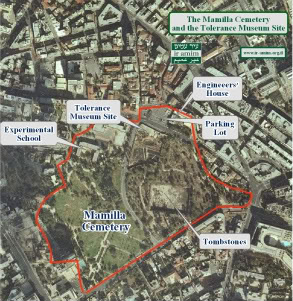
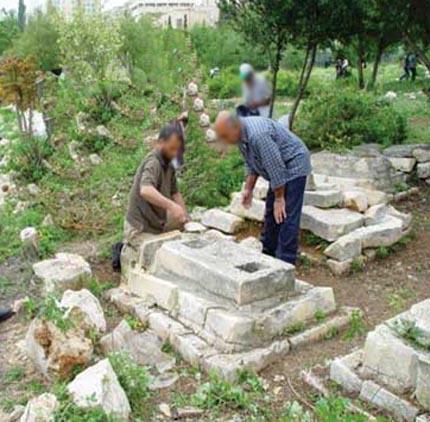
Simon Wiesanthal Museum of Intolerance: Mamilla Cemetery In Jerusalem
Critics continue to speak out against plans to build the new Simon Wiesanthal Museum of Tolerance near the Mamilla Cemetery. The cemetery is an 800 year old Muslim burial in the heart of Jerusalem and covers about 12 percent of the plot of the new 250 million dollar museum. Today we examine the ongoing legal fights to preserve the cemetery. Mamillacampaign.org
The museum construction has been halted several times in the last few years. Recently, the Israel’s Supreme Court ruled to go ahead with the continued construction, since there was no objection in 1960 when a parking lot was built over a small part of the cemetery. Controversy swirls around the project, the previous architect of the museum project designed an imposing futuristic mix of titanium, glass and stone. Police detain filmmakers
The initial outcry opposing the project came from the Palestinian community, Israeli archaeologists and Ultra-Orthodox Jews. Meanwhile, construction of the museum continues in portions of the area where human remains have not been found. CCR Synopsis
Dima Khalidi:
- Mamilla Cemetery is a huge piece of land located in West Jerusalem It’s an ancient cemetery dating back possibly to the 7th century. Palestinians buried their relatives there since at least 1948
- It has the ancestors of the biggest Jerusalem families including my own family.
- The cemetery has been constantly built on since the fifties and sixties. Our petition to several United Nation bodies is really part of a larger opposition. UN rapporteur on Freedom and Belief and the rapporteur on Ending Racial Discrimination
- We are asking that they label the Mamilla cemetery as a historic site and protect it and move this project, also find the remains that have been dug up so that the Palestinian families can re-bury them. 250 sets of bones removed, at least.
- There are four layers of burials dating back to the 11th century. 2 thousand people buried there.
- The museum’s archeologist called it an archeological crime. The mayor of Jerusalem offered a different site.
- Michael Ratner: what’s going on here is the expulsion of the memory and history of Musliims and Palestinians from Jerusalem
- Israeli Supreme Court handed down a decision in December 2009 affirming previous decision that it was legal to build this museum on top of the cemetery.
Guest – Palestinian-American lawyer Dima Khalidi. Dima is based in Chicago, she has a JD from DePaul University College of Law in Chicago and a Masters from the School of Oriental and African Studies, University of London in International and Comparative Law with a focus on Islamic Law. She has worked with the People’s Law Office in Chicago, and the Center for Constitutional Rights (CCR) in New York. Prior to studying law, she spent two years working in the West Bank at Birzeit University on a project studying the role of customary/tribal law in Palestinian society. She has been working on the Mamilla cemetery case with CCR and other attorneys in recent months.
——-
The Iraq Papers: John Ehrenberg
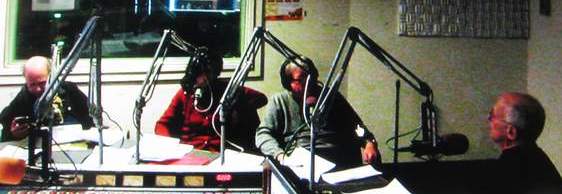
Political science professor and author John Ehrenberg joined hosts live in the studio to talk about a book he had worked on with 4 other colleagues titled The Iraq Papers. (From the review) The book offers a compelling documentary narrative and interpretation of this momentous conflict. With keen editing and incisive commentary, the book weaves together original documents that range from presidential addresses to redacted memos, carrying us from the ideology behind the invasion to negotiations for withdrawal. These papers trace the rise of the neoconservatives and reveal the role of strategic thinking about oil supplies.
The authors also provide Congressional resolutions and speeches by President Bush, but internal security papers, Pentagon planning documents, the report of the Future of Iraq Project, and eloquent opposition statements by Senator Robert Byrd, other world governments, the Non-Aligned Movement, and the World Council of Churches.
John Ehrenberg:
- The book is a compendium of presidential speeches, position papers, news conferences.
- All the way from those who planned it beginning in the late 1990s to those who fought it in Iraq,
- This is not a neutral book, this is a reader with an attitude. It’s an anti-war reader. We try to be fair, and try to represent the many voices in the Iraq war. The lead up to the war so marked by misinformation, duplicity, lies, silence, everybody’s hands are dirty on this.
- As we debated, we really came to the one single variable that could be used to describe this war.
- with the fall of the Soviet Union is the late 80s, there arose in Washington a group of insiders who thought with considerable evidence that the world had passed from a bipolar system to a unipolar system, these groups became consolidated into groups one of which became PNAC (Project for the New American Century)
- Their view was that history had presented the US with a unique moment to cement its hegemony over the entire world. It’s really as simple and scary as that.
- Why care about it now? A lot of reasons. To what extent did unilateralism and pre-emption simply mirror the longstanding trends in American foreign policy? We split the middle and decided both were true.
- The people who signed PNAC go into the state department of the Bush Administration.
- The neo-conservatives haven’t disappeared. Every couple weeks, Dick Cheney gets on the air to attack Obama. Sara Palin.
- The architecture of the Iraq war, the reasons for it are still alive and kicking. There’s a very good piece in the NY Times that Gary Wills wrote. He says it doesn’t matter how reformist he/she is that comes into power, confronts the “deep state”
- They are deep beneath the surface and are immune to democratic power and they are not touched by elections or anything else. Coming into power (Obama) is confronted en mass by secret treaties, foreign obligations, military entanglements, hundreds of bases, hundreds of countries.
- Assuming he was honest, he would be unable to disentangle from that apparatus. I think Afghanistan is a way to protect Obama from the right on charges of abandoning Iraq. I don’t think Obama’s people are under any illusions to think that they can do what others couldn’t in recorded history.
- This is a holding operation to provide them with cover. We have a document called the Kubark, its a CIA manual (read manual) that became declassified a few years ago, that basically outlines all of the torture techniques.
- The basic orientation of the Bush foreign policy was organized around what we call pre-emption.
- These guys were clear in their intention, and the astounding thing is they announced their intention years before.
- None of this should have come as a shock to people. The claim was power trumps everything.
- You can’t solve political issues militarily, and that’s what the neo-cons were convinced they could do.
Guest – John Ehrenberg, author of Servants of Wealth, The Rights Assault on Economic Justice, and recently, The Iraq Papers. He’s also professor of political science at Long Island University.
Law and Disorder February 8, 2010
Podcast: Play in new window | Download
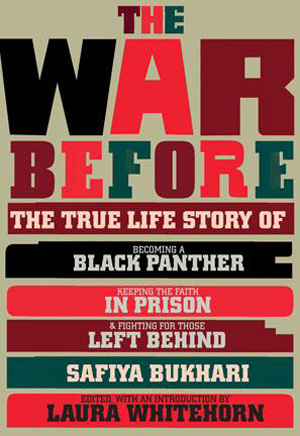
The War Before: The Story of Black Panther and Political Prisoner Safiya Bukhari – By Laura Whitehorn
We’re delighted to have political activist and former Weather Underground member Laura Whitehorn back with us to talk about her new book titled, The War Before. In the book about Laura introduces us to Safiya Bukhari, a member of the Black Panther Party in the late 1960s. The War Before traces Safiya’s life’s commitment of organizing around the rights of the oppressed. Through Safiya’s personal writings, we hear her unique perspective of what had happened to the Black Panther Party and her personal insights into the incarceration of outspoken radicals. Safiya, herself a longtime political prisoner and jailhouse activist, died in 2003. It was at the request of Safiya’s daughter Wonda Jones, that Laura assembled and edited the War Before.
Laura Whitehorn/Sundiata Sadiq:
- When I was first in prison there was no library. Nothing. Whoever we were as political prisoners, we would have met Safiya. When she got out of prison in 1983, she made it her business to go and fight for every political prisoner in this country, that she could get to who wanted to be part of a movement to free political prisoners.
- Safiya: The fight for the freedom of political prisoners can’t be separate from the fight against repression in general whomever that is effecting. If she were alive today, I’m sure she would have been at the rally for Fahad Hashmi and fighting for the rights of immigrant detainees.
- Safiya: Political prisoners will continue to arise if people oppose the government.
- This book began with Wonda Jones (Safiya’s daughter) Wonda in some ways has been working on this book for her entire life.
- Safiya was aware all the time that the “freedom and democracy” that this country promotes as its image only exists on the suffering of so many people. Her politics were a challenge to the government all along, her being was a challenge.
- Some of these are essays, some of these are speeches. Safiya was investigating, she was questioning, she was willing to look at herself, what each of us brings into a movement. There is a connection between her humility, her honesty and her commitment.
- Sundiata: I became close to Herman Ferguson and Safiya.
- Laura: I was in prison when Jericho was founded.
- Sundiata: I was asked to get Sofiya into the Sing Sing Prison to talk to the brothers.
- They had to remove her (Safiya) uterus because of fibroids.
- In the February issue of the Monthly Review we have an excerpt of Sofiya’s chapters. It’s about post traumatic stress symptoms in the Black Panther party. When I was putting this manuscript together and re-read it, I thought, I would like people to read this book from beginning to end.
Guest: Laura Whitehorn – revolutionary ex-political prisoner and native New Yorker Laura Whitehorn. Since the 1960s Laura was active in supporting groups such as the Black Panther Party, the Black Liberation Movement and was active with Students for a Democratic Society and the Weather Underground. Laura also worked to expose the FBI’s Counter Intelligence.
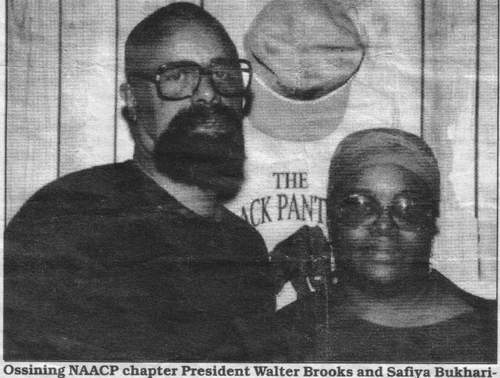
Guest – Sundiata Sadiq. (Walter Brooks) He is a leading member of the Free Mumia Abu-Jamal Coalition in New York City and was a close friend of Safiya Bukhari for many years. Sudiata has been politically active since the late sixties, and he was also the president of the Ossining, New York Chapter of the NAACP.
—-
Educators for Mumia Abu-Jamal: Johanna Fernandez
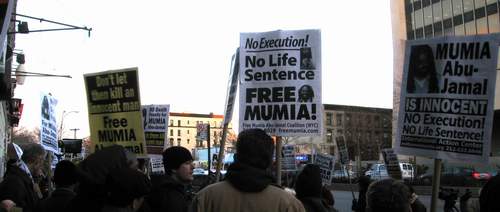
The U.S. Supreme Court recently re-opened the possibility that Pennsylvania may execute award-winning journalist and world-renowned “Voice of the Voiceless” Mumia Abu-Jamal. The high Court referred his case back to the Third Circuit to reconsider its 2008 decision that Mumia could have a new penalty phase hearing in light of the Court’s ruling in the Ohio case of Smith v. Spisak. Spisak’s jury-imposed death sentence had been reversed when his attorneys, like Mumia’s, successfully invoked a critical 1988 Supreme Court decision in the Mills V. Maryland case. Mills rejected the idea that jurors had to be unanimous on the mitigating circumstances that existed in a case. Before Mills, juries had little or no alternative but to impose death if even one juror blocked consideration of a mitigating circumstance. The High Court’s recent decision in Mills will now make it easier to obtain death sentences in capital cases; Mumia’s attorneys will argue that his case is distinguishable from Spisak’s.
Mumia as many know, was convicted and sentenced to death for the 1981 murder of police officer Daniel Faulkner. A previous guest here on Law and Disorder, author/ journalist J. Patrick O’Connor who wrote The Framing of Mumia Abu Jamal, says the real shooter was Kenneth Freeman a business partner of Mumia’s brother. Freeman, was found dead in 1985, bound and cuffed in a Philadelphia parking lot.
Professor Johanna Fernandez:
- Educators for Mumia Abu-Jamal emerged in the 1990s to build a profile for Mumia on college campuses among educators and students.
- We’re also making the movement mainstream in pointing out what’s wrong with the criminal justice system.
- We’re getting a hip hop show for schools for spring break (Pennsylvania colleges)
- We want to educate young people and students in a nation that incarcerates 3 million people. That’s the size of San Francisco.
- I’ve known Mumia for about five years. I have used Mumia in the classroom live through phone conference. He speaks on issues such as the Vietnam War, the civil rights movement, the Black Panther Party and the criminal justice system today. These live conferences are incredibly powerful.
- Conversations with Mumia are intense, we talk about politics, Obama. We talk a lot about what life is like on death row. His cell is the size of a small bathroom. He’s only allowed 20 books at any given time. His cell is messy because he’s a researcher, a writer.
- Mumia: food is horrendous. They’re allowed to buy food, MRE style pre-packaged dry food. The servicing of inmates in this country is a billion dollar industry.
- What’s interesting about his situation is the state has tried to strip him of his intellectual vitality. Although they have failed, he’s written six books from death row, he’s got his radio journals.
- The first thing the movement is asking people to do is to arm themselves with the facts of the case. Then you can sign a petition. There’s another petition calling for Obama to make a statement on the case.
- If you’re a student or a university professor we are asking you to help us organize a large town hall meeting, for April 3, 2010 (likely in NYC) Mumia’s case should be taken up during Black History Month by colleges all over the city.
Guest – Educators for Mumia member Johanna Fernandez. Johanna Fernandez is a native New Yorker. She received a Ph.D. in History from Columbia University and a B.A. in Literature and American Civilization from Brown University.
——-
Gaza Freedom March Report Back Speeches
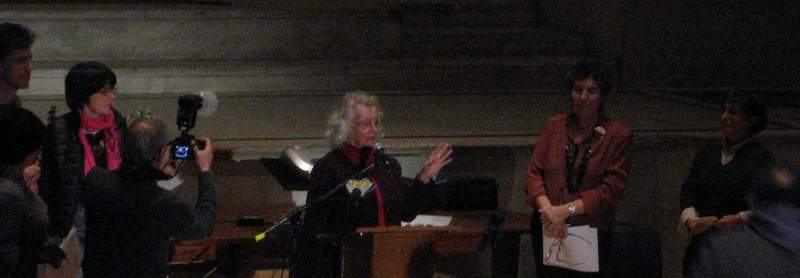
We hear another strong speech from Palestinian teacher and filmmaker Fida Qishta. Fida is from Rafah, Southern Gaza.
Gaza Freedom March Commitments Include:
- Palestinian Self-Determination
- Ending the Occupation
- Equal Rights for All within historic Palestine
- The full Right of Return for Palestinian refugees
From: Waging Nonviolence blog. The Egyptian government didn’t let most of the over 1,300 protesters from around the world into Gaza for the planned march, but those at Judson said that they witnessed a new stage in the emergence of a global movement, facilitated by the Internet, that may well be poised to end the international support that makes Israel’s policies possible. The lynchpin of the movement, the Cairo Declaration of the Gaza Freedom March, was drafted by would-be marchers while they waited in Egypt.
——————————————————————————————–