Welcome to Law and Disorder Radio
Law and Disorder is a weekly independent civil liberties radio program airing on more than 150 stations and on Apple podcast. Law and Disorder provides timely legal perspectives on issues concerning civil liberties, privacy, right to dissent and practices of torture exercised by the US government and private corporations.
Law and Disorder April 5, 2010
Podcast: Play in new window | Download
Updates:
- Fingerprint Scans for UK Students
- FBI Tracks Down Those Who Travel To Cuba
- Pope Benedict Ratzinger Accused of Covering Up Molestation Case of 200 Deaf Children
—–
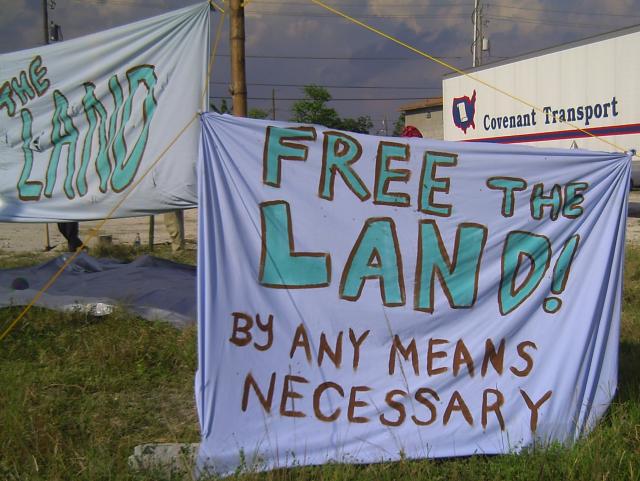
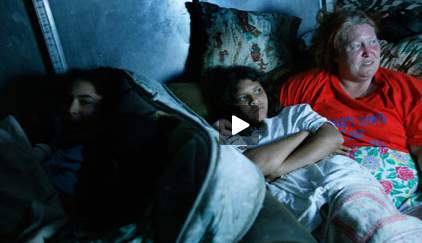
Take Back The Land and The Center For Constitutional Rights Delegation To South Africa
The national movement, Take Back the Land has demanded housing for the homeless in Miami, New York City and is in South Africa to engage in anti-eviction and land reform work. Lawyers with the Center for Constitutional Rights will also join Take Back the Land and provide legal support to the social justice movements. The two groups will be in Cape Town with the Anti-Eviction Campaign and 3 days in Durban with Abahlali bs Mjondolo or (ABM). Among the core beliefs of this project called the Center for Pan African Development are, land is an essential element of liberation, the black community must collectively control land in the black community and the path to liberation is pave through self-determination, not the accommodation of those in power.
- The history of Apartheid is so connected to land and redistribution of land. We spent a few days in Cape Town with the Anti-Eviction Campaign. We traveled to Durban and visited with ABM there. Throughout the trip activists and community members had shared stories of displacement and mass evictions at the government’s hands, without any redress. We have a lot to learn from the movement in South Africa.
- In the United States, we can’t think beyond the private ownership of land.
- Housing is not a constitutionally protected right. Where we can gain from international human rights law, we need to infuse that into our work. The Universal Declaration of Human Rights, recognizes housing as a human right.
- South African Constitution states in articles 26 and 33 affording one house for one family.
Guest – CCR staff attorney, Sunita Patel is involved with racial profiling, immigrant rights and other human rights litigation. Prior to her position at CCR, she held a Soros Justice Fellowship at The Legal Aid Society, Immigration Law Unit in New York where she represented immigrant detainees in removal proceedings and worked with criminal justice and human rights groups to create independent community oversight for detention operations through public accountability boards.
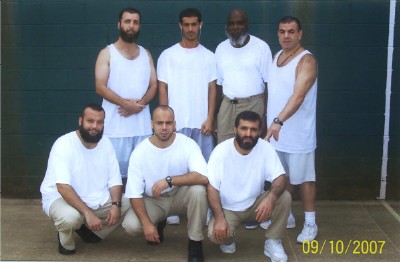

CCR Challenges Experimental Prison Units that Restrict Communication
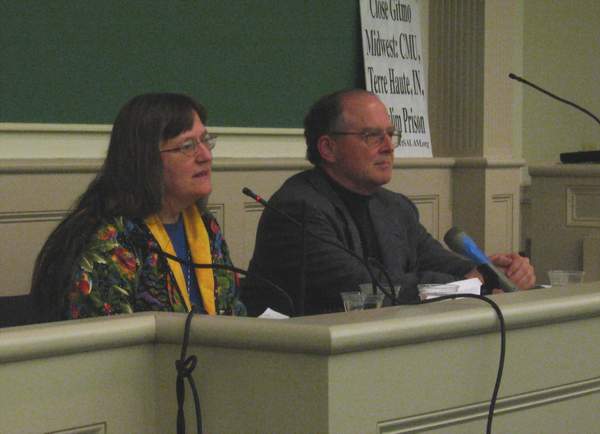
The Center for Constitutional Rights filed a lawsuit challenging violations of fundamental constitutional rights, including the right to due process, at two experimental federal prison units called “Communications Management Units” (CMUs). The units are being used overwhelmingly to hold Muslim prisoners and prisoners with unpopular political beliefs.
CCR filed Aref v. Holder in the D.C. District Court on behalf of five current and former prisoners of the units in Terre Haute, IN and Marion, IL; two other plaintiffs are the spouses of prisoners. The CMUs were secretly opened under the Bush administration in 2006 and 2007 respectively and were designed to monitor and control the communications of certain prisoners and to isolate them from other prisoners and the outside world. More about Aref
- It’s the first time we’ve seen units like this in the federal system. The Bureau of Prisons secretly created these prisons in 2006 and 2007 under the Bush Administration.
- The bureau of prisons initially offered a public comment period and were flooded with comments of what a bad idea this is. They withdrew the public comment and continued to build the prison in secret.
- There’s no meaningful process at all as to who should be put in this unit.
- The Bureau of Prisons has published very broad criteria about the types of individuals, it thinks belongs there.
- The criteria is so broad it could encompass tens of thousands of prisoners.
- When we look at who is being sent the unit, it’s mostly Middle Eastern Muslims, African Americans who have converted to Islam in prison, and also a lot of people with unpopular political views.
- One of our clients Daniel McGowan, is an environmental activist who is serving a term in prison. He never violated a prison rule, he was a low security prison for the first part of his sentence, and then without any reason, he is moved to this highly restricted unit.
- The CMU is an experiment in social isolation. Very few opportunities for visits. Uniquely cruel for individuals who have to undergo it.
- Bad public policy, these individuals are going to be released at some point.
- We are seeking to challenge the extreme limitations on their phone calls and visits.
- Most inmates get 300 minutes a month of phone calls, my clients for years had only one 15 minute call a week.
- For prisoners with large families, this is incredibly difficult. It seems to me this is truly about silencing advocacy from inside the prison.
- Some of our clients including Mr Aref were convicted on terrorism related charges, in his case material support.
- When prisons move prisoners into the CMU of extremely restricted confinement without any process or explanation, of course leads to putting prisoners in the CMU for discriminatory or retaliatory reasons.
Guest – Rachel Meeropol has worked at the Center for Constitutional Rights (CCR) since 2002. She is the co-editor and primary author of the Jailhouse Lawyers Handbook, a widely-requested resource for prisoners, and the editor of America’s Disappeared: Secret Imprisonment, Detainees, and the “War on Terror,” (Seven Stories Press, 2005).
—————–
FBI Entrapment: Personal Stories of Preemptive Prosecution
We go now to hear segments from the event titled FBI Entrapment: Personal Stories of Preemptive Prosecution sponsored by the National Lawyers Guild, Middle Eastern Law Students Association (MELSA), Islamic Law Students Association (ILSA) and Law Students for Human Rights.
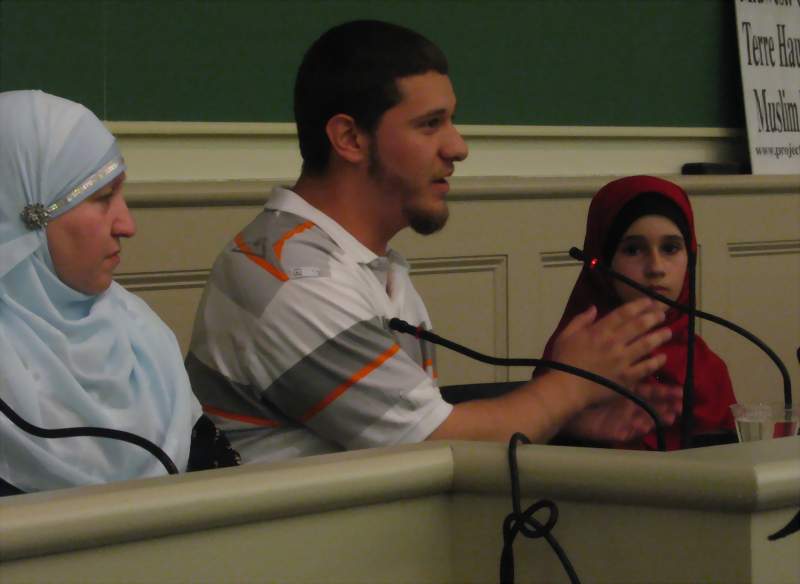
Families and community members gathered in a room at NYU to discuss their cases, and how their family members were entrapped by FBI informants and agent provocateur tactics. As we have reported in the past years, the FBI have used these tactics to target Muslims and others by offering money and assets within impoverished communities. Some FBI groups target mosques and incite violent action. Most informants are felons, that have made plea-deals with the FBI. As we have seen, these stories make headlines across the country on Memorial Day or the 4th of July, meanwhile, these men implicated in the FBI stings are serving long sentences. We get an inside perspective from their families. We hear from Lynne Jackson and Attorney Stephen Downs from Project Salam. We also hear from 12 year old Lejla Duka, and her cousin, family members with the Fort Dix Five case.
Lynne Jackson / Attorney Stephen Downs
- CCR filed Aref v. Holder in the D.C. District Court
- Aref/Hossain have left behind 2 families, 10 children, ranging in ages 4-16 years old.
- What is going on with our country?
- We formed Project Salam, we need to look at all these case together, there are hundreds of cases.
- We’ve had no response at all from President Obama or Attorney General Holder
- The Cheney one percent doctrine. If there is one percent chance that a Muslim will commit a terrorist act down the road you have to take them out.
- One of the worst things you can do as Muslim is be generous. The government made good use of the material support for terrorism statute.
- Certainly from my point of view, as a lawyer I assume every conversation I have is being monitored. I think all of you should to.
- Check out prisoner database at CMU’s (PDF)
Lynne Jackson, volunteer and co-founder of Project Salam, Attorney Stephen Downs, a retired New York State attorney and a volunteer attorney for the Yassin Aref case. Listen to last year’s Law and Disorder interview.
————————————————————————–
Law and Disorder March 29, 2010
Podcast: Play in new window | Download
Updates:
- Palestinians forbidden to mourn the Nakba – “If people can’t remember their past they won’t rebel.”
- Marc Thiessan – Courting Disaster – Jane Mayer Savages Thiessan – Filled with counter factual falsehoods.
- Thiessan: “The Dean of the Gitmo Bar” /Meet Michael Ratner, lead terrorist defender.
- Michael Ratner: “To a certain extent a man may be known by his enemies.” G. Orwell, “As I Please” (1944)
———————

Citizen’s Battle Against Haliburton Gas Drilling Heats Up
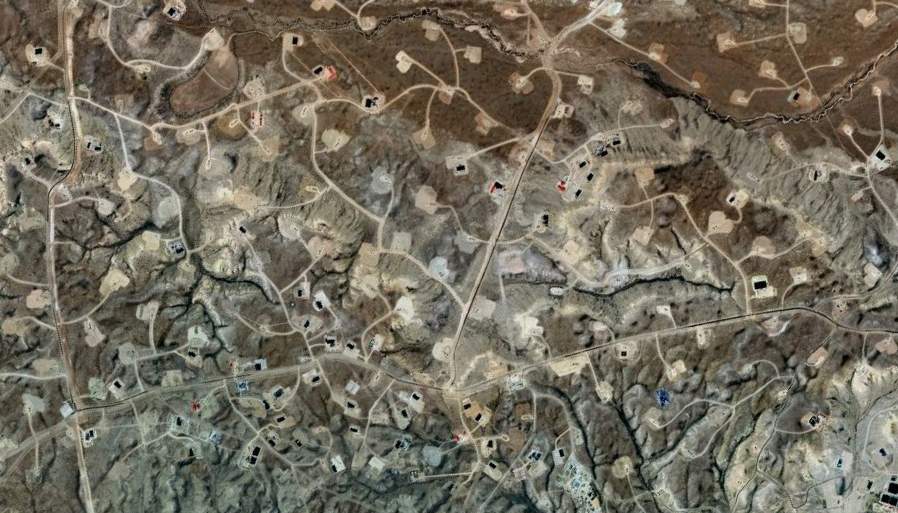
Environmental community groups from New York, New Jersey and Pennsylvania gathered last week in Philadelphia, pulling together strategies to protect the Marcellus Shale watershed from natural gas drilling and hydraulic fracturing. The shale is believed to hold some of the world’s largest deposits of natural gas, and those that want to mine this resource say it will reduce dependence on foreign oil and boost the economy. The environmental and public health costs are too high say opponents. They point out that gas drilling causes increased runoff because the water used in drilling won’t be returned to streams.There will be more erosion, water quality will worsen. The lesson is clear from other locations that had the same drilling. Near the Jonah gas field in Wyoming, there was a drop in wildlife of 50%, an increase in crime, loss of businesses, a drop in property values, accidents like wildfires, more traffic, and a greater need for emergency services are some of the impacts of gas drilling. Damascus Citizens Man lights tap water on fire – video
Late last week, the EPA stated it will investigate how hydraulic fracturing will impact water supplies and water quality in New York State. The Upper Delaware River Watershed Basin is the source of pure water for 20 million people in Philadelphia, New York City and half of New Jersey. 171 products and 245 chemicals are used among millions of gallons of water and sand. Halliburton’s gas well drilling process is now exempt from the Safe Drinking Water Act, The Clean Air Act and The Right To Know Act.
Susan Blankensop:
- I live in New York City and I have a part time residency in Pennsylvania.
- In January of 2008, some neighbors of mine starting speaking about these land-men who were coming around the neighborhoods speaking to private land owners, and offering them money for their mineral rights under their land.
- It was all secretive, they said don’t tell your neighbor because I’m offering you a better deal.
- Then we started hearing about this Marcellus Shale and natural gas deposits, hydro fracturing and horizontal drilling. They’re offering 3500.00 an acre with 18 percent royalties.
- Haliburton is the company that developed Hydro-fracturing is where they drill down into these deep shale levels. They go vertically down about a mile then bore horizontally and start setting off mini-explosions. Other companies involved – Chesapeake Energy /Fortuna – Now Talisman Hess
- Explosions – a high velocity mixture of water, chemicals and sand, creating fissures, then the gas escapes up the well. Each time they drill a well, they use an estimate of 5 to 9 million gallons of water, just to drill one well. Each time they fracture a well, it’s another 5-9 million gallons of water, and they can fracture a well multiple times.
- Huge amounts of water, where are they getting the water? Huge amounts of chemicals, 275 different toxic chemicals. After they drill the well, they end up with millions of gallons of industrial waste, this radioactive water. 40-70 percent of it stays underground.
- 90 percent of the New York City’s drinking water comes from ground zero of where Haliburton wants to drill into the Marcelle Shale for natural gas.
- MILLIONS OF ACRES HAVE ALREADY BEEN GIVEN UP FOR DRILLING
- The land owners stand to gain from this, but everybody is going to be affected by the contamination of the water. It’s going to turn the countryside into an industrial zone.
- TIMETABLE: In New York State, they’re (drilling companies) are waiting for the DEC guidelines.
- However, the EPA, came out with a statement, saying that those guidelines were totally inadequate. (No long term, cumulative effects of contamination) The hydro-fracturing, has no federal regulating body.
- Movie Documentary – – Gas Land, Directed by Josh Fox
- Organizing – at this point – stay as local as you can. Each area is different.
- Natural gas burns relatively cleaner than oil and coal, but it’s still a hydrocarbon. It’s still polluting, and the extraction process is highly contaminating.
- NYH2O – Events: Thursday, April 1, 2010 at 7 PM / John Jay College, Gerald W. Lynch Theater /899 10th Avenue @59th Street, NYC
- Symposium and Public Programs for Natural Gas – April 14-15, Cooper Union
Guest – Susan Blankensop, public speaker and member of Damascus citizens a non-profit advocacy group.
—————–

Left Forum: How to Make a Revolution in the US
We hear from our own co-host Michael Smith and Historian Paul LeBlanc who spoke at the Left Forum panel titled, How to Make a Revolution in the U.S. Paul teaches history and political science at LaRoche College.
- One percent of the families own 40 percent of the wealth, top 20 percent own 80 percent of the wealth.
- Economic power translates into political power. This is an international reality, this inequality of wealth and power. A revolution involves flipping this.
- So that there is an equal share of wealth and power. An economic democracy that is equal in power throughout the world. The oppressed workers no longer accepting the rulership over them, that’s a revolution and that’s what we need. We have crisis, and capitalism generates crisis.
- The movie Children of Men, shows global demonstrations, but they didn’t change the balance of power in society.
- People who are struggling for social change, can be co-opted by those who have power to repress, make adjustments. We have to oppose Imperialism, extraction industries, for those who own and control multi-national corporations, which exist not to meet the needs of the people of the Earth but to maximize profits for those who have economic power.
- They will do WHATEVER is necessary to maintain power and profit. They’re doing it in Iraq and Afghanistan and threatning to do the same in other regions.
- We have a responsibility to oppose that. Building anti-war movement. I think I’m going to die before we make the revolution. We need to replace Capitalism.
- They thought Obama would end the wars. Obama wanted to be president of the United States empire.
- Anti-war movement weakened. There is a lack of cadre. People who know how make a leaflet, organize a meeting. Who know how to use a series of meetings that will result in a demonstration, and that demonstration will be part of an overarching strategy, that will build an increasing militant and radical majority. We need to develop cadre. A strategic perspective that fights for victories in the here and now.
Speakers – Michael Steven Smith and Historian Paul LeBlanc. Professor LeBlanc graduated from University of Pittsburgh – B.A., M.A., Ph.D. He’s written many books including, “Black Liberation and the American Dream” (2003) / “U.S. Labor in the Twentieth Century” (edited with John Hinshaw, 2000) / “A Short History of the U.S. Working Class” (1999) and “Rosa Luxemburg: Reflections and Writings” (1999)”
————————————————–
Law and Disorder March 22, 2010
Podcast: Play in new window | Download
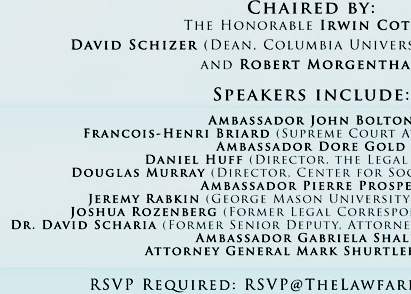
Inside the Lawfare Project: Netanyahu’s Attack on Human Rights NGO’s Hits the States
Earlier this month, the Lawfare Project, a not-for-profit organization described as dedicated to raising awareness about the abuse of the law and legal systems, held an event at the New York Lawyers Association. The project’s goals state: to facilitate a response to the perversion and misapplication of human rights law, mobilize resources and bring interested parties together in a common forum.
Max Blumenthal, award-winning journalist, was there, and reports back in his recent article, Inside the Lawfare Project: Netanyahu’s Attack on Human Rights NGO’s Hits the States. Our own Michael Ratner and the Center for Constitutional Rights was also a target. Blumenthal writes, The Center for Constitutional Rights was singled out because its founder, Michael Ratner, went on the recent Gaza Freedom March with Code Pink. None of the factual documentation these groups released was challenged by the NGO Monitor report or in Herzberg’s presentation. Instead, the groups and their leadership are being targeted with a scattershot of accusations that recall McCarthyism in its crudest form.
- This conference was convened at the New York Lawyers Association, with the Dean of the Columbia University Law School presiding over it.
- Politicians, neo-conservative think tank heads, and Israeli high officials, convening basically to bash the Goldstone Report which they consider to be the zenith of law fare against Israel.
- To bash the human rights groups that contributed data to the Goldstone Report.
- Law fare: Using law as a means to conduct foreign policy. Past manifestations of law fare, used by British to legitimatize laws to break up their colonies.
- Law fare Project, singled out human rights groups such as the Center for Constitutional Rights and Michael Ratner
- Israel is going further and further outside of the scope of international law. Instead of Israel having to deny charges of war crimes in a public forum they attack Judge Goldstone.
- PR firms associated with the Lawfare Project. 5wPR, which used to represent birth right of Israel. The firm is run by Ronn Torossian, who has been involved with settler attacks on Palestinians.
- They’re being funded by the law firm of Pat Robertson. The American Center for Law and Justice.
- This is I think really an effort of public diplomacy by the Israeli government funded by right wing Jewish and Christian Zionists interests.
- The NGO monitor headed by Gerald Steinberg, who is notorious in helping to de-fund, and de-legitimatize all Israel human rights groups. Israel had its first human rights march this year.
- Human rights group members in Israel, have their homes graffit’d with “price tag”, settler slang for you’ll be assassinated.
- In addition, you Michael Ratner were singled out as a traitor to the United States of America, openly and you’re in this NGO monitor black list. Put together by NGO monitor legal advisor, Ann Herzberg, you are accused of NGO lawfare. You and Human Rights Watch.
- We heard David Matas who is a Canadian lawyer, says this is equivalent to anti-Semitic gangs beating up Jews in the street, – – because International law is the legacy of the holocaust, it should always side with Israel.
- Michael Ratner: Israel wants an exemption. I’ve gone after human rights violaters in nearly every country in the world. We do a little bit of work on human rights violations in Gaza and the West Bank and all of a sudden I’m an enemy of United States, I’m anti-Semitic.
- They’re seeking emotional and subtle ethnic justification for their defense without debating the Goldstone Report.
- I think it puts Jews in danger, when they claim the Gaza assault which killed more than 700 civilians is somehow a reflection of the Jewish ethos.
- The image of it is intended to intimidate those who want to speak out, especially in the Jewish community but haven’t done so yet. We sound hopeful on this show, but this is a time for deep, deep concern.
- People are wondering, where’s the Palestinian Ghandi? My father was a White House advisor, my mother worked in the White House, my father worked in the Washington Press Corp Israel is in the grip of a mass psychosis.
- In the youth of Israel, we’re seeing a trend in favoring apartheid.
Guest – Max Blumenthal, award-winning journalist and bestselling author whose articles and video documentaries have appeared in The New York Times, The Los Angeles Times, The Daily Beast, The Nation, The Huffington Post, Salon.com, Al Jazeera English and many other publications. He is a writing fellow for the Nation Institute. His book, Republican Gomorrah: Inside The Movement That Shattered The Party, is a New York Times and Los Angeles Times bestseller.
———
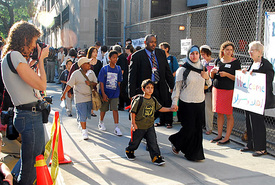
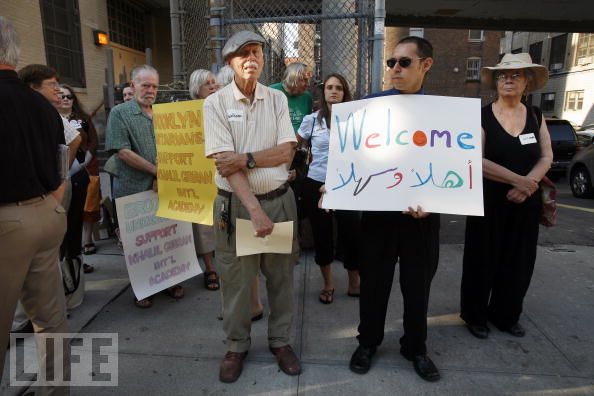
Khalil Gibran International Academy Principal Discriminated Against.
Last week the Equal Employment Opportunity Commission found that the Department of Education discriminated against interim principal Debbie Almontaser in 2007 when they forced her to resign from Khalil Gibran International Academy. The school was envisioned to provide knowledge and understanding of Arab language and culture and controversy arose before its doors opened. As we covered in November of 2007, Almontaser was forced to resign after she was quoted explaining in the New York Post that the word “intifada” literally means “shaking off” in Arabic. This was in reference to a controversy stirring over a t-shirt that read “Intifada NYC” created and worn by a group called Arab Women Active in the Arts and Media. Almontaser came under criticism by the community for not denouncing it. The EEOC ruling calls on the Department of Education to reach a “just resolution” as well as meet Almontaser’s demand, of a reinstatement, back pay, damages and legal costs. Communities In Support of KGIA
- DOE had capitulated to mob pressure, to community prejudice, when the firestorm erupted after the New York Post article, August 2007.
- DOE, instead of quelling the fire, days went by and the fire grew. Debbie Almontaser’s qualifications were questioned, she was told if she didn’t resign the school would be closed.
- Debbie was out of central casting for the position, she couldn’t have been more perfect for it. The DOE knew about that record, that’s why they selected Debbie as principal for Khalil Gibran International Academy.
- The EEOC found that because the DOE capitulated, they became the discriminator.
- Mona : The t-shirts in question, had nothing to do with Debbie, but somehow she was associated with them. The DOE required Debbie to do this interview with the New York Post, not with the Times.
- The Post misquoted and misrepresented her as the EEOC found.
- Alan: The DOE had succumbed to the kind of prejudice that the Khalil Gibran International Academy was intended to dispel.
- The claim is based on that Debbie Almontaser was attacked by a bigoted community based on being an American Muslim and a government agency to its great shame capitulated to that prejudice.
- Certainly the DOE could have expected a strong reaction from the Arab-American community.
- Alan: The DOE investigation is accessible to us, what people said in this investigation will be part of the record in this case (federal) The EEOC is the premier agency in the country for evaluating employment discrimination claims.
Guests, attorney Alan Levine and Mona Eldahry, co-founder of Arab Women Active In the Arts.
——————————————————–