Welcome to Law and Disorder Radio
Law and Disorder is a weekly independent civil liberties radio program airing on more than 150 stations and on Apple podcast. Law and Disorder provides timely legal perspectives on issues concerning civil liberties, privacy, right to dissent and practices of torture exercised by the US government and private corporations.
Law and Disorder January 11, 2010
Podcast: Play in new window | Download
Updates:
- Michael Ratner Update: GTMO 8th Anniversary / 198 People Still Detained
- Obama Stops Release of All Yemen Detainees
- Witness Against Torture: Demonstrations To Close Guantanamo Bay Prison
—
Historic Win for Constitutional Rights! Injunction Granted in CCR Lawsuit on Behalf of ACORN
Recently, a federal judge blocked Congressional effort to withhold funding to the community group ACORN. In the decision, the court found that ACORN can show that the targeting by Congress in de-funding the anti-poverty group, is a violation of the Constitution’s prohibition against the Bill of Attainder. This is a legislative act which singles out a specific person or group for punishment. Jules Lobel, CCR Vice-President and Cooperating Attorney says quote “This historic decision by the Court affirms the fundamental constitutional principle that the Congress cannot be judge, jury, and executioner.” Following the decision, Bertha Lewis, ACORN’s Executive Director, said quote “The court’s decision is a victory not only for the many dedicated citizens who work with ACORN to improve their communities and promote responsible lending and homeownership, but for the Constitution and the rights of all Americans.”
- ACORN is 39 years old, started in Little Rock, Arkansas. It grew out of the welfare rights movement, George Wiley founder of WRO. We began to organize folks in the South first, just around bread and butter issues.
- Red-lining banks, block busting racist strategies, potholes. Most people would know us by the housing work that we did, we challenge the banks for the red-lining tactics. I was the executive director for New York, I’ve been with ACORN for almost 20 years.
- We had an internal scandal, where the founder Wade Rasky had allowed his brother in a 2 year period of time misappropriate almost a million dollars. I was appointed CEO after that for my New York City organizing work. We’re (ACORN) the best organizers, but we’re not the best managers.
- It was fine if we stuck with soup kitchens, etc, but we started registering poor people to vote around issues. The minimum wage law passed in Florida. I think we became a threat when we actually moved those people to the polls. Now we begin to change the balance of power.
- We need to organize multi-ethnic, multi-culture, multi-issue, and build an institution where people have real power. Karl Rove leaked emails revealed : “Bring me the head of ACORN.”
- The organizing was effective because we’re not a single issue organization. We can be better managers, but I guess we had a naivete about the forces we’ve been going against all these years.
- Since 2000, the right has seen us as a growing threat, we were effective and almost immediately we were accused of voter fraud, voter registration fraud. Nothing stuck. They decided, we got to keep (ACORN) in the news, we gotta keep attacking them.
- This filmmaker – James O’Keefe made up this fantasy scenario, was racist and sexists. So, they had this series of videos, when you looked at it, it was very sensational.
- Anyone could see it was highly edited, where they had this woman say she hadn’t paid taxes, and there are these girls from Honduras we want to bring over.
- So, what you see in these tapes is some of our workers giving advice. Next thing it was online, it went viral. Funders were saying they didn’t want to be associated with us. Five hundred organizers, four hundred thousand member families.
- Three times before the Republicans tried to say ACORN was a criminal organization, no due process. In October after that video, they put in writing, no funds given to ACORN. Omnibus funding bill. The bill passed, only 7 brave senators voted against it.
- Congress (right wing) was pushed to name ACORN, because federally funded groups such as Blackwater / KBR / would be snared in broad language net. This is about the Constitution, it applies to poor people, it applies to poor people’s organizations.
- CCR lawyers – “I call them Jedi Knights for Justice”
Guest – Bertha Lewis, Chief Executive Officer and Chief Organizer of ACORN, the largest community organization in the country. Appointed in May 2008, Ms. Lewis oversees the operations of its 400,000 strong membership, which is active in over 110 cities across the country. A 16 year veteran of the organization, Ms. Lewis was most recently the Executive Director of ACORN’s New York affiliate and is a founding Co-Chair of the New York Working Families Party.
——————-
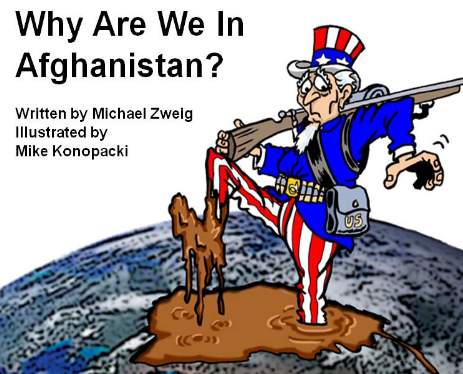
Why Are We in Afghanistan is the question many listeners still have and is the title of a film by Michael Zweig. The film examines how the reasons for the Afghanistan war have clouded since September 11, 2001. The conflict centers on geo-political positioning that holds the US in the war torn landscape. At this stage, the Afghanistan war is a humanitarian disaster, the civilian casualities are stunning and conditions on the ground are desperate for Afghani women and children. The film, Why Are We in Afghanistan? is an educational resource for communities, unions, veterans and active duty military, classes, and anyone who wonders why we are in Afghanistan, and what to do about it.
- We started out being in Afghanistan because of the 9/11 attacks, the idea was they attacked us from a base in Afghanistan, and we’re going to get the bad guys. Once they were there it became clear, that they weren’t interested in going to Afghanistan, they were interested in invading Iraq.
- Starting in 2002, the focus left Afghanistan, we were there, in an inactive state. Then comes the presumed resolution in Iraq, then Obama comes in and tries to be the president, running the campaign of prosecuting the good war.
- Why are we now doubling down in Afghanistan?
- Obama’s latest speech says primary reason for war escalation is Taliban, who are sheltering Al-Qaeda. To “nation-build” – stabilize Afghanistan. Al-Qaeda is in Pakistan, though, if you were to stabilize Pakistan, Al-Qaeda would go to Somalia, etc. It’s like wack-a-mole.
- General Petraeus’s American Counterinsurgency Doctrine. 2006
- They accept in the doctrine, that counter-insurgency is 80 percent civilian work and taking care of civilian population / 20 percent military. But if you look at the budget in place right now for 2010, it’s 6 percent civilian and 94 percent military.
- So, what’s going on? It’s not really about counterinsurgency, it’s not really about Al-Qaeda? We shouldn’t downplay the domestic and military pressure to do this.
- Sentiment about Afghanistan War changed in the US Labor movement summer of 2009
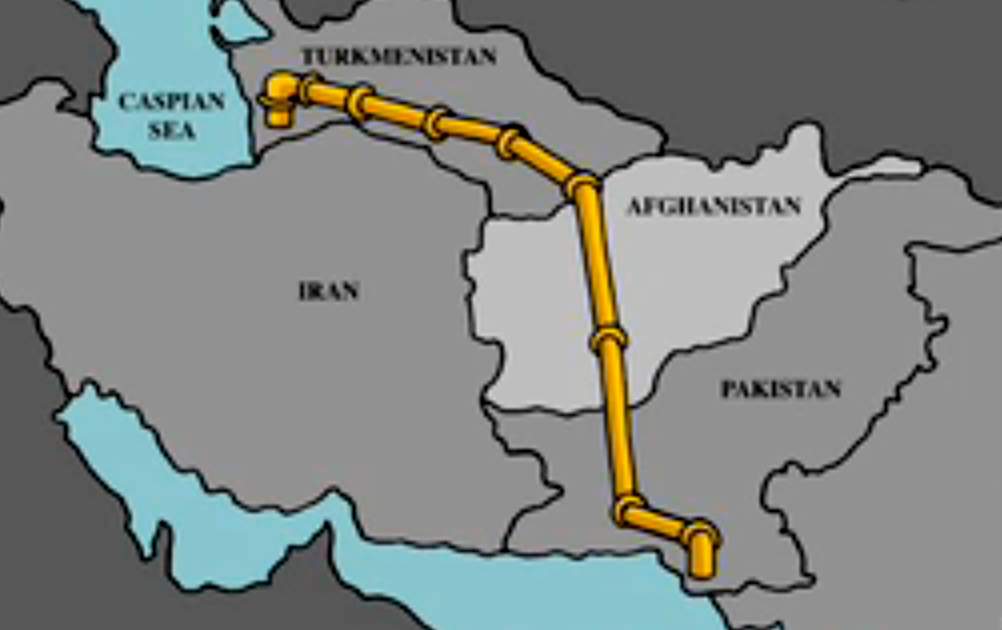
- Pipelanistan: During collapse of Soviet Union, the central asia “stan” countries came in to play.
- The US department of Energy forecasts between the year 2000 and 2025, China’s need to import oil is going to increase to 73 percent of its oil needs they will have to import.
- Pakistan’s agent in Afghanistan are the Taliban.
- Unocal – Moderate size US oil company, negotiating with Taliban and Pakistan to build pipeline.
- Unreported: There were meetings in Turkmenistan, in 2002 with the Bush Administration and Asian development Bank to build a pipeline going to Arabian Sea.
- There was a meeting in 2001 before 9/11, with Cheney and energy executives. They issued a report on American energy strategies May 2001. They identified the Central Asia republics as a major source of oil and natural gas.
- They identified these resources, Cheney and his crew, as a source to block from the Chinese and others from getting those resources.
- We’re in Afghanistan because of both strategic interests which include the oil resources and to block others.
- What are going to do, we can’t win, but we can’t not fight it. Obama doesn’t see a way unless there’s a mass movement in this country or military rebellion.
- Barbara Tuchman – March of Folly – Leaders of countries lead them into disasterous courses, against advice and alternative policies.
- You can’t reduce it all to simple, rational calculations because there are other courses that they could do.
- How do you make it hot for Obama on the decisions that he’s made? How do you build the social movement.
- We’ve built quite a presence in the labor movement around Iraq.
- Almost spending 100 billion dollars a year in Afghanistan. You could create a lot of jobs, tax relief, stimulus systems.
- War good for economy? No. For every dollar spent on military spending, you create way fewer jobs than the same money spent on building roads, or turbines for wind farms.
Guest – Michael Zwieg, Professor of Economics and Director of the Center for Study of Working Class Life at the State University of New York at Stony Brook, where he has received the SUNY Chancellor’s Award for Excellence in Teaching. His most recent books are What’s Class Got To Do With It? American Society In the 21st Century and The Working Class Majority: America’s Best Kept Secret (2000). He was executive producer and co-writer of the documentary Meeting Face to Face: The Iraq-US Labor Solidarity Tour. (Center for Study of Working Class Life, 2006).
Professor Zweig received his PhD in economics in 1967 from the University of Michigan where, as an undergraduate, he was a founding member of Students for a Democratic Society (SDS), and as a graduate student helped found the Union for Radical Political Economics (URPE).
——————————————————-
Law and Disorder January 4, 2010
Podcast: Play in new window | Download
Updates:
- National Lawyers Guild Asks Obama To Withdraw the Nomination of Sharon Brown to the Board of the Legal Services Corporation
- Obama Issues Executive Order: Classified National Security Information Restructure
——–
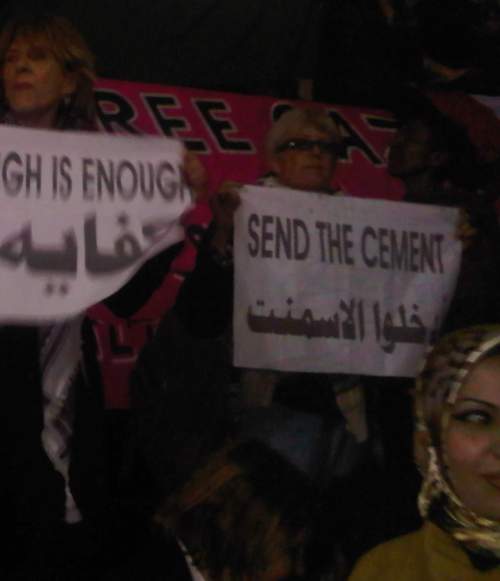
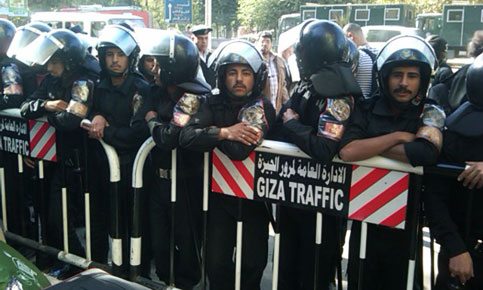
Historic International Support: Gaza Freedom March
Hundreds of activists from more than 40 countries staged demonstrations and sit-ins in Cairo to protest the Egyptian government’s refusal to allow them to cross the border into Gaza. Our own Michael Ratner and his family are among the 13 hundred solidarity marchers in the Gaza Freedom March. Among the marchers, 300 from the United States, 80 from New York State and 250 marchers from France. Last week organizers said an offer by Egyptian authorities to allow only 100 members of the group into Gaza was not enough. The Egyptian embassy has stalled the marchers and some were detained by police as crowds outside the embassies grew.
Abdeen Jabara / Dorothy Zellner:
- This has truly been one of the truly great, historic, international mobilizations of people in solidarity.
- Thousands upon thousands over the course of months have been working in over 42 countries around the globe.
- They go to Cairo, Egypt as a transit point to go to Gaza.
- This effort has heightened the consciousness about the siege on Gaza and exposed the United States, Israel and the Egyptian government to promote the division of the middle east for their own selfish reasons.
- There is the Gaza Freedom March, then there is Viva Palestina, which is a convoy of trucks loaded with humanitarian aid that actually made it into Gaza several months ago.
- Viva Palestina is led by George Galloway, former British parliament member, they are stuck in Jordan.
- The Egyptians initially said the trucks can go through but the people can’t. This is a massive international effort to prevent the Palestinians from getting the help that they need.
- The French have been lying down in the streets in front of the French Embassy for 3 days already.
- The Gaza Freedom March had been working with the Egyptians for months and it was only until the organizers got to Cairo that the Egyptians changed their decision.
- They said we didn’t come here to create any difficult for the government, we came here to stand in solidarity with the Palestinians in Gaza.
- The Egyptian government then allowed 100 people to come through to Gaza, and to give them the names in 2 hours. A divide and rule approach, more conflict against the marchers.
- Congress voted to make Egypt the second largest aid recipient in the world : 1.7 Billion annually.
- Congress tried to take 100 million dollars away from Egypt because of the “smuggling tunnels to Gaza.” Egypt got the message. Egypt is not a democracy, Mubarak has been in power since 1981. It’s essentially a police state, they more people in their intelligence and police than they have in the Army.
- Egypt is planning to put in (with the help of the US Army Corp of Engineers) metal barriers, 50 feet into the ground to prevent tunneling to Gaza. Sixty percent of the Gaza is dependent upon that tunnel trade.
- This is the largest civilian population of the world that is completely trapped. If you ever go to Gaza, this could be the Riviera of the Mediterenean. This could be an unbelievable place if they would let them live like human beings.
- The problem is with the campaign finance system and the money that keeps them in office. This is where the problem is.
Guests – Abdeen Jabara and Dorothy Zellner give a broader scope on the Gaza Freedom March and the significance of demonstrations. Abdeen Jabara, civil rights lawyer and former president of the American-Arab Anti-Discrimination Committee. Dorothy Zellner, civil rights activist with Jews Say No, who has organized groups opposing Israeli violence in the occupied territories.
—————————————-
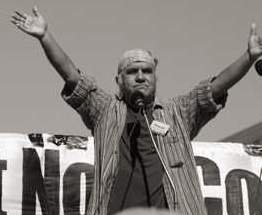
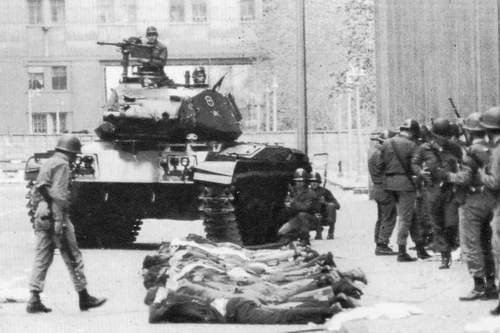
Victor Toro: Chilean Socialist Faces US Deportation After 25 Years
Ex-political prisoner and human rights organizer Victor Toro joins us in the studio. Victor is a Bronx community organizer and he was a former leader in the resistance to Chile’s military dictatorship during the 1970s. In July of 2007 Victor was arrested in an immigration sweep by border officials aboard an Amtrak train in Rochester, New York. He was charged for being in the country illegally and has been out on bail since. Before coming to the United States in 1984, Toro helped found and lead the MIR, or Revolutionary Left Movement. The group opposed the US -sponsored coup against the military dictatorship led by Augusta Pinochet. The Department of Homeland Security and US Immigration are seeking to deport Toro, the prosecution has filed a 46 page court brief containing information on the MIR, claiming the group attacked government buildings. Meanwhile, a deportation hearing for Victor Toro was adjourned until Jan. 11, 2010. Victor joins us in the studio with his translator Gonzalo Venegas.
Victor Toro:
- I was arrested by Pinochet’s regime, April 20th, 1974. I was incarcerated for 3 years in different concentration camps in which I was tortured. I was expelled from Chile, and given a document stating never to return. I was expelled to Sweden, and then Cuba.
- When I was forced to leave Chile, I was officially declared dead by the Pinochet regime.
- I ended up in Mexico, where I was given transitional asylum, however my safety was at risk in Mexico, because agents of Pinochet were trying to murder me. I left Mexico in 1984, fleeing persecution of Pinochet’s agents.
- Well, in the South Bronx, I continued doing the work, an extension of the work I had done in Chile in my earlier years. Working in the community and with unions.
- I’ve worked with undocumented people and immigrants in the United States. In California in 2007, I was engaging in the advocacy work for immigrant rights. On a train back to New York, I was caught in an immigration raid, with bomb sniffing dogs.
- Initially, I was facing the same case as any undocumented worker in the US. Recently the case took a political turn where the government has presented documents against me.
- I went from undocumented worker to becoming a terrorist because of my affiliations and work that I did in Chile in the 1970s.
- I was the leader of the organization MIR, that was building a socialist left movement. MIR resisted Pinochet’s oppressive tactics. MIR was branded a terrorist organization by the US.
- If you look at Chile’s current president of the senate, and house of representatives, the Navy, it all lead by former members of Pinochet’s political party.
- Demand asylum for Victor Toro / Friday January 8, 2010 – SEIU 1199 / Martin Luther King Auditorium. 310 West 43rd Street / between 8th and 9th Avenues.
- Monday January 11, 2010 – Court date 9 AM – / Rally afterward at NOON at 26 Federal Plaza, NY.
Guest – Victor Toro, a Chilean activist in the Bronx who fought against the Pinochet dictatorship in Chile. Toro is one of tens of thousands of immigrants who are racially profiled and targeted for deportation unjustly and unfairly.
—————————————————————————
Law and Disorder December 28, 2009
Podcast: Play in new window | Download
Updates:
- Michael Ratner and Family Leave For Gaza Freedom March: 1350 People
- Help Keep Rafa Entranced To Gaza Open
- Call Egyptian Embassy – Omar Youssef – 202-895-5400
- Please Call – UPDATE: Egyptian Police Detaining U.S. Citizens in Egypt, Reportedly at Request of US Embassy
- Music Break: Eli Smith Instrumental
—
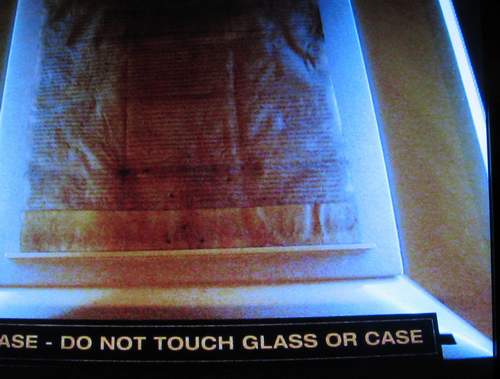
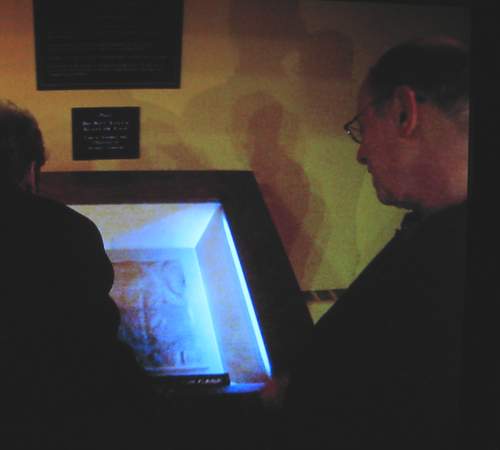
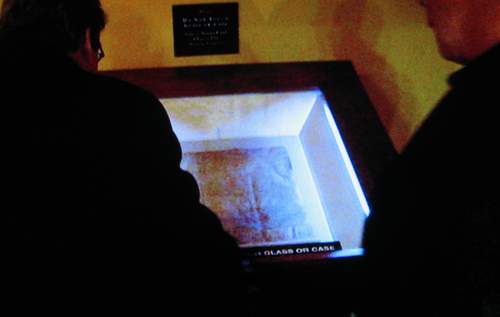
Fraunces Tavern: Magna Carta and the Foundations of Freedom
Hosts visit Fraunces Tavern Museum in lower Manhattan, where the Magna Carta document was on display from September 15 to December 15. It’s been nearly 800 years since it was originally drafted, and this copy has traveled from Lincoln Cathedral in England to New York City very few times. The first was for the 1939 World’s Fair.
Fraunces Tavern was built in 1719, it was a residence and then bought by tavern keeper Samuel Fraunces. It’s also known as the site where George Washington gave his farewell address to the officers of the Continental Army in 1783. When New York City was the nation’s capital, the tavern was rented to house offices of the Department of War, Treasury and Foreign Affairs.
- The tavern was originally built as a house by the Delancey family in 1719.
- There’s been a lot of changes to the buildings, restorations throughout the centuries, and it does make it the oldest surviving building in Manhattan. Light would fade the document, the lighting is no more than 50 lumens.
- This 1215 document was one of four reproduced. Hand copied in Latin, the language of education and communication of those days. This was the only way to spread news, there was no paper, this is on sheepskin.
- Taxation issues, women’s issues, trial by ones peers issues. Written in very tiny tiny script by a Monk.
- At the bottom you’ll see 3 holes for a ribbon where the King’s seal was attached.
- The idea started with a select few, and you can’t hold that back. The Magna Carta was lost for 600 years.
- Article 39 of the Magna Carta
- In the Razul v Bush case, they actually cited the Magna Carta. They said when King John at Runnymede in 1215 was forced to sign the Magna Carta
- We have since that time been against executive detention. I have a feeling that when King John affixed his seal on this document he had no intention of it existing for very long.
- Other charters, Providence plantations and Virginia charter, rights to property and not have it taken away for various reasons.
- Flushing Remonstrance. When New York was New Amsterdam, established by the Dutch in 1624. When Peter Stuyvesant came in 1657 all of New Amsterdam was is in disarray, lawlessness. Stuyvesant established hospitals, schools and also made it by law that you had to go to the Dutch church.
- These are ideas that came out of the Magna Carta, traveled to these shores and became deep within our own laws here. This is truly a revolutionary museum, the only museum dedicated to the American Revolution.
- Bill of Rights: Five of the amendments on the Bill of Rights come from the ideas of the Magna Carta.
- Estover – Charter of the Forest / The Royal Forest / Land that is claimed by the King.
- You can’t do anything on the land without the King’s approval. You can’t kill game, or fish. The Magna Carta was originally called the Charter of Liberties. Articles 48 and 47 of the Charter of the Forest.
- Charter of the Commons – Creative Commons. Magna Carta is being revived.
Guest – Educational Director of Fraunces Tavern Museum Jennifer Patton, and Communications Director, Tony Wellman. Fraunces Tavern was built in 1719, it was a residence and then bought by tavern keeper Samuel Fraunces. It’s also known as the site where George Washington gave his farewell address to the officers of the Continental Army in 1783. When New York City was the nation’s capital, the tavern was rented to house offices of the Department of War, Treasury and Foreign Affairs.
—————
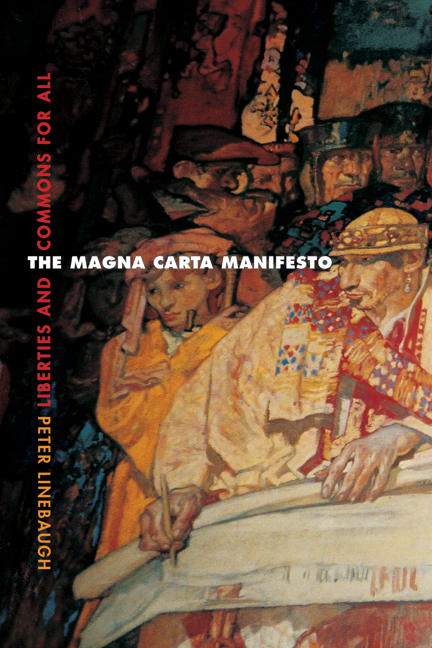
Magna Carta Manifesto: Liberties and Commons for All
In January of 2008, hosts interviewed author Peter Linebaugh on his book the Magna Carta Manifesto. It’s a sweeping history of the Magna Carta as a longstanding retraint against tyranny, the support of trial by jury and due process of law, the prohibition of torture and the rights of habaes corpus. Peter Linebaugh worked to construct the original history of the Great Charter and it’s little known companion, the Charter of the Forest, which was created to protect the rights of the poor.
- On November 11, 1217, after the 1215 document was lost and civil war had resumed, the Magna Carta was founded again and a smaller version was produced called the Charter of the Forest.
- Charter of the Forest: Forms of protection of subsistence rights for people to the woodlands. The woods was the form that hydrocarbon energy took.
- There’s a parallel with the protection of woodlands for all, back then, and our own oil economy. Common Rights for oil, share in the wealth of commons.
- Origins of rights. Magna Carta and Charter of Forest dividing civil and economic rights. Similar to UN documents now.
- W.E.B. DuBois attacked the separation of rights of the “stomach” from rights of speech, or from civil and political rights and economic rights.
- DuBois argued with Eleanor Roosevelt at Breton Woods on behalf of millions of people in the third world.
- Gerrard Winstanley – “The Earth Belonged To No One” It is a common treasury for all. John Locke was afraid of them and developed his notions of private property in contrast to them.
- The lessons for us today, depends on creativity and widespread discussion that must occur at the grassroots.
- Historically, the ruling class has been able to retain it’s avaricious powers only to the extent that it keeps us apart. We’re familiar with gender and racial divisions, and we’ve become a Carceral continent.
- When we get together we learn that so much of our history has been stolen from us. Our land, wealth, we must recover the knowledge of our own Commoning.
Guest- Peter Linebaugh, Professor, a student of E.P. Thompson, received his Ph.D. in British history from the University of Warwick in 1975. A graduate of Swarthmore and of Columbia, he taught at Rochester, New York University, University of Massachusetts-Boston, Harvard and Tufts before joining The University of Toledo in 1994. Grants from the Max Planck Institute in Göttingen and from the Fulbright and Mellon fellowship programs have supported his research. Peter Linebaugh is currently at work on a study of an Irish insurrectionary during ‘the great transformation’ of the Atlantic revolutions.
——————————————————————————————-