Welcome to Law and Disorder Radio
Law and Disorder is a weekly independent civil liberties radio program airing on more than 150 stations and on Apple podcast. Law and Disorder provides timely legal perspectives on issues concerning civil liberties, privacy, right to dissent and practices of torture exercised by the US government and private corporations.
Law and Disorder October 19, 2009
Podcast: Play in new window | Download
Host Updates:
- Len Weinglass Cuban Five – The Re-sentencing of Antonio Guerrero
- Goldstone Report Update
- (Goldstone report)Protest in Chicago during former Israeli Prime Minister Ehud Olmert’s speech.
———————————————

Gaza Update: Code Pink Member Kitt Kittredge
Last month, the United Nations commission released the Goldstone Report, a scathing six hundred page account detailing how Israel committed war crimes against the Palestinians in the Gaza Strip. South African Judge Richard Goldstone who headed the report says the Israeli Defense Force and Israeli commanders must stand trial for war crimes committed during Operation Cast Lead earlier this year. Recently, Israeli Prime Minister Benjamin Netanyahu said he would never allow any Israel’s leaders or soldiers to be put on trial for war crimes. He called the Goldstone report a kangaroo court against Israel. War crimes are war crimes as many see it.
Meanwhile, living conditions in the Gaza Strip deteriorate, salt water has contaminated a large percentage of drinking water, damaging kidney function among the Palestinian children. Many who can afford it are trying to leave the region. To give us an update on the living conditions, we catch up with Code Pink member Kitt Kittredge, who has recently returned from Gaza.
Kitt Kittredge:
- It turned my stomach to think that we were handing off a less better world to our children
- So I thought I should step into the more active role of a concerned citizen and I found Code Pink.
- The conditions are deteriorating, it is a place under siege as you know, I consider it a very slow, deliberate strangulation of Palestine. Because it is a slow strangulation, it doesn’t make the news as would a total annihilation
- The biggest thing is they’re demoralized, depressed and diminished sense of hope.
- Unemployment is up more than it was in March, and women are bearing the burden of that.
- Goods are less available, and they are extremely expensive, Israel determines what goes in and when.
- Less than 15 percent of what is really needed.
- The water out of the tap is salty, the showers are cold. The salt water is coming into the wells, the desalinization plant was destroyed, and now the children are drinking the salt water, and they have severe kidney damage.
- It was very exciting to go to Gaza in September and work with the Palestinians on the Gaza Freedom March scheduled for December 31, 2009
- International Surge To End the Siege – GazaFreedomMarch.org
Guest – Kitt Kittredge – Code Pink member, recently returned from the Gaza Strip.
———–
Decriminalization of Drug Possession
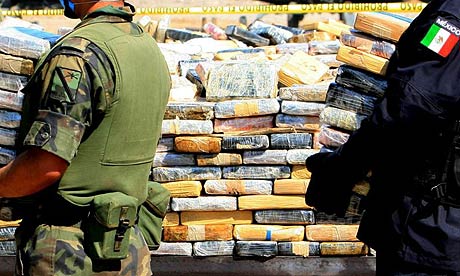
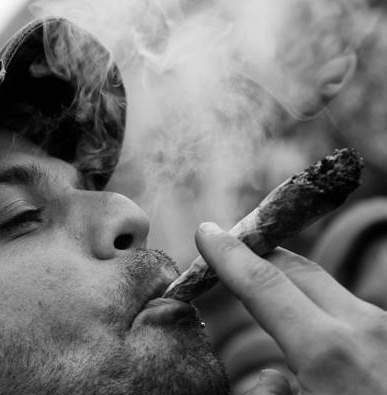
Decriminalization of drug possession has now gone into effect for 150 million Latin Americans. Earlier this month, Mexico decriminalized the possession of a small amount of all drugs and days later, the Argentine Supreme Court declared unconstitutional their own law that criminalized drug possession. Embedded in the recent legislation, Mexico’s decriminalization laws also allow for state and local authorities to arrest and prosecute drug offenders and allows them to make undercover drug buys.
“What’s happened in Mexico and now Argentina is very consistent with the broader trend in Europe and Latin America in terms of decriminalizing small amounts of drugs and promoting alternatives to incarceration and a public health approach for people struggling with drug addiction,” said Ethan Nadelmann, executive director of the Drug Policy Alliance. International Drup Policy Reform Conference Nov 12 – 14, 2009.
- I think people understood that this was a good idea all along, sensible re-prioritization of police resources, treat addiction as a health issue, not a criminal issue.
- Many people who are getting away with drug possession don’t really have a drug problem and shouldn’t be a concern of the state.
- It doesn’t require people to be tossed into rehab regardless if whether or not they have a drug problem
- This applies to any drug (Mexico law)
- It’s part of that human rights, civil liberties tradition that exists in various languages in many parts of the world.
- Two thirds of Americans say, someone who’s been picked up on possession of drugs and clearly has an addiction, should not be sent to jail,
- More than 70 percent of the American people say that a small amount of marijuana possession should be decriminalized
- My job is to mentor and hand off the baton to the second and third generation,
- I look at drug policy reform as a movement for individual freedom and social justice
- New York City, marijuana arrest capital of the world / 40,000 marijuana arrests per year / Targeting young black and brown men
- Easy arrests, easy overtime pay, not contributing to public safety in any way even as its really screwing with hundreds and thousands of peoples lives.
Guest – Ethan Nadelmann, executive director of the Drug Policy Alliance says that the global consensus on drug policy is changing as countries seek to counteract prison overcrowding, rise in organized crime and drug violence.
——–

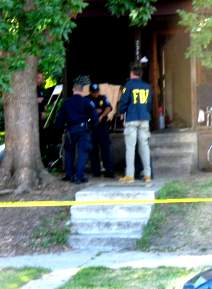
Food Not Bombs Surveillance: Criminalizing Lawful Non-violent Protest
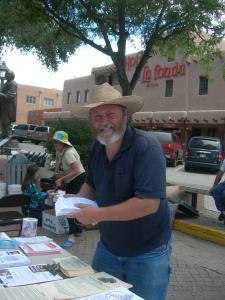
Since 9/11, the government has stepped up its surveillance of a range of individuals and organizations, including volunteer-based groups. After providing free vegetarian food in hundreds of communities worldwide, Food Not Bombs has found itself a part of the domestic terrorism dragnet. Co-founded by Keith McHenry and seven friends, the group is dedicated to non-violent social change, and recovers food that would otherwise be discarded to serve hot free meals to the homeless, disaster survivors, rescue workers and others.
Keith McHenry – Food Not Bombs:
- We started out in Cambridge, MA. I was a produce worker and I was throwing out a lot of produce every morning. It occurred to us that we could take some of that produce and give it to battered women shelters and homeless shelters.
- We could also promote vegetarian eating and animal rights.
- We now share vegetarian meals in a thousand cities every week. We’re in Iceland, Poland has 12 chapters.
- I got arrested in 1988 for serving food without a permit. I ended up facing 25 to life under California’s 3 strikes law. They didn’t mind that we were feeding people, but we were making a political statement and that’s not allowed.
- Political Statement: Money and resources can go more toward feeding the hungry, healthcare and education. Diverting some of the money from the military to domestic human needs.
- Anonymous people would go to the state government, or city officials in different communities and file complaints against us.
- In Albuquerque, New Mexico, we started to get fined 500.00 a day, everyday we served, because of this anonymous complaint.
- We found out that it was military personnel who objected to our statement.
- In Flagstaff, Arizona, you can serve the food but you can’t have the Food Not Bombs banner and literature.
- Last week in Lancaster, Pennsylvania, similar complaints. Turned out the anonymous tipster was the manufacturer of landmines. This was a quarter mile away from where we were sharing free meals.
- A Lancaster health department official came by, without a thermometer to test the pH of the food, and said it was fine we were feeding people we had to get rid of the literature.
- We’re seeing this all over, including letters from the state of New Mexico, ordering me to stop all chapters serving free food.
- In Connecticut, I started getting emails ordering to stop all chapters.
- I think its the federal government, Homeland Security, and the intelligence unit of Chevron Oil, have all been involved in harrasing Food Not Bombs.
- We were first declared a terrorist organization in 1988.
- I’ve been under intense stress for a number of years, with informants trying to force me out of Food Not Bombs.
- I lost a couple of friends, who had committed suicide, as a result of this tension created in San Francisco, Food Not Bombs in particular.
- When I was facing the 3 strikes case in California, there was a man who turned out to be an FBI agent, was hanging out with my wife.
- He was hanging out at the California street bus stop, and he became friends with my wife, and ended up having an affair with her, during the time I was incarcerated and we had no idea whether I would get out of prison.
- Everything that we were saying in our house was being monitored.
- In one case, my home phone had become a pay phone. The Food Not Bombs hotline. To dial out, he was asked to deposit 35 cents. I would dial 611 Pacific Bell phone repair and they would tell me it was a pay phone.
- We’ve had a huge number of informants joining Food Not Bombs.
- When someone at a Food Not Bombs meeting is joking about violence, you have to distance yourself from that person. You don’t need to call them out and say you’re an infiltrator.
Guest – Keith McHenry, co-founder of Food Not Bombs. Keith has been arrested more than 100 times for making a political statement of sharing free food in San Francisco and he has spent more than 500 nights in jail for peaceful protest.
———————————————
Law and Disorder October 12, 2009
Podcast: Play in new window | Download
Host Updates:
- The L Magazine Votes co-host Heidi Boghosian among New York City’s top 10 Heroes
- Che Guevarra Anniversary
- Michael Ratner and Michael Smith Announce Book Project: Hidden History of Che Guevarra
- Italian Prosecutors Urge Prison for Americans in CIA Case
- Assistant US Secretary of State Michael Posner Criticizes Goldstone Report
- General Moshe Yaalon Cancels London Trip After Arrest Fears From Gaza Bombing

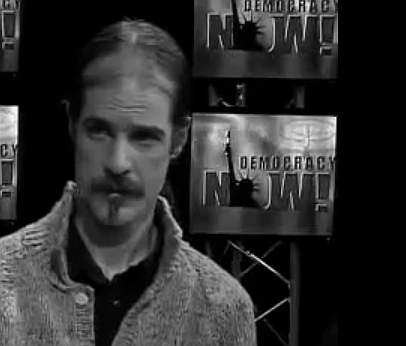
Elliot Madison: Activist Arrested for Using Twitter To Communicate With G20 Protesters.
Elliot Madison, a social worker and activist was arrested in Pittsburgh last month during the G20 Summit and was charged with hindering apprehension or prosecution, criminal use of a communication facility and possession of instruments of crime. The Pennsylvania State Police say he was found in a hotel room with police scanners and computers while using the social networking site Twitter to communicate police movements to protesters. Madison recently said “They arrested me for doing the same thing everybody else was doing, which was perfectly legal,” he said. “It was crucial for people to have the information we were sending.” Madison’s laywer Martin Stolar told the New York Times “He and a friend were part of a communications network among people protesting the G-20,” Mr. Madison’s lawyer, Martin Stolar, said. “There’s absolutely nothing that he’s done that should subject him to any criminal liability.”
- It seems it would be helping out the police in a way. They’re saying disperse, don’t go here, don’t go there.
- They selected him for some reason amid all the various people posting things on twitter boards
- They got a search warrant for his hotel room, rousted he and a colleague who was there, arrested Elliot and he was held on a 30 thousand dollar bail.
- Unfortunately, agents of the FBI, and the Joint Terrorism Task Force, showed up at his home in Queens, with a search warrant issued by a Federal Court in Brooklyn, seeking evidence of violating the federal anti-rioting laws. (H.Rap Brown Act) Think about the Chicago 8.
- They spent 16 hours searching his home, grabbing everything in sight, it was terribly unclear what would violate this law. So they took pictures of Lenin, his writings, computers, material from producing a documentary film.
- The warrants seemed properly issued, until I can see the affidavits that underlie the warrant.
- I whipped up some legal papers to show cause and a motion under Federal rules of criminal procedure 41G. A motion for the return of property illegally seized.
- He is accused of posting stuff that is publicly available, that is a police scanner that is posted on the internet, such as a police order to disperse.
- That information is passed on through the Twitter board and that constitutes the crime that he is charged with.
- Law enforcement is targeting those who provide support for lawful demonstrations.
- This case is a first in Pennsylvania and a real stretch in criminal law to penalize what is essentially speech
- In New York, there is potentially a separate investigation in which Elliot is a target
- The so-called Green Revolution in Iran, the demonstrators were using Twitter, in exactly the same way the folks in the G20 used it. When the oppressive government came down on the Iranian students using Twitter, the US State Dept said, wait a minute there are free speech issues here.
Guest – Attorney Martin Stolar, president of the New York chapter of the National Lawyers Guild.
———
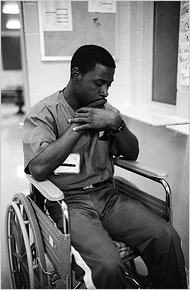
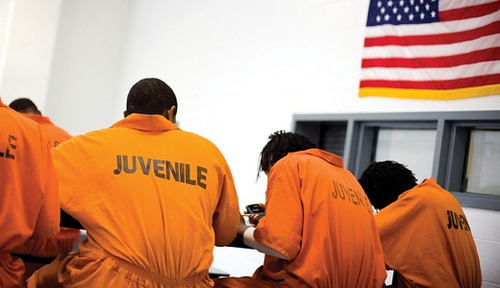
Supreme Court To Argue Life Without Parole Cases For Children
The Supreme Court will address whether it’s constitutional to sentence a child to be imprisoned for life without parole for an offense committed during adolescence. There will be two main cases the Supreme Court will argue. One is the case involving Joe Sullivan. Joe, at the time, was a mentally disabled 13 year old child living in a home where he was physically and sexually abused. He was convinced to participate in a burglary of a home. The elderly home owner was sexually abused, though she didn’t see her attacker. Joe was tried in an adult court, found guilty and sentenced to life in prison without the possibility of parole. He was fourteen when he was sent to an adult prison, there he was abused and later diagnosed with MS. That is a summary of one of the cases.
- 2400 Kids in jail serving life sentences without parole in the US. 120 of those kids didn’t commit homicides.
- The United States is the only country in the world that sentences children to life, without the possibility of parole
- Part of this sentencing of kids was an accident, they were getting tougher on adults in the early 80s and 90s.
- There should be an opportunity, Sullivan’s lawyer argued that at some point they could be granted parole
- Florida is the number one state that puts children in prison for life without the possibility of parole
Guest – Stephen Harper, Adjunct professor of Juvenile Justice University of Miami school of Law.
———————–
National Lawyers Guild Observes Improper Use of Force by Law Enforcement at the G-20
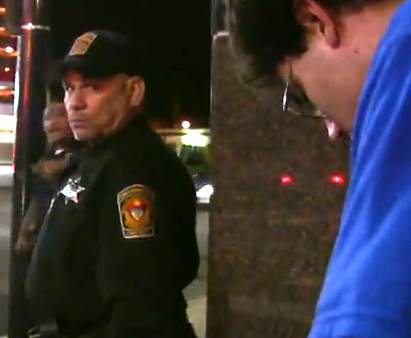
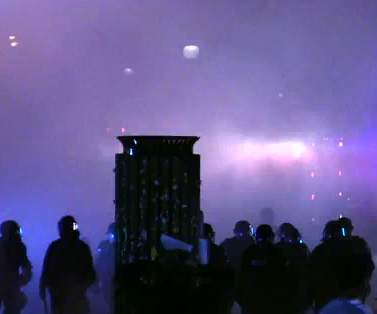
Many listeners have probably seen the videos of the G20 protesters going up against hundreds of riot police. Some of the most compelling footage were of reckless use of LRAD, the sonic weapons, and the surge of riot police onto the University of Pittsburgh campus. Many students who were not protesting were rounded up, knocked down, tear gassed and beaten by police. We reported last month on the blatant violations of first amendment rights as local police engaged in patterns of harassment on activists such as the group Seeds for Peace. Today we hear first hand accounts of police abuse from our own Heidi Boghosian who was at the marches and demonstrations as a legal observer and we’ll be joined by attorney Joel Kupferman, who was also at the also a legal observer with National Lawyers Guild at the G20 Summit. Read Heidi’s G20 Blog Entry Here
Heidi Boghosian / Joel Kupferman
- LRAD Sonic Weapons combined with order to disperse. You had to cover your ears, some stayed still, paralyzed. We think it’s illegal, it’s and invasion, it’s a weapon.
- One of the legal angles, we’re looking into is the fifth amendment, where we charged Christine Todd Whitman after 9/11 for violating our fifth amendment rights of bodily integrity and in this case, that sound pierced that bodily integrity.
- The manufacturer of the device (LRAD) filed in their SEC filings of Sept 2008 that the device is capable of sufficient acoustic output to cause damage to human hearing or human health, expressing concern that the misuse could lead to lawsuits.
- Private security police forces were employed. They went up the hill, onto the campus and students were just coming out of their dorms, hearing this noise, the helicopters, they didn’t know whether they should stay in their buildings. They started to arrest people who didn’t know what was going on.
- This is the highest police per protester ratio I’ve ever seen, definitely a radicalizing experience for these students, definitely no cause for arrests. Wantonly arresting people in a violent fashion.
- When we spoke to shop owners downtown, there was a hatred, I’ve never seen before. The sympathy came from the neighborhoods of color, it was a climate of fear, they were basically saying, you can’t assemble.
- It almost seemed like it was a police convention. The Pittsburgh Police Department wore military fatigues. I saw more Canine Units there then any other demonstration.
Guest – Attorney Joel Kupferman, National Lawyers Guild Legal Observer /New York Environmental Law and Justice Project
————————————————
Law and Disorder October 5, 2009
Podcast: Play in new window | Download
Lawsuit Brought Against Former US Attorney General John Ashcroft
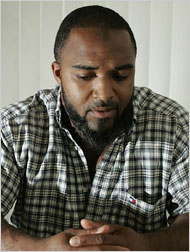
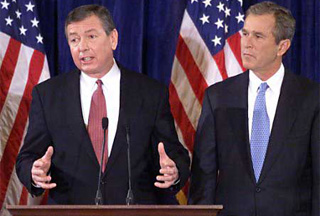
Last month, a major decision written by a federal judge gives a lawsuit standing that was brought against former US Attorney General John Ashcroft for the illegal and unconstitutional detention of American Muslims. The lawsuit was brought by Abdullah al-Kidd, an American citizen and African American who had coverted to Islam. In 2003 Al-Kidd was arrested, and detained under abusive conditions without evidence that he did anything wrong. The lawsuit points at the way John Ashcroft abused the material witness statute to “preventively detain” American Muslims. Ashcroft uses the statute as a pretext to arrest American Muslims without sufficient evidence to establish probable cause. This suit will be a key lawsuit when President Obama presents a proposal for a “preventive detention system.”
Lee Gelernt:
- Federal Appeals court recognized the abuse of the material witness statute under Ashcroft.
- Material witness statute, rarely used, limited purpose before 9/11. If the witness would not testify and needed testimony, they would arrest witness get testimony then release person.
- If its taking too long, get the person’s deposition, because you simply cannot hold a witness for a long time, because they’re completely innocent.
- After 9/11 the government used the material witness statute on Muslim men who were suspicious and no probable cause. Probable cause is the bedrock of this country. Mere suspicion is not enough.
- It turned out that dozens and dozens of men were arrested as mere witnesses, held for months under the most harsh conditions. They have to be unwilling to be a witness, you don’t simply arrest a witness, obstensibly.
- Abdullah al-Kidd, born in Kansas, spent some time in Los Angeles, and mostly in Seattle. African American born in the United States. His father is a supervisor at the Chino Correctional Institute in California. His mother has done work for IBM for the last thirty years.
- He was a football player, went to University of Idaho on a football scholarship. Right before 9/11 he converted to Islam, and started working for charitable organizations. After 9/11 he was under surveillance, then arrested, held for 16 days under the very abusive conditions. Restricted for 14 months.
- FBI agents went to magistrate saying Al-Kidd had a one-way ticket to Saudi Arabia, it turns out after spending time in detention, that it was a round-trip coach ticket.
- The agents also did not tell the magistrate that he cooperated with the FBI and a native born citizen.
- Lawsuit is against Attorney General in a personal capacity and two FBI agents who submitted an affadavit, the United States and 3 Wardens. Settled lawsuit against the 3 wardens.
- FBI Director Mueller, went before Congress to report on the recent successes of the terrorism fight. The first person Mueller mentions is Kalik Sheikh Mohammed, the second person is Abdullah al-Kidd.
- Bedrock principle: You’re innocent unless the government has probable cause (objective reasonable belief) not law enforcement acting under suspicion. In other countries, people can be arrested on suspicion.
Guest – ACLU Attorney Lee Gelernt, the Deputy Director of the Immigrants’ Rights Project. He has litigated many cases including the Detroit Free Press v. Ashcroft and North Jersey Media Group v. Ashcroft, which involved challenges to the government’s post-September 11 policy of holding secret deportation hearings.
———
FOIA Lawsuit to Make Public the FBI’s Domestic Investigative Operational Guidelines
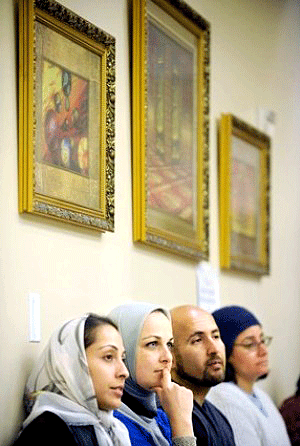
Last month, a Muslim civil rights group filed a lawsuit against the FBI’s refusal to make public its surveillance guidelines of civic and religious organizations in connection with criminal investigations. The group Muslim Advocates, a national legal and educational organization filed a Freedom of Information Act suit against the Department of Justice. The lawsuit is seeking the text of the Domestic Investigative Operational Guidelines. The quote DIOGs which went into effect last December are practical manual interpreting revised surveillance guidelines. The interesting part of this story is that civil rights groups including Muslim Advocates were shown drafts of the FBI surveillance guidelines but were not given a copy.
- Agent are provocateurs sent into mosques. Muslim Americans should not have to look over their shoulders while they’re praying.
- Suspicion based on not wrongdoing and criminality, but religion. What concerns us is the set of guidelines issued during the waning days of the Bush Administration, that further and potentially expand FBI powers.
- We were able to see those guidelines in a meeting with the FBI, but not keep a copy of the guidelines. Those guidelines went into effect 1-2 weeks after that meeting.
- We sought formal channels to get a copy of those guidelines then filed a FOIA request.
- It’s been almost a year later, and we still have not got a copy of the guidelines.
- We would hope that the FBI would be working in consistence with the President’s committment to greater transparency
- The FBI said our request is under review and may be redacting or blacking out sections of the guidelines.
- We think the public has a right to know how the powers of the FBI have been expanded and are wielded in our name. What we saw in the draft guidelines were “gathering data about racial and ethnic communities” Geo-mapping of communities.
- Changes made to FBI guidelines under former Attorney General Ashcroft allow line agent FBI to make decisions based on limited evidence of criminality. One example, a prominent Pakistani physician made pro-democracy comments for Pakistan in a US newspaper. Days later he was visited by the FBI who wanted to ask him general political questions about Pakistan and Pakistani leaders.
- Check out Muslim Advocates “Got Rights?” Video.
Guest – Farhana Khera, first Executive Director of Muslim Advocates and the National Association of Muslim Lawyers (NAML). Prior to joining Muslim Advocates and NAML in 2005, Ms. Khera was Counsel to the U.S. Senate Judiciary Committee, Subcommittee on the Constitution, Civil Rights, and Property Rights. In the Senate, she worked for six years directly for Senator Russell D. Feingold (D_WI), the Chairman of the Constitution Subcommittee. Ms. Khera focused substantially on the USA PATRIOT Act, racial and religious profiling, and other civil liberties issues raised by the government’s anti_terrorism policies since September 11, 2001. She was the Senator’s lead staff member in developing anti_racial profiling legislation and organizing subcommittee hearings on racial profiling.