Welcome to Law and Disorder Radio
Law and Disorder is a weekly independent civil liberties radio program airing on more than 150 stations and on Apple podcast. Law and Disorder provides timely legal perspectives on issues concerning civil liberties, privacy, right to dissent and practices of torture exercised by the US government and private corporations.
Law and Disorder September 28, 2009
Podcast: Play in new window | Download
Updates:
- In Memory of Attorney Rick Wagner – Guest: Marty Needelman, Project Dir. / Chief Counsel of Brooklyn Legal Services Corporation A
- Center For Constitutional Rights: Torture Team Trading Cards – Free
—
G20 Protest Permit Lawsuits : First Amendment Rights Challenge – Jules Lobel
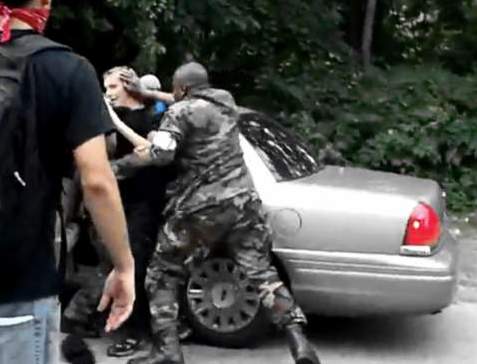
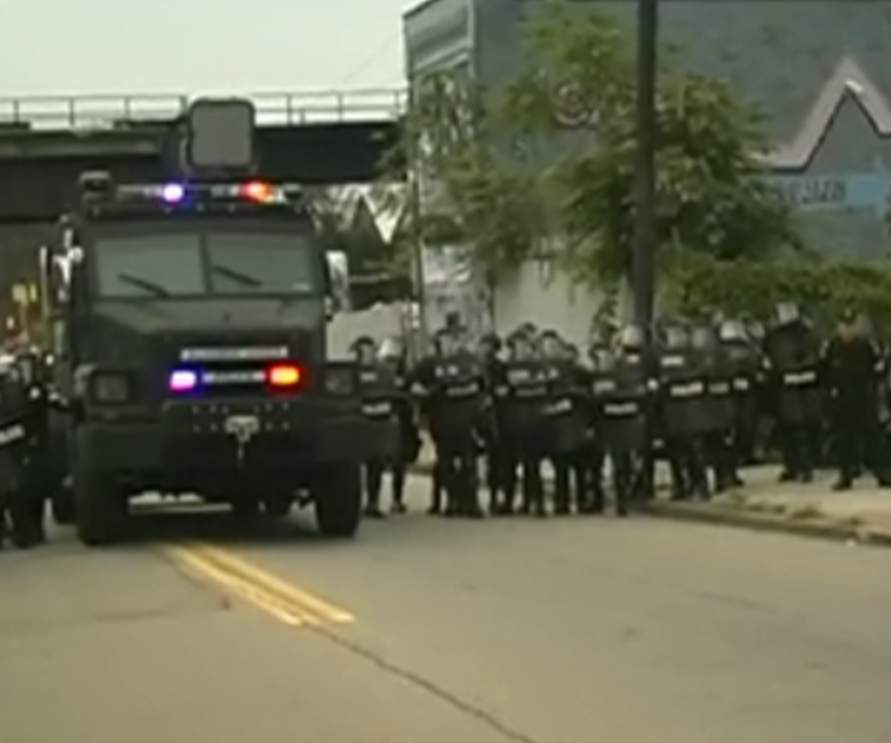
G20 lawsuits filed to allow for peaceful demonstration challenged critical First Amendment rights. The right to demonstrate. Lawsuits filed on behalf of 6 activist groups including Code Pink, requested permits, such as permits to use public parks. The lawsuit brought against the city of Pittsburgh and the US Secret Service states protesters will engage in peaceful, constitutionally protected expressive activities. Jules Lobel, professor of law at the University of Pittsburgh had said to the Pittsburgh Post-Gazette, “When you have reports of huge numbers of police coming in, it suggests they plan to cordon off much of Pittsburgh and prevent meaningful protest.”
- Oppressive environment in Pittsburgh once G20 was announced.
- Heavy police presence, roads are closed, 4 to 5 thousand police from out of Pittsburgh
- Classified as a National Security event, meaning the US Secret Service controls what’s going to happen
- Protest groups sent in applications for permits in July and August. The city, either did not respond or stall granted peaceful permits. Groups with long histories of non-violent protests, artists, ecumenical groups, environmental groups that wanted to set up a sustainability fair.
- Code Pink wanted to set up a tent city in the major park of downtown Pittsburgh. Bail Out The People
- We went to court because for a long time, the city would not give these groups a permit.
- In the lawsuit, we demanded that the city give a permit to the groups they’ve been negotiating with and allow the groups to use the park downtown for its protests.
- As soon as we filed suit the city negotiated much more reasonably, but still refused to grant Code Pink their permit to use the downtown park two days before G20. The court could not find a compelling reason why Code Pink could not use the park, and were granted a permit and had a wonderful tent city in the park.
- Its always a fight now to get permits, and the courts usually win when they defer to the invocation of national security.
- We also asked for overnight camping, far away from the convention center, again, no security concerns.
- The group feeds demonstrators, they grow organic food, they run a bus on organic fuel, an environmentally safe and sound operation. Here’s what happened:
- Police were suspicious, the first thing they did was give them a ticket and impounded their bus for parking the bus more than 12 inches from the curb. They got the bus back, paying 220.00.
- Some industrial artists rented out their lot to the group and allowed buses (which had kitchens in them) to park there. The next day 20 police in full riot gear, broke into the place and demanded to search without a warrant
- The artist who owns the lot after arguing with police, finally allowed the police to search, they found nothing.
- Then they sent out building inspectors to where the people were staying and threatened the artists to get rid of these people or face a 1000.00 a day fine. (These are people who are coming to give out free food)
- They then went to a black community, found an abandoned school and the owner said you can stay here.
- Before they could pull their buses in, a police and many police cars, stopped them and searched everyone and the buses again. Giving citations for parking wheel up on curb, and saying they needed a bus driver to drive commercial vehicle (their bus)
- They pressured the owner of the abandoned school, and finally they had to move again. They found a church, the police followed them there. The police tried to get the pastor to evict them, but he wouldn’t.
- A lawsuit was brought for pattern of harassment and the judge said you can sue for damages after the G20 Summit.
Guest – Jules Lobel, Vice President of the Center for Constitutional Rights and Professor of Law at the University of Pittsburgh. Through the U.S. Center for Constitutional Rights, Jules Lobel has litigated important issues regarding the application of international law in the U.S. courts. In the late 1980’s, he advised the Nicaraguan government on the development of its first democratic constitution, and has also advised the Burundi government on constitutional law issues.
—
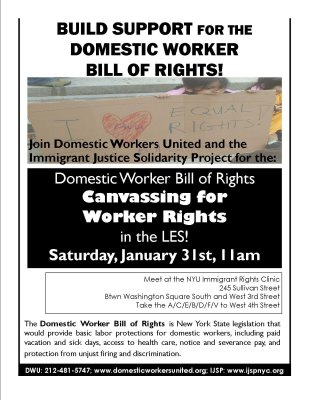
The New Domestic Order: Domestic Workers Unite
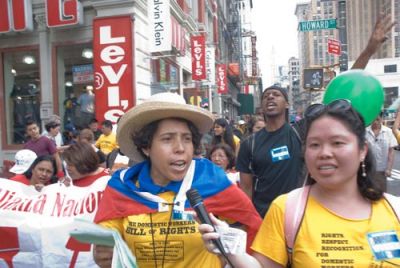
Domestic workers in New York City are pushing for the passage of their own “Bill of Rights” style protection. Most domestic workers are under paid in the United States, and now for many its especially difficult to make ends meet. New York’s domestic workers are calling for their own government bailout. The growing movement is made up mostly of women, it’s multi-ethnic, from countries such as the Philipines, Barbados, Trindad, Jamaica and Nepal. Some workers were abuse, others have been let go from their jobs without notice or proper compensation. The ranks of domestic-worker activists are filled with globalization’s refugees writes Lizzy Ratner, correspondent with the Nation Magazine.
EVENT: Damayan Migrant Workers Association is organizing a workshop on unemployment benefits. October 3, (1-4PM) Held at 53-22 Roosevelt Avenue, Woodside, Queens.
Lizzy Ratner / Linda Abad:
- Linda Abad: Member of the Damayan Migrant Workers Association working with Domestic Workers Alliance and Domestic Workers United campaigning for the passage of the New York Bill of Rights.
- New York Bill of Rights, fair labor standards, recognition, and win respect and dignity for the work force for women and some men who work in the homes of American families.
- There are 200 thousand domestic workers in New York City and about 15 percent are Filipino domestic workers like me. I’m a part-time housekeeper for a couple on the West Side
- I was a government employee in the Philippines, I had a home and 2 children. Income was too low to support family. My first job in the U.S. I worked for a family with 3 children in a big house. I started at 7AM and ended at 9PM. It was a big home, I had to take care of children, cook meals. I was getting 225.00 a week.
- When you’re working in the privacy of homes, you do not have a network, organization.
- Domestic Workers Bill of Rights, passed the assembly now, not the Senate.
- Most domestic workers don’t know that under New York law, after working 44 hours, you get time and a half
- Nine out of 10 domestic workers do not get health insurance, we really need it. We’re exposed to sick children, hazardous cleaning chemicals.
- The inclusion bill in the New York State assembly does not have health coverage. Many domestic workers work off the books. Domestic Workers United large group of Caribbean and Latina domestic workers.
- Lizzy Ratner: I was lucky enough to accompany (as a journalist) a large, large group of domestic workers and allies to Albany in Spring 2008. What I saw inspired me and much of what I learned horrified me. This was the fourth year of pushing for the Domestic Workers Bill of Rights. If you want rights for domestic workers, you have to organize and begin to change the laws.
- There was a sense of rebellious exuberance, defiance. Led by women, by women of color, by immigrants, documented and undocumented. Domestic workers have organized in California, Texas, Seattle, Miami, Maryland and New York
- The United States has come a long way in creating a civilized country, but somehow it’s difficult for lawmakers to see the righteousness of giving dignity and fair standard to this labor force.
- September 29, another trip to Albany to put pressure on the New York State Senate
Guest – Lizzy Ratner, journalist/correspondent with the Nation Magazine. Linda Abad, domestic worker and organizer for the Damayan Migrant Workers Association.
——————————————————————–
Law and Disorder September 21, 2009
Podcast: Play in new window | Download
Updates:
- Obama Administration Asks To Extend Expiring Patriot Act Surveillance
- Roving Wiretaps /Track Personal Records /Track Foreign Militants
- Court Rejects Suit Against Titan and CACI
——
United Nations Goldstone Report on Gaza: Operation Cast Lead
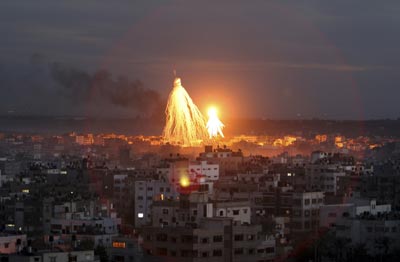
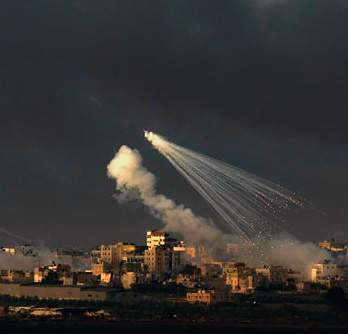
Last week, the United Nations commission released a six hundred page report (PDF) that says Israel committed war crimes against the Palestinians in the Gaza Strip. South African Judge Richard Goldstone who headed the report also says that Israel committed crimes against humanity during the Operation Cast Lead in late December and January. The report also states that the Palestinians committed war crimes by firing rockets into southern Israel. The report confirms that Israel fired the chemical agent white phosphorous in civilian areas, and intentionally fired high-explosive artillery shells upon hospitals. It also claims that Israel used Palestinian civilians as human shields and deliberately attacked Palestinian food supplies in Gaza.
- The report is a real milestone in holding the Israeli government accountable at least at the level of affirming facts for its behavior in the occupied territories. A great contribution to the Palestinian Solidarity Movement.
- I think the report went a little too far in the objective view, while it didn’t treat them equally, the report gave a lot of detail on the rockets that were fired from Gaza, and allowed a certain impression of symmetry to be formed, which I think is very misleading.
- The rocket fire is a war crime and should be condemned but at the same time, there was a cease fire in 2008 where the rocket fire was reduced virtually to zero. Hamas tried to extend that cease fire, Israel basically broke it and refused to extend it.
- Reasons why Israel broke cease fire: It occurred near Israeli elections, change in leadership in the US, overcoming the impression of Israeli defeat in the Lebanon conflict of 2006
- Israel kept pressing for an opportunity to show it is a formidable power that shouldn’t be challenged, and in that sense the message was as much to Iran as the Palestinians.
- The report discuss in detail the various incidents in factual detail and confirmed what had been alleged earlier. Attacking civilians who are in complete vulnerability.
- It was the indiscriminant and disproportionate character of the use of force by Israel, that is the focus of the condemnation that is at the core of the report. The report confirms what had been a journalistic consensus.
- The report gives credibility to universal jurisdiction. Universal jurisdiction initiatives are appropriate given the findings of the report. The international criminal court may not be available, but there are other possibilities for ending Israeli impunity and one of them is universal jurisdiction. Countries can push for universal jurisdiction in holding certain Israelis accountable.
- The report will help legitimize the BDS movement. The blockade still in place.
Guest – Professor Richard Falk, Special Rapporteur on Human Rights in the Palestinian Territories for the United Nations High Commissioner for Human Rights who has been barred entry to Israel. He’s Professor of International Law at Princeton, will be the Council’s special investigator of Israeli behavior in the territories and this has incited furious objections from Yitzhak Levanon, the Israeli ambassador to the U.N. in Geneva. Falk replaced South African John Dugard, a veteran anti-apartheid activist.
—————————–
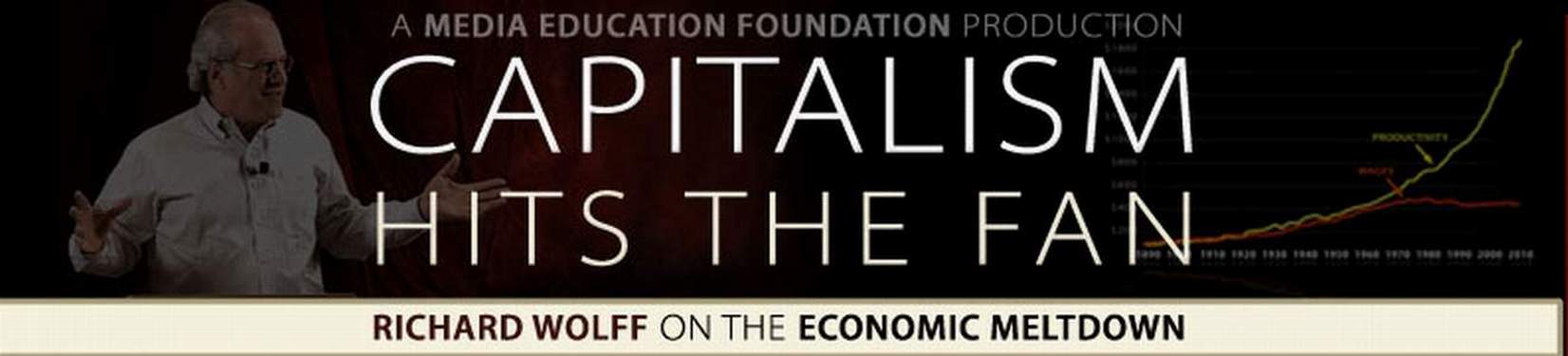
Capitalism Hits The Fan: A Jobless Economic Recovery
Nearly a year ago, the US government seized mortgage banks Fannie Mae and Freddie Mac, within a week investment bank Lehman Brothers went bankrupt that triggered a global financial panic. In the months that followed financial markets tumbled worldwide. With trillions vaporized from the world economy, the US is partnering with G20 groups to create global rules that will govern finance. The US economy is just now showing signs of recovering from one of its deepest economic recession ever.
- False euphoria about recovery, gamblers come into the market, believing it won’t go lower.
- Typically however there’s another leg down, we have people investing in a way expecting the market to drop.
- The whole world went into the toilet (economically) and the Chinese government stock market doubled?
- The Chinese miracle is based on exports, but in order to have exports, the rest of the world has to be able to buy. The rest of the world has been in the greatest depression at least since the second world war
- How can the Chinese keep producing if the rest of world in which they sold, can’t buy?
- My theory is that if the Chinese allow their system to collapse they’d have a domestic impossibility, socially and politically. The Chinese are basically continuing production and storing it. Hold it, and hope against hope, warehouses of toys and everything. Revealed: The ghost fleet of the recession anchored just east of Singapore
- Two bubbles, the Chinese bubble and the US treasury bubble.
- The Federal Reserve prints money, that’s voted on by the Federal Reserve boards. This way they avoid the unpleasantness of having to tax people or borrowing from the private sector
- One out of 15 people in the US labor force today is unemployed (Bureau of Labor Statistics)
- Roughly 59 percent of the US is working, every conceivable worker that can be laid off, is being laid off.
- Is this a real recovery? New businesses? Yes, but workers taking it on the chin.
- American businesses are discovering everywhere, that the future growth is elsewhere, it’s not in the U.S.
- The American working class is being pushed down, with the unemployment, the foreclosures.
- In China and other countries that are desperately poor, there’s a small growing income rich, technical industry, since that’s the only growth anywhere in the world economy, it’s what everyone is excited about, and where everybody is gearing.
- The Obama Administration ought to question the assumption of focusing all their efforts on restoring credit markets and shoring up banks, bailing out busted insurance companies, etc.
- Roosevelt hired millions people in the depths of the depression to work on a whole host of projects, Obama hasn’t done a thing about that, nothing.
- Capitalism Hits the Fan, you can follow how the crisis happened, why it took the forms it did, literally, month by month how it was happening, think about it as a critical analysis, of how we had this crisis, why its not responding to the government, why it is so powerful and global in nature.
Guest – Rick Wolff, Professor of Economics at University of Massachusetts at Amherst. In his new book Capitalism Hits the Fan: The Global Economic Meltdown and What to Do About, Rick takes the reader back to 2005 and step by step reveals how policies, economic structures and wage to profit systems led to a global economic collapse. His books is complimented by the film Capitalism Hits the Fan.
———————————————————————————-
Law and Disorder September 14, 2009
Podcast: Play in new window | Download
New Time: Law and Disorder Broadcasts at 9AM on WBAI Listen here
Updates:
- 9-11 Anniversary/ Patriot Act / AUMF / Preventive Detention /Surveillance
- North Carolina terrorists / Consequences of cooperating with FBI
- Spanish prosecution update / Change in universal jurisdiction law / Trying to narrow law at behest of Israelis and Chinese
—–
Rethinking Afghanistan
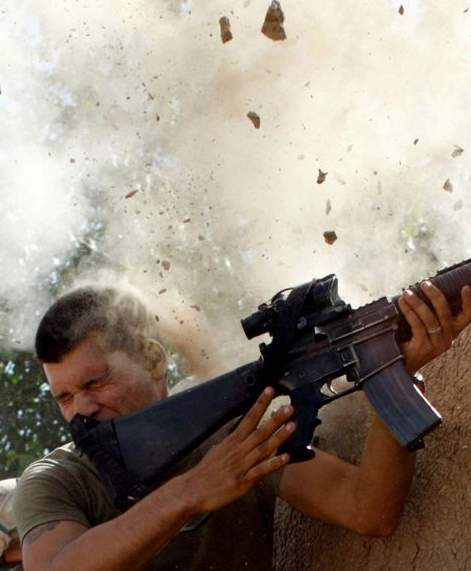
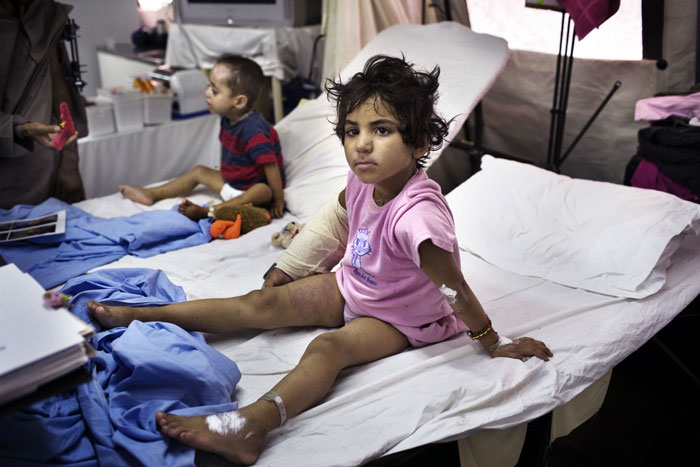
Last week, Defense Secretary Robert Gates affirmed the US miltary commitment in Afghanistan, as thousands of additional troops are deployed. To give us a perspective we are joined by Norman Soloman, executive director of the Institute for Public Accuracy. Solomon is also the author of “War Made Easy: How Presidents and Pundits Keep Spinning Us to Death.” and has written several articles about his experiences in Afghanistan. Solomon has returned from a visit to Kabul in late August. His articles have detailed the war torn landscapes, stunning civilian casualties and the desperate living conditions of Afghani children. Previous Law and Disorder Shows on Afghanistan
- It’s worse than the mainline media would tell us.
- People who do go to Afghanistan, travel in a bubble, taken around by the Pentagon and learn very little, often not speaking to any Afghans who aren’t part of Karzai government.
- The intention of the Obama Administration is to wage war in Afghanistan, and humanitarian aid and assistance is an after thought.
- It’s in the foreground for PR, but the suffering is way beyond the number of people killed that’s being reported
- Afghans are outraged at the US killing civilians and outraged at the air war
- There are no Al-Qaeda in in Afghanistan, that’s been true for a while.
- This is a prescription for endless war, repetition compulsion.
- The agenda is less defensive and high blown, they have to do with geo-political positioning which is primary.
- Recommended Book: Descent Into Chaos: The United States and the Failure of Nation Building in Pakistan, Afghanistan and Central Asia.
- Afghanistan War is a humanitarian disaster that continues to unfold.
- The solution has to do with humanitarian and military activity being inverted.
Guest – Norman Solomon, executive director of the Institute for Public Accuracy. Solomon is also the author of “War Made Easy: How Presidents and Pundits Keep Spinning Us to Death.” and has written several articles about his experiences in Afghanistan. Solomon returned from a visit to Kabul in late August.
—–
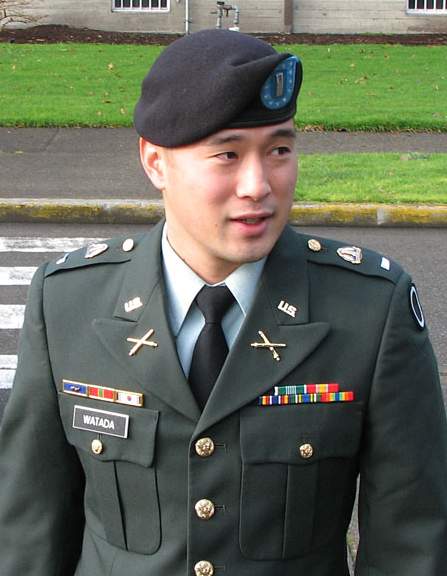
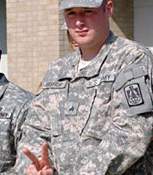
T.Bishop – photo by: Eric Thompson
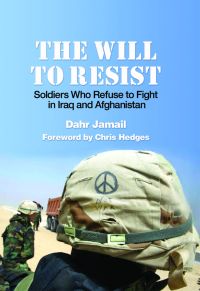
The Will To Resist: Soldiers Who Refuse to Fight in Iraq and Afghanistan
The majority of the United States has opposed the continued occupation of Iraq and as the Pentagon decides to send more US troops to Afghanistan, there is a growing public distrust surrounding this recent escalation of war. Is there also a growing resistance among the ranks of US soldiers? The mainstream media has failed to report on the increasing number of soldiers taking a public stand and finding ingenious ways to express defiance. Author Dahr Jamail has compiled a report of dissent within the military in his recent book The Will To Resist: Soldiers Who Refuse to Fight in Iraq and Afghanistan. Watch Winter Soldier Coverage
- In the last decade, 50 thousand troops have gone AWOL. In 2007, a 42 percent increase of troops going AWOL in the US Army. Nearly 8 thousand troops each year going AWOL.
- Increase in troops contacting groups such as Courage To Resist and IVAW
- Soldiers resisting are often quickly processed through to shut them up
- Massive escalation in Afghanistan – more than 60 thousand troops. 131 thousand troops still in Iraq.
- McCrystal was advised that after the surge is done, add 45 thousand more troops.
- Lack of quality treatment for PTSD and Traumatic Brain Injury are not lost on the military, they know and understand.
- The Will To Resist focuses on active duty troops and veterans, the lead chapter is about resistance on the ground in Iraq.
- Search and avoid missions, IED lottery, we would find an open field, park there and call in every hour, saying yes we’re still looking for weapons caches.
- We often see a demoralized unit being sent in to an extremely bad situation, when it gets time to gear up, the troops are sitting there and the commander sees them and rather than risk media exposure, he’ll cancel the mission.
- A lot of people still in Canada.
- Soldiers are not informed that they can refuse an unlawful order and that they can apply for conscientious objector status. Two resisters from Fort Hood, SP4 Victor Augusto and Sgt Travis Bishop.
Guest- Dahr Jamail, he currently writes for the Inter Press Service, Le Monde Diplomatique, and many other outlets. His stories have also been published with The Nation, The Sunday Herald in Scotland, Al-Jazeera, the Guardian, Foreign Policy in Focus, and the Independent.
————————————————————————–