Welcome to Law and Disorder Radio
Law and Disorder is a weekly independent civil liberties radio program airing on more than 150 stations and on Apple podcast. Law and Disorder provides timely legal perspectives on issues concerning civil liberties, privacy, right to dissent and practices of torture exercised by the US government and private corporations.
Law and Disorder September 14, 2026
Podcast: Play in new window | Download
Support Law and Disorder here. We very much appreciate the support so far!
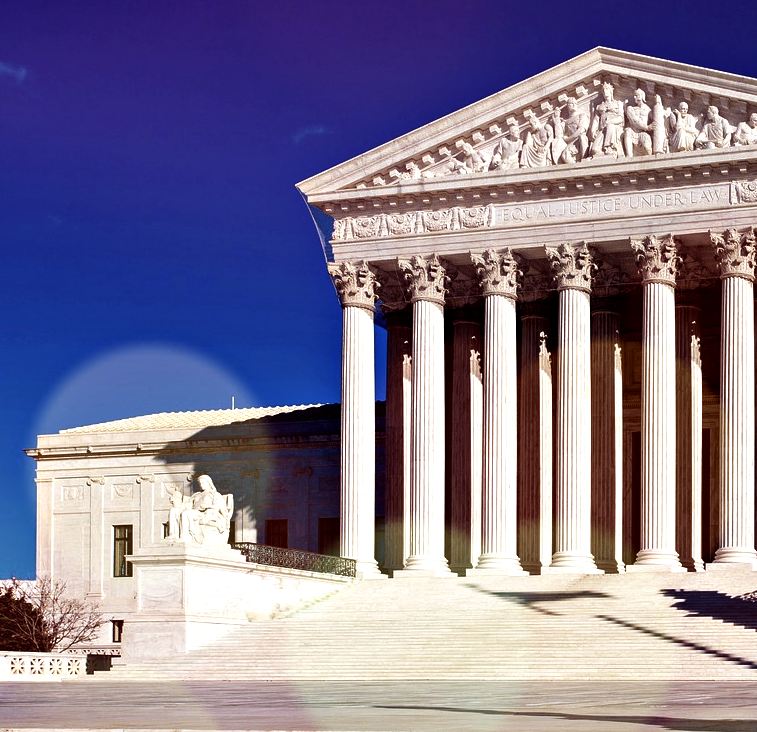

Reviewing Key SCOTUS and Lower Court Cases
Last month co-host Stephen Rohde reviewed the conservative legal doctrine known as the Unitary Executive Theory as the US Supreme Court ended its term further entrenching the reactionary Republican agenda. As legal battles mount across every tier of the judiciary, basic constitutional rights continue to be tested in the courtroom. We’ll highlight key cases that impact immigration, voting rights, freedom of speech and freedom of press.
Guest – Stephen Rohde is the author of two books and numerous articles and book reviews on constitutional law and history. He is the former president of the ACLU Foundation of Southern California and is a special Advisor on Free Speech and the First Amendment for the Muslim Public Affairs Council. He is host of the new podcast Speaking Freely produced by MS Studios and is available on Spotify and I Heart radio and other streaming platforms. Steve Rohde is also, of course, one of the co-hosts here on the Law and Disorder radio show.
—-
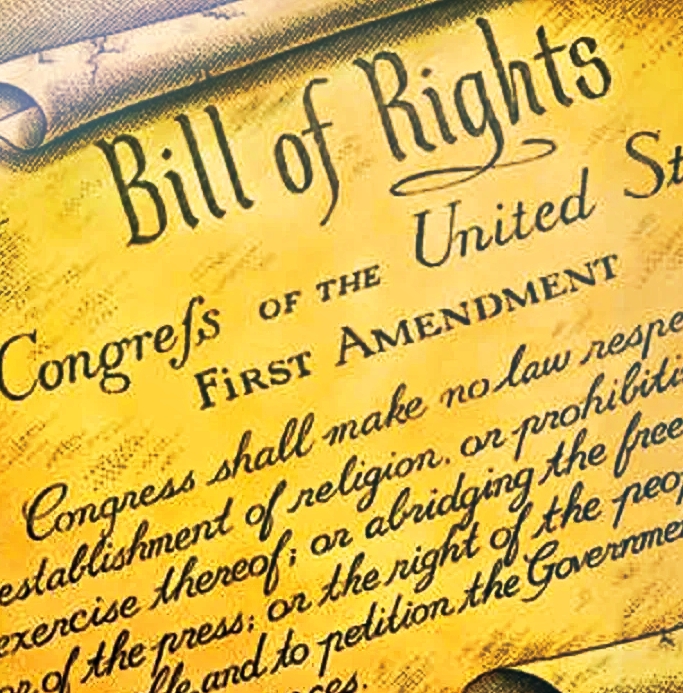
Defending Attacks Against First Amendment Rights
We are living through one of the most dangerous government attacks on freedom of speech and freedom of the press in American history. Trump has issued more than forty executive orders, fact sheets, and presidential memorandum, along with scores of enforcement actions dutifully issued by the obedient federal officials he has appointed, that abridge the First Amendment rights of millions of Americans and foreign visitors.
Here’s a sampling of what Trump has done: He has retaliated against law firms for their advocacy and representation of specific clients; terminated billions of dollars in federal funding to universities in an effort to alter their ideological cultures and control their core academic operations; conditioned federal research and other funding on the agreement not to practice or promote “diversity, equity, and inclusion” or “gender ideology” and to teach only “patriotic” curricula in K-12 schools; arrested, detained, and subjected to deportation international students and foreign scholars based on their viewpoints and political activism, and revoking the visas of foreign nationals based on political expression; retaliated against the press by excluding specific media outlets from White House events based on their viewpoints and reporting; threatened to revoke broadcast licenses based on networks’ editorial decisions; restricted reporters’ access to unclassified defense-related information held by the Pentagon; sued newspapers and publishers for defamation, consumer fraud, and “election interference”; scrubbed historical, scientific, and other data from federal agency websites; ordered the removal of “anti-American” displays in national museums;
Interview referenced on Medialite
Guest – Floyd Abrams, one of the most prominent First Amendment lawyers in America.

————————
Law and Disorder September 7, 2026
Podcast: Play in new window | Download
Analysis Of A Transformation
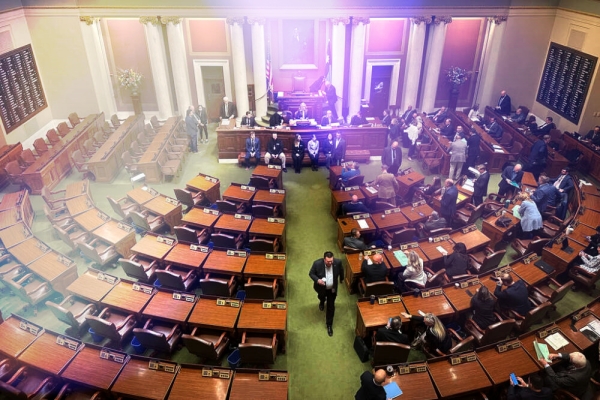
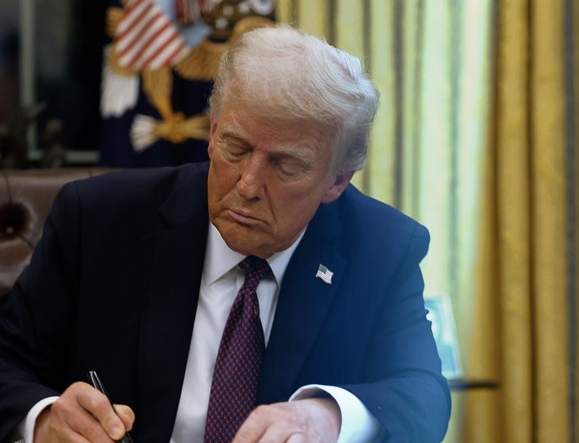
Our country is going through a great transformation. We are no longer the constitutional democracy we once were. Its reported that Elon Musk, the world‘s first trillionaire, gave Trump and his MAGA organization $200 million in the last election. Miriam Adelson, the widow of a casino magnate gave another $100 million. Trump bragged about her ready access to the White House. Musk took a wrecking ball to federal jobs. Other institutions such as law firms, the Supreme Court,universities, and Congress have been transformed. Extraordinarily no one in Congress is able to say “the king has no clothes“. The media facilitate all of this.
Guest – Ann Wright is a retired colonel in the army having served 29 years in it and the reserves . She then became a diplomat and was posted in many countries around the world. In 2003 she quit over the lies the government told to manipulate the American people into supporting a war on Iraq. She then co-wrote the book with Susan Dixon titled “Dissent : Voices of Conscience : Government Insiders Speak Out Against the War in Iraq. It includes a forward by Daniel Ellsberg. Ann Wright has been active since then as a the leader of the anti-war group Code Pink and a leader of Veterans for Peace. She is was on numerous flotillas that sailed across the Mediterranean to bring help to the Palestinians and publicize their plight. VoicesOfConscience.
—-
We Will Dismantle The ICC Brick By Brick
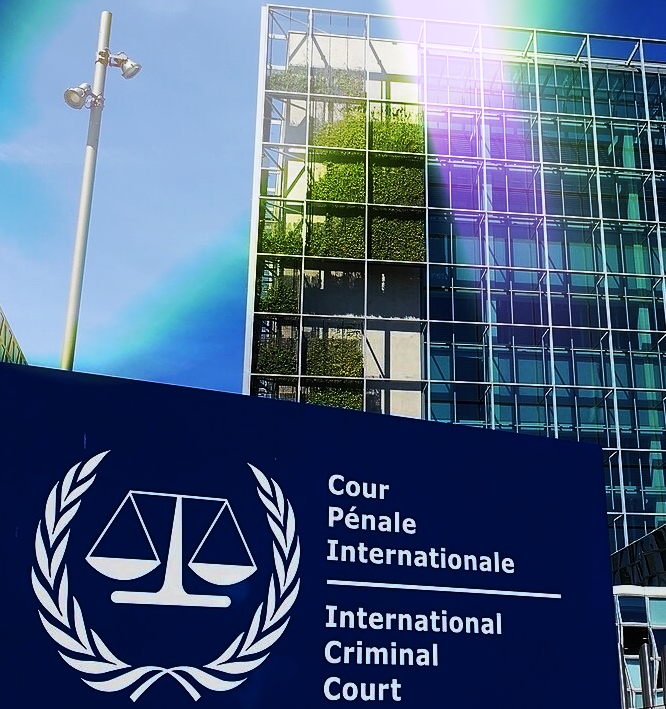
The United States has long endeavored to undermine the work of the International Criminal Court (ICC). Although it is not a party to the Rome Statute, the U.S. has consistently attacked the ICC. In 2003, Congress passed, and then-President George W. Bush signed, the American Service-Members’ Protection Act, known as “The Hague Invasion Act.” It says that if a national of the U.S. or its ally (which includes Israel) is detained by the ICC in The Hague, Netherlands, the U.S. military can use armed force to extricate them.
The Bush administration effectively blackmailed 100 countries that were parties to the Rome Statute by forcing them to sign bilateral immunity agreements in which they promised not to turn over U.S. persons to the ICC, or the United States would withhold foreign aid from them. In November 2024, after an investigation lasting more than three years, the ICC issued arrest warrants for Israeli Prime Minister Benjamin Netanyahu and former Defense Minister Yoav Gallant. They stand charged with the war crimes of starvation as a form of warfare, and intentional attacks on civilians; and the crimes against humanity of murder, persecution, and other inhumane acts.
Donald Trump has taken the U.S. assault on the ICC to a new level with punishing sanctions against those who seek to hold accountable individuals who commit the most heinous crimes. In February, Trump issued an executive order that has led to the sanctioning of nine of the ICC’s 18 judges and three ICC prosecutors. Sanctions include frozen or closed bank accounts, rejection of financial transactions, denial of access to digital services, and travel bans.
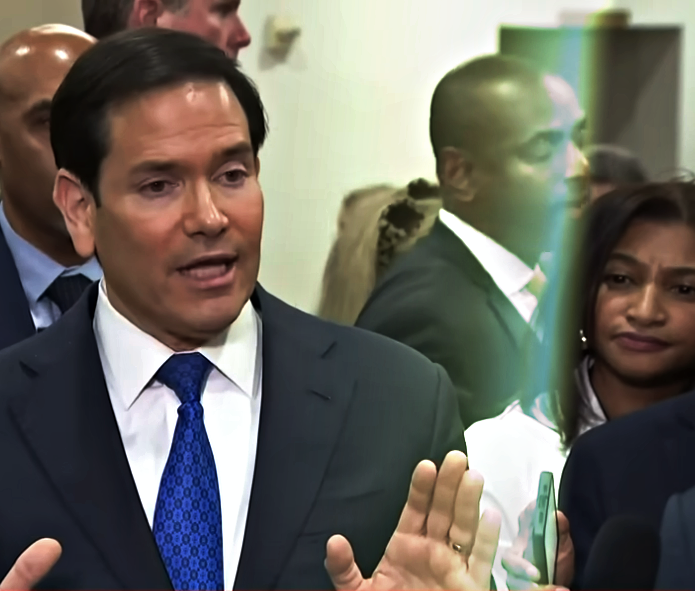
In July, Secretary of State Marco Rubio vowed to “dismantle” the International Criminal Court. He accused the ICC of “waging a war against our country, not with bullets or missiles,” but with “the force of so-called international law.” In an article in Wall Street Journal, Rubio wrote that “we will dismantle the ICC – brick by brick, if necessary.”
Now four prominent human rights organizations have filed a lawsuit in the U.S. District Court for the Southern District of New York, alleging that Trump’s executive order violates the U.S. Constitution, federal statutes, and international law.
Guest – Marjorie Cohn, a former host on Law and Disorder is professor emerita at Thomas Jefferson School of Law, dean of the People’s Academy of International Law, and past president of the National Lawyers Guild. She sits on the national advisory board of Veterans For Peace, she is a member of the bureau of the International Association of Democratic Lawyers, and serves as the U.S. representative to the continental advisory council of the Association of American Jurists. Her books include Drones and Targeted Killing: Legal, Moral, and Geopolitical Issues. She writes a regular column for Truthout, including a recent one entitled, Trump Sanctioned ICC Officials to Shield Israeli Leaders. Rights Groups Sued.
————–
Law and Disorder August 31, 2026
Podcast: Play in new window | Download
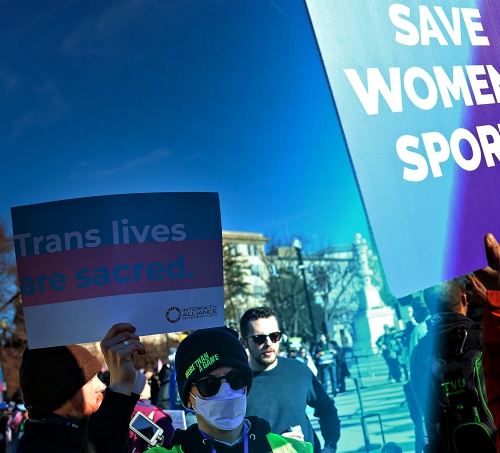
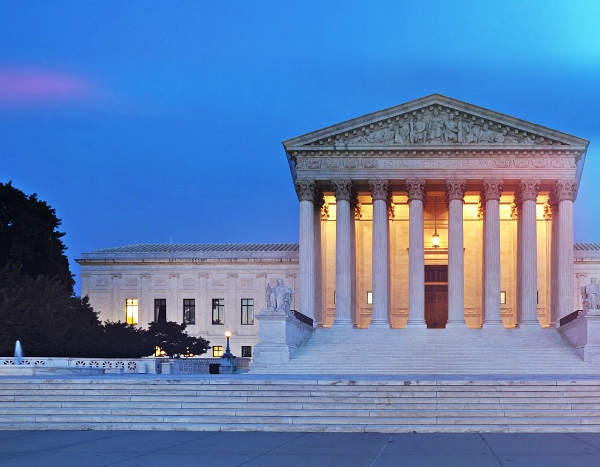
Transgender Community Legal Protection, LGBTQ Rights and SCOTUS
The transgender community is the whipping boy of the Republican Party. Conservatives never miss a chance to try to inflame voters with scary stories about transgender people invading public bathrooms and women’s sports. Transphobia has now reached the US Supreme Court which has handed down a series of regressive decisions seriously impairing trans rights.To help us understand what’s going on and how decent people can stand in solidarity with the transgender community, we’re delighted to be joined by Shannon Minter, who is Vice President and Legal Director at the National Center for LGBTQ Rights, where he has led the legal team’s impact litigation, legislative, and public policy efforts for nearly 30 years.
Currently, he is leading litigation challenging a range of anti-transgender executive orders and federal policies. Shannon is one of the nation’s foremost experts on conversion therapy, helping to draft and pass legislation in states to protect LGBTQ youth and support survivors.An appointee to President Obama’s Commission on White House Fellowships, Shannon was one of the most senior transgender appointees in the Obama administration. He was named to the 2026 TIME100 and has received ABA’s Stonewall Award and several other important recognitions.
—-


Agents Of Hope: Rebuilding American Democracy
We are 10 weeks away from one of the most momentous Midterm Elections in the history of the United States, which could well spell the future of the American democracy. If the Democrats do not win control of Congress, President Donald Trump will have clear sailing to continue to expand his fascist regime by killing citizens and non-citizens, dismantling cherished American institutions, and violating the US Constitution.
The question facing every one of us is what are We the People going to do about it. What are we going to do deny the MAGA movement control of the House and Senate and governorships and state legislatures, and what are we going to do over the next 2 years, 4 years, 8 years and beyond to take back and rebuild our democracy.
To help us chart that path, we are very fortunate to be joined today on Law and Disorder by Heather Booth. Heather Booth is one of the country’s leading strategists on progressive issue campaigns and elections. She began organizing in the civil rights and women’s movements of the 1960s. She started JANE, an underground abortion service in 1965, before Roe v Wade was decided.
Heather has been involved in and managed a wide range of political campaigns and was the Training Director of the Democratic National Committee. In 2000, she was the Director of the NAACP National Voter Fund, which helped to increase African American election turnout. In 2008, she was the director of the Health Care Campaign for the AFL-CIO. In 2009, she directed the campaign to pass President Barack Obama’s first budget. In 2010 she was the founding director of Americans for Financial Reform, fighting to regulate the financial industry. She was the national coordinator for the coalition around marriage equality and a strategic advisor to the Alliance for Citizenship. She was the field director for the 2017 campaign to stop the tax giveaways to millionaires and billionaires and won the Consumer Financial Protection Bureau and the Dodd/Frank Bill. She directed Progressive and Seniors Outreach for the Biden/Harris campaign.
Currently, Heather Booth is a member of the consulting firm Democracy Partners, she is national outreach director of Battleground Alliance, organizing in about 40 marginal congressional districts, and she is President of the Midwest Academy, training social change leaders and organizers. Best of all she is the sister of Dave Tobis, one of my dearest friends and classmates at Paul D. Schreiber High School in Port Washington, Long Island.
—————–