Welcome to Law and Disorder Radio
Law and Disorder is a weekly independent civil liberties radio program airing on more than 150 stations and on Apple podcast. Law and Disorder provides timely legal perspectives on issues concerning civil liberties, privacy, right to dissent and practices of torture exercised by the US government and private corporations.
Law and Disorder July 27, 2009
Podcast: Play in new window | Download
Host Updates:
- Obama’s Detention Policy Taskforce
- Federal Court Trials / Military Commissions / Preventive Detention
- Holder May Not Prosecute If Torturers Stay Within Yoo Guidelines
Segments This Week:
- Washington DC Check Points: Mara Verheyden-Hilliard
- Jewish Fast For Gaza
——-
Washington DC Check Points Not Legal: Mara Verheyden-Hilliard
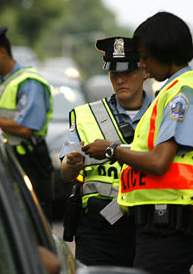
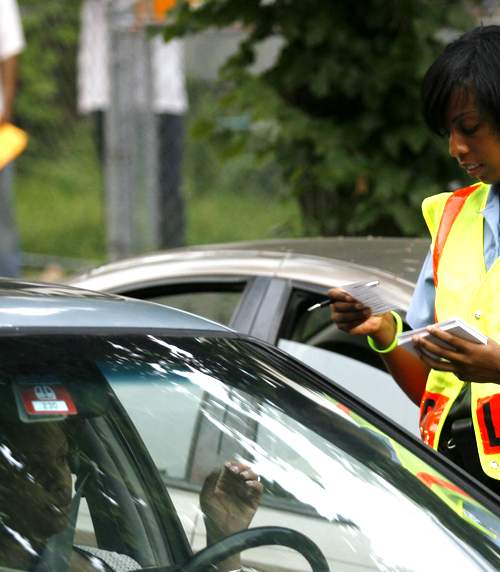
Last summer, D.C. police set up checkpoints around the city’s Trinidad neighborhood and denied access to drivers who refused to disclose their destination. The purpose of the checkpoints, according to the Metropolitan Police Department, was to deter violence after a string of drive-by shootings in 2008. Recently, a federal appeals court ruled that these checkpoints are unconstitutional. In the opinion, Chief Judge David Sentelle of the D.C. Circuit Court of Appeals wrote that “citizens have a right to drive upon the public streets of the District of Columbia or any other city absent a constitutionally sound reason for limiting their access.” The Partnership for Civil Justice
- We do think if we had not succeeded with this case, it would have been a model in implementation in urban environments throughout the U.S.
- In the District of Columbia, last summer the mayor and the attorney general deployed an extraordinary checkpoint program. It was really a blockade or barricade program.
- It was the sealing off of an entire neighborhood, police setting up check points and not letting anyone through without being interrogated. It’s an interrogation and seizure program.
- The police would question you, as to where you were going, who you were visiting, demand that you provide identity information, information on your associates, information on what you were doing, who you knew.
- You could not continue to drive on this public roadway unless you proved to the satisfaction of the police, a legitimate reason to travel further. When we challenged them, they stayed in court, they defended the program, saying it was absolutely constitutional.
- Plaintiffs included a 50 year old resident, a retired DC school teacher. He would have to be stopped at the checkpoint to get to his own home. Visitors were reluctant to come over, to avoid getting tangled with the police. Racial profiling, police misconduct, abuse of power.
- It’s not nearly that your stopped by the police and you can explain your way in. The police set up 6 defined categories of legitmate reasons for entering. Visiting a friend is not a legitimate reason.
- If crime became the prevention for fundamental fourth amendment rights, then there wouldn’t be any fourth amendment rights to speak of.
- The issue is you have the right to travel down a public roadway without being seized by the police without any allegation of criminal activity or suspicion of criminal wrong doing.
- The Trinidad neighborhood is on the cusp of gentrification. We’re seeing a lot of these programs happening in areas that are moving toward gentrification.
- The community wants geniune responses to crime in their neighborhoods, this program was not only unconstitutional but ineffective.
- We believe they were collecting information at the checkpoints and collecting a criminal database.
- We demanded that they cease that activity and expunge the information collected in the database.
- They were sending in tag readers, they’re mounting cameras on government vehicles, they do a mass scan on license tags and suck up information on where you are.
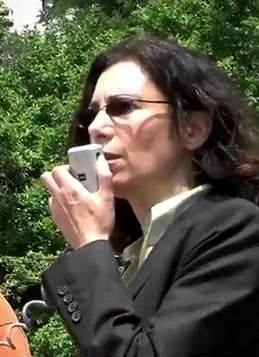
Guest – Mara Verheyden-Hilliard is an attorney and co-founder of the Partnership for Civil Justice, which represented three drivers challenging the checkpoints.
—————-
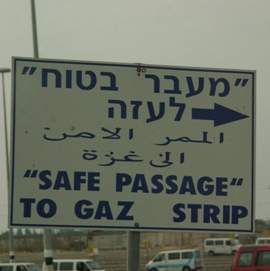
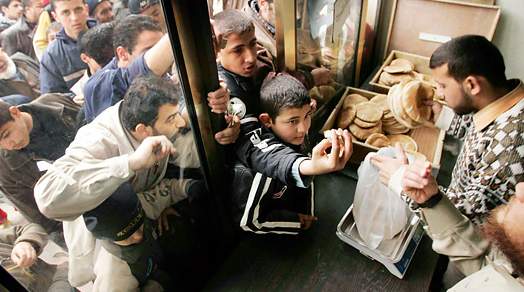
A group of American Rabbis have launched a water-only fast, aimed at breaking the Jewish Community’s silence over Israel’s collective punishment of Palestinians. The initiative, called Jewish Fast For Gaza includes Reform, Reconstructionist, Orthodox and Conservative rabbis who call for lifting the blockade on Gaza. They plan to fast the third Thursday of each month, lasting from sunrise to sunset.
Rabbi Brian Walt:
- This idea of a fast in a time of trouble is an ancient tradition. We were stunned by the silence among the Rabbis.
- So we decided to gather together as a Minyan, to break the silence in our community.
- It’s not a Jewish-only initiative, it’s a Jewish initiated event to draw people of all faiths.
- The state that is the state of the Jewish people is preventing food from reaching children whose growth is stunted by these actions. To be silent in the face of that as a Rabbi, is inconceivable to me.
- Can’t one separate out, an opinion about a government and collective punishment of a whole people?
- Four goals: Lifting Israeli blockade, bring in food, make peace with your enemies.
- Does Israel recognize the Palestinian people?
- Why is Israel asking two things of it’s partner that its not prepared to do?
- It’s a pretext because Israel doesn’t want to negotiate. If Israel doesn’t want to negotiate, they’ll say the other side doesn’t want to, it’s a trick that Israel has done for decades.
- Anyone can join the fast, nearly 600 have joined. 70 Rabbis so far.
- The most vile and violent responses we get come from Israel.
- I grew up under apartheid in South Africa in a very Zionist family with deep connections in Israel.
Guest – Rabbi Brian Walt, co-coordinator of Jewish Fast For Gaza. Rabbi Walt is also the founding executive director of Rabbis for Human Rights-North America and Rabbi Emeritus of Congregation Mishkan Shalom, a synagogue in Philadelphia, PA. He is dedicated to the integration of spiritual life and social justice. Born in Cape Town, South Africa, he was active in the struggle against Apartheid. He is a member of the board of the National Religious Campaign against Torture.
———————————————
Law and Disorder July 20, 2009
Podcast: Play in new window | Download
Host Updates:
- Prosecution On the Table? – Holder May Appoint Line Prosecutor.
Segments This Week:
—–
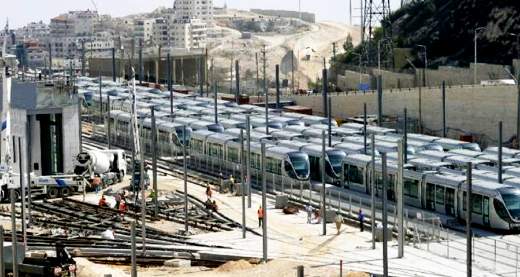
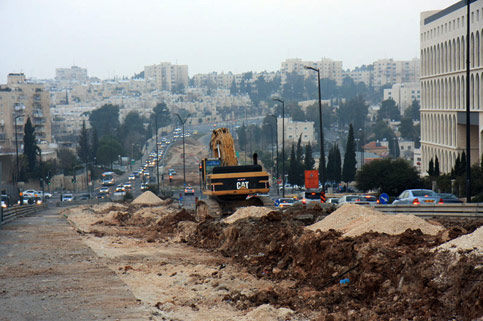
French Company, Veolia Abandons Light Rail Project Linking Illegal Jewish Settlements
A French multinational company, Veolia Transport, contracted to build a light rail tramway system linking west Jerusalem to illegal Jewish settlements has abandoned the project. The rail system would have grouped more Jewish settlements into the State of Israel and help annex the Palestinian territory of east Jerusalem. The victory came about from years of coordination by the French, Dutch and British groups, as well as the Palestinian BDS National Committee.
Omar Barghouti:
- Israel has not found an effective weapon to counter the civil non-violent weapon of the Palestinians.
- BDS is a movement based on Palestinian rights, to live without occupation, without colonization, without apartheid and the system of discrimination.
- A colony is a base for settlers who have are aggressive / military and confiscate more Palestinian land. Stealing more land, stealing water, cutting Palestinian trees, doing very nasty colonial acts.
- Boycott Divest and Sanction / BDS movement – Motorola / Israeli fruit and vegetables in Europe
- Divest, is when you pressure a university like Hampshire College to divest from companies profiting from the occupation. Also churches and unions can be pressured and levied. Sanction is a boycott by state. A decision by sovereign governments to isolate another government. Sanctions take a long time to get going.
- Veolia is part of a consortium that is contracted to build a light rail to connect illegal Israeli colonies with Jerusalem.
- International support for the Derail Veolia campaign came from Australia, Sweden, Britain, France and Tehran.
- Veolia lost 8 billion in contracts mainly due to the boycott movement.
- Veolia has not withdrawn yet, its a very technical process requiring Israeli approval. But Veolia has said it can’t sustain the losses and has considered withdrawing.
- This victory told us that you can’t censor yourself. Veolia says it will sell its 5 percent share in the consortium light rail.
- The project is illegal, that’s why people didn’t have to think twice to stop it. Israel’s reaction to Veolia withdrawal and BDS movement, very hush hush, which was intentional.
- The boycott campaign is impacting Israeli produce. Israeli barcodes begin with “729.” The BDS movement is growing in Indonesia, Brazil, Venezuela.
Guest – Omar Barghouti, founding committee member of the Palestinian Campaign for the Academic and Cultural Boycott of Israel. Omar is a Palestinian political analyst and doctoral student of philosophy (ethics) at Tel Aviv University. His articles have appeared in the Al-Ahram Weekly, Z-Magazine, and Counterpunch.
—–

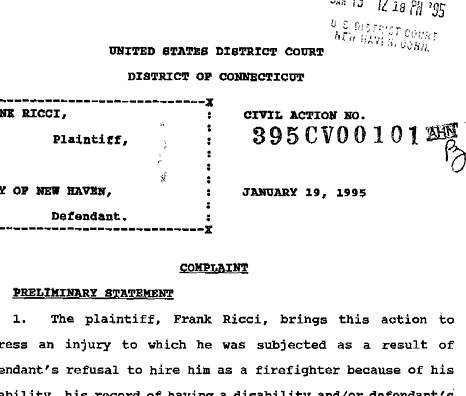

Last month, the Supreme Court ruled 5-4 in Ricci v. DeStefano that a group of white firefighters and one Hispanic had been discriminated against when the city threw out a 2003 lieutenants’ promotion exam after African-American firefighters scored lower than required. The higher scoring firefighters say the decision is unfair and compared it to (quote) reverse discrimination. The high court declared that white firefighters in Connecticut were unfairly denied promotion because of their race, ruling against minorities and overturning Supreme Court nominee Judge Sotomayor’s earlier ruling. Title VII
Attorney Richard Levy:
- The question: When can an employer set aside a hiring test or procedure because it has adverse impacts on a minority group?
- In the Connecticut firefighters case, whites passed the exam at levels twice that of blacks and hispanics.
- The city decided to take a look at the test, considering the adverse impact on minority officers in the fire department.
- The city held a number of hearings that determined that the test should not be certified. As a result a group of white firefighters backed by their unions, sued the city.
- They said, wait, now you’re discriminating against whites because we studied and passed, and black and latinos did not, doesn’t mean that the test is bad.
- The test had a 60 percent written component and 40 percent oral component. (Test questions were not reviewed by anyone in the New Haven fire department)
- The test was created in a way that purportedly measured firefighter skills. However, oral skills in the field are much more important than written.
- Title VII says that you have to look at exams that are neutral on their face, but not neutral on their outcome.
- The Supreme Court says you can’t just throw out a test because blacks didn’t do well, suppose it’s a test that is fair and necessary for job performance? You are then discriminating against those who took the test and did well to perform the job.
- Supreme Court: What should the standard be. A new standard. Must have a strong basis in evidence that the test is not valid.
- Five of the nine justices changed the standard. It raises the standard for a city to do what its supposed to do.
- The Supreme Court did not allow the case go back to the city where they could show “strong basis in evidence”
- A result oriented outcome, an activist right wing bench changing the law, and the parties are not allowed to present evidence in light of the new law.
- Forty percent black in Connecticut. Their fire department has 30 percent black incumbency.
- NYC is 28 percent black, the fire department is 3 percent black incumbency. Levy Ratner is challenging the NYC test. (entirely written some physical, no oral component) CCR Firefighters Case in NY. Vulcan society brought the case several years ago.
Guest – Richard A. Levy (Cornell, B.A., 1964, NYU School of Law, J.D., 1968) is a senior partner at LR. He has practiced labor, employment, employee benefits and civil rights law since 1971. During law school he was associate editor of the Annual Survey of American Law. A member of the United States Supreme Court Bar, Levy has lectured at conferences for the NLRB, AFL -CIO, Practicing Law Institute and has published articles on labor law and civil rights litigation. He has served on the Lawyers Advisory Panel of the AFL -CIO.
Richard Levy has litigated a number of important employment discrimination class actions. These include Grant v. Bethlehem Steel, 635 F.2d 1007 (2d Cir. 1980) (finding prima facie case of disparate treatment and disparate impact in failure to promote black ironworkers into supervisory jobs); Latino Officers Association v. City of New York, 209 F.R.D. 79 (S.D.N.Y. 2002) (class action challenge to disparate discipline in the New York Police Department, with settlement for up to $20 million in damages and injunctive relief) and most recently, United States v. City of New York, 2009 U.S. Dist. LEXIS 39514 (E.D.N.Y. 2009) (representing class of African-American applicants for entry-level firefighter jobs with City of New York ).
——————————————————————————–
Law and Disorder July 13, 2009
Podcast: Play in new window | Download
Host Updates:
Segments This Week:
- Cynthia McKinney and 20 Peace Activists Return From Israeli Prison
- Private Contractors in Afghanistan / Pakistan
- Honduran Coup Tries to Halt Advance of Latin American Left
—-
Cynthia McKinney and 20 Peace Activists Return From Israeli Prison
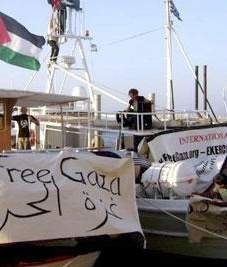
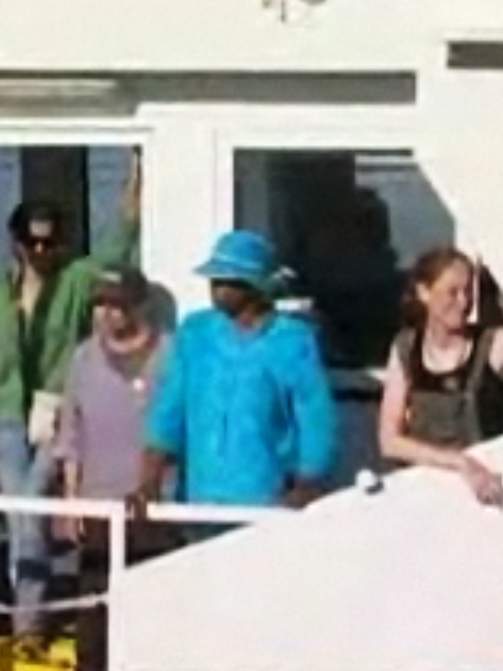
While hoping to deliver humanitarian supplies, a Free Gaza Delegation boat was stopped in International waters by the Israeli Navy earlier this month. Among the nearly 100 U.S. peace activists was former Congresswoman Cynthia McKinney and Irish peace activist and Nobel laureate Mairead Maguire. McKinney and others had been in custody since Tuesday of last week, but could have been released earlier if they signed a document admitting they violated Israel’s blockade. McKinney – “It’s quite unusual for anyone to get a glimpse inside an Israeli prison.”
Cynthia McKinney:
- There were 21 of us on the Free Gaza Boat, they were also bringing boats for Palestinian fisherman in Gaza.
- We embarked on our journey on the Spirit of Humanity boat. You can tell the folks put a lot of love in re-furbishing the boat, with the paint and making it a livable place for a 30 hour journey.
- That boat was destroyed by the Israeli military. They took some kind of huge magnetic item that held the boat suspended and shook it violently.
- It was an unusually calm day, it was absolutely beautiful. But it was 37 hours on the boat including the Israeli Navy intercept. It was nighttime, we were still in International waters and the Israelis threatened us.
- Remember I was on the Dignity when the Israelis rammed it.
- This time, they disabled the GPS, they tried to provide an escort to push us into Israeli waters.
- That tactic didn’t work. They also utilized, something I haven’t seen before, a “wave making machine,” because they shook us up and down.
- The GPS was turned off, communications were disrupted ( small EMP weapon?) I think they were trying to get us into Israeli waters, to make it look like we were off course.
- That did not happen, and they regrouped, and waited for us to enter Gaza territorial waters. That’s when these four speed boats came very quickly. Eight soldiers dressed like ninjas with the ski-mask, they commandeered the boat. Ejected the captain, and took over the steering.
- They put into one room on the boat, told us to sit down and shut up. We were forced to leave the boat with our hands in the air, some were handcuffed.
- The Israeli soldiers were rough with Maguier, she saw them take down one of the women, and she protested, and the soldiers roughed her up with bad language, it was a scene, and the men came to her rescue and those men got handcuffed.
- We got a full body search, we were held by the military for several hours, they transferred us to a detention facility, then to a full prison.Romley Prison. We were mixed in with the prison population. It was amazing, where we were there were young women of African and Asian descent.
- The Israelis actively blocked our effort to meet with our attorneys. We were deported from a country we didn’t intend to enter. The Free Gaza Movement has no intention of stopping.
Guest – former United States Representative and was the 2008 Green Party nominee for President of the United States. McKinney has served as a Democrat in the U.S. House of Representatives from 1993–2003 and 2005–2007, first representing Georgia’s 11th Congressional District and then Georgia’s 4th Congressional District. She is the first African-American woman to have represented Georgia in the House.
—–
Private Contractors in Afghanistan / Pakistan
Since President Obama announced the strategy for Afghanistan and Pakistan in late March of this year, news of troop deployment, drone attacks, and the killing of innocent Afghani and Pakistani civilians is heard nearly every week. Private contractors, mercenaries and the war profiteers in the region rarely make headlines however. One study has concluded that private contractors and mercenaries outnumber US soldiers. Check out – Outsourcing Intelligence in Iraq by Amnesty International and Pratap Chatterjee.
Pratap Chatterjee:
- President Obama has inherited long term contracts in Iraq and Afghanistan, 5-10 year contracts.
- If canceled (contracts) the system will shutdown. For every soldier in Iraq there is a contractor, for every soldier in Afghanistan, there are 2 contractors
- A lot of these people are cooks, janitors, builders, mostly from India, Pakistan, Sri Lanka, Phillipines, Egypt, Bosnia. They do the dull and dirty work nobody else wants to do.
- There’s no draft, so in a volunteer army, the US employs Indians/Bangladeshis for 300 dollars a month, cooking, cleaning. You have contract interrogator types who are making 250 thousand a year.
- There are now 15 thousand prisoners in each country, Iraq, Afghanistan.
- When US goes to interrogate these prisoners, they need translators.
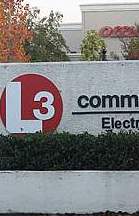
- L3 which is based in New York City, bought up Titan. Titan. under L3 subcontracts interrogators.
- Titan is gone now (by name, same people involved) , but there’s a new company set up by Spider Marx, the guy in charge of intelligence during the invasion of Iraq. Global Linguist Solutions with Dyncorp.
- Contracts are designed to maximize profits. Company such as L3 is paid for 7000 translators, but penalized for having only 6000. 1000 unqualified translators are brought in to war zones.
- Interagency Roundtable Standards
Guest – Pratap Chatterjee, he’s recently returned from Afghanistan. Pratap is a journalist and former executive director of Corpwatch, an Oakland based corporate accountability organization.
—–
Honduran Coup Tries to Halt Advance of Latin American Left
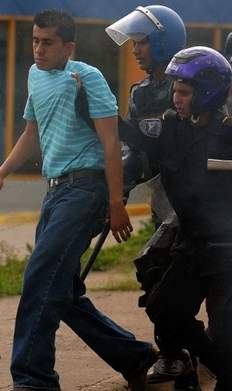
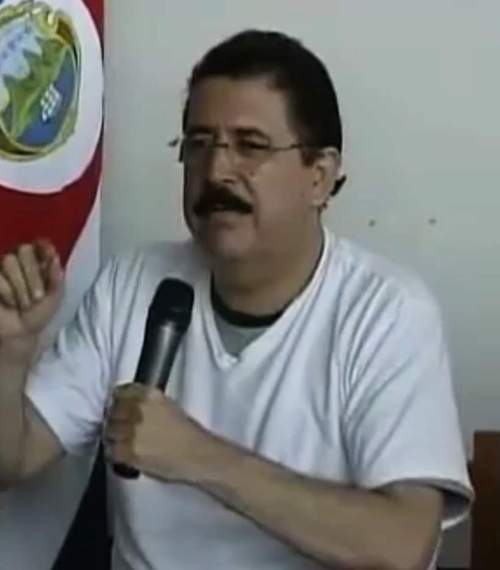
Two weeks after the Honduran Coup ousted President Manuel Zelaya was prevented from returning to the country. Today we look deeper into the life of Manuel Zelaya, his background among the land_owning class, and his shift as a reform minded leader increasing wages for workers and teachers. Half way through his term Zelaya was inspired by changes in Venezuela, Bolivia and Cuba. He soon had the support of labor unions and social organizations that put him at odds with the corrupt social elite and drug mobsters. Today we talk with author Roger Burbach, about how Zelaya enraged the Honduran elite which led to up to the military coup.
Roger Burbach:
- The news in the main stream press about the coup was to stop Zelaya from re-election.
- Zelaya was not seeking re-election but a constituent assembly on the ballot to draft a new constitution for the country. Similar to Venezuela, Bolivia, and Ecuador.
- Either way, Zelaya could not run for re-election as the media and Honduran elites are portraying.
- The existing Honduran constitution was drafted in 1982, a very repressive constitution, back when John Negroponte was working with the death squads.
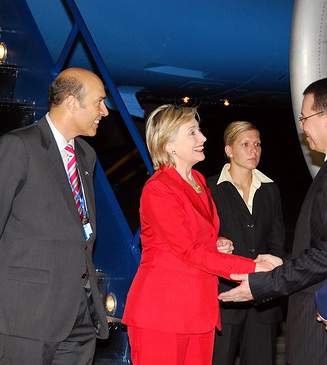
- US Sec of State, Hilliary Clinton doesn’t like Zelaya, she didn’t like him when she met him in early June.
- ALBA, an alternative free trade agreement that believes in solidarity measures and economic measures, led by Cuba, Venezuela, Ecuador and Bolivia.
- The US has the strongest military presence in Honduras, than any other Central American country. I would suggest that the US military intelligence knew about the impending coup and did nothing to stop it.
- Why does the US care about Honduras? Strategic military point in Central America, amid three radical governments now rising.
- New radical left leaders such as Chavez, Morales, Correia in Ecuador, Reformist governments of Brazil, Uraguay, maybe El Salvador. The US wants to drive a wedge in there, as with the coup Zelaya was aligned with the radical countries.
- The World Bank and the IMF have all suspended economic support except for the United States.
Guest – Roger Burbach, author of the Pinochet Affair and Director of the Center for the Study of the Americas based in Berkeley, California. Read more articles from Roger Burbach.
—————————————————————————–