
Welcome to Law and Disorder Radio
Law and Disorder is a weekly independent civil liberties radio program airing on more than 150 stations and on Apple podcast. Law and Disorder provides timely legal perspectives on issues concerning civil liberties, privacy, right to dissent and practices of torture exercised by the US government and private corporations.
Law and Disorder March 2, 2009
Podcast: Play in new window | Download
Updates:
- Co-hosts Michael Ratner and Heidi Boghosian discuss the lawsuit brought against the secret society Skull and Bones to return Geronimo’s skull.
- Geronimo’s Kin Sue Skull and Bones
—
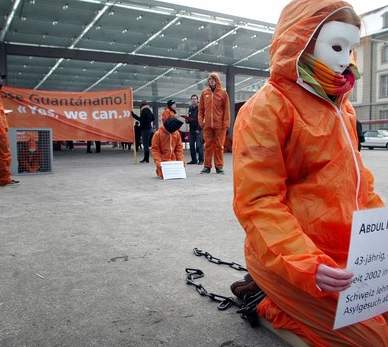
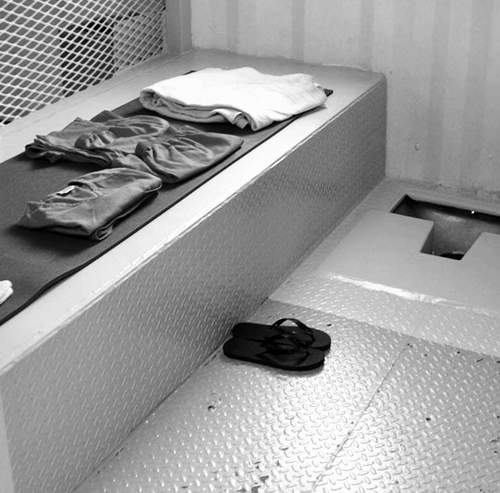
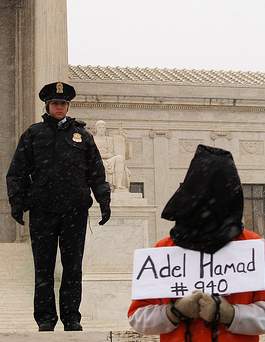
The conditions at Guantanamo Bay Prison still violate the law according to an independent report released by the Center for Constitutional Rights. The report partially compiled from attorney eyewitness accounts and detainees, has found that the conditions of confinement violate Geneva Conventions and International human rights law. Among the violations are the severe isolation of solitary confinement, psychological abuse, abusive force_feeding of hunger strikers, religious abuse, and physical abuse or threats of violence from guards and from the Immediate Reaction Force (IRF) team.
- The executive order that President Obama issued on Jan 22 tasked the Sec. Of Defense with conducting a review of Guantanamo.
- Basically, asking the person who was in charge of Guantanamo for years to investigate operations there.
- It’s more on of an internal review than an outside independent one and its not surprising that they think all is fine and well in GTMO
- We have the impression that they’ve only spoken with about a dozen detainees out of the 240 plus.
- Detainees in Camp 6 are held in cells that are 6 X 8 feet. there are no windows. They are in them for 20-22 hours a day.
- There are no openings except a metal food slot, and a window into the interior of the prison that allows guards to look in.
- Their compliant behavior within Camp 6 determines whether they can go to an open air cell for two hours and pace.
- In Camp 5, it is similar, no natural air or light, the lights are on 24 hours a day,
- One detainee who is 17 is smearing feces around the cell and banging his head on concrete.
- As a consequence he is subject to physical abuse by the Immediate Reaction Force IRF team, (riot squad style guards) who beat him up, and spray tear gas in the cell.
- This is the response to someone who needs, competent caring psychological help.
- In January, there were about 70 detainees on hunger strikes. They use force feeding chairs. The chairs are made by a company in Iowa who calls them “padded cells on wheels”
- The person is fully strapped to this chair while a 12 inch tube is forcibly inserted up their nose and down into their stomachs to allow about a 1.5 liter of formula to be pumped into their stomachs.
- Often during this force feeding process, there are guards around them humiliating them, making jokes.
Guest – Pardiss Kebriaei, Staff Attorney with the Guantanamo Global Justice Initiative, at the Center For Constitutional Rights.


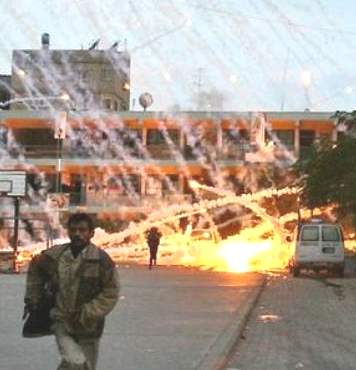
Amnesty International-Fuelling conflict: Foreign arms supplies to Israel/Gaza
Last month Amnesty International released an in depth report detailing fresh evidence that the weapons used during the Israel Gaza conflict earlier this year were supplied abroad. The report tracked countries supplied arms to both Israel and Hamas. Weapons such as white phosphorus, anti-tank mines, air delivered munitions and flechettes which are 4 centimeter darts packed by the thousands into artillery shells.
The report also unearthed multiple violations of humanitarian law and in some cases, war crimes. Flechettes, for example are not specifically banned under international humanitarian law. but they contributed to unlawful killings of and injuries to civilians.
- There were fragments from the US made Hellfire missile where 3 paramedics were killed.
- International military law is clear about attacks on medical personnel.
- White phosphorus burns at a temperture of 1500 degrees.
- Using white phosphorus indiscriminately as a smoke screen creates a situation where it injures and kills civilians.
- Israel had not used white phosphorus in Gaza before. Watch video
- White phosphorus burns right through the skin to the bone, very difficult to stop.
- Palestinians doctors did not know how to treat white phosphorus burns, so civilians were dying from minor burns. Some WP munitions are US made and some are not.
- Potential violations of the Arms Control Act
Guest – Colby Goodman, Policy Director for Military, Security, and Police Transfers at Amnesty International USA (AIUSA). Colby he leads AIUSA’s research and analysis on issues related to conventional arms control and child soldiers in support of AIUSA’s major campaigns and issue or country advocacy.
—–

EPIC RECESSION AND GLOBAL FINANCIAL CRISIS
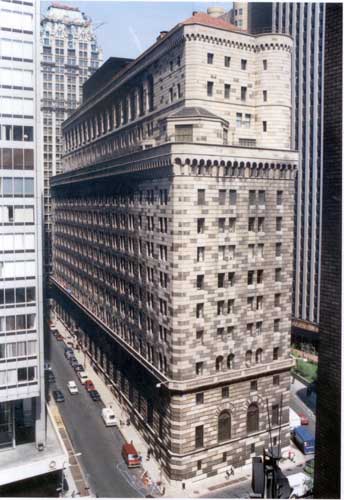
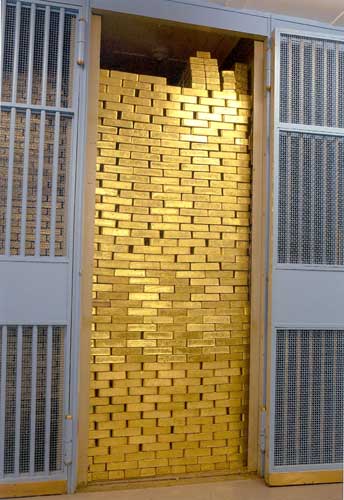
There are other economic solutions and proposals that are critical of the 787 billion dollar Economic Stimulus Plan. Dr. Jack Rasmus’s recent article in Z magazine titled Obama’s Economic Plan vs. An Alternative lays out a different recovery program in 20 measures that could stimulate job growth, run an alternative tax plan and a push through single payer health plan. His Z magazine article is a snapshot from his newly published book titled Epic Recession and Global Financial Crisis.
Dr. Jack Rasmus: – “We are in an Epic Recession phase now, not a normal recession.”
- Banks come first, trickle down. Maybe they’ll give something to the rest of us which they don’t.
- We’ve see a virtual bankers strike for the last six months, we’ve thrown somewhere between 2 and 3 trillion dollars at the banks with the hope they’ll loan a bit out with a lower interest rate. Of course, we know they’re not doing that, they’re paying each other big bonuses, dividends and acquiring each other.
- The commercial money center banks are broke. Zombie banks, banks by name only.
- It’s a solvency crisis, the banks are in default and are not going to loan.
I) Stimulus Bill – 789 Billion of Tax Cuts and Spending
- Designed to slow the accelerating collapse of consumption.
- Not designed to reverse massive unemployment which is gaining momentum. Since 2007 – 13 million unemployed. 20 million unemployed by 2009.
- We’re losing 400 billion dollars just from the now 10 million unemployed. Add in 401k collapse, stocks collapsing, credit cards cut off, long term rates rising, reduction in hours worked occuring, state and local tax and fee increases, state and local funds decreasing.
- Obama is changing rhetoric from creating 3 million new jobs to saving and creating 3 million jobs.
II) Big Bank Bailout
- What to do about the bad assets of commercial banks.
- Securitize Markets – Auto / Credit Cards/ Student Loans
- Insurance Scheme Proposal – Instead of giving banks money they’ll insure them. Taking the Citigroup Bailout Plan Model – 300 Billion back up.
III) Housing Industry – Mortgage modification
- Give the mortgage lenders money – 600 Billion – and hopefully they’ll stop going on strike and they’ll lower the interest rates.
Solutions:
- No way out of housing crisis without nationalizing housing market.
- Create a new government agency and properly fund it, – 900 billion dollars – it would create a small residential and business loan agency.
- Go in there and reduce long term principle and interest to long term averages that existed before 2002’s run up of huge speculation.
- That would be for all loans, not just the ones in foreclosure. Which would stimulate consumption not just shore up housing industry.
- Similar to the Homeowners Loan Corporation of the 1930s
- Auto Companies – You can’t just have 3 US Auto Companies surviving. They have to be nationalized if they’re going to put that much government money into them.
- We don’t give them a penny unless they stop their investment and expansions overseas.
- Ford is building big plants in Petersburg Russia. GM is building big plants in Shang Hai, China. Immediately they should be required to build cars with proper mileage.
- Bring back 2 trillion of the 6 trillion that’s been stuff away in offshore tax havens in the last 20 years.
Guest – Author and Professor, Jack Rasmus teaches in the Department of Economics and Politics at St. Mary’s College, Moraga, California.
—————————————————————-
Law and Disorder February 23, 2009
Podcast: Play in new window | Download
The First 100 Days – Part 3


Private Military Contractors – Susan Burke
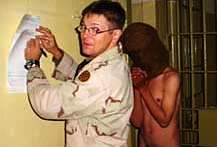
We go now to look at the abuse of force by Private Military Contractors and their role in illegal torture tactics and interrogation. In one case currently in litigation, four former Abu Ghraib detainees are suing two U.S. military contractor corporations and three individual contractors. The four were wrongly imprisoned, tortured and later released without charge.
According to the complaints, the defendants abused detainees physically and mentally and then destroyed documents, videos and photographs; prevented the reporting of the torture and abuse to the International Committee of the Red Cross. They actually hid detainees and other prisoners from the Red Cross; and misled non_conspiring military and government officials about the state of affairs at the Iraq prisons.
The defendants are CACI International Inc. and CACI Premier Technology, Inc., of Arlington, Va.; L-3 Services Inc., an Alexandria, Va.-based division of L-3 Communications Corp. and three individual contractors, Adel Nakhla, of Maryland, Timothy Dugan, of Ohio, and Daniel Johnson, of Seattle.
Susan Burke:
- Blackwater case pending before judge reggie walter in district of columbia federal court.
Nassir massacre case - representing the families and people injured in that massacre. in the meantime the justice dept is looking into indicting blackwater soldiers
- Titan and CACI International Inc
- The CACI International Inc case on interrogation, the court says that this interrogation company could be liable because they exercised corporate control over the interrogators.
- The same court said the translator company L3 could not be held liable because they turned over the translators to the military.
- There are appeals on both issues, they’ve been briefed and are waiting for oral arguement.
- during the appeals, Susan’s lawfirm has been contacted by many additional victims.
- “As I litigate these cases, it struck me that we really need to stop these corporations from acting as if they are the United States.
- All these companies are trying to wrap themselves in sovereign immunity, wrap the flag around themselves. and say that we simply can’t even look at what they did.
- One of the companies CACI International Inc sued for defamation, because somebody dared to criticize them. Rhandi Rhodes the talk show host.
- I would like to see immediately a real push to make the government’s position real clear.
- Corporations are not the United States and should not automatically be entitled any type of immunity.
- The Bremer order which has been in effect has insulated them from being sued in Iraq.
- As a result the Iraqis who want to obtain justice have to come to the United States.
- By allowing there to be a derogation to evade, the laws in black and white that are on the decks right now that say,
you can not hire soldiers. - By the fact that those laws are being ignored and we’re increasing our firepower with mercenaries, the current administration has essentially bought its way from having to draft people.
- Its a troubling thing because we’ve created a class of mercenaries.
- They define themselves as mercs
- They are soldiers for hire, they’ll fight for anyone who pays them.
- That’s why we have to clamp down and enforce the law against the existence of mercenaries,
- We’ve got to take away the veneer of legitimacy, what the defense industry has thrown over the illegal mercenary industry.
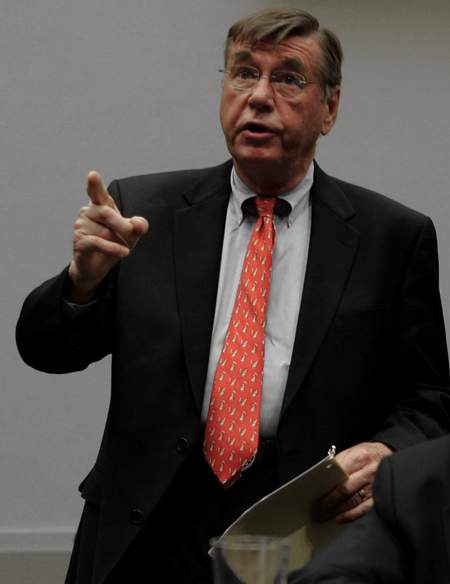

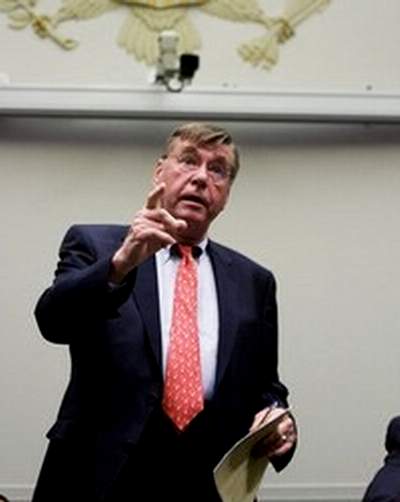
Wide View – Research Professor of Law, Michael Tigar
Michael Tigar is an expert in Constitutional Law and the Supreme Court. He has represented Terry Nichols of the Oklahoma City Bombing, Angela Davis, and Lynne Stewart. Tigar outlines several steps the Obama Administration must do to turn back the major breaches in U.S. civil liberties.
Michael Tigar:
- There is now a systematic breaking down of all barriers against government intrusion into the private lives of people.
- Alien Enemy Combatants: A creation of a new class of people who are thought to be utterly right-less, both as to whether they can be detained, the conditions of their detention, and the manner in which they can be held and interrogated.
- Meanwhile, we have legal fictions such as the Vice President saying he’s neither a member of the executive or legislative branch, and therefore being subject to the rules of both is subject to the rules of neither.
- We have justice system staffed with people whose only qualification is their asserted ideological purity.
- We have two aggressive wars, all done to the tune of the most massive federal debts in history.
- This, accompanied by the largest transfer of wealth from the poor, and working class to the already wealthy, coupled with the dismantling of regulatory barriers of how greed and avarice operate.
- It is the lack of any significant organized resistance from legislators, and with some few bright exceptions, judges and lawyers that define for us the task that lies ahead.
- Eric Holder, a good lawyer, was among the group of people in the Clinton administration that even though they had all the evidence, that they would not prosecute Pinochet.
- National State Secrets: the case of journalist Quentin Reynolds who took a ride on an Air Force jet and it crashed, his widow sued under the federal tort claims act saying that she thought there was negligence. The United States convinced the Supreme Court that to disclose the reasons why that plane crashed might involve state secrets, and that she should not be able to sue.
- Sixty years later the maintenance file on that plane was on unsealed. It turned out that it was a routine maintenance error that caused the crash. Behind the curtain of states secrets is illegality and mendacity.
- How many years did it take to get Pinochet for any kind of proposed criminal accountability, almost 20, because of states secrets.
- The tort system, that is the way we enforce rules about safe products, it’s the way that we enforce the rules about the toxic substances that poison people, it’s the way that we deal with the kleptocracy that rules wall street.
- It’s so well tested – Marbury v Madison 1803 – Chief Justice Marshall said that he could decide a case was unconstitutional.
Guest – Michael Tigar, a criminal defense attorney who has represented some of the country’s most controversial clients. He is also a member of the Duke University Law School faculty.
——–
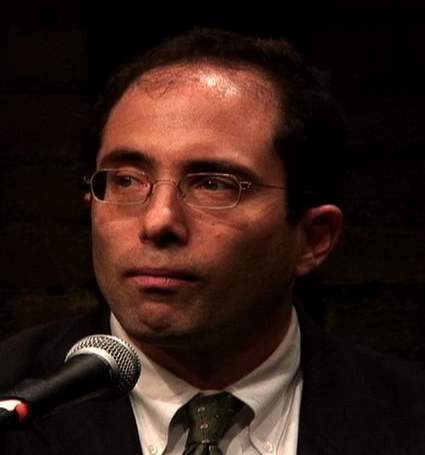
Jonathan Hafetz: Enemy Combatant:
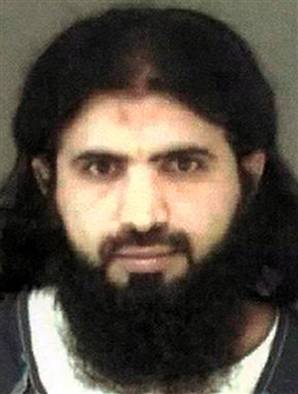
In June of last year, an en banc Federal Appeals Court in Virginia ruled 5-4 that the Bush Administration could subject Ali Al-Marri to indefinite detention even though he was a resident of the United States. The court in the fourth circuit ruled that US residents could be locked up indefinitely as enemy combatants even though they were never charged with a crime. Al-Marri is the only enemy combatant currently in detention and without charges in the United States.
- Can the president declare legal residents including American citizens, enemy combatants, deprive them a right to a trial and hold them indefinitely.
- This, based on the idea that there is a global and never ending war on terror.
- Though on sovereign soil, no right to habeas corpus. He was declared an enemy combatant, the case was lost in an embank in the fourth circuit
- Why is this case so critical to liberty in the United States . . . ?
- The five judges who ruled against the case, said essentially that there must be this power to effectively detain people in the United States to prevent terrorist attacks.
- Ruling: the president can label legal residents including American citizens an enemy combatant in the United States, without a trial, no habeas, hold them indefinitely.
- It’s the idea of the president to use the military to seize people including citizens from their home or places of work.
- A very dangerous power to allow any president to have, it corrupts the justice system, it can be used as a weapon,
- Seven years of these cases of assertion of executive power, and the courts have not answered this fundamental basic question, who can be detained by the military, who is a soldier and who is a civilian?
- All that is stated is that if someone picks up a weapon on the battlefield, that person can be a soldier, but in the most extreme cases in the war on terror – – such as being picked up in the United States as a soldier in the extended geographic concept of the war on terror – – the courts have not grappled with whether there is habeas in those cases.
- Even the judges who ruled against us did say that it included American citizens.
Guest – Jonathan Hafetz, Staff Attorney at the American Civil Liberties Union, National Security Project.

War Powers – Jules Lobel
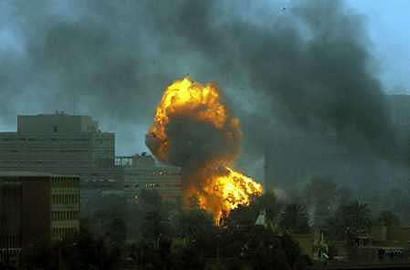
Co-host Michael Ratner and Jules Lobel have litigated 14 cases concerning the power to go to war. “The least effective area of law is holding back the use of war powers.” In the Bush Administration, there was an excessive use in the power to go to war, in Afghanistan, Iraq and around the world. Jules Lobel has testified in front of Congress recently to get a more restrictive law passed by Congress that would actually hold back presidential war making. Unfortunately, Congress passed the Authorization To Use Military Force to go to war on executive order in the name of national security.
Attorney Jules Lobel:
- The president shall not start a war without congressional approval.
- That would not only reverse what the position was in the last 8 years, but the last 50 years.
- For example Iran, there’s all this speculation that the US will attack Iran.
- I think if Obama says I will not attack Iran without Congressional approval, a signal then to Iran that the US will have to fiddle with Congress and no immediate threat.
- The point is the president should not be making this decision on his own!!!
- Presidents for the last 50 years have asserted the president has a right to use US force abroad,
not in self defense but when some vague notion of our national security is at stake. - I think Obama should say that we will clearly reverse this.
- What the Bush and Clinton administration which is we can go to war in violation of the UN charter
- The US has signed to agree and abide by UN Charter that only allows the US to go to war in two circumstances.
- One is self defense of an attack against us. Second is we think there’s a grave threat of national security or world peace.
- We have a right to go the security council and get them to authorize, and we did so when Iraq attacked Kuwait.
- Ok for Obama administration to continue to use force in Afghanistan under constitution and UN charter?
- Congress authorized a very narrow use of force against Al-Qaida
- Still we have to decide, whether or not its legal, the best policy of approach,
- The model is focused on war and not criminal justice.
- Unfortunately they have a narrow authorization, which the Bush administration has argued for a much broader
- I don’t think they have authorization to use force against people in the United States
- Jules: when I testified before Congress I said we should put in a war powers act that doesn’t violate our treaties.
- The restraints on the dogs of war shouldn’t be just from the US Congress, because they often go along with unreasonable executive persuasion, such as the Gulf of Tonkin and the AUMF
- There has to be enforcement at least of the International treaties, even though the political elite have ignored it.
- Jules: i think the legislation that I testified on of possibly getting through with some amendment or beefing up the war powers act and making it effective.
- This was mostly done in secret, secret memos, I think Obama should publish the secret memos.
- We need to publish and expose what was done in secret, including memos written by the DOJ, which should never be secret.
- Legal memos: Obama can de-classify this huge slew of material that would indicate just how far off the rails the Bush administration was.
- Yes on prosecution to bring accountability, there is a very basic step preliminary to building evidence and cases, you have an institutional precedence to follow executive authority.
Through the U.S. Center for Constitutional Rights, Jules Lobel has litigated important issues regarding the application of international law in the U.S. courts. In the late 1980’s, he advised the Nicaraguan government on the development of its first democratic constitution, and has also advised the Burundi government on constitutional law issues.
Professor Lobel is editor of a text on civil rights litigation and of a collection of essays on the U.S. Constitution, A Less Than Perfect Union (Monthly Review Press, 1988). He is author of numerous articles on international law, foreign affairs, and the U.S. Constitution in publications including Yale Law Journal, Harvard International Law Journal, Cornell Law Review, and Virginia Law Review. He is a member of the American Society of International Law.
———————————————————————-
Law and Disorder February 16, 2009
Podcast: Play in new window | Download


The First 100 Days: Dismantling the Police State in a New Presidency – Part 2
This is the second of a three part special. Law and Disorder hosts bring a series of interviews with key attorneys, authors and activists from the front lines such as the Center For Constitutional Rights, Universities of Law and the National Lawyers Guild. Some of the police state policies are beginning to be reversed such as closing down secret CIA sites, a timeline to shut down Guantanamo, and mandating everyone CIA included follow US Army Field Manual Interrogation tactics.
Recently the Obama Administration defended the telecom wiretapping legislation. Attorney General Eric Holder told Senator Orin Hatch – “The duty of the Justice Department is to defend statutes that have been passed by Congress.”
CCR staff attorney Shane Kadidal explains in detail the 3 main groups of Guantanamo detainees, the laws that allow for secret sites, FISA wiretapping, National Security letters, data mining and the Patriot Act.
Shane Kadidal:
- The Three Groups in Guantanamo: First Group – Two dozen genuinely involved with “Al Qaeda” – planning terrorist activities – the people who would be tried in federal courts if GTMO never existed.
- Second Group – Shouldn’t have been there in the first place. The US says they may charge as many as 80 people, there are 255 people left, that means there are close to 200 people that the US gov’t will send home. Like the 500 people who have already been sent home from GTMO.
- Subgroups – there are about 110 Yemenis waiting to return back to Yemen
- Third group: Guantanamos refugees who come to GTMO from places with horrible human rights records, Syria, Uzbekistan, Tunisia, about 13 countries where we ordinarily give them asylum. We can’t return them in good faith back to the countries they are citizens of. Find traditional asylum accepting countries to send them to largely in Europe.
- Secret Sites: The next president could decide to end the secret sites – Who is accountable for sending people to black sites to be tortured? – Military Commissions Act gives those involved immunity from actions that would have been violations of the War Crimes Act or Anti Torture Act
- Repeal MCA – Once you do that, then any officials participating in the black sites have to worry the rest of their lives of being criminally prosecuted for what they did.
- Repealing the MCA would restore Habeas Corpus to full flower that Supreme Court did in the case of Razul and proper judicial oversight regarding detentions.
- Repudiate the whole practice of using black sites and rendition
- Torture: There is one measure out there to propose that the military revert to the model of the Army Field Manual, that actually has acceptable interrogation tactics. – Done
- The Army Field Manual was designed by Interrogation experts with long history of experience and know from practical experience that torture doesn’t work in producing reliable information.
- All of this can be done by executive order, a stroke of the pen as Clinton used to say.
- FISA – wiretapping – the secret court that approves wiretaps – The historic model was that law enforcement would have to present a little bit of evidence of suspicion and that the court would authorize the person to be wiretapped. You go to the judge you get the order directed to one person.
- Right now, it’s broader, instead of going to a judge with specific evidence and getting specific authority for a very limited wiretap. Now based on the FISA Amendments Act passed this summer of June 2008, – they seem to want to get authority to do a wholesale authority on wiretapping and they’ll give the judge criteria in very rough terms. The discretion of law enforcement no longer limited.
- The colonists wrote the fourth amendment with the warrant requirement in it because they were concerned the king had issued these general warrants to allow his agents to run around where there might be violations of the stamp tax act.
- The Supreme Court may argue that the fourth amendment is outdated and allow the broader wiretap powers.
- Also, a new president coming in may decide not to use this power, but there is going to be a great deal of inertia from the intelligence agencies who had five or six years of this power under the NSA
- Its hard to get rid of this entrenched thing, they’ll come to the president with all sorts of arguments.
- This is an area where Congress would have to step in to restore post Watergate era restrictions that were put in place in the FISA act in 1978
- Patriot Act – A lot of it hasn’t been used as predicted.
- Preventive detention – they can hold citizens for 7 days without charge/ but the president asserted executive power to hold citizens and non-citizens without charges for years.
- Now the Patriot Act looks like a model of checks and balances.
- National Security letters and Data Mining – The government pulls in huge amounts of data both from private sources and things that can accumulate. We know that they were seeking calling records, the story broke in the middle of 2006 from nearly all the phone companies and they complied.
- We know they’ve been seeking search terms in various contexts from internet providers, we know they have worked with Swift which processes interbank tranactions to get huge amount of financial transfer data, financial transactions that happen anywhere in the world.
- They’re putting this into a database to see if they can catch terrorists by applying pattern analysis. The first problem with that is that we don’t know if it works, its likely to have a very false positive rate.
- Very close to profiling and pull in people who should not be made the targets of suspicion.
- There is so little human intelligence on the ground, and its tempting for intelligence agencies to look to for technological panacea.
Guest – Shayana Kadidal has been at the Center for Constitutional Rights (CCR) since 2001. Shane is senior managing attorney of the Guantánamo Global Justice Initiative at CCR. In addition to supervising the Guantánamo litigation, he also works on the Center’s case against the NSA’s warrantless surveillance program, CCR v. Bush, and its challenge to the “material support” statute, HLP v. Gonzales. Shane has testified before Congress on the material witness statute and is a contributor to the Center’s book Articles of Impeachment Against George W. Bush, 2006. He graduated from Yale Law School and clerked for a judge of the U.S. Court of Appeals for the First Circuit.
——————————————————


Mara Verheyden-Hilliard: Criminalizing Dissent
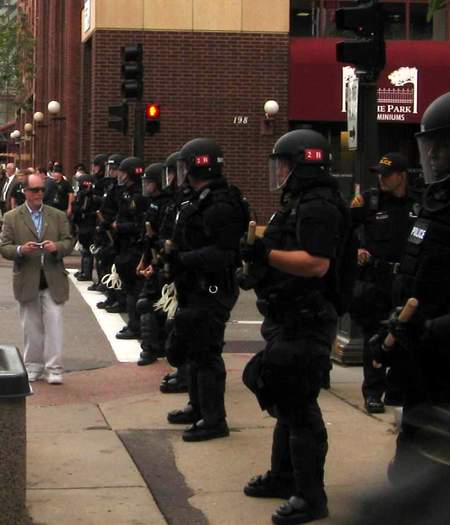
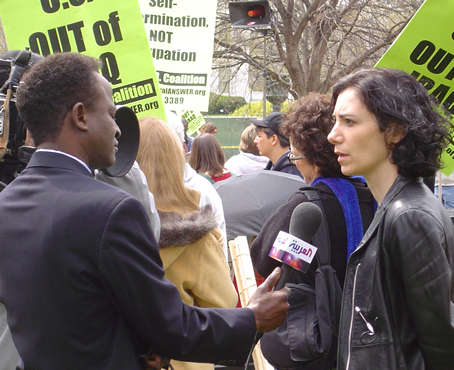
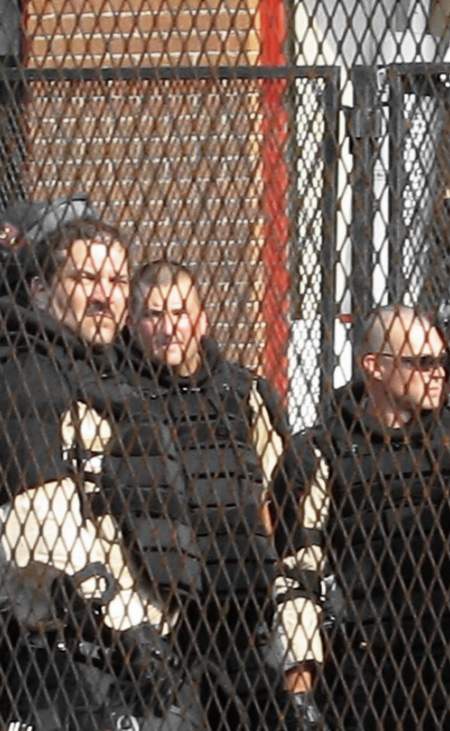
Criminalizing Dissent has chilled most free speech movement in the United States, especially when demonstrators take to the streets. We talk with attorney Mara Verheyden Hilliard co_founder of The Partnership for Civil Justice Legal Defense & Education Fund about criminalizing dissent, surveillance, data mining, fusion centers and the ability to exercise first amendment rights. A recent example were the violations of free speech during the mass arrests of protesters at the 2008 Republican National Convention. The demonizing of protesters and their message in the media will usually allow for the use of military force by police. That combined with intelligence gathering and targeting of lead organizers squelched the voice of dissent in all age groups.
- A lot of our work is at the intersection of first and fourth amendment rights.
- PCJ has a class action suit pending from the world bank IMF protest – 8 year drag out tactic.
- “What they want to do is stage-manage democracy.”
- Victory: After years of litigation the government has to lift regulations on number of people at the Great Lawn
- Is it important to say that we don’t want to go back to Jan 19, 2001 just the day before Bush took office- or is there more that we have to do?
- We think there has to be an audit of every agency’s databases to determine exactly what the databases are.
- Identify what has been collected, where it has been put, who has access to that information,
- Then to tell people in the United States individually, what has been collected on them and then to expunge it.
- For people in their United States, their government collecting information, maintaining information, in these massive database files, that can be used by law enforcement, pulled up in a moment’s notice is really a very dangerous practice.
- What they’ve done is misuse existing databases and data tools.
Guest – Attorney Mara Verheyden Hilliard co-founder of The Partnership for Civil Justice Legal Defense & Education Fund.
————————————————-