Welcome to Law and Disorder Radio
Law and Disorder is a weekly independent civil liberties radio program airing on more than 150 stations and on Apple podcast. Law and Disorder provides timely legal perspectives on issues concerning civil liberties, privacy, right to dissent and practices of torture exercised by the US government and private corporations.
Law and Disorder May 4, 2009
Podcast: Play in new window | Download
Host Updates:
- CCR 100 Days Score Card
- 100 Days Glimmer of Hope
- Spanish judge Baltazar Garzon Says He Will Continue With Investigating US Torture Conspiracy
- Update on Troy Davis – Brian Evans AI Abolition Campaigner – Stay of Execution Ends May 16, 2009
- Troy Davis Video – Finality Over Fairness
—
Unreasonable Intrusions Report
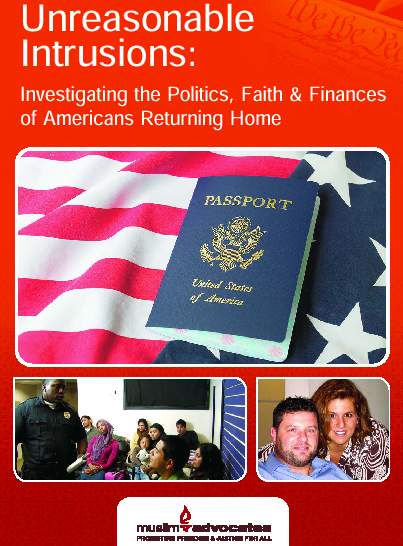
Last month, the Muslim Advocates released a report titled Unreasonable Intrusions: Investigating the Politics, Faith & Finances of Americans Returning Home. The report documents the systematic and widespread practice of federal agents interrogating Americans returning home after overseas travel at our nation’s borders and international airports. Muslim Advocates, a sister group with the National Association of Muslim Lawyers (NAML), which is a group of approximately 500 Muslim lawyers, law students and other legal professionals.
Farhana Khera:
- These are folks who are returning home from travel and they’re being stopped at borders, land crossings.
- After showing valid US passports, federal agents are engaging in very invasive questioning and searches of these Americans.
- Muslim or those Americans who may look Muslim.
- The questions (from border agents) go into first amendment protected areas. What mosque do you attend? How often do you pray?
- We want to educate federal policy makers, members of Congress, Homeland Security and the Obama Administration about this practice.
- Laptops, cameras and phones searched, in some cases asking about people in images, and how they particular individuals.
- Again, all of this without any evidence or suspicion.
- Ninth Circuit Decision US v Arnold, pretty much gives blanket authority to federal agents at the border to search laptops and electronic devices of law abiding Americans.
- We really need some standards in place that address the need of probable cause and reasonable suspicion before seizing personal data.
- We believe that Americans have the right to enter the country and not be compelled to answer questions, particularly about first amendment protected beliefs.
- We are giving practical advice in saying that you think this line of questioning is inappropriate. Get badge #’s of officers who have your stuff, then file a complaint.
- Traveler’s Privacy Protection Act – Proposed Legislation, to be re-introduced.
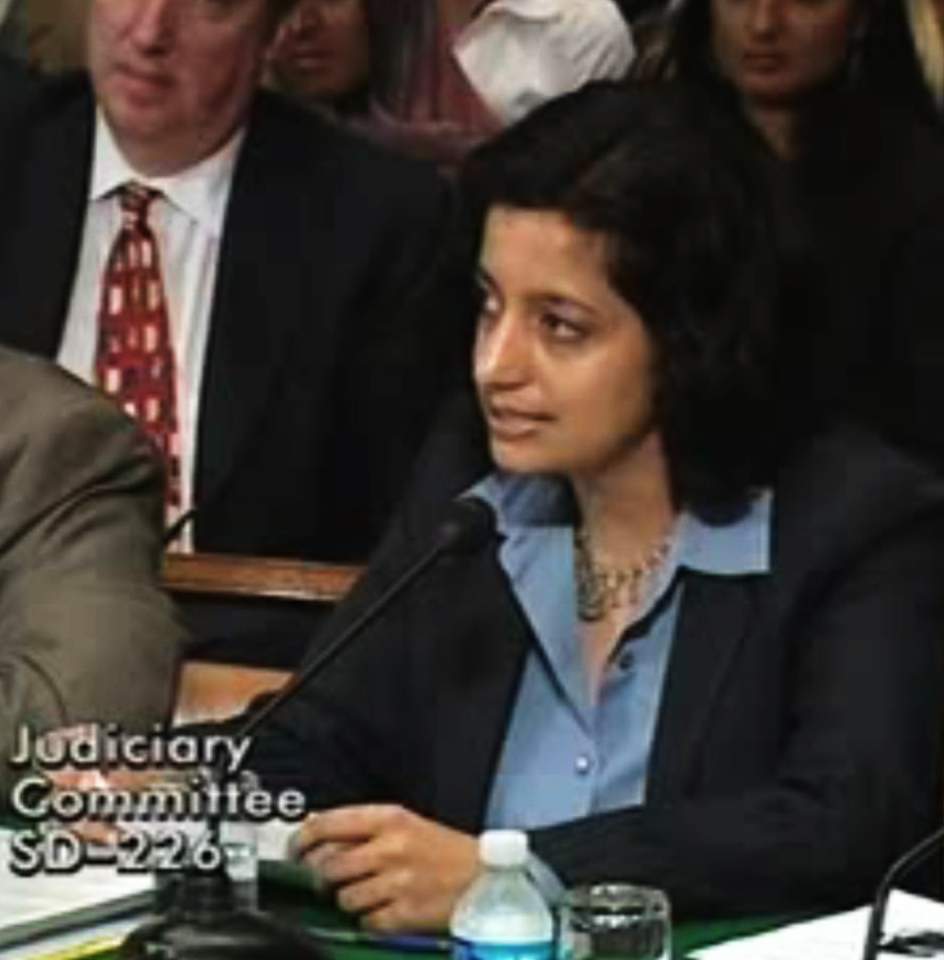
Guest – Farhana Khera, first Executive Director of Muslim Advocates and the National Association of Muslim Lawyers (NAML). Prior to joining Muslim Advocates and NAML in 2005, Ms. Khera was Counsel to the U.S. Senate Judiciary Committee, Subcommittee on the Constitution, Civil Rights, and Property Rights. In the Senate, she worked for six years directly for Senator Russell D. Feingold (D_WI), the Chairman of the Constitution Subcommittee. Ms. Khera focused substantially on the USA PATRIOT Act, racial and religious profiling, and other civil liberties issues raised by the government’s anti_terrorism policies since September 11, 2001. She was the Senator’s lead staff member in developing anti_racial profiling legislation and organizing subcommittee hearings on racial profiling.
—-
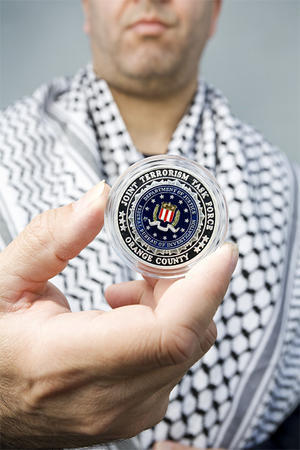
FBI Exposed: Federal Judge Orders FBI to Provide Full Muslim Surveillance Records
Last week a federal judge ordered the FBI to submit 100 documents detailing the bureau’s surveillance of Muslim leaders and organizations in Southern California and specifically, documents relating to the Council on American_Islamic Relations of Greater Los Angeles and its executive director. The court’s decision came in response to a 2007 lawsuit filed by the ACLU of Southern California that claimed the government’s incomplete and long_delayed response violated the Freedom of Information Act.
An attorney with the ACLU of Southern California says the surveillance records will show how the FBI infiltrated Southern California mosques and invasively monitored members of the Muslim community as if they were criminals.
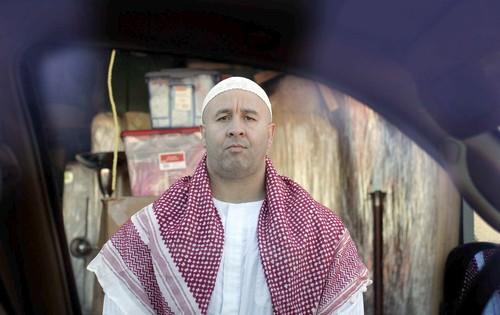
“Truth can never be redacted. Only full disclosure will satisfy us and alleviate the pervasive fear in our communities and congregations,” said Shakeel Syed, executive director of the Islamic Shura Council of Southern California, who joins us today.
Shakeel Syed:
- It was confirmed in a court of law, under oath, that the FBI had employed informants, in one case, the informant was a former convicted felon.
- Craig Monteilh has multiple identities, he was given a different by the FBI and sent into one of the mosques.
- He embraced Islam proclaiming that he wanted to become Muslim and wanted to make his faith public.
- He abused the Islamic platform to gain trust in the community. The FBI told him the best way for you to infiltrate is to become Muslim and pretend to be a slow learner.
- The people at the mosque were alarmed when Craig Montel was encouraging others to blow up buildings in LA
- They called the FBI office on Craig Monteilh unaware that he was an informant. They brushed the report aside.
- Radiation monitoring of mosques
- We filed a FOIA request jointly not individually, which was good because what was suspected is now fully confirmed in the court of law that informants were paid as provocateurs in the area.
- In 2006, one of our members of the mosque, a student, ambushed an agent that was following him and he was apprehended by the University of Irvine campus police. We later filed a case against this individual and later never heard back from the campus police or the FBI.
- We received similar reports in our conversations with other community leaders in other areas such as Chicago, New York, Dallas, Detroit, Houston, Atlanta, Miami, San Francisco.
- It was revealed in some of the FBI surveillance documents that my private speeches were mentioned that were against the war in Iraq. Dalia Hashad – “They were in the mosque.”
- We continue to receive reports from the community on an almost ongoing basis from within the regions of Southern CA that the FBI has approached them to become informants, threatened them, intimidated them, offered them convenience of getting their naturalization papers expedited or immigration papers duly adjusted.
- I’m disgusted, but more emboldened to stand up and assert my rights.
Guest – Shakeel Syed, executive director of the Islamic Shura Council of Southern California.
———————————————————————————-
Law and Disorder April 27, 2009
Podcast: Play in new window | Download
Host Updates:
- Obama Speech To CIA
- Obama Administration Releases Torture Memos
- Leaked: – More than 200 waterboarding applications done to 2 people.
- Rahm Emanual Misspoke: Protect CIA Line Agents and Lawyers
- US Attny General to make decision on whether to prosecute
- Coalition Suggests Impeachment of Judge Bybee
- Armenian Genocide Bill
Hear more of the Jim Lehrer Newshour interview with Michael Ratner and Jeffrey Smith
—-
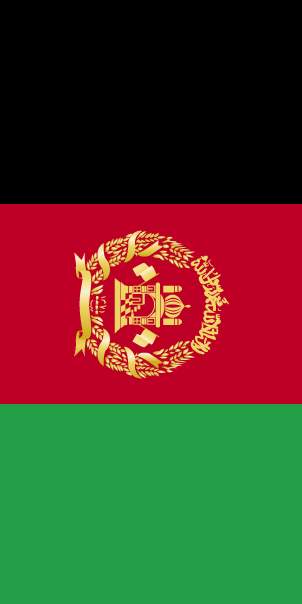
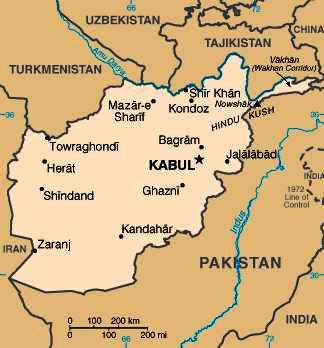
US To Escalate War in Afghanistan
Nearly 15 thousand US troops have been recently committed to Afghanistan, and progressive think tanks are pushing the Obama Administration to send an additional 17 thousand which would bring the total to 70 thousand troops. Expansions are being built onto the Bagram prison, as mass incarceration is expected. Progressive Think Tank Tells Obama to Escalate
- Global Phoenix Program – in testimony last week, 10 – 12 years overall to win the Afghanistan War. Two years of hard fighting, a couple extra billion dollars a month. I think they plan to send the troops into Southern Afghanistan and to take on the Taliban or who ever the local resistance forces are.
- I think people need to buckle their seat belts for a war. We’re going to have a war in Afghanistan that’s soft on torture. Where are the human rights groups, we’re sending US troops into a dirty war that incarcerates without evidence, tens of thousands of people.
- Center for American Progress – I’m disappointed in them, they’re usually good liberal democrats. Now they’ve come out for a military surge in Afghanistan.
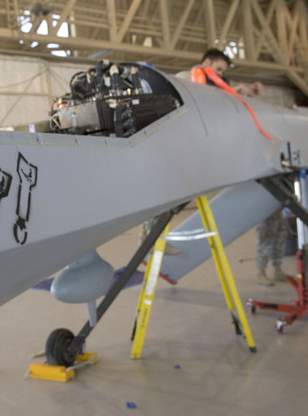
- Obama has narrowed it down to one goal. Can we prevent Al-Quaeda from getting a base area from which they can attack Europe or the United States. The more we go into Pakistan with the predators and drones, the more Pakistan turns against us. It becomes a recruiting tool for more militants.
- The other way to go would be to address the grievances of the Muslim world that give al-queda some support base.
- 1. The US unconditional support for Israel
- 2. 150 thousand troops still in Iraq
- 3. US troops in countries where Muslims control their own oil.
- It’s all laid out in a book by Michael Scheuer -Imperial Hubris: Why the West is Losing the War on Terror
- I work very closely with Robert Greenwald at Brave New Foundation. Getting Afghanistan Right. There’s a huge sectarian problem in the anti-war movement. Nonetheless there’s always a peace and justice community in every city I go to.
- One wonders what it will take for someone in the House or Senate to stand up and say I want to lead the anti-war movement.
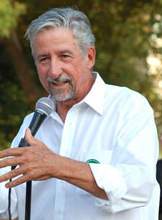
Guest – Political and social activist Tom Hayden joins us today to fill in the detail and time line in this escalation of war. Tom is also the author of Ending The War In Iraq.
—–
US War in Afghanistan and Pakistan – Follow Up
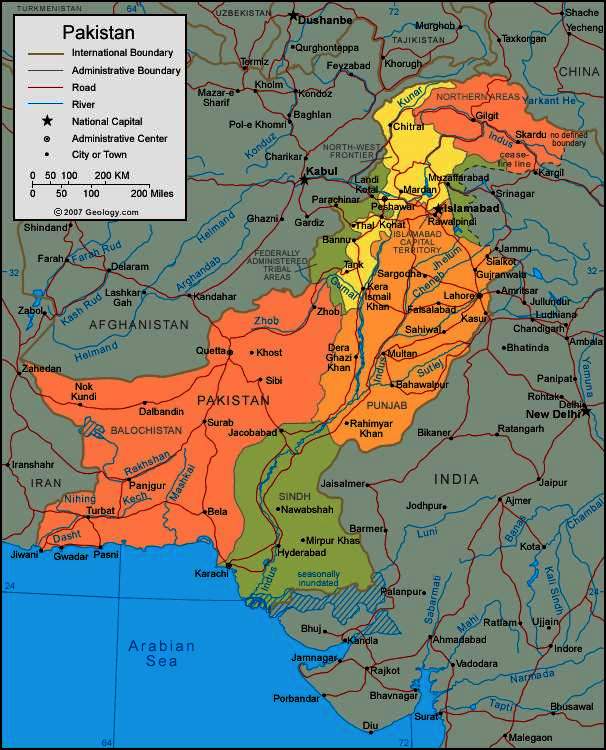
As tensions rise between Pakistan and the United States, President Obama recently mentioned that stability in Afghanistan depends on what will happen in Pakistan. The United States and Pakistan have been allies in their interest to purge Islamist extremism, however the two countries are now embroiled in miscommunication, drone wars and mistrust that is centered around a 10 billion dollar military aid fund. Analysts say the Obama administration is asking a lot from a fragile Pakistani government that has been in power for now only a year.
Michael Schwartz:
- President Obama’s speech – on Pakistan, tells the whole story. You have to unpack it.
- Not a lot of people have read the speech, Obama starts by saying a campaign against extremism will not succeed by bullets and bombs alone then he launches into the peaceful side of American policy.
- The US is planning to make Pakistan another outpost of globalization creating an opportunity for multinational corporations to invest into a local economy and basically take it over.
- What they’re saying is they’re trying to execute a policy to bring Pakistan into full economic domination of American capitalism. – a globalized version of American capitalism. The military aspect of this is only a part to secure the farthest reaches of the middle east, the part of instability.
- Obama’s speech is filled with being “adminstratively involved with Afghanistan and Pakistan.
- The delivery is profound American presence. American enterprises, adminstrators, experts, trainers, a kind of colonial presence, then on the other side of this, an integration into the global system.
- Private multinational enterprises will build schools, infrastructure.
- This same neo-liberal process has ocurred in Africa, South America and what we know about this process is that there is an extraction of large profits by these multinational corporations. The Taliban would set up a social organization that is incompatible with the globalized agenda, so you can see this as a counter-insurgency maneuver.
- The military part of this is that they’re not going to be able to do this in a peaceful way, they’re going to have to conquer the area.
- In a period of two years with more than 90 drone attacks have killed 5000 innocent Pakistanis. They want to kill civilians
- The sense that people are waiting to see whether Obama and Congress move to escalate the war is a big part of the lack of energy in the anti-war movement.
- These are colonial wars, because the United States seeks to have a real administrative hold over these countries.
- The United States can’t withdraw from Afghanistan because it borders on the three Caspian Sea oil companies. Those oil companies are gravitating toward China and Russia in the grand scheme of things.
- Regarding the Poppy agriculture in Afghanistan, the Taliban had gotten rid of the poppies, since the US had invaded Afghanistan, the poppy agriculture has come backWe talk today with Michael Schwartz about the current relations amid Pakistan, the United States and the war in Afghanistan.
- $1.5 billion in direct support to the Pakistani people every year over the next five years – resources that will build schools, roads, and hospitals, and strengthen Pakistan’s democracy. I’m also calling on Congress to pass a bipartisan bill co-sponsored by Maria Cantwell, Chris Van Hollen and Peter Hoekstra that creates opportunity zones in the border region to develop the economy and bring hope to places plagued by violence. And we will ask our friends and allies to do their part – including at the donors conference in Tokyo next month.
Guest – Michael Schwartz is a professor of Sociology and Faculty Director of the Undergraduate College of Global Studies at Stony Brook University, has written extensively on popular protest and insurgency as well as on American business and government dynamics. His books include the recently published War Without End.
———
Cuba, South America and the Summit of the Americas
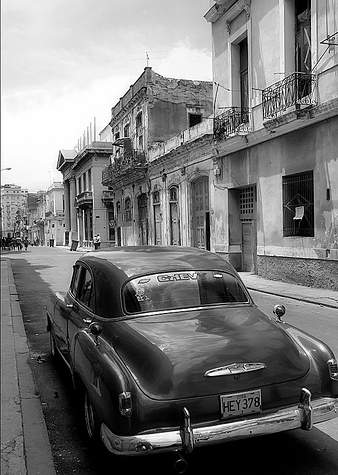
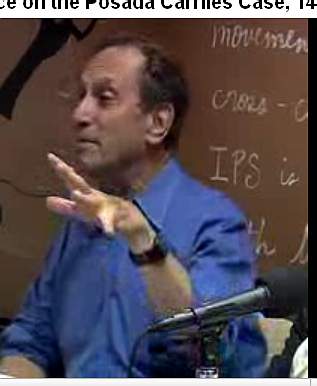
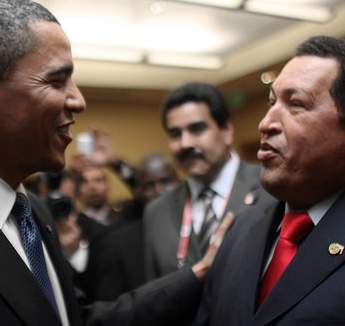
Earlier this year we spoke with film maker and Cuban scholar Saul Landau about the Cuban 50th anniversary and its significance. Now Saul describes the changes we can expect with regard to Cuban / US relations from the Obama Administration. The discussion also covers some detail of the recent talks at the Summit of the Americas in Trinidad.
- Obama has allowed Cuban Americans to travel freely to Cuba and allowing more loose travel regulations as well.
- What can Cuba really do except to promise to stop hitting the US in the fist with its face.
- What did Cuba do to the United States to merit 50 years of punishment?
- I don’t think Cubans are prepared to have 100 thousand Spring Breakers descend upon Havana.
- Nor are they prepared for American investors with big wads of cash, trying to buy up everybody and everything that they see.
- I think Obama is one of the cleverist, winsome, brightest people I can ever imagine, he’s a hard man to resist. But you have to get behind his optimistic rhetoric, his humility, his smile and his handshake and remember that prize fighters also shake hands before the first round.
- Cuba will have a lower profile in the future, we’ve seen the most publicity we’re going to see for quite a while now.
- I think things are little better, they’re a little quieter and less hostile. I think Cuba has its own problems that it really has to deal with
Guest – Saul Landau is an internationally known author, commentator, and film maker on foreign and domestic policy issues. Landau’s most widely praised achievements are the over forty films he has produced on social, political and historical issues, and worldwide human rights, for which he won the Letelier-Moffitt Human Rights Award, the George Polk Award for Investigative Reporting, and the First Amendment Award, as well as an Emmy for “Paul Jacobs and the Nuclear Gang.” In 2008, the Chilean government presented him withthe Bernardo O’Higgins Award for his human rights work. Landau has written fourteen books including a book of poems, “My Dad Was Not Hamlet.” He received an Edgar Allen Poe Award for Assassination on Embassy Row, a report on the 1976 murders of Chilean Ambassador Orlando Letelier and his colleague, Ronni Moffitt.
He is Professor Emeritus at California State University, Pomona. He is a senior Fellow at and Vice Chair of the Institute for Policy Studies.
————————————————————-
.
Law and Disorder April 20, 2009
Podcast: Play in new window | Download
Hosts Updates:
- Michael Ratner: Obama Administration May Have Pressured Spain – Spanish Attorney General Gives Reasons Not To Prosecute US Torture Conspirators.
- Release of 4 Torture Memos
- Obama Administration Says CIA Torturers Should Have Immunity From Prosecution
- Obama Administration To Fund Legal Defense For CIA Torturers
- Michael Ratner’s Recent Post: “In making the decision not to prosecute, President Obama is acting as jury, judge and prosecutor. It is not his decision to make.”
——————-
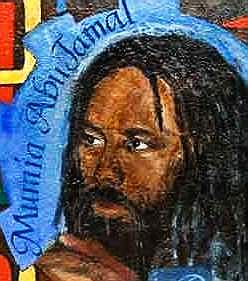
Mumia Exception: Supreme Court Denies Appeal For Mumia Abu-Jamal
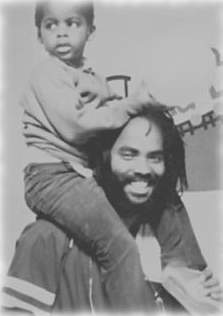
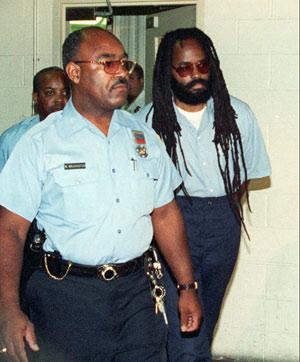
In early April the Supreme Court denied a petition for writ of certiorari in the longstanding case of Mumia Abu Jamal. The appeal to the high Court included an examination of the so-called culture of discrimination operative among Philadelphia prosecutors. It cited 11 separate rulings in which federal and Pennsylvania state courts specifically faulted Philadelphia prosecutors for engaging in intentional discrimination during jury selection. Mumia Exception
Citing dozens of court rulings nationwide, it noted a U.S. Supreme Court ruling where one justice used a statistical study documenting Philadelphia prosecutors purging potential Black jurors at twice the rate of whites during death penalty trials between 1981 and 1997.
- Courts, be they city courts in Philadelphia, apellate courts in Pennsylvania or federal courts at the trial level and appeals level,
- they will either ignore or alter their established rulings, their precedent . . .when it comes to the Mumia case.
- In Mumia’s case, we have a situation where police actually, withheld evidence, they altered evidence, we now know this clearly, but the courts have helped suppress that
- Prison authorities have barred photographing or recording for broadcast purposes of inmates in institutions, just as a way to get at Mumia. You can go in with a notebook and pen.
- Batson Case: In the first 3 years of prosecution in Mumia’s trial, there was deliberate purging of black people from the jurors, for racially discriminatory purposes.
- A video tape had surfaced of a training session, a formal training session in the office, where a senior prosecutor was instructing other prosecuters, on how to purge blacks for juries, in a way that it would mask what they’re doing and thus get around the Batson ruling.
- In March 2008, the US Supreme Court issued relief to an inmate on death row in Louisiana, citing Batson, the essence of it was, if there was one provable instance of discrimination against a black juror – you would have a new trial.
- Two months later, the US Third Circuit, ignored that ruling and created new law, new restriction, higher burden for inmates to raise, in Batson cases.
- Justice Samuel Alito had initially ruled if one legal juror was discriminated against, it was provable, . . to get a new trial – Batson case. Then he changed his view.
- Here we had an award winning journalist, at that time the head of the black journalist association in Philadelphia.
- This has been fascinating in terms of the police withholding evidence, perjury, intimidating witnesses, prosecuters engaged in egregious misconduct and judges from the trial court level, all the up to the US Supreme Court ignoring their duty to justice
- Regarding Judge Sabo’s remark ” to fry that n-word” a court stenographer overheard this and years later came forward to make it public.
Guest – Linn Washington is an Associate Professor of Journalism at Temple University in Philadelphia and a weekly columnist for The Philadelphia Tribune – America’s oldest black owned newspaper. He has reported on the Abu-Jamal case for nearly thirty years. Linn Washington is currently writing a book on police brutality, the thesis is why we have police brutality. We have a continuation of police brutality decade after decade because prosecutors actually aid by ignoring the misconduct of officers.
————–
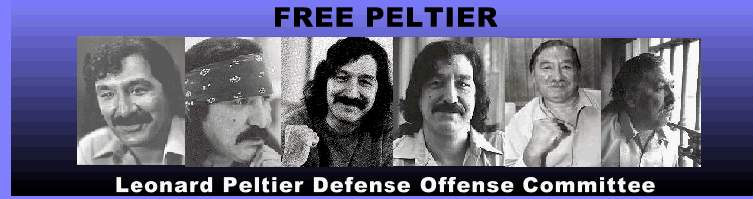
Leonard Peltier: Update On A Political Prisoner
Leonard Peltier is a Native American activist who was convicted of killing two FBI agents during a shootout on the Pine Ridge Indian Reservation in 1975. He was recently transferred back to prison in Lewisburg, Pennsylvania after being attacked and beaten. Leonard Peltier was also denied clemency by the Bush Administration, the request had been pending for 8 years. He is featured in the recently published book, Let Freedom Ring, A Collection of Documents From the Movements to Free US Political Prisoners, brings together the voices of numerous US political prisoners who have taken great risk and sacrifice to stand up for human and civil rights.
Political prisoners such as Leonard Peltier, receive some of the harshest treatment behind bars, such as torture, inhumane and degrading treatment, they’re also subjected to disproportionately lengthy prison sentences. Attorney Michael Kuzma will give us an update on Leonard Peltier’s current condition and case.
- Two FBI agents, Kohler and Williams allegedly had a warrant they were trying to serve on Jimmy Eagle, who had allegedly stolen some cowboy boots. They went to execute the warrant, a fire fight erupted and the next thing you know, Joe Stunts and the two agents are dead. Subsequently, Leonard Peltier, Bob Robado, Dino Butler, were charged with murdering the two agents.
- For Leonard Peltier’s case it was tragic in that the lead attorney Eliot Takiff, had never tried a murder case before, you had an unfriendly judge and the prosecutors had a field day with ramping up the fear.
- When Bill Kunstler picked up the case on a Habeas, after losing appeals. It was about the bullet not matching.
- There was a balistics report that was withheld from defense attorneys in 1977, it was later unearthed by John Privatera and Michael Tigar.
- When Leonard was arrested on February 6, 1976, he was with an individual named Frank Blackhorse. Blackhorse was wanted for several offenses and indicted in 1973 for wounding at FBI agent at Wounded Knee.
- The most curious thing about this case is that Frank Blackhorse is not extradicted, he’s allowed to roam free in Western Canada. Turns out also, Frank Blackhorse isn’t his real name.
- The head of security for the American Indian Movement was a paid FBI operative.
- Based on the work I’ve done with the FOIA requests, its clear that along with others in the AIM, Leonard Peltier had been targeted by the FBI under Cointel Pro.
- We’ve been fighting to get documents that show how the FBI used a host of dirty tricks against Leonard.
- One of the prosecutors who is now retired, Len Krooks, has publicly stated that they don’t know who shot the agents.
- What we discovered is that the government turned over 3500 pages of material to Leonard’s defense attorneys and said this is all we have. As a result of a FOIA case brought in the late seventies we discovered the FBI had 18 thousand pages of material.
- Twelve thousand pages were released, 6 thousand pages withheld. Then as a result of another FOIA request in 2001 we found the FBI had 142, 579 pages of material.
- We have a suit still pending, we’re waiting for a decision from the court of appeals, for the 8th circuit. We’re trying to get 90 thousand pages, that’s what we’re sueing for. The government is fighting to hold onto 11 thousand pages of material. The reason they say is that the material if released will hamper the nation’s war on trans-national terrorism.
- The FBI can’t afford to have this information come out, because if people learned how extensive the informants and under cover agents were
- Leonard Peltier will be 65 on September 12, 2009. He has diabetes, his eyesight is not the best. There’s no threat whatsoever if Leonard was released today. William Kunstler believed Peltier did not shoot the FBI agents.
- Leonard is considered to be an old law inmate.
- Leonard had been in Ft. Leavenworth Prison and was transferred to the Lewisburg Federal Penitentiary. He was then transfere
- January 13th. Leonard was brutally attacked by two other inmates and suffered a possible concussion, he was kicked around the ribcage, he’s having headaches, his knee was bruised.
- What we’ve been hoping to do is get Leonard transferred to a medium security prison, he’s eligible.
Guest – Michael Kuzma, attorney for Leonard Peltier. As many know, Leonard Peltier is a Native American activist who was convicted of killing two FBI agents during a shootout on the Pine Ridge Indian Reservation in 1975. He was recently transferred back to prison in Lewisburg, Pennsylvania after being attacked and beaten. Leonard Peltier was also denied clemency by the Bush Administration, the request had been pending for 8 years.
——————————————————————-