Welcome to Law and Disorder Radio
Law and Disorder is a weekly independent civil liberties radio program airing on more than 150 stations and on Apple podcast. Law and Disorder provides timely legal perspectives on issues concerning civil liberties, privacy, right to dissent and practices of torture exercised by the US government and private corporations.
Law and Disorder March 23, 2009
Podcast: Play in new window | Download
Updates:
- Obama Scorecard #1: Guantanamo Bay / Enemy Combatant Status still exists. The words “Enemy Combatant” have been changed to “Opposing Force.” Obama press release misleading and disingenous.
- Red Cross Report – Mark Danner
- Dalia Hashad – Obama Signs UN Declaration To Decriminalize LGBTI’s
——-
Steve Downs: The Yassin Aref Story and Muslim Database, Project Salam
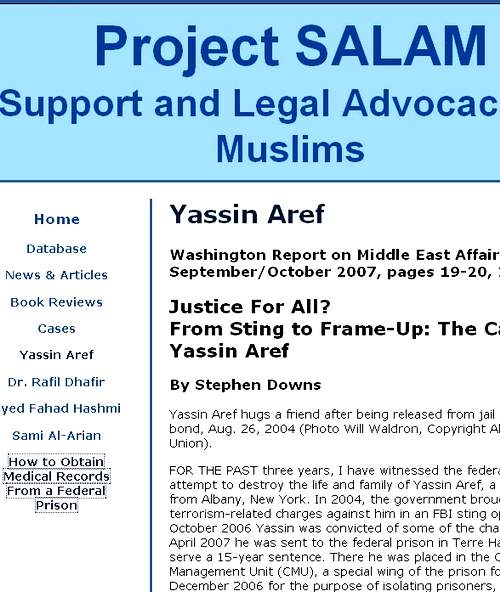
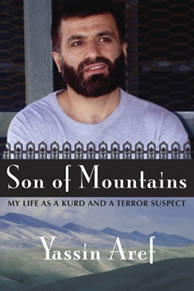
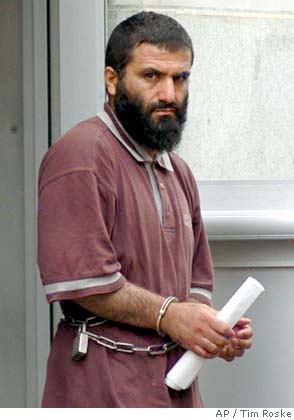
Imam Yassin Aref is among numerous Muslim men in the United States who were targeted by the FBI framed and wrongly convicted. Aref is Iraqi Kurd who came to Albany, New York in 1999 as refugee from Kurdistan. He later became the leader at a local mosque. After 9/11 the FBI began to illegally wiretap and eavesdrop on the mosque and Yassin. It was later reported in the New York Times that these wiretaps were conducted without court approval. As retired attorney Stephen Downs explains, Yassin is one of 400 in a database site, Project Salam that keeps track of Muslim men in United States prison.
Stephen Downs:
- Whatever it was that triggered suspicion, the FBI decided they wanted to convict Yassir
- So, they set up sting operation, it was run by a guy who was convicted of a number of felonies.
- Yassin was convicted and sentence to 15 years in communication management units at Terra Haute Prison, Indiana,
- They’re trying to seal them off from the prison population and society at large.
- They’re being treated like they have some horrible disease and would infect anyone that they’d come in contact with.
- I have a suspicion that the Bush Administration was thinking of closing Guantanamo and I can’t help thinking that because the size of this place is about right, that they’d consider transferring prisoners there, but that didn’t happen.
- There is room for 400 prisoners, there are 50 or 60.
- We began to realize that all over the country there were groups that were forming around certain people in their communities that had been simply, locked away.
- So, we got together at Albany Law School and decided to set up a database of all the Muslims in the country who had been improperly gone after. They were under suspicion from the government for some reason.
- We just wrote to President Obama and Attorney General Holder regarding what has happened under the Bush Administration in that we change the paradigm in how we prosecute people.
- Now we’re going to be writing letters about specific cases. We got 900 people to sign the first letter.
- We are asking people to adopt a defendant.
- We have about 400 Muslims in the database. We can’t say that all 400 are innocent. Some people are overcharged.
- We appealed and lost. There was a secret appeal and a top secret brief that even the prosecutor wasn’t allowed to see.
- The appellate decision was harsh, it either mischaracterized what we had to say or brushed them aside immediately.
- We thought it was a victory because the standard is a 30 year prison sentence, based on the all the “enhancements” that they added.
Guest – Stephen Downs, a retired New York State attorney and a volunteer attorney for the Yassin Aref case.
———————————————–

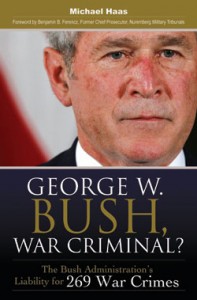
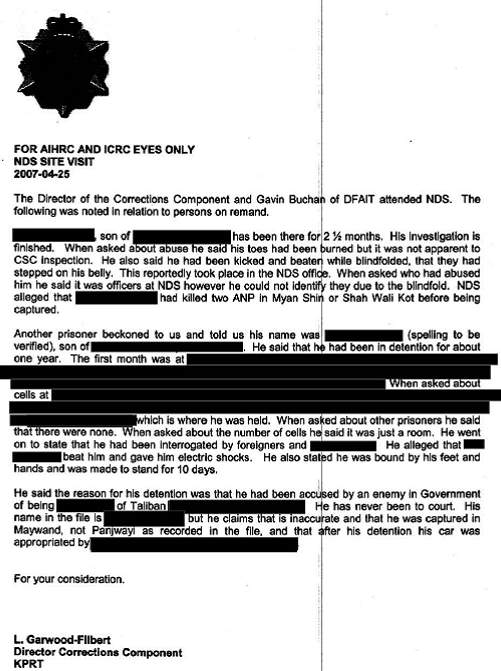
George W. Bush, War Criminal ? by Michael Haas
In the book titled George W. Bush, War Criminal? author Michael Haas counts 269 war crimes that the Bush Administration are liable to be prosecuted for. He itemizes each war crime into a specific category of four classes, such 36 war crimes committed in the conduct of war, 175 war crimes committed in the treatment of prisoners and so on. This book carefully documents the war crime evidence, making it quick work to investigate how George W. Bush, the military officers under his command and the staff in his administration can be brought to justice.
- Types Of War Crimes:
- The illegality of the war.
- The misconduct during war, militarily, the mistreatment of prisoner.
- The misgovernment of the occupations of Iraq and Afghanistan.
- The decision to indiscriminately bomb without giving proper notice to the civilian population and then the use of illegal weapons such as Daisy Cutters, White Phosphorous and Depleted Uranium Weapons which not only affected the civilian population in Iraq, but the American soldiers who came in to occupy.
- I have a table in the book indicating 40 international agreements that are war crimes treaties.
- The most prominent to begin with is the Red Cross Convention of 1864 and then going on to the Hague Conventions, the Geneva Conventions before and after WWII and then the subsequent conventions against torture and forced disappearances.
- Any kind of torture is illegal involving prisoners of war.
- When they couldn’t get information out of Guantanamo prisoners, the Geneva Convention orders to not torture prisoners was countermanded to try other techniques by then Secretary of Defense Donald Rumsfeld – by executive order through George Bush.
- Most of the war crimes are from the mistreatment of prisoners, because the Geneva Convention is very detailed and specific about what cannot be done.
- The Bush executive order details what had happened and in fact is an admission of abuse.
- Extraordinary renditions, to send someone to another country to be tortured is itself a war crime.
- War crimes are ongoing now, they’re happening under the Obama Administration.
- If we can’t focus on now, which apparently isn’t happening, then we can’t learn lessons from the past.
- At Guantanamo, the following war crimes are taking place: Failure to transmit legal documents to prisoners, secret judicial proceedings, refusal to cooperate in investigations and prosecution of torturers. The wreckless endangerment of health in prison, the violation of medical ethics, that is the force feeding. Indefinite imprisonment of children, cruel treatment, that is the beatings after force feedings.
- These are what I’ve counted to be 22 war crimes since the inauguration of President Obama.
- The thesis of the book is to have a truth commission on the war crimes published in this book so that people know, the public what is a war crime, what is not a war crime.
- Some of the war crimes are only heresay right now, so we need sworn testimony, though some of the war crimes are signed by George W Bush. www.uswarcrimes.com
- I was writing a textbook on human rights, I’m a scholar, political scientist, while I was reading the Geneva Conventions to summarize them for the purpose of a chapter, I was also reading the newspaper, I realized that the violations of the Geneva Conventions, and reading them item by item – its very dry reading, but I can make it much more interesting.
- I quit my job as a professor, and relentlessly began getting up at 5 AM and going to bed at 1AM day after day to finish this book, so it would be coming out just a few days before the inauguration of the new president.
Guest – Michael Haas, has written more than 30 books on human rights, he is currently Professor Emeritus of Political Science at the University of Hawaii and the Chairman of the International Academic Advisory Board of the University of Cambodia. He played a role in stopping the secret funding of the Khmer Rouge by the administration of President George H. W. Bush. He has taught political science at the University of London, Northwestern University, Purdue University, and the University of California, Riverside.The argument is that all 4 types of war crimes were violated with great impunity by George W Bush and members of his administration.
——————————————-
Law and Disorder March 16, 2009
Podcast: Play in new window | Download
Updates:
- Sarah Kunstler has baby boy, William Ferguson Kunstler
- Co-host Michael Ratner discusses debate at Princeton – Justice After Bush
- Justice Dept. Investigates Sheriff Joe Arpaio of Maricopa County, Arizona
- Charles Barkley and Sheriff Joe’s Special Treatment
- Padilla v Yoo, among many cases pending in courts
————
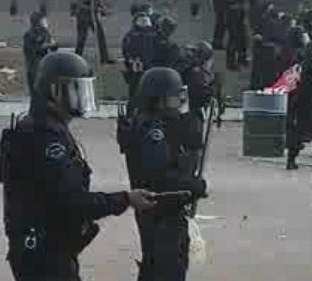
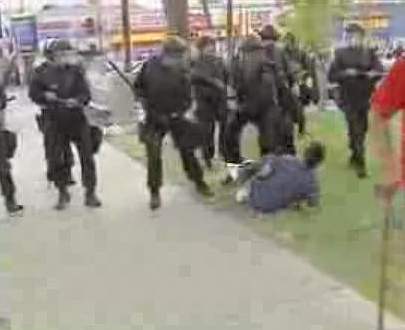
13 Million Dollar Payout in May Day LAPD Police Abuse Cases
In a landmark class action lawsuit settlement, the Los Angeles city council agreed to pay nearly 13 million dollars to those injured or mistreated in the 2007 May Day demonstration in MacArthur Park. As the march ended, LAPD riot police were filmed by camera crews using excessive force, firing rubber bullets and striking people with batons. Dozens were injured in the melee and the footage was seen around the world. The 13 million dollar settlement was part of a larger portion of nearly 300 May Day claims.
- There was an immigrants rights march in MacArthur Park in Los Angeles on May 1st 2007, there has been for the last 7 years. The police didn’t want to give the group a permit to march in the streets.
- There are about 20 lawyers on this case, the National Lawyers Guild, the Guild’s Police Accountability Project and MALDEF, the Mexican American Legal Defense Education Fund.
- As around 10 thousand people approached the park, police “forgot” to direct people into the park.
- The rally was at the Northwest corner of park, so marchers had to cross an 8 lane highway that divides the park. This created chaos of which the problems arose.
- There was no instruction, people didn’t know where they were supposed to go.
- Then people got near police on motorcycles, they used their motorcycles to hit protesters. This was happening as an Aztec circle dance performance closed the march and opened the rally.
- Some protesters through trash, plastic water bottles at police. It was heard that the police said “We need to get rid of these people now.” Police were not giving orders to disperse, they simply said “move”.. to the 10 thousand people in the park.
- The officers were speaking only English, the crowd spoke almost all Spanish.
- Families had no idea why the police were coming with riot gear. While police were saying to move, people were thinking, “well I didn’t do anything wrong, they could’nt be talking to me.”
- So officers began knocking people down and hitting people, firing pellets, it was total chaos.
- 140 rounds of less lethal munitions were randomly fired into the crowds.
- The police report also stated there was no probable cause, no reason to go after the marchers.
- Lesson: It’s very difficult to change the culture of a police department. The police department can’t engage in this behavior, because we can’t afford it as a city.
Guest – California civil rights attorney Carol Sobel, who represented some of the injured. In 2000 Carol was struck by police pellets while serving as a legal observer during the Democratic National Convention.
———————–
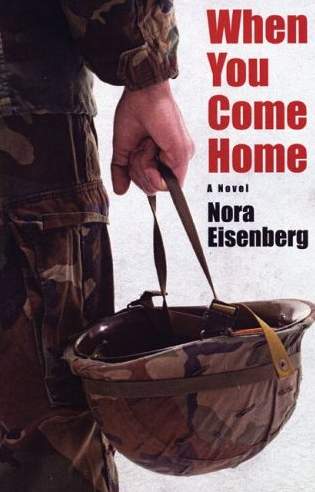
Nora Eisenberg: When You Come Home
We’re pleased to have with us Nora Eisenberg, she’s the author of the recent book When You Come Home. It is a powerful novel that acknowledges the physical and psychological effects of veterans returning from Operation Desert Storm-The Persian Gulf War (2 August 1990 – 28 February 1991). In this beautifully written ant-war fiction, Nora delves into the corrosive effects post war combat has on the families and communities that are called on to nurture veterans returning home. Mimi is the main character who’s husband was killed in Vietnam, her 20 year old son Tony, a marine reservist, has returned from the Gulf War and there’s Tony’s childhood sweetheart, Lily who was raised by Mimi after her parents disappeared.
One book review describes When You Come Home this way: “In 1991, troops sent to Iraq for the first Gulf War returned home with a litany of physical, neurological, and psychological symptoms that collectively became known as Gulf War syndrome, a subject seldom dealt with in works of fiction. Eisenberg poignantly demonstrates that casualties of war occur both on and off the battlefield and ironically illustrates the vivid consequences when those in charge of veterans’ postwar care fail to meaningfully “support our troops.”
- The First Gulf War – “The Good War”, 5 weeks of censorship and fabrication. Fabricated by a Washington based PR firm – Hill and Nolton. The campaign was headed by Craig Fuller. Fuller was also Chief of Staff for George H.W. Bush. Fuller took charge of the campaign to impress the public of what villians the Iraqis were.
- The firm brought this young girl to testify in front of a Congressional Committee – She claimed to work at a maternity ward in Kuwait. “The mean Iraqi soldiers” came in and hurled nearly 300 babies from their incubators and were left to die on the floor.
- This young girl was part of the Kuwaiti Royal Family, her father was Washington / Kuwait ambassador.
- All part of a 10 million dollar PR campaign with Hill and Nolton.
- Aside from the no-fly zones and sanctions, the deaths of Iraqis were massive and continuing.
- I’ve been following the deteriorating health system in Iraq and the rise of disease leading to the deaths of 2 million Iraqi children.
- I started writing this book with the “bad” war looming and with a sense that the ’91 war wasn’t over at all.
- I thought, are we going to kill millions again and get off scott-free, does it really work that way?
- Gulf War Illness, even among progressive people, there remains very little awareness of what this disease is. It attacks the respiratory system, the nervous system, it’s a neuro-toxic event.
- These soldiers got sick, immediately. Some say they got sick after swallowing an anti-nerve gas pill.
- When they were around the insecticides that were soaking the tents, they felt sick immediately, vertigo, stomach cramps.
- The soldiers loved ones, pets and wives coming down with similar symptoms, by proximity.
- It’s taken almost 20 years for Congress to say what the veterans already knew, that they were poisoned.
- A report delivered by high profile doctors at Roberta White say the soldiers were exposed to neuro-toxins. These were not neuro-toxins from Saddam Hussein.
- Those are main culprits, there are other terrible exposures that came out in a report last November.
- Such as the exposure to sarin in a weapons depository that affected 2-3 hundred thousand US soldiers.
- Nearly 15 thousand have died from Gulf War Illness. We have nearly 400 thousand US soldiers coming back as patients / nearly 40 percent are psychiatric patients.
Guest – Nora Eisenberg, New York City novelist and professor of English at the City University of New York (LaGuardia) and directs CUNY’s Faculty Publications Program. The War at Home ws a Washington Post Rave Book of the Year for 2002 and Just the Way You Want Me was awarded the 2004 Gold Prize in General Fiction from Foreword, the weekly of independent publishing. Her short stories, essays, and reviews have appeared in The Village Voice, Partisan Review, the LA Times, Tikkun., and numerous anthologies.
——————————————————–
Law and Disorder March 9, 2009
Podcast: Play in new window | Download
Updates:
- Co-host Dalia Hashad explains why Proposition 8 affect fundamental rights for all
- Civil Rights Pioneers Honored on Stamps
- Tell Senator Patrick Leahey that Truth Commissions are not enough and could easily be Impunity for Torturers
—
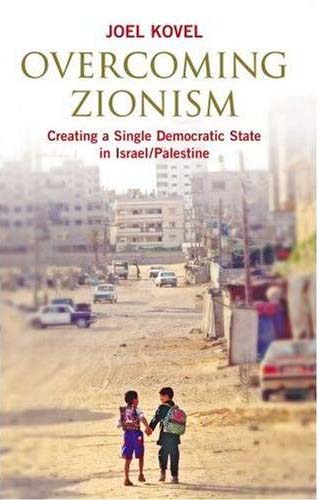
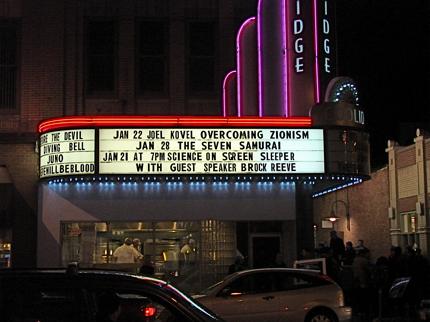
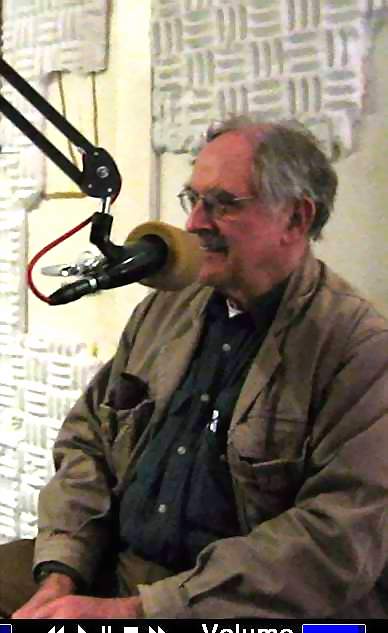
Zionist Critic Joel Kovel: Terminated From Teaching Position At Bard College
Since author and professor Joel Kovel, published, Overcoming Zionism, Creating a Single Democratic State in Israel and Palestine, he has endured accusations of anti-semitism, Michigan Press temporarily suspended distribution of the book – calling it “hate speech” and recently Kovel was terminated from his teaching position as a professor of 21 years at Bard College. Joel Kovel is back with us on Law and Disorder to give us a brief chronology of these controversies and deliberate set backs.
- I was terminated from an endowed chair (at Bard College) 3 weeks after I published an article critical of Israel and Zionism. Then asked to resign 3 weeks after I published another article critical of Zionism.
- This is a good example of the kinds of repression that the Zionist lobbies impose upon the people who dissent on the unholy relationship between Israel and the United States.
- Most campuses in this country are highly Zionist in organization, but Bard is exceptionally so. The president is the conductor of the Jerusalem symphony orchestra. He says he makes 10 trips a year to Israel. He brought the symphony around and played the Israel national anthem and the audience all stood, which I thought was just outrageous.
- I tried to give a lecture to call attention to that and was shunned.
- My book Overcoming Zionism did not only focus in on the occupation of Palestine or Israeli abuses but the fundamental structure of the Israeli state which is animated by Zionism which leads to all of the woes and abuses of human rights.
- Unless you deal at that level and point towards an overcoming and not just Zionism, but the special status and you treat Israel as we treated South Africa for equivalent crimes of Apartheid; namely a systematic racism against an indigenous people.
- So I started catching hell from the Zionist lobbies. “I’m anti-semitic, full of hate.” They panicked the University of Michigan Press, and they pulled the book.
- It’s remarkable that Bard College which is very proud of its image of being a bastion of defense of freedom of speech. Not a single peep. So I knew we were in serious straights at that point.
- I put up an anti-Zionist course last fall, which was evaluated. The evaluation was dripping with innuendo, and references to me losing my grip as a teacher, and was basically the preliminary to my termination at Bard College after 21 years.
- The alumni has supported me, the faculty not so. This is important because it is now a place that has instilled timidity and even terror amongst the faculty.
- They’re intimidated and its distressing that you can take people who are sophisticated and ostensibly good values and they will not bring themselves to utter basic criticism of an event that has shocked the world and caused millions to change their view of Israel.
- Bard is creating a new class of bourgeois who would get the jobs, auto dealerships, burger kings, whatever they’re planning.
- It’s typical of a liberal institution to use generous impulses and they want to make something good happen, but we also know how many pitfalls there are. Just think of all the universities that were founded by the British and the French to secure their empires. I think it has a lot to do with that.
Guest- Joel Kovel, scholar and an activist. In the former capacity he has published nine books and over a hundred articles and reviews. His books include White Racism, which was nominated for a National Book Award in 1972; A Complete Guide to Therapy; The Age of Desire (in which his work in the psychiatric-psychoanalytic system is detailed); Against the State of Nuclear Terror; In Nicaragua; The Radical Spirit; History and Spirit(1991) – Committee for Open Discussion of Zionism
—–
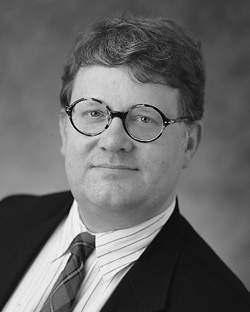
Office of Legal Counsel Release Secret Memos: First Batch
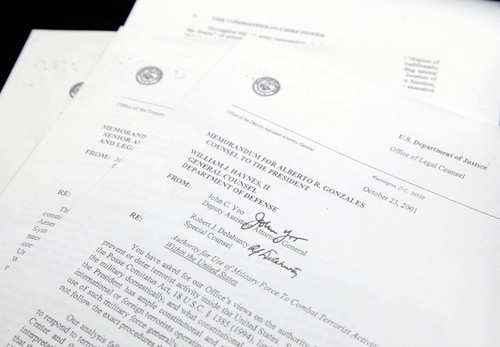
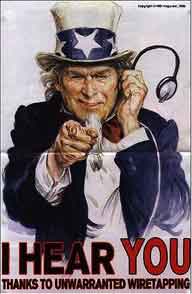
Last week the Justice Department released internal Bush documents that revealed more legal memos authorizing torture and interrogation outside of the United States. These “police state” memos include the military’s search, detention or trial of civilians in the U.S. without congressional input and a newly disclosed opinion by torture memo author John Yoo who argued that constitutional provisions ensuring free speech and barring warrantless searches could be disregarded by the president in wartime.
- The Bush Administration kept them secret to the very end. The Obama transition team went in to get the memos and were told you can’t have them, you can’t see them.
- These memos were published because they were sought in litigation. Specifically in the lawsuit – Padilla v Yoo
- Memorandum Oct 25, 2001 – talks about the ability of the Bush Administration to drop a bomb on my house? Unreasonable search and seizure doesn’t apply if the president engages in domestic military operations. Neither does the First Amendment.
- It says the Posse Comitatus Act is essentially a dead letter.
- What they’ve said in this memo is that 200 years of Constitutional history is gone.
- These memos have an instrumental role. They set the legal policy, that’s in accordance with the Judiciary Act of 1789.
- There seems to be a vague presumption that all these memorandum are invalid. The OLC will be repudiating these memos and put a priority on publishing them because they welcome public participation in this process.
- Michael Ratner: Can you really prosecute John Yoo for these torture memos?
- You look at his public statements of which there are hundreds, he seems to understand that he has an acceptable legal defense, because everything is geared to “that’s my honest opinion and nothing has changed” Is that argument correct? No, it’s not.
- He says he was asked his opinion, he gave his opinion. I think what we will see is that he was told in meetings in the White House, before he wrote opinions, that a torture program was put in place, pushback was coming from career lawyers saying this is unlawful conduct .. and he was told we need you to protect us from this and write legal memos.
- Implying, that these memos had an instrumental role to silence critical lawyers and push the torture program, already in motion, forward.
- If that’s the case, he’s beyond the role of advisor. Mis-stating advice and corrupting the law.. .that is the precedent to be liable for war crimes. The most likely outcome from all of this is a lot of disbarmments
Guest – New York attorney Scott Horton, known for his work in human rights law and the law of armed conflict. Scott is also the contributing editor to Harper’s Magazine
———————————-
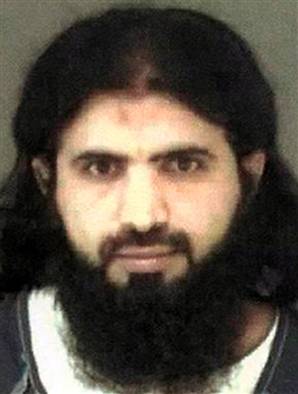
Ali Saleh Kahlah al Marri Indicted on Terrorism Charges
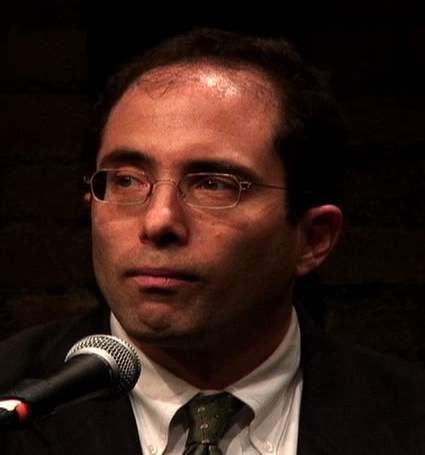
Last week, a federal court charged the only enemy combatant with two counts of providing material support to Al Qaeda. This will allow his release from six years of military custody and into the criminal justice system. The ACLU says this is exactly where the case should be to determine whether al-Marri is guilty. Jonathan Hafetz, working as al-Marri’s lead defense counsel says despite the news, he will not drop the habeas corpus challenge in the case.
Michael Ratner Update: Since this interview, Al-Marri’s enemy combatant status was wiped off the books. The Obama Administration in it’s brief, essentially insisted they might well have the right to hold people as enemy combatants. As it now stands, the president has the power to hold a person in the United States as an enemy combatant.
Attorney Jonathan Hafetz:
- On Feb 27, the US government unsealed an indictment that had just been filed, in the central district of Ilinois, charging Mr. Al-Marri with 2 counts of material support for terrorism.
- At the same time the government filed a motion in the Supreme Court asking to dismiss Mr. Al-Marri’s appeal claiming it was moot.
- Michael Ratner: Now this was an appeal that was going to test the power of the president to detain as unlawful enemy combatants, people in the United States?
- This sweeping power, that the president could seize and militarily detain potentially with life without trial, any individual including a US legal resident and a US citizen, based on the assertion that they were involved in terrorist activities.
- Since 9/11, this policy is finally being called into account in the Supreme Court. The Obama Administration effectively refused to defend the policy.
- In their motion paper in the Supreme Court, when they were seeking to have the case thrown out of the Supreme Court, the Obama Administration did not renounce the policy as they are trying to shield this policy of military detention from review but at the same time they’re not renouncing it.
- We filed an opposition a motion saying that the case is not moot because while the government has charged Mr Al-Marri, it has not renounced its policy or properly detaining US residents or American citizens within the United States.
- So, the Obama Administration is trying to keep all it’s options open avoiding review of this repugnent and unlawful policy that’s been in place since 9/11.
- We hope in our opposition that even if the court dismisses the case as moot, it must take one measure which is to effectively overturn the lower court’s decision in upholding the president’s power so that decision (Executive power to detain US enemy combatants) is not on the books.
Guest – ACLU attorney Jonathan Hafetz with the National Security Project.
————————————————————