
Welcome to Law and Disorder Radio
Law and Disorder is a weekly independent civil liberties radio program airing on more than 150 stations and on Apple podcast. Law and Disorder provides timely legal perspectives on issues concerning civil liberties, privacy, right to dissent and practices of torture exercised by the US government and private corporations.
Law and Disorder August 25, 2008
Podcast: Play in new window | Download
- Haitian Death Squad Leader Toto Constant Found Guilty of Mortgage Fraud
- Michael Ratner and Lawsuit Against Revolutionary Front For Haitian Advancement and Progress
- Antiwar Activists Win 2 Million Settlement from New York City: Carlyle Group Protest
- A Look At the DNC Protester Prison
- The Trial Of Donald Rumsfeld: A Prosecution By Book, by Michael Ratner
- Human Rights First Unveils Plan for Closing Guantanamo
- New York Times: A New Rush To Spy
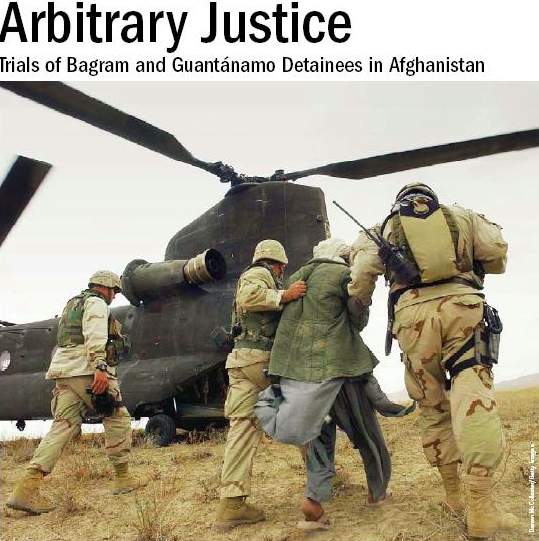


Arbitrary Justice: Trials of Bagram and Guantanamo in Afghanistan
Human Rights First and Sahr MuhammedAlly have come out with a powerful report detailing the transfer of Guantanamo and Bagram prisoners to be prosecuted at the Afghan National Detention Facility in Kabul known as Block D. The report is titled Arbitrary Justice: Trials of Bagram and Guantanamo in Afghanistan. Among the details, the report describes that more than 250 former Guantánamo and Bagram detainees have been transferred to Block D, a facility built by the US government to hold and prosecute former Guantanamo and Bagram prisoners.
More than 160 have been referred for prosecution. The detainees are being charged under Afghan law for crimes ranging from treason and destruction of government property to threatening the security of Afghanistan. Defendants have been sentenced to terms of imprisonment ranging from 3 to 20 years, their trials last from 30 minutes to an hour.
 Arbitrary Justice: Trials of Bagram and Guantanamo in Afghanistan
Guest – Sahr MuhammedAlly, senior associate in Human Rights First’s Law & Security Program. Through research and advocacy Sahr works on U.S. counterterrorism and national security policies to ensure respect for human rights. Sahr has conducted human rights fact-finding research in Afghanistan, China, Indonesia, Malaysia, and Pakistan.
—-
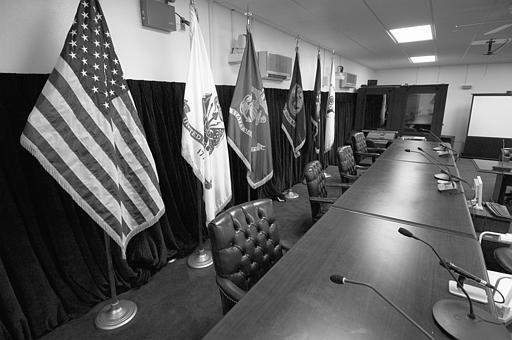

Teenage Detainees: Mohammed Jawad
We want to bring listeners up to date with the case of Mohammed Jawad. He was captured by Afghan police on December 17, 2002, and handed over to US forces the same day. According to his military defense lawyer, Jawad was briefly held at Bagram Air Base and transported to Guantanamo in January 2003. The same time period as portrayed in Taxi To The Dark Side.
Emi MacLean Interview Notes:
- Mohammed Jawad is facing trial by military commissions, created by executive order.
- Military commissions by executive order: illegal by the Supreme Court decision in Hamdan v Rumsfeld.
- In response to Hamdan v Rumsfeld, Congress passed the Military Commissions Act in 2006
- MCA 2006: Allows for secret trials / secret parts of trials /denying the accused the right to be tried by an impartial court /allows coerced testimony to be used; usually information gathered from being tortured.
Emi Maclean – “If you think the system is deeply, deeply flawed, look again, when the Dept of Defense couldn’t get what they wanted, they fired a judge. In the case of Omar Katr, the judge had ordered the government to produce information about the conditions of his detention and the conditions of which Omar’s statements were made. Even in a situation where the system is in favor of the government, the judge was replaced when that judge ruled against the government.”
Michael Ratner – “Even if Jawad is acquitted by this show trial, the (Bush) administration still says they can hold people indefinitely.”
Guest – Emi MacLean, staff attorney at the Center For Constitutional Rights and with the Guantánamo Global Justice Initiative (GGJI) since June 2006. She works on issues related to Guantánamo and other forms of executive detention, including secret prisons and transfers-to-torture. She helps coordinate the pro bono attorneys representing the hundreds of men still detained at Guantánamo and supports CCR’s direct representation of a number of current detainees.
————————————————————————————————————-
Law and Disorder August 18, 2008
Podcast: Play in new window | Download
Updates:
- Extremely Rare: Court Moves To Rehear Case of Canadian Rendition Victim Maher Arar
- NYC’s Plan To Track Everything That Moves
- Outrage At NYPD Plan To Track Vehicles
- NYPD Travel To London For Security Tips
- Detention Camp Set Up For DNC Protesters
- UK: Zero Privacy

CCR Campaign: The First 100 Days
Vincent Warren, Executive Director of the Center for Constitutional Rights talks with hosts about the CCR campaign titled the First 100 Days. Warren says there is a clear opportunity for the next president to steer things in a new direction, to repudiate the executive orders that have been put in place by George W. Bush, and by the sidestepping of the Justice Department. A lot of the reversal can be done without Congress because they are executive orders. The First 100 Days campaign will put this information(PDF) in the hands of the people to make the next administration accountable. Law and Disorder will have more programming on the First 100 Days.
Guest – Vincent Warren, Executive Director of the Center for Constitutional Rights
—
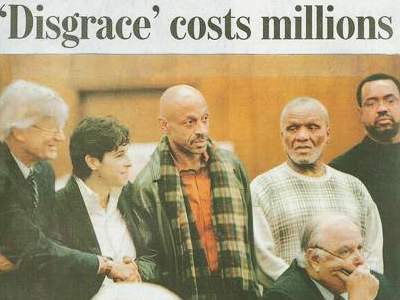
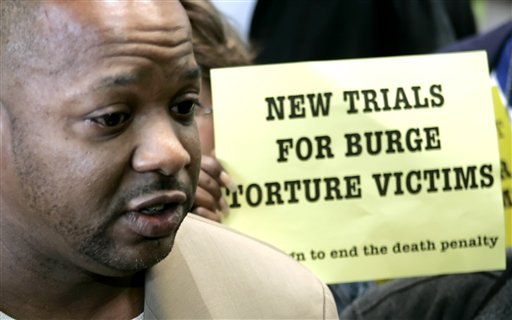
20 Years Later: Dozens of Black Men Remain Behind Bars In Chicago After Being Tortured
According to the People’s Law Office in Chicago, at least 24 African American men are still serving sentences for crimes they say they confessed to after being tortured by Chicago Police officers. The happened when the Chicago police precinct was under Commander Jon Burge in the early 70’s to the 1992. Jon Burge is a Vietnam Vet who is said to have brought back torture to Chicago. People’s Law Office Attorney Flint Taylor says Burge shot through the ranks all the way to commander, primarily by leading a band of torturers. They used methods such as electric shock, dry submarino, (suffocating with bags)
Flint Taylor on the Daryl Cannon Torture Case:
- Flint Taylor represents torture victim Daryl Cannon who the city has admitted they tortured and settled for 3 thousand dollars twenty years ago before any evidence of the systemic torture came out.
- Under Seventh Circuit law if there’s a conspiracy to cover up the evidence in a civil case to show fraud then you can bring the case again. The PLO brought the case in 2005 and the city of Chicago still refuses to settle the case and they’re pumping hundreds of thousands of dollars in that case.
- They’re over the 10 million dollar mark and pumping more in to the defense of Commander Jon Burge. We’ve calculated the pensions that have been paid to Burge and the 25 other implicated torturers; its over 25 million because statute of limitations have no remedy.
The Peoples Law Office attorneys are also battling to get the remaining men off of death row and to get them hearings. They’re also battling to get the states attorney and DA to Richard Daily former Chicago mayor and Richard Devine to the carpet because they had evidence to prosecute Burge criminally, thus allowing torture ring to continue.
The Committee of Torture in the United Nations has connected the torture brought back to the U.S. in Chicago with torture in Guantanamo and other black sites around the world.
Guest – G. Flint Taylor, attorney at the Peoples Law Office.Taylor, a graduate of Brown University and Northwestern University School of Law and a founding partner of the People’s Law Office.
—-

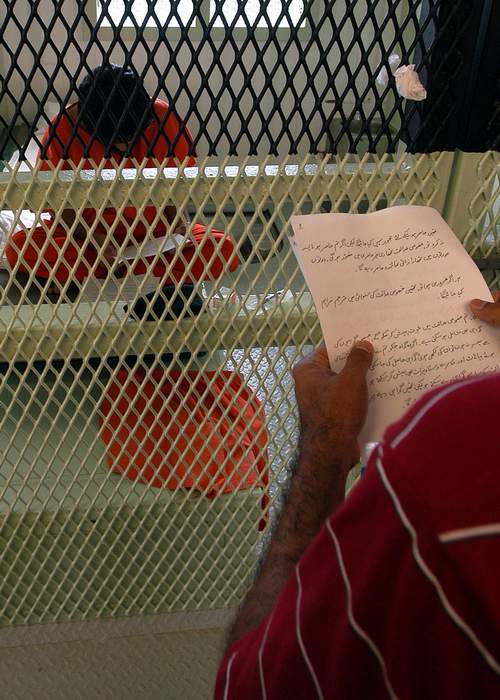
Beyond Guantanamo Speech: Pardiss Kebriaei
We hear from Pardiss Kebriaei, Staff Attorney, Guantánamo Global Justice Initiative, at the Center For Constitutional Rights who spoke at the event titled, Beyond Guantanamo.
Now that key rulings issued by the Supreme Court affirm the constitutional rights of Guantánamo detainees to challenge their detention in the federal courts, what does the future hold for Guantanamo detainees and the rule of law? In the cases of Boumediene v. Bush and Al Odah v. United States, the June 2008 Supreme Court ruling has undone the attempts of the Bush administration and Congress to suspend the fundamental right of habeas corpus. Closing Guantanamo is on top of the list of actions in the First 100 Days for the next U.S. President’s Administration.
Among the speakers:
- Vincent Warren, Executive Director, CCR,
- Stephen Abraham, Guantánamo whistleblower, attorney, and U.S. Army reserve officer who served on a military “combatant status review tribunal”
- Baher Azmy, Professor of Law, Seton Hall University and habeas counsel to Guantánamo detainees
——————————————————————–
Law and Disorder August 11, 2008
Podcast: Play in new window | Download
- CCR Statement On Hamdan Case
- Salim Hamdan Case Update
- National Lawyers Guild: Execution of Jose Medillin
- Guantanamo Detainee Files First Petition Against The U.S.
- EFF Battles Dangerous Attempts to Circumvent Electronic Privacy Law
- NSA Spying – CCR v Bush update
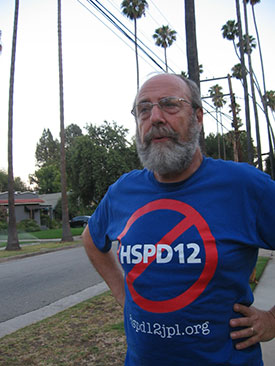



Jet Propulsion Engineers Win Injunction Over “Unconstitutional†Background Checks
Last year, twenty-eight senior scientists and engineers at Jet Propulsion Laboratory challenged the United States government and the California Institute of Technology in a lawsuit claiming that NASA’s new background investigations were unconstitutional. The scientists include members of the Mars Rover program are fighting Homeland Security Presidential Directive 12 or (HSPD-12). This directive requires all federal employees and contractors to “voluntarily” sign a form allowing the government the right to investigate them “without limit” for two years- even if they leave government work during that time. NASA and Caltech employees were told, non-compliance will result in immediate termination.
In the interview Bob Nelson describes the drama in a Ninth Circuit Court decision: the Ninth Circuit Court of Appeals issued a temporary injunction at 4:40pm. The same day around 5pm, JPL managers were approaching the several hundred JPL employees who were non-compliant and reading them an order saying if you don’t comply by Monday, we will advertise your job. You have until 5pm today to decide.
A few minutes before 5pm Bob Nelson brought in a faxed copy of the order by the Ninth Circuit Court judge and told JPL managers that what they’ve done may be illegal, if you have a problem, consult your lawyer. The Ninth Circuit ruled that NASA and the DOJ were out of order and that Caltech was in the wrong for serving as an enforcer.
The lawsuit caused a lot of interest within Caltech alumni who then wrote to the board of trustees and later began to fund the lawsuit. Nelson says, “You can fight the system of a completely entrenched bureacracy that constantly rewrites the rule in their favor.”

Guest – Robert Nelson, Senior Research Scientist at Jet Propulsion Laboratories and lead plaintiff in the JPL case.
—
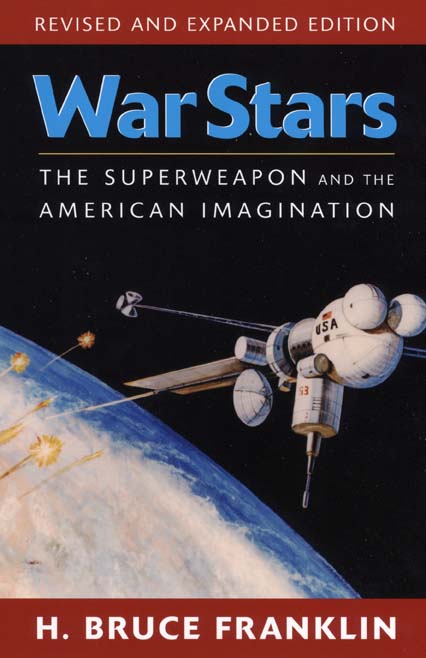
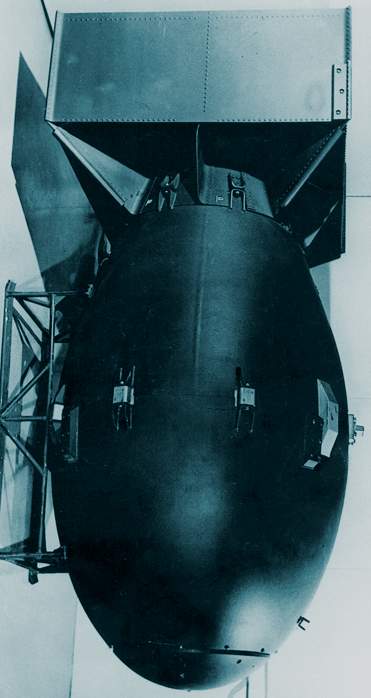

H.Bruce Franklin – War Stars: The Super Weapon and The American Imagination
Today we welcome cultural historian H Bruce Franklin, author of many books including The Most Important Fish In The Sea and one we will talk with him today titled War Stars: The Superweapon and The American Imagination. One review writes “this book reveals how and why the American quest for the ultimate defensive weapon, guaranteed to end all war and bring universal triumph to American ideals has led to the creation of forces increasingly capable of automated global annihilation.”
H.B. Franklin Interview Notes:
- Grotesque Fantasy: PNAC, Pox Americana and Superweapons
- A typical Trident class submarine carries 142 thermo-nuclear weapons
- War Stars are nuclear weapons, same physics of a star.
- Roosevelt urged leaders to avoid barbaric war strategy of bombing civilians.
- “How did we get to a place where we built weapons capable of destroying our own society, human civilization, possibly exterminating the human species, while always thinking that we’re making ourselves more secure, bringing global peace, bringing democracy to the world?”
Franklin explores the influences of the collective imagination in movies, novels and stories from obscure pre-World War I fiction to modern classics such as Slaughterhouse Five and Dr. Strangelove. War Stars interweaves culture, science, technology and history to demonstrate how the American consciousness shapes ingenious new superweapons while creating its antithesis in art.
Guest – Bruce Franklin, American cultural historian who has authored or edited nineteen books on a range of subjects. As of 2008, he is the John Cotton Dana Professor of English and American Studies at Rutgers University in Newark, New Jersey. He first attained prominence as a Melville scholar and has served as president of the Melville Society. His award-winning books and teaching on science fiction played a major role in establishing academic study of the genre. His books on American prison literature have been said to open an entirely new field of study. His most recent work has focused on relations between the marine environment and American cultural history.
——————————————————————————————-