Welcome to Law and Disorder Radio
Law and Disorder is a weekly independent civil liberties radio program airing on more than 150 stations and on Apple podcast. Law and Disorder provides timely legal perspectives on issues concerning civil liberties, privacy, right to dissent and practices of torture exercised by the US government and private corporations.
Law and Disorder June 23, 2008
Podcast: Play in new window | Download
Updates:
- House Approves Unconstitutional Surveillance Legislation
- “Yes” To Swedish Surveillance Law
- CCR Files Damages Claims on Behalf of Families of Men Who Died at Guantanamo
- Shooting of Reuters Journalist in Iraq Justified, Says Pentagon
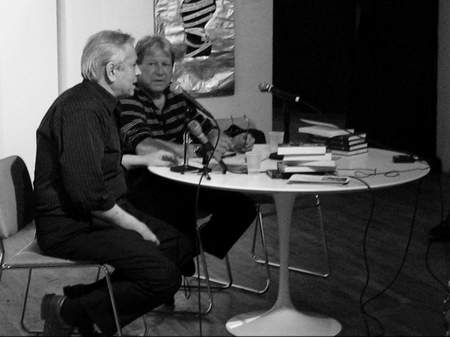
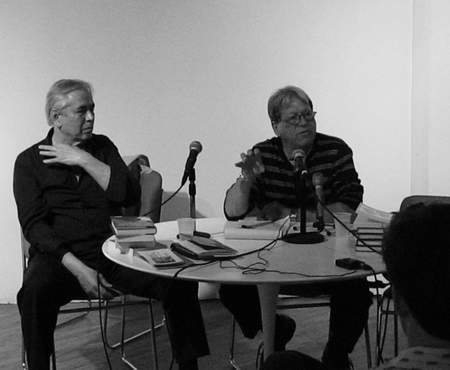
Brecht Forum – Citizen Soldier and Anti War GI’s
We hear excerpts from speeches at the Brecht Forum by our own Michael Smith and Citizen Soldier’s Tod Ensign. The anti-war soldier panel started with Michael Smith describing his work defending anti-war GI’s at Ft. Jackson, South Carolina and the formation of the GI Civil Liberties Defense Committee.
Anti-war GI’s were pivotal to the movement’s success. The growing protests from within the U.S. military today echo the Vietnam War soldiers experience. The panel discusses the role of anti-war GI organizing in the anti-war movements from 1917 to 1968 and to the present.
Tod Ensign is also the co-coordinator of the Different Drummer Café at Fort Drum. A meeting place for soldiers who get immediately deployed to battle after training at Fort Drum. The cafe promotes the free and uncensored exchange of ideas and information among active duty and reserve military personnel and civilians. This includes, issues of war and peace, foreign policy, the military mission of our soldiers both at home and abroad, and the proper balance between the rights of citizen soldiers and military authority in a democratic society.
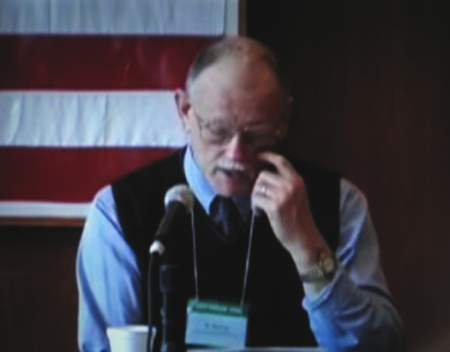
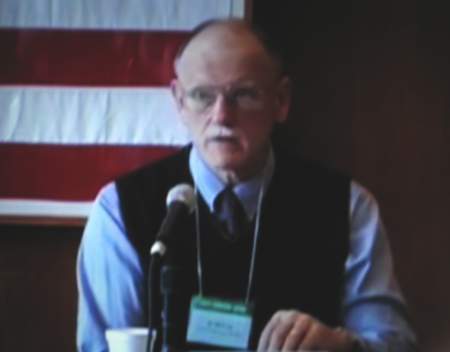
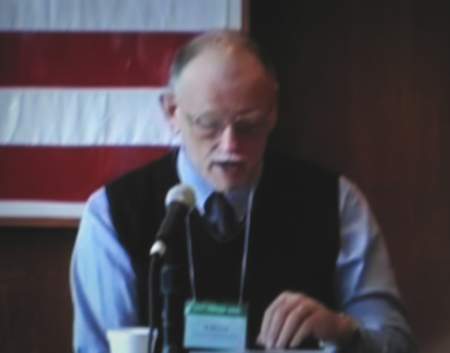
World Day in Support of Victims of Torture: Left Forum 2008 – Torture and the Decline of the American Empire. Professor Alfred McCoy Part I
There are several significant events surrounding the US policy on torture taking place this week. Already last week, the US Senate Committee on Armed Services held hearings on the origins of aggressive interrogation techniques. Among the events this week is the fifth session of the United Nations Committee against Torture, Subcommittee on Prevention of Torture and Other Cruel, Inhuman or Degrading Treatment or Punishment in Geneva.
Amnesty International releases a report on torture and unfair trials in Tunisia’s war on terror, Amnesty International’s Guantanamo prison cell replica opens to the public in Washington, DC, through Sunday, June 29 and there is also the World Day in Support of Victims of Torture.
Professor Al McCoy, author of A Question of Torture, delivers a powerful speech on the history of torture in the United States. This is from this year’s Left Forum on a panel titled, Torture and the Decline of the American Empire. Moderated by our own Michael Steven Smith.
Law and Disorder June 16, 2008
Podcast: Play in new window | Download
Updates: Landmark Win: Guantánamo Detainees Have Constitutional Right to Habeas Corpus
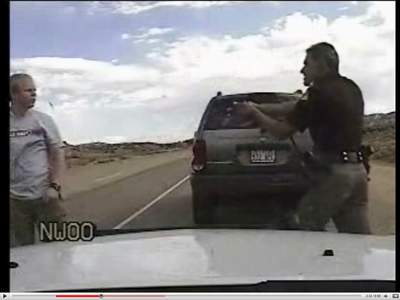
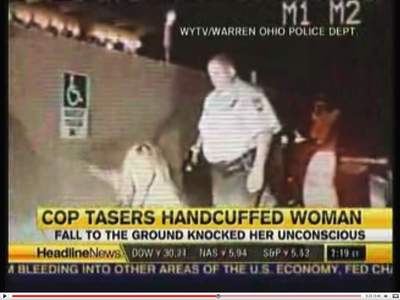
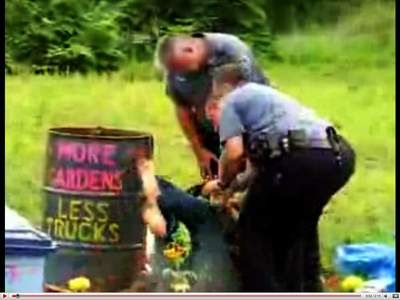
Federal jury awards $6.2 million in Taser death lawsuit
Here on Law and Disorder we’ve talked with many guests on the dangers of Taser stun guns. Recently Taser International Inc., the largest stun-gun maker, lost a $6.2 million jury verdict over the death of a California man who died after police shot him multiple times with the weapon. A San Jose, California jury says that Taser failed to warn the police of Salinas, California that prolonged exposure to Tasr’s electric shock could cause a risk of heart attack. The 40 year old victim Robert Heston died February 20, 2005 after his father had called Salinas police because his son was “acting strangely,” and seemed to be on drugs, according to the lawsuit complaint.
This is the first defeat for Taser International in a product-liability claim. Though, a product liability claim, another issue of concern is how police abuse and torture people indiscriminately with tasers.
- Nearly 400 people in the United States have been killed in Taser-related deaths in the past 7 years.
- Stun guns are already widely abused on people who take too long to pull out ID, who are loud in public, elderly, disabled or in the wrong place at the wrong time.
- Medical examiners are afraid to rule Tasers as the primary or contributory cause of death out of fear of retribution. In meetings with coroners, Taser International has actually threatened to sue if stun guns are cited on death certificates.
- Taser International has formed questionable PR ties with law enforcement. It established and funded the Taser Foundation for Fallen Officers in 2004.
- Taser International Slogan: Saving Lives Everday
Guest: Civil rights attorney John Burton who litigated the case. Burton says there are 68 more Taser-related death cases to be litigated.
—

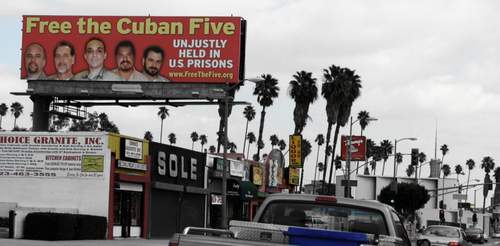
The Cuban Five: 11th Circuit Court Upholds Convictions
We’ve been following the case of the Cuban Five for years. Last week, the 11th U.S. District Court of Appeals in Atlanta upheld the convictions of the Cuban Five who are serving long prison sentences charged with spying and conspiracy to commit murder. The Five were falsely accused by the U.S. government of committing espionage conspiracy against the United States, and other related charges.
The Five pointed out vigorously in their defense that they were involved in monitoring the actions of Miami-based terrorist groups, in order to prevent terrorist attacks on their country of Cuba. The Five’s actions were never directed at the U.S. government. They never harmed anyone nor ever possessed nor used any weapons while in the United States. The Cuban Five are five Cuban men who are in U.S. prison, serving four life sentences and 75 years collectively, after being wrongly convicted in U.S. federal court in Miami, on June 8, 2001.
Guest: Len Weinglass – U.S. Civil Rights Attorney and Activist
Law and Disorder June 9, 2008
Podcast: Play in new window | Download
Updates:
- U.S. Politicians and Scholars Are Helping Turkey Cover up WWI Armenian Genocide
- Cluster bomb ban treaty approved: US, China and Russia Oppose
- CCR Report: U.S. Government Allows Security Forces from Brutal Human Rights Abusing Regimes to Threaten Prisoners at Guantánamo
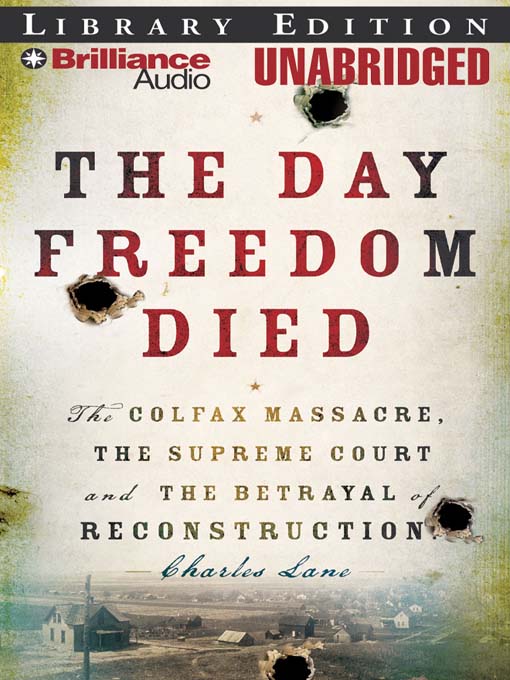
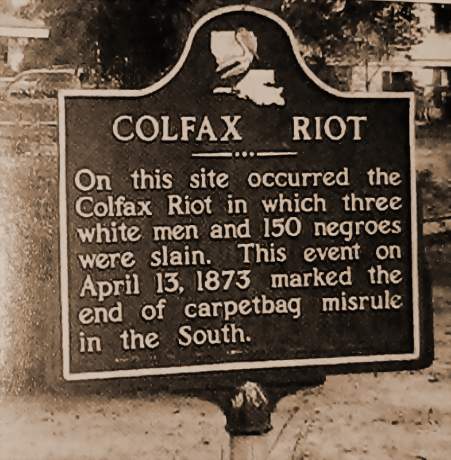
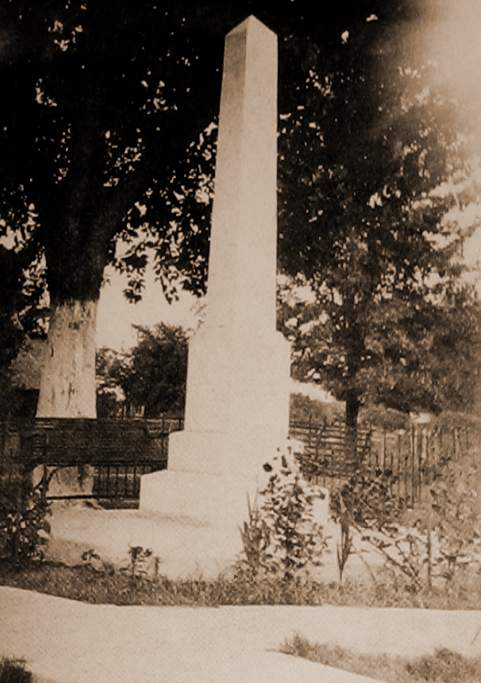
The Day Freedom Died: The Colfax Massacre, the Supreme Court, and the Betrayal of Reconstruction
It was April 13, 1873 in Louisiana when a small army of white ex-Confederate soldiers enraged by freedmen asserting their new rights killed more than 60 African Americans who had occupied a courthouse. Today we talk with author and journalist Charles Lane. His recent book is titled The Day Freedom Died: The Colfax Massacre, the Supreme Court, and the Betrayal of Reconstruction. In the book, Lane uncovers a nearly forgotten historic post civil war massacre of African American men in Colfax, Louisiana and a white lawyer’s epic battle to bring the perpetrators to justice. Reviews call Lane’s book an electrifying piece of historical detective work that captures a gallery of characters from presidents to townspeople and re-creates the bloody days of Reconstruction. Lane discovered the Colfax Massacre case while covering the Supreme Court for The Washington Post.
Guest – Charles Lane, member of the editorial page staff, is the author of “The Day Freedom Died: The Colfax Massacre, the Supreme Court and the Betrayal of Reconstruction.”
—

Ann Ginger : Meiklejohn Civil Liberties
Today we’re delighted to have Ann Ginger on the program, she’s a lawyer, teacher, writer, and political activist. She is the founder and the executive director of the Meiklejohn Civil Liberties, a think tank for human rights in Berkeley California. Here on Law and Disorder we’ve examine the practices and laws that have crippled civil and human rights in this country and now we take a look at ways law students and legal workers can bring them back.
Ann Ginger at Meiklejohn Civil Liberties has published Four Little Orange Books. The first is titled: Landmark Cases left Out of your Textbooks, the second is The Living Constitution, the third, Undoing The Bush/Cheney Legacy – Restoring Lost Liberties: A Tool Kit For Congress and fourth, Making the Universal Declaration the Supreme Law of the Land. Ann writes – the roles of successful lawyers and legal workers in the future will not be the same as the roles of successful lawyers before the Bush-Cheney “war on terrorism. “
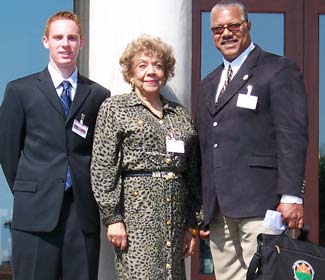
Guest – Ann Ginger. Ann is Executive Director of Meiklejohn Civil Liberties Institute, a center for peace law and human rights, with archives of historic cases. Founded in 1965, the Institute answers queries of clients and lawyers and trains interns to prepare reports on U.S. compliance with human rights treaties for submission to U.N. committees.
Ann learned early to use the law and history to work for peace and human rights, coming from an Irish Catholic, English Quaker, Russian Jewish, Midwestern newspaper family. As a lawyer, she won a civil liberties case in the U.S. Supreme Court. After her testimony as an expert witness on international law that applies in the U.S., a jury acquitted nuclear weapons protesters in Utah. She is now teaching Peace Law and Human Rights at San Francisco State University and long served on the Peace and Justice Commission that administers the Nuclear Free Zone Ordinance in Berkeley.